Phonology

  • · ·

    My child is hard to understand at school age. Should I be concerned?

    Many parents notice speech errors when their children are toddlers. At that stage it often feels quite normal. Young children are still learning the sounds of their language, and those early mispronunciations can be very endearing.

    But as children grow older, parents sometimes begin to wonder:

    ‘Should my child still be speaking like this?’

    A common concern I hear from families is that their child is still difficult to understand even after starting school. Sometimes it is a parent who notices it first. Other times it is a teacher who gently mentions that classmates occasionally struggle to understand what a child is saying.

    When this happens, parents naturally wonder whether it is something their child will grow out of, or whether some extra support might help.

    When should children’s speech be clear?

    Children learn speech sounds gradually over several years. Some sounds develop earlier, while others take longer to master.

    By the time children reach five to six years of age, most of their speech should be clear enough for unfamiliar adults to understand. There may still be a few tricky sounds developing (such as /R/ or /TH/), but overall speech should be fairly easy to follow.

    If a child is frequently difficult to understand at school age, it can sometimes indicate that a speech sound difficulty has persisted beyond the stage when it would normally resolve on its own.

    Why some children remain hard to understand

    There are several reasons why speech clarity may still be developing in older children.

    Phonological patterns

    Some children continue to use speech patterns that are typical of younger children. For example:

    • saying ‘tat’ instead of ‘cat’
    • saying ‘doe’ instead of ‘go’
    • leaving sounds out of words

    These patterns are called phonological processes. They are a normal part of early speech development, but when they persist into the school years they can make speech difficult for others to understand.

    Difficulty producing specific sounds

    Other children may have difficulty producing certain individual sounds clearly. This might include sounds such as:

    • /S/
    • /SH/
    • /R/
    • /TH/

    These difficulties are called articulation difficulties.

    A child might understand exactly what they want to say but find it hard to produce the sound accurately with their tongue, lips or airflow.

    Motor speech planning challenges

    For some children, the difficulty lies in the planning and coordination of the movements needed for speech.

    Speech requires very precise timing between the tongue, lips, jaw and breath. If the brain finds it difficult to organise these movements consistently, speech can sound unclear or inconsistent.

    In some cases this may relate to Childhood Apraxia of Speech, although only a full assessment can determine this.

    Why clarity matters for school-age children

    Speech clarity becomes particularly important once children start school.

    At this stage, children are:

    • Answering questions in class
    • Talking with friends
    • Reading aloud
    • Developing confidence in communication

    When speech is difficult to understand, children sometimes become more hesitant to speak, particularly in group situations.

    This can affect confidence and participation, even when the child has lots of ideas they would like to share.

    The good news: speech can improve

    The encouraging news is that speech sound difficulties can often improve significantly with the right support.

    Speech therapy focuses on helping children:

    • Learn how sounds are produced
    • Practise accurate speech movements
    • Understand how sounds change meaning in words
    • Build consistency through structured practice

    Different children benefit from different therapy approaches. Some need support with phonological patterns, while others benefit from more motor-based practice that strengthens speech coordination.

    Often therapy combines several strategies to support the child’s individual speech profile.

    When to seek advice

    If your child is already at school and you find that people outside the family often struggle to understand them, it can be helpful to seek advice from a speech and language therapist.

    A detailed assessment can help identify:

    • Which sounds are causing difficulty
    • Whether patterns such as fronting or sound substitutions are present
    • Whether motor planning challenges may be contributing
    • Which therapy approach is likely to be most effective

    Early support can help children develop clearer speech and greater confidence in communication.

    Every child’s speech journey is different

    Speech development is not the same for every child. Some children master speech sounds quickly, while others need a little more guidance along the way.

    The important thing is that support is available when children need it.

    With the right strategies and practice, many children make excellent progress and develop speech that is clearer, more confident and easier for others to understand. If you are concerned about your child’s speech clarity or ongoing speech sound errors, a speech and language assessment can help identify the underlying difficulty and guide the most appropriate support.

    Feel free to contact me on my contact page.

    Sonja McGeachie

    Highly Specialist Speech and Language Therapist

    Owner of The London Speech and Feeding Practice.


    Health Professions Council registered
    Royal College of Speech & Language Therapists Member
    Member of ASLTIP

    Find a speech and language therapist for your child in London. Are you concerned about your child’s speech, feeding or communication skills and don’t know where to turn? Please contact me and we can discuss how I can help you or visit my services page.

    3
  • ·

    How can I incorporate AAC into my speech therapy sessions?

    Many parents are surprised when I bring AAC into a session, especially if they’ve come to see me primarily for speech sound work.

    They might wonder: ‘If we’re working on pronunciation, why are we using a communication device?’

    The simple answer is this: speech therapy is about communication first, and speech sounds second. Supporting a child’s ability to express themselves clearly and confidently is always the priority, and AAC can be a powerful tool alongside spoken speech.

    What do we mean by AAC?

    AAC stands for Augmentative and Alternative Communication.

    This can include:

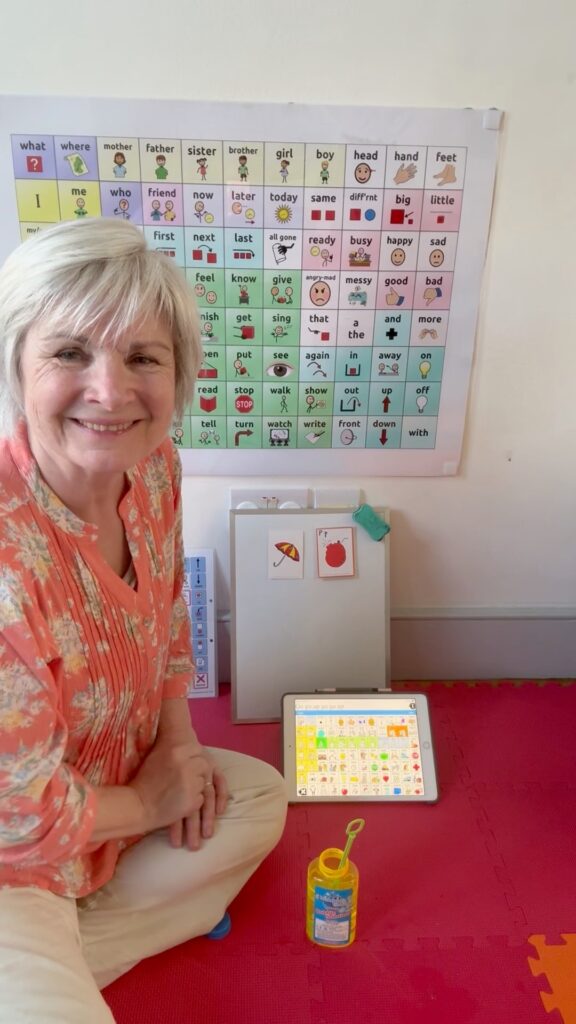
    • A speech-generating device (such as LAMP Words for Life or GRID as I used in the photo below)
    • A communication app on a tablet
    • A symbol board or communication book
    • Gestures, signs, or visual supports

    AAC does not replace speech. Instead, it supports language development, reduces frustration, and builds communication success while speech skills are developing.

    Pretend Play using Speech and AAC in my clinic room

    But I mainly work on speech sounds… So how does AAC fit?

    Most of the children I see are working on:

    • Articulation difficulties
    • Phonological delay
    • Motor planning challenges (including apraxia/dyspraxia)
    • Unclear speech affecting confidence

    For these children, AAC isn’t a separate therapy. It’s simply woven naturally into what we are already doing.

    If a child brings their device to sessions, I actively include it. If they don’t yet use AAC but could benefit from visual or symbolic support, I may introduce simple options within activities.

    Using AAC to support speech practice

    Let’s say we are working on early speech targets like: ‘GO’.

    We might practise:

    • Saying the word verbally
    • Listening for the target sound
    • Using play (TOY TRAIN GOING ROUND A TRACK)

    Now we can extend this using AAC.

    On the device or communication board, we might model: ‘LET’S GO’ or ‘IT’s GOING up the hill’.

    This allows the child to:

    • Practise their speech sound target
    • Build a simple sentence
    • Experience successful communication even if speech is not fully clear yet

    All responses are valid and supported.

    AAC helps children communicate more than they can say

    Many children can understand and think in longer phrases than they can physically say.

    For example:

    • A child who verbally says single words may build longer phrases on AAC.
    • A child who struggles to plan speech movements may use AAC to communicate smoothly while still practising verbal attempts.
    • A child who becomes frustrated when misunderstood gains a reliable backup system.

    Rather than slowing speech progress, AAC often:

    • Reduces communication pressure
    • Increases participation in therapy
    • Encourages more attempts at speech
    • Supports language growth

    When children feel understood, they usually become more motivated to try speaking.

    There are no ‘prerequisites’ for AAC

    One of the biggest myths I hear is: ‘My child isn’t ready for AAC yet.’

    In reality, children do not need to:

    • Reach a certain speech level
    • Use pictures first
    • Prove they understand everything
    • Show immediate interest

    Instead, we presume competence and introduce AAC in meaningful, playful ways.

    That means:

    • Modelling words while blowing bubbles
    • Commenting during playdough activities
    • Choosing words during games
    • Building simple phrases in shared reading

    AAC should never feel like extra ‘work’. It’s simply another way to join in communication.

    My goal is always the same: to help each child communicate as clearly, confidently, and successfully as possible, using every helpful tool available.

    If your child uses AAC (or might benefit from it)

     Please feel free to:

    • Bring the device to sessions
    • Show me how your child currently uses it
    • Share advice from school or other therapists

    I am very happy to incorporate AAC into our work together so that speech practice, language development, and real communication all move forward hand-in-hand. Because ultimately, therapy isn’t just about producing perfect sounds. It’s about helping your child be heard and understood.

    If you’d like support or advice, please contact me and I can help guide the next steps.

    Sonja McGeachie

    Highly Specialist Speech and Language Therapist

    Owner of The London Speech and Feeding Practice.

      Health Professions Council registered
      Royal College of Speech & Language Therapists Member
      Member of ASLTIP

      Find a speech and language therapist for your child in London. Are you concerned about your child’s speech, feeding or communication skills and don’t know where to turn? Please contact me and we can discuss how I can help you or visit my services page.

      3
    • · ·

      Understanding phonological processes in 3–7-year-olds: What’s typical and when to seek help

      As a speech and language therapist, one of the most common questions I hear from parents is:

      ‘They can talk, but their speech still sounds immature. Is this normal?’

      Many children between the ages of three and seven use speech patterns that make their words sound different from adult speech. These patterns are known as phonological processes, and for younger children, they are a normal part of speech development.

      However, when these processes persist beyond the expected age, they can start to affect clarity, confidence and learning, especially once children enter school.

      This blog will help you understand:

      • what phonological processes are
      • which patterns are typical at different ages
      • and when it might be time to seek speech therapy support

      What are phonological processes?

      Phonological processes are patterns of sound simplification that children use while their speech system is developing.

      Instead of learning each sound one by one, children initially organise sounds into patterns that make speech easier to produce. This is a normal and efficient strategy for a developing brain.

      For example:

      • saying ‘tar’ instead of ‘car’
      • saying ‘poon’ instead of ‘spoon’
      • saying ‘bud’ instead of ‘bus’

      These are not ‘bad habits’. They are part of how speech develops.

      The key question is how long these patterns last.

      Common phonological processes (and when they usually disappear)

      Below are some of the most common processes parents notice in 3–7-year-olds.

      1. Final consonant deletion

      Leaving off the last sound in a word

      • ‘ca’ for cat, ‘da’ for dog
      • Typically resolved by 3–3½ years

      2. Fronting

      Replacing back sounds (k, g) with front sounds (t, d)

      • ‘tar’ for car, ‘do’ for go
      • Typically resolved by 3½–4 years

      3. Cluster reduction

      Omitting one sound in a consonant cluster

      • ‘poon’ for spoon, ‘top’ for stop
      • Typically resolves by 4–5 years (some clusters slightly later)

      4. Gliding

      Replacing /R/ or /L/ with /W/ or /Y/

      • ‘wabbit’ for rabbit, ‘yion’ for lion
      • Can be typical up to 5–6 years

      5. Weak syllable deletion

      Leaving out unstressed syllables

      • ‘nana’ for banana
      • Usually resolved by 4 years

      If these patterns continue past the expected age, speech can remain difficult to understand particularly for unfamiliar listeners such as teachers, peers, and also Auntie Karen or grandparents who visit once in a while.

      Why phonological processes matter in school-age children

      By the time children reach reception and Year 1, speech clarity becomes increasingly important.

      Persistent phonological difficulties can affect:

      • being understood by teachers and peers
      • phonics and early reading
      • spelling
      • confidence in speaking
      • willingness to participate in class

      Some children become aware that they ‘sound different’ and may speak less, avoid longer words, or become frustrated when misunderstood.

      What’s the difference between a delay and a disorder?

      This is an important distinction.

      • A phonological delay means a child is following the normal pattern of development, just more slowly.
      • A phonological disorder means the child is using atypical patterns, or continuing age-expected patterns well beyond when they should have resolved.

      A speech and language assessment helps identify:

      • which processes are present
      • how many are affecting speech
      • how consistent the errors are
      • and whether intervention is needed

      Signs it may be time to seek speech therapy

      You may want to seek professional advice if your child:

      • is 3½ years or older and still hard to understand
      • is understood well by family but not by others
      • becomes frustrated or avoids talking
      • has difficulty with phonics or spelling
      • uses several phonological processes at once
      • has not made progress despite time and encouragement

      Early support does not mean something is ‘wrong’. It simply helps speech development move forward more efficiently.Research consistently shows that unresolved phonological processes beyond the expected age can impact intelligibility, literacy and confidence (Dodd, 2014; Bowen, 2015).

      How speech therapy helps phonological development

      Phonological therapy is not about drilling individual sounds endlessly.

      Instead, therapy focuses on:

      • helping children recognise sound patterns
      • building awareness of contrasts (e.g. ‘tar’ vs ‘car’)
      • practising speech in meaningful, playful ways
      • supporting generalisation so progress carries into everyday speech

      For school-aged children, therapy is usually structured, motivating and highly targeted and progress can be very encouraging.

      A final reassurance

      Many children with phonological difficulties go on to develop clear, confident speech with the right support.

      If you’re unsure whether your child’s speech is ‘just a phase’ or something that needs attention, a professional assessment can give clarity and peace of mind.

      If you’d like support or advice, please contact me and I can help guide the next steps.

      Sonja McGeachie

      Highly Specialist Speech and Language Therapist

      Owner of The London Speech and Feeding Practice.

      Research references


      Health Professions Council registered
      Royal College of Speech & Language Therapists Member
      Member of ASLTIP

      Find a speech and language therapist for your child in London. Are you concerned about your child’s speech, feeding or communication skills and don’t know where to turn? Please contact me and we can discuss how I can help you or visit my services page.
      3
    • · ·

      Childhood Apraxia of Speech: Signs and first steps (2–5 years)

      If you’ve found yourself wondering ‘Why can my child say a word one day, but not at all the next?’ it might be that your child has a motor speech difficulty. This means the challenge isn’t that your child doesn’t know what they want to say; it’s that their brain finds it harder to plan and coordinate the movements needed for clear speech. This speech difficulty is called Childhood Apraxia of Speech (CAS)

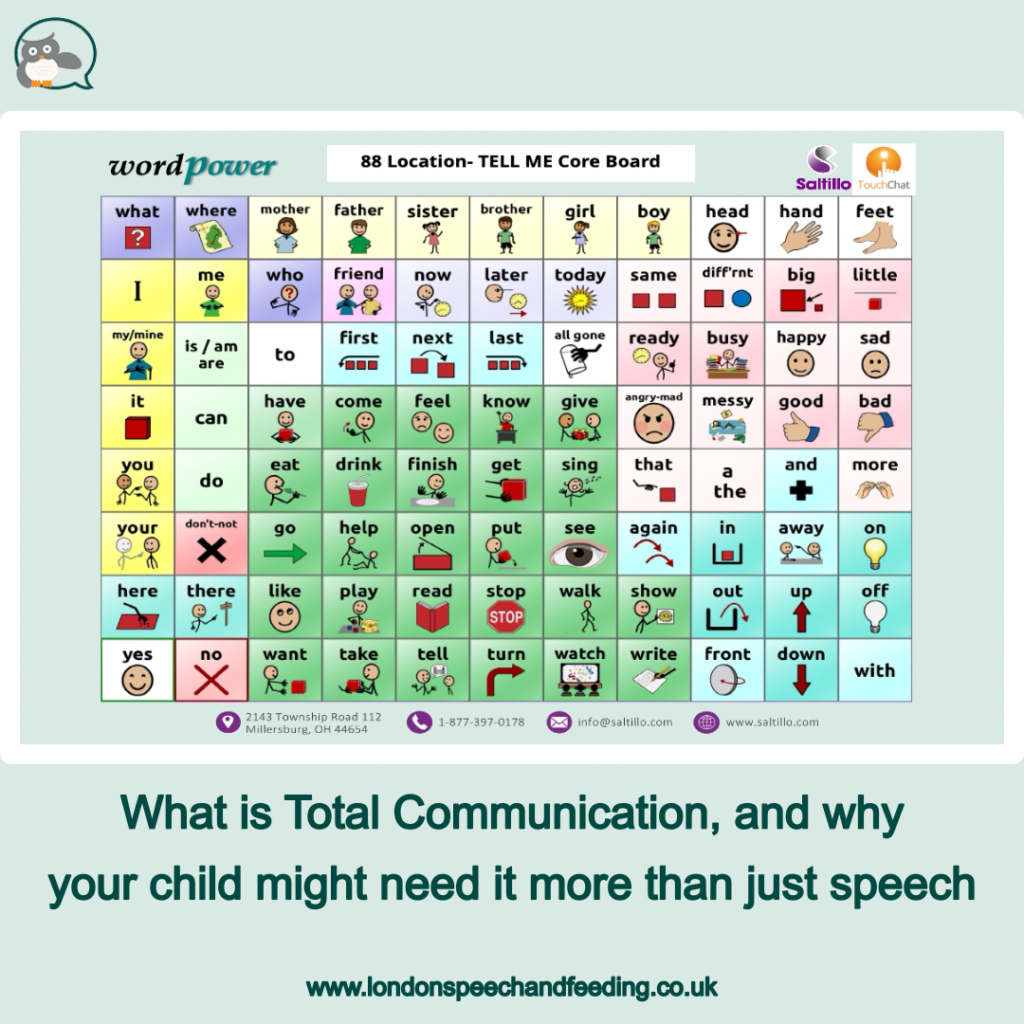
      Sonja showing power words on a board

      In this post, I’ll explain what CAS can look like in 2–5 year olds, what an assessment usually involves, and what you can start doing at home to support your child without turning life into ‘speech homework all day long’.

      What is childhood apraxia of speech (CAS)?

      Children with CAS often have lots to communicate about (and strong ideas!) but their speech may come out as:

      • Unclear
      • inconsistent
      • hard to ‘copy’ on demand
      • frustrating for them and for you

      CAS is not caused by laziness and it is not a parenting issue. It is also not something children simply ‘grow out of’ without support. But with the right therapy approach, children can absolutely build clearer speech over time.

      If you’d like to read more about verbal dyspraxia, you may also find this helpful: Supporting children and families living with verbal dyspraxia.

      Why is CAS such a big topic right now?

      Many families come to me after months (or years) of being told:

      • ‘She’ll talk when she is ready’
      • ‘He’s just shy’
      • ‘It’s probably a speech delay’
      • ‘It’s normal for toddlers’

      And sometimes it is a general delay. But sometimes it’s something more specific, like CAS.

      There’s also been a huge rise in parents seeking information online, and CAS is often mentioned alongside speech sound difficulties such as:

      • phonological delay (pattern-based speech errors)
      • articulation difficulties (one sound that won’t come out clearly)
      • inconsistent speech disorder

      These can look similar at first glance, which is why a specialist assessment matters.

      Signs of childhood apraxia of speech in 2–5 year olds

      Children develop speech at different rates, and not every unclear speaker has CAS. But here are some common features that may raise a flag, especially when you notice several together.

      1) Inconsistent speech errors

      Your child might say the same word in different ways:

      • ‘banana’ → nana / baba / mana
      • ‘daddy’ → gaga / daddy / dadi

      This inconsistency is one of the biggest clues.

      2) Difficulty copying words on request

      Some children speak more easily in natural play, but when asked ‘Say ___’, they freeze or the word becomes much harder.

      3) Limited sound repertoire

      They may use only a small set of consonants (like /M/, /N/, /B/, /D/) and avoid others.

      4) Vowel distortions

      Many children with typical delays mainly struggle with consonants. But in CAS, vowels can also sound ‘off’ or change between attempts.

      5) Speech that sounds effortful

      You might notice your child:

      • pauses between sounds
      • tries multiple times
      • looks like they’re ‘searching’ for the right mouth movement

      6) Longer words are much harder

      ‘Car’ might be easier than ‘carry’, and ‘carry’ easier than ‘caterpillar’.

      7) Prosody differences (rhythm and stress)

      Some children with CAS sound a little unusual in their speech rhythm, stress, or intonation.

      8) Frustration or reduced confidence

      When a child is frequently misunderstood, they may:

      • talk less
      • use gestures more
      • become upset when asked to repeat themselves

      Important note: none of these signs alone prove CAS but they are a strong reason to seek a speech assessment rather than waiting.

      CAS vs phonological delay vs articulation difficulty (quick guide)

      These are some of the most common questions I hear.

      If it’s mainly an articulation difficulty…

      A child may consistently say one sound incorrectly (for example, ‘thun’ for ‘sun’- lisp- but everything else is developing well.

      If it’s mainly a phonological delay…

      You might notice clear patterns, like:

      • leaving off the ends of words (‘ca’ for ‘cat’)
      • swapping back sounds for front sounds (‘tar’ for ‘car’)

      Patterns are often consistent and respond well to phonology-based therapy.

      If it might be CAS…

      Speech often feels less predictable, harder to imitate, and more impacted by word length and complexity.

      If you’re unsure, that’s completely normal, and exactly why assessment matters.

      What happens in a CAS assessment?

      A high-quality speech assessment for possible CAS usually includes:

      1) Parent discussion and developmental history

      We talk about:

      • pregnancy and birth history (where relevant)
      • feeding history
      • early sounds and babbling
      • first words and how speech has progressed
      • family history of speech/language needs

      2) A speech sound assessment

      Your child might be shown pictures or play-based prompts so we can hear:

      • what sounds they can say
      • what they simplify
      • whether errors are consistent or inconsistent

      3) An oral-motor and movement check

      This isn’t about ‘strength’. It’s about coordination and planning. We look at how your child manages speech movements and transitions.

      4) Stimulability testing

      This means: how easily can your child learn a new sound or word with support?

      For CAS, we often explore how they respond to:

      • slowed-down speech
      • visual cues
      • rhythm/tapping
      • short, simple syllable shapes

      5) Functional communication and confidence

      We look at how speech impacts daily life:

      • being understood at nursery
      • joining in with peers
      • asking for help
      • managing emotions when misunderstood

      At the end, you should leave with:

      • a clear explanation of what we think is going on
      • a therapy plan
      • practical home strategies
      • realistic next steps

      What parents can do at home

      Here are CAS-friendly strategies you can start right away.

      1) Choose ‘power words’

      Pick 1–2 words that matter most in your child’s daily life, such as:

      • more
      • help
      • mummy
      • again
      • stop
      • open

      These words are motivating and functional.

      2) Keep it short and successful

      For many children with CAS, the goal is quality over quantity.

      Try five minutes a day rather than 30 minutes of struggle.

      3) Support speech with rhythm

      Some children benefit from:

      • tapping a beat on the table
      • clapping syllables
      • using a gentle ‘marching’ rhythm

      This can help the brain organise the sequence of movements.

      4) Celebrate approximations

      If your child says ‘moh’ for ‘more’, that’s communication!

      We want them to feel:

      • safe
      • understood
      • proud to try again

      Confidence is a key part of progress.

      A short parent story (anonymised)

      One mum said to me:

      ‘We kept being told to wait. But I could see my child understood everything; they just couldn’t get the words out. Once we had an assessment and a plan, it felt like we finally knew what to do. The biggest change was his confidence. He started trying more.’

      When should you seek support?

      You don’t need to wait until school.

      It’s worth getting an assessment if your child is:

      • hard to understand compared with peers
      • becoming frustrated or withdrawing from talking
      • inconsistent with words they used to say
      • struggling to imitate speech sounds
      • showing signs that match CAS

      Early support can reduce stress for the whole family and help your child feel successful in communication.

      Here’s how I can help:

      ✅ A detailed speech assessment (including whether CAS is likely)

      ✅ A clear therapy plan with realistic goals

      ✅ Practical home strategies you can use immediately

      ✅ Support for nurseries and schools (where needed)

      ✅ In-person sessions in North-West London and online options

      Book your consultation here.

      Final gentle reminder

      You are not overreacting. Trust your instincts.

      Your child is communicating the best way they can, and with the right support, speech can become easier, clearer, and more confident.

      Sonja McGeachie

      Highly Specialist Speech and Language Therapist

      Owner of The London Speech and Feeding Practice.


      Health Professions Council registered
      Royal College of Speech & Language Therapists Member
      Member of ASLTIP

      Find a speech and language therapist for your child in London. Are you concerned about your child’s speech, feeding or communication skills and don’t know where to turn? Please contact me and we can discuss how I can help you or visit my services page.
      3
    • · ·

      A helpful addition in my toolbox for lisp correction

      Meet the MUPPY – a vestibular orthodontic plate

      I have become very well versed in Lisp Correction because so many children come to me with this problem! And I absolutely love lisp correction and Articulation Therapy! Please take a look at my blog on tips and tricks for correcting a lisp.

      The MUPPY

      Over the years I have created my unique style of remediating an Interdental Lisp and as part of my treatment I sometimes use an Orthodontic Tool, called the ‘MUPPY’, which I purchase directly from Germany. I first discovered it some years ago when working with a child with Down Syndrome. Back then I was searching for additional support with my student’s jaw grading and mouth closure difficulties and that’s when I first came across this little tool as recommended by one of my colleagues, a specialist orthodontist in Germany.

      I was a bit sceptical at first but I have used it now many times for three years on a variety of clients with varying degrees of lisps. I find it really helps together and in addition to all my other techniques which are language and motor based.

      How do I use it?

      The MUPPY is a custom-made mouth plate that gently repositions the tongue, encouraging correct tongue placement for clearer speech. It sits comfortably between the lips and teeth; a thin wire sits right behind the teeth, inside the oral cavity.

      The plate I like to use for lisp correction has a pearl in the middle. As soon as it is in situ the tongue starts fishing for the pearl and thereby keeps on moving up towards the correct place on the hard palate, just behind the front teeth. This is the place where the tongue tip needs to be for all the alveolar sounds our students find so hard to make.

      How does this help reduce a lisp?

      A lisp results mainly from incorrect tongue placement during sound production – though at times atypical dentition also contributes to the problem. Specifically, an interdental lisp occurs when the tongue protrudes between the teeth during the production of sounds like /S/ and /Z/. The tongue is often described by parents as ‘thrusting forward’ but I find that is rarely the case. Most often the tongue simply protrudes forward, which is different to tongue thrusting, a more forceful and involuntary movement. Most often I see a habitual tongue protrusion not only for /S/ and /Z/ but also for /T/, /D/, /L/ and /N/. Often /SH/ and ZH/ are also affected.

      To visualise this:

      1. A correct /S/ sound looks like this: The tongue tip is raised and touches the alveolar ridge (the bony, slightly uneven ridge behind the upper teeth). The sides of the tongue touch the upper molars.
      2. Interdental lisp: The tongue tip protrudes between the front teeth, creating a /TH/ sound.
      3. Lateral lisp: Here the mechanics of the tongue are different. But using the MUPPY can help here too. To visualise a lateral lisp, the sides of the tongue are not raised high enough, allowing air to escape over the sides. This results in a ‘slushy’ or ‘wet’ sound.

      Understanding the specific type of lisp is crucial for targeted therapy and successful correction.

      The Vestibular Plate (Muppy) HELPS to guide the tongue towards the right place from where we shape the NEW SOUND.

      Methods

      Most important to my articulation work re lisping are the motor- and language-based techniques I use, as broadly described below:

      • A thorough oral examination, tongue movements, lip closure, dentition, jaw grading, breath coordination, cheek tonicity, palatal form
      • Discussion on awareness and motivation of child to work on their speech
      • Contrasting sounds at the beginning and end of words: sing vs thing / sink vs think / mess vs mesh etc to raise awareness that it matters what sounds we use in speech and that just one sound can change the meaning of a word completely
      • Mirror work, pulling faces, moving our tongue voluntarily
      • Exploring the oral cavity and thinking about all the parts of the tongue and the palate
      • Finding the alveolar ridge and placing the tongue there at rest
      • Then working towards a good baseline of the other alveolar sounds: /T/ /D/ /L/ /N/ and from there we work towards our NEW /S/ SOUND.

      I use a variety of picture clues depending on what is most meaningful for my student:

      The child likes a train set, I use the TIRED TRAIN SOUND.

      The child knows about bike or car tyres, I use the FLAT TYRE SOUND.

      With a student who loves a balloon I might use the FLAT BALLOON SOUND.

      And we work our way from correct tongue placement to these long /SSSSSSSSS/ sounds with the help of these visual cues, but also gestural and hand cues such as Jane Passy’s Cued Articulation sound for /S/.

      I really love helping children correct their speech sound, be it an articulatory difficulty like the lisp or a phonological difficulty such as ‘fronting’ or ‘gliding’ and I also love working with motor-based speech difficulties we see in Childhood Apraxia of Speech. Feel invited to get in touch if your child needs help in these areas.

      Sonja McGeachie

      Early Intervention Speech and Language Therapist

      Feeding and Dysphagia (Swallowing) Specialist The London Speech and Feeding Practice

      The London Speech and Feeding Practice


      Find a speech and language therapist for your child in London. Are you concerned about your child’s speech, feeding or communication skills and don’t know where to turn? Please contact me and we can discuss how I can help you or visit my services page.
      1
    • · ·

      Chaining: A powerful tool for phonological development

      Understanding chaining

      Chaining is a therapeutic technique I like to use in my speech therapy work with children who have Childhood Apraxia of Speech (CAS) or phonological speech sound difficulties. It helps to break down a complex target behaviour into smaller, more manageable steps. By systematically teaching and reinforcing each step, I can help my students achieve their communication goals.

      There are two types of chaining: Forward and backward chaining

      Today I am going to show and talk about backward chaining. This technique involves starting with the last step and working backward to the first. This approach can be particularly effective for children with persistent speech sound difficulties where combining consonants into clusters, such as /BL/ or /FR/ or /SHR/ is very difficult.

      Backward chaining allows my student to experience immediate success and build his confidence.

      In my video I show you how I applied backward chaining to the words ‘Shriek’, ‘Shrub’, ‘Shrimp’ etc

      My student struggles with both the /SH/ and the /R/ sounds and we have been working on both sounds for some weeks now. He has mild Childhood Apraxia of Speech and he has difficulties with coordinating his tongue movements, breathing and using his jaw effectively to make words. His sound repertoire has grown a lot since we started working together last year. Today in this session I show you how we pulled both the sound /SH/ together with /REEK/ to make ‘SHRIEK’. I love using the pictures and therapy materials from Adventures in Speech Pathology.

      This is also part of the Complexity approach which I will explain in a separate blog post.

      • Step 1 (not shown in the video): I explain what the word means; I find that when my student understands what a word means he is much better at saying it. It increases his confidence and motivation to say a word that he knows the meaning of. Often this student does not tell me that he does not know what a word means, so I always remind myself to check that out first.
      • Step 2 (not shown in the video): We do a little rhyming game and think about what any one word rhymes with: ‘Shriek’ – ‘meek’, ‘weak’, ‘seek’.
      • Step 3: I show my student that there are two parts to this word /reek/ and the sound /SH/.
      • Step 3: We practise the easier part: /reek/ /reek/ /reek/.
      • Step 4: We add the /SH/ sound and pull it together to make our target word ‘Shriek’.

      /REEK/ /REEK/ /REEK/ + /SH/ = ‘SHRIEK’
      /RUB/ /RUB/ /RUB/ + /SH/ = ‘SHRUB’
      /RUG/ /RUG/ /RUG/ + /SH/ = ‘SHRUG’

      By breaking down the word into smaller, manageable steps, my student can focus on each syllable individually, get that right and then gradually build up to the full word. This approach can help to reduce frustration and increase motivation.

      Forward chaining

      Forward chaining is the same process but in reverse: we start with the front sound or syllable and work forward towards the next/last part of the word:

      /SH/ + /REEK/ = ‘SHRIEK’
      /SH/ + /RUB/ = ‘SHRUB’
      /SH/ + /RUG/ = ‘SHRUG’

      Benefits of chaining

      • Increased motivation: By starting with the last step, my student experiences success, which boosts his motivation to continue trying to say the word and trying other words.
      • Reduced frustration: Breaking down the target behaviour into smaller steps can make the task less overwhelming, reducing frustration and anxiety.
      • Improved confidence: As the little learner masters each of the step, his confidence and self-esteem increases. Again, this leads to increased motivation.
      • Faster learning: By focusing on the final step first, and practising lots of chaining (forward and backward), a student can quickly learn to generalise to other words.

      Backward chaining (and forward chaining) is a really great tool for teaching complex speech sounds and words to children with phonological disorders.

      Watch out for my next blog which is all about the complexity approach in Phonology.

      Do get in touch if your child has a speech sound disorder, I would love to help.

      Any questions or need help with supporting your little one’s language please contact me via my contact form, or you could also check out www.hanen.org for advice and lots of inspiration.

      Sonja McGeachie

      Early Intervention Speech and Language Therapist

      Feeding and Dysphagia (Swallowing) Specialist The London Speech and Feeding Practice

      The London Speech and Feeding Practice


      Find a speech and language therapist for your child in London. Are you concerned about your child’s speech, feeding or communication skills and don’t know where to turn? Please contact me and we can discuss how I can help you or visit my services page.
      1
    • Empty Set and Phonology approaches

      I have been avoiding the use of the Empty Set approach for the longest time as I was not sure if it would work seeing that I am challenging two sounds my student struggles with at the same time. But I decided to give it a go and it works a treat!

      With this approach, we use two sounds that our student is struggling with. For example, in my video this student cannot produce /sh/ and /r/. Both sounds have different rules, so I decided to contrast them with each other.

      • The rules of /sh/ are: no voice, air is pushed out through teeth, produced at the front.
      • The rules for /r/ are: use your voice, produce the sound in the middle of the mouth by shaping your tongue in a particular way.

      So I chose the words ‘shoes’ and ‘ruse’ as their rules are quite different. Contrasting two sounds the student does not know has been shown to lead to greater change in the child’s articulation. And I can certainly vouch for this as my student is making the best progress with this approach.

      Phonology Therapy – what is it, why and how?

      Phonology is the study of the sound system of a language. It’s distinct from articulation therapy which focuses on the physical production of sounds.

      Phonology therapy focuses on rules. For example, sounds that are produced at the front of the mouth, in contrast to sounds that are produced at the back of the mouth, or sounds that are produced with a long air stream: /s/ or /f/ versus short sounds like /p/ or /t/; sounds are produced with voice or without voice.

      Many children, and sometimes adults, are unaware of some of the speech rules and confuse and replace individual sounds. They might say TAT instead of CAT or SIP instead of SHIP.

      A quick overview of phonology approaches I use:

      Minimal Pairs:

      This approach is good for single sound substitutions. We offer word pairs that differ by only one sound, like ‘ship’ and ‘sip.’ One of our first goal in therapy is to highlight the difference between the target sound (e.g., /sh/) and the sound the child uses (e.g., /s/). This helps discriminate and eventually produce the correct sound.

      Multiple Oppositions:

      A child might replace lots of sounds with a single sound like a /d/. So instead of ‘four’, ‘chore’ and ‘store’ our child says ‘door’, making speech very unintelligible.

      The approach is typically geared towards shaking up the phonological system. Our goal is to choose two to four targets that are different from each other, and different from the substituted sound. If our child’s favourite sound is /d/ they can use their voice and make a short sound by stopping their airflow. So I will choose a different target sound to change up the speech system. For example I might choose an /f/, a /m/ and a /k/ sound. So I would contrast: ‘door’ with ‘four’, ‘more’ and ‘core’.

      Maximal Oppositions:

      In the Maximal Oppositions approach the treatment sets consists of words that are minimally contrasted and that have maximal or near maximal feature differences between each word pair. One word in a pair represents a sound the child ‘knows’ (can say at word level) and the other represents a sound the child does not know (cannot say).

      For example, a child may ‘know’ /m/ and be able to say words like ‘man’, ‘mat’ and ‘mine’. However, the same child may be unable to say /f/ as in ‘fan’, ‘fat’ and ‘fine’. The consonants /f/ and /m/ are maximally opposed as follows.

      I am always delighted to work on speech sound disorders, I love the challenge and the successes we can celebrate together. Get in touch with me!

      Sonja McGeachie

      Early Intervention Speech and Language Therapist

      Feeding and Dysphagia (Swallowing) Specialist The London Speech and Feeding Practice

      The London Speech and Feeding Practice


      Find a speech and language therapist for your child in London. Are you concerned about your child’s speech, feeding or communication skills and don’t know where to turn? Please contact me and we can discuss how I can help you or visit my services page.
      1
    • ·

      Principles of motor learning in childhood apraxia of speech: A guide for parents and therapists

      Image by Freepik

      Childhood Apraxia of Speech (CAS) is a complex neurological disorder that affects a child’s ability to plan and coordinate the movements necessary for speech production. Children with CAS often have difficulty with articulation, prosody, and fluency, making it challenging for them to communicate effectively. While there is no cure for CAS, speech and language therapy can significantly improve a child’s communication skills and overall quality of life. Understanding the principles of motor learning is crucial for both parents and speech therapists to support children with CAS on their speech journey.

      What is MOTOR LEARNING?

      Motor learning refers to the process of acquiring and refining new skills through practice and experience. This applies to all aspects of movement, including speech production. The brain constantly receives sensory information about the movements being made and adjusts them based on the desired outcome. A breakdown or interruption of this process can make it difficult for children to plan, sequence, and coordinate the intricate movements involved in speech.

      What key principles do we use in speech and language therapy for motor learning?

      • Task Specificity: Speech Therapy activities that directly target the specific speech sounds or skills your child is working on. For example, if your child is struggling with /p/, practising isolated /p/ sounds, words with /p/, and phrases with /p/ would be most beneficial.
      • Massed vs. Distributed Practice: We consider the optimal amount and distribution of practice sessions throughout the day. Massed practice involves concentrated practice in a single session, while distributed practice spreads practice sessions throughout the day. The best approach depends on the individual child’s learning style and attention span.
      • Feedback: We provide clear and immediate feedback to help your child understand the accuracy and effectiveness of their attempts. This feedback can be auditory, visual, or touch based.
      • Error Correction: We aim to gently correct errors so that we can help your child refine their movements and avoid developing bad habits. The focus is on providing specific cues and guidance rather than simply pointing out mistakes.
      • Variety and Progression: We gradually introduce new challenges and variations in speech therapy activities to prevent plateaus and maintain motivation.
      • Motivation and Engagement: A big part of our work is to make therapy sessions fun and engaging to keep your child motivated and actively participating. We use games, songs, and activities that your child enjoys while incorporating targeted practice opportunities.

      What about home work?

      Yes we need your help and here are some examples of how this could look:

      • Task Specificity: During story time, focus on practising target sounds present in the story. Have your child repeat words or phrases containing the sound and encourage them to identify the sound in other words.
      • Massed vs. Distributed Practice: Instead of one long practice session, try shorter, more frequent sessions throughout the day. This can help maintain focus and prevent fatigue. It is recommended to go for 100 repetitions of the target sound per day, every day in between the sessions. We can decide together how you can best do that through either massed or distributed practice. We can decide after the session.
      • Feedback: Use a mirror to provide visual feedback on lip and tongue placement during sound production. Record the child’s speech and play it back to help them self-monitor their accuracy.

      I quite like this mirror below but any table top mirror will work as long as it is not too small. Your child should see their whole face easily.

      tabletop mirror
      • Error Correction: If the child makes an error, gently model the correct sound or movement without shaming or criticising. Provide specific cues such as ‘lips together’ for /p/ or ‘tongue up’ for /t/.
      • Variety and Progression: We will guide you on exactly what words to practise so this is something you need not worry about.
      • Motivation and Engagement: Use games, songs, and activities that your child enjoys. Play a game of ‘I Spy’ focusing on words with the target sound or create silly sentences with the sound to make practice fun.

      Let’s work together!

      It is crucial for parents, therapists, and other caregivers to work collaboratively to ensure a consistent and comprehensive approach to supporting your child’s speech development. Speech and Language Therapists can provide guidance and resources on implementing these principles at home, while parents can share observations and progress updates to inform therapy sessions.

      Remember, every child with CAS learns at their own pace. By understanding and applying the principles of motor learning, parents and speech therapists can create a supportive and stimulating environment that empowers children with CAS to reach their full communication potential.

      Do get in touch if you would like some in-person or on-line 1:1 support with this. It can be overwhelming to figure it all out alone.


      Find a speech and language therapist for your child in London. Are you concerned about your child’s speech, feeding or communication skills and don’t know where to turn? Please contact me and we can discuss how I can help you or visit my services page.

      2
    • What is FRONTING?

      Kids Speech Therapist London

      Does your child say “Dough” instead of “Go”? Or “Tea” instead of “Key”? Do you hear a /Sh/ instead of an /S/ does “see” sound more like “she”?

      We Speechies call this a Fronting Pattern which means that a sound that should be produced at the back of the throat with the back of the tongue, like K or G , is said at the front of the mouth with the tip of the tongue, like a T or a D or SH. When this happens speech can be really hard to make out because these sounds are literally everywhere in everyday sentences. Just think how many K’s and G’s we hear in a simple sentence?

      For example, I heard my little student say earlier today: “I know what game we can play in your garden? It’s the one with cones and rings and cushions! I know where it is I can get it.”

      But it sounded like:

      “I know what DAME we DAN play in the DARDEN! It’s the one with TONES and rings and TUSHIONS! I know where it is I TAN DED it.”

      If that sounds familiar to you, here is a little overview of what we can do about it:

      First up it’s always good to start with general speech sounds awareness: does a child hear syllables and intonation? Do they know words that rhyme? Can they follow or copy a simple beat with a drum? Can they listen and hear quiet sounds and loud sounds and can they copy those? Can they follow mouth and tongue movements:, for example : stick out your tongue, lick your lips, click your tongue, blow raspberries?

      Then it really helps to talk about BACK and FRONT of things and to draw attention to the back of the mouth and the back of the tongue and the front tip of the tongue and how sounds are made in the mouth. I often use a puppet to show this or a model of a mouth like this one here in the picture.

      Next we try and listen to words starting with a BACK sounds like a K or a G , and I read out a list of words with those sounds: COW, CORE, CAT, CONE, KEY etc or ARK, EEK, OAK, ACHE…

      Or GOO GUY GUM GONE

      After that we try and see if a student can actually produce a single sound like a K or a G just by itself. If they can, that’s a really great start and if they can’t I help them to produce one – over a few sessions we usually get there. We call this Sound production in isolation.

      Once a child can produce a sound correctly, on its own, we try and start working on very simple words that are really powerful like “GO”!!!!! in a motivating game or “CAR” for little ones who love a car racing track.

      Now that we have established the back sounds and are using it in short words, we can gradually re-train brain pathways and oral- motor/movement pathways to use these new sounds in many words and then short phrases. That can take time!! This is called generalisation and it is not uncommon for it to take up a whole year for fluent speech to be error-free .

      Why does it take so long? Being able to produce a correct and clear K or G sound does not mean it will be used easily. Our brain pathways are fixated or habituated to the error sound. It takes time for habits to change. A child might be able to hear the word TIGER with a G in the middle and she knows that it is not a TIDER but when saying it her tongue automatically moves forward rather than lifts up at the back. It’s a bit like a person who has a rounded back: the brain knows to stand upright and how not to slouch, but when we don’t focus on it, ooops we have slouched again because that is what we are comfortable doing and our body moves with our habit.

      It takes effort and motivation to change our movement patterns and that includes our tongue and lip patterns! We usually get there through a huge variety of games and practice. Lots and lots of repetition is key as is motivation to change.

      Parents and carers are crucial in the success of Speech Therapy!

      We need your feedback at home, the regular short and sweet exercises, the constant positive encouragement and great modelling of speech sounds. We often find that parents are tuned into their child’s error sounds and can understand them much better than anyone else. This is great of course in many ways, however, it also means that the child has less motivation to change: if mummy understands me then my world is ok.

      I will give you a short outline of what different speech therapy models I use in my practice, be it in clinic face to face or on-line in my future blogs soon.


      Find a speech and language therapist for your child in London. Are you concerned about your child’s speech, feeding or communication skills and don’t know where to turn? Please contact me and we can discuss how I can help you or visit my services page.