Four struggles parents face when out and about with children with speech, language, and communication difficulties
|
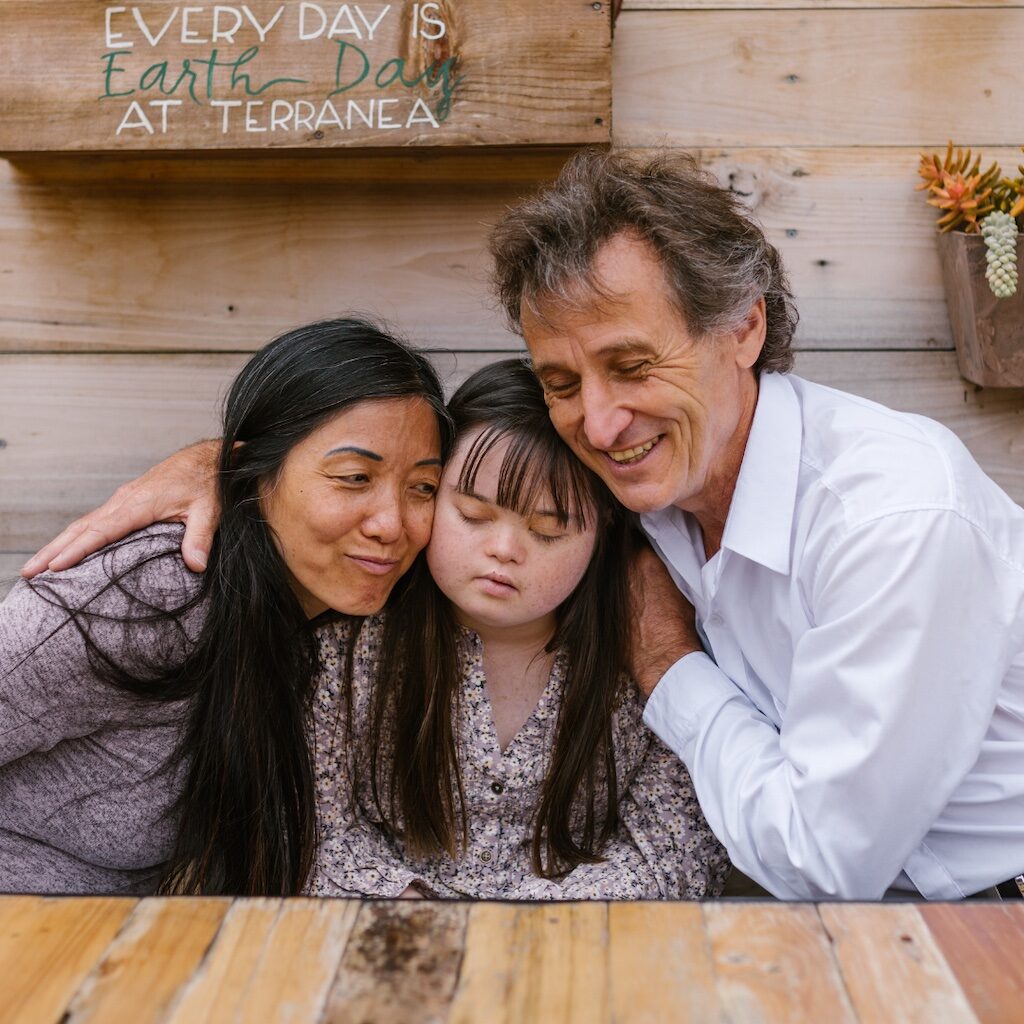
A man and a woman hug a young girl at a table
Hug

You (as parents) often describe yourselves as being under constant pressure and stress when looking after your children and young people with Special Educational Needs and Disabilities (SEND). You may find going out to do the simplest of tasks a challenge. And you will try to avoid social situations out of fear and anxiety. One of the most important factors to you is having like-minded people who understand your position as a parent with a young person with additional needs. Let’s look at some of the challenges you face and how I can support you and your family.

1. Challenging behaviour and going out to the shops

When your child displays challenging behaviour and won’t go into a shop without buying a toy that they insist on having, it can be tough on your family. You see people around you staring as you try to manage the situation. They do not understand the pressures you face, or that the simplest of tasks are a huge challenge.

I can support you by giving strategies to use when out and about. I know that using visuals is important for your child. They may not understand or take in language when they are in a heightened state of anxiety or feeling overwhelmed. You could print pictures of the places you’re going to and put them on an easily accessible chain. Then you could use that chain when out and about at the shops. You may want to introduce a visual timetable at home. That way your child or young person understands where they are going. This may lessen their anxiety and subsequent behaviour.

2. Your child is not able to communicate their needs to an unfamiliar communication partner

When your child has difficulty communicating to an unfamiliar person it can be hard to manage. You feel yourself explaining your situation repeatedly. I can provide your child with individualised strategies or communication aids which support your child to communicate with both familiar and unfamiliar communication partners. We’ll work together to find which communication methods work in different situations and how your child will use these to help their independence.

3. Being overwhelmed

Your child or young person may easily be overwhelmed which may contribute to behaviour changes. I’ll work with your family to understand what the behaviour means, looking at what happened before and what happened afterwards. We’ll not only look at the behaviour but at the environment as well. This can inform how you can support your child or young person in the future, to reduce sensory stimuli (if needed) and for them to feel emotionally regulated.

4. People avoid engaging with you

One of the hardest things as a parent is for others to avoid you. You see them crossing the street because they don’t know what to say to you. All you want is them to accept you, to maintain your identity as a person and not as a SEND parent. I can support you emotionally. I can give you advice on local support networks where you can find other parents in a similar situation.

We know the stresses that being a parent with a child with SEND comes with. Please know I am always here to support you, to find solutions so that when you’re next out and about. Your experience will be a little easier and you’ll feel less isolated.

Improve your child’s communication, confidence, reduce overwhelm and feel supported here.


Find a speech and language therapist for your child in London. Are you concerned about your child’s speech, feeding or communication skills and don’t know where to turn? Please contact me and we can discuss how I can help you or visit my services page.

1

Similar Posts

  • Tele-Speechtherapy: Online, connected, and highly effective

    A different kind of therapy. Online, connected, and highly effective

    When parents first enquire about speech and language therapy, many assume it will happen face-to-face, in a clinic room, with a therapist sitting across from their child.

    So when therapy is offered online, it’s natural for questions to arise:

    Can this really work? Will my child engage? Will progress be slower?

    This short video offers a glimpse into what online therapy can look like: calm, interactive, relationship-based, and surprisingly effective.

    Online therapy is not ‘less than’ in the right circumstances

    Teletherapy is not suitable for every child in every situation. However, for many school-aged children, particularly those who enjoy conversation, technology, and shared activities, online therapy can be an excellent fit.

    The child you see in this video is around eight years old and was supported for a persistent lisp. Sessions were primarily online, with the occasional in-person appointment when helpful.

    What made the difference was not the screen. It was the combination of engagement, support, and consistency.

    Parent involvement changes everything

    One of the greatest strengths of online therapy is the way it naturally invites parents in.

    In this case, parents regularly joined the video sessions:

    • Listening in
    • Taking part when appropriate
    • Learning how to support practice gently between sessions

    This meant that therapy didn’t stay ‘on the screen’. Strategies carried over into everyday conversation, making progress faster and more meaningful.

    Speech sound therapy, including support for lisps, relies heavily on awareness, feedback, and confidence, all of which can be supported very effectively at home with the right guidance.

    Therapy through a screen can still be deeply relational

    A common concern is whether connection can truly be built online.

    In reality, many children feel more relaxed in their own home environment. They are often more willing to talk, experiment with sounds, and reflect on their speech when they feel comfortable and supported.

    Online sessions allow:

    • Shared focus and conversation
    • Clear visual feedback
    • Real-life practice in a familiar setting
    • Immediate parent support

    For some children, this actually enhances engagement rather than limits it.

    Real progress, real outcomes

    Over the course of approximately 12 online sessions, alongside a small number of in-person appointments, this child achieved resolution of their lisp.

    Progress was steady, positive, and confidence-building. Importantly, the child remained motivated and proud of their achievements throughout the process.

    While every child’s journey is different, this example highlights what is possible when:

    • The child is ready
    • Parents are involved
    • Therapy is tailored and collaborative

    If you’re considering online therapy

    If you’re unsure whether teletherapy could work for your child, it’s worth remembering that effective speech and language therapy is less about the room you’re in, and more about:

    • Relationship
    • Understanding
    • Consistency
    • Carryover into daily life

    For many families, online therapy offers flexibility, accessibility, and excellent outcomes especially when parents are active partners in the process.

    If you’re at the start of your child’s speech journey and wondering whether online therapy could be the right fit, I’m always happy to talk it through. Sometimes clarity begins with simply understanding what therapy can look like

    Teletherapy: Frequently Asked Questions

    Is online speech and language therapy really effective?

    Yes. For many children, particularly school-aged children, online therapy can be highly effective. Progress depends far more on engagement, consistency, and support than on physical location.

    What age does online therapy work best for?

    Teletherapy often works well for children from around six years and up, especially those who can attend to a screen, enjoy conversation, and follow simple instructions. That said, suitability is always considered individually and often a supportive adult is needed to help guide the child through the activities.

    Can speech sound work (such as a lisp) really be done online?

    Absolutely. Speech sound therapy relies on clear visual feedback, listening skills, and practice all of which can be supported very effectively online. Many children respond particularly well when practising in their own home environment.

    Do parents need to be involved in sessions?

    Parental involvement is strongly encouraged. Parents may sit in, join parts of the session, or support practice between appointments. This involvement often leads to quicker progress and better carryover into everyday speech.

    Will my child still build a relationship with the therapist?

    Yes. Strong therapeutic relationships can and do develop online. Many children feel more relaxed and confident communicating from home, which can actually enhance connection and learning.

    Is online therapy suitable for every child?

    Not in my experience. Some children benefit more from in-person support, or a combination of online and face-to-face sessions. A discussion and initial assessment help determine the best approach for each child.

    Sonja McGeachie

    Highly Specialist Speech and Language Therapist

    Owner of The London Speech and Feeding Practice.


    Health Professions Council registered
    Royal College of Speech & Language Therapists Member
    Member of ASLTIP

    Find a speech and language therapist for your child in London. Are you concerned about your child’s speech, feeding or communication skills and don’t know where to turn? Please contact me and we can discuss how I can help you or visit my services page.

    3
  • · ·

    AAC Systems and Speech and Language Development

    Introduction

    I see a lot of minimally speaking or non-verbal children in my practice. Some children are autistic and others are severely challenged with motor planning and some are both. Some children are simply delayed in their spoken language for reasons that we don’t quite know yet.

    Regardless of the causes, what is always apparent pretty quickly is that apart from the odd gestures or Makaton signs (mainly ‘more” ‘finished’ and “biscuit) we don’t have a robust alternative for speech in place. Instead, what we often have is a child with lots of frustration and tantrums and some behaviours we really don’t want like: hitting, biting, pushing, grabbing and often throwing… There are others, too many to mention, but we don’t enjoy watching our children in these states. And we are often fearful of what might happen next if we don’t find a way to calm our child.

    Fear not

    In my work, before I get to offer an alternative means of communication, I often have to work with a fair amount of resistance on the parents’ side as parents tend to feel that allowing such a system into their lives will prevent their child from speaking. They fear that their child will so enjoy pressing those buttons that they will become lazy and not talk at all.

    I totally get it!

    Parents often feel overwhelmed by the task of getting their own heads round how to use AAC, either in paper form or a computerised system. This can be a great turn-off for lots of people who feel they are not very “techy” – like myself actually! Indeed, it is true to say that I resisted operating in this field for a long time as I didn’t feel able to navigate electronic devices. But fear not. Truly, most systems are very user-friendly. The support is great. And I have managed to become quite proficient in one or two of these systems, through using it daily. It really is as simple as that.

    Alternative and Augmentative Communication (AAC)

    There is plenty of research on the efficacy of Alternative and Augmentative Communication (AAC). It is now very well understood and proven that, once we introduce our child to a good, attractive way of communicating that they can actually do, in time children who can speak will speak. Speaking is more effective than any AAC system. It is more versatile, more fun, and when human beings have discovered how to speak, most will do so in favour of any other system.

    Many children and adults, for many reasons, were never going to speak an awful lot, or with great difficulty. Or they were not going to like to speak. Or they were going to like to speak some times but not other times… And for all those people an AAC system is invaluable and a wonderful resource.

    Neuro-diversity affirming means that we do not impose one system of communication on our children (speaking with our mouth) only because it is the one we are using and most people we know too.

    Of course, we want the best for our children, and we want them to have the easiest and most straight forward existence on Earth. Of course we do. Speaking with our mouth does help with that. But we must come to understand that not all children and people feel like that and they struggle to use their mouth for talking.

    Personal experience

    I have difficulties understanding this myself, I will be very honest here. And I will say that – shoot me down in flames SLT fraternity – but I am learning to accept that using an AAC system proficiently is a very good alternative for when speech is not coming. I am learning to accept that some people are perfectly able to speak, and might do so but not always and only when conditions are right. I came into the profession as a speech therapist with the idea that I would help anybody that came to me to speak with their mouth. But I have changed my stance on that and now am happy to help anybody that comes to me to communicate most effectively with whatever works for them. I will always try for speech if I can … Just because it’s easiest!

    Acceptance

    Now I will equally celebrate a child pointing to a symbol or making a sign for something. It is a fantastic moment when it happens for the parents and me and the child! And we can always hope for more speech to come as we go. Nothing wrong with our aspirations, is there?

    The basic premise is this: accept any mode of communication as valid, as long as your communication partner understands what it means. Don’t require individuals to repeat themselves in another modality. Do model the response in the modality you are trying to teach. So, a child can point to a symbol and I will respond with speaking (with my mouth) but I will also respond by pointing to a symbol because that way I am signalling that both are ok and that I have understood and am encouraging the person to say some more.

    Here is some research;

    Binger, C., Berens, J., Kent-Walsh, J., & Taylor, S. (2008) The effects of aided AAC interventions on AAC use, speech and symbolic gestures. Seminars in Speech and Language, 29, 101-111.

    Sennott, S.C., Light, J., & McNaughton, D. (2016). AAC modelling intervention research review. Research and Practice for Persons with Severe Disabilities, 41, 101–15.

    Dada, S., & Alant, E. (2009). The effect of aided language stimulation on vocabulary acquisition in children with little or no functional speech. American Journal of Speech-Language Pathology, 18, 50–64.

    Contact me if you would like your child to have neurodiversity affirming speech and language therapy.


    Find a speech and language therapist for your child in London. Are you concerned about your child’s speech, feeding or communication skills and don’t know where to turn? Please contact me and we can discuss how I can help you or visit my services page.

    0
  • ·

    Correcting a lisp

    Correcting A Lisp

    This is a surprisingly common speech error and it can be corrected really well in my experience. I have helped lots of children of all ages learn how to control their tongue movements and produce clear, sharp /S/ sounds and good /SH/ sounds.

    Initial consideration

    There are some factors which need to be considered before we can dive into therapy proper and these are they, in a nutshell:

    1. The student is not currently displaying negative oral habits such as thumb sucking or excessive sucking on clothing. This is because thumb sucking exerts pressure on the teeth and therefore can, over time, push teeth out of their natural order/position.
    2. The student does not have a restricted lingual frenulum or tongue tie which can cause at times restricted movements of the tongue (pending on how tight the frenulum is attaching the tongue to the base of the oral cavity); equally a labial frenulum or lip-tie can restrict lip movement and therefore physically restrict good speech sound production.
    3. The student does not have enlarged tonsils as they can sometimes push a tongue forward and also cause open mouth posture and open mouth breathing.
    4. The student’s motivation to change their speech pattern is high. (this is an important factor though with younger students I can get round this with a lot of fun games and good parental involvement!)

    When I do an Oral Assessment of my student these are the first factors I want to look at and consider. Often I will refer to other agencies such as Orthodontists, dentists or ENT specialists to advise and help with some of these factors before we can get going. However, there are strategies that we can work on almost straight away.

    Most of my Lisp students present with an open mouth posture: that is where the student has their mouth always slightly open for breathing. Over time the tongue starts to fall forward and rests on the front teeth or the bottom lip instead of finding a comfortable resting place either at the alveolar ridge (the bumpy spot behind the upper front teeth) or, alternatively, resting at the bottom of the mouth behind the lower front teeth.

    Another common problem is that the tongue is not moving independently from the jaw and so is reluctant to pull back or lift up inside the mouth as the tongue is guided in movement by the jaw.

    Combine those two factors and your tongue is not pulling back, or lifting up or doing very much at all without the jaw moving as well. This makes for unclear speech sounds, especially all the sounds we make at the front with our tongue or with our lips: /B/ /P/ /L/ /N/ and of course /S/ and /SH/ are particularly hard to make. We often also struggle with the /Y/ sound so ‘LELLOW’ instead of ‘yellow’.

    Do not fear!

    But no fear, these problems can be treated over time for sure! We often start with lip, tongue, and jaw exercises that help to move the tongue independently from the Jaw, our student learns that the tongue is a muscle and can be trained to do amazing acrobatic things in the mouth! WOW! It can actually pull back, lift up, and come down again all on its own!

    We work on breathing, holding our breath for a bit then pushing it out and then holding it again.

    And when it comes to the actual /S/ sound I often try and go a NEW route bypassing the Snake-Sound route if that is what had previously been tried and failed so that we can create completely new sound patterns in our brain and think about our sounds in a completely new way.

    We then work on producing the sound /S/ on its own for a bit, at the end of words, then on either side of complimentary sounds, for instance : ‘EASY” – the sound patterns here are EEE-S–EE : the /EEE/ sound is complimentary to the /S/ sound as the tongue is at the right hight for the /S/ already once you have it in place for /EEE/ -……see?! EASY!

    And gradually we work towards saying the /S/ sound clearly at the front of short words, then phrases and then sentences.

    The process takes some time and it depends on how ready the student is. This varies of course hugely so I can never promise the exact number of sessions we will take to get that Lisp fixed. A lot depends on home practice in between sessions, and this is of course crucial to all therapy! Every day 15-20 mins practice is a good average time to aim for and when this is done it shortens the therapy block drastically.

    I always give plenty of home work so there is never a chance of it getting boring or there being “nothing to do”!

    Do contact me. I really enjoy working with this type of student and get a great kick out of FIXING THAT LISP!


    Find a speech and language therapist for your child in London. Are you concerned about your child’s speech, feeding or communication skills and don’t know where to turn? Please contact me and we can discuss how I can help you or visit my services page.

  • ·

    Principles of motor learning in Childhood Apraxia of Speech (CAS)

    We use powerful motor learning principles to help children with CAS (Childhood Apraxia of Speech) learn how to produce better, clearer speech sounds in words, phrases and sentences.

    What are these principles?

    Principle 1: MASSED PRACTICE

    This is where you see a child for lots of sessions in a shorter period of time, so for instance six weeks of three times weekly for 30 minutes.

    This leads to motor performance or automaticity.

    Principle 2. DISTRIBUTED PRACTICE

    This is what I use, as most of my clients are not able to come and see me that often on a weekly basis. It is hard to travel in London and life is hectic. So I favour one session a week over say a term or two terms and a session is usually 45 minutes long.

    This leads to improved Motor Learning and good generalisation.

    During either Massed or Distributed Practice, we choose between 4 variables:

    Principle 3: Constant vs Variable

    Principle 4: Blocked vs Random

    To explain:

    Constant Practice is where we repeat the practice of a small handful of target words.

    We practise the same target sound in the same word position, e.g. at the beginning of a word: ‘bee’, ‘bye’, ‘bow’, ‘baa’ or ‘key’, ‘car’, ‘cow’, ‘Kaye’ etc.

    We keep the rate, pitch and intonation constant.

    Variable Practice is where we vary the rate, volume, pitch and intonation of the targets

    We use a larger number of sounds, and words that are motivating to say for the child.

    For example, if a child loves Peppa Pig then I might choose the words: ‘Peppa’, ‘Daddy Pig’, ‘George’, ‘Mummy Pig’ and a couple of other favourite characters. My child might struggle with a number of sound sequences there but we will target them one by one.

    We can also select simpler words like ‘cape’ and ‘cake’ or ‘tick’ and ‘tip’.

    Blocked Practice is where we practise one target word for say five minutes then we move to another target word for the next five minutes and then we revert back to the first target word again and so on, so blocks of practice.

    Random Practice means we practise several target words at the same time.

    How do I decide on what to use?

    Good question!

    I always opt for distributed practice (weekly for up to 45 minutes).

    Within that, I tend to find it most successful to start out with constant practice when a child is finding a certain sound sequence really hard and we need to just ‘nail it’. Bearing in mind I only pick sounds that my student can actually make in isolation, so we are not working on articulation! (where we focus on trying to elicit single sounds correctly – or even at all sometimes) Here in CAS work, we are working with sounds the student can make but is having trouble to add together, into a sequence that is needed to make a word sound right.

    As soon as I feel we have some traction I will go to variable practice, i.e. I pick words that are either funny or interesting for the child and it can be a slightly larger number.

    I tend to use blocked practice in the beginning or when working on vowels. That’s because it is more important we get our vowels right. They carry a word and are very important for overall speech intelligibility. Once we are on a roll, I tend to go more for random practice.

    Example

    Here in the video clip, we try and work the /e/ vowel in short words likes ‘bell’, ’fell’, ‘dell’, ‘sell’, ‘smell’ and I am using an AAC device to give a child’s voice as auditory feedback as well as using the PROMPT approach to help my student shape his vowels.

    So this is:

    1. Distributed (1 x week for 45 minutes)
    2. Constant – we are practising the /e/ vowel in the same position in six different words
    3. Blocked – we did this: several repetitions of each word and after the sixth we moved to another sound, and then later we came back to this.

    Please feel free to contact me if your child has speech sound difficulties. It is my passion. I love supporting children with apraxia.

    Sonja McGeachie

    Early Intervention Speech and Language Therapist

    Feeding and Dysphagia (Swallowing) Specialist The London Speech and Feeding Practice

    The London Speech and Feeding Practice


    Find a speech and language therapist for your child in London. Are you concerned about your child’s speech, feeding or communication skills and don’t know where to turn? Please contact me and we can discuss how I can help you or visit my services page.

    1
  • · ·

    Support your autistic child’s communication by learning the stages of Gestalt Language Processing

    If your child is using echolalia and/or has a diagnosis of autism, then your child’s way of processing language is most likely different to the classic way children typically learn language. We call this process Natural Language Acquisition or Gestalt Language Processing.

    Speech Therpaist in London
    Step by Step guide to Gestalt Learning

    Let’s explore the following stages of Gestalt Processing:

    Stage 1: communicative use of whole language gestalts

    (e.g., “let’s get out of here”)

    Children and young people in this stage use echolalia. They need to hear more gestalts or scripts. So, your job is to model, model, model and to use functional language that your child can repeat back.

    Stage 2: mitigated into chunks and re-combining these chunks

    (e.g., “let’s get” + “some more”) and (e.g., “let’s get” + “out of here”)

    This is when you take parts of gestalts or phrases and then combine it with other parts.

    Stage 3: further mitigation (single words recombining words, formulating two-word phrases)

    (e.g., “get…more”)

    They are going beyond their gestalts. Furthermore, they may begin to label different objects.

    Stage 4: formulating first sentences

    (e.g., “let’s get more toys”)

    You may see more grammatical errors during this phase as they are creating unique sentences. Please don’t worry about this, it means they are playing and experimenting with language. As communication partners, you could model the correct form of the sentence.

    Stages 5 & 6: formulating more complex sentences

    (e.g., “how long do you want to play inside for?”)

    You can see that language learning is a process, that is trialled and tested, used in different contexts for children to be able to learn and use language appropriately.

    My next blog will give you activities ideas and how you might use them specifically with a Gestalt Language Processor.

    Remember early intervention is vital. So, if you have any concerns, please seek the advice of a Speech and Language Therapist.

    Contact me, Specialist Speech and Language Therapist Sonja here.

    Find a speech and language therapist for your child in London. Are you concerned about your child’s speech, feeding or communication skills and don’t know where to turn? Please contact me and we can discuss how I can help you or visit my services page.
  • · · ·

    The quiet power: Why silence and responsiveness boost communication in children with delays

    The quiet power: Why silence and responsiveness boost communication in children with delays
    Supplied by Sonja McGeachie, Practice Owner

    As parents and caregivers, our natural instinct when interacting with a child, especially one who struggles with communication, is often to fill every silence. We might ask lots of questions, offer constant commentary, or try to prompt him or her to speak. Our hearts are in the right place. We want to help him or her communicate! However, for children with language delays or those on the autism spectrum, this well-intentioned approach can sometimes inadvertently create more pressure and fewer opportunities for them to truly initiate and develop their own communication skills.

    What if I told you that one of the most powerful tools in your communication toolkit is often silence? And that responding to your child, rather than always initiating, can unlock incredible potential?

    Let’s explore why these seemingly simple strategies are so profoundly beneficial.

    The unspoken benefits of silence

    In our fast-paced world, silence can feel awkward, but for a child who is processing language differently, it’s a gift:

    1. Time to process: Children with language delays often need more time to process what they hear and to formulate their own thoughts or responses. When we bombard them with words, we don’t give their brains the crucial milliseconds they need to catch up. A pause of 5–10 seconds can make all the difference.
    2. Reduces pressure: Constant questioning or prompting can feel like a test. Silence removes this pressure, creating a more relaxed environment where the child feels safe to communicate without fear of being ‘wrong’ or rushed.
    3. Creates opportunity to initiate: If you’re always talking, when does your child get a turn to start the conversation? Silence opens up a space for him or her to initiate, whether it’s through a sound, a gesture, eye contact, or a word. This is vital for developing spontaneous communication.
    4. Encourages independent thinking: When a child is given space, he or she is more likely to try to figure things out himself or herself. This fosters problem-solving skills and reduces reliance on adult prompts.
    5. Prevents overwhelm (especially for ASD): Many children on the autism spectrum can be sensitive to auditory input. A constant stream of language can be overwhelming, leading to withdrawal or challenging behaviours. Strategic pauses can help them regulate and engage more effectively.

    The power of responding (not just initiating)

    Think of a tennis match: if only one person serves, it’s not a game. Communication is a rally, a back-and-forth exchange. When you primarily respond to your child’s communication attempts, you’re teaching him or her the rhythm of conversation:

    1. Follow the child’s lead: This is a cornerstone of effective language intervention, famously championed by programs like Hanen’s ‘It Takes Two to Talk’. When you respond to what your child is already interested in or doing, the interaction becomes immediately relevant and motivating for him or her.
    2. Validates his or her attempts: Every sound, gesture, glance, or partial word your child offers is a communication attempt. By responding to it, you’re telling him or her, ‘I see you. I hear you. Your communication matters.’ This builds immense confidence and encourages him or her to try again.
    3. Builds confidence and motivation: When a child feels understood and successful in his or her communication, he or she are more likely to communicate more often. It’s a positive feedback loop.
    4. Teaches turn-taking naturally: By taking your turn after his or hers, you model the natural flow of conversation. He or she learns that communication is a shared activity, not a one-sided lecture.
    5. Makes interactions meaningful: When you respond to his or her interests, you’re talking about things that are inherently motivating to him or her. This makes the language you use more easily understood and remembered.

    Practical strategies for parents: Observe, Wait, Listen (OWL)

    The Hanen Centre’s ‘Observe, Wait, Listen’ (OWL) strategy perfectly encapsulates these principles:

    • Observe: Watch your child closely. What is he or she looking at? What is he or she doing? What sounds is he or she making? What gestures is he or she using?
    • Wait: After you’ve observed, wait. Give him or her time. Resist the urge to jump in with a question or comment immediately. Count to five (or even ten) in your head. This silence is an invitation for him or her to communicate.
    • Listen: When he or she does communicate (in any way!), listen intently. Try to understand his or her message or intent.

    Beyond OWL – More tips:

    • Reduce questions, increase comments: Instead of ‘What’s that?’ try ‘Oh, a big red ball!’ or ‘The car is going fast!’ Comments provide language models without demanding a verbal response.
    • Expand, don’t just prompt: If your child says ‘Car’, you could respond with ‘Yes, That’s a big car!’ or ‘It’s really fast!’ You’re building on his or her communication with a slightly richer language model.
    • Create opportunities for communication: Place desired items slightly out of reach. This creates a natural reason for your child to communicate his or her wants (e.g., reaching, pointing, vocalising).
    • Respond to all communication: Don’t just wait for words. If your child points, look where he or she is pointing and comment. If he or she makes a sound, imitate it or respond with a related word.

    In summary

    Embracing silence and prioritising responsiveness might feel counterintuitive at first, especially when you’re eager for your child to talk. However, these powerful strategies create a nurturing, low-pressure environment that encourages spontaneous communication, builds confidence, and truly meets your child where he or she is. By giving your child the space and the meaningful responses he or she needs, you’re laying a strong foundation for his or her communication journey.

    Try incorporating these ‘quiet powers’ into your daily interactions and watch your child’s communication blossom.

    Sonja McGeachie

    Highly Specialist Speech and Language Therapist

    Owner of The London Speech and Feeding Practice.


    Health Professions Council registered
    Royal College of Speech & Language Therapists Member
    Member of ASLTIP

    Find a speech and language therapist for your child in London. Are you concerned about your child’s speech, feeding or communication skills and don’t know where to turn? Please contact me and we can discuss how I can help you or visit my services page.

    1