
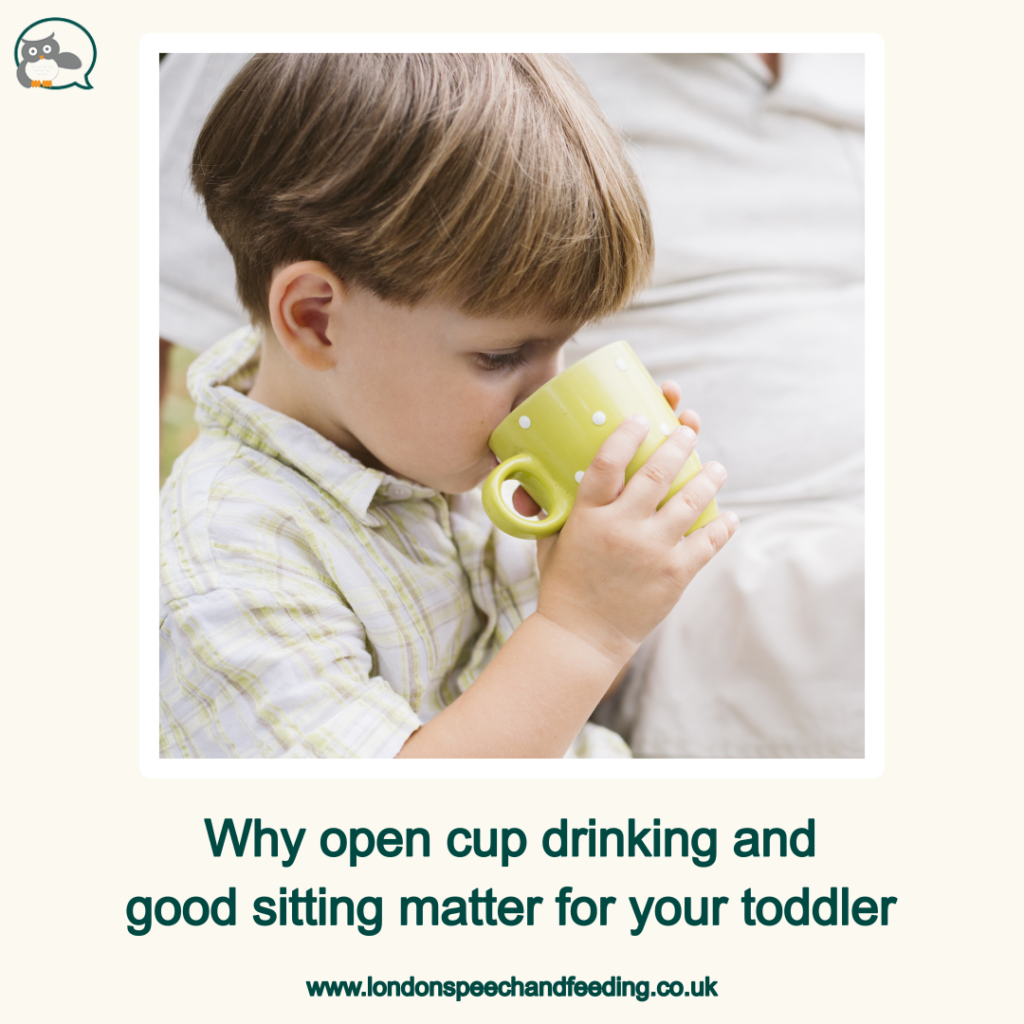
Why open cup drinking and good sitting matter for your toddler
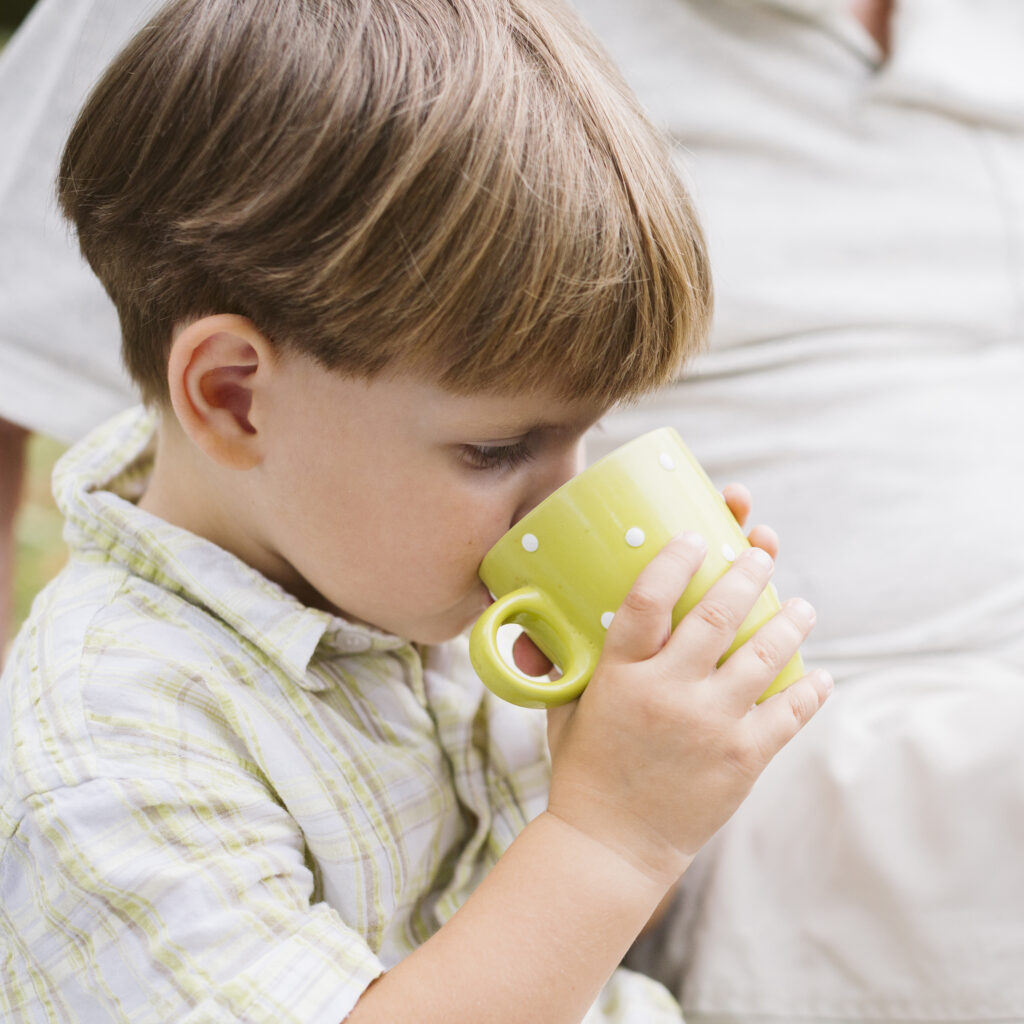
When your baby reaches around 12 months, there is a lot going on developmentally. They are learning to walk, communicate, feed themselves and become increasingly independent. One small but important milestone that can sometimes get overlooked is learning to drink from an open cup.
Many toddlers continue to have milk from a bottle well beyond their first birthday, and parents are often understandably reluctant to take it away. The bottle may be familiar, comforting and convenient, particularly at bedtime.
But moving towards an open cup is not simply about changing the way your child drinks. It is part of their development of oral-motor skills, feeding independence and mealtime development.
And there is another piece of the puzzle that is often overlooked: how your toddler is sitting while they eat and drink.
The way the body is supported can make a real difference to what the mouth is able to do.
Why introduce an open cup from around 12 months?
Babies can begin learning to drink from an open cup much earlier than many parents realise. By around 12 months, most children should be given regular opportunities to practise drinking from an open cup alongside other suitable drinking vessels.
An open cup encourages your toddler to learn a different pattern of drinking from the sucking pattern they have used with a bottle.
With an open cup, your child needs to:
- lean towards the cup and control its position
- grade how much liquid enters the mouth
- use their lips to help control the liquid
- coordinate breathing and swallowing
- develop increasingly mature tongue and jaw movements
- learn to take a drink without relying on a teat or nipple.
These are useful skills for developing efficient eating and drinking.
This doesn’t mean that a toddler who still has a bottle at 14 or 18 months has somehow ‘missed their chance’. Children develop at different rates, and there is always an opportunity to work towards new skills.
However, if a bottle remains the main or only way a child drinks for a long time, there can be fewer opportunities to practise these more mature drinking skills.
What are the pitfalls of staying with a bottle for too long?
The occasional bottle is not the issue. The concern is when a toddler continues to rely heavily on a bottle and therefore has little reason or opportunity to develop other drinking skills.
A bottle encourages a sucking pattern which is appropriate for infancy. As children mature, we want to see increasing use of their lips, tongue, jaw and facial muscles in more sophisticated ways.
Long-term bottle use can also make the transition to an open cup more difficult simply because the child has become very accustomed to the bottle.
There can also be practical considerations around dental health, particularly when milk is offered frequently throughout the day or overnight.
For many toddlers, the bottle has also become associated with comfort, sleep or emotional regulation. This can make giving it up feel like a very big change for the whole family.
So rather than thinking, ‘The bottle has to disappear tomorrow’, think:
‘How can I gradually increase opportunities for open-cup drinking?’
Offer the open cup regularly at meals. Let your toddler experiment. Expect spills. Keep the amount of liquid small initially and provide plenty of encouragement.
Learning to drink is a skill. And skills need practice.
But what has sitting got to do with drinking?
Quite a lot!
When we think about feeding, we naturally tend to focus on the mouth. We watch what the tongue is doing, whether a child chews, whether they cough or gag and what foods they accept.
But feeding is a whole-body activity.
Your child needs a stable body position before they can use their mouth efficiently.
Think about trying to drink from a cup while sitting on a wobbly stool with your feet dangling in the air. You would probably find it much easier if your body was well supported.
The same principle applies to toddlers.

A well-designed highchair such as a Tripp Trapp chair can provide a stable base when it is correctly adjusted for the individual child. Ideally, your toddler should have:
- hips well supported
- knees comfortably bent
- feet resting firmly on a footplate
- a stable pelvis and trunk
- the table or tray at an appropriate height
This gives your child a solid foundation from which to move.
And that matters because stability in the body supports movement and control in the mouth.
Feet supported = better feeding?
I sometimes hear parents say, ‘He doesn’t need the footrest don’t worry about it (as I crouch down with my Allenn key to adjust the Tripp Trapp chair) but I always explain it is very important to have his feet supported. Dangling legs can make it much harder to maintain a stable sitting position.
When the feet are supported, your toddler can push gently through their feet and stabilise their pelvis and trunk. This can help them maintain a more organised position while eating and drinking.
They can then devote more attention to the job in front of them:
looking, reaching, grasping, chewing, swallowing and drinking.
This is particularly important for toddlers who are developing their chewing skills or who find mealtimes physically demanding.
A stable body supports a busy mouth
Eating involves an extraordinary amount of coordination.
Your toddler is managing food in their hands, bringing it to their mouth, biting, chewing, moving food around with their tongue, forming a bolus and swallowing, often while simultaneously looking around, communicating and interacting with you.
Drinking from an open cup adds another layer of coordination.
Good postural support doesn’t teach a child to drink from a cup, but it can give them a much better physical foundation from which to practise the skill.
This is why, when I assess a toddler’s feeding, I don’t just look inside the mouth.
I also look at how the child is positioned.
Making open-cup drinking part of everyday life
You don’t need a complicated programme.
At meals, offer a small amount of water in an open cup. You can help your toddler hold the cup initially, tipping it gently towards their lips and allowing them to control the drinking as much as possible.
Some mess is completely normal!
You might also use a small, lightweight open cup that is easy for little hands to manage.
And remember that the goal is not to make every drink perfect. The goal is to give your child regular, positive opportunities to practise.
If your toddler is struggling with drinking, frequently coughing or choking, refusing cups, relying heavily on a bottle, or experiencing difficulties with chewing and eating, it is worth seeking professional advice from a Speech and Language Therapist with expertise in paediatric feeding.
The bigger picture
Open-cup drinking and good sitting are not two unrelated developmental skills.
They are part of the same picture.
A stable body provides a foundation for skilled movement. Skilled movement supports feeding. And feeding skills develop through practice and opportunity.
So as your toddler approaches and moves beyond their first birthday, think beyond simply asking, ‘How much milk are they drinking?’
Think about how they are drinking, how they are sitting, and what opportunities they have to develop the skills they will need as they grow.
And if you have a little one sitting beautifully at the table in a well-supported Tripp Trapp chair, remember: you’re not just creating a comfortable seat.
You’re creating a stable foundation for eating, drinking, learning and growing.
Do get in touch with me. I would love to hear from you and help your little one develop good sitting and drinking habits.

Sonja McGeachie
Highly Specialist Speech and Language Therapist
Owner of The London Speech and Feeding Practice.


Find a speech and language therapist for your child in London. Are you concerned about your child’s speech, feeding or communication skills and don’t know where to turn? Please contact me and we can discuss how I can help you or visit my services page.