Why teletherapy is great

Did you know that you don’t have to see a therapist with your child present to have improved communication? For younger children, evidence suggests that regular tailored interaction with parents/carers is as good as seeing a Speech and Language Therapist, with their advice followed. Often your child will respond better because they are in familiar surroundings with their favourite toys present. By learning the techniques I teach you in our weekly virtual zoom sessions, you can support your child’s language and communication every single day. This can be as good and sometimes even better than coming into clinic once a week. You’re embedding and generalising what your child is learning into everyday situations. This is important for your child’s communication development.

Speech Therpaist in London

It takes two to talk – the Hanen approach

The Hanen approach is about improving your child’s communication by tweaking your own communication style as parents and carers. It looks at your strengths and weaknesses in your communication with your child. You film a session playing with your child, and with a trained Hanen Speech and Language Therapist you review the video identifying strengths and weaknesses in your communication on a regular basis for a set period. For example, you may give your child plenty of time to answer questions, but you might identify from the video that you ask too many questions.

The Hanen approach works well online because:

  • Parents and carers can concentrate on the information they are given without interruption from their child
  • It is a process; you’re not told what’s right and wrong. It’s a process of discussion, reflection, and understanding by analysing the video footage
  • This method can be applied to daily activities, so together we can think about how it can be individualised specifically for your family situation
  • You can carry out the techniques in your own time when your child is well, calm, and willing to engage.

Online therapy is also ideal for older children (aged 7+) who have difficulties with speech, word-finding, sequencing, or executive functioning (planning and processing information) skills. You can see and hear the therapist and gain knowledge from their valuable expertise whilst saving you time, money, and energy resources. In addition, children tend to love technology, so the online resources are motivating and capture their attention.

Remove the barriers and start your online therapy journey today.

Contact me to learn more.


Sonja is a highly knowledgeable and experienced speech and language therapist. Don’t hesitate to contact her, especially if you are concerned that remote/zoom sessions aren’t as effective as ‘real life’. We have found quite the opposite! She has worked with us on Hanen and now troubleshoots when problems come up. This is such a wonderful way of working. She acts as your indispensable guide (a speech and language fairy godmother, if you like) but make no mistake, it’s your application of what she teaches you, on a day-to-day basis that results in the most change.

P. Goeldner


Find a speech and language therapist for your child in London. Are you concerned about your child’s speech, feeding or communication skills and don’t know where to turn? Please contact me and we can discuss how I can help you or visit my services page.


Similar Posts

  • ·

    Succeed with lisps at London Speech and Feeding

    A child is on the right-hand side, touching their lips and holding a mirror. They're facing an adult on the left hand side, also holding their hand to their lisps.
    Mirror game

    You may notice that your child or young person finds certain sounds difficult to produce. With a lisp, the sounds /s/ and /z/ are more problematic. You may notice that your child’s speech is affecting their confidence. They are quiet, and the teacher reports they don’t engage in classroom conversations. You feel it’s impacting on their social and emotional wellbeing. The good news is that with the support of a Speech and Language Therapist and the determination and motivation of your child, we can treat a lisp can.

    You feel you have so many questions and you don’t know where to begin. Let’s start by answering some of the most frequently asked questions.

    1. Is it normal for my child to have a lisp?

    It’s important to remember that we can expect a lisp in a child up until four and a half years of age.

    2. Can I do anything for my child’s lisp?

    The best approach you can take is to provide a good model. You can show the correct sound and you can talk about where in the mouth your tongue or lips are. Your Speech and Language Therapist can recommend you on what you can say.

    3. Should I wait to see if my child’s lisp resolves on its own?

    As always, early intervention is advised as producing sounds as a lisp can be more ingrained the longer your child waits for therapy. It is true that some children’s lisps resolve on their own.

    Therapy depends on many factors, one of which is deciding on whether your child is ready for therapy. It’s best to seek advice from a qualified Speech and Language Therapist about whether your child is ready for therapy. It takes motivation, determination, and practice.

    4. What should I expect from a Speech and Language Therapist when they see my child?

    Your Speech and Language Therapist will ask you as parents and carers about your child’s history. This is because they’ll want to confirm it is a lisp and no other areas of communication are affected. They may ask your child about the impact of their lisp on them (if your child is aware of their speech difficulty).

    They will then assess your child using a speech assessment. Your Speech and Language Therapist will confirm their findings and will put a plan in place with you.

    5. How will my child’s therapist fix my child’s lisp?

    • The start to fixing any sound is looking at discrimination between the sound your child is making vs the correct sound. Can your child hear the sound they should be making?
    • Your therapist may still get your child to discriminate two sounds. They will begin to work on the sound in isolation, so saying the child’s tricky sound by itself (e.g., /s/)
    • Then they will ask your child to say their tricky sound with a vowel, with a breath between the consonant and the vowel (e.g., s-oo, s-ow, s-ee, s-aa, s-ai)
    • Your child will then remove the gap between (e.g., soo, sow, see, saa, sai)
    • Your child will then be ready to move onto consonant-vowel-consonant words (e.g., sat, sit, seen, sown)
    • Your child’s therapist will tell that the next step is to produce sentences using your child’s tricky sound, /s/ in this example (e.g., Simon says silly sausages)
    • Your child is working towards generalising their ability but there are a few steps before this happens
    • Choose a context where your child can practise their talking, focusing on one sound (e.g., during 10 minutes of special time). This is an ideal environment as you can create opportunities for your child.
    • The next stage is saying the sounds correctly in general conversation
    • You’ll want your child to be less reliant on you for modelling the sound, so you’ll want to start to phase this out
    • It’s important for your child to self-correct and self-monitor. Encouraging this is the final stage to correcting your child’s lisp.

    You and your child will need to be motivated, as it’s true: practice makes perfect!

    For support on speech sound difficulties, feel free to contact me.


    Find a speech and language therapist for your child in London. Are you concerned about your child’s speech, feeding or communication skills and don’t know where to turn? Please contact me and we can discuss how I can help you or visit my services page.

    1
  • ·

    My child is not speaking yet. What can I do?

    My Child Is Not Speaking Yet What Can I Do?
    My Child Is Not Speaking Yet What Can I Do?

    SIMPLE SPEECH AND LANGUAGE THERAPY TIPS you can try out at home in daily life!

    So many new referrals come to me from parents of toddlers saying help, my little one does not speak yet, what can I do? Consider trying out those strategies, they really help:

    Increase playing with your child and try to have MORE FUN. Try and resist the urge to ‘teach’ your child. Fun activities are naturally more motivating and your child will learn new words more easily if you are both having fun together. Try and act goofy to get your child’s attention and make them laugh.

    Respect all play forms your child is interested in, not just play with typical/shop bought toys. Be a PLAY PARTNER instead of a PLAY DIRECTOR.

    My Child Is Not Speaking Yet What Can I Do?
    Go With What Your Child Is Interested In
    Go with what your child is interested in even if it isn’t that new toy you bought the other day! If you follow your child’s lead by watching him closely, you will discover what they are interested in. Then, if you wait and observe your little one he or she may try to communicate something about that favourite toy or activity.

    Use simple words and short phrases with correct grammar about your child’s interests. For example, if he gives you a toy and wants to play, use words to describe that activity, e.g. : “spinning”! “that’s spinning round and round” “wheee” “wow it’s spinning fast!”

    Your child is likely to learn the words that match activities he’s motivated and interested in.

    Show your child what words mean

    You can POINT to something as you say the word (e.g. point to a bird in the sky as you say “Look at the bird!”), ACT out what the word means (e.g. pretend to shiver as you talk about how “cold” it is), or HOLD UP OBJECT as you say it’s name (e.g. hold up your child’s coat as you say, “It’s time to put your coat on”).

    Stress key words and repeat them often. Children need to hear words several times in different situations before they really understand what they mean. Try to repeat words that are familiar to your child during everyday activities and routines. For example, you might use the word “go” when you are talking about going outside and duringva “ready steady go” game. Using the same word in different situations gives your child more information about what the word means.

    Stop asking too many questions, this is hard for adults to do as we often try to direct our children’s play.

    Respond positively to your child’s attempts to communicate, even if these attempts aren’t perfect. As children are learning about words, they sometimes attempt to say a word but don’t pronounce it correctly, or they might use an action or gesture instead of the word. When you notice your child attempt to communicate with you, respond as if he said the word. This shows him you are listening and that you understand what he is trying to tell you. It also encourages him to keep trying to communicate with you.

    Learning to say new words doesn’t happen overnight. It takes time for children to build their understanding enough that they can say a word and use it in the right situation. By using the tips above, you will give your child’s vocabulary a kickstart, and pave the way to new words.

    Do get in touch with me if you need more help. I specialise in providing individual on-line virtual coaching with parents . This is helpful and often necessary given how complex our children are and how difficult it is to acquire speech and language when for one reason or another it is not your thing!

    Find a speech and language therapist for your child in London. Are you concerned about your child’s speech, feeding or communication skills and don’t know where to turn? Please contact me and we can discuss how I can help you or visit my services page.
  • ·

    Four reasons to continue Speech and Language Therapy during the summer

    The summer holidays can be tricky for parents as there is so much to do: organising childcare, the actual holiday, and trying to have some all-important ‘me time’. Speech therapy for your little one might be the last thing on your mind. But …. If we can prioritise only a small amount of time every day then we are maximising time and finances spent thus far and can continue your child’s Speech and Language Therapy sessions throughout the summer, no problem. Have a look at this blog. We’ll take you through good reasons why you shouldn’t ignore Speech and Language Therapy sessions this summer.

    1. Building communication skills takes time

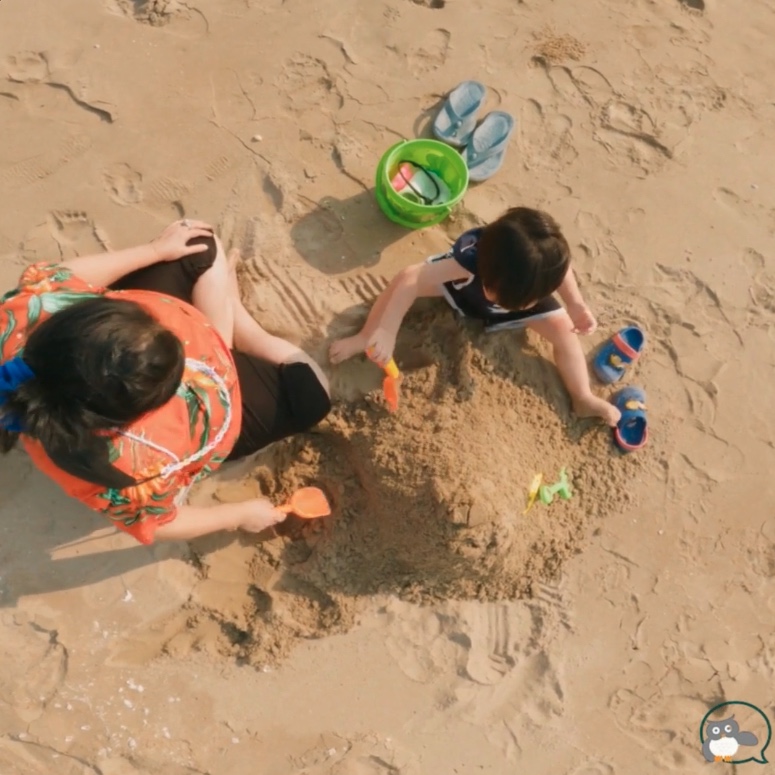
    You’ve worked so hard throughout the year to support your child’s speech, language and communication. Now is the time to continue, not to stop! You will watch your child’s communication and confidence grow and flourish over the next couple of months. All the different experiences your child will have on holiday or just even pootling about in your local park with you, or granny/nanny will help expand their capacity for learning and using language and words to communicate with you. If you have time during the summer, you can embed the skills your child has learnt into everyday life which is vital . If in doubt ask how you can use the strategies you have learned in any new environment. Together we can workshop all eventualities and make them fun and doable. There is no end of fun and opportunities with a bucket, spade and a bit of sand!

    2. Getting to know your child’s Speech and Language Therapist is vital

    Here’s a plug for regular therapy sessions: building a rapport with your child’s Speech and Language Therapist is key. If our sessions together are consistent and regular, then it will be so easy for us to develop a good rapport with your little one. Trust is key. So if sessions are infrequent and irregular it is hard for your child to build up trust with their therapist and it is hard for the therapist also to get you know your child and tailor the sessions so that they really work very well. We need to know what your child loves and what activities or toys work well; so, if sessions are missed and irregular then the process just takes longer.

    3. Goals are set and measured

    Sometimes a break is needed and that’s fine. We measure goals within a certain time frame and whilst a few weeks holiday are great for everyone, we don’t want to lose any progress your child has made. If a child does not attend sessions, progress will often diminish as consistency in therapy is key!

    4. You’ll be able to embed skills over the summer at home

    Did you know you can access Speech and Language Therapy wherever you are with our remote service? Teletherapy allows flexibility which means your child’s sessions can be wherever you are. Whilst this isn’t for everyone, it does allow regular sessions to continue. If that does not work for you then let’s talk about how we can help you transfer all the therapy goals into your holiday. You will be surprised how easy it is: lots of goals can be worked into snack times for example or bath times. You will have those wherever you are so this won’t take away your holiday fun, promise!

    Find out more about teletherapy.


    Find a speech and language therapist for your child in London. Are you concerned about your child’s speech, feeding or communication skills and don’t know where to turn? Please contact me and we can discuss how I can help you or visit my services page.

    0
  • What is FRONTING?

    Kids Speech Therapist London

    Does your child say “Dough” instead of “Go”? Or “Tea” instead of “Key”? Do you hear a /Sh/ instead of an /S/ does “see” sound more like “she”?

    We Speechies call this a Fronting Pattern which means that a sound that should be produced at the back of the throat with the back of the tongue, like K or G , is said at the front of the mouth with the tip of the tongue, like a T or a D or SH. When this happens speech can be really hard to make out because these sounds are literally everywhere in everyday sentences. Just think how many K’s and G’s we hear in a simple sentence?

    For example, I heard my little student say earlier today: “I know what game we can play in your garden? It’s the one with cones and rings and cushions! I know where it is I can get it.”

    But it sounded like:

    “I know what DAME we DAN play in the DARDEN! It’s the one with TONES and rings and TUSHIONS! I know where it is I TAN DED it.”

    If that sounds familiar to you, here is a little overview of what we can do about it:

    First up it’s always good to start with general speech sounds awareness: does a child hear syllables and intonation? Do they know words that rhyme? Can they follow or copy a simple beat with a drum? Can they listen and hear quiet sounds and loud sounds and can they copy those? Can they follow mouth and tongue movements:, for example : stick out your tongue, lick your lips, click your tongue, blow raspberries?

    Then it really helps to talk about BACK and FRONT of things and to draw attention to the back of the mouth and the back of the tongue and the front tip of the tongue and how sounds are made in the mouth. I often use a puppet to show this or a model of a mouth like this one here in the picture.

    Next we try and listen to words starting with a BACK sounds like a K or a G , and I read out a list of words with those sounds: COW, CORE, CAT, CONE, KEY etc or ARK, EEK, OAK, ACHE…

    Or GOO GUY GUM GONE

    After that we try and see if a student can actually produce a single sound like a K or a G just by itself. If they can, that’s a really great start and if they can’t I help them to produce one – over a few sessions we usually get there. We call this Sound production in isolation.

    Once a child can produce a sound correctly, on its own, we try and start working on very simple words that are really powerful like “GO”!!!!! in a motivating game or “CAR” for little ones who love a car racing track.

    Now that we have established the back sounds and are using it in short words, we can gradually re-train brain pathways and oral- motor/movement pathways to use these new sounds in many words and then short phrases. That can take time!! This is called generalisation and it is not uncommon for it to take up a whole year for fluent speech to be error-free .

    Why does it take so long? Being able to produce a correct and clear K or G sound does not mean it will be used easily. Our brain pathways are fixated or habituated to the error sound. It takes time for habits to change. A child might be able to hear the word TIGER with a G in the middle and she knows that it is not a TIDER but when saying it her tongue automatically moves forward rather than lifts up at the back. It’s a bit like a person who has a rounded back: the brain knows to stand upright and how not to slouch, but when we don’t focus on it, ooops we have slouched again because that is what we are comfortable doing and our body moves with our habit.

    It takes effort and motivation to change our movement patterns and that includes our tongue and lip patterns! We usually get there through a huge variety of games and practice. Lots and lots of repetition is key as is motivation to change.

    Parents and carers are crucial in the success of Speech Therapy!

    We need your feedback at home, the regular short and sweet exercises, the constant positive encouragement and great modelling of speech sounds. We often find that parents are tuned into their child’s error sounds and can understand them much better than anyone else. This is great of course in many ways, however, it also means that the child has less motivation to change: if mummy understands me then my world is ok.

    I will give you a short outline of what different speech therapy models I use in my practice, be it in clinic face to face or on-line in my future blogs soon.


    Find a speech and language therapist for your child in London. Are you concerned about your child’s speech, feeding or communication skills and don’t know where to turn? Please contact me and we can discuss how I can help you or visit my services page.

  • ·

    Discover how Attention Autism can support your Autistic child’s communication

    “I’ve got something in my bag, in my bag, in my bag,

    I’ve got something in my bag,

    what it is”

    You might be wondering why your Speech and Language Therapist is singing this song and then presenting items from a zipped-up bag. Let me take you through stage one of this evidence-based approach.

    There are many aims of ‘bucket or bag time’. During stage one, you are simply engaging your child’s attention (whilst also exposing them to language). It’s important to remember that you are not forcing your child to say or do anything. The idea is that the items in the bag or bucket ‘offers an irresistible invitation to learn’ (Gina Davies, 2020).

    You don’t need ‘special’ expensive toys. Use what you have at home. It might be that you have some bubbles, a wind-up toy. You might have some foil that you can roll up into a ball, or a balloon. Keep these items for ‘bucket time’. This means that your child is likely to be excited and motivated for the activity. The only stipulation is that these items must be highly motivating and must be the most exciting thing in the room. You’ll want to cover up any distractions.

    So, you have your items and your opaque zipped bag, next you’ll want to put the items into the bag ensuring the zip is closed. The zip is important as it increases suspense and excitement as your child cannot see inside. You can also comment when unzipping ‘open bag’ using the signs ‘open’ + ‘bag’ to support your child’s understanding. Your Speech and Language Therapist can help with any Makaton signs that are unknown. The idea of this activity is that the item isn’t touched by your child. This can seem a little odd or feel “mean” but there is a reason for this: we want our child to look at us as well as the object or toy. As soon as we allow our child to touch and play with that toy their attention will go to the toy alone and we won’t get JOINT attention or engagement. This is the reason why we SHOW interesting things for a brief moment and then put these items back into the bag or bucket and out comes the next item. If your child wants to grab the toy and gets upset, then they may not be quite ready for this approach.

    Next, we sing the song (as above) and unzip the bag taking out one of the items. The use of pausing is important. Pause after the song: does your child try to use gesture or sound? You can also use this opportunity to model short phrases, ideally one or two words such “it’s a spinner! Wow… so many colours”. After a couple of turns, repeat the process and pull out a different item. We tend not to sing the song each time for the next item. Just sing it at the beginning and then get on with producing the amazing, wonderful things in your bag. No hard and fast rules though, apart from “don’t let the child touch the toys”.

    The biggest factor here is that you and your child enjoy the activity together. Have lots of fun!!

    Keep up to date with our latest blogs to explore more stages of Attention Autism.

    If you need speech, language or communication support or advice, I am always here to help.


    Find a speech and language therapist for your child in London. Are you concerned about your child’s speech, feeding or communication skills and don’t know where to turn? Please contact me and we can discuss how I can help you or visit my services page.

    0
  • ·

    13 tips to support children and young people with food aversions

    When you have a picky eater it’s easy to feel on edge and that others are judging your parenting skills. It is astonishing how suddenly the world and its brother/sister are all experts on how to feed your child, even the lady in the corner shop is not shy to offer unsolicited tips and advice on your child’s nutrition intake. They will say “try this or that“, “how about these new crackers (only £1.99 special offer)” but…

    The fact is often that you are very concerned about what your child is eating. And you desperately want to give them a healthy, nutritious packed lunch but you know that it will get left, unopened, and unfinished. So, instead, you stick to the same sad soft cheese sandwich on white bread as it is at least something you know they’ll eat.

    Sensory needs can impact on eating with both individuals with and without other conditions. We need to consider all these elements:

    • taste (sweet vs. sour)
    • consistency (crunchy vs. soft)
    • temperature (hot vs. cold)
    • colour (beige vs. colourful)
    • and smell (pungent vs. mild)

    Let’s take a blueberry as an example: it can be sweet or sharp; it can be firm or mushy; it can even differ in colour. Now let’s look at a piece of cereal: it’s crunchy all the time; it looks the same. It’s very predictable, and therefore less anxiety provoking.

    Speech Therpaist in London

    Find our top tips here:

    1. Check with a medical professional that there is nothing physically wrong (e.g. gastrointestinal, or anatomical structural difficulties).
    2. For swallowing difficulties, whether confirmed or suspected, please book an assessment with a certified swallowing/feeding Speech and Language Therapist or please contact me.
    3. Does your child have confirmed or suspected allergies? If so, please contact a dietician who has experience with allergies and can advise, for example: Dr Rosan Meyer.
    4. Talk to other family members about food and their experiences of food. Perhaps there is a family tendency to be picky with eating/food avoidant. This may be important information that you can share with your clinician during the case history taking.
    5. Be patient, though this is easier said than done/felt! Know that many children need repeated exposure to food(s) before liking them, up to 14 spoons! So, take it at your child’s pace and it’s vital we don’t force them to try new foods or use bribes.
    6. You can provide opportunities to engage with food, perhaps you could cook with your child, and allow them to choose what they want to cook. For younger children try Messy Food Play – there are tons of suggestions on Pinterest for ideas on how to incorporate foods into play activities or ask your feeding-Speech and Language Therapist.
    7. You may want to talk about pictures in books that introduce new foods (e.g. The Very Hungry Caterpillar for younger children or magazines if older).
    8. You can play with toy food in a toy kitchen for little ones, or comment on supermarket adverts for young people who are older.
    9. Offer opportunities to taste new foods. You could use a toothpick for bite-sized pieces.
    10. Be sure you eat together with your child as often as you can, modelling positive eating behaviour is most important and can be really effective over time.
    11. You could ask your child to sort foods by colour or stack them on a plate.
    12. We know that Autistic Spectrum Conditions often come with hypersensitivity to textures, so consider what your child prefers (e.g. they may not like slices of tomato but prefer the runnier texture of a tomato sauce).
    13. Reward and give praise following your child’s flexibility with foods and their attempts to try and not whether they like/dislike the food, for example “well done for touching the avocado!” Or “great you licked your fingers with the humous on, that’s excellent”.

    We are always here to support you in whatever way we can. Contact me for support.


    Find a speech and language therapist for your child in London. Are you concerned about your child’s speech, feeding or communication skills and don’t know where to turn? Please contact me and we can discuss how I can help you or visit my services page.