AAC

  • · ·

    AAC Systems and Speech and Language Development

    Introduction

    I see a lot of minimally speaking or non-verbal children in my practice. Some children are autistic and others are severely challenged with motor planning and some are both. Some children are simply delayed in their spoken language for reasons that we don’t quite know yet.

    Regardless of the causes, what is always apparent pretty quickly is that apart from the odd gestures or Makaton signs (mainly ‘more” ‘finished’ and “biscuit) we don’t have a robust alternative for speech in place. Instead, what we often have is a child with lots of frustration and tantrums and some behaviours we really don’t want like: hitting, biting, pushing, grabbing and often throwing… There are others, too many to mention, but we don’t enjoy watching our children in these states. And we are often fearful of what might happen next if we don’t find a way to calm our child.

    Fear not

    In my work, before I get to offer an alternative means of communication, I often have to work with a fair amount of resistance on the parents’ side as parents tend to feel that allowing such a system into their lives will prevent their child from speaking. They fear that their child will so enjoy pressing those buttons that they will become lazy and not talk at all.

    I totally get it!

    Parents often feel overwhelmed by the task of getting their own heads round how to use AAC, either in paper form or a computerised system. This can be a great turn-off for lots of people who feel they are not very “techy” – like myself actually! Indeed, it is true to say that I resisted operating in this field for a long time as I didn’t feel able to navigate electronic devices. But fear not. Truly, most systems are very user-friendly. The support is great. And I have managed to become quite proficient in one or two of these systems, through using it daily. It really is as simple as that.

    Alternative and Augmentative Communication (AAC)

    There is plenty of research on the efficacy of Alternative and Augmentative Communication (AAC). It is now very well understood and proven that, once we introduce our child to a good, attractive way of communicating that they can actually do, in time children who can speak will speak. Speaking is more effective than any AAC system. It is more versatile, more fun, and when human beings have discovered how to speak, most will do so in favour of any other system.

    Many children and adults, for many reasons, were never going to speak an awful lot, or with great difficulty. Or they were not going to like to speak. Or they were going to like to speak some times but not other times… And for all those people an AAC system is invaluable and a wonderful resource.

    Neuro-diversity affirming means that we do not impose one system of communication on our children (speaking with our mouth) only because it is the one we are using and most people we know too.

    Of course, we want the best for our children, and we want them to have the easiest and most straight forward existence on Earth. Of course we do. Speaking with our mouth does help with that. But we must come to understand that not all children and people feel like that and they struggle to use their mouth for talking.

    Personal experience

    I have difficulties understanding this myself, I will be very honest here. And I will say that – shoot me down in flames SLT fraternity – but I am learning to accept that using an AAC system proficiently is a very good alternative for when speech is not coming. I am learning to accept that some people are perfectly able to speak, and might do so but not always and only when conditions are right. I came into the profession as a speech therapist with the idea that I would help anybody that came to me to speak with their mouth. But I have changed my stance on that and now am happy to help anybody that comes to me to communicate most effectively with whatever works for them. I will always try for speech if I can … Just because it’s easiest!

    Acceptance

    Now I will equally celebrate a child pointing to a symbol or making a sign for something. It is a fantastic moment when it happens for the parents and me and the child! And we can always hope for more speech to come as we go. Nothing wrong with our aspirations, is there?

    The basic premise is this: accept any mode of communication as valid, as long as your communication partner understands what it means. Don’t require individuals to repeat themselves in another modality. Do model the response in the modality you are trying to teach. So, a child can point to a symbol and I will respond with speaking (with my mouth) but I will also respond by pointing to a symbol because that way I am signalling that both are ok and that I have understood and am encouraging the person to say some more.

    Here is some research;

    Binger, C., Berens, J., Kent-Walsh, J., & Taylor, S. (2008) The effects of aided AAC interventions on AAC use, speech and symbolic gestures. Seminars in Speech and Language, 29, 101-111.

    Sennott, S.C., Light, J., & McNaughton, D. (2016). AAC modelling intervention research review. Research and Practice for Persons with Severe Disabilities, 41, 101–15.

    Dada, S., & Alant, E. (2009). The effect of aided language stimulation on vocabulary acquisition in children with little or no functional speech. American Journal of Speech-Language Pathology, 18, 50–64.

    Contact me if you would like your child to have neurodiversity affirming speech and language therapy.


    Find a speech and language therapist for your child in London. Are you concerned about your child’s speech, feeding or communication skills and don’t know where to turn? Please contact me and we can discuss how I can help you or visit my services page.

    0
  • ·

    Rethinking the PECS Approach

    I want to talk about some concerns of SLTs, parents and increasingly autistic adults who explain to us how this communication method did not really work so well and why.

    What is PECS in a nutshell:

    PECS (Picture Exchange Communication System) is based on the idea of exchanging pictures in return for desired items. For more advanced users, it is used to communicate different functions such as emotions, comments, negations using the exchange of a sentence strip. It was founded on the principles of Applied Behavioural Analysis (ABA).

    How does that look in practice?

    In my experience, having been trained in the approach myself, the overall aim is eventually for the child to spontaneously go and get their picture book (PECS book), open it, look through a range of pages to select the correct picture of what they want to have or say, then go and find their communication partner, and finally place that picture onto the communication partner’s outstretched palm to be rewarded with an item or with a response of some sort. Or the child selects a range of pictures to create a little sentence, such as: ‘the blue fish swims in the sea’, ‘the red bird flies in the sky’ or ‘I see a red bird’ for example. This can be part of a structured table top activity.

    The system follows a series of phases, starting from simple picture exchanges to eventually construction of sentences using symbols. PECS’s aim is to promote communication initiation and reduce frustration for those who struggle with speech.

    So far so good one might say, why not? Before I go into the various concerns, I would want to add my own working experience with PECS, and whilst it is my opinion, I would say I have NEVER seen a working PECS book being used spontaneously!

    My experience

    I have seen attempts of stages 1 and 2 done quite well, in schools, and where people knew that I was coming in “to have a look at how PECS is working with child X”. Yes, in those instances an effort was made of course to try and show me how it worked. I must add that have never been very impressed. I cannot recall it used for any other items than: biscuits/quavers/crisps/ raisins and bubbles/puzzle pieces or spinners.

    If we want to see a child trained to exchange for these items in a structured setting, i.e., the child sits at a little table with the adult sitting opposite enticing the child with one or other item, then yes that can be done successfully. I have seen children exchange 25 pictures with a crisp on it, for said crisp and they might have asked for another 25 of those crisps given half the chance. Yes. Good. But. I have yet to see a child go to their PECS book and go through all the motions that I mentioned above to get a crisp. In school they don’t need to: they know that crisps are only available when the PECS book is being practised. Otherwise, let’s be honest, it’s fruit at 10.30 am!

    So, they don’t get a spontaneous opportunity to ask for highly motivating items as that is not how school works, is it? ‘SIR! Can I have a crisp?’ At 10.02am, in the middle of maths? Didn’t think so… So in reality this does not get practised in my experience.

    A few concerns in no particular order:

    Limited Generalisation

    One issue often raised is the limited generalisation of skills learned through PECS. The structured nature of the program may result in a child only being able to communicate effectively within the specific contexts where they were taught to use the system (as I suggest above: crisps: yes, please let’s do the PECS for it). This limitation can pose challenges when trying to apply communication skills in new or unstructured/spontaneous situations.

    Lack of Spontaneity

    Critics suggest that PECS can sometimes lead to scripted and less spontaneous communication. This is also what I have observed. Since the method is designed to follow a structured progression, there is a concern that individuals might struggle to initiate communication outside of the established framework, potentially hindering their ability to engage in more natural interactions.

    Narrow range of communication functions being practised

    While PECS is quite successful in focusing on requesting and naming items, there are many other important communication functions, such as expressing emotions, asking questions, giving opinions or greetings for instance. We can argue that a communication core board where we have a whole range of different core words available lends itself much better to practising a range of communicative functions.

    The Pictures are movable

    They are attached to the book via Velcro. They are constantly being picked and exchanged and then returned to the book. This means that the pictures tend to be always in different places. This goes against the motor planning that takes place when one is learning a new skill: imagine you want to learn to touch type and the letters always move and are at different places? How can you be quick about finding a letter? You can never get to “automatic” with this type of approach.

    Communication is not taught via behavioural means

    Only if you say “banana” in the way that I dictate that you should will you get a piece of banana. Who does that? Nobody. Typically, child points to the counter where there is a banana and says: ‘ba’ or ‘ana’ and mother/carer will look over there and say ‘oh banana! You want a banana? Ok there you go have a piece.’ Or something like it. Mother will not say: ‘SAY BANANA or else you won’t get it.’ Child hears mum saying ‘Banana’ each time and with time will point and say ‘banana’ or ‘I want-a-nana’ or something. This is how communication is learned: through the adult modelling it cheerfully all day long and the child hearing it and then gradually copying it.

    One other gripe I personally have but I am reliably informed by all my parents that they share this about PECS:

    IT IS SO LABOUR INTENSIVE!

    There are 10, 50, 100’s of little pictures that first of all need laminating… then velcroing, then finding and replacing. As I said above, it’s a constant moveable feast for one, but also you LOSE them. Yep. You want to find the picture for “trampoline”. ‘Where is it? I saw it yesterday… We had it outside when we practised you asking for the trampoline. I am sure we put it back? Where is it??? Ok. We need to print off a new one.’

    It is also labour intensive for the first stage where you need to have TWO adults to ease the exchange (pick up and release of picture into the communication partner’s hand). Who has two adults available for what can be weeks until the child is able to pick up and release by themselves?

    YEP. So it’s really not for me you can tell! I much prefer Core boards (see my previous post on using one) or electronic speech generating AAC devices like GRID, or LAMP or TOUCHCHAT. These are all great to use and there is good support out there for introducing these.

    Finding a Balance

    While the concerns surrounding the PECS approach are valid, it’s fair to note that the method also has some merits. There is anecdotal evidence of many individuals who have successfully improved their communication skills and quality of life through PECS. But, finding a balance between using PECS as a stepping stone and ensuring the development of more comprehensive and SPONTANEOUS communication is key.

    As educators and therapists, we need to extend the focus beyond requesting and labelling by incorporating symbols that represent emotions, actions, and more complex ideas. This expansion encourages a broader range of communication functions. When the time is right, gradually transitioning from PECS to more advanced communication methods such as Core boards or electronic AAC tools and speech-generating devices is the way forward.

    We want to value all communication equally and our approach ought to be playful and child-led and to focus on intrinsic motivation instead of extrinsic rewards and reinforcers.

    If you have any questions or if you are looking for a therapist who endorses play-based and child-led therapy approaches, please do reach out.


    Find a speech and language therapist for your child in London. Are you concerned about your child’s speech, feeding or communication skills and don’t know where to turn? Please contact me and we can discuss how I can help you or visit my services page.

    0
  • ·

    Empowering non-speaking children: the power of AAC Core Boards

    Communication is the essence of human interaction, allowing us to express thoughts, feelings, wants and needs. For non-speaking children and their families finding an avenue to communicate effectively can be a really challenging journey.

    Augmentative and Alternative Communication (AAC) offers a solution: with AAC Core Boards as a powerful ally and tool to empower and express more than requests: ideas, comments, surprise and delight, as well as saying no to something! Very important!

    “AAC is a set of tools and strategies that an individual uses to solve every day communicative challenges. Communication can take many forms such as: speech, a shared glance, text, gestures, facial expressions, touch, sign language, symbols, pictures, and speech-generating devices” (RCSLT, 2023) to name just some.

    AAC Core Boards are a powerful tool to empower non-speakers to express ideas. In this blog, we’ll explore the significance of AAC Core Boards and how they can unlock the world of communication for non-speaking children.

    Let’s discover and understand AAC Core Boards

    Firstly, let’s look at what a Core Board looks like…

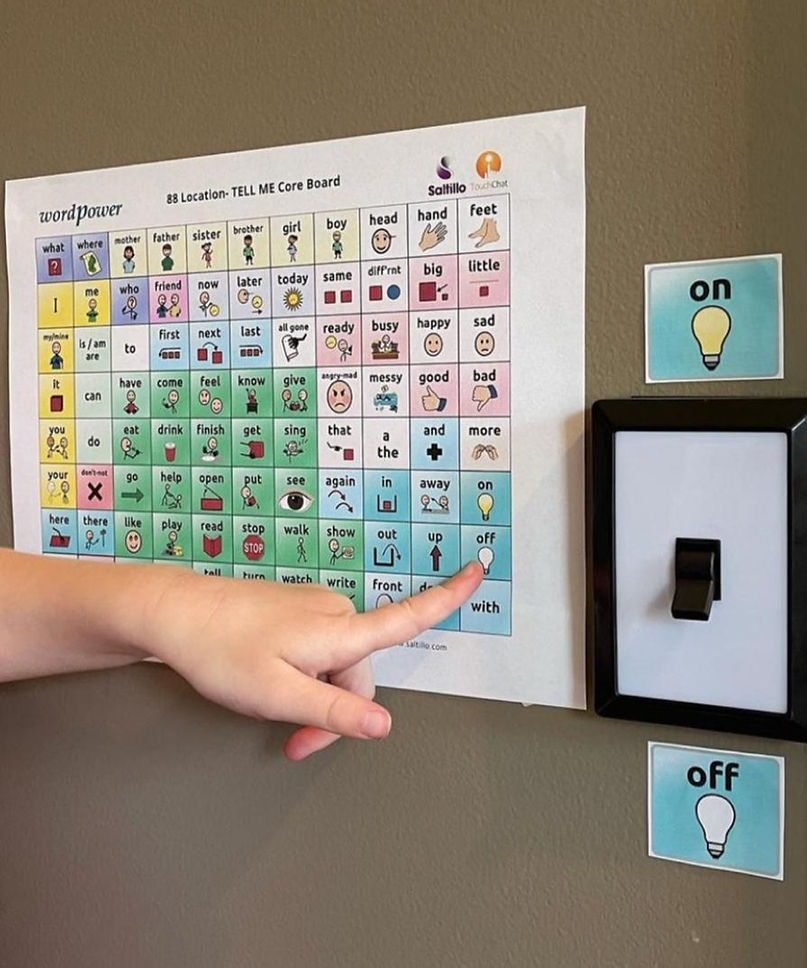
    AAC Coreboards
    Credit: Saltillo Word Power

    Why not have a go and download your own copy (and other boards) for free on the Saltillo Word Power website.

    AAC Core Boards are a specific type of AAC system that employs a grid-style board. This grid contains a set of core vocabulary words or symbols, which serve as a foundation for all communicative functions (e.g., initiating, greeting, requesting, negating, commenting, asking a question, and expressing surprise).

    These boards incorporate high-frequency (most used) and versatile words. They enable us to construct sentences, express emotions, and take part in conversations, fostering a sense of independence and autonomy. By enabling communication, we also remove some of the frustration (from not being able to communicate) which contributes/or often leads to behavioural difficulties.

    Building literacy skills

    AAC Core Boards are not only tools for immediate communication. They also play a pivotal role in language and literacy development. By using these boards, non-verbal children engage with words and symbols. It reinforces their understanding of language structure and grammar.

    As they consistently play with and then use their boards, they naturally absorb language patterns, laying the foundation for improved literacy skills. This immersive learning experience paves the way for future language acquisition and communication growth.

    Customisation for individual needs

    Every child is unique, and their communication needs can vary significantly. AAC Core Boards are designed with this diversity in mind, allowing for customisation to suit individual preferences and abilities. The boards can be adapted to include specific vocabulary relevant to a child’s daily life, interests, and activities. This personalisation ensures that the AAC Core Board is a true reflection of your child’s personality and needs, making communication more motivating, engaging and effective.

    Collaboration between AAC Core Boards and Speech Therapy

    AAC Core Boards are an excellent tool but we need to know one important aspect: they only work well when used regularly by the child’s family and key people in the first place.

    The board needs to be used and modelled by adults consistently and regularly across environments. This is so our children know what to expect, take an interest and begin to use the boards themselves. Modelling the use of AAC Core boards is vital. Think how long it typically takes for a child to learn their first word. Around a year! During that time the adults talk constantly to their child without hesitation or expectation! The same goes for introducing this new way of communicating.

    Collaborating with your child’s Speech and Language Therapist (SLT) ensures that your child receives the right guidance in using the AAC system. SLTs can assess your child’s communication abilities, recommend appropriate boards and provide guidance on how to best put them in place, so that your child can reach their communicative potential.

    For non-speaking children, AAC Core Boards are more than just tools. They are bridges to a world of communication, connection, and empowerment. These boards harness the power of visual communication, foster language development, social interaction, and personal expression. They can be tailored to individual needs with the support of skilled professionals. AAC Core Boards offer a beacon of hope, helping to break through communication barriers and thrive in a world that is waiting to hear your child’s voice.

    For answers to your questions and to explore the most effective support for your child, feel free to contact us.


    Find a speech and language therapist for your child in London. Are you concerned about your child’s speech, feeding or communication skills and don’t know where to turn? Please contact me and we can discuss how I can help you or visit my services page.

    0
  • Connecting with children in Speech and Language Therapy

    A deep and meaningful relationship

    In the realm of Speech and Language Therapy, connecting with a child goes far beyond the mechanics of language and articulation. It’s about fostering a deep, meaningful relationship that nurtures growth, builds confidence, and unlocks the potential for effective communication.

    As Speech and Language Therapists we embrace this art and invest in building authentic connections. We want to pave the way for children to embark on a path of communication success that will resonate throughout their lives.

    Establishing rapport and trust is the foundation upon which effective communication and progress are built. In this blog, we explore the significance of making a connection with a child as an integral part of Speech and Language Therapy. We look at strategies, benefits, and the transformative impact it can have on a child’s journey to communication success.

    The importance of connection

    Every child is a unique individual with their own personality, experiences, and challenges. Recognising and respecting these individual differences lay the groundwork for forming a connection that goes beyond the clinical setting. A strong therapeutic alliance encourages a child to open up, engage actively in sessions, and make greater strides in their speech, language and communication development.

    Strategies I use for establishing connection

    Face to Face:

    I always aim to get down and dirty: I sit on the floor with a child or at a low level so that it is easy for a child to look at me, even for a brief moment, here and there. When sitting at a table I position the child so that they can make eye contact with me should they be so inclined. Important: not every child wants to make eye contact! We must not be too focused on a child looking at our face or into our eyes. Sometimes some individuals find this disconcerting and off putting. They would rather look at what they are doing, and that does not mean that they are not aware of you or not listening!

    Active listening:

    I devote my full attention to the child. This demonstrates that they are important and that I am genuinely interested in their world. This is not always possible for longer periods of time, but I aim for 3-10 minutes of top-quality time before I might have a little break. I would encourage all parents and caregivers to try this out for 1 , then 2, then 3 minutes: turn off your phone and be 100% with your child no matter what. You will see your child really appreciates your undivided attention.

    Shared interests:

    I try to discover and engage in activities, topics, or hobbies that resonate with the child.

    Play-based learning:

    Play is a big part of all Speech and Language Therapy sessions. This is because it is a child’s natural mode of communication and all learning comes through play and fun.

    Respect for autonomy:

    Encouraging a child’s autonomy is important. Where possible, I involve children in decision-making about session goals, activities, and approaches. This also makes sessions more motivating for the child.

    As the connection strengthens, communication barriers begin to dissolve. Children are more inclined to take risks (challenges that are within their reach), try new sounds or words, and explore new ways of doing things.

    Long-term progress:

    A solid connection sets the stage for ongoing progress. The child is more likely to continue practicing and engaging in speech, language and communication exercises outside of therapy, leading to sustained improvements.

    The transformation that can occur through a strong therapeutic connection is nothing short of remarkable. A child who once hesitated to communicate might now eagerly share their thoughts and ideas. Those struggling with speech sounds before might gain the confidence to practise them frequently and thus master them. The bond forged between the child and the Speech and Language Therapist becomes a source of motivation, encouragement, and resilience.

    Please get in touch!


    Find a speech and language therapist for your child in London. Are you concerned about your child’s speech, feeding or communication skills and don’t know where to turn? Please contact me and we can discuss how I can help you or visit my services page.

    0
  • ·

    Four Ways to Progress your Child’s Language and Build Confidence

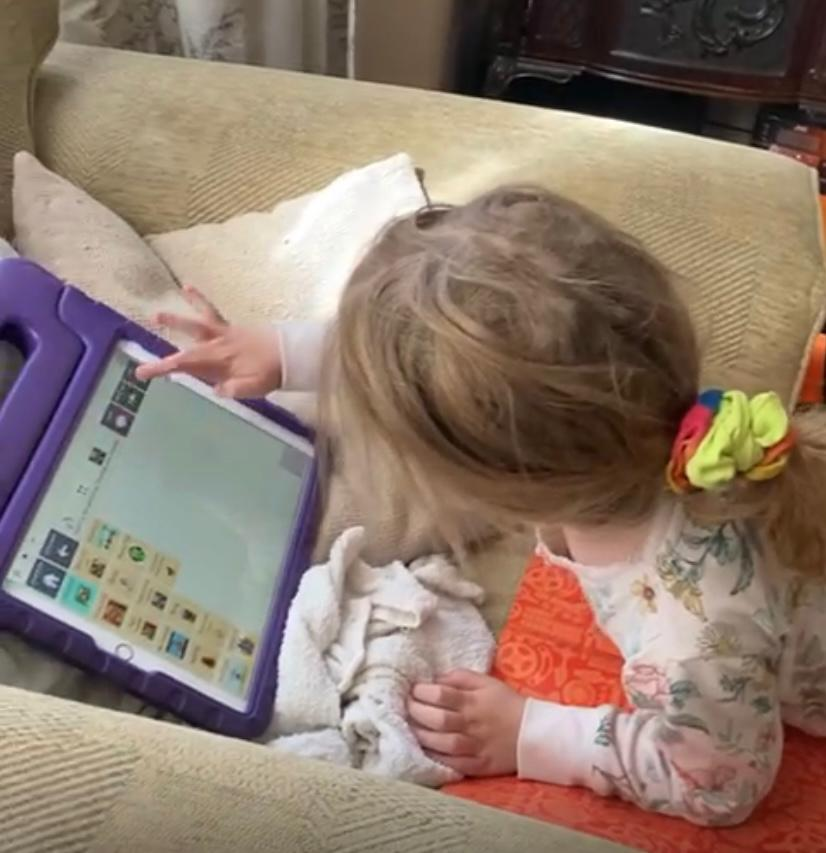
    A child is using a tablet

    Watching your child’s confidence grow as their language develops is something you dream of. You feel helpless, you watch your child repeat language over and over and this concerns you. You know you should be supporting their communication development, but you feel stuck. You’ve reached the point where you don’t know where to turn to for support. Accessing the knowledge of a Speech and Language Therapist is a great place to start.

    Here are four ways to support your child’s language:

    1. Provide great communication models that include scripts or “gestalts”

    Instead of commenting with single words like “apple” or two word phrases e.g., “want apple”, it is more beneficial to comment with small sentences or scripts such as “let’s eat an apple”, “I want an apple mummy”, “I want more apple please” or “I’m hungry daddy.”

    These are phrases that include more intonation and rhythm (top tip: ensure you do use appropriate intonation and rhythm), and your child is likely to pick up those phrases and copy them much more easily than single words or two-word phrases.

    2. Offer a robust Alternative and Augmentative Communication (AAC) device

    There are many examples of AAC devices such as ‘Lamp for Life’ or ‘Grid Smartbox’. It’s vital that you consult a Speech and Language Therapist with a specialism within this area of communication. You want your child to be able to communicate their wants and needs. Furthermore, their communication buttons need to be tailored to your child’s interests so they are motivated to use them (e.g. if your child likes Thomas the Tank Engine, you may wish to program in specific phrases such as “I want to watch Thomas the Tank Engine”. It is also important that the devices are suitable for your child’s physical and emotional stage of development.

    3. Learn to be a word detective

    Listen to your child’s echolalia (or repetitions) and try to understand what they mean. Their communication is often meaningful around a previous experience. For example, one of my students says, “bang my head” and that actually means “I want to play that tickling game again” (where I banged my head the other day).

    4. Take turns with your child and copy their scripts

    This shows you are listening actively and value their attempts at language. We all love it when someone is actively listening and trying to decode what we are saying.

    Take heart and try not to worry. You’re doing the best you can. Your child is more than likely a Gestalt Processing Learner and so they are moving through very defined stages. Echolalia (repetition) is the first of many, so you have an exciting journey ahead watching your little one’s language grow and develop.

    Reduce your child’s frustration and build their confidence today.

    Contact me here for speech and language advice and AAC support


    Find a speech and language therapist for your child in London. Are you concerned about your child’s speech, feeding or communication skills and don’t know where to turn? Please contact me and we can discuss how I can help you or visit my services page.
  • Using AAC – Augmentative and Alternative Communication for non-verbal and early verbal children

    Using a Core Vocabulary Board

    Your Speech Therapist might have been advising you to introduce words to your child with the help of a CORE BOARD. What on earth is she talking about and why would we want to do this, I hear you think – and in fact this is what I get asked a lot, as I often do recommend using Core Boards.

    Core boards belong to the category of Augmentative and Alternative Communication (AAC ) and they can be really useful for:

    • Children or adults who cannot speak at all or who are very hard to understand.
    • Children who are slow to speak and have difficulty expressing themselves verbally, due to genetic conditions as Down Syndrome, Verbal dyspraxia, Autism or any other learning difficulty that means a child is slow to develop speech.

    Here is what a Core board might look like, in fact this is one that I love to use. It is made by Beautiful Speech Life, there are a ton of similar boards out there for free. I have also made my own, you can check it out on my Instagram feed.

    Using a Core Vocabulary Board

    What is Core Vocabulary/ Core words?

    Core vocabulary consists of the most common words used by children throughout a day. In 2003 Banajee and Dicarlo et al found that 50 % of pre-schoolers in their project used nine words consistently across their daily play and meal routines. These words are Core words and are typically the ones you can see on a board, like the one above.

    How To Use It

    Adults always first need to consistently model and show their child how to use a board. This is key! For example: Adult can point to “YOU” “WANT” ‘MORE” and then point to the cup of Water on the counter. Child could then reply either by shaking his/her head and/or pointing to “NOT” which also stands for “NO”. Then adult can point to “NOT” “MORE” and do an OK sign as well. Eventually Child can initiate a request and point to “I” “ WANT” “MORE” and then point to the cup on the counter.

    This is not as cumbersome or limited as it first sounds or appears. Here’s why: As adult you can talk normally and, of course, many words you are using will not be on this board. But some will be, and you will be surprised how many you can find when you start using it. So you could say quite normally: Hey lovely (name of your child) would YOU LIKE some MORE water? The words in capital are on the board which you can point to as you speak normally. Basically, you are showing/saying to your child: “We can speak and these are the pictures we can use to help us; We call this TOTAL COMMUNICATION, as communication is so much more than just words! Great communication can be silent, where we use our facial expression, our smile, our eyes, our hand gestures, body movements and yes, of course, words. But when words fail us, these boards are so helpful.

    This still does not answer your original question of: why would I want to do this, I want my child to talk!? You are a SPEECH Therapist, please help my child TALK, not point to pictures, that is not what I had in mind.

    Let Me Explain

    When speech is difficult for a child it doesn’t mean that there is nothing to talk about! Of course, we want all our children and all people to speak because it is the easiest and most effective way of communicating, no doubt! However, sometimes this is very hard for some children and whilst we are always working towards speech where possible, we also want to make sure that whilst figuring out how to speak, your child has a MEANS TO COMMUNICATE. Using a board like this might well be a temporary strategy but whilst you are using it and working on their speech you will find a reduction in tantrums and frustration as you child is able to express themselves more effectively.

    Often we find that as soon as we offer a CORE VOCABULARY like the above sample a child who has had no or very few words suddenly blossoms and starts to point to new words on the board and starts to PRACTICE USING THESE WORDS!! Practice makes perfect, right? Yes it totally does! There is lots of evidence that tells us that using Core Vocabulary Boards ENHANCE AND SUPPORT SPEECH PRODUCTION AND NOT HINDER IT. Using a board like this will only ever be helpful to your child and will never make your child “lazy” – too lazy to speak? NO SUCH THING!

    Here is what one of my parents says about the core board we use with her little boy:

    “the board has been a game changer, my son is a visual learner so it really helps to have the board as he associates communication so much easier this way. We have incorporated his twin sister who models it’s use and have definitely seen improvement in speech through its support and his frustration around being unable to verbally communicate at times has definitely lessened”

    K Connolly, Mother of Tom (aged 3.5 years).

    Reading and hearing this makes me so happy!

    In addition to general core board above I also sometimes use a Core Board that is specific to an activity, such as for example BLOWING BUBBLES. Below is an example of such a board, which you can use very nicely during a bubble blowing activity and sometimes it is a nice place to start for newcomers, this can be an easy introduction. You can download this and many similar boards on www.widgit.com for free!

    Using a Core Vocabulary Board

    There is so much more to say about AAC and using Coreboards, visit my Instagram you can find a bit more information on how I use them.


    Find a speech and language therapist for your child in London. Are you concerned about your child’s speech, feeding or communication skills and don’t know where to turn? Please contact me and we can discuss how I can help you or visit my services page.