Why tongue lateralisation matters: The hidden feeding skill that every toddler needs
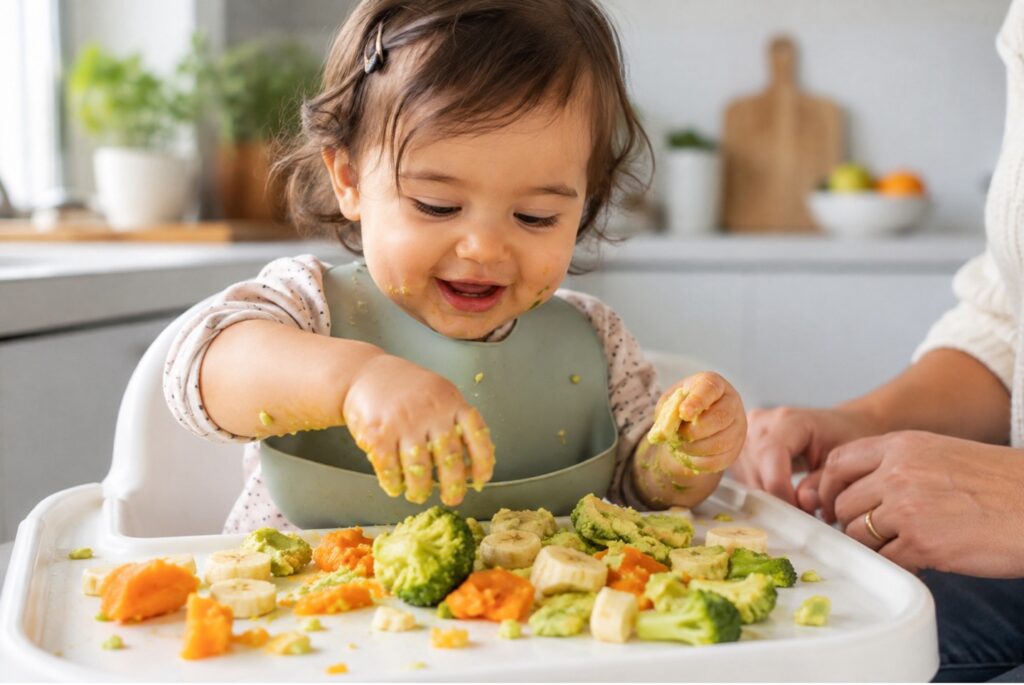
When parents think about feeding milestones, they often focus on what their child is eating. Are they accepting lumps? Will they eat vegetables? Are they managing finger foods?
However, one of the most important skills happening behind the scenes is something many parents have never heard of: tongue lateralisation.
Tongue lateralisation simply means the tongue’s ability to move from side to side inside the mouth. Although this sounds like a small movement, it is one of the key building blocks for safe chewing, efficient eating and later speech development.
As a Speech and Language Therapist specialising in infant feeding, I frequently assess children who have delayed or absent tongue lateralisation. The encouraging news is that this skill can often be developed. But like many areas of development, there is an optimal window during which children learn it most naturally.
What does the tongue actually do during eating?
Eating is an incredibly complex process involving the lips, jaw, cheeks, tongue and swallowing muscles all working together.
For mature chewing, the tongue needs to:
- move food from the centre of the mouth onto the back gums and molars
- keep the food positioned while the jaw chews
- collect scattered pieces of food from around the mouth
- reform the chewed food into a single cohesive bolus
- move that bolus safely to the middle of the tongue before swallowing.
Without good tongue lateralisation, food often stays in the middle or front of the mouth where it cannot be chewed effectively.
Children may compensate by:
- swallowing pieces whole
- mashing food with the front teeth only
- relying on sucking instead of chewing
- holding food in their cheeks
- gagging frequently
- refusing more challenging textures altogether.
These children are often described as ‘fussy eaters’, when in reality they may simply lack the oral motor skills needed to manage more advanced textures comfortably.
When should tongue lateralisation develop?
Tongue lateralisation begins to emerge during the second half of the first year of life as babies start exploring textured foods.
Between approximately 6 and 12 months, babies naturally begin learning to move food sideways towards their gums for early chewing. As molars develop during the second year, these movements become more refined and efficient.
This period represents an important developmental window because babies are biologically programmed to experiment with increasingly varied textures. Repeated opportunities to chew different foods strengthen the tongue, jaw and cheek muscles while building the complex movement patterns needed for mature eating.
If a child remains on smooth purées or very soft foods for too long, they may miss hundreds of opportunities to practise these essential movements.
Why does this developmental window matter?
Like learning to crawl, walk or ride a bicycle, oral motor skills develop through repeated practice.
Children who do not experience enough chewing opportunities during infancy can sometimes continue to rely on immature sucking and munching patterns well into toddlerhood.
This does not mean the opportunity is completely lost after infancy. Many toddlers can still learn tongue lateralisation successfully with the right support. However, the longer an immature pattern is used, the more established it becomes, making change more challenging.
That is why early assessment is so valuable.
Signs your toddler may have poor tongue lateralisation
You may notice your child:
- chews mainly with the front teeth
- bites but does not chew efficiently
- keeps food in the centre of the mouth
- pockets food in the cheeks
- frequently spits out textured foods
- gags on lumps
- prefers soft foods
- swallows before food has been adequately chewed
- takes a very long time to finish meals.
Not every child showing these signs has an oral motor difficulty, but they do warrant further assessment.
How can we encourage tongue lateralisation?
The good news is that the tongue learns through experience.
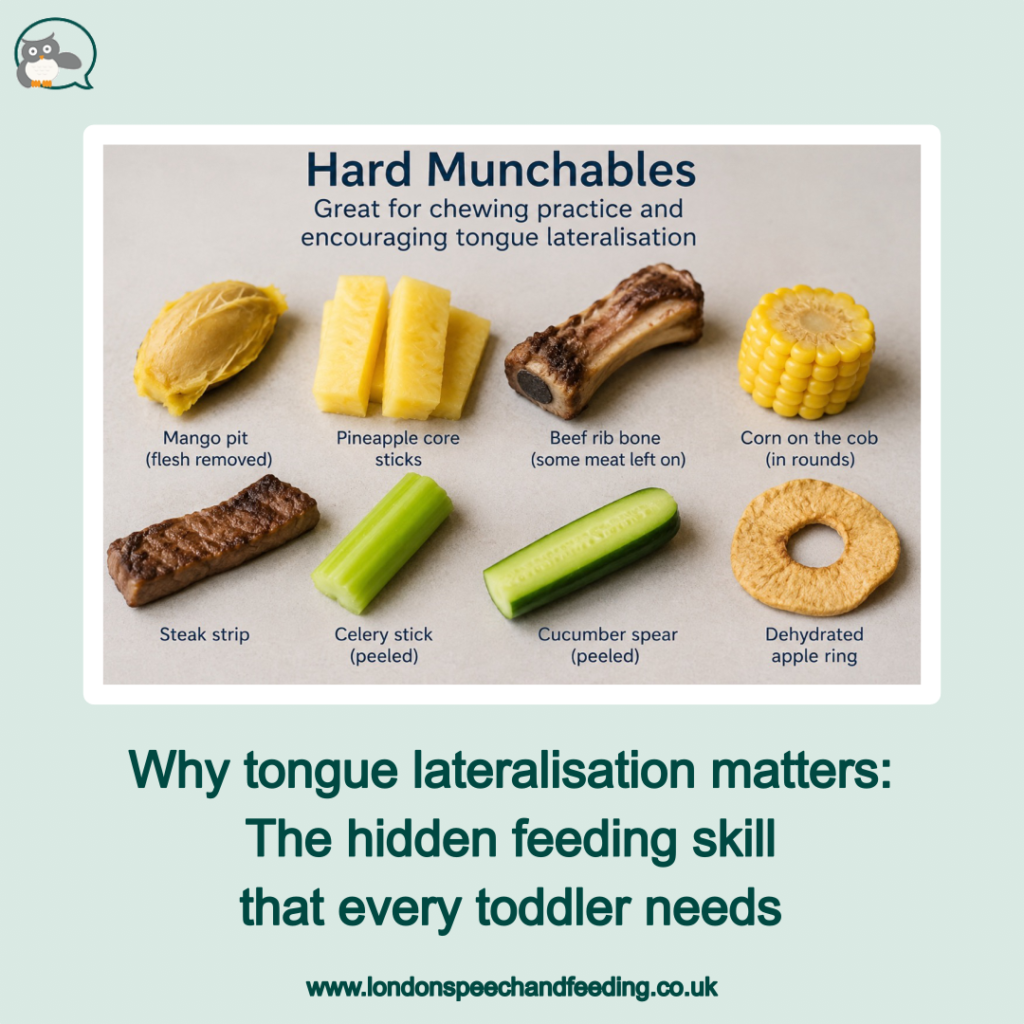
One of the best ways to encourage side-to-side movement is by offering long, resistive foods that naturally encourage the tongue to move food towards the side gums for chewing. We also call them sometimes HARD MUNCHABLES – they look like on the following image.
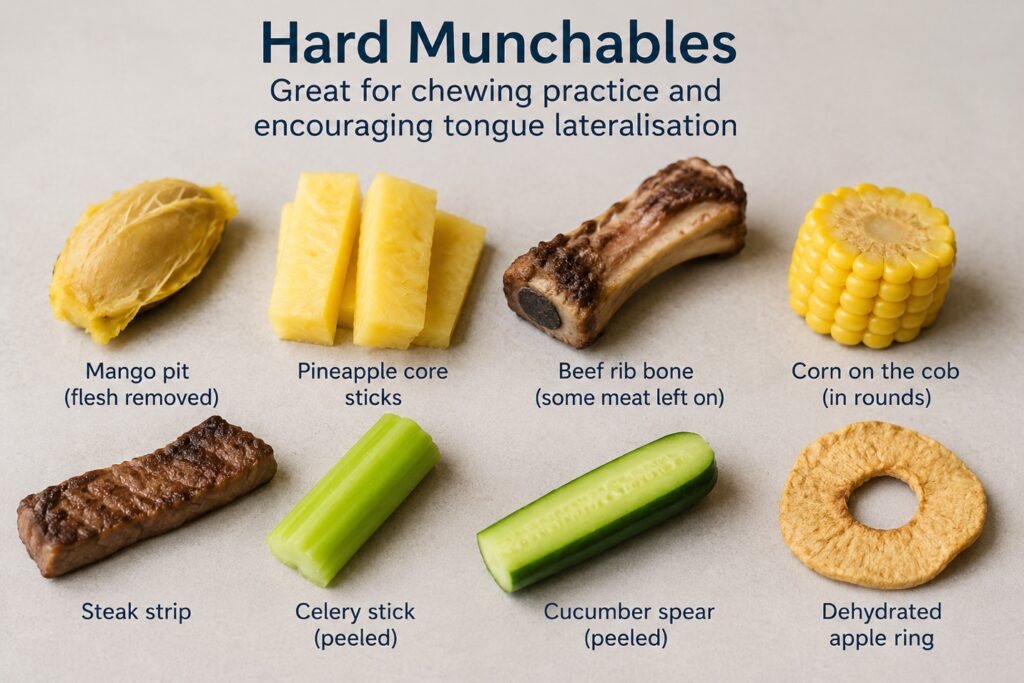
Examples include:
- mango pits with most of the flesh removed
- pineapple core strips
- thick steak strips
- cooked pork strips
- peeled celery sticks
- thick cucumber spears
- roasted pepper strips
- corn on the cob cut into manageable rounds
- dehydrated apple rings
- large clean cooked rib bones with a little meat remaining for supervised chewing practice.
These foods are not intended for children to consume large pieces quickly. Instead, they provide resistance that encourages the jaw, cheeks and tongue to work together while giving valuable sensory feedback.
A simple technique that can help
Some toddlers struggle because they never naturally move food to the side of their mouths.
In these cases, placing a long strip of food gently onto the side gums can sometimes trigger the chewing pattern automatically. This gives the tongue an opportunity to experience where chewing should occur.
This should always be done calmly, with the child sitting upright and under close adult supervision.
Every child develops differently
Some children are more likely to experience delayed tongue lateralisation than others.
This may include children who:
- remained on purées for an extended period
- have developmental delays
- have low muscle tone
- were born prematurely
- have significant sensory processing differences
- have experienced prolonged tube feeding or medical conditions affecting feeding.
A feeding assessment can identify whether tongue movement, jaw stability, sensory processing or another factor is contributing to the difficulty.
Early intervention makes a difference
One of the biggest misconceptions I hear is:
‘They’ll grow out of it.’
Some children do. Others don’t.
Without intervention, inefficient chewing patterns can persist for years, affecting food variety, mealtime confidence and nutritional intake. In some cases, immature oral motor patterns may also contribute to unclear speech production later on, although feeding and speech skills do not always develop at the same rate.
The earlier we identify a problem, the easier it usually is to help children develop more mature, efficient chewing patterns.
Final thoughts
Tongue lateralisation may not be a term many parents recognise, but it is one of the foundations of successful feeding.
By offering opportunities to chew a variety of safe textures during infancy, parents help build the complex tongue movements needed for efficient eating throughout childhood.
If your toddler still struggles with chewing, gags on textured foods, or seems unable to move food around their mouth, don’t simply wait and hope they will outgrow it. A comprehensive feeding assessment can identify exactly where the difficulty lies and provide practical strategies tailored to your child’s needs.
Sometimes a few small changes at the right time can make a lifetime of difference. Do get in touch with me. I would love to hear from you and help your little one develop good chewing skills and eating habits.

Sonja McGeachie
Highly Specialist Speech and Language Therapist
Owner of The London Speech and Feeding Practice.



Find a speech and language therapist for your child in London. Are you concerned about your child’s speech, feeding or communication skills and don’t know where to turn? Please contact me and we can discuss how I can help you or visit my services page.