Saltillo AAC

  • What is Total Communication, and why your child might need it more than just speech
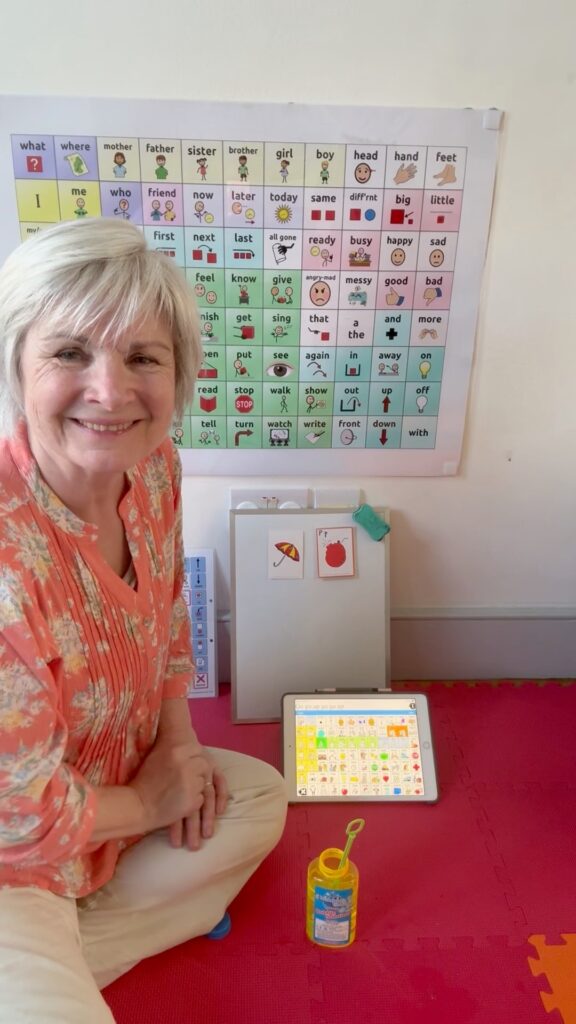
    Sonja smiling

    When a child’s speech is difficult to understand, it can feel overwhelming for everyone involved. As a parent, your instinct is often to focus on helping your child ‘talk properly’. And that makes complete sense. Speech is important. But here’s the key message I want to share with you:

    Speech is just one way to communicate.

    And when speech is not yet clear, not yet reliable, or not yet available, children need other ways to get their message across.

    This is where Total Communication comes in.

    What is Total Communication?

    Total Communication is an approach that encourages the use of all available ways to communicate, not just speech.

    This can include:

    • spoken words
    • gestures and pointing
    • facial expressions
    • signing (such as Makaton)
    • pictures or symbols
    • drawing
    • electronic AAC (Augmentative and Alternative Communication), such as apps like LAMP Words for Life

    It’s not about replacing speech. It’s about supporting communication in every possible way.

    Think of it like this: if speech is currently unclear or limited, why restrict a child to the hardest route? Why not give them more tools to succeed?

    ‘But won’t this stop my child from talking?’

    This is one of the most common concerns I hear in clinic.

    Parents often worry that if a child starts using signs or a communication device, they will become ‘dependent’ on it and stop trying to talk.

    The research tells us something very different.

    Studies consistently show that AAC does not prevent speech development. In fact, it often supports it.

    • A review by Millar, Light & Schlosser (2006) found that AAC interventions do not reduce speech production and may actually increase it.
    • Romski & Sevcik (2005) demonstrated that children given AAC often develop stronger overall communication skills, including spoken language.
    • More recent work continues to show that providing AAC early can accelerate language development, not delay it.

    So rather than ‘giving up on speech’, using AAC is actually building the foundations that speech needs.

    Why Total Communication matters, especially for unintelligible children

    When a child is very difficult to understand, they are often experiencing a hidden frustration:

    ‘I know what I want to say, but no one understands me.’

    Over time, this can lead to:

    • reduced confidence
    • behavioural frustration
    • withdrawal from communication
    • fewer opportunities to practise language

    If a child cannot successfully communicate, they communicate less. And when they communicate less, their language development slows down.

    Total Communication breaks this cycle.

    By giving a child reliable ways to be understood, we:

    • reduce frustration
    • increase interaction
    • build confidence
    • create more opportunities for language learning

    And importantly, we allow them to show us what they already know.

    AAC is a bridge, not a barrier

    Using AAC (whether that’s pointing to pictures, signing, or using a device) does something powerful:

    It separates language from speech.

    A child might have lots of ideas, vocabulary, and understanding but their speech system (especially in cases like phonological disorder or childhood apraxia of speech) cannot yet keep up.

    AAC allows the child to:

    • express complex ideas now
    • practise sentence structure
    • develop vocabulary
    • take part in conversations

    All while their speech is still developing.

    In other words, AAC doesn’t replace speech. It keeps language moving forward while speech catches up.

    What does this look like in real life?

    In therapy, I often use a combination of approaches:

    • modelling simple signs alongside speech
    • pointing to symbols while talking
    • encouraging children to gesture or show
    • using drawings to support understanding
    • incorporating an AAC device such as LAMP Words for Life

    You might see a child:

    • say part of a word
    • point to a symbol
    • use a gesture
    • and look at you expectantly

    That is communication success.

    And success builds motivation.

    ‘I just want them to talk’

    Of course you do. And I do too!! That’s always the goal.

    But here’s the important shift in thinking:

    Children learn to talk by communicating, not by waiting until speech is perfect.

    If we hold out for clear speech before allowing other communication methods, we risk:

    • limiting their ability to interact
    • reducing practice opportunities
    • increasing frustration

    But if we support all communication, we give them:

    • more chances to express themselves
    • more positive communication experiences
    • more input and feedback

    And that is what drives progress.

    A balanced approach

    Total Communication doesn’t mean ‘speech is no longer important’.

    It means:

    • we continue targeted speech therapy
    • we work on sounds and clarity
    • and we support communication in the meantime

    It’s not either/or.

    It’s both/and.

    Final thought

    If your child’s speech is difficult to understand, the most important question is not:

    ‘Are they talking clearly yet?’

    It’s:

    ‘Can they successfully communicate?’

    Because communication is the foundation of:

    • relationships
    • learning
    • confidence
    • wellbeing

    And every child deserves a voice, in whatever form that voice takes right now.

    Feel free to contact me if your child needs help with speech and communication.

    Sonja McGeachie

    Highly Specialist Speech and Language Therapist

    Owner of The London Speech and Feeding Practice.

    References (parent-friendly):


    Health Professions Council registered
    Royal College of Speech & Language Therapists Member
    Member of ASLTIP

    Find a speech and language therapist for your child in London. Are you concerned about your child’s speech, feeding or communication skills and don’t know where to turn? Please contact me and we can discuss how I can help you or visit my services page.

    3
  • · · ·

    Unlocking communication: My daily life with the Saltillo 88 Core Board

    Introduction

    As an AAC speech and language therapist who uses the Saltillo 88 Core board every day, I can tell you it’s more than just a communication tool. It’s a doorway to independence, connection, and expressing my students’ unique voice.

    What is the Saltillo 88 and why do I use this one?

    In this blog post, I want to share practical, real-world examples of how I integrate the Saltillo 88 into various daily activities, empowering my students and parents to learn to communicate.

    There are literally hundreds of core boards out there and I have tried many different ones over the years. Which one should I use with this particular client? Should I make up my own? (I have made up tons!) or should I use a ready-made one like the one below which is what this blog is about.

    For me the best ones are boards with a good number of core words (at least 60) so that the board is versatile and can be used across a range of activities. The board needs to have a range of pronouns, verbs, descriptors, prepositions and question words to be useful and to stimulate not just requesting but commenting and asking questions. Another consideration is: can the board easily be transferred to a more robust AAC system. Once my student is used to the symbols and where they are could we move to an electronic talker/device. And if this answer is ’yes’ then we have a great board to get started with.

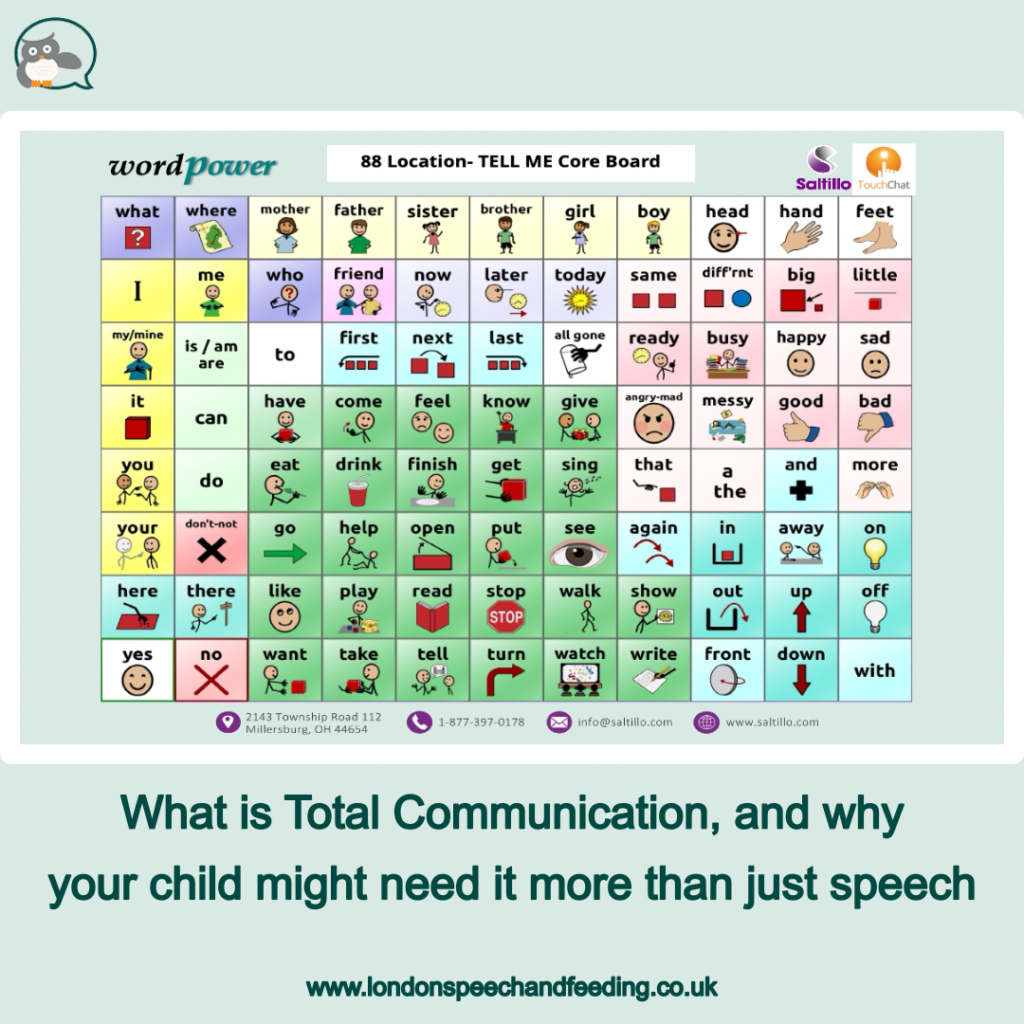
    Below is a picture of the Saltillo 88.

    Saltillo 88 Core Board
    Saltillo 88 Core Board

    It has 88 words and I find it really does suit most activities. The same board and design is also then found on the TOUCHCHAT AAC device which can be a seamless transition for our learner.

    Let me dive into how core words/board or AAC can be used daily:

    1.  Getting dressed

    Whilst choosing clothes for your little one and getting them ready for the day you can use the following words: want, like, get, finish. Always pack the words into little phrases you can speak naturally when using a board. I have tried to show you phrases that you could use below.

    The words in bold are the core words on the board and the other words are just words you say whilst pointing to the core word.

    • Goal: Express choices, needs, and preferences about clothing.
    • Ideas:
      • ‘I want this one [specific item of clothing: ‘shirt’, ‘pants’]’
      • ‘I like that one [colour/type of clothing]’
      • ‘Help me [put/get it on/take off]’
      • ‘let’s get your socks now’
      • finished let’s go’ (when dressed)

    2. Having a shower/bath

    • Goal: Bath time tends to happen daily and so it lends itself to using the same useful phrases and words to chat about temperature preferences, to ask for toys or for washing routines.
    • Ideas:
      • ‘let’s go have a bath/shower’
      • ‘let’s turn on the tap/water’
      • now turn it off
      • ‘let’s get/have more toys/water/bubbles/tickles’
      • all gone, what’s next?’
      • ‘how about washing your hands/feet’
      • ‘let’s do that again’
      • ‘need some help?’
      • Stop it now, let’s do something different’

    3. Mealtimes

    • Goal: Mealtimes can be (or should be) enjoyable and motivating to ask for specific things we like, and commenting about our eating experiences.
    • Ideas:
      • ‘I want/give me [food item: ‘apple’, ‘bread’]/[drink item: ‘water’, ‘juice’]’
      • More foods/drinks/snacks’
      • All done
      • ‘that’s messy we like that (not)’
      • ‘Like’/‘Don’t like’
      • Big’/‘Little’
      • ‘this is so nice!’

    4. Playing

    • Goal: This is where it’s at for children of course and we can use our core words to chat and engage with our little learners.
    • Ideas:
      • ‘I want play’
      • Go’/‘Stop
      • More/again’
      • ‘not it’s my My turn/’it’s Your turn
      • ‘that’s a Big one!’/‘let’s do Little bubbles (describing toys)
      • ‘let me Open it for you (for boxes, doors in play)
      • ‘I See it’ (to draw attention)
      • Help me’ (with a tricky toy)

    5. Opening boxes/doors/etc

    • Goal: Most kids love opening boxes, doors and cabinets to see what there is to play with. Help your child to ask for what they want.
    • Ideas:
      • let’s Open that box/bag/zip/door’
      • get me a (toy) out of here’
      • ‘Let’s Take it out and see what it is?’
      • finished’ (when finished with the task)
      • ‘I want [what’s inside]’
      • ‘What’s next? Let’s see’

    Tips for using AAC effectively

    • Consistency is key: Emphasise using it regularly, even for small things.
    • Modelling: this is crucial, the adults need to use the board for all situations first and foremost before we can expect our child to be interested.
    • Patience: Communication takes time and practice.
    • Celebrate successes: Acknowledge every communicative attempt.
    • Make it accessible: Keep the board within easy reach at all times.

    Conclusion

    If you’re considering the Saltillo 88, or TouchChat, or are already using it, I hope these examples inspire you. It’s a journey of discovery, and every word communicated is a step towards a more connected and independent life. What are your favourite ways to use the Saltillo 88 or which core board do you love using? I would love to hear your comments and stories.

    Sonja McGeachie

    Highly Specialist Speech and Language Therapist

    Owner of The London Speech and Feeding Practice.


    Health Professions Council registered
    Royal College of Speech & Language Therapists Member
    Member of ASLTIP

    Find a speech and language therapist for your child in London. Are you concerned about your child’s speech, feeding or communication skills and don’t know where to turn? Please contact me and we can discuss how I can help you or visit my services page.

    2