Great toys and books for our toddlers (around 1–2 years old)

| |

As a speech and language therapist, I often get asked by parents what toys and books they should buy for their toddlers. It can feel overwhelming with so many options available! So, I’ve put together a list based on my experience and what I’ve found works well.

Remember, every child is unique!

Observe your toddler’s interests and play style. Some toys that are popular might not be engaging for your child.

Here are a few ideas to get you started:

Sensory Toys:

  • Stacking cups: These are fantastic for developing hand-eye coordination, fine motor skills, and understanding size relationships. (Various brands available) Note: You can stack many things you have around the house, like bowls or measuring cups, for a similar experience!
  • Shape sorters: Help with shape recognition, hand-eye coordination, and problem-solving. (Melissa & Doug, Vtech)
  • Sensory balls: Balls with different textures (soft, bumpy, squishy) provide tactile stimulation. (Various brands)
  • Push and pull toys: Encourage gross motor development and exploration. (Vtech, Fisher-Price)

Communication-focused toys:

  • Picture books with flaps: Engage curiosity and encourage language development. (Various brands)
  • Talking toys: Introduce new vocabulary and encourage imitation. (Vtech, Fisher-Price)
  • Simple puzzles: Develop hand-eye coordination, problem-solving, and spatial awareness. (Melissa & Doug, Ravensburger)
  • Musical instruments: Encourage exploration of sounds and develop auditory skills. (Bright Starts, Fisher-Price)

Now, let’s talk about books:

  • The Very Hungry Caterpillar by Eric Carle: A classic with repetitive text and vibrant illustrations, great for introducing vocabulary and concepts like days of the week.
  • Brown Bear, Brown Bear, What Do You See? by Bill Martin Jr. and Eric Carle: Simple, repetitive text and engaging illustrations make this a favourite for many toddlers.
  • Goodnight Moon by Margaret Wise Brown: A soothing bedtime story with calming illustrations.
  • Pat the Bunny by Dorothy Kunhardt: An interactive book with textures and flaps to engage young children.
  • Corduroy by Don Freeman: A heartwarming story about a teddy bear who loses his button.

Remember:

  • Observe your child’s interests: Choose toys and books that capture their attention and encourage exploration.
  • Engage with your child: Play with the toys together and read books aloud with enthusiasm.
  • Keep it simple: Start with a few toys and books and gradually introduce new ones.
  • Rotate toys: Keep playtime fresh by rotating toys and books regularly.
  • Most importantly, have fun! Reading and playing with your child should be a joyful experience for both of you.

Also consider the power of open-ended play

In today’s world filled with electronic gadgets, it’s easy to overlook the value of open-ended play. Open-ended toys lack specific functions or prescribed outcomes, allowing children to use their imaginations to explore and create. Unlike toys with pre-determined ways to play, open-ended toys encourage:

  • Creative thinking: Children can use them in countless ways, developing their own rules and narratives. A block can become a car, a house, or a spaceship, depending on the child’s imagination.
  • Problem-solving skills: Children learn to figure out how to use the toys, experimenting and adapting as they go. Don’t immediately rush in and fix things for your little one, let them think for themselves and then communication incentive: let them come and find you!
  • Fine motor skills: Many open-ended toys, like blocks, encourage the development of fine motor skills like grasping, stacking, and building.
  • Cognitive development: Children learn about cause and effect, spatial relationships, and problem-solving as they play with open-ended toys.
  • Social-emotional development: Open-ended play can foster social interaction and cooperation as children play together and share ideas.

Simple toys with big impact

Some of the best toys for toddlers are often the simplest ones. Here are a few examples:

  • Wooden blocks: Building towers, bridges, and forts encourages creativity and problem-solving.
  • Balls: Throwing, kicking, and rolling balls promote gross motor skills and hand-eye coordination.
  • Fabric: Bits of fabric can be draped, draped, and used for imaginative play.
  • Empty boxes: From cardboard boxes to tissue boxes, these can be transformed into anything a child can imagine: a car, a house, a spaceship!
  • Natural materials: Sticks, leaves, pinecones, and rocks can be used for imaginative play and sensory exploration.

Remember, the key to open-ended play is to let children explore and discover

Step back and observe, allowing your child to use his or her imaginations without too much direction. You might be surprised at the creative ways he or she uses simple toys!

Happy play times with your little one!

Contact me via my contact form.

Sonja McGeachie

Early Intervention Speech and Language Therapist

Feeding and Dysphagia (Swallowing) Specialist The London Speech and Feeding Practice

The London Speech and Feeding Practice


Find a speech and language therapist for your child in London. Are you concerned about your child’s speech, feeding or communication skills and don’t know where to turn? Please contact me and we can discuss how I can help you or visit my services page.

1

Similar Posts

  • Speech sound disorders

    Kids Speech Therapist London
    Speech Sound Disorders

    Treatment Approaches – A Typical Session

    There are various great ways to treat speech sound disorders and I use all the approaches available selectively; I decide what works with each individual child and I also vary the approach depending on the child’s frame of mind at any given time during my session.

    Some of the approaches are more “drill-based” and require a child to be able to pay attention and really participate actively in the therapy, and this is what I am showing you today with this video clip.

    My little student here has been working with me for some time and from only saying a handful of words which were not very easy to understand he has come a long way. He does have some features of Verbal Dyspraxia which I shall briefly outline here:

    • Making sounds in general is a struggle, especially when asked to copy certain sounds, example: ‘can you say: a ee ou oo?”
    • Repeating sound sequences or words sequences is hard, for example: “say p-t-k in sequence” or “say fish chips fish chips fish chips
    • When saying the same word again and again, different mistakes can be heard
    • Intonation difficulties: speech sounds monotonous
    • Vocabulary is very limited

    Some therapy approaches are more play based, for example the Core Word method: here we pick a few words at a time which are very significant to the child and therefore highly motivating to try and say. These could be characters of Pokemon or Minecraft for example, or simple words like “GO!”

    When you watch the video you will see that I use a lot of visual prompting, such as showing him where the tongue is moving to or from. I do this with my index finger and this approach is called Tactile Cueing or “Cued Articulation”. Part of the approach is to give a visual prompt and then reduce the prompt as the learner is more able to produce the correct sounds. Once he can produce the sound on its own, we quickly move to the sound within a word.

    I do mix and match my approaches and in fact here I am drilling but I also use the Core Word which for him (YELLOW) — it’s his favourite colour and I happen to have quite a few good games where a YELLOW something or other can be asked for….. WHO KNEW!? 🙂


    Find a speech and language therapist for your child in London. Are you concerned about your child’s speech, feeding or communication skills and don’t know where to turn? Please contact me and we can discuss how I can help you or visit my services page.

  • Six ways to prepare your child for the Christmas festivities

    It feels like the Christmas festivities start earlier and earlier every year. This makes it harder for your child with communication difficulties to process what is happening. Whilst you can’t do anything about the events that happen around your child, you can start to put into practice strategies which may support them and allow them to regulate their emotions.

    Speech Therpaist in London
    Six ways to prepare your child for the Christmas festivities

    Explore six ideas here:

    1. Print off or buy a blank calendar to use at home

    You can start to write in activities out of the usual routine and add a picture to allow your child to understand what it’s about. You can also use it as a countdown to Christmas Day to try to prevent ‘how long’ questions.

    2. Make use of visual timetables

    These are useful in everyday settings and activities but also when change occurs.

    3. Be aware of any non-uniform days

    Days like ‘Christmas Jumper Day’ can make your child feel uncomfortable and may affect their behaviour. By giving yourself time, you can have conversations with your child’s teacher to find a more suitable alternative. For example, they can wear a Christmas t-shirt that they find more comfortable.

    4. Think about what will benefit your child

    Do they like being surrounded by people or do they prefer a quiet space on a 1:1 basis? Christmas activities often involve lots of group work in school (e.g., rehearsing for carol concerts or plays). They might prefer to pre-record their part in the Christmas play or create pieces of art which can be used. At home, they may prefer one guest visiting at a time, rather than all at once.

    5. Explore how your child is feeling

    It’s important to find out how your young person is feeling and how these impact on the activities of that day. It might be that your child doesn’t like surprises and the intensity of opening gifts is too much for them. They may prefer gifts to be left unwrapped and given throughout the day, rather than all at once.

    6. Consider sensory needs

    Ensure your young person has everything they need to meet their sensory needs. This can be e.g. noise cancelling headphones, fidget toys, or comforting items. These will particularly be helpful with routines changing, often with little notice. If at home, you may wish to not put lights on the Christmas tree if visual stimuli become too much.

    Remember clear communication between home, school and other family members is vital during this time. By having clear communication and expectations, your young person will feel more secure. And you can have a Christmas that is right for you and your family.


    Find a speech and language therapist for your child in London. Are you concerned about your child’s speech, feeding or communication skills and don’t know where to turn? Please contact me and we can discuss how I can help you or visit my services page.

  • Can AI help my child’s speech delay? What it can do and what it can’t

    If you’re worried about your child’s speech, you are absolutely not alone. Many parents I work with tell me the same thing:

    ‘I’ve been Googling…’
    ‘I asked ChatGPT what activities to try…’
    ‘TikTok said we should practise this sound every day…’

    It makes complete sense. When waiting lists are long, evenings are quiet, and your child is struggling to communicate, it’s natural to look for help wherever you can find it.

    AI tools can actually be helpful in some ways. But they also have clear limits especially for children with significant speech delays or speech sound disorders.

    Here’s an honest, balanced guide to what AI can do, and what it simply can’t.

    ✔️ What AI can help with

    1. Explaining things in simple language

    AI can be very helpful for explaining speech and language terms in a way that’s easy for parents to understand for example, what a phonological delay is, or what Childhood Apraxia of Speech means. It can also suggest possible reasons for a child’s speech delay based on the information you provide.

    The difficulty is that parents (or teachers) can only ask questions based on what they notice or perceive to be the problem. In practice, this doesn’t always tell the full story. For example, parents often report that their child ‘can say certain words’, but during an assessment we may find those words are actually produced with consistent error patterns. These patterns give important clues about the underlying nature of the difficulty, whether it’s a delay or a disorder and they guide the speech therapist in choosing the most effective targets to improve intelligibility.

    2. Suggesting games and activities

    AI is very good at suggesting ideas for games and practice, such as word lists, simple play activities, sound practice games, book suggestions, and ways to encourage talking within everyday routines. These can be especially helpful when you feel stuck or want some fresh inspiration for supporting your child at home. It can help to think of AI as a big ideas bank, somewhere to dip into when you need new, playful ways to keep practice engaging.

    3. Helping you prepare questions for a therapist

    Some parents use AI to list questions before an assessment, understand reports and organise concerns.

    This can make therapy feel less overwhelming and more collaborative.

    Used this way, AI can actually support the therapy process.

    ❌ Where and why AI cannot replace real life speech therapy

    There is substantial research supporting the effectiveness of real-life speech therapy compared to generic online resources or AI-generated suggestions. Here are some key points highlighting why in-person therapy is often more beneficial:

    • Personalisation: Speech therapists assess each child’s unique needs, strengths, and challenges through direct observation and interaction. This personalised approach allows for tailored interventions that address specific issues, which generic resources cannot provide.
    • Nuanced understanding: Therapists are trained to recognise subtle cues in speech production, including the nuances of sound articulation, language comprehension, and social communication. This expertise enables us to identify underlying issues that may not be apparent through generic assessments.
    • Motivational support: A speech therapist can provide encouragement, motivation, and emotional support, which can significantly enhance a child’s willingness to participate and engage in therapy. This relational aspect is crucial for building confidence and reducing anxiety around communication.
    • Evidence-based practices: As a highly trained and specialised speech therapist I utilise evidence-based practices that are grounded in research, ensuring that the techniques used are effective and up to date. This contrasts with generic online information, which may not always be reliable or validated.
    • Progress monitoring: In-person therapy allows for ongoing assessment and adjustments to the treatment plan. We track progress over time and modify strategies as needed, ensuring that the therapy remains effective and relevant.

    Research studies consistently show that individualised, face-to-face interventions lead to better outcomes in speech therapy than generalised approaches. For parents and caregivers, seeking professional help tends to provide a more effective path toward improving their child’s communication skills.

    The healthiest way to think about AI

    AI works best as a starting point, not a substitute. You might use it to understand your child’s report and learn how speech develops,

    But if your child has significant delay or difficulty being understood, what makes the real difference is:

    • A tailored assessment
    • A clear therapy plan
    • Expert target selection
    • Ongoing adjustment
    • Support for both child and you the parent!

    Dear parents,

    If you’ve been turning to AI for help, it doesn’t mean you’re doing anything wrong. It means you care!

    But please know the best outcomes usually come from combining your daily support at home with guidance and support from your speech therapist who knows you and your child.

    Many of my past and present clients tell me that they really value my ‘handholding’ and me guiding them in between the sessions. A quick check in is often all that is needed but it makes a huge difference!

    If you’d like support or advice, please contact me and I can help guide the next steps.

    Sonja McGeachie

    Highly Specialist Speech and Language Therapist

    Owner of The London Speech and Feeding Practice.


    Health Professions Council registered
    Royal College of Speech & Language Therapists Member
    Member of ASLTIP

    Find a speech and language therapist for your child in London. Are you concerned about your child’s speech, feeding or communication skills and don’t know where to turn? Please contact me and we can discuss how I can help you or visit my services page.

    3
  • · ·

    The picky eater’s plate: Introducing solids to toddlers with ARFID

    Designed by Freepik

    Mealtimes can be a battleground for parents of picky eaters, especially toddlers with Avoidant/Restrictive Food Intake Disorder (ARFID). I see a great number of toddlers with Autism traits and many of my clients are picky eaters from mild to severe. Take a look at my blog for an outline of what the issues are and how to try and help.

    ARFID goes beyond typical ‘picky eating’ and can significantly impact a child’s growth, nutrition, and social-emotional well-being. If your toddler is resistant to trying new foods or has a very limited diet, here are some strategies to navigate the introduction of solids:

    1. Understand ARFID:

    ARFID is a diagnosable eating disorder characterised by:

    • Limited food variety: Eating only a small range of foods, often with specific textures or colours.
    • Fear of new foods: Intense anxiety or aversion to trying unfamiliar foods.
    • Sensory sensitivities: Heightened sensitivity to taste, smell, texture, or appearance of food.
    • Lack of interest in eating: May show little interest in food or mealtimes.

    2. Seek professional guidance:

    • Paediatrician and/or gastroenterologist: Rule out any underlying medical conditions.
    • Registered dietitian: Assess nutritional needs and create a balanced meal plan.
    • Speech and language therapist (SLT): If oral-motor skills or sensory sensitivities are contributing to feeding difficulties.
    • Occupational therapist (OT): If sensory processing challenges are affecting mealtime behaviours.
    • Child psychologist: If anxiety or emotional factors are contributing to ARFID.

    3. Strategies for introducing solids:

    • Start small: Introduce one new food at a time, in small amounts, alongside familiar favourites.
    • Patience is key: It can take multiple exposures (up to 10–15 times!) for a child to accept a new food. Don’t give up!
    • Positive reinforcement: Praise and encouragement for any interaction with the new food, even just touching or smelling it.
    • No pressure: Avoid forcing or pressuring the child to eat. This can create negative associations with food.
    • Make it fun: Present food in playful ways, use cookie cutters for fun shapes, or involve the child in food preparation.
    • Sensory exploration: Encourage exploration of food through touch, smell, and sight before tasting.
    • Role modelling: Show the child that you enjoy eating a variety of foods.
    • Use fun utensils: your child might like characters from ‘Frozen’ or ‘Dinosaurs’ or ‘Diggers’ there are a host of character-based cutlery and cups/plates to be had. Also, I really rate these two items very highly they are so good so I want to share these with you. Both are available online. But warning: the cup is outrageously expensive as it comes from the United States and is sold by a small scale company. But I feel this is cup very worth trying, I have had good results with this.
    • Gradual desensitisation: Start with foods that are similar in texture or taste to accepted foods, then gradually introduce more challenging options.
    • Food chaining: Introduce new foods that are similar in taste, texture, or appearance to accepted foods.

    4. Mealtime Environment:

    • Positive and relaxed: Create a calm and enjoyable mealtime atmosphere.
    • No distractions: Minimise distractions like TV or toys.
    • Consistent schedule: Offer meals and snacks at regular times.
    • Child-sized portions: Offer small, manageable portions to avoid overwhelming the child.
    • Involve the child: Let the child choose their utensils, plate, or cup.

    5. Remember:

    • Every child is different: What works for one child may not work for another.
    • Progress takes time: Be patient and celebrate small victories.
    • Focus on the positive: Praise any positive interaction with food.
    • Seek support: Connect with other parents or support groups.

    Introducing solids to toddlers with ARFID can be challenging, but with patience, persistence, and professional guidance, you can help your child develop a healthier relationship with food.

    Get in touch with me via my contact form if you need support

    Sonja McGeachie

    Early Intervention Speech and Language Therapist

    Feeding and Dysphagia (Swallowing) Specialist The London Speech and Feeding Practice

    The London Speech and Feeding Practice


    Find a speech and language therapist for your child in London. Are you concerned about your child’s speech, feeding or communication skills and don’t know where to turn? Please contact me and we can discuss how I can help you or visit my services page.
    1
  • Explore the relationship between poor speech, language and communication and literacy skills

    Communication skills are critical in all areas of communication throughout childhood and into adulthood. They are needed for understanding, narrating, making predictions and to develop social skills, for example in understanding everyday language or talking in the classroom or socialising with peers. Children with communication needs can experience low self-esteem, potential behavioural difficulties, lower school attendance and attainment.

    Communication skills have a strong impact on literacy. Let’s look at some of the facts:

    • 50% of children with language delays also have challenges with literacy (Burns et al, 1999).
    • 73% of poor readers in year three had a history of difficulties with phonemic awareness (the ability to hear, identify and manipulate sounds) or spoken language in pre-school (Catts et al, 1999).
    Speech Therpaist in London

    The effect of expressive language on spelling and reading

    The ability to read is very much dependent on competent language skills. Furthermore, a limited vocabulary will also have an impact on literacy skills. The more we know about a word, the easier it is to retrieve, recall, understand and use. So, if a young person has a poorer vocabulary, it’s likely that they will not have the same decoding skills as a peer with a richer set of vocabulary. By decoding we mean the ability to apply knowledge of letter-sound relationships including pronunciation of words. Decoding is a vital skill used in literacy.

    Whilst learning to read is a key skill, it’s important to remember that a solid foundation is needed for success. We need to ensure that no steps are missed, otherwise there will be gaps in knowledge.

    As your child moves further through the education system, they will be “reading to learn”. This is where young people with poorer language skills may show literacy difficulties (for example, reading comprehensions become more challenging, and their expressive language skills impact on their written abilities).

    When should I seek advice or support?

    Always seek the advice from a qualified professional such as a Speech and Language Therapist. You need appropriate advice for the age and stage of your child’s development and early intervention is of course key to success. It is never too late to ask for advice. The earlier you seek support, the better the outcome for your child in all areas (language, literacy, and emotional well-being).

    Have you still got unanswered questions? Contact me here and we can have a look at your child’s phonemic awareness, auditory processing skills, verbal understanding and assess his/her ability and likelihood of reading and literacy struggles. If we find that your child has dyslexia I can refer on to a specialist colleague who can help you further.


    Find a speech and language therapist for your child in London. Are you concerned about your child’s speech, feeding or communication skills and don’t know where to turn? Please contact me and we can discuss how I can help you or visit my services page.
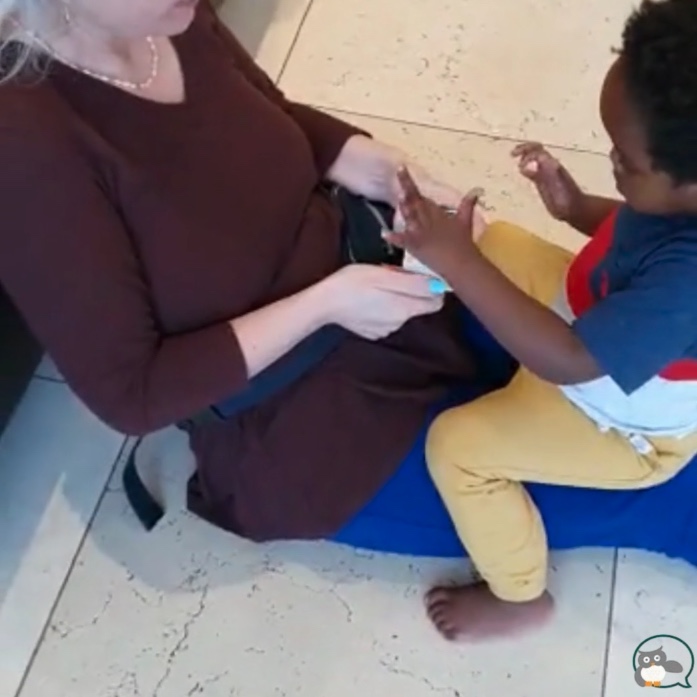
  • Why imitation is a powerful strategy to support social communication

    Before reading this blog, it’s important to understand what we mean by ‘social communication’ and ‘imitation’. Social communication is more complex than it first appears. It refers to many aspects of communication such as body language, voice, conversational skills, social ‘rules’ (such as being polite and using manners), interpersonal skills (such as developing friendships), and emotional literacy (such as appropriacy and developing self-awareness). Imitation refers to the simple act of copying.

    You may have noticed that your child has difficulties in some of the areas mentioned above. They might be less responsive to you and appear to be quite happy in their own world. Whilst we do not want to change their unique characteristics, we do need to prepare them for future experiences, and what is socially acceptable.

    How will copying my child develop their social communication?

    1. If your child is already engaged with a certain activity, they are already interested and motivated. You’re not competing for their attention.
    2. Both yours and your child’s attention is on the same activity which makes imitating for you (as the parent) easier.
    3. Studies have demonstrated that when a parent imitates a child, they are more likely to look at the adult.
    4. Imitation not only supports eye contact but supports facial expressions (such as smiling), may increase vocalisations, and encourages your child to sit closer to you.
    5. Children learn through trial and error. They may start to try to perform new actions to gain their parents attention. Let your child lead the play!!

    How do I start imitating my child?

    1. Start with observing them. Take the time just to watch. You don’t need to make notes. Sit back and observe their actions, movements, and sounds they make.
    2. Wait for your child’s reaction when they realise you are copying their actions. Remember they may not notice, you don’t need to remind them, simply copy them again.
    3. Having the same set up as your child allows them to feel in control. So, you may have two sets of the same activity rather than copying using their set of toys.

    This may sound daunting, but it doesn’t have to be. Start with a ten-minute time frame where you choose to copy your child. This is where you can practise your imitation strategy. Ten minutes a day is far more effective than an hour every two weeks. You may feel self-conscious but trust the process. Build your confidence, whilst exposing your child’s to increased language and communication, enabling them to develop vital social communication skills.

    Look at the video above to watch the strategy in action!

    Support is only a click away. I’m here to help.


    Find a speech and language therapist for your child in London. Are you concerned about your child’s speech, feeding or communication skills and don’t know where to turn? Please contact me and we can discuss how I can help you or visit my services page.

    0