The tricky /R/: Mastering tongue placement for clear speech

The /R/ sound is notoriously challenging for many children (and even some adults!). It’s one of the most complex sounds in the English language, with various pronunciations depending on its position in a word. If your child is struggling with their /R/s, you’re not alone. As Speech and Language Therapists (SLTs), we frequently work on this sound, and a key component of our therapy is focusing on proper tongue placement.

Why is the /R/ so difficult?

The /R/ sound requires precise coordination of the tongue, jaw, and lips. Unlike sounds like /P/ or /B/ that involve simple lip movements, the /R/ involves intricate tongue movements and tension. There are also different ways to produce the /R/ sound, which adds to the complexity:

  • Retroflex /R/: The tongue tip curls up and back towards the roof of the mouth.
  • Bunched /R/: The body of the tongue bunches up towards the roof of the mouth, while the tongue tip remains down.

The importance of tongue placement

Regardless of which /R/ variation is being targeted, accurate tongue placement is crucial. Even a slight deviation can result in a distorted or inaccurate sound. That’s why SLTs dedicate significant time to teaching and practising tongue positioning.

Speech therapy techniques: Focusing on the tongue

Here’s a glimpse into how I address /R/ sound difficulties, with a focus on tongue placement:

  • Visual aids:
    • Mirrors: I use a mirror to help children see their tongue movements and make adjustments.
    • Tongue diagrams and models: These visual tools provide a clear representation of where the tongue should be positioned.
  • Tactile cues:
    • Tongue depressors: These can be used to gently guide the tongue into the correct position.
    • Food-grade tools: Sometimes, I use flavoured tongue depressors or other tools to provide tactile feedback and increase awareness of tongue placement.
  • Auditory discrimination:
    • I help children distinguish between correct and incorrect /R/ sounds.
    • I use auditory cues and verbal feedback to reinforce proper pronunciation.
  • Exercises and drills:
    • Tongue strengthening exercises: Strengthening the tongue muscles can improve control and coordination.
    • Tongue placement drills: We practise positioning the tongue in the desired location and holding it there.
    • Sound approximation techniques: Sometimes we use other sounds to help approximate the /R/ sound. For example, I use the /L/ sound, to help achieve the correct tongue placement. Once my child has found the /L/ sound it is then a matter of pulling back just slightly to get a good /R/.
  • Contextual practice:
    • Once the child can produce the /R/ sound in isolation, we gradually introduce it into syllables, words, phrases, and sentences.
    • We also practise the /R/ sound in different contexts, such as at the beginning, middle, and end of words.

Tips for Parents:

  • Be patient and supportive: Learning the /R/ sound takes time and practice.
  • Practise regularly: Short, frequent practice sessions are more effective than long, infrequent ones.
  • Make it fun! Use games, stories, and other engaging activities to keep your child motivated.
  • Work with an SLT: A qualified SLT can provide personalised guidance and support.

In conclusion:

The /R/ sound can be challenging, but with targeted speech therapy and a focus on tongue placement, most children can achieve clear and accurate pronunciation.

I hope this blog post is helpful!

Get in touch with me via my contact form if you need support

Sonja McGeachie

Early Intervention Speech and Language Therapist

Feeding and Dysphagia (Swallowing) Specialist The London Speech and Feeding Practice

The London Speech and Feeding Practice


Find a speech and language therapist for your child in London. Are you concerned about your child’s speech, feeding or communication skills and don’t know where to turn? Please contact me and we can discuss how I can help you or visit my services page.
1

Similar Posts

  • ·

    Explore four truths or myths about speech, language, and communication

    There are many truths and myths out there that I’d like to explain to prevent misunderstanding. This will enable you to support your child by seeking the correct information.

    Why not have a look at the following statements and decide if you think they are true or false?

    1. Flashcards will fix my child’s speech, language, and communication needs.
    2. Singing to my child will not help their language development.
    3. My child communicates in a variety of ways not just through speech.
    4. Learning another language is good for my child.
    Speech Therpaist in London

    Now let’s explore these statements in more detail.

    1. Flashcards will fix my child’s speech, language and communication needs – False

    To develop your child’s communication skills, you’ll want your child to generalise their skills across multiple areas. I would highly recommend staying away from flashcards if they are only teaching ‘rote learning’. Children need to explore the world through play. However if you’re looking at cards, talking about them and having meaningful conversations, and your child is enjoying it, then there potentially is a use for flashcards. But at London Speech and Feeding, we love innovative activities that your child is fully immersed in.

    2. Singing to my child will not help their language development – False

    Singing introduces your child to rhyme, and repetition amongst many other benefits. It allows them to attend and listen to you as their caregiver and develop the vital stages of early communication. Singing slows down language so your child becomes more aware of the relationship between letters and sounds. You’re also supporting your child’s oral fluency as well as their memory. Furthermore, you’ll often be face to face with your child singing which allows them to see your facial expressions, lip patterns and eye contact (to name a few).

    3. My child communicates in a variety of ways not just through speech – True

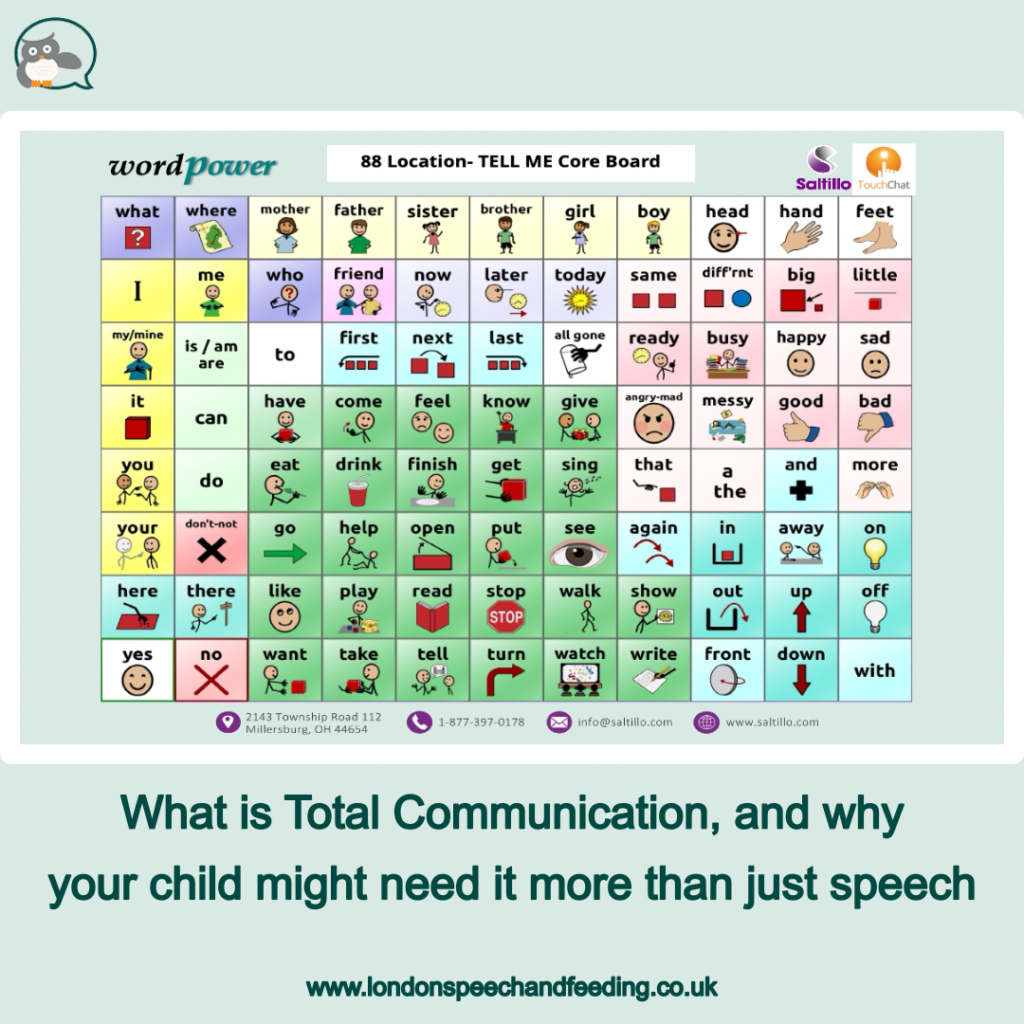
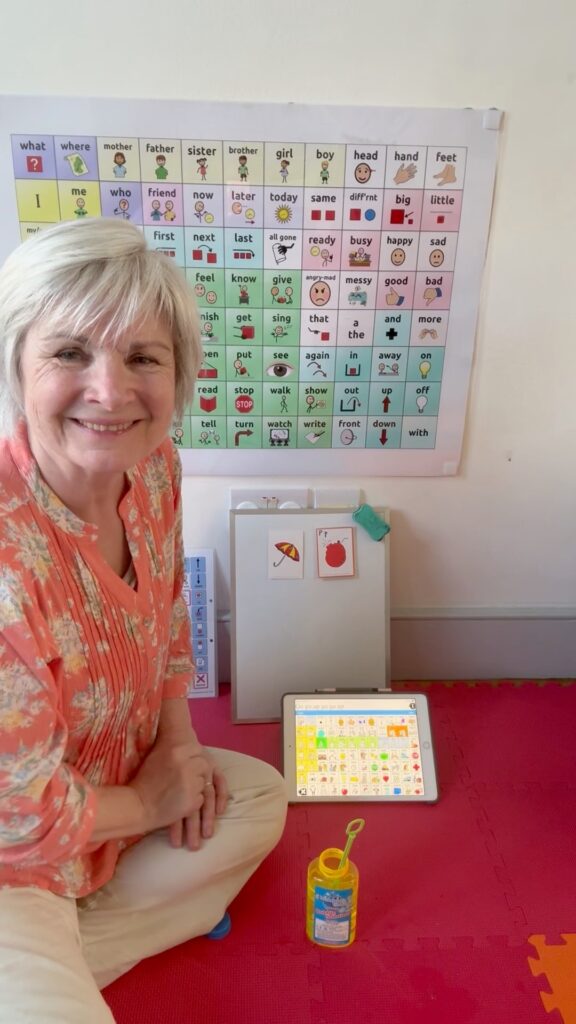
    Communication is much more than just talking. So, it’s true that communication happens in a variety of ways. Think about it. If you didn’t talk and you wanted to convey a message of frustration, you may show different facial expressions, body language; you may point at something which has caused your frustration. We can communicate through a variety of means (some of which include symbols, gestures, hand signals, and pictures). Can you think of any other ways in which you communicate to others?

    4. Learning another language is good for my child – True

    Current evidence suggests that speaking another language to your child is a positive. It allows your child to interact with different members of the family or with their friends. ASHA suggests that children who speak two languages fluently often learn new vocabulary easier and find categorisation simpler. Bilingual children have been shown to understand the needs of their communication partner. In addition, increased vocabulary may support better understanding. There are no negative factors about learning more than one language. We would recommend that, whatever language(s) your child is learning, they have a good model of that language, so they learn best practice.

    Always seek the advice from a qualified Speech and Language Therapist if you’re unsure of how your child’s speech, language and communication is developing, as there are lots of information online that aren’t always accurate.

    I’m always happy to support your family to increase your knowledge and understanding.

    You can find support by contacting Specialist Speech and Language Therapist Sonja here.


    Find a speech and language therapist for your child in London. Are you concerned about your child’s speech, feeding or communication skills and don’t know where to turn? Please contact me and we can discuss how I can help you or visit my services page.

  • ·

    Four struggles parents face when out and about with children with speech, language, and communication difficulties

    A man and a woman hug a young girl at a table
    Hug

    You (as parents) often describe yourselves as being under constant pressure and stress when looking after your children and young people with Special Educational Needs and Disabilities (SEND). You may find going out to do the simplest of tasks a challenge. And you will try to avoid social situations out of fear and anxiety. One of the most important factors to you is having like-minded people who understand your position as a parent with a young person with additional needs. Let’s look at some of the challenges you face and how I can support you and your family.

    1. Challenging behaviour and going out to the shops

    When your child displays challenging behaviour and won’t go into a shop without buying a toy that they insist on having, it can be tough on your family. You see people around you staring as you try to manage the situation. They do not understand the pressures you face, or that the simplest of tasks are a huge challenge.

    I can support you by giving strategies to use when out and about. I know that using visuals is important for your child. They may not understand or take in language when they are in a heightened state of anxiety or feeling overwhelmed. You could print pictures of the places you’re going to and put them on an easily accessible chain. Then you could use that chain when out and about at the shops. You may want to introduce a visual timetable at home. That way your child or young person understands where they are going. This may lessen their anxiety and subsequent behaviour.

    2. Your child is not able to communicate their needs to an unfamiliar communication partner

    When your child has difficulty communicating to an unfamiliar person it can be hard to manage. You feel yourself explaining your situation repeatedly. I can provide your child with individualised strategies or communication aids which support your child to communicate with both familiar and unfamiliar communication partners. We’ll work together to find which communication methods work in different situations and how your child will use these to help their independence.

    3. Being overwhelmed

    Your child or young person may easily be overwhelmed which may contribute to behaviour changes. I’ll work with your family to understand what the behaviour means, looking at what happened before and what happened afterwards. We’ll not only look at the behaviour but at the environment as well. This can inform how you can support your child or young person in the future, to reduce sensory stimuli (if needed) and for them to feel emotionally regulated.

    4. People avoid engaging with you

    One of the hardest things as a parent is for others to avoid you. You see them crossing the street because they don’t know what to say to you. All you want is them to accept you, to maintain your identity as a person and not as a SEND parent. I can support you emotionally. I can give you advice on local support networks where you can find other parents in a similar situation.

    We know the stresses that being a parent with a child with SEND comes with. Please know I am always here to support you, to find solutions so that when you’re next out and about. Your experience will be a little easier and you’ll feel less isolated.

    Improve your child’s communication, confidence, reduce overwhelm and feel supported here.


    Find a speech and language therapist for your child in London. Are you concerned about your child’s speech, feeding or communication skills and don’t know where to turn? Please contact me and we can discuss how I can help you or visit my services page.
    1
  • Tongue-Tie: A complex issue requiring careful assessment

    Tongue-tie, or ankyloglossia, is a condition where the lingual frenulum, the thin piece of tissue that connects the underside of the tongue to the floor of the mouth, is too short or tight. Tongue-tie is quite common in babies and is often not detected after birth. Tongue-tie can lead to a difficult start with breast feeding as it makes it very difficult for the baby to latch effectively.

    In my clinical experience as a feeding therapist, I have seen many babies who were not able to latch well due to the frenulum being tight. In many cases an experienced feeding speech therapist/lactation consultant can really make a difference and help a new mum to latch the baby even though the tongue is tethered to the floor of the baby’s mouth. In some cases the frenulum can be divided and once this has been done, in some cases, feeding improves immediately or soon after the division. But this is not always the case. I have seen several babies who have had as many as four tongue-tie divisions and feeding was still difficult.

    It is important to say that while tongue-tie can sometimes impact speech and feeding, it’s important to note that it’s not always the root cause of these difficulties. In recent years, there has been a surge of interest in tongue-tie division surgeries, with some cases being unnecessary. It’s crucial to understand the complexities of tongue-tie and the role of speech therapy in addressing related challenges.

    The impact of tongue-tie on speech and feeding

    When tongue-tie is severe, it can interfere with the tongue’s ability to move freely, affecting speech production and swallowing. Some common speech and feeding difficulties associated with tongue-tie include:

    • Feeding difficulties: Challenges with sucking, chewing, and swallowing.
    • Drooling: Excessive drooling due to difficulty controlling saliva.
    • Speech problems: Difficulty producing certain sounds, such as /l/, /r/, /t/, /s/ and /d/.

    The importance of comprehensive assessment

    Before considering any surgical intervention for tongue-tie, it’s essential to undergo a thorough evaluation by a qualified speech-language therapist (SLT). An SLT can assess the severity of the tongue-tie, its impact on speech and feeding, and determine if surgery is necessary.

    • Functional assessment: The SLT will assess the tongue’s range of motion, its impact on speech sounds, and the child’s overall oral motor skills.
    • Feeding evaluation: The SLT will observe the child’s feeding patterns and identify any difficulties related to tongue-tie.
    • Differential diagnosis: The SLT will rule out other potential causes of speech and feeding difficulties, such as apraxia of speech, dysarthria, or sensory processing disorders.

    The role of speech therapy

    Even in cases where tongue-tie is present, speech therapy can often be highly effective in addressing speech and feeding difficulties. Here’s how speech therapy can help:

    • Articulation therapy: Targeting specific speech sounds that may be affected by tongue-tie.
    • Childhood Apraxia of Speech (CAS): if the diagnosis by the SLT has shown that in fact the child has motor planning difficulties then there are very specific and effective treatment programmes that help with this and can make a real difference over time.
    • Feeding therapy: Strategies to improve swallowing, chewing, and oral-motor skills.
    • Sensory integration: Addressing underlying sensory processing issues that may contribute to feeding difficulties.

    London Speech and Feeding Case Study: The importance of comprehensive assessment

    One of my clients was initially diagnosed with tongue-tie and recommended for surgery at the age of eight years old. His speech had been perceived by parents and teachers as ‘mumbled and unclear’.

    However, after a thorough evaluation, I was able to determine that the child’s primary issue was apraxia of speech, a neurological disorder that affects motor planning for speech. Parents decided to wait with surgery and trust my judgment and we proceeded with weekly intensive speech therapy to address motor planning difficulties around tricky sounds and words. I am delighted to say that the child’s speech has improved significantly, demonstrating the importance of comprehensive assessment and individualised treatment. He is no longer seen as a candidate for an operation, which would have been traumatic for him at his age and, as it turned out, entirely unnecessary.

    Below is a short video clip of my working on the /l/ sound with this child.

    Using the Gingo Puppet from GingoTalk

    Conclusion

    Tongue-tie is a complex issue that requires careful evaluation and individualised treatment. While surgery may certainly be necessary in some cases, it’s essential to consider the potential benefits and risks. Speech therapy can be a highly effective approach for addressing speech and feeding difficulties associated with tongue-tie, even in cases where surgery is still required. By working with a qualified speech-language therapist, parents can ensure that their child receives the best possible care and support.

    Please feel free to contact me.

    Sonja McGeachie

    Early Intervention Speech and Language Therapist

    Feeding and Dysphagia (Swallowing) Specialist The London Speech and Feeding Practice

    The London Speech and Feeding Practice


    Find a speech and language therapist for your child in London. Are you concerned about your child’s speech, feeding or communication skills and don’t know where to turn? Please contact me and we can discuss how I can help you or visit my services page.

    1
  • ·

    Discover more about Verbal Dyspraxia

    What is Verbal Dyspraxia?

    Apraxia or dyspraxia is a difficulty in motor planning, which sometimes can be seen in both gross and fine motor skills, as well as speech. Gross motor refers to difficulties in coordinating the whole body (e.g., bumping into things frequently, often falling over hurting themselves or others through being “clumsy” or unsteady). Fine motor movements refer to smaller, more precise movements (e.g., difficulties doing anything with their hands such as holding a spoon or pen).

    Verbal dyspraxia

    In Dyspraxia of Speech, instead of seeing a coordinated smooth way of talking, we see the articulators (tongue, lips, cheeks) and voice coordinating very smoothly. The voice can be very quiet or very loud. Muscle tone can be weaker at times. Speech sounds are very unintelligible, with a flat voice that can sound forced. It may be that the timings of verbalisation appear random and that children can say a certain word once and never again. This is often what we hear from parents.

    It is interesting to note that many of our autistic clients are either non-speaking or are reluctant speakers. Sometimes they say a word once and then never again. Others say lots of words but the words are very hard to make out. Did you know that about 40% of autistic people have verbal dyspraxia? (Richard, 1997). Because the problem is one of motor planning, not of automatic motor execution, once a plan has become automatic, it is easier to get back to it and this is why we often see repetitive patterns that can be called ‘stims’ (Marge Blanc, 2004).

    How can Speech and Language Therapy help?

    Children with verbal dyspraxia can make great progress!

    We provide frequent and appropriate speech movement opportunities and with time and the right support, children will move forward and begin to speak more fluently and with greater intelligibility. It is important to know this can take time.

    We provide Oral Motor Therapy using a variety of approaches to practise breathing, vocalising on the outbreath, and sequencing our speech movements.

    We design carefully tailored programmes focusing on words that have a lot of power (e.g., NO, GO, UP, IN, OUT, LET’S GO, STOP).

    We offer shared enjoyment, and laughter. This helps a child find their voice. Other ways of finding our voices include singing or humming, or even yelling/shouting!

    The most difficult phase of verbal dyspraxia is initiation, that is to start talking, to start producing a word. Frequent “automatic” repetition supports children with initiation because it removes the element of “thinking to start”. I often ask a child to repeat a word 5-10 times (with rewards at the end. A little game works well). You can see that with repetition the act of initiating is taken out of the equation as you are “on a roll “as it were.

    Once a child starts to find their voice, we will be able to hear them talk lot… And if we give them credit and presume that what they are saying has meaning, we will find in time that their words become clearer and more intelligible. If we listen carefully, we can detect real words and phrases.

    For more tips and support, please get in touch!


    Find a speech and language therapist for your child in London. Are you concerned about your child’s speech, feeding or communication skills and don’t know where to turn? Please contact me and we can discuss how I can help you or visit my services page.
    0
  • ·

    Explore the world of speech sound therapy for young children

    Many parents who come to the clinic voice with the concerns about their child’s “speech”. On assessment we discover that actually besides the words not being clear what we most often don’t see is “language” (putting words together to request something for example). And we don’t see “social communication” (waving bye with a smile for example). So what is perceived as “speech” is much more than just not saying the speech sounds correctly. It might be that we need to increase the child’s vocabulary and language so that we can target specific speech sound patterns.

    We’ll guide you through some of the most frequently asked questions.

    What is the difference between speech and language?

    Language is how we put words together (e.g., the cat ran up a tree). For non-verbal children this might be how gestures and symbols are put together. Both will put these into a meaningful context. Language needs to use either speech and/or gestures or signs or pointing to symbols in order to come into being. It needs words, either spoken or written, put into grammatical order so that thoughts can be expressed adequately: about the here and now, about what he had for breakfast this morning or what we are going to do this coming weekend. We put words together to express our feelings and thoughts. Speech is one aspect of this very complex process.

    Speech is the specific sounds that make up a word (e.g., the sounds in fish are /f-i-sh/).

    Some children are delayed in their speech but will catch up with their peers’ development with time. Others may be using disordered speech sound patterns. If you’re unsure, contact your Speech and Language Therapist as early intervention is vital. It might be that you’re given activities to carry out at home. Or a direct therapeutic intervention may be required, along with regular practice at home. The approach depends on your child and how they learn best.

    When might your Speech and Language Therapist recommend direct Speech and Language Therapy?

    There are several reasons why your child may need intervention to support their communication. Some of these include:

    • When they produce vowels incorrectly
    • When a child has significantly fewer consonants than they should have by their age
    • Error patterns that are not following a typical process
    • Fewer word approximations
    • When a child is ready for speech therapy. That is to say, when we can target speech production through interactive play but most often speech is targeted through repeated activities which focus on a few sounds or words at a time. For this to work ideally a child does need to be able to sit at a table and take part in the activities and games.

    How can I work on speech and language targets at the same time?

    You’ll want your child to be engaged in activities. It’ll need to be in short bursts to keep their attention. Let’s say you’re focusing on the /p/ sound. You may get a bag with objects and items with /p/ in them. Speak to your child’s Speech and Language Therapist about what position in the word they are targeting now.

    Sing the ‘what’s in the bag’ song. Pull out each item in turn and emphasise the sound that you are working on such as “it’s a fox, ffffox”. You can then comment on what the fox is doing, or what they look like (e.g., look at this fffurry fffox. It’s very fffriendly. Oh, the fffox is running).

    This activity gives you the opportunity not only to build vocabulary but also to expose your little one to a good model of speech sounds.

    “I’m concerned my child won’t sit through the assessment”

    This is a common concern. Don’t worry. If your child is not able to sit through an assessment then we usually offer play-based assessment. This means it is activity focused and can be wherever your child feels most comfortable; this is usually on the floor. It is often best to see children in their own homes or even nursery places where they can roam more freely and where they feel most comfortable. On reading the filled-out parent questionnaire we can decide whether a home visit/nursery visit or a clinic visit might work best for your child.

    You will be guided all the way through from assessment to intervention and beyond. So, you’ll leave feeling empowered and confident to get started!

    Contact Sonja for support with your child’s speech.


    Find a speech and language therapist for your child in London. Are you concerned about your child’s speech, feeding or communication skills and don’t know where to turn? Please contact me and we can discuss how I can help you or visit my services page.
    0
  • Discover the secrets to applying for an Education and Healthcare Plan

    Bubble speech with a testimonial

    Navigating the education and healthcare system isn’t easy, which you’re all too familiar with. You want what’s best for your child so that they can thrive. This isn’t about achieving top grades in class or getting into a top set in a subject. It’s allowing independence, being able to make developmentally appropriate choices and giving them a voice, allowing them to be heard.

    You may be at the start of your journey or going through the process of applying for an Education and Healthcare Plan (EHCP). You feel lost and have minimal confidence in the system, and every question you ask feels like it’s challenging every belief you have. But you know you must carry on. You worry that your child’s EHCP will be rejected and that this will prevent them from achieving their potential. You’re aware of the importance to put forward your child’s case and advocate for them. What the panel don’t see is that you have your child’s best interests in mind every single minute of every single day. Fighting for their needs is tough on your family.

    Let me guide you through some of the most frequently asked questions, allowing you to feel more confident in the process and how together we can make a difference to your child’s future.

    1. What is an EHCP?

    An EHCP is a legal binding document which provides support for children up until the age of 25. These are for children who require more support than the provision given through Special Educational Needs.

    2. Why is an EHCP used?

    An EHCP is used to help you get the correct support for your child, so they can achieve their potential, and improve the quality of their learning. It also allows support for the family.

    3. What is the role of a Speech and Language Therapist in the process of applying for an EHCP?

    The role of a Speech and Language Therapist is to assess your child’s speech, language, and communication. It forms part of the plan to see what extra support is needed to access their education and reach their full potential. A report will be formulated and identify any limitations in your child’s communication profile and how these impact on their education.

    4. What areas does an EHCP cover?

    The EHCP document is very detailed to demonstrate what support your child needs and is likely to need. There are 11 sections (A-K). It covers the following:

    • A – An overview of the child to include your child’s interests and wishes.
    • B – A detailed explanation of your child’s needs which includes their cognition and learning ability, communication and interaction skills, social, emotional, and mental health and sensory and physical disabilities.
    • C – The healthcare needs of your child which may include physical or mental health difficulties, difficulties with eating, anxiety, and epilepsy.
    • D – The social care needs of your child such as being able to take part in activities outside of school.
    • E – This section collates all the information and discusses the outcomes which are based on the assessment (which includes educational aims such as success in education or participation).
    • F – Section F details the provision required to meet their needs.
    • G – Section G is where you’ll need information about their learning difficulty or disability which may include information about equipment or medication (e.g., software or a specialist wheelchair).
    • H – You’ll provide details on social care for your child (such as activities attended outside of school or any short breaks). This is also the section to write about the support you get at home as a family.
    • I – Section I should give details on the education setting your child attends.
    • J – This section contains information about finances you will receive to get the support your child needs.
    • K – The final section contains all the supporting documentation (such as assessments, reports, and advice).

    Together we can achieve support

    Whilst this may seem daunting, it is necessary to gain the support your child requires. I will guide you through the process, step by step, so you feel confident in the application that you submit on your child’s behalf. This document supports your child’s future.

    Let’s break down the barriers and allow your child to learn and flourish. It’s their time to be independent.

    Support is only a click away. I’m here to help.


    Find a speech and language therapist for your child in London. Are you concerned about your child’s speech, feeding or communication skills and don’t know where to turn? Please contact me and we can discuss how I can help you or visit my services page.

    1