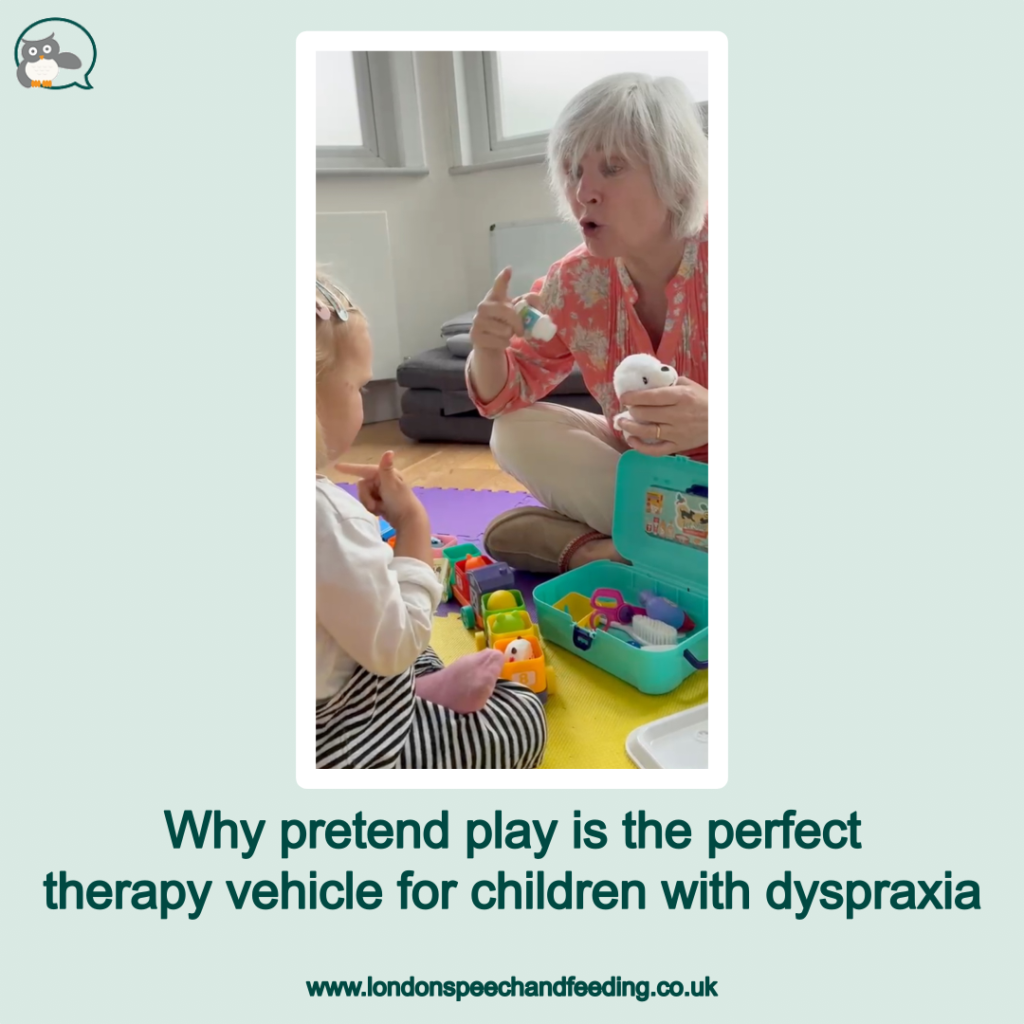
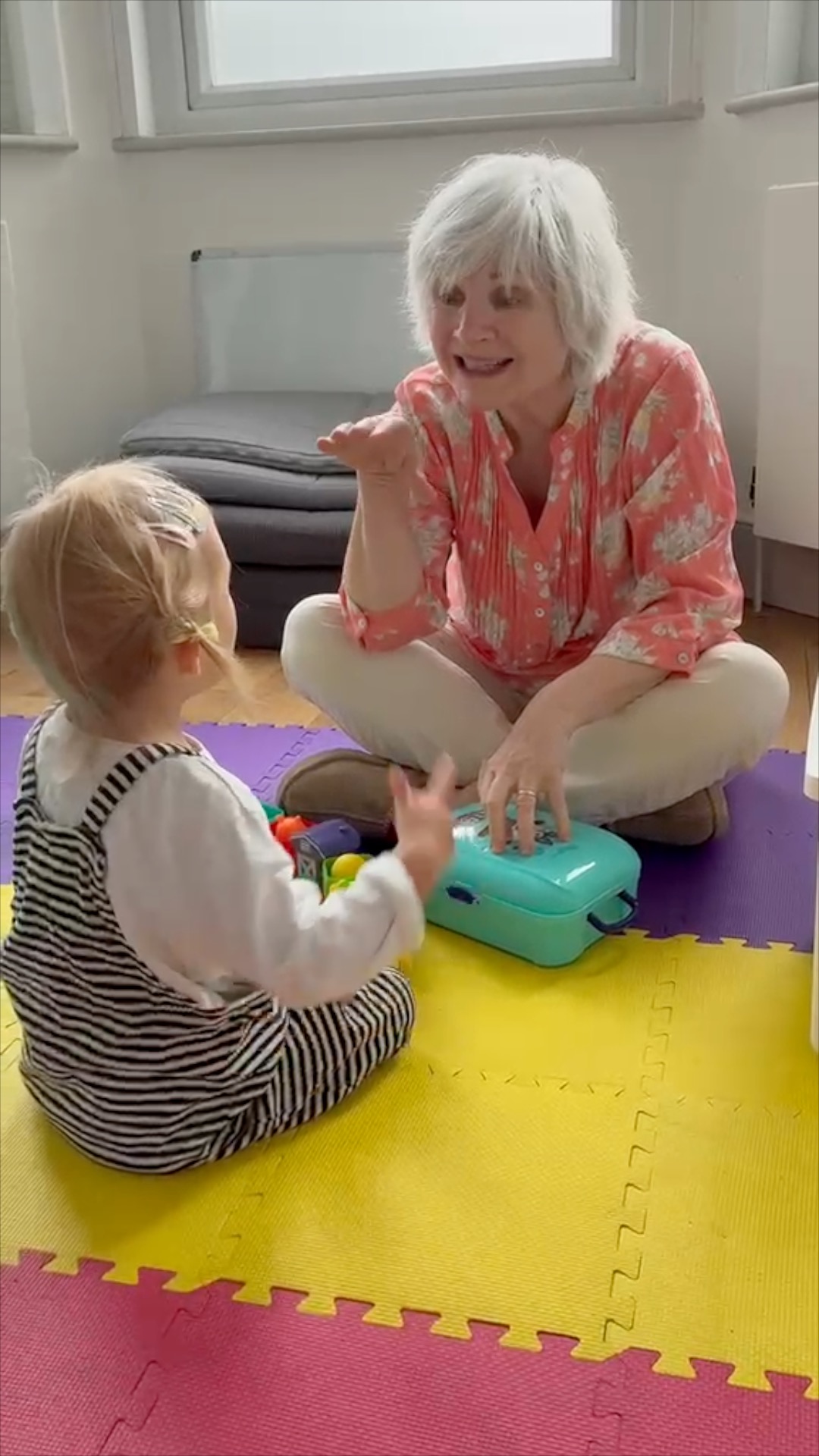
Great toys and books for our toddlers (around 1–2 years old)

| |

As a speech and language therapist, I often get asked by parents what toys and books they should buy for their toddlers. It can feel overwhelming with so many options available! So, I’ve put together a list based on my experience and what I’ve found works well.

Remember, every child is unique!

Observe your toddler’s interests and play style. Some toys that are popular might not be engaging for your child.

Here are a few ideas to get you started:

Sensory Toys:

  • Stacking cups: These are fantastic for developing hand-eye coordination, fine motor skills, and understanding size relationships. (Various brands available) Note: You can stack many things you have around the house, like bowls or measuring cups, for a similar experience!
  • Shape sorters: Help with shape recognition, hand-eye coordination, and problem-solving. (Melissa & Doug, Vtech)
  • Sensory balls: Balls with different textures (soft, bumpy, squishy) provide tactile stimulation. (Various brands)
  • Push and pull toys: Encourage gross motor development and exploration. (Vtech, Fisher-Price)

Communication-focused toys:

  • Picture books with flaps: Engage curiosity and encourage language development. (Various brands)
  • Talking toys: Introduce new vocabulary and encourage imitation. (Vtech, Fisher-Price)
  • Simple puzzles: Develop hand-eye coordination, problem-solving, and spatial awareness. (Melissa & Doug, Ravensburger)
  • Musical instruments: Encourage exploration of sounds and develop auditory skills. (Bright Starts, Fisher-Price)

Now, let’s talk about books:

  • The Very Hungry Caterpillar by Eric Carle: A classic with repetitive text and vibrant illustrations, great for introducing vocabulary and concepts like days of the week.
  • Brown Bear, Brown Bear, What Do You See? by Bill Martin Jr. and Eric Carle: Simple, repetitive text and engaging illustrations make this a favourite for many toddlers.
  • Goodnight Moon by Margaret Wise Brown: A soothing bedtime story with calming illustrations.
  • Pat the Bunny by Dorothy Kunhardt: An interactive book with textures and flaps to engage young children.
  • Corduroy by Don Freeman: A heartwarming story about a teddy bear who loses his button.

Remember:

  • Observe your child’s interests: Choose toys and books that capture their attention and encourage exploration.
  • Engage with your child: Play with the toys together and read books aloud with enthusiasm.
  • Keep it simple: Start with a few toys and books and gradually introduce new ones.
  • Rotate toys: Keep playtime fresh by rotating toys and books regularly.
  • Most importantly, have fun! Reading and playing with your child should be a joyful experience for both of you.

Also consider the power of open-ended play

In today’s world filled with electronic gadgets, it’s easy to overlook the value of open-ended play. Open-ended toys lack specific functions or prescribed outcomes, allowing children to use their imaginations to explore and create. Unlike toys with pre-determined ways to play, open-ended toys encourage:

  • Creative thinking: Children can use them in countless ways, developing their own rules and narratives. A block can become a car, a house, or a spaceship, depending on the child’s imagination.
  • Problem-solving skills: Children learn to figure out how to use the toys, experimenting and adapting as they go. Don’t immediately rush in and fix things for your little one, let them think for themselves and then communication incentive: let them come and find you!
  • Fine motor skills: Many open-ended toys, like blocks, encourage the development of fine motor skills like grasping, stacking, and building.
  • Cognitive development: Children learn about cause and effect, spatial relationships, and problem-solving as they play with open-ended toys.
  • Social-emotional development: Open-ended play can foster social interaction and cooperation as children play together and share ideas.

Simple toys with big impact

Some of the best toys for toddlers are often the simplest ones. Here are a few examples:

  • Wooden blocks: Building towers, bridges, and forts encourages creativity and problem-solving.
  • Balls: Throwing, kicking, and rolling balls promote gross motor skills and hand-eye coordination.
  • Fabric: Bits of fabric can be draped, draped, and used for imaginative play.
  • Empty boxes: From cardboard boxes to tissue boxes, these can be transformed into anything a child can imagine: a car, a house, a spaceship!
  • Natural materials: Sticks, leaves, pinecones, and rocks can be used for imaginative play and sensory exploration.

Remember, the key to open-ended play is to let children explore and discover

Step back and observe, allowing your child to use his or her imaginations without too much direction. You might be surprised at the creative ways he or she uses simple toys!

Happy play times with your little one!

Contact me via my contact form.

Sonja McGeachie

Early Intervention Speech and Language Therapist

Feeding and Dysphagia (Swallowing) Specialist The London Speech and Feeding Practice

The London Speech and Feeding Practice


Find a speech and language therapist for your child in London. Are you concerned about your child’s speech, feeding or communication skills and don’t know where to turn? Please contact me and we can discuss how I can help you or visit my services page.
1

Similar Posts

  • · ·

    Baby-led weaning: Empowering little eaters from the start

    I had a mum ask me about Baby Led Weaning the other day. So I thought I would write a blog on all the useful questions she had and what we discussed as it may help lots of mums and dads out there.

    As a Paediatric Feeding SLT, one of the exciting developments in recent years is the growing interest in baby-led weaning (BLW). This approach to introducing solids has gained significant traction, and for good reason. It empowers infants to take the lead in their feeding journey, fostering a positive relationship with food and supporting important developmental milestones.

    What exactly is baby-led weaning?

    At its core, baby-led weaning is about offering your baby appropriately sized and textured solid foods from the very beginning, allowing him or her to self-feed. Instead of spoon-feeding purées, you present whole, soft foods that your baby can grasp, bring to his or her mouth, and explore at his or her own pace. This means no mashing, no blending, and no forcing spoons into reluctant mouths. It’s a fun, messy, and intuitive process that is led by your baby’s natural instincts.

    The genesis of baby-led weaning

    ‘Baby-led weaning’ was popularised by British health visitor Gill Rapley. In the early 2000s, Rapley observed that babies naturally develop the skills needed to self-feed and that traditional spoon-feeding might actually hinder this development. Her work, particularly her book Baby-Led Weaning: The Essential Guide to Introducing Solid Foods (co-authored with Tracey Murkett), published in 2008, brought BLW into the mainstream and provided a structured framework for parents. Her research and observations highlighted the benefits of trusting a baby’s innate ability to regulate his or her intake and explore different textures.

    What’s the deal?

    Implementing BLW is simpler than you might think, though it does require a shift in mindset. Here’s a breakdown of what it typically involves:

    • Readiness is key: The golden rule of BLW is to wait until your baby shows clear signs of readiness. This isn’t about age alone, but rather developmental milestones. Your baby should be at least six months old, able to sit unassisted, have good head and neck control, show an interest in food (e.g., reaching for yours), and have lost his or her tongue-thrust reflex (which pushes solids out of his or her mouth).
    • Offer finger foods: Start with soft, easily graspable foods cut into finger-sized sticks or spears. Think cooked sweet potato fries, steamed broccoli florets (soft enough to mash with gentle pressure), banana sticks, or avocado slices. The goal is for babies to be able to pick it up and get some into their mouth.
    • Embrace the mess: BLW is inherently messy, especially in the beginning. Food will be squished, dropped, and smeared. This is a crucial part of the learning process as babies explore textures, smells, and the properties of food. A wipeable mat under the highchair and a good bib are your best friends!
    • Observe, don’t interfere: Allow your baby to lead. He or she will decide what to eat, how much, and how quickly. Avoid putting food into his or her mouth or pressuring him or her to eat more. This respects his or her hunger and fullness cues, laying the foundation for healthy eating habits.
    • Continue breastmilk or formula: Until your baby is well-established on solids, breastmilk or formula remains his or her primary source of nutrition. Solids are for exploration, taste, and developing skills, gradually increasing in quantity over time.

    The benefits of baby-led weaning

    The advantages of BLW extend far beyond simply getting food into your baby. From a speech and feeding perspective, the benefits are compelling:

    • Develops oral motor skills: Chewing, gnawing, and manipulating various food textures are crucial for developing the muscles in the mouth, jaw, and tongue. This strengthens the oral motor skills necessary for speech development.
    • Enhances fine motor skills and hand-eye coordination: The act of grasping food, bringing it to the mouth, and coordinating these movements significantly refines fine motor skills and hand-eye coordination.
    • Promotes self-regulation and intuitive eating: By allowing babies to control their intake, BLW helps them tune into their own hunger and fullness cues, fostering a healthy relationship with food and reducing the likelihood of overeating.
    • Encourages adventurous eating: Exposure to a wide variety of tastes and textures from the outset can lead to less picky eating later. Babies are more likely to accept new foods when they have been in control of their exploration.
    • Facilitates family mealtimes: BLW integrates babies into family mealtimes from an early age, promoting social interaction and making mealtime a shared, enjoyable experience.

    When is baby-led weaning appropriate, and when not?

    While BLW offers numerous benefits, it’s not a one-size-fits-all approach.

    When BLW is appropriate:

    • When your baby meets all the developmental readiness signs: This is paramount for safety and success.
    • When you are comfortable with the mess and the learning curve: It requires patience and a relaxed attitude.
    • When you are committed to offering a variety of safe, appropriate foods.
    • When you are willing to learn about and practise safe food preparation to minimise choking hazards.

    When BLW might not be appropriate (or requires extra caution and professional guidance):

    • If your baby has a history of prematurity or significant developmental delays: His or her oral motor skills might not be sufficiently developed.
    • If your baby has certain medical conditions or anatomical differences (e.g., cleft palate, severe reflux, swallowing difficulties): These may necessitate a modified approach to feeding.
    • If there are significant feeding difficulties, aversion, or a history of choking incidents.
    • If you feel overly anxious about choking: While BLW, when done correctly, is not associated with a higher choking risk than traditional weaning, parental anxiety can impact the feeding experience. Education and consultation with a professional can help alleviate these concerns.

    A note on safety: Choking hazards

    It’s crucial to understand the difference between gagging and choking. Gagging is a natural reflex that helps prevent choking and is very common in BLW as babies learn to manage food in their mouths. Choking is silent and serious. To minimise choking risks:

    • Always supervise your baby closely during mealtimes.
    • Offer appropriately sized and textured foods. Avoid small, round, hard foods like whole grapes, nuts, popcorn, and large chunks of meat.
    • Ensure your baby is sitting upright and calm.
    • Educate yourself on infant CPR.

    Final thoughts

    Baby-led weaning is a wonderfully empowering approach that celebrates a baby’s natural abilities and fosters a positive and independent relationship with food. As Speech and Language Therapists we often see the positive impact it has on oral motor development, self-regulation, and overall feeding confidence. By understanding what it entails, when it’s appropriate, and prioritising safety, you can embark on this exciting journey with your little one, helping him or her become a confident and capable eater from the very first bite.

    If you would like help and support with weaning your baby whilst continuing to breastfeed then please get in touch!

    Sonja McGeachie

    Highly Specialist Speech and Language Therapist

    Owner of The London Speech and Feeding Practice.


    Health Professions Council registered
    Royal College of Speech & Language Therapists Member
    Member of ASLTIP

    Find a speech and language therapist for your child in London. Are you concerned about your child’s speech, feeding or communication skills and don’t know where to turn? Please contact me and we can discuss how I can help you or visit my services page.

    1
  • ·

    Unlocking language and thinking skills: The power of sequencing

    Sonja demonstrates the power of sequencing

    As speech and language therapists, we often use a variety of techniques to help children develop their communication and cognitive skills. One incredibly valuable tool in our toolkit is the use of sequencing activities. But what exactly is sequencing, and why is it so beneficial?

    What is sequencing?

    Sequencing, at its core, involves arranging items, events, or actions in a specific order. This could involve putting pictures in the correct order to tell a story, following the steps in a recipe, or understanding the order of daily routines like brushing teeth or getting dressed.

    The link between sequencing and language

    Sequencing is fundamental to language development and is quintessential to executive functioning skills in several ways:

    • Narrative skills: Storytelling, whether oral or written, relies heavily on sequencing. A child needs to understand the order of events (beginning, middle, end) to construct a coherent narrative.
    • Explanations and instructions: Providing clear explanations or instructions requires the ability to sequence information logically. For example, explaining how to play a game or how to get from one place to another. In the video clip below we are working on ‘how do make a sandwich’.
    • Vocabulary development: Sequencing helps children understand temporal words and phrases like ‘first,’ ‘then,’ ‘next,’ ‘before,’ and ‘after’.
    • Sentence structure: Constructing grammatically correct sentences often involves sequencing words in a specific order (e.g., subject-verb-object).

    Beyond language, sequencing plays a crucial role in developing executive functioning skills. These are higher-level cognitive skills that help us plan, organise, and manage our time and actions.

    Sequencing activities can help children improve in the following areas:

    • Planning and organisation: Sequencing tasks require children to think ahead, plan the steps involved, and organise them in a logical order.
    • Problem-solving: When they are faced with a problem, sequencing helps children break it down into smaller, more manageable steps.
    • Working memory: Holding information in mind and manipulating it, such as remembering the steps in a multi-step direction, is supported by sequencing skills.
    • Cognitive flexibility: Being able to adjust to changes in a sequence or think of alternative sequences promotes cognitive flexibility.

    Examples of sequencing activities

    Here are some practical examples of sequencing activities you can do with your child:

    • Picture sequencing: Use a set of picture cards to tell a short story or illustrate a process (e.g., making a sandwich, going to the park). Ask your child to arrange the cards in the correct order.
    • Story retelling: After reading a story, have your child retell it, focusing on the order of events.
    • Following instructions: Give your child multi-step instructions to follow (e.g., ‘First, get your shoes. Then, put on your coat. Next, go to the door.’).
    • Sequencing during play: Integrate sequencing into everyday play. For example, while building with blocks, talk about the steps: ‘First, we put this block here. Next, we add this one…’
    • Daily routines: Create visual schedules for daily routines, like getting ready for school or bedtime, to help children understand the sequence of events.
    • In the video clip below I am using an on-line language activity which is often fun for children as they can use their finger to swipe the pictures effortlessly into the right place and, if we realise at the end of the story that we have made a little error, we can then easily re-jig the pictures into their correct place.

    In conclusion

    Sequencing activities offer a powerful way to support children’s language development and enhance their executive functioning skills. By helping children understand and create order, we equip them with essential tools for communicating, learning, and navigating the world around them.

    Do get in touch via my contact form if you are concerned about your child’s development.

    Sonja McGeachie

    Highly Specialist Speech and Language Therapist

    Owner of The London Speech and Feeding Practice.


    Health Professions Council registered
    Royal College of Speech & Language Therapists Member
    Member of ASLTIP

    Find a speech and language therapist for your child in London. Are you concerned about your child’s speech, feeding or communication skills and don’t know where to turn? Please contact me and we can discuss how I can help you or visit my services page.
    1
  • ·

    Explore seven activities to encourage speech development in school-aged children

    Explore seven activities to encourage speech and language development in school-aged children
    Encourage speech and language development in school-aged children

    We hear too often parents ask, “what do I need to buy so I can support speech skills at home?” The advice I give is to use what you have at home; you don’t need specific toys or equipment. I’ll give you some ideas so you can adapt them for your child or young person’s interests.

    Ensure you know which level your child is working at (e.g., sound level, consonant + vowel, consonant vowel, word, sentence, or generalisation level). If you’re unsure ask your child’s Speech and Language Therapist. The more practice your child has, the better, so practise little and often.

    1. Bubbles

    Explain to your child that you will play a game. You’ll take it in turns to say their tricky sound and practise at whichever level they are working at/towards.

    2. Pop up pirate or similar

    Explain the rules of the game to your child (as above). You could stick a picture to each of the swords for variety or stick photos on different characters beginning with their tricky sound. This would be particularly helpful if they are struggling for motivation.

    3. ISpy

    This is a great game where you can involve the whole family and you can even play it to and from school. Choose their tricky sound and everyone takes it in turns to say “ISpy with my little eye something beginning with [insert tricky sound]”.

    4. Hide and seek with words

    Explain to your child that you will hide pictures around the room. They will cover their eyes and will be told when they can look. Then they become a word detector and search for the pictures. After they’ve found each one, they are to say the sound (at whichever level they are working at).

    5. Name 10!

    Your child will name 10 words beginning with their tricky sound. Your Speech and Language Therapist will be able to give you the words at the level they are working at.

    6. Sound focused game – silly sentences!

    Your child will make silly sentences beginning with their tricky sound. E.g., if your child’s tricky sound is /s/ a silly sentence might be ‘Simon sat on sizzling sausages this Saturday’. Take turns to create them. Allowing your child to hear the correct sound is important for their production skills.

    7. Throwing a beanbag on the correct sound

    Have their tricky sound and the sound they make placed on the floor. They can use a beanbag or a ball to throw or place on the sound which you produce. Explain what you expecte them to do. Use specific praise (e.g., you listened well).

    You can adapt all the above activities to meet your child’s needs. Please feel free to contact me should you need any further advice. I’m here to provide support, reduce your overwhelm and empower you to support your child’s speech and improve their communication. This will in turn reduce their frustration.

    Find a speech and language therapist for your child in London. Are you concerned about your child’s speech, feeding or communication skills and don’t know where to turn? Please contact me and we can discuss how I can help you or visit my services page.

    1
  • Using AAC – Augmentative and Alternative Communication for non-verbal and early verbal children

    Using a Core Vocabulary Board

    Your Speech Therapist might have been advising you to introduce words to your child with the help of a CORE BOARD. What on earth is she talking about and why would we want to do this, I hear you think – and in fact this is what I get asked a lot, as I often do recommend using Core Boards.

    Core boards belong to the category of Augmentative and Alternative Communication (AAC ) and they can be really useful for:

    • Children or adults who cannot speak at all or who are very hard to understand.
    • Children who are slow to speak and have difficulty expressing themselves verbally, due to genetic conditions as Down Syndrome, Verbal dyspraxia, Autism or any other learning difficulty that means a child is slow to develop speech.

    Here is what a Core board might look like, in fact this is one that I love to use. It is made by Beautiful Speech Life, there are a ton of similar boards out there for free. I have also made my own, you can check it out on my Instagram feed.

    Using a Core Vocabulary Board

    What is Core Vocabulary/ Core words?

    Core vocabulary consists of the most common words used by children throughout a day. In 2003 Banajee and Dicarlo et al found that 50 % of pre-schoolers in their project used nine words consistently across their daily play and meal routines. These words are Core words and are typically the ones you can see on a board, like the one above.

    How To Use It

    Adults always first need to consistently model and show their child how to use a board. This is key! For example: Adult can point to “YOU” “WANT” ‘MORE” and then point to the cup of Water on the counter. Child could then reply either by shaking his/her head and/or pointing to “NOT” which also stands for “NO”. Then adult can point to “NOT” “MORE” and do an OK sign as well. Eventually Child can initiate a request and point to “I” “ WANT” “MORE” and then point to the cup on the counter.

    This is not as cumbersome or limited as it first sounds or appears. Here’s why: As adult you can talk normally and, of course, many words you are using will not be on this board. But some will be, and you will be surprised how many you can find when you start using it. So you could say quite normally: Hey lovely (name of your child) would YOU LIKE some MORE water? The words in capital are on the board which you can point to as you speak normally. Basically, you are showing/saying to your child: “We can speak and these are the pictures we can use to help us; We call this TOTAL COMMUNICATION, as communication is so much more than just words! Great communication can be silent, where we use our facial expression, our smile, our eyes, our hand gestures, body movements and yes, of course, words. But when words fail us, these boards are so helpful.

    This still does not answer your original question of: why would I want to do this, I want my child to talk!? You are a SPEECH Therapist, please help my child TALK, not point to pictures, that is not what I had in mind.

    Let Me Explain

    When speech is difficult for a child it doesn’t mean that there is nothing to talk about! Of course, we want all our children and all people to speak because it is the easiest and most effective way of communicating, no doubt! However, sometimes this is very hard for some children and whilst we are always working towards speech where possible, we also want to make sure that whilst figuring out how to speak, your child has a MEANS TO COMMUNICATE. Using a board like this might well be a temporary strategy but whilst you are using it and working on their speech you will find a reduction in tantrums and frustration as you child is able to express themselves more effectively.

    Often we find that as soon as we offer a CORE VOCABULARY like the above sample a child who has had no or very few words suddenly blossoms and starts to point to new words on the board and starts to PRACTICE USING THESE WORDS!! Practice makes perfect, right? Yes it totally does! There is lots of evidence that tells us that using Core Vocabulary Boards ENHANCE AND SUPPORT SPEECH PRODUCTION AND NOT HINDER IT. Using a board like this will only ever be helpful to your child and will never make your child “lazy” – too lazy to speak? NO SUCH THING!

    Here is what one of my parents says about the core board we use with her little boy:

    “the board has been a game changer, my son is a visual learner so it really helps to have the board as he associates communication so much easier this way. We have incorporated his twin sister who models it’s use and have definitely seen improvement in speech through its support and his frustration around being unable to verbally communicate at times has definitely lessened”

    K Connolly, Mother of Tom (aged 3.5 years).

    Reading and hearing this makes me so happy!

    In addition to general core board above I also sometimes use a Core Board that is specific to an activity, such as for example BLOWING BUBBLES. Below is an example of such a board, which you can use very nicely during a bubble blowing activity and sometimes it is a nice place to start for newcomers, this can be an easy introduction. You can download this and many similar boards on www.widgit.com for free!

    Using a Core Vocabulary Board

    There is so much more to say about AAC and using Coreboards, visit my Instagram you can find a bit more information on how I use them.


    Find a speech and language therapist for your child in London. Are you concerned about your child’s speech, feeding or communication skills and don’t know where to turn? Please contact me and we can discuss how I can help you or visit my services page.
  • Ten Top Tips for Parents and Carers to Encourage their Children’s Communication Development

    A woman is looking down at a child in her arms

    Read some of my top tips so you can make your communication as effective as possible. You’ll be able to make the most out of everyday opportunities to support your child’s speech, language and communication development.

    1. We need to go beyond the child’s needs. Think about their interests and what they may want to communicate. If they can express their wants, they are more likely to be motivated. Motivation is a big factor to ensure successful outcomes in therapy.
    2. Practice really does make perfect. So, 10 minutes twice daily is more effective than an hour every two weeks. To begin with, practise these strategies in a structured activity and then, when you’re comfortable, you can begin to generalise them to other contexts in your child’s life.
    3. Add an element of play into your communication. Make it exciting!! You could add suspense or anticipation. You could use exaggeration to add to the drama, or you could simply change the pace to add a different dimension to your interaction.
    4. Use the ‘wait’ from the OWL strategy to see if your child initiates or makes a request.
    5. Create a list of these requests that your child responds well to. You will be able to notice any patterns and create more of these opportunities to give your child more success.
    6. Talk about the rhythm in everyday experiences such as tapping your foot or describe the rhythm of the washing machine or dishwasher. Try to find everyday sounds in your child’s environment that you can talk about.
    7. Add a gesture to the sound or rhythm. We know that a lot of children are visual learners so adding a gesture will support their understanding and use of language.
    8. Ensure you look animated and this will encourage your child to participate.
    9. Learn to create opportunities for your child every day.
    10. Remember that we are not forcing our children to participate. We are simply making the activity irresistible. Above all, remember communication should be fun, so be creative!!

    You may feel like you need some reassurance, someone to check in with to make sure you’re maximising these opportunities. Feel free to contact me.


    Find a speech and language therapist for your child in London. Are you concerned about your child’s speech, feeding or communication skills and don’t know where to turn? Please contact me and we can discuss how I can help you or visit my services page.
  • ·

    Cued Articulation – using hand gestures to show how a sound is made

    Watch how cued articulation can transform your child’s speech and language skills!

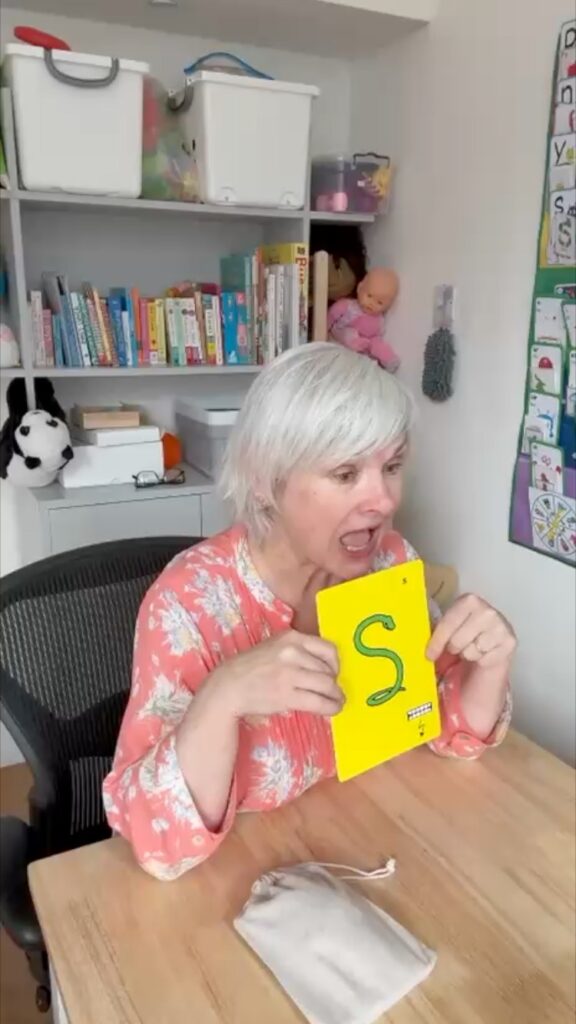
    Cued Articulation involves using specific handshapes and placement cues to guide the speaker’s articulators, such as the tongue, lips, and teeth, to produce accurate sounds. It was originally conceptualised by Jane Passy, a speech-language pathologist. But it is important to know that we can, and often do, also use other speech cues which help our student visualise what they need to do. In other words, we can mix and match our cue pictures depending on what works best with each student.

    In the beginning of my speech therapy practice I would stick religiously to Jane Passy’s method but over the years I have learned and used many different visual hand cues which all have worked with individual students.

    It is important to remember that this is not an exact science, rather than an art! The art is to find the key to each individual student’s understanding and inspire motivation to try out a sound which they find hard to do.

    As an example, the hand signs used by Caroline Bowen’s method, an Australian Speech-Language Pathologist, are quite different to Jane Passy’s signs but they can equally work very well. Caroline Bowen’s visual for the /r/ sound is the ‘rowdy rooster’ — a crazed rooster on a motorbike — and the hand signal is that of revving up the motor bike engine with both hands whilst trying out the /r/ sound! I have a good handful of students who really loved this rooster image and were able to eventually produce a good /r/ using this cue.

    So, it is horses for courses with many things, and visual images and hand cues are no exception!

    Sound picture cards:

    Again, there are a host to choose from and I tend to collect a number of different images for each sound I want to practise with my student. As an example, below are a couple of different examples I use for the sound /p/:

    The Nuffield Programme suggests to use this popper card, which works well with a student who knows these poppers and perhaps has one on their trousers.

    As an alternative, and especially for younger students, I like using the Popper Pig Card – which I also have in my room so I can quickly show how it pops. Or we can have a popping game in between saying the /p/ sound at times. (The popper card is great as I can use the real toy to help with conveying the /p/ sound as it pops.)

    Each card has its own merit and I choose the right card for the individual student.

    How I use cued articulation and the visuals in Speech Therapy

    1. Cueing and practice: I introduce the appropriate card and handshapes for the targeted sounds. We then practise producing the sounds.
    2. Reinforcement and feedback: Positive reinforcement encourages progress and builds confidence.
    3. Fading out the cues: Once my student is able to say the sound more easily, we can gradually fade out the speech cues.

    Benefits and effectiveness

    Using Cued Articulation and Speech Image Cards has been shown to be effective in improving speech production for individuals with various speech and language disorders, including:

    • Articulation disorders: Difficulty producing specific sounds accurately.
    • Apraxia of speech: A motor planning disorder that affects the ability to sequence and coordinate movements involved in speech.
    • Phonology disorders or delays: Confusion and delays in how sounds are organised in categories to convey meaning, errors in sound patterns, for example front sounds are produced at the back, or long sounds are produced as stops.
    • Stuttering: A fluency disorder characterised by interruptions in speech, such as repetitions and prolongations.

    Tips for parents and student speech therapists

    Parents can play a crucial role in supporting the implementation of cued articulation at home and in therapy sessions. Here are some tips:

    • Collaborate with your SLT: Good feedback and communication with the Speech and Language Therapist creates consistency and progress..
    • Practise Regularly: Encourage consistent practice of cued articulation at home to reinforce learning.
    • Use Visual Aids: Use the same visuals that your therapist uses in the speech clinic to help your child at home with recall and practice.

    Feel free to contact me if you need help with your child.

    Sonja McGeachie

    Early Intervention Speech and Language Therapist

    Feeding and Dysphagia (Swallowing) Specialist The London Speech and Feeding Practice

    The London Speech and Feeding Practice


    Find a speech and language therapist for your child in London. Are you concerned about your child’s speech, feeding or communication skills and don’t know where to turn? Please contact me and we can discuss how I can help you or visit my services page.

    1