Why pretend play is the perfect therapy vehicle for children with dyspraxia
Picture this. A small dinosaur is stomping across a wooden floor. A tiny teacup is being filled with imaginary juice. Someone, probably you, has just been told very firmly that you are the baby and you must go to sleep now.
To the outside world, this is just play. Joyful, chaotic, completely ordinary toddler play.
But for a child with Childhood Apraxia of Speech (CAS), also known as verbal dyspraxia, what is happening inside a well-designed pretend play session is anything but ordinary. It is, in fact, some of the most powerful motor speech therapy we have.
Let me explain why.
First, a quick reminder: what is dyspraxia?
Childhood Apraxia of Speech is a motor speech disorder. The difficulty does not lie in the muscles of the mouth, those are perfectly capable. The difficulty lies in the brain’s ability to plan and sequence the precise movements needed to produce speech sounds consistently and accurately.
A child with CAS knows what they want to say. The message is there. But somewhere between the intention and the execution, the plan breaks down. Words come out differently each time, or not at all. It is effortful, unpredictable, and for many children, deeply frustrating.
What this means for therapy is important: CAS requires motor learning, not just language stimulation. And motor learning has very specific conditions under which it thrives.
Repetition is the medicine and pretend play delivers it without the child noticing
One of the most well-established principles of motor learning is that new movement patterns need to be practised many, many times before they become reliable. Think of learning to ride a bike, or to touch-type. Repetition is how the motor system builds consistency.
For speech, this means a child needs many opportunities to attempt a target word or phrase within a single session. In a formal drilling exercise, this quickly becomes tedious and dysregulating, especially for young children. After five attempts at ‘go’, most three-year-olds have mentally left the building.
But inside a pretend play scenario? The word ‘go’ appears naturally and meaningfully dozens of times. The car goes. The train goes. Ready, steady, go. Go to sleep. Go there doggie. Every repetition is embedded in a moment that makes sense to the child, which means they are motivated to keep going, and the practice is accumulating without any sense of effort or demand.
A relaxed brain learns better
There is a reason I tend not to sit a dyspraxic child at a table with flashcards and ask them to repeat after me. It is not because I lack structure. Every session I run has clear targets and intentional design. It is because we know that anxiety and pressure actively interfere with motor learning.
When a child feels observed, corrected, or under pressure to perform, the cognitive load increases and the very motor planning system we are trying to support becomes less accessible. The errors increase. The frustration escalates. The session unravels.
Pretend play, by contrast, creates a state of engaged, relaxed absorption. The child is leading. They are safe. They are having fun. In this state, the brain is far more receptive to new motor patterns being laid down. I am not asking the child to perform speech. I am simply being present, following their lead, and slipping in carefully chosen models at exactly the right moments.
Child-led play gives us the child’s own words to target
Another reason pretend play works so beautifully for children with dyspraxia is that it tells us exactly which words matter most to this particular child, right now, today. When a child reaches for the toy telephone and hands it to me with enormous expectation, I know that ‘hello’ is a word worth targeting in this moment. When they are clearly trying to tell me that the baby needs feeding, ‘more’ and ‘eat’ have instant, genuine relevance.
Targeting words a child is already motivated to say means the communication attempt is coming from them. And a self-initiated attempt, even an approximation, is neurologically far more valuable than a prompted imitation.
What this looks like in practice
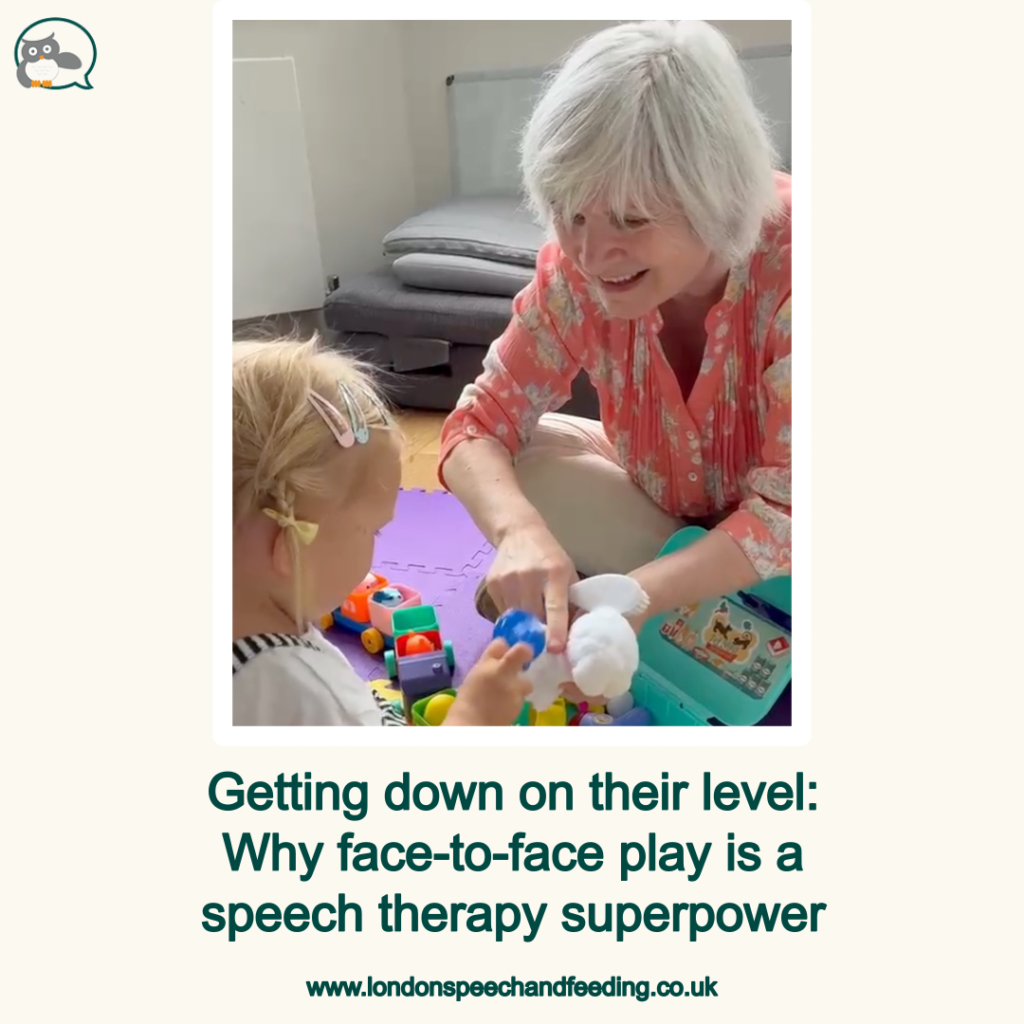
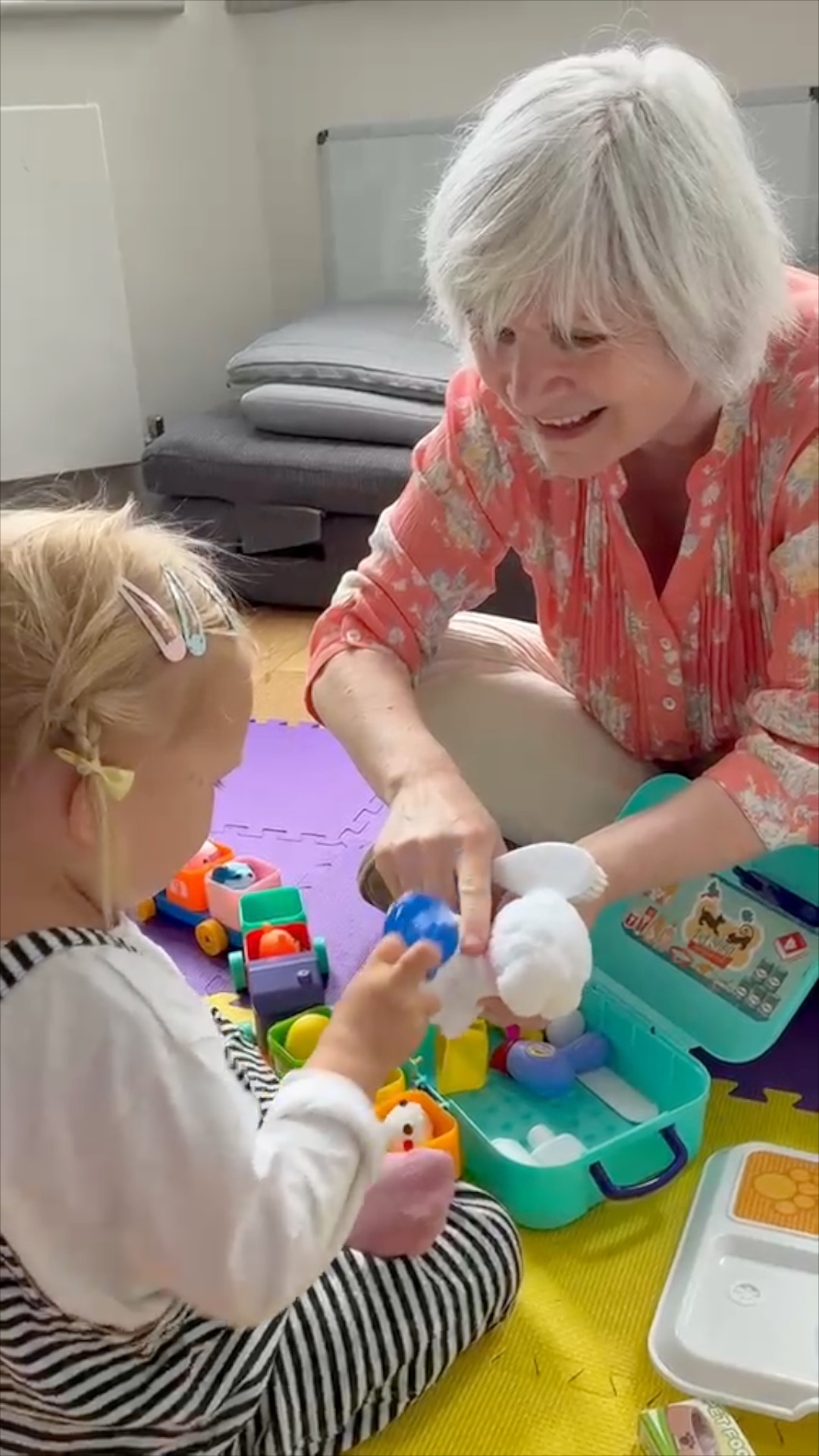
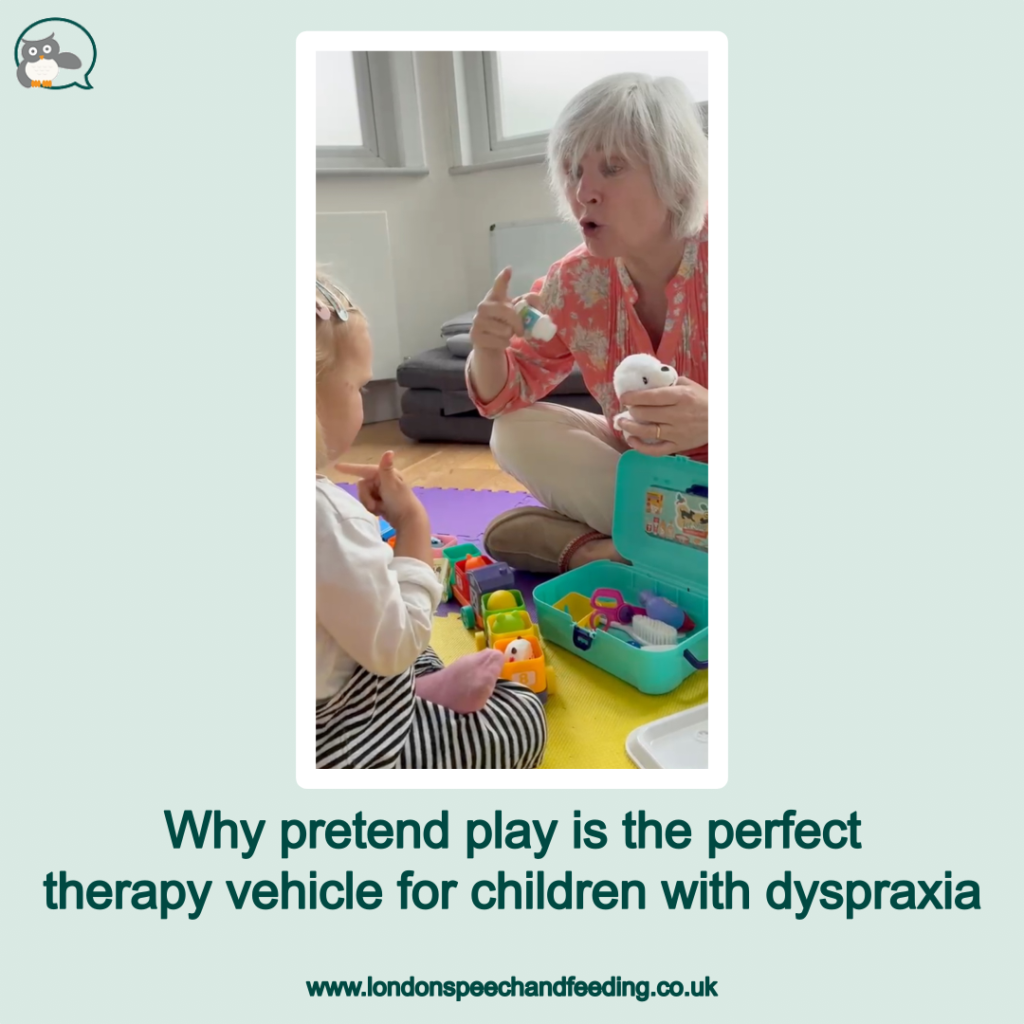
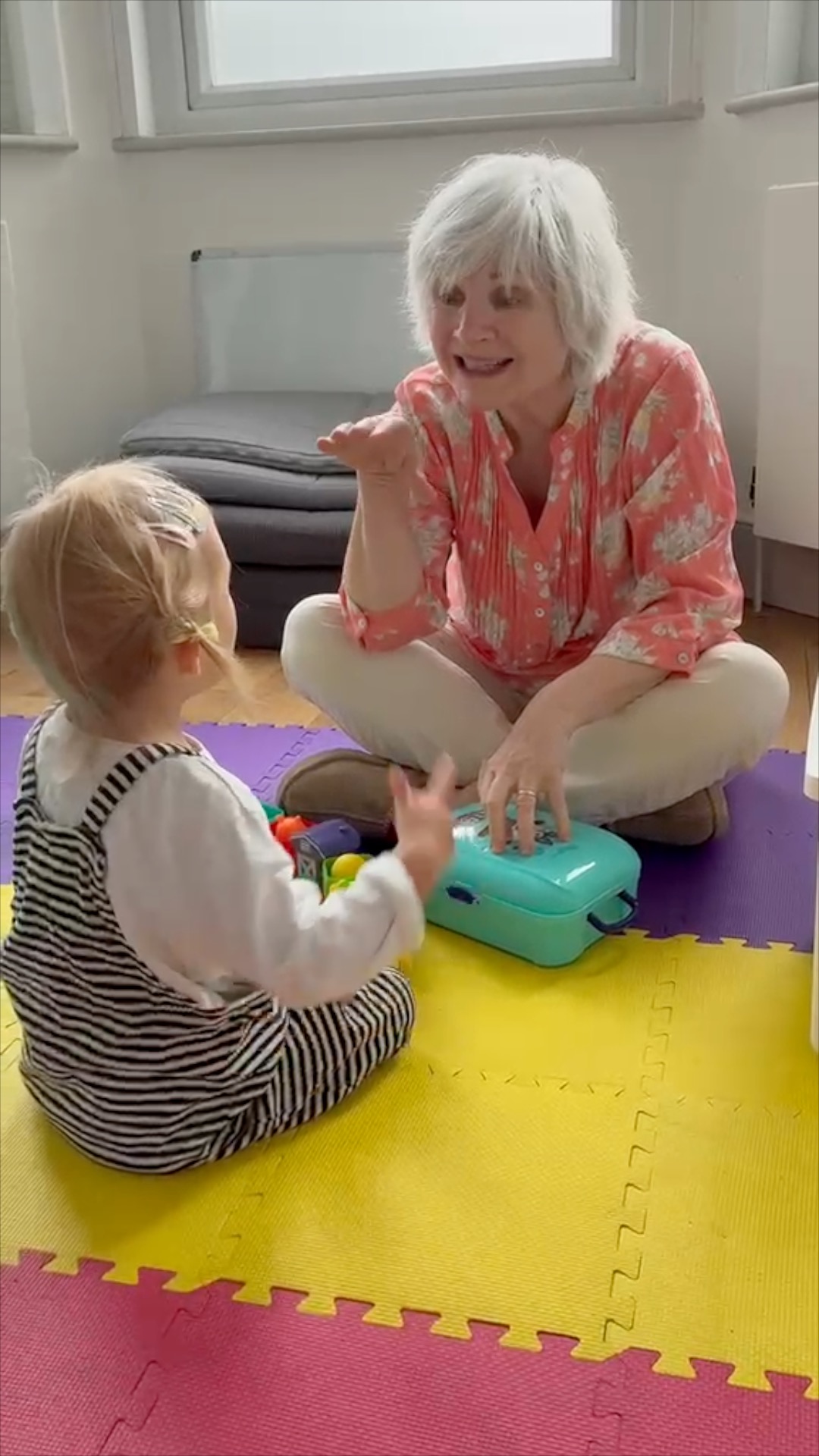
In the short video clip below you can see this dynamic in action. Notice how the session looks relaxed and playful on the surface. The child is absorbed in the pretend play scenario we have created together.
Notice, though, what is happening underneath:
- the consistent, gentle modelling of target words
- the use of Makaton signs alongside speech to provide an additional sensory pathway
- the visual mouth cues that give the child a roadmap for how a sound is shaped
- and running through all of it, the repetition. The same words, again and again, wrapped in play.
This is not therapy disguised as play. It is therapy that is play, because for a child with dyspraxia, those two things are not in opposition. They are, in fact, perfectly aligned.
If you are concerned about your child’s speech and wondering whether verbal dyspraxia might be a factor, please do not hesitate to get in touch. I would love to help you find some answers.

Sonja McGeachie
Highly Specialist Speech and Language Therapist
Owner of The London Speech and Feeding Practice.


Find a speech and language therapist for your child in London. Are you concerned about your child’s speech, feeding or communication skills and don’t know where to turn? Please contact me and we can discuss how I can help you or visit my services page.