Speech Milestones

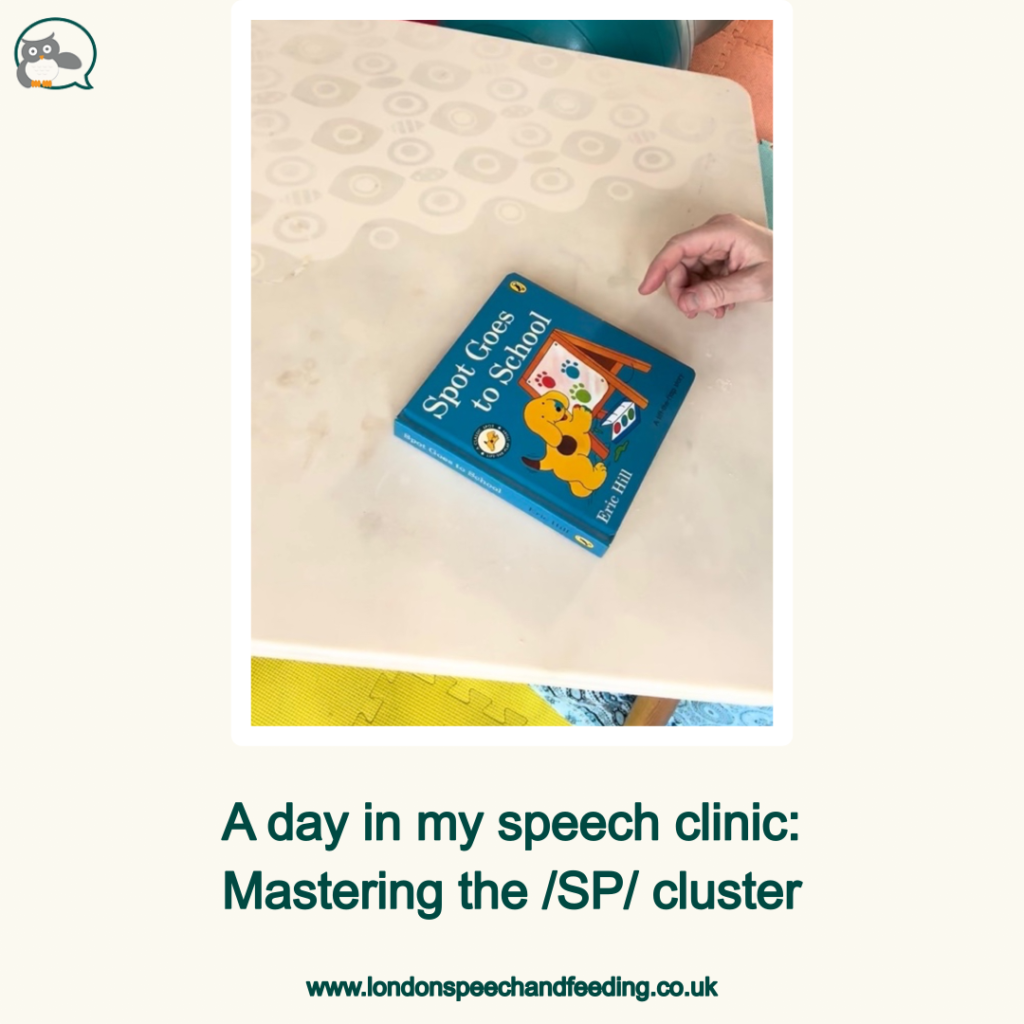
  • A day in my speech clinic: Mastering the /SP/ cluster

    I very often work on /S/ Blends (/SP/ /ST/ /SM/ /SK/ /SN/ and /SL/). When we work on these sound blends (like SPider, STop, or SMile), we are using a clever speech therapy ruse! Because these blends are complex, teaching a child how to master them naturally helps them clear up simpler single sounds (like just /S/ or just /P/) at the same time. Plus, because S-blend words are so common in everyday language think spoon, spy, spot, and spin, practising them gives your child an immediate confidence boost when they are understood much more easily.

    Good news: high-repetition motor practice doesn’t have to be a chore. In fact, the more sensory input we can provide, the faster those new neural pathways are built. Recently, I recorded a series of seven short clips to demonstrate how we can weave intense speech practice into the fabric of play.

    Here is a look at a typical day in the clinic focusing on /SP/ blends.

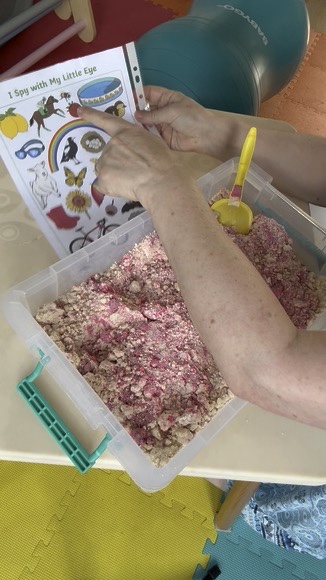
    1. The sensory sandbox:

    We started our session at the sensory table. Sensory bins can often work well because they provide tactile feedback that grounds the child’s focus (of course they are usually messy, so one needs to have the physical space and energy for it to be fair!).

    • The Activity: I pointed to our ‘I Spy’ board before we dove into the sand. Using a toy spade we dug for hidden objects and named them each time we found one.
    • Every time we scooped, we practised Spade. Every discovery was a spider, a spoon or a spotty animal. By pairing the physical effort of digging with the speech sound, we help the brain synchronise motor planning and vocal execution.
    2. Bingo dabbers rock!

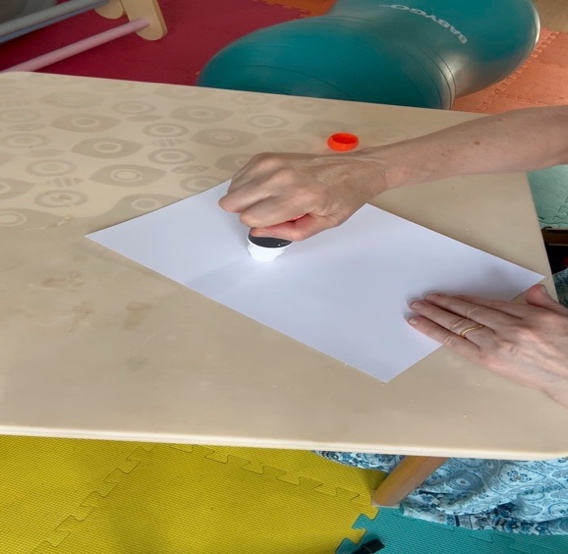
    Next, we moved to making ink marks on paper.

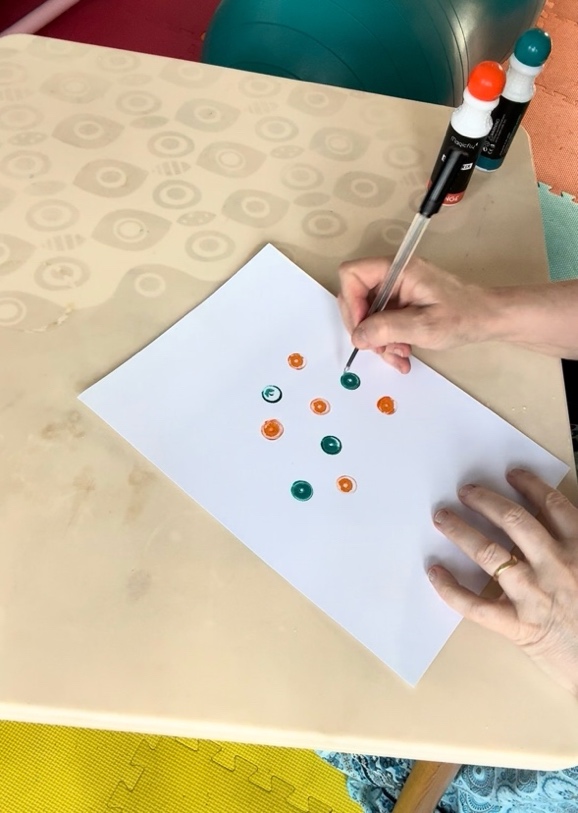
    • The Activity: I demonstrated making spots with coloured bingo dabbers.
    • We treated each ink spot as a visual anchor. Stamp –Spot Stamp –Spot. This creates a rhythmic pacing that prevents the child from rushing. It’s a wonderful way to get 50+ repetitions in under five minutes without the child even realising they are ‘working’.
    3. Drawing spiders

    Building on the previous activity, we took those spots and turned them into something more complex.

    • The Activity: I drew spiders out of the spots we had just made.
    • Drawing the legs provided a perfect opportunity for ‘stretch’ sounds. As we drew a long leg, we practise a long, hissy ‘Sssssssss’, snapping into the /P/ as the pen hits the spot.
    4. Wind-up spinners

    High-energy toys are excellent for eliciting ‘power’ sounds.

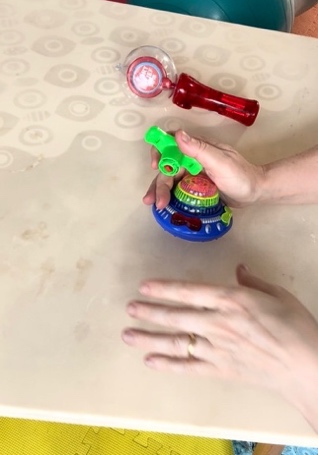
    • The Activity: I brought out two mechanical wind-up spinners.
    • Method: The child says Spin or Spinner to get me to wind them up. The anticipation of the toy moving acts as a natural reinforcer.
    5. The Incy Wincy spider game

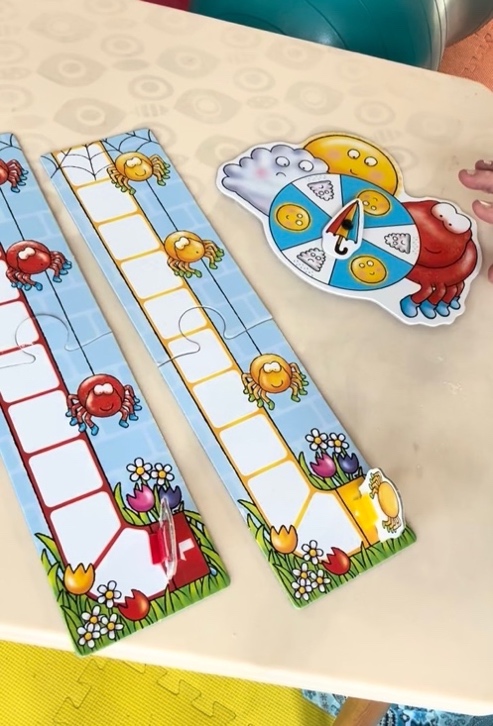
    • The Activity: I spun a game spinner to determine how many steps our toy spiders would take up the spout.
    • This activity is a triple threat. We practised ‘Spin’, ‘Spider’, and ‘Spout’ all in one go. The visual of the spider moving up the spout also helps with the concept of UP and DOWN of course.
    6. Searching for Spot

    Books are a great tool for generalisation, taking a sound from a single word and moving it into phrases and sentences.

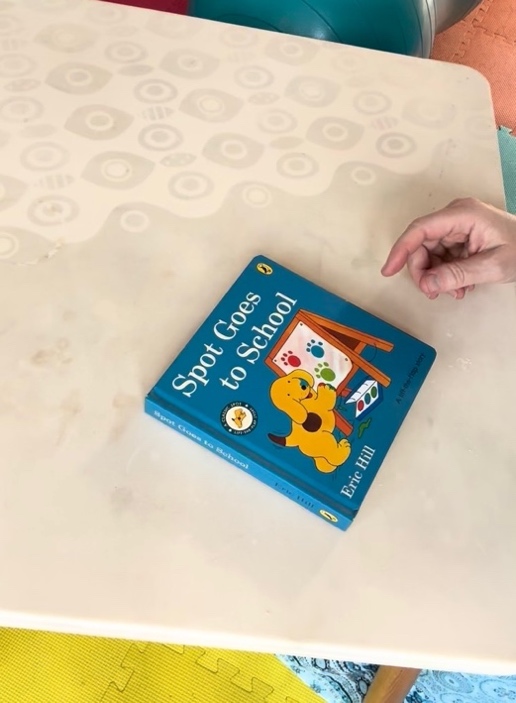
    • The Activity: We went through a ‘Spot the Dog’ book.
    • Instead of just reading, we used the ‘I Spy’ strategy. ‘I spy Spot! He has a big spot on his back!’ This encourages the child to use the target word in a functional, communicative way rather than just repeating it after me.
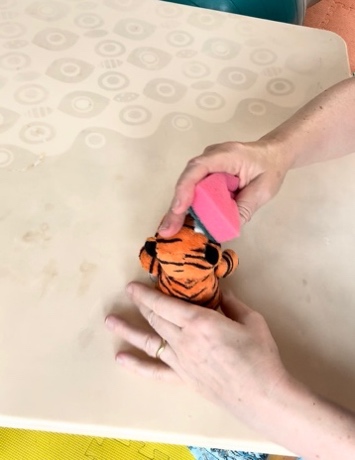
    7. Finally, sponging off some sand

    We ended the session with some ‘heavy work’ and cleaning.

    • The Activity: We took a soft toy that had gotten a bit ‘dusty’ in the sandbox and used a sponge to clean it down.
    • The action of squeezing the sponge provides proprioceptive input (pressure), which can be very calming and help a child focus on their articulatory placement for those final repetitions of the day.
    A day in my speech clinic: Mastering the /SP/ cluster

    Speech therapy works on motor learning. Just like learning to ride a bike or play the piano, the brain needs thousands of correct repetitions to make a movement automatic. By using /SP/ words in these seven distinct, sensory-rich ways, we:

    1. Reduce frustration: The focus is on the play, not the correction.
    2. Increase engagement: A child who is having fun will stay in the learning zone longer.
    3. Provide context: The child learns that saying /SP/ correctly helps them get the spade, spin the spinner, and find the spider.

    Next time I will show you some more activities for /ST/ and /SM/ words. If you have any super ideas for /S/ cluster words please leave me your suggestions in the comments on instagram, I would appreciate it thank you! 😊

    If you are concerned about your child’s speech, please do not hesitate to get in touch. I would love to help you find some answers.

    Sonja McGeachie

    Highly Specialist Speech and Language Therapist

    Owner of The London Speech and Feeding Practice.


    Health Professions Council registered
    Royal College of Speech & Language Therapists Member
    Member of ASLTIP

    Find a speech and language therapist for your child in London. Are you concerned about your child’s speech, feeding or communication skills and don’t know where to turn? Please contact me and we can discuss how I can help you or visit my services page.

    3
  • ·

    Bilingualism – should I speak only English with my speech delayed child?

    Introduction

    Bilingualism is a beautiful aspect of our diverse world. Growing up in a bi- or multi-lingual household is a wonderful gift, allowing children to communicate with a broader range of people and access many cultures.

    My own two children grew up in a bilingual German-English speaking household. They have both been so enriched by this experience, not only language- and learning-wise but of course also culturally: their world has always been so open and colourful. Growing up in inner London and having their German family and mum’s friends as well, this has been a wonderful experience. Both my boys speak German well (not quite like native speakers but like very good second language speakers) and both have very easily learned 3rd and 4th languages additionally when in secondary school.

    Whilst bilingualism has untold benefits, it’s not uncommon for bilingual children to take slightly longer to reach certain speech milestones. This should not be automatically mistaken for speech disorders but rather seen as a natural part of bilingual language development.

    Bilingualism and speech delays

    Sometimes, of course, we do see speech delays or disorders where a child’s speech development lags significantly behind their peers. We often see a delay in both languages equally, making it extra hard for to communicate effectively. BUT PLEASE KNOW the family speaking in multi-lingual languages never caused the delay/disorder!

    If there is a delay or a disorder any number of other reasons could have caused it, such as:

    • hearing impairments,
    • reduced phonological awareness,
    • sensory processing issues,
    • reduced attention and reduced joint attention,
    • neuro-developmental delays or difficulties,
    • general or specific learning difficulties
    • or sometimes other genetic factors.

    So, to say that the difficulty is due to a child being exposed to several languages is a red herring. (no offence to herrings!)

    Speech therapy

    Speech therapy can be powerful to help bilingual /multilingual children with speech delays unlock their full linguistic potential. By providing individualised assessments, targeted interventions, and involving families, speech therapy can bridge the gap between speech delays and bilingualism. It’s essential for the therapist and parents to work together to support the children in their unique linguistic journeys, helping them communicate effectively and thrive in both of their languages.

    Happy Islamic family sitting on the floor
    Image by Freepik

    Speak your home language at home

    Many parents report that they worry about speaking their home language at home and instead they have been focusing on just speaking English at home. They now rarely use their home language with their child. They fear that speaking a language other than English with their child will cause further delay and hinder their progress. All parents want the best for their child and often parents fear that their child won’t fit in or will be seen as ‘different’. So we can understand why parents feel that the English language is the only one worth having.

    But the opposite is the case: it is crucial to speak in both languages freely, both at home and outside the home! Both languages will benefit your child, no matter what the delay or difficulty is. Acquiring a ‘mother tongue’ or native language is absolutely vital for children to have a good, solid linguistic grounding on which to build other languages. Bilingual children may mix languages during speaking and parents may equally mix their languages. This does not hinder language development and is a natural part of linguistic development.

    Speak freely and naturally

    What is far more important than the question: ‘which language should I say this in?’ Instead think: ‘let me speak freely and naturally, let me respond naturally, in good intonation and let communication flow freely to the child.’

    Speech therapy can be a crucial resource for bilingual or multilingual children and their families.

    We work on targeted interventions to address speech and language difficulties, helping your child develop essential communication skills. For home practice between therapy sessions, we can recommend tailored treatment plans to help you help your child in daily life. Our input could be focusing on articulation, phonological awareness, attention and listening, vocabulary development and grammar.

    Family support is crucial in speech therapy. We like to work closely with parents to provide guidance and strategies for fostering language development in both languages at home.

    If you have any worries about your child being delayed in a bilingual or multilingual household do get in touch and we will be happy to support you in your journey.


    Find a speech and language therapist for your child in London. Are you concerned about your child’s speech, feeding or communication skills and don’t know where to turn? Please contact me and we can discuss how I can help you or visit my services page.

    1