A day in my speech clinic: Mastering the /SP/ cluster

I very often work on /S/ Blends (/SP/ /ST/ /SM/ /SK/ /SN/ and /SL/). When we work on these sound blends (like SPider, STop, or SMile), we are using a clever speech therapy ruse! Because these blends are complex, teaching a child how to master them naturally helps them clear up simpler single sounds (like just /S/ or just /P/) at the same time. Plus, because S-blend words are so common in everyday language think spoon, spy, spot, and spin, practising them gives your child an immediate confidence boost when they are understood much more easily.

Good news: high-repetition motor practice doesn’t have to be a chore. In fact, the more sensory input we can provide, the faster those new neural pathways are built. Recently, I recorded a series of seven short clips to demonstrate how we can weave intense speech practice into the fabric of play.

Here is a look at a typical day in the clinic focusing on /SP/ blends.

1. The sensory sandbox:

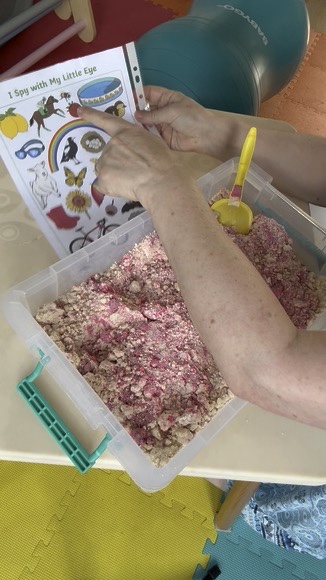
We started our session at the sensory table. Sensory bins can often work well because they provide tactile feedback that grounds the child’s focus (of course they are usually messy, so one needs to have the physical space and energy for it to be fair!).

  • The Activity: I pointed to our ‘I Spy’ board before we dove into the sand. Using a toy spade we dug for hidden objects and named them each time we found one.
  • Every time we scooped, we practised Spade. Every discovery was a spider, a spoon or a spotty animal. By pairing the physical effort of digging with the speech sound, we help the brain synchronise motor planning and vocal execution.
2. Bingo dabbers rock!

Next, we moved to making ink marks on paper.

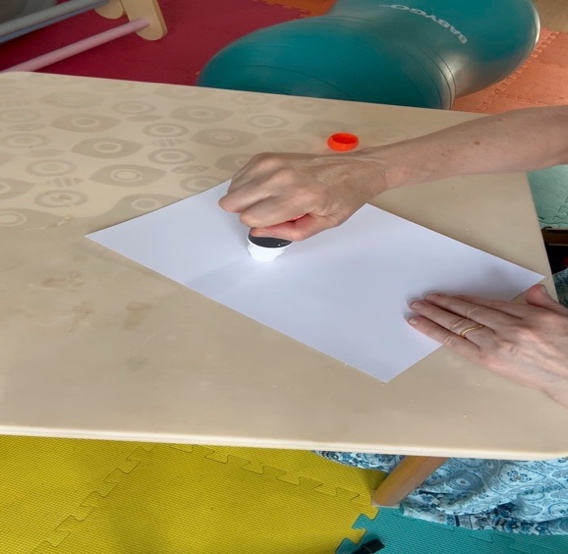
  • The Activity: I demonstrated making spots with coloured bingo dabbers.
  • We treated each ink spot as a visual anchor. Stamp –Spot Stamp –Spot. This creates a rhythmic pacing that prevents the child from rushing. It’s a wonderful way to get 50+ repetitions in under five minutes without the child even realising they are ‘working’.
3. Drawing spiders

Building on the previous activity, we took those spots and turned them into something more complex.

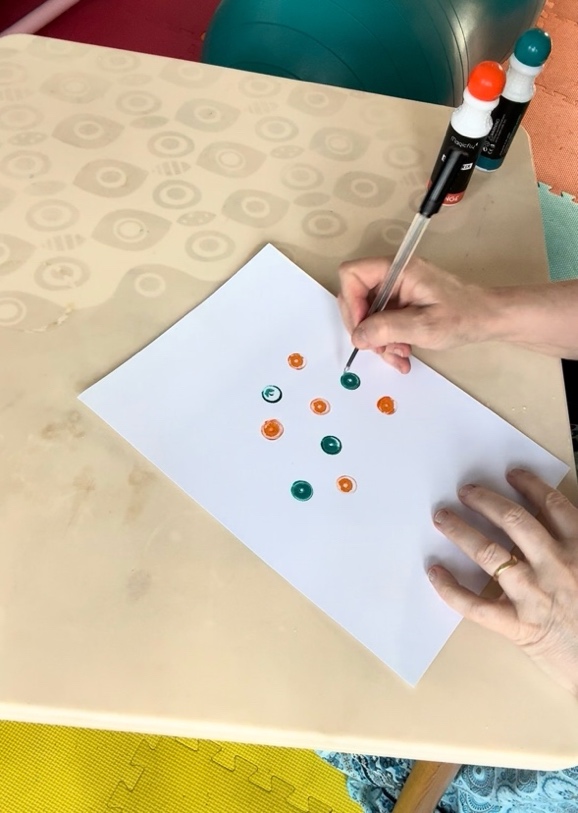
  • The Activity: I drew spiders out of the spots we had just made.
  • Drawing the legs provided a perfect opportunity for ‘stretch’ sounds. As we drew a long leg, we practise a long, hissy ‘Sssssssss’, snapping into the /P/ as the pen hits the spot.
4. Wind-up spinners

High-energy toys are excellent for eliciting ‘power’ sounds.

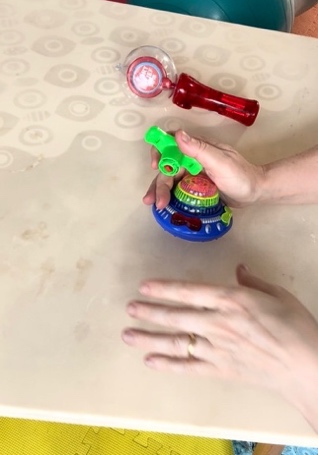
  • The Activity: I brought out two mechanical wind-up spinners.
  • Method: The child says Spin or Spinner to get me to wind them up. The anticipation of the toy moving acts as a natural reinforcer.
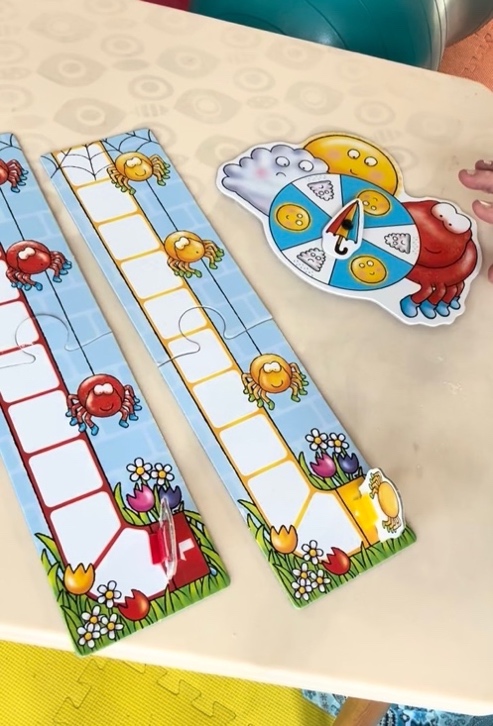
5. The Incy Wincy spider game

  • The Activity: I spun a game spinner to determine how many steps our toy spiders would take up the spout.
  • This activity is a triple threat. We practised ‘Spin’, ‘Spider’, and ‘Spout’ all in one go. The visual of the spider moving up the spout also helps with the concept of UP and DOWN of course.
6. Searching for Spot

Books are a great tool for generalisation, taking a sound from a single word and moving it into phrases and sentences.

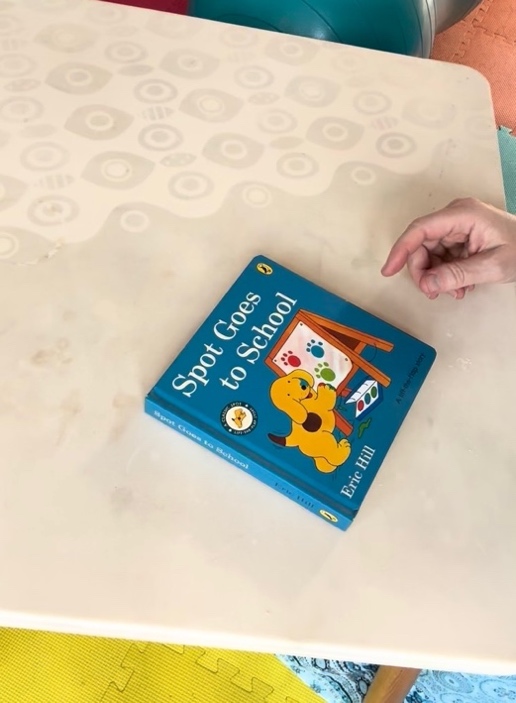
  • The Activity: We went through a ‘Spot the Dog’ book.
  • Instead of just reading, we used the ‘I Spy’ strategy. ‘I spy Spot! He has a big spot on his back!’ This encourages the child to use the target word in a functional, communicative way rather than just repeating it after me.
7. Finally, sponging off some sand

We ended the session with some ‘heavy work’ and cleaning.

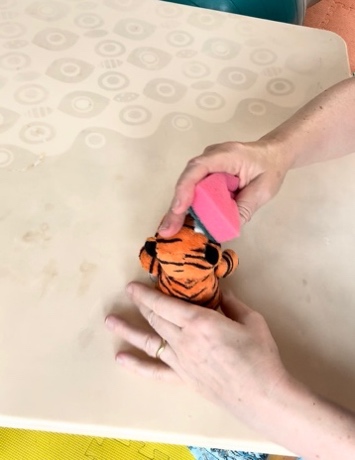
  • The Activity: We took a soft toy that had gotten a bit ‘dusty’ in the sandbox and used a sponge to clean it down.
  • The action of squeezing the sponge provides proprioceptive input (pressure), which can be very calming and help a child focus on their articulatory placement for those final repetitions of the day.
A day in my speech clinic: Mastering the /SP/ cluster

Speech therapy works on motor learning. Just like learning to ride a bike or play the piano, the brain needs thousands of correct repetitions to make a movement automatic. By using /SP/ words in these seven distinct, sensory-rich ways, we:

  1. Reduce frustration: The focus is on the play, not the correction.
  2. Increase engagement: A child who is having fun will stay in the learning zone longer.
  3. Provide context: The child learns that saying /SP/ correctly helps them get the spade, spin the spinner, and find the spider.

Next time I will show you some more activities for /ST/ and /SM/ words. If you have any super ideas for /S/ cluster words please leave me your suggestions in the comments on instagram, I would appreciate it thank you! 😊

If you are concerned about your child’s speech, please do not hesitate to get in touch. I would love to help you find some answers.

Sonja McGeachie

Highly Specialist Speech and Language Therapist

Owner of The London Speech and Feeding Practice.


Health Professions Council registered
Royal College of Speech & Language Therapists Member
Member of ASLTIP

Find a speech and language therapist for your child in London. Are you concerned about your child’s speech, feeding or communication skills and don’t know where to turn? Please contact me and we can discuss how I can help you or visit my services page.

3

Similar Posts

  • · ·

    AAC Systems and Speech and Language Development

    Introduction

    I see a lot of minimally speaking or non-verbal children in my practice. Some children are autistic and others are severely challenged with motor planning and some are both. Some children are simply delayed in their spoken language for reasons that we don’t quite know yet.

    Regardless of the causes, what is always apparent pretty quickly is that apart from the odd gestures or Makaton signs (mainly ‘more” ‘finished’ and “biscuit) we don’t have a robust alternative for speech in place. Instead, what we often have is a child with lots of frustration and tantrums and some behaviours we really don’t want like: hitting, biting, pushing, grabbing and often throwing… There are others, too many to mention, but we don’t enjoy watching our children in these states. And we are often fearful of what might happen next if we don’t find a way to calm our child.

    Fear not

    In my work, before I get to offer an alternative means of communication, I often have to work with a fair amount of resistance on the parents’ side as parents tend to feel that allowing such a system into their lives will prevent their child from speaking. They fear that their child will so enjoy pressing those buttons that they will become lazy and not talk at all.

    I totally get it!

    Parents often feel overwhelmed by the task of getting their own heads round how to use AAC, either in paper form or a computerised system. This can be a great turn-off for lots of people who feel they are not very “techy” – like myself actually! Indeed, it is true to say that I resisted operating in this field for a long time as I didn’t feel able to navigate electronic devices. But fear not. Truly, most systems are very user-friendly. The support is great. And I have managed to become quite proficient in one or two of these systems, through using it daily. It really is as simple as that.

    Alternative and Augmentative Communication (AAC)

    There is plenty of research on the efficacy of Alternative and Augmentative Communication (AAC). It is now very well understood and proven that, once we introduce our child to a good, attractive way of communicating that they can actually do, in time children who can speak will speak. Speaking is more effective than any AAC system. It is more versatile, more fun, and when human beings have discovered how to speak, most will do so in favour of any other system.

    Many children and adults, for many reasons, were never going to speak an awful lot, or with great difficulty. Or they were not going to like to speak. Or they were going to like to speak some times but not other times… And for all those people an AAC system is invaluable and a wonderful resource.

    Neuro-diversity affirming means that we do not impose one system of communication on our children (speaking with our mouth) only because it is the one we are using and most people we know too.

    Of course, we want the best for our children, and we want them to have the easiest and most straight forward existence on Earth. Of course we do. Speaking with our mouth does help with that. But we must come to understand that not all children and people feel like that and they struggle to use their mouth for talking.

    Personal experience

    I have difficulties understanding this myself, I will be very honest here. And I will say that – shoot me down in flames SLT fraternity – but I am learning to accept that using an AAC system proficiently is a very good alternative for when speech is not coming. I am learning to accept that some people are perfectly able to speak, and might do so but not always and only when conditions are right. I came into the profession as a speech therapist with the idea that I would help anybody that came to me to speak with their mouth. But I have changed my stance on that and now am happy to help anybody that comes to me to communicate most effectively with whatever works for them. I will always try for speech if I can … Just because it’s easiest!

    Acceptance

    Now I will equally celebrate a child pointing to a symbol or making a sign for something. It is a fantastic moment when it happens for the parents and me and the child! And we can always hope for more speech to come as we go. Nothing wrong with our aspirations, is there?

    The basic premise is this: accept any mode of communication as valid, as long as your communication partner understands what it means. Don’t require individuals to repeat themselves in another modality. Do model the response in the modality you are trying to teach. So, a child can point to a symbol and I will respond with speaking (with my mouth) but I will also respond by pointing to a symbol because that way I am signalling that both are ok and that I have understood and am encouraging the person to say some more.

    Here is some research;

    Binger, C., Berens, J., Kent-Walsh, J., & Taylor, S. (2008) The effects of aided AAC interventions on AAC use, speech and symbolic gestures. Seminars in Speech and Language, 29, 101-111.

    Sennott, S.C., Light, J., & McNaughton, D. (2016). AAC modelling intervention research review. Research and Practice for Persons with Severe Disabilities, 41, 101–15.

    Dada, S., & Alant, E. (2009). The effect of aided language stimulation on vocabulary acquisition in children with little or no functional speech. American Journal of Speech-Language Pathology, 18, 50–64.

    Contact me if you would like your child to have neurodiversity affirming speech and language therapy.


    Find a speech and language therapist for your child in London. Are you concerned about your child’s speech, feeding or communication skills and don’t know where to turn? Please contact me and we can discuss how I can help you or visit my services page.

    0
  • · ·

    Childhood Apraxia of Speech: Signs and first steps (2–5 years)

    If you’ve found yourself wondering ‘Why can my child say a word one day, but not at all the next?’ it might be that your child has a motor speech difficulty. This means the challenge isn’t that your child doesn’t know what they want to say; it’s that their brain finds it harder to plan and coordinate the movements needed for clear speech. This speech difficulty is called Childhood Apraxia of Speech (CAS)

    Sonja showing power words on a board

    In this post, I’ll explain what CAS can look like in 2–5 year olds, what an assessment usually involves, and what you can start doing at home to support your child without turning life into ‘speech homework all day long’.

    What is childhood apraxia of speech (CAS)?

    Children with CAS often have lots to communicate about (and strong ideas!) but their speech may come out as:

    • Unclear
    • inconsistent
    • hard to ‘copy’ on demand
    • frustrating for them and for you

    CAS is not caused by laziness and it is not a parenting issue. It is also not something children simply ‘grow out of’ without support. But with the right therapy approach, children can absolutely build clearer speech over time.

    If you’d like to read more about verbal dyspraxia, you may also find this helpful: Supporting children and families living with verbal dyspraxia.

    Why is CAS such a big topic right now?

    Many families come to me after months (or years) of being told:

    • ‘She’ll talk when she is ready’
    • ‘He’s just shy’
    • ‘It’s probably a speech delay’
    • ‘It’s normal for toddlers’

    And sometimes it is a general delay. But sometimes it’s something more specific, like CAS.

    There’s also been a huge rise in parents seeking information online, and CAS is often mentioned alongside speech sound difficulties such as:

    • phonological delay (pattern-based speech errors)
    • articulation difficulties (one sound that won’t come out clearly)
    • inconsistent speech disorder

    These can look similar at first glance, which is why a specialist assessment matters.

    Signs of childhood apraxia of speech in 2–5 year olds

    Children develop speech at different rates, and not every unclear speaker has CAS. But here are some common features that may raise a flag, especially when you notice several together.

    1) Inconsistent speech errors

    Your child might say the same word in different ways:

    • ‘banana’ → nana / baba / mana
    • ‘daddy’ → gaga / daddy / dadi

    This inconsistency is one of the biggest clues.

    2) Difficulty copying words on request

    Some children speak more easily in natural play, but when asked ‘Say ___’, they freeze or the word becomes much harder.

    3) Limited sound repertoire

    They may use only a small set of consonants (like /M/, /N/, /B/, /D/) and avoid others.

    4) Vowel distortions

    Many children with typical delays mainly struggle with consonants. But in CAS, vowels can also sound ‘off’ or change between attempts.

    5) Speech that sounds effortful

    You might notice your child:

    • pauses between sounds
    • tries multiple times
    • looks like they’re ‘searching’ for the right mouth movement

    6) Longer words are much harder

    ‘Car’ might be easier than ‘carry’, and ‘carry’ easier than ‘caterpillar’.

    7) Prosody differences (rhythm and stress)

    Some children with CAS sound a little unusual in their speech rhythm, stress, or intonation.

    8) Frustration or reduced confidence

    When a child is frequently misunderstood, they may:

    • talk less
    • use gestures more
    • become upset when asked to repeat themselves

    Important note: none of these signs alone prove CAS but they are a strong reason to seek a speech assessment rather than waiting.

    CAS vs phonological delay vs articulation difficulty (quick guide)

    These are some of the most common questions I hear.

    If it’s mainly an articulation difficulty…

    A child may consistently say one sound incorrectly (for example, ‘thun’ for ‘sun’- lisp- but everything else is developing well.

    If it’s mainly a phonological delay…

    You might notice clear patterns, like:

    • leaving off the ends of words (‘ca’ for ‘cat’)
    • swapping back sounds for front sounds (‘tar’ for ‘car’)

    Patterns are often consistent and respond well to phonology-based therapy.

    If it might be CAS…

    Speech often feels less predictable, harder to imitate, and more impacted by word length and complexity.

    If you’re unsure, that’s completely normal, and exactly why assessment matters.

    What happens in a CAS assessment?

    A high-quality speech assessment for possible CAS usually includes:

    1) Parent discussion and developmental history

    We talk about:

    • pregnancy and birth history (where relevant)
    • feeding history
    • early sounds and babbling
    • first words and how speech has progressed
    • family history of speech/language needs

    2) A speech sound assessment

    Your child might be shown pictures or play-based prompts so we can hear:

    • what sounds they can say
    • what they simplify
    • whether errors are consistent or inconsistent

    3) An oral-motor and movement check

    This isn’t about ‘strength’. It’s about coordination and planning. We look at how your child manages speech movements and transitions.

    4) Stimulability testing

    This means: how easily can your child learn a new sound or word with support?

    For CAS, we often explore how they respond to:

    • slowed-down speech
    • visual cues
    • rhythm/tapping
    • short, simple syllable shapes

    5) Functional communication and confidence

    We look at how speech impacts daily life:

    • being understood at nursery
    • joining in with peers
    • asking for help
    • managing emotions when misunderstood

    At the end, you should leave with:

    • a clear explanation of what we think is going on
    • a therapy plan
    • practical home strategies
    • realistic next steps

    What parents can do at home

    Here are CAS-friendly strategies you can start right away.

    1) Choose ‘power words’

    Pick 1–2 words that matter most in your child’s daily life, such as:

    • more
    • help
    • mummy
    • again
    • stop
    • open

    These words are motivating and functional.

    2) Keep it short and successful

    For many children with CAS, the goal is quality over quantity.

    Try five minutes a day rather than 30 minutes of struggle.

    3) Support speech with rhythm

    Some children benefit from:

    • tapping a beat on the table
    • clapping syllables
    • using a gentle ‘marching’ rhythm

    This can help the brain organise the sequence of movements.

    4) Celebrate approximations

    If your child says ‘moh’ for ‘more’, that’s communication!

    We want them to feel:

    • safe
    • understood
    • proud to try again

    Confidence is a key part of progress.

    A short parent story (anonymised)

    One mum said to me:

    ‘We kept being told to wait. But I could see my child understood everything; they just couldn’t get the words out. Once we had an assessment and a plan, it felt like we finally knew what to do. The biggest change was his confidence. He started trying more.’

    When should you seek support?

    You don’t need to wait until school.

    It’s worth getting an assessment if your child is:

    • hard to understand compared with peers
    • becoming frustrated or withdrawing from talking
    • inconsistent with words they used to say
    • struggling to imitate speech sounds
    • showing signs that match CAS

    Early support can reduce stress for the whole family and help your child feel successful in communication.

    Here’s how I can help:

    ✅ A detailed speech assessment (including whether CAS is likely)

    ✅ A clear therapy plan with realistic goals

    ✅ Practical home strategies you can use immediately

    ✅ Support for nurseries and schools (where needed)

    ✅ In-person sessions in North-West London and online options

    Book your consultation here.

    Final gentle reminder

    You are not overreacting. Trust your instincts.

    Your child is communicating the best way they can, and with the right support, speech can become easier, clearer, and more confident.

    Sonja McGeachie

    Highly Specialist Speech and Language Therapist

    Owner of The London Speech and Feeding Practice.

    Health Professions Council registered
    Royal College of Speech & Language Therapists Member
    Member of ASLTIP

    Find a speech and language therapist for your child in London. Are you concerned about your child’s speech, feeding or communication skills and don’t know where to turn? Please contact me and we can discuss how I can help you or visit my services page.

    3
  • ·

    Rethinking the PECS Approach

    I want to talk about some concerns of SLTs, parents and increasingly autistic adults who explain to us how this communication method did not really work so well and why.

    What is PECS in a nutshell:

    PECS (Picture Exchange Communication System) is based on the idea of exchanging pictures in return for desired items. For more advanced users, it is used to communicate different functions such as emotions, comments, negations using the exchange of a sentence strip. It was founded on the principles of Applied Behavioural Analysis (ABA).

    How does that look in practice?

    In my experience, having been trained in the approach myself, the overall aim is eventually for the child to spontaneously go and get their picture book (PECS book), open it, look through a range of pages to select the correct picture of what they want to have or say, then go and find their communication partner, and finally place that picture onto the communication partner’s outstretched palm to be rewarded with an item or with a response of some sort. Or the child selects a range of pictures to create a little sentence, such as: ‘the blue fish swims in the sea’, ‘the red bird flies in the sky’ or ‘I see a red bird’ for example. This can be part of a structured table top activity.

    The system follows a series of phases, starting from simple picture exchanges to eventually construction of sentences using symbols. PECS’s aim is to promote communication initiation and reduce frustration for those who struggle with speech.

    So far so good one might say, why not? Before I go into the various concerns, I would want to add my own working experience with PECS, and whilst it is my opinion, I would say I have NEVER seen a working PECS book being used spontaneously!

    My experience

    I have seen attempts of stages 1 and 2 done quite well, in schools, and where people knew that I was coming in “to have a look at how PECS is working with child X”. Yes, in those instances an effort was made of course to try and show me how it worked. I must add that have never been very impressed. I cannot recall it used for any other items than: biscuits/quavers/crisps/ raisins and bubbles/puzzle pieces or spinners.

    If we want to see a child trained to exchange for these items in a structured setting, i.e., the child sits at a little table with the adult sitting opposite enticing the child with one or other item, then yes that can be done successfully. I have seen children exchange 25 pictures with a crisp on it, for said crisp and they might have asked for another 25 of those crisps given half the chance. Yes. Good. But. I have yet to see a child go to their PECS book and go through all the motions that I mentioned above to get a crisp. In school they don’t need to: they know that crisps are only available when the PECS book is being practised. Otherwise, let’s be honest, it’s fruit at 10.30 am!

    So, they don’t get a spontaneous opportunity to ask for highly motivating items as that is not how school works, is it? ‘SIR! Can I have a crisp?’ At 10.02am, in the middle of maths? Didn’t think so… So in reality this does not get practised in my experience.

    A few concerns in no particular order:

    Limited Generalisation

    One issue often raised is the limited generalisation of skills learned through PECS. The structured nature of the program may result in a child only being able to communicate effectively within the specific contexts where they were taught to use the system (as I suggest above: crisps: yes, please let’s do the PECS for it). This limitation can pose challenges when trying to apply communication skills in new or unstructured/spontaneous situations.

    Lack of Spontaneity

    Critics suggest that PECS can sometimes lead to scripted and less spontaneous communication. This is also what I have observed. Since the method is designed to follow a structured progression, there is a concern that individuals might struggle to initiate communication outside of the established framework, potentially hindering their ability to engage in more natural interactions.

    Narrow range of communication functions being practised

    While PECS is quite successful in focusing on requesting and naming items, there are many other important communication functions, such as expressing emotions, asking questions, giving opinions or greetings for instance. We can argue that a communication core board where we have a whole range of different core words available lends itself much better to practising a range of communicative functions.

    The Pictures are movable

    They are attached to the book via Velcro. They are constantly being picked and exchanged and then returned to the book. This means that the pictures tend to be always in different places. This goes against the motor planning that takes place when one is learning a new skill: imagine you want to learn to touch type and the letters always move and are at different places? How can you be quick about finding a letter? You can never get to “automatic” with this type of approach.

    Communication is not taught via behavioural means

    Only if you say “banana” in the way that I dictate that you should will you get a piece of banana. Who does that? Nobody. Typically, child points to the counter where there is a banana and says: ‘ba’ or ‘ana’ and mother/carer will look over there and say ‘oh banana! You want a banana? Ok there you go have a piece.’ Or something like it. Mother will not say: ‘SAY BANANA or else you won’t get it.’ Child hears mum saying ‘Banana’ each time and with time will point and say ‘banana’ or ‘I want-a-nana’ or something. This is how communication is learned: through the adult modelling it cheerfully all day long and the child hearing it and then gradually copying it.

    One other gripe I personally have but I am reliably informed by all my parents that they share this about PECS:

    IT IS SO LABOUR INTENSIVE!

    There are 10, 50, 100’s of little pictures that first of all need laminating… then velcroing, then finding and replacing. As I said above, it’s a constant moveable feast for one, but also you LOSE them. Yep. You want to find the picture for “trampoline”. ‘Where is it? I saw it yesterday… We had it outside when we practised you asking for the trampoline. I am sure we put it back? Where is it??? Ok. We need to print off a new one.’

    It is also labour intensive for the first stage where you need to have TWO adults to ease the exchange (pick up and release of picture into the communication partner’s hand). Who has two adults available for what can be weeks until the child is able to pick up and release by themselves?

    YEP. So it’s really not for me you can tell! I much prefer Core boards (see my previous post on using one) or electronic speech generating AAC devices like GRID, or LAMP or TOUCHCHAT. These are all great to use and there is good support out there for introducing these.

    Finding a Balance

    While the concerns surrounding the PECS approach are valid, it’s fair to note that the method also has some merits. There is anecdotal evidence of many individuals who have successfully improved their communication skills and quality of life through PECS. But, finding a balance between using PECS as a stepping stone and ensuring the development of more comprehensive and SPONTANEOUS communication is key.

    As educators and therapists, we need to extend the focus beyond requesting and labelling by incorporating symbols that represent emotions, actions, and more complex ideas. This expansion encourages a broader range of communication functions. When the time is right, gradually transitioning from PECS to more advanced communication methods such as Core boards or electronic AAC tools and speech-generating devices is the way forward.

    We want to value all communication equally and our approach ought to be playful and child-led and to focus on intrinsic motivation instead of extrinsic rewards and reinforcers.

    If you have any questions or if you are looking for a therapist who endorses play-based and child-led therapy approaches, please do reach out.


    Find a speech and language therapist for your child in London. Are you concerned about your child’s speech, feeding or communication skills and don’t know where to turn? Please contact me and we can discuss how I can help you or visit my services page.

    0
  • ·

    Let’s relax about making EYE CONTACT already…

    There’s been a long tradition with teaching staff and with Speech and Language Therapists working in schools that eye contact should be a goal. It is well known that Autistic individuals (whether that be children or adults) mostly avoid eye contact. Whilst it’s part of the way we communicate, it shouldn’t be used as a necessity for an individual who feels that it is uncomfortable. Whilst it does show that you’re listening and showing an interest, it’s not a fair expectation for neurodiverse children.

    Autistic children can find making and maintaining eye contact physically and emotionally uncomfortable as well as unnatural. It adds an extra layer of stress and has been reported to increase distractions rather than reduce them. Children who engage in conversations in their own way (i.e., with reduced eye contact) are not shown to suffer with schooling, work, or social interaction.

    By having fun through meaningful activities, I often experience that ‘BINGO’ moment (a phrase coined by Alex @meaningfulspeech) where the child is enjoying themselves and naturally makes eye contact. There is no demand on them, they are in a fun, engaging environment which suit their strengths and supports their needs.

    Following this, I often reflect on this question ‘Should we make eye contact as a goal?’

    It very much depends on the situation. If it places more demands on the child and becomes stressful. Then no. There are many strategies we can use which gain eye contact without placing extra demands on the child. We need to be mindful to adapt the environment and not place neurotypical expectations to meet the needs of neurodiverse children.

    How can you encourage eye contact without demand?

    • If you’re using toys, try holding them up to your eye level.
    • You can adjust your position, try sitting face to face during play.
    • Always get down to your child’s level. This might mean that you lay on the floor if your child is positioned in this way.
    • During play, waiting is extremely powerful. Before a key part of the activity, wait and see if your child looks at you. Remember silence is golden!
    • The best way I find is: do something unusual during play. It might be that you spray shaving foam with the lid still on. Or you bring out a wow toy and make it spin/light up or make a noise. A balloon can be good – see video clip. Use the excitement of the activity, and wait to see if you achieve that ‘BINGO’ moment.
    • Create opportunities when there are no toys involved such as during ‘tickles’ or ‘hide and seek’. Autistic children find it difficult to shift their attention between a toy and an adult. So by removing one option, you’re setting them up to succeed.

    Remember, it takes practice and time for you to develop these skills. Try one at a time and experiment, see which works best for your child. If you need speech, language or communication support or advice, I am always here to help.


    Find a speech and language therapist for your child in London. Are you concerned about your child’s speech, feeding or communication skills and don’t know where to turn? Please contact me and we can discuss how I can help you or visit my services page.

    0
  • · ·

    Your child’s communication journey

    Understanding our neurodiversity-affirming, child-led approach

    Welcome to a different kind of therapy!

    Your child’s communication journey

    The start of a new year often brings fresh hope, and sometimes fresh worries, for parents supporting their child’s communication. I am always genuinely excited to begin a new journey with children and their families, and I know that, for many parents, this kind of therapy may look very different from what they were expecting.

    Parents (and children!) are often surprised to discover that our sessions are playful, joyful, and intentionally low-pressure. You won’t see demands for eye contact, sitting still, or being told to ‘do it this way’ or ‘put the red square there’. Instead, you’ll see your child being met exactly where they are.

    For families who have previously experienced more adult-led or behaviour-based approaches including Applied Behaviour Therapy, this difference can feel unfamiliar at first. Because of that, I want to take a moment to prepare you for what child-led, neurodiversity-affirming therapy looks like, so you can feel confident, comfortable, and reassured from day one.

    Why doesn’t child-led therapy look like ‘traditional’ therapy?

    Many people picture speech and language therapy as sitting at a table, using flashcards, or practising words through repetition. While those approaches can work well for some children, they are often not effective or appropriate for many neurodivergent children—including children with autistic profiles, ADHD, or demand-sensitive nervous systems.

    Our approach is grounded in a simple and powerful truth:

    Children learn best when they feel safe, motivated, and emotionally connected.

    When a child’s nervous system feels calm and secure, learning becomes possible. When a child feels pressured or controlled, communication often shuts down, even if they can speak.

    🎯 Our purpose: Communication through connection

    Our goal is not simply to help your child say more words. Our goals go deeper and are built on strong foundations:

    • Trust and regulation: We focus on building a trusting relationship where your child feels safe, understood, and emotionally regulated. A calm nervous system is the starting point for all communication.
    • Motivation: We follow your child’s intrinsic motivation, the things they naturally enjoy to make communication meaningful, joyful, and purposeful.
    • Spontaneous communication: We create opportunities for your child to communicate because they want to, not because they are asked or instructed to.

    🧸 What to expect in a session

    Our sessions are intentionally child-led and often look very much like play.

    FeatureWhat it looks likeWhy we do this
    Minimal toysWe usually offer just 3–4 carefully chosen activities (such as bubbles, blocks, or sensory play).Less is more. Fewer choices reduce overwhelm and help children focus on what genuinely interests them.
    Child choosesYour child decides what to play with and how to engage.This immediately establishes us as a safe, non-demanding partner and increases motivation.
    The therapist’s roleWe join your child’s play, observing closely and responding naturally.We model language, share attention, and reflect your child’s experiences in a way that feels natural and supportive.
    No pressure or demandsThere are no ‘must-do’ tasks. If your child wants to spin, crash, line up toys, or repeat an activity, we follow.Reducing demands lowers anxiety and supports communication, particularly for children with demand-sensitive profiles.

    Is this really effective?

    It’s completely natural to wonder, ‘Are they just playing?’ The answer is yes, and very intentionally so.

    Our sessions are guided by nearly 30 years of speech and language therapy experience, alongside clear, achievable goals tailored to each individual child. Play is a child’s natural language and their most powerful learning tool.

    Within play, we are constantly creating opportunities to:

    • Build joint attention (sharing focus and interest)
    • Model language at the right level
    • Encourage back-and-forth communication
    • Develop a deep, authentic connection

    If your child has struggled to engage or communicate in more structured or demand-heavy settings, this child-led approach is often the key to unlocking their potential.

    💛 What this might look like at home

    You may notice that when pressure is reduced:

    • Your child begins communicating more during everyday routines
    • Language emerges through play, movement, or shared enjoyment
    • Communication feels more natural and less forced

    Small moments could be a shared smile, a look, a sound, a gesture. All matter. These are the building blocks of meaningful communication.

    📚 Resources for parents

    If you’d like to explore these ideas further, you may find the following helpful:

    I look forward to meeting you and your child. Please bring any questions, uncertainties, or curiosities to our first session, there is no such thing as a silly question. This is a journey we take together. Contact me via my contact form.

    Sonja McGeachie

    Highly Specialist Speech and Language Therapist

    Owner of The London Speech and Feeding Practice.


    Health Professions Council registered
    Royal College of Speech & Language Therapists Member
    Member of ASLTIP

    Find a speech and language therapist for your child in London. Are you concerned about your child’s speech, feeding or communication skills and don’t know where to turn? Please contact me and we can discuss how I can help you or visit my services page.

    3
  • · ·

    Halloween without the tears: Supporting children through the Spooky Season

    For many families, Halloween is an exciting time filled with costumes, decorations, and sweets. But for children who are sensory sensitive, whether they’re autistic, have sensory processing differences, or simply find new experiences overwhelming, Halloween can feel like a night of chaos rather than fun.

    The bright lights, unexpected noises, strange textures, and social pressure to ‘join in’ can quickly become too much. The good news? With some thoughtful planning and gentle support, you can make Halloween a positive and manageable experience for your child.

    Understanding sensory overload

    Sensory overload happens when a child’s brain receives more sensory input than it can process. This might mean:

    • Costumes that itch, squeeze, or feel strange on the skin.
    • Loud sounds like doorbells, fireworks, or shrieking decorations.
    • Crowds and unpredictability during trick-or-treating.
    • Strong smells or tastes from face paint or unfamiliar sweets.

    When overloaded, children may cry, cover their ears, hide, run away, or ‘shut down.’ These reactions aren’t ‘bad behaviour’, they’re signs of distress. The goal isn’t to eliminate Halloween fun, but to adjust it to your child’s comfort level.

    Step 1: Choose costumes wisely

    Costumes are often the biggest trigger. Scratchy fabrics, tight seams, or masks that restrict breathing can be unbearable for some children.

    Try these tips:

    • Go sensory-friendly: Use soft, breathable fabrics and remove tags. Many retailers now sell sensory-safe costumes.
    • Test it early: Let your child wear the outfit around the house before Halloween. If it’s too much, simplify — maybe themed pyjamas or a favourite T-shirt with Halloween accessories.
    • Skip the mask: Face paint can be equally challenging, always test on a small patch of skin first. A comfortable headband or hat might be enough to feel ‘in costume.’

    Remember, participation doesn’t require perfection. Your child can still ‘be’ their favourite character without a full costume.

    Step 2: Plan your Halloween environment

    Before the big day, think about what parts of Halloween your child enjoys — and what might overwhelm them.

    At home:

    • Keep decorations minimal and predictable. Avoid motion-activated sounds or flashing lights.
    • Practise knocking at your own front door or saying ‘trick or treat’ with a trusted adult.
    • Have a ‘quiet space’ ready, a cosy corner or room where your child can retreat if things get too intense.

    If you’re going out:

    • Choose earlier, quieter times for trick-or-treating.
    • Visit a few familiar houses instead of the whole street.
    • Bring ear defenders or noise-cancelling headphones.
    • Have a clear exit plan if your child needs a break.

    Sometimes, watching from the window and handing out sweets can be just as enjoyable! it still offers social participation without sensory overload.

    Step 3: Prepare socially and emotionally

    Halloween involves a lot of unexpected social interaction: strangers at the door, unfamiliar greetings, and different rules.

    Help your child by:

    • Using visuals or stories: Read picture books about Halloween or make a short social story about what will happen.
    • Role-playing: Practise saying ‘Trick or treat!’ or handing out sweets in a fun, low-pressure way.
    • Labelling feelings: Explain that it’s okay to feel nervous or to take a break if something feels ‘too loud’ or ‘too much.’

    Children feel safer when they know what to expect. Predictability reduces anxiety and makes participation more enjoyable.

    Step 4: Rethink the treats

    Not every child enjoys sweets; some dislike sticky textures or strong flavours. Offer non-food alternatives like stickers, glow sticks, or small toys.

    If your child has feeding difficulties or oral sensitivities, it’s okay to opt out of the traditional treats entirely. They can still join in by giving treats or decorating treat bags instead.

    It’s also helpful to prepare your child that others might offer sweets they don’t want. Practising polite ‘no thank you’ responses can make these moments easier. (check out my symbol download for children who struggle to speak)

    Step 5: Celebrate your way

    Halloween doesn’t have to look like anyone else’s version. Maybe your family watches a ‘not-too-scary’ film, carves pumpkins, or does a flashlight treasure hunt indoors. The goal is joyful connection, not conformity.

    A calm, happy experience, even if it looks simple from the outside builds positive associations your child will carry into future celebrations.

    In summary

    Halloween can be full of sensory surprises, but with empathy, planning, and flexibility, it doesn’t have to end in tears.

    The more you adapt to your child’s sensory needs, the more they learn that they are safe, understood, and included not just at Halloween, but in every celebration.

    As with all things in speech and feeding development, progress starts with connection. When children feel regulated and supported, communication and confidence follow.

    Sonja McGeachie

    Highly Specialist Speech and Language Therapist

    Owner of The London Speech and Feeding Practice.


    Health Professions Council registered
    Royal College of Speech & Language Therapists Member
    Member of ASLTIP

    Find a speech and language therapist for your child in London. Are you concerned about your child’s speech, feeding or communication skills and don’t know where to turn? Please contact me and we can discuss how I can help you or visit my services page.

    2