Childhood Apraxia of Speech: Signs and first steps (2–5 years)
If you’ve found yourself wondering ‘Why can my child say a word one day, but not at all the next?’ it might be that your child has a motor speech difficulty. This means the challenge isn’t that your child doesn’t know what they want to say; it’s that their brain finds it harder to plan and coordinate the movements needed for clear speech. This speech difficulty is called Childhood Apraxia of Speech (CAS)

In this post, I’ll explain what CAS can look like in 2–5 year olds, what an assessment usually involves, and what you can start doing at home to support your child without turning life into ‘speech homework all day long’.
What is childhood apraxia of speech (CAS)?
Children with CAS often have lots to communicate about (and strong ideas!) but their speech may come out as:
- Unclear
- inconsistent
- hard to ‘copy’ on demand
- frustrating for them and for you
CAS is not caused by laziness and it is not a parenting issue. It is also not something children simply ‘grow out of’ without support. But with the right therapy approach, children can absolutely build clearer speech over time.
If you’d like to read more about verbal dyspraxia, you may also find this helpful: Supporting children and families living with verbal dyspraxia.
Why is CAS such a big topic right now?
Many families come to me after months (or years) of being told:
- ‘She’ll talk when she is ready’
- ‘He’s just shy’
- ‘It’s probably a speech delay’
- ‘It’s normal for toddlers’
And sometimes it is a general delay. But sometimes it’s something more specific, like CAS.
There’s also been a huge rise in parents seeking information online, and CAS is often mentioned alongside speech sound difficulties such as:
- phonological delay (pattern-based speech errors)
- articulation difficulties (one sound that won’t come out clearly)
- inconsistent speech disorder
These can look similar at first glance, which is why a specialist assessment matters.
Signs of childhood apraxia of speech in 2–5 year olds
Children develop speech at different rates, and not every unclear speaker has CAS. But here are some common features that may raise a flag, especially when you notice several together.
1) Inconsistent speech errors
Your child might say the same word in different ways:
- ‘banana’ → nana / baba / mana
- ‘daddy’ → gaga / daddy / dadi
This inconsistency is one of the biggest clues.
2) Difficulty copying words on request
Some children speak more easily in natural play, but when asked ‘Say ___’, they freeze or the word becomes much harder.
3) Limited sound repertoire
They may use only a small set of consonants (like /M/, /N/, /B/, /D/) and avoid others.
4) Vowel distortions
Many children with typical delays mainly struggle with consonants. But in CAS, vowels can also sound ‘off’ or change between attempts.
5) Speech that sounds effortful
You might notice your child:
- pauses between sounds
- tries multiple times
- looks like they’re ‘searching’ for the right mouth movement
6) Longer words are much harder
‘Car’ might be easier than ‘carry’, and ‘carry’ easier than ‘caterpillar’.
7) Prosody differences (rhythm and stress)
Some children with CAS sound a little unusual in their speech rhythm, stress, or intonation.
8) Frustration or reduced confidence
When a child is frequently misunderstood, they may:
- talk less
- use gestures more
- become upset when asked to repeat themselves
Important note: none of these signs alone prove CAS but they are a strong reason to seek a speech assessment rather than waiting.
CAS vs phonological delay vs articulation difficulty (quick guide)
These are some of the most common questions I hear.
If it’s mainly an articulation difficulty…
A child may consistently say one sound incorrectly (for example, ‘thun’ for ‘sun’- lisp- but everything else is developing well.
If it’s mainly a phonological delay…
You might notice clear patterns, like:
- leaving off the ends of words (‘ca’ for ‘cat’)
- swapping back sounds for front sounds (‘tar’ for ‘car’)
Patterns are often consistent and respond well to phonology-based therapy.
If it might be CAS…
Speech often feels less predictable, harder to imitate, and more impacted by word length and complexity.
If you’re unsure, that’s completely normal, and exactly why assessment matters.
What happens in a CAS assessment?
A high-quality speech assessment for possible CAS usually includes:
1) Parent discussion and developmental history
We talk about:
- pregnancy and birth history (where relevant)
- feeding history
- early sounds and babbling
- first words and how speech has progressed
- family history of speech/language needs
2) A speech sound assessment
Your child might be shown pictures or play-based prompts so we can hear:
- what sounds they can say
- what they simplify
- whether errors are consistent or inconsistent
3) An oral-motor and movement check
This isn’t about ‘strength’. It’s about coordination and planning. We look at how your child manages speech movements and transitions.
4) Stimulability testing
This means: how easily can your child learn a new sound or word with support?
For CAS, we often explore how they respond to:
- slowed-down speech
- visual cues
- rhythm/tapping
- short, simple syllable shapes
5) Functional communication and confidence
We look at how speech impacts daily life:
- being understood at nursery
- joining in with peers
- asking for help
- managing emotions when misunderstood
At the end, you should leave with:
- a clear explanation of what we think is going on
- a therapy plan
- practical home strategies
- realistic next steps
What parents can do at home
Here are CAS-friendly strategies you can start right away.
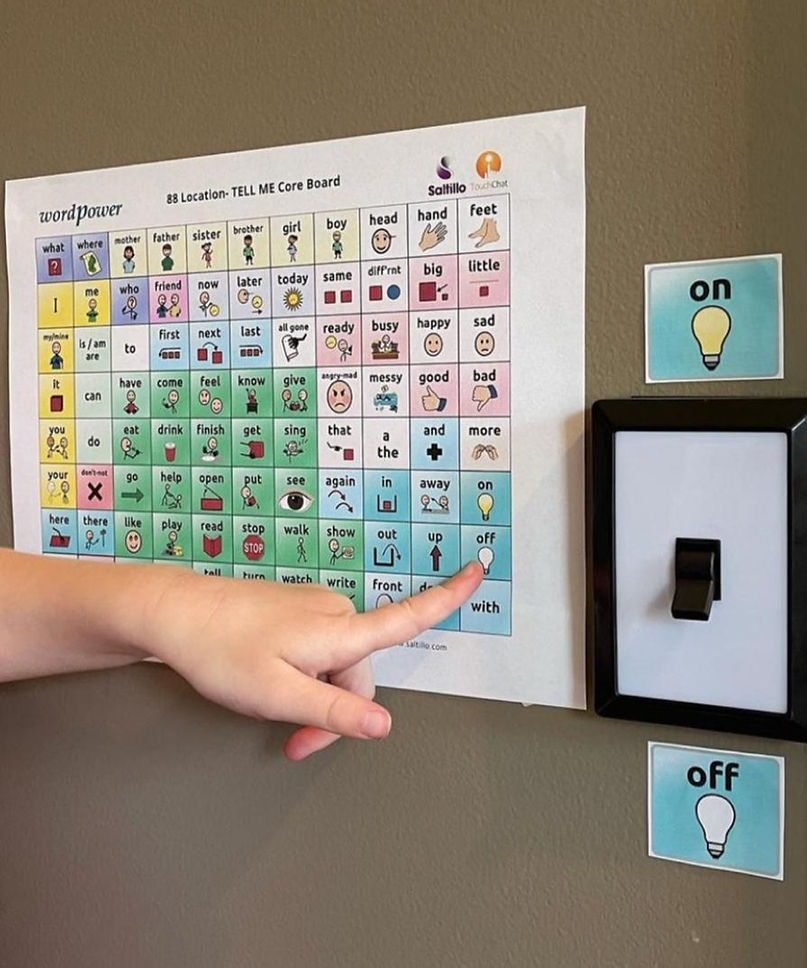
1) Choose ‘power words’
Pick 1–2 words that matter most in your child’s daily life, such as:
- more
- help
- mummy
- again
- stop
- open
These words are motivating and functional.
2) Keep it short and successful
For many children with CAS, the goal is quality over quantity.
Try five minutes a day rather than 30 minutes of struggle.
3) Support speech with rhythm
Some children benefit from:
- tapping a beat on the table
- clapping syllables
- using a gentle ‘marching’ rhythm
This can help the brain organise the sequence of movements.
4) Celebrate approximations
If your child says ‘moh’ for ‘more’, that’s communication!
We want them to feel:
- safe
- understood
- proud to try again
Confidence is a key part of progress.
A short parent story (anonymised)
One mum said to me:
‘We kept being told to wait. But I could see my child understood everything; they just couldn’t get the words out. Once we had an assessment and a plan, it felt like we finally knew what to do. The biggest change was his confidence. He started trying more.’
When should you seek support?
You don’t need to wait until school.
It’s worth getting an assessment if your child is:
- hard to understand compared with peers
- becoming frustrated or withdrawing from talking
- inconsistent with words they used to say
- struggling to imitate speech sounds
- showing signs that match CAS
Early support can reduce stress for the whole family and help your child feel successful in communication.
Here’s how I can help:
✅ A detailed speech assessment (including whether CAS is likely)
✅ A clear therapy plan with realistic goals
✅ Practical home strategies you can use immediately
✅ Support for nurseries and schools (where needed)
✅ In-person sessions in North-West London and online options
Final gentle reminder
You are not overreacting. Trust your instincts.
Your child is communicating the best way they can, and with the right support, speech can become easier, clearer, and more confident.

Sonja McGeachie
Highly Specialist Speech and Language Therapist
Owner of The London Speech and Feeding Practice.


Find a speech and language therapist for your child in London. Are you concerned about your child’s speech, feeding or communication skills and don’t know where to turn? Please contact me and we can discuss how I can help you or visit my services page.