Childhood Apraxia of Speech: Signs and first steps (2–5 years)

| |

If you’ve found yourself wondering ‘Why can my child say a word one day, but not at all the next?’ it might be that your child has a motor speech difficulty. This means the challenge isn’t that your child doesn’t know what they want to say; it’s that their brain finds it harder to plan and coordinate the movements needed for clear speech. This speech difficulty is called Childhood Apraxia of Speech (CAS)

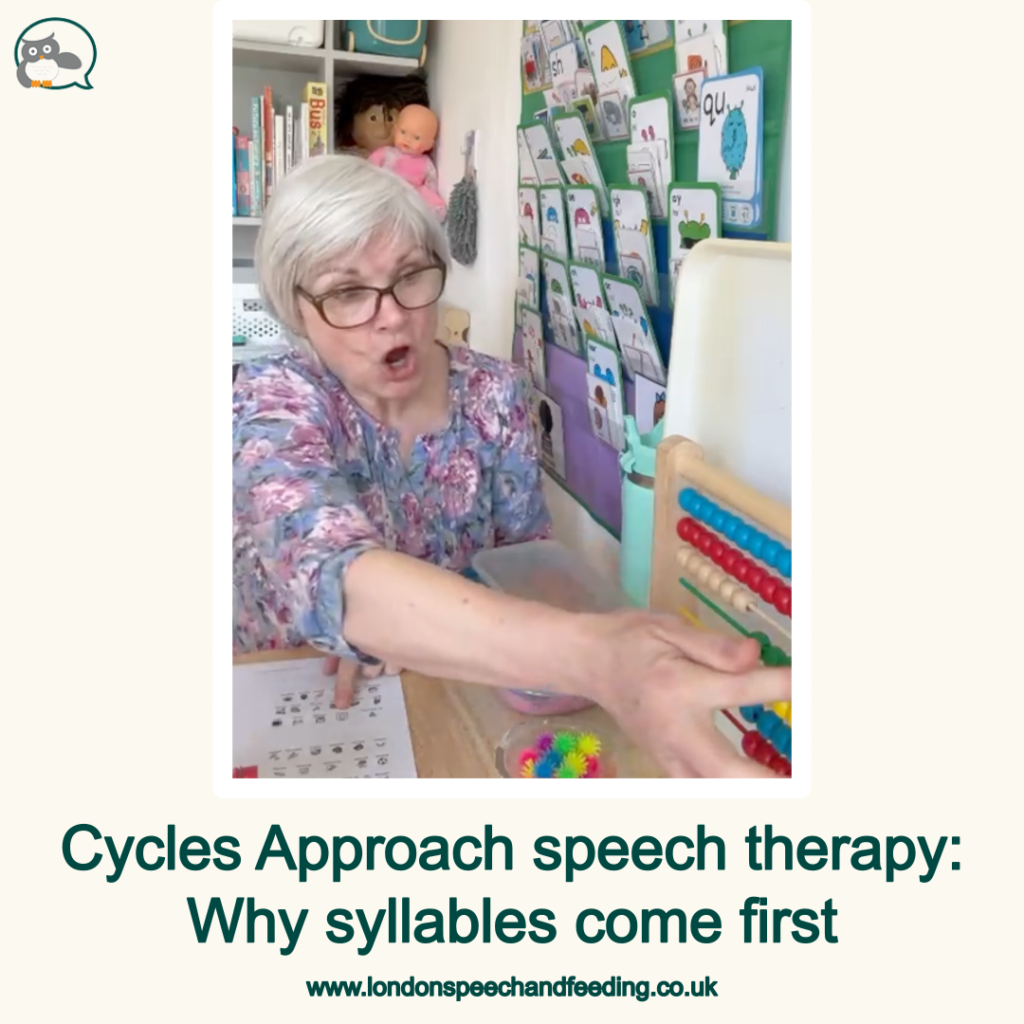
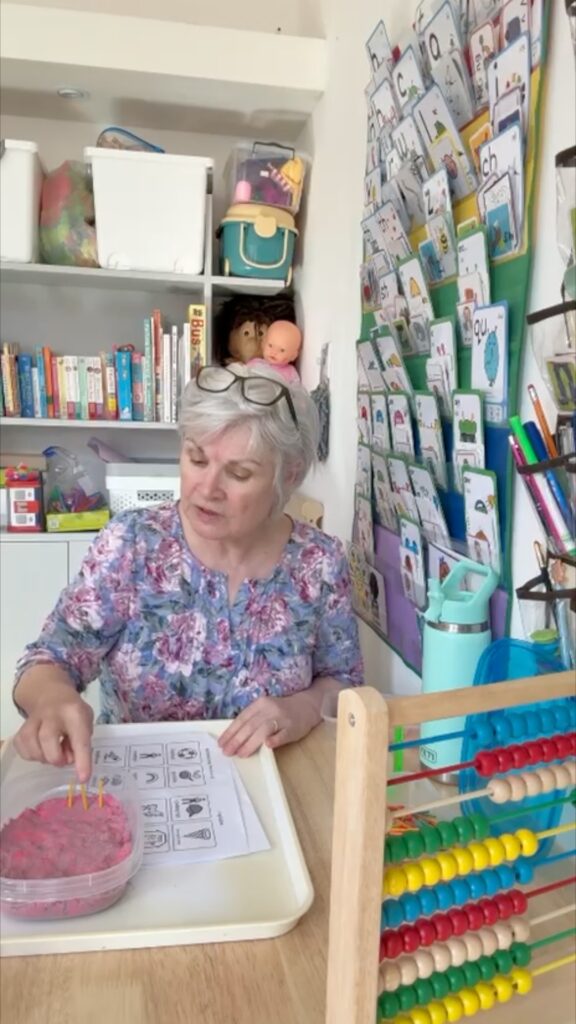
Sonja showing power words on a board

In this post, I’ll explain what CAS can look like in 2–5 year olds, what an assessment usually involves, and what you can start doing at home to support your child without turning life into ‘speech homework all day long’.

What is childhood apraxia of speech (CAS)?

Children with CAS often have lots to communicate about (and strong ideas!) but their speech may come out as:

  • Unclear
  • inconsistent
  • hard to ‘copy’ on demand
  • frustrating for them and for you

CAS is not caused by laziness and it is not a parenting issue. It is also not something children simply ‘grow out of’ without support. But with the right therapy approach, children can absolutely build clearer speech over time.

If you’d like to read more about verbal dyspraxia, you may also find this helpful: Supporting children and families living with verbal dyspraxia.

Why is CAS such a big topic right now?

Many families come to me after months (or years) of being told:

  • ‘She’ll talk when she is ready’
  • ‘He’s just shy’
  • ‘It’s probably a speech delay’
  • ‘It’s normal for toddlers’

And sometimes it is a general delay. But sometimes it’s something more specific, like CAS.

There’s also been a huge rise in parents seeking information online, and CAS is often mentioned alongside speech sound difficulties such as:

  • phonological delay (pattern-based speech errors)
  • articulation difficulties (one sound that won’t come out clearly)
  • inconsistent speech disorder

These can look similar at first glance, which is why a specialist assessment matters.

Signs of childhood apraxia of speech in 2–5 year olds

Children develop speech at different rates, and not every unclear speaker has CAS. But here are some common features that may raise a flag, especially when you notice several together.

1) Inconsistent speech errors

Your child might say the same word in different ways:

  • ‘banana’ → nana / baba / mana
  • ‘daddy’ → gaga / daddy / dadi

This inconsistency is one of the biggest clues.

2) Difficulty copying words on request

Some children speak more easily in natural play, but when asked ‘Say ___’, they freeze or the word becomes much harder.

3) Limited sound repertoire

They may use only a small set of consonants (like /M/, /N/, /B/, /D/) and avoid others.

4) Vowel distortions

Many children with typical delays mainly struggle with consonants. But in CAS, vowels can also sound ‘off’ or change between attempts.

5) Speech that sounds effortful

You might notice your child:

  • pauses between sounds
  • tries multiple times
  • looks like they’re ‘searching’ for the right mouth movement

6) Longer words are much harder

‘Car’ might be easier than ‘carry’, and ‘carry’ easier than ‘caterpillar’.

7) Prosody differences (rhythm and stress)

Some children with CAS sound a little unusual in their speech rhythm, stress, or intonation.

8) Frustration or reduced confidence

When a child is frequently misunderstood, they may:

  • talk less
  • use gestures more
  • become upset when asked to repeat themselves

Important note: none of these signs alone prove CAS but they are a strong reason to seek a speech assessment rather than waiting.

CAS vs phonological delay vs articulation difficulty (quick guide)

These are some of the most common questions I hear.

If it’s mainly an articulation difficulty…

A child may consistently say one sound incorrectly (for example, ‘thun’ for ‘sun’- lisp- but everything else is developing well.

If it’s mainly a phonological delay…

You might notice clear patterns, like:

  • leaving off the ends of words (‘ca’ for ‘cat’)
  • swapping back sounds for front sounds (‘tar’ for ‘car’)

Patterns are often consistent and respond well to phonology-based therapy.

If it might be CAS…

Speech often feels less predictable, harder to imitate, and more impacted by word length and complexity.

If you’re unsure, that’s completely normal, and exactly why assessment matters.

What happens in a CAS assessment?

A high-quality speech assessment for possible CAS usually includes:

1) Parent discussion and developmental history

We talk about:

  • pregnancy and birth history (where relevant)
  • feeding history
  • early sounds and babbling
  • first words and how speech has progressed
  • family history of speech/language needs

2) A speech sound assessment

Your child might be shown pictures or play-based prompts so we can hear:

  • what sounds they can say
  • what they simplify
  • whether errors are consistent or inconsistent

3) An oral-motor and movement check

This isn’t about ‘strength’. It’s about coordination and planning. We look at how your child manages speech movements and transitions.

4) Stimulability testing

This means: how easily can your child learn a new sound or word with support?

For CAS, we often explore how they respond to:

  • slowed-down speech
  • visual cues
  • rhythm/tapping
  • short, simple syllable shapes

5) Functional communication and confidence

We look at how speech impacts daily life:

  • being understood at nursery
  • joining in with peers
  • asking for help
  • managing emotions when misunderstood

At the end, you should leave with:

  • a clear explanation of what we think is going on
  • a therapy plan
  • practical home strategies
  • realistic next steps

What parents can do at home

Here are CAS-friendly strategies you can start right away.

1) Choose ‘power words’

Pick 1–2 words that matter most in your child’s daily life, such as:

  • more
  • help
  • mummy
  • again
  • stop
  • open

These words are motivating and functional.

2) Keep it short and successful

For many children with CAS, the goal is quality over quantity.

Try five minutes a day rather than 30 minutes of struggle.

3) Support speech with rhythm

Some children benefit from:

  • tapping a beat on the table
  • clapping syllables
  • using a gentle ‘marching’ rhythm

This can help the brain organise the sequence of movements.

4) Celebrate approximations

If your child says ‘moh’ for ‘more’, that’s communication!

We want them to feel:

  • safe
  • understood
  • proud to try again

Confidence is a key part of progress.

A short parent story (anonymised)

One mum said to me:

‘We kept being told to wait. But I could see my child understood everything; they just couldn’t get the words out. Once we had an assessment and a plan, it felt like we finally knew what to do. The biggest change was his confidence. He started trying more.’

When should you seek support?

You don’t need to wait until school.

It’s worth getting an assessment if your child is:

  • hard to understand compared with peers
  • becoming frustrated or withdrawing from talking
  • inconsistent with words they used to say
  • struggling to imitate speech sounds
  • showing signs that match CAS

Early support can reduce stress for the whole family and help your child feel successful in communication.

Here’s how I can help:

✅ A detailed speech assessment (including whether CAS is likely)

✅ A clear therapy plan with realistic goals

✅ Practical home strategies you can use immediately

✅ Support for nurseries and schools (where needed)

✅ In-person sessions in North-West London and online options

Book your consultation here.

Final gentle reminder

You are not overreacting. Trust your instincts.

Your child is communicating the best way they can, and with the right support, speech can become easier, clearer, and more confident.

Sonja McGeachie

Highly Specialist Speech and Language Therapist

Owner of The London Speech and Feeding Practice.


Health Professions Council registered
Royal College of Speech & Language Therapists Member
Member of ASLTIP

Find a speech and language therapist for your child in London. Are you concerned about your child’s speech, feeding or communication skills and don’t know where to turn? Please contact me and we can discuss how I can help you or visit my services page.

3

Similar Posts

  • When ‘star’ sounds like ‘dar’: Understanding speech sound disorders and the path to clearer speech

    If your child says ‘dar’ instead of ‘star’, you might be wondering if they will simply outgrow it or if they require specialised support. While ‘cluster reduction’—dropping one of the sounds in a blend—is a normal part of learning to talk, we typically expect these sounds to lock into place by age four years. If these errors persist as a child approaches school age, it often signals a speech sound delay that may now no longer pass without help. As a Speech and Language Therapist, I specialise in helping children bridge this gap using evidence-based techniques like backward chaining.

    This isn’t about constant correction; it’s about providing the right clinical scaffolding to move a child from ‘frustrated’ to ‘fluent’ before they hit those critical early school years.

    Dropping sounds from words is a common feature of speech sound difficulties, and while it can look small on the surface, it can have a big impact on how clearly a child is understood. In this short video clip, I’m working with a child on an /ST/ sound cluster, demonstrating how I use an evidence-based speech therapy technique called backward chaining to help children build clearer speech with confidence.

    What’s actually happening when a child drops the ‘S’?

    Clusters like /ST/, /SP/, and /SK/ are tricky. They require:

    • precise timing
    • careful airflow
    • and the ability to blend sounds smoothly

    For many children, especially those with speech sound difficulties, this is a big ask.

    So instead of hearing:

    ‘star’

    we might hear:

    ‘tar’ or ‘dar’

    This isn’t laziness or refusal. It’s the child simplifying the word to make it manageable.

    Why I don’t start by saying ‘say star’

    Telling a child to ‘just add the S’ rarely works.

    Instead, I meet them where they are already successful.

    In this clip, the child can already say ‘dar’ clearly. That’s our starting point.

    Backward chaining: building speech from success

    Backward chaining means we:

    1. Start with the part of the word the child can already say
    2. Gradually add the missing sound
    3. Keep the child feeling successful at every step

    So rather than jumping straight to ‘star’, we:

    • secure the ending
    • gently introduce the /S/
    • and blend it in a way that feels achievable

    This approach reduces frustration, builds confidence, and helps the sound stick not just in the therapy room, but out in the real world.

    Why this matters beyond one word

    This isn’t just about saying ‘star’.

    It’s about:

    • teaching the mouth a new movement pattern
    • giving the brain time to organise the sound sequence
    • and helping the child feel capable, not corrected

    When therapy feels safe and successful, children are far more likely to generalise their new sounds into everyday speech.

    Speech therapy works best when children feel supported not tested.

    If your child struggles with speech clarity

    If your child:

    • drops sounds from words
    • avoids longer or trickier words
    • or becomes frustrated when they’re not understood

    This is the kind of work I do every day building speech step by step, in a way that respects each child’s pace and strengths.

    Support can be gentle, effective, and empowering.

    If you’d like to learn more about how speech therapy can support your child, you’re always welcome to get in touch.

    Sonja McGeachie

    Highly Specialist Speech and Language Therapist

    Owner of The London Speech and Feeding Practice.


    Health Professions Council registered
    Royal College of Speech & Language Therapists Member
    Member of ASLTIP

    Find a speech and language therapist for your child in London. Are you concerned about your child’s speech, feeding or communication skills and don’t know where to turn? Please contact me and we can discuss how I can help you or visit my services page.

    3
  • Learn why ‘watchful waiting’ isn’t the answer

    As a Speech and Language Therapist, I am a big advocate of early intervention. And I’m always encouraging you (as parents and carers) to seek intervention as early as possible. But you might be thinking, “my child just needs more time.” Have you ever wondered why early intervention is important? Read on to learn more.

    Speech Therpaist in London
    Watchful waiting is not the answer

    Early intervention

    By intervening at a later age or stage of development, you may be leading your child to develop consequences as a result. One consequence can be challenging behaviour due to their inability to express their wants and needs. They may have difficulty in understanding and following directions. This will not only affect their ability in the classroom but also socially, maintaining friendships. Early intervention can support understanding. This can also help you support your child in breaking down activities so they can fully take part in home and school life. The Early Intervention Foundation (2021) suggest that providing early intervention can develop a young person’s strengths. You can use these activities to support their needs which creates better outcome measures. This allows young people to reach their full potential across a range of settings. It can positively impact on mental health and self-esteem.n

    Positive outcomes

    Also, we are protecting our young people from harmful situations by giving them a voice. And by giving them a voice, they are:

    • more likely to achieve and
    • less likely to have in negative experiences such as crime and with the justice system.

    We know that social and emotional skills (such as developing self-awareness, social skills, and emotional regulation) are crucial to a young person’s development. Research has found that children with a higher level of social and emotional skills are more likely to:

    • achieve in education,
    • graduate from university,
    • have career prospects,
    • have positive work and family relationships,n
    • maintain good mental and physical health.

    By having these positive aspects in their lives, they are less likely to engage in antisocial behaviour and related crime. It’s easy to think this feels like a long way off for your family. But by giving them the best possible start, you are promoting a positive future in all aspects of their life.

    Contact me today to get started with speech, language and communication intervention.


    Find a speech and language therapist for your child in London. Are you concerned about your child’s speech, feeding or communication skills and don’t know where to turn? Please contact me and we can discuss how I can help you or visit my services page.

    1
  • The tricky /R/: Mastering tongue placement for clear speech

    The /R/ sound is notoriously challenging for many children (and even some adults!). It’s one of the most complex sounds in the English language, with various pronunciations depending on its position in a word. If your child is struggling with their /R/s, you’re not alone. As Speech and Language Therapists (SLTs), we frequently work on this sound, and a key component of our therapy is focusing on proper tongue placement.

    Why is the /R/ so difficult?

    The /R/ sound requires precise coordination of the tongue, jaw, and lips. Unlike sounds like /P/ or /B/ that involve simple lip movements, the /R/ involves intricate tongue movements and tension. There are also different ways to produce the /R/ sound, which adds to the complexity:

    • Retroflex /R/: The tongue tip curls up and back towards the roof of the mouth.
    • Bunched /R/: The body of the tongue bunches up towards the roof of the mouth, while the tongue tip remains down.

    The importance of tongue placement

    Regardless of which /R/ variation is being targeted, accurate tongue placement is crucial. Even a slight deviation can result in a distorted or inaccurate sound. That’s why SLTs dedicate significant time to teaching and practising tongue positioning.

    Speech therapy techniques: Focusing on the tongue

    Here’s a glimpse into how I address /R/ sound difficulties, with a focus on tongue placement:

    • Visual aids:
      • Mirrors: I use a mirror to help children see their tongue movements and make adjustments.
      • Tongue diagrams and models: These visual tools provide a clear representation of where the tongue should be positioned.
    • Tactile cues:
      • Tongue depressors: These can be used to gently guide the tongue into the correct position.
      • Food-grade tools: Sometimes, I use flavoured tongue depressors or other tools to provide tactile feedback and increase awareness of tongue placement.
    • Auditory discrimination:
      • I help children distinguish between correct and incorrect /R/ sounds.
      • I use auditory cues and verbal feedback to reinforce proper pronunciation.
    • Exercises and drills:
      • Tongue strengthening exercises: Strengthening the tongue muscles can improve control and coordination.
      • Tongue placement drills: We practise positioning the tongue in the desired location and holding it there.
      • Sound approximation techniques: Sometimes we use other sounds to help approximate the /R/ sound. For example, I use the /L/ sound, to help achieve the correct tongue placement. Once my child has found the /L/ sound it is then a matter of pulling back just slightly to get a good /R/.
    • Contextual practice:
      • Once the child can produce the /R/ sound in isolation, we gradually introduce it into syllables, words, phrases, and sentences.
      • We also practise the /R/ sound in different contexts, such as at the beginning, middle, and end of words.

    Tips for Parents:

    • Be patient and supportive: Learning the /R/ sound takes time and practice.
    • Practise regularly: Short, frequent practice sessions are more effective than long, infrequent ones.
    • Make it fun! Use games, stories, and other engaging activities to keep your child motivated.
    • Work with an SLT: A qualified SLT can provide personalised guidance and support.

    In conclusion:

    The /R/ sound can be challenging, but with targeted speech therapy and a focus on tongue placement, most children can achieve clear and accurate pronunciation.

    I hope this blog post is helpful!

    Get in touch with me via my contact form if you need support

    Sonja McGeachie

    Early Intervention Speech and Language Therapist

    Feeding and Dysphagia (Swallowing) Specialist The London Speech and Feeding Practice

    The London Speech and Feeding Practice


    Find a speech and language therapist for your child in London. Are you concerned about your child’s speech, feeding or communication skills and don’t know where to turn? Please contact me and we can discuss how I can help you or visit my services page.

    1
  • ·

    Five ways to use books to encourage speech, language and communication for reluctant readers

    Reading can be a tricky skill to master for young people with speech, language, and communication difficulties, which may lead to reluctance in picking up a book. But that doesn’t mean you can’t use books to inspire and encourage them. It’s important to think outside of the box and take an innovative approach.

    But before you do that, you need to identify why your child is averse to reading. There are many possibilities: is it that they have difficulties remembering what they’ve read; or perhaps they may have difficulties decoding the words, which is the ability to apply your knowledge between letters and sounds; or it might be that they are unable to understand the language used. Whatever the reason, it’s helpful to know. It’s only then that we can support their needs which may lead to greater enjoyment in reading.

    A boy behind a pile of books on a table with hands in fists

    Explore five ways in which we can encourage reluctant readers using books:

    1. Firstly, we could narrate what’s happening from the images and relate it to experiences that your child has had, which will make it more relevant. For example, when looking at a book with a cat in it, you could say “do you remember the time when grandma had a black cat sipping out of her glass of water?”.
    2. You could talk about what they think will happen next and make predictions. You could even make this into a game. Write your predictions on paper and see who is right.
    3. Draw images to identify the key parts of the story. You might want to create a story board together.
    4. Make a sensory experience, where your child can have a hands-on approach. See what you have at home, you don’t have to go out and buy materials. E.g., If the book is talking about a gravel path, you may have rice crispies; if it mentions the weather, you could spray water or have a torch for sunlight. Let your imagination do the work! This is also a great way to learn new vocabulary. In addition, you can also use a colour coded structure to support their expressive language (e.g., who? (the man) doing what? (is eating) to what? (an apple) how? (quickly) where? (in the park) when? (on Monday). Write out the different parts of the sentence with a picture for each part. So, your young person has a visual to learn from.
    5. Why not act out the story with family or friends? This really brings the story to life and allows your child to practise vital skills for attention and listening and social interaction such as turn-taking.

    Make sure you use a book that is appropriate for the age and stage of your child’s development and adapt your activities accordingly.

    Check my blogs for speech, language, and communication support.

    Contact me and see if I can help you.


    Find a speech and language therapist for your child in London. Are you concerned about your child’s speech, feeding or communication skills and don’t know where to turn? Please contact me and we can discuss how I can help you or visit my services page.

  • Why imitation is a powerful strategy to support social communication

    Before reading this blog, it’s important to understand what we mean by ‘social communication’ and ‘imitation’. Social communication is more complex than it first appears. It refers to many aspects of communication such as body language, voice, conversational skills, social ‘rules’ (such as being polite and using manners), interpersonal skills (such as developing friendships), and emotional literacy (such as appropriacy and developing self-awareness). Imitation refers to the simple act of copying.

    You may have noticed that your child has difficulties in some of the areas mentioned above. They might be less responsive to you and appear to be quite happy in their own world. Whilst we do not want to change their unique characteristics, we do need to prepare them for future experiences, and what is socially acceptable.

    How will copying my child develop their social communication?

    1. If your child is already engaged with a certain activity, they are already interested and motivated. You’re not competing for their attention.
    2. Both yours and your child’s attention is on the same activity which makes imitating for you (as the parent) easier.
    3. Studies have demonstrated that when a parent imitates a child, they are more likely to look at the adult.
    4. Imitation not only supports eye contact but supports facial expressions (such as smiling), may increase vocalisations, and encourages your child to sit closer to you.
    5. Children learn through trial and error. They may start to try to perform new actions to gain their parents attention. Let your child lead the play!!

    How do I start imitating my child?

    1. Start with observing them. Take the time just to watch. You don’t need to make notes. Sit back and observe their actions, movements, and sounds they make.
    2. Wait for your child’s reaction when they realise you are copying their actions. Remember they may not notice, you don’t need to remind them, simply copy them again.
    3. Having the same set up as your child allows them to feel in control. So, you may have two sets of the same activity rather than copying using their set of toys.

    This may sound daunting, but it doesn’t have to be. Start with a ten-minute time frame where you choose to copy your child. This is where you can practise your imitation strategy. Ten minutes a day is far more effective than an hour every two weeks. You may feel self-conscious but trust the process. Build your confidence, whilst exposing your child’s to increased language and communication, enabling them to develop vital social communication skills.

    Look at the video above to watch the strategy in action!

    Support is only a click away. I’m here to help.


    Find a speech and language therapist for your child in London. Are you concerned about your child’s speech, feeding or communication skills and don’t know where to turn? Please contact me and we can discuss how I can help you or visit my services page.

    0
  • ·

    Four struggles parents face when out and about with children with speech, language, and communication difficulties

    A man and a woman hug a young girl at a table
    Hug

    You (as parents) often describe yourselves as being under constant pressure and stress when looking after your children and young people with Special Educational Needs and Disabilities (SEND). You may find going out to do the simplest of tasks a challenge. And you will try to avoid social situations out of fear and anxiety. One of the most important factors to you is having like-minded people who understand your position as a parent with a young person with additional needs. Let’s look at some of the challenges you face and how I can support you and your family.

    1. Challenging behaviour and going out to the shops

    When your child displays challenging behaviour and won’t go into a shop without buying a toy that they insist on having, it can be tough on your family. You see people around you staring as you try to manage the situation. They do not understand the pressures you face, or that the simplest of tasks are a huge challenge.

    I can support you by giving strategies to use when out and about. I know that using visuals is important for your child. They may not understand or take in language when they are in a heightened state of anxiety or feeling overwhelmed. You could print pictures of the places you’re going to and put them on an easily accessible chain. Then you could use that chain when out and about at the shops. You may want to introduce a visual timetable at home. That way your child or young person understands where they are going. This may lessen their anxiety and subsequent behaviour.

    2. Your child is not able to communicate their needs to an unfamiliar communication partner

    When your child has difficulty communicating to an unfamiliar person it can be hard to manage. You feel yourself explaining your situation repeatedly. I can provide your child with individualised strategies or communication aids which support your child to communicate with both familiar and unfamiliar communication partners. We’ll work together to find which communication methods work in different situations and how your child will use these to help their independence.

    3. Being overwhelmed

    Your child or young person may easily be overwhelmed which may contribute to behaviour changes. I’ll work with your family to understand what the behaviour means, looking at what happened before and what happened afterwards. We’ll not only look at the behaviour but at the environment as well. This can inform how you can support your child or young person in the future, to reduce sensory stimuli (if needed) and for them to feel emotionally regulated.

    4. People avoid engaging with you

    One of the hardest things as a parent is for others to avoid you. You see them crossing the street because they don’t know what to say to you. All you want is them to accept you, to maintain your identity as a person and not as a SEND parent. I can support you emotionally. I can give you advice on local support networks where you can find other parents in a similar situation.

    We know the stresses that being a parent with a child with SEND comes with. Please know I am always here to support you, to find solutions so that when you’re next out and about. Your experience will be a little easier and you’ll feel less isolated.

    Improve your child’s communication, confidence, reduce overwhelm and feel supported here.


    Find a speech and language therapist for your child in London. Are you concerned about your child’s speech, feeding or communication skills and don’t know where to turn? Please contact me and we can discuss how I can help you or visit my services page.

    1