Empowering non-speaking children: the power of AAC Core Boards

|

Communication is the essence of human interaction, allowing us to express thoughts, feelings, wants and needs. For non-speaking children and their families finding an avenue to communicate effectively can be a really challenging journey.

Augmentative and Alternative Communication (AAC) offers a solution: with AAC Core Boards as a powerful ally and tool to empower and express more than requests: ideas, comments, surprise and delight, as well as saying no to something! Very important!

“AAC is a set of tools and strategies that an individual uses to solve every day communicative challenges. Communication can take many forms such as: speech, a shared glance, text, gestures, facial expressions, touch, sign language, symbols, pictures, and speech-generating devices” (RCSLT, 2023) to name just some.

AAC Core Boards are a powerful tool to empower non-speakers to express ideas. In this blog, we’ll explore the significance of AAC Core Boards and how they can unlock the world of communication for non-speaking children.

Let’s discover and understand AAC Core Boards

Firstly, let’s look at what a Core Board looks like…

AAC Coreboards
Credit: Saltillo Word Power

Why not have a go and download your own copy (and other boards) for free on the Saltillo Word Power website.

AAC Core Boards are a specific type of AAC system that employs a grid-style board. This grid contains a set of core vocabulary words or symbols, which serve as a foundation for all communicative functions (e.g., initiating, greeting, requesting, negating, commenting, asking a question, and expressing surprise).

These boards incorporate high-frequency (most used) and versatile words. They enable us to construct sentences, express emotions, and take part in conversations, fostering a sense of independence and autonomy. By enabling communication, we also remove some of the frustration (from not being able to communicate) which contributes/or often leads to behavioural difficulties.

Building literacy skills

AAC Core Boards are not only tools for immediate communication. They also play a pivotal role in language and literacy development. By using these boards, non-verbal children engage with words and symbols. It reinforces their understanding of language structure and grammar.

As they consistently play with and then use their boards, they naturally absorb language patterns, laying the foundation for improved literacy skills. This immersive learning experience paves the way for future language acquisition and communication growth.

Customisation for individual needs

Every child is unique, and their communication needs can vary significantly. AAC Core Boards are designed with this diversity in mind, allowing for customisation to suit individual preferences and abilities. The boards can be adapted to include specific vocabulary relevant to a child’s daily life, interests, and activities. This personalisation ensures that the AAC Core Board is a true reflection of your child’s personality and needs, making communication more motivating, engaging and effective.

Collaboration between AAC Core Boards and Speech Therapy

AAC Core Boards are an excellent tool but we need to know one important aspect: they only work well when used regularly by the child’s family and key people in the first place.

The board needs to be used and modelled by adults consistently and regularly across environments. This is so our children know what to expect, take an interest and begin to use the boards themselves. Modelling the use of AAC Core boards is vital. Think how long it typically takes for a child to learn their first word. Around a year! During that time the adults talk constantly to their child without hesitation or expectation! The same goes for introducing this new way of communicating.

Collaborating with your child’s Speech and Language Therapist (SLT) ensures that your child receives the right guidance in using the AAC system. SLTs can assess your child’s communication abilities, recommend appropriate boards and provide guidance on how to best put them in place, so that your child can reach their communicative potential.

For non-speaking children, AAC Core Boards are more than just tools. They are bridges to a world of communication, connection, and empowerment. These boards harness the power of visual communication, foster language development, social interaction, and personal expression. They can be tailored to individual needs with the support of skilled professionals. AAC Core Boards offer a beacon of hope, helping to break through communication barriers and thrive in a world that is waiting to hear your child’s voice.

For answers to your questions and to explore the most effective support for your child, feel free to contact us.


Find a speech and language therapist for your child in London. Are you concerned about your child’s speech, feeding or communication skills and don’t know where to turn? Please contact me and we can discuss how I can help you or visit my services page.
0

Similar Posts

  • ·

    Principles of Motor Learning in Childhood Apraxia of Speech (CAS)

    We use powerful motor learning principles to help children with CAS (Childhood Apraxia of Speech) learn how to produce better, clearer speech sounds in words, phrases and sentences.

    What are these principles?

    Principle 1: MASSED PRACTICE

    This is where you see a child for lots of sessions in a shorter period of time, so for instance six weeks of three times weekly for 30 minutes.

    This leads to motor performance or automaticity.

    Principle 2. DISTRIBUTED PRACTICE

    This is what I use, as most of my clients are not able to come and see me that often on a weekly basis. It is hard to travel in London and life is hectic. So I favour one session a week over say a term or two terms and a session is usually 45 minutes long.

    This leads to improved Motor Learning and good generalisation.

    During either Massed or Distributed Practice, we choose between 4 variables:

    Principle 3: Constant vs Variable

    Principle 4: Blocked vs Random

    To explain:

    Constant Practice is where we repeat the practice of a small handful of target words.

    We practise the same target sound in the same word position, e.g. at the beginning of a word: ‘bee’, ‘bye’, ‘bow’, ‘baa’ or ‘key’, ‘car’, ‘cow’, ‘Kaye’ etc.

    We keep the rate, pitch and intonation constant.

    Variable Practice is where we vary the rate, volume, pitch and intonation of the targets

    We use a larger number of sounds, and words that are motivating to say for the child.

    For example, if a child loves Peppa Pig then I might choose the words: ‘Peppa’, ‘Daddy Pig’, ‘George’, ‘Mummy Pig’ and a couple of other favourite characters. My child might struggle with a number of sound sequences there but we will target them one by one.

    We can also select simpler words like ‘cape’ and ‘cake’ or ‘tick’ and ‘tip’.

    Blocked Practice is where we practise one target word for say five minutes then we move to another target word for the next five minutes and then we revert back to the first target word again and so on, so blocks of practice.

    Random Practice means we practise several target words at the same time.

    How do I decide on what to use?

    Good question!

    I always opt for distributed practice (weekly for up to 45 minutes).

    Within that, I tend to find it most successful to start out with constant practice when a child is finding a certain sound sequence really hard and we need to just ‘nail it’. Bearing in mind I only pick sounds that my student can actually make in isolation, so we are not working on articulation! (where we focus on trying to elicit single sounds correctly – or even at all sometimes) Here in CAS work, we are working with sounds the student can make but is having trouble to add together, into a sequence that is needed to make a word sound right.

    As soon as I feel we have some traction I will go to variable practice, i.e. I pick words that are either funny or interesting for the child and it can be a slightly larger number.

    I tend to use blocked practice in the beginning or when working on vowels. That’s because it is more important we get our vowels right. They carry a word and are very important for overall speech intelligibility. Once we are on a roll, I tend to go more for random practice.

    Example

    Here in the video clip, we try and work the /e/ vowel in short words likes ‘bell’, ’fell’, ‘dell’, ‘sell’, ‘smell’ and I am using an AAC device to give a child’s voice as auditory feedback as well as using the PROMPT approach to help my student shape his vowels.

    So this is:

    1. Distributed (1 x week for 45 minutes)
    2. Constant – we are practising the /e/ vowel in the same position in six different words
    3. Blocked – we did this: several repetitions of each word and after the sixth we moved to another sound, and then later we came back to this.

    Please feel free to contact me if your child has speech sound difficulties. It is my passion. I love supporting children with apraxia.

    Sonja McGeachie

    Early Intervention Speech and Language Therapist

    Feeding and Dysphagia (Swallowing) Specialist The London Speech and Feeding Practice

    The London Speech and Feeding Practice


    Find a speech and language therapist for your child in London. Are you concerned about your child’s speech, feeding or communication skills and don’t know where to turn? Please contact me and we can discuss how I can help you or visit my services page.
    1
  • The tricky /R/: Mastering tongue placement for clear speech

    The /R/ sound is notoriously challenging for many children (and even some adults!). It’s one of the most complex sounds in the English language, with various pronunciations depending on its position in a word. If your child is struggling with their /R/s, you’re not alone. As Speech and Language Therapists (SLTs), we frequently work on this sound, and a key component of our therapy is focusing on proper tongue placement.

    Why is the /R/ so difficult?

    The /R/ sound requires precise coordination of the tongue, jaw, and lips. Unlike sounds like /P/ or /B/ that involve simple lip movements, the /R/ involves intricate tongue movements and tension. There are also different ways to produce the /R/ sound, which adds to the complexity:

    • Retroflex /R/: The tongue tip curls up and back towards the roof of the mouth.
    • Bunched /R/: The body of the tongue bunches up towards the roof of the mouth, while the tongue tip remains down.

    The importance of tongue placement

    Regardless of which /R/ variation is being targeted, accurate tongue placement is crucial. Even a slight deviation can result in a distorted or inaccurate sound. That’s why SLTs dedicate significant time to teaching and practising tongue positioning.

    Speech therapy techniques: Focusing on the tongue

    Here’s a glimpse into how I address /R/ sound difficulties, with a focus on tongue placement:

    • Visual aids:
      • Mirrors: I use a mirror to help children see their tongue movements and make adjustments.
      • Tongue diagrams and models: These visual tools provide a clear representation of where the tongue should be positioned.
    • Tactile cues:
      • Tongue depressors: These can be used to gently guide the tongue into the correct position.
      • Food-grade tools: Sometimes, I use flavoured tongue depressors or other tools to provide tactile feedback and increase awareness of tongue placement.
    • Auditory discrimination:
      • I help children distinguish between correct and incorrect /R/ sounds.
      • I use auditory cues and verbal feedback to reinforce proper pronunciation.
    • Exercises and drills:
      • Tongue strengthening exercises: Strengthening the tongue muscles can improve control and coordination.
      • Tongue placement drills: We practise positioning the tongue in the desired location and holding it there.
      • Sound approximation techniques: Sometimes we use other sounds to help approximate the /R/ sound. For example, I use the /L/ sound, to help achieve the correct tongue placement. Once my child has found the /L/ sound it is then a matter of pulling back just slightly to get a good /R/.
    • Contextual practice:
      • Once the child can produce the /R/ sound in isolation, we gradually introduce it into syllables, words, phrases, and sentences.
      • We also practise the /R/ sound in different contexts, such as at the beginning, middle, and end of words.

    Tips for Parents:

    • Be patient and supportive: Learning the /R/ sound takes time and practice.
    • Practise regularly: Short, frequent practice sessions are more effective than long, infrequent ones.
    • Make it fun! Use games, stories, and other engaging activities to keep your child motivated.
    • Work with an SLT: A qualified SLT can provide personalised guidance and support.

    In conclusion:

    The /R/ sound can be challenging, but with targeted speech therapy and a focus on tongue placement, most children can achieve clear and accurate pronunciation.

    I hope this blog post is helpful!

    Get in touch with me via my contact form if you need support

    Sonja McGeachie

    Early Intervention Speech and Language Therapist

    Feeding and Dysphagia (Swallowing) Specialist The London Speech and Feeding Practice

    The London Speech and Feeding Practice


    Find a speech and language therapist for your child in London. Are you concerned about your child’s speech, feeding or communication skills and don’t know where to turn? Please contact me and we can discuss how I can help you or visit my services page.
    1
  • ·

    A bite-sized guide to Speech and Language Therapy: feeding and swallowing

    What is a Speech and Language – Feeding Therapist?

    You’ve probably heard of speech therapists helping people who stutter or struggle to pronounce words. But did you know that they also work with children and adults who have problems with eating and swallowing? This specialised area is called Speech and Language Therapy: Feeding and Swallowing, or Dysphagia Therapy.

    Why does a Speech Therapist help with eating and swallowing?

    The mouth, tongue, and throat are all involved in both speech and swallowing. When there’s a problem with any of these parts, it can affect both your ability to talk and to eat. For example:

    • Weak tongue muscles: Can make it hard to chew food and to form sounds.
    • Difficulty coordinating swallowing: Can lead to choking or aspiration (when food or liquid goes into the lungs).
    • Sensory issues: Can make certain textures or tastes feel unpleasant or overwhelming.
    • Communication: If we are not able to express ourselves we are likely to have difficulties during daily mealtimes: how do we ask for ‘more’ of something, how do we say we have had enough or we don’t like a particular food?

    How does a Speech and Language Therapist help?

    Our work involves a combination of assessment and therapy. We carefully observe how your child feeds, eats and swallows, and we look into your child’s mouth to help us see what the cause of the difficulties are: could be a very highly-arched palate, it could be a very flaccid/low tone tongue, it could be poor dentition. Then, we create a personalised treatment plan to address your specific needs.

    Here are some of the things we might do:

    • Teach swallowing techniques: We can help your child learn strategies to improve or facilitate a safe swallow.
    • Recommend dietary modifications: We may suggest changes to your child’s diet to make it easier to eat and swallow.
    • Provide sensory therapy: If your child has sensory needs we can help your child become more comfortable with different textures, tastes, and smells.
    • Work on oral motor skills: We can help to encourage more effective chewing, or drinking skills, or we can help your child to close his/her mouth more during chewing or drinking from a straw.
    • Collaborate with other professionals: We often work closely with doctors, nurses, occupational therapists, and dietitians to provide comprehensive care.

    What kinds of problems do Speech and Language Therapists help with?

    We see a wide range of feeding and swallowing difficulties, including:

    • Delayed feeding: Children who are slow to develop feeding skills or who have difficulty transitioning to solid foods.
    • Tongue-ties: Babies can have significant difficulties with feeding when the tongue is very tightly tethered to the floor of the mouth.
    • Refusal to eat: Children who refuse to eat certain foods or textures.
    • Aspiration: When food or liquid goes into the lungs, which can lead to pneumonia and other serious complications.
    • Chewing difficulties: Problems with chewing food, such as difficulty breaking down food or keeping food in the mouth.
    • Swallowing difficulties: Problems with swallowing, such as feeling like food is stuck or choking.
    • Neurological conditions: Conditions like cerebral palsy, down syndrome or other genetic syndromes can affect feeding and swallowing.
    • Developmental delays: Children with developmental delays may have difficulties with feeding and swallowing.

    Is there hope?

    If your child is struggling with feeding or swallowing, know that there is help available. Speech and Language Therapy can make a significant difference in your and your child’s quality of life. We’re here to support you every step of the way.

    Remember, you don’t have to suffer in silence. If you’re concerned about your child feeding or swallowing, please reach out. You can find a Speech and Language Therapist with a Feeding/dysphagia qualification near you via www.asltip.co.uk or contact me.

    Sonja McGeachie

    Early Intervention Speech and Language Therapist

    Feeding and Dysphagia (Swallowing) Specialist The London Speech and Feeding Practice

    The London Speech and Feeding Practice


    Find a speech and language therapist for your child in London. Are you concerned about your child’s speech, feeding or communication skills and don’t know where to turn? Please contact me and we can discuss how I can help you or visit my services page.
    1
  • · ·

    Explore how to improve communication skills for a Gestalt Language Processor

    Let’s break it down into steps to make these complicated words easier to understand. Once you have a deeper understanding, you will then be able to support your child or young person develop their communication skills in the best way as a Gestalt Language Processor. Remember not every child will be a Gestalt Language Processor; if your child uses echolalia and/or has a diagnosis of autism then your child’s way of processing language is most likely different to the classic way children typically learn language.

    Let’s start with understanding what each of these words “Gestalt Language Processors” mean.

    Gestalt: “the way a thing has been placed or put together”

    Language: “a system of human communication”

    Processors: “responds to and processes basic instruction”

    So, let’s put those meanings together. “Gestalt Language Processors are children who process early language in strings of sounds or chunks.” They tend not to process single words.

    It is important to understand this way of processing communication because between 75-90% of children with Autistic Spectrum Conditions process language in this way (Blanc, 2012). We know that it’s important for young people to have their voice heard and to be able to express themselves. So, it’s vital that they move from echolalia to self-generated communication to be able to do this. This means that our children’s communication partners play a vital role in supporting their child’s language. We can support our children by modelling phrases until the child has learnt the process themselves.

    Speech Therpaist in London

    Let’s explore an example together

    X (who is a gestalt language processor) and his family love to feed the ducks in their spare time; this is an activity that takes place regularly. Let’s look at how you, as the adults, could support X in his communication. Look at the phrases that are used. They are meaningful to the activity with repetition used throughout.

    Top tip: You could think of an activity you and your child or young person take part in on a regular basis and brainstorm some key phrases that you could use.

    Need a boost in confidence to support your child’s gestalt language processing?

    Contact me.


    Find a speech and language therapist for your child in London. Are you concerned about your child’s speech, feeding or communication skills and don’t know where to turn? Please contact me and we can discuss how I can help you or visit my services page.
    6
  • · ·

    Living life with a lisp

    You may be questioning ‘will my child grow out of having a lisp?’ There are so many myths out there that it’s sometimes difficult to find your way out of a complex maze of information.

    The good news: lisps can be successfully treated by a Speech and Language Therapist and the earlier it’s resolved, the better. We know from the evidence base that some children’s lisps will resolve and, as always, it is completely age appropriate to have this speech pattern up until aged 4 ½.

    As with any speech and language targets your child will need to be motivated to practise their newly acquired techniques, at home and in other settings. They will eventually be able to generalise this skill, but it takes lots of practice. So, think carefully about if your child is ready and motivated before commencing Speech and Language Therapy.

    There are essentially two ways in which your child has acquired a lisp. It’s key here to mention that parents have no blame in this.

    1. They’ve mis-learned it and now incorrect production has become a habit
    2. Children have difficulties organising the sounds to make a clear production

    You may be surprised to realise that there are different types of lisps. But all the techniques will be the same.

    1. Interdental lisp

    When your child pushes their tongue too far forward, they will make a /th/ sound instead of /s/ and /z/

    1. Dental lisp

    This is where your child’s tongue pushes against their teeth

    1. Lateral lisp

    Air comes over the top of the tongue and down the sides

    1. Palatal lisp

    Your palate is the roof of your child’s mouth. Sometimes they will touch their palate when making certain sounds (e.g., /s/ and /z/)

    It’s useful for you to know what type of lisp your child has because you can then support them to make the correct production. You’ll be able to talk about where in the mouth their tongue is and where it needs to be to produce a clear sound. Your Speech and Language Therapist will be able to help you with this.

    Top therapy tips for lisps

    1. Awareness is key. Does your child know where their tongue and teeth are (i.e., are they behind their teeth)? Do they notice the air escaping? Use a mirror so that your child can see not only themselves but also you in the mirror.
    2. Repetition! As with most therapeutic intervention, practice makes perfect. So little and often is key!
    3. Make sessions fun, perhaps around your child’s interests or allow them to drink from a straw
    4. Comment on how the sound is produced (e.g., /z/ is like a bee, /s/ is like a snake)
    5. Use tactile cues. Your child’s vocal folds vibrate when they produce a sound like /z/ but not with /s/. You could use the words ‘loud’ and ‘quiet’ to describe this.
    6. Start with a /t/ sound and gradually elongate the sound to an /s/

    Having a lisp may not be problematic for some, but for other children, it can have a significant impact on their emotional wellbeing. Intervening at an early age can prevent this from happening. We always advocate for early intervention!

    Contact Sonja for support on resolving your child’s lisp.


    Find a speech and language therapist for your child in London. Are you concerned about your child’s speech, feeding or communication skills and don’t know where to turn? Please contact me and we can discuss how I can help you or visit my services page.
    0
  • ·

    Speech sounds: Expectations vs reality

    Sometimes our kids find it hard to listen to sounds in words and hearing the difference between sounds. This is an important skill which we call “sound awareness”. A lack of it can really impact on clear speech sounds production.

    Your child might be confusing similar sounding words. Or they might not notice that a TAT is not a CAT for a DOD is not a DOG. Often children with speech sound disorders or difficulties don’t tune into individual sounds or even syllables. Grow your knowledge to support your child.

    Read our latest blog on hearing the difference between sounds to develop speech sound production.

    Practice makes perfect

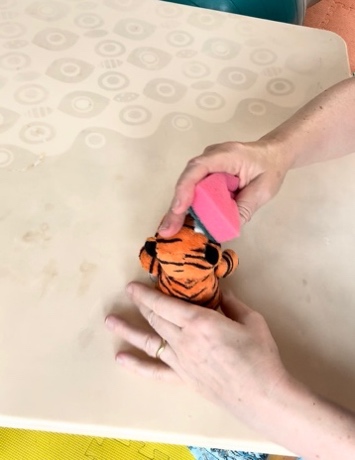
    There is a lot more to speech sound production than first meets the eye. Did you know that producing the correct speech sound at sentence level is the last piece to the communication puzzle? There’s a lot of practice before your child develops this last stage of speaking clearly. Your Speech and Language Therapist will start by determining if your child can hear the difference between the sound they are producing and the correct sound. So if your child says LIT instead of LICK we might contrast those two words by perhaps using a candle and a lollypop. Each time he/she says LICK they get to have a lick (or 3) on the lolly. But if they say LIT then we light up and blow out a candle. This way your child can see that there is a difference between those words and that the sounds we make actually matter. Fancy that!!

    We call this auditory awareness, which is essentially hearing the sounds in words. Don’t be surprised if you hear your child’s therapist model the sound a lot. This is to develop their awareness. The more your child hears a sound, the easier they will find production. Furthermore, your Speech and Language Therapist will work on phonemic awareness (sound structures) such as the difference between a sound (e.g. sh, is one sound) vs a syllable (e.g., shell has one syllable) vs total number of sounds in a word (shell has three sounds sh-e-ll ), like you can see in my little video clip.

    Once a child is able to produce a sound on its own and they can hear and identify how a short word is said correctly we can go and repeat lots of similar words with the sound at the beginning or end until it becomes automatic and new neuro pathways are laid in the child’s brain. From there we branch out into short phrases and then eventually sentences.

    Six tips to practise auditory discrimination for speech sound production

    1. Sit opposite your child so they can see your mouth or or sit next to the child and place a mirror in front of you so they can see and hear your production.
    2. Make it fun! Once they’ve identified the sounds in the word, play part of a game (e.g., pop up pirate, Jenga, something which allows plenty of turns).
    3. Use car journeys or walking to school to practise (e.g., oh I see a sheep, sh-ee-p, sh-ee-p has three sounds. Can you spot something beginning with /sh/?)
    4. Remember that spellings can differ (e.g., ‘chef’ and ‘shed’ both have the same initial sound).
    5. Talk about what you’re doing with your mouth (e.g., my lips are rounded for /sh/). Your Speech and Language Therapist will be able to support you with this.
    6. Make silly sentences using your child’s special sound (e.g., Sheep show shepherds shearing).

    At this stage you are not expecting your child to produce the sound. This is why it’s important that they continually hear an excellent model. If your child attempts speech sound production at any stage, this is to be encouraged as it’s a great opportunity to model the correct version.

    Contact me to develop your child’s speech sounds.


    Find a speech and language therapist for your child in London. Are you concerned about your child’s speech, feeding or communication skills and don’t know where to turn? Please contact me and we can discuss how I can help you or visit my services page.
    0