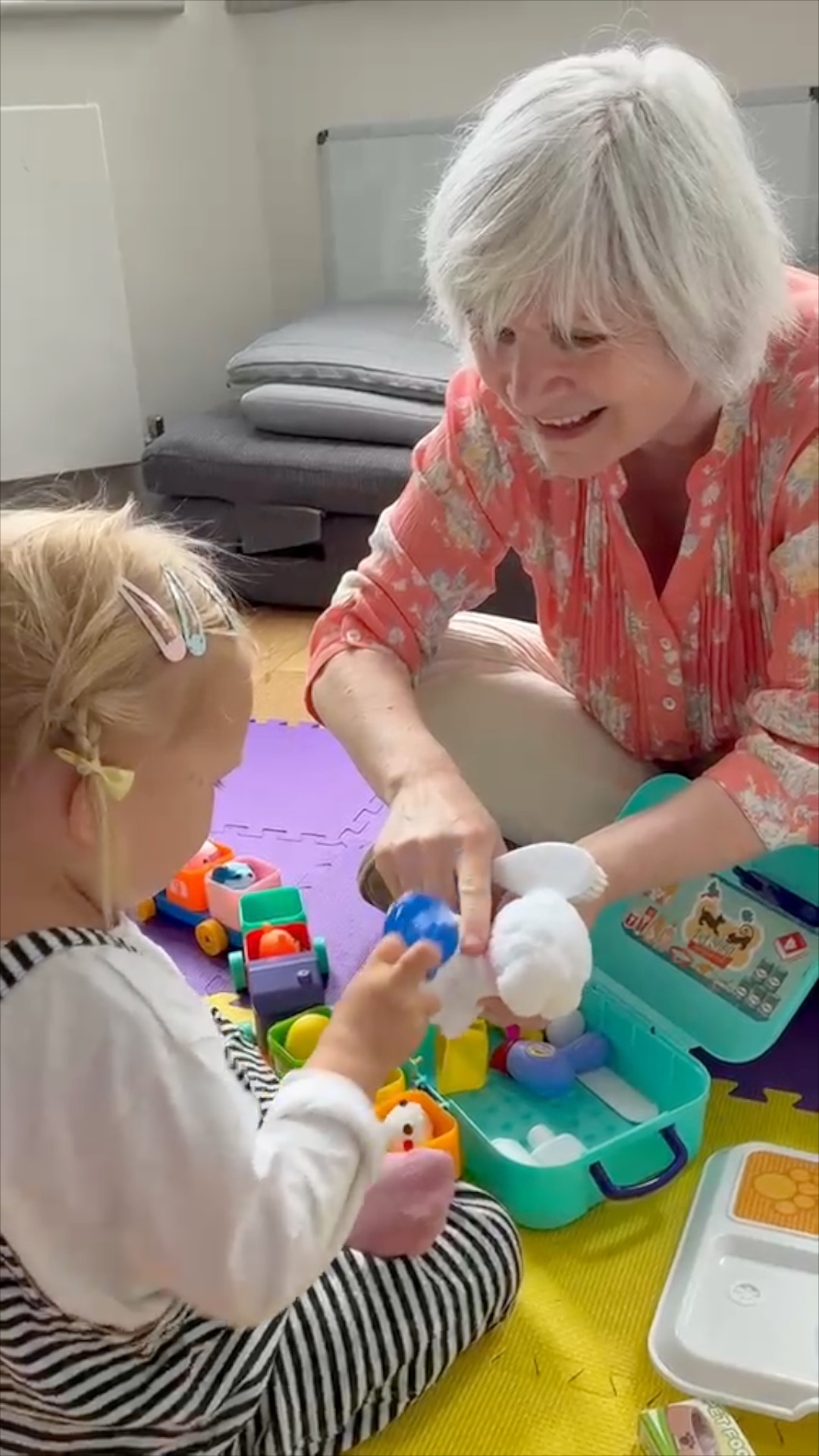
The art of selective care: My journey as a semi-retired private therapist

Welcome!

Hello, and welcome. I’m writing this today to share a bit about my professional journey, a journey that has evolved over many years from a bustling, full-schedule practice to a more intentional, deeply fulfilling semi-retired life. This shift wasn’t born out of a desire to slow down, but rather an understanding of what truly matters: my time, your time, and the quality of the work we do together.

For decades, I poured my energy into a full calendar, helping as many families as I possibly could. It was a wonderful, demanding, and rewarding time. I learned so much, grew immensely as a professional, and had the privilege of witnessing countless moments of breakthrough and success. But over recent months, I began to realise that the most impactful work wasn’t about quantity; it was about quality. It was about giving my whole, undivided attention to a select few, creating an environment where true progress could flourish.

Change

This realisation led to a significant change in my practice. I am now at a point in my career where my time is both valuable and precious. It is no longer a commodity to be filled, but a resource to be invested wisely. This doesn’t just apply to my personal life, but to my professional life as well. I’ve chosen to be more selective about the clients I see, and this selectivity is rooted in a single, powerful question: ‘Who can I truly, profoundly help?’

I believe that successful therapy is a partnership. It requires commitment, trust, and a genuine connection between therapist and client. When I take on a new family, I am not just filling a slot in my schedule; I am making a deep commitment to them. I am dedicating a part of my precious time and decades of expertise to their child’s success. This is why I am now focusing on who I can really work with: families who are equally invested in the process, who understand that progress is a team effort, and who are ready to engage fully in the journey.

My fees reflect this deep investment. You will find that my rates are higher than those of many other therapists, and I want to be transparent about why. It’s a reflection of the extensive experience I bring to the table. I have spent years honing my skills, navigating complex cases, and developing a unique, effective approach to speech, language and feeding challenges. This is not just a job for me. It is my life’s work, and I honour the value of that expertise and the time I dedicate to each family.

I want to ensure that every minute you spend with me is productive, focused, and truly transformative. Therefore, I provide a ‘boutique style’ of care. Think of it as an exclusive, personalised experience where every detail is considered and your needs are at the forefront. You won’t feel like you’re just another appointment on a long list. You will feel that you have my full, undivided attention, as if you were my only client.

This means less time spent on administrative tasks and more time dedicated to preparing for your sessions, reflecting on our progress, and providing you with the most thoughtful, tailored support possible. It means an environment of calm and focused expertise, where we can truly dive deep into the specific challenges and build a clear, effective path forward.

New perspective

For parents reading this, I hope this provides a new perspective. Choosing a therapist for your child is one of the most important decisions you can make. It’s about finding not just a professional, but a partner. I want you to feel that, if we choose to work together, you are entering into a unique partnership where your child’s growth is my singular focus.

In this next chapter of my career, I am prioritising passion over pace, depth over breadth, and meaningful connections over a packed schedule. I am here to work with families who are ready for a truly collaborative and transformative experience. If you are seeking a level of care that goes beyond the standard, an approach that is both highly experienced and deeply personal, I would be honoured to speak with you.

Sonja McGeachie

Highly Specialist Speech and Language Therapist

Owner of The London Speech and Feeding Practice.


Health Professions Council registered
Royal College of Speech & Language Therapists Member
Member of ASLTIP

Find a speech and language therapist for your child in London. Are you concerned about your child’s speech, feeding or communication skills and don’t know where to turn? Please contact me and we can discuss how I can help you or visit my services page.

1

Similar Posts

  • · ·

    The Hanen Program® – The beauty of the ‘4 S’

    One of my favourite pieces of advice I give to parents is the ‘4 S’, a strategy coined by the Hanen Program® which I teach, particularly the ‘More than Words’ programme which is designed for and aimed at parents of children with Social Communication Difficulties or Autism. It is honestly one of those golden nuggets that I use myself in my practice and I highly recommend it to all my parents. There is something about terms like the ‘4 S’ that is easy to recall and therefore use.

    Introduction

    The ‘4 S’ is a strategy that helps to clarify the words we use with our children so that they can notice us, hear us and understand what we are saying.

    Research shows that we use on average 120-200 words per minute during everyday conversation. That’s a lot! And our children who are still learning to communicate are often bombarded with endless speech coming at them all day long. If we take into account that many of our students are Gestalt Language Processors, we can see that picking out relevant chunks of what we are saying is not at all easy, and this contributes to our children’s delays.

    So let’s look at the ‘4 S’

    1. The first one is SAY LESS

    This means we should use shorter, simpler sentences with good grammar, for example, something like: ‘let’s get ready, time to put our shoes on’ instead of what we might be saying: ‘come on then darling, let’s put your shoes on we need to get going it’s dark outside’ or similar.

    Good grammar helps to give clues about what words mean and how they are used in sentences. So, instead of ‘shoes on’ say ‘let’s put our shoes on’.

    2. The second one is STRESS

    I hear you think ‘I am stressed!‘. – NO! here it means ‘highlight’. We use our voice to highlight the important words in our sentence or phrase. For example, when you say ‘this banana is so yummy’ you can stress the word ‘yummy’ by saying it a bit louder and you can make a gesture, like rubbing your tummy as you say it.

    3. The third one is GO SLOW

    This means to speak a bit slower than you normally would and add pauses. By slowing down the pace of our speaking we give our child time to think and understand what we are saying. When we allow for pauses after we have spoken, we are inviting our child to say something in response.

    4. The last one is SHOW

    Always remember to show actions, gestures, objects, and point to pictures while speaking to help support your child’s understanding. We can show our child what words mean by pointing to things or holding up objects whilst describing or talking about them.

    At this point I would also like to recommend the use of Core Boards, and particularly Electronic AAC devices, such as LAMP Words for Life or PODD. I have written about this in other blogs but can always be persuaded to say a bit more on the matter… 😊 It is such a big help to have an AAC talker available for both the child and the adult so we can find words and pictures to help support the words we are saying.

    For example, today when reading a book like The Hungry Caterpillar (so good!) I used my LAMP AAC talker to make comments as we were looking at the pages together with my student. Example: ‘Look! He is eating more cake he is very hungry’ using my AAC talker I was able to supplement my speech and at the same time I was inviting my minimally speaking child to press a button or two and reply with ‘cake!’ which they would not have said with their mouth otherwise.

    5. It does say ‘4 S’ but really it should be ‘5’ except the fifth is not an ‘S’

    The fifth is REPEAT.

    Repeat words and phrases often throughout the day. When learning a language we all need to hear words and phrases several times and in different situations before we can understand, remember, and then eventually use them. Our children are ‘new language learners’ and so we can apply the same principles that we would when learning a new foreign language ourselves.

    Any questions or need help with supporting your little one’s language please contact me via my contact form, or you could also check out www.hanen.org for advice and lots of inspiration.

    Sonja McGeachie

    Early Intervention Speech and Language Therapist

    Feeding and Dysphagia (Swallowing) Specialist The London Speech and Feeding Practice

    The London Speech and Feeding Practice


    Find a speech and language therapist for your child in London. Are you concerned about your child’s speech, feeding or communication skills and don’t know where to turn? Please contact me and we can discuss how I can help you or visit my services page.

    1
  • · ·

    The power of imitation in supporting children with autism

    Image by Freepik

    Imitation, the act of mirroring someone else’s actions, gestures, sounds, or words, is a fundamental skill that plays a crucial role in human development. It’s how babies learn to wave ‘bye-bye’, how toddlers pick up new words, and how children acquire social skills. But for children with autism imitation can be a significant challenge and understanding why it’s important and how to foster it becomes a key focus for parents, educators, and speech and language therapists.

    Why is imitation important?

    Imitation is a building block for a wide range of developmental skills:

    • Social interaction: Imitation is the foundation of social reciprocity. When a child imitates, he or she is engaging in a shared experience, connecting with another person, and learning to take turns in social exchanges.
    • Communication development: Imitation is closely linked to language acquisition. Children often imitate sounds and words before they can produce them independently. Imitation also helps them understand the meaning of gestures and facial expressions, which are vital for nonverbal communication.
    • Cognitive development: Imitation plays a role in problem-solving, learning new skills, and understanding cause and effect. By imitating actions, children explore their environment and learn how things work.
    • Emotional development: Imitation helps children understand and share emotions. When a child imitates a smile, he or she may begin to understand the feeling of happiness.

    Imitation challenges in autism

    Many children with autism face challenges with imitation, which can affect their development in these key areas. These challenges can manifest in different ways:

    • Difficulty imitating motor actions: Children with autism may struggle to imitate simple motor movements, such as clapping hands, waving, or playing ‘peek-a-boo’.
    • Limited vocal imitation: Imitating sounds, words, and phrases can be difficult for some children with autism, which can impact their speech development.
    • Challenges with social imitation: Imitating social cues, such as facial expressions, gestures, and body language, can be particularly challenging for children with autism, affecting their ability to engage in social interactions.

    Why do children with autism struggle with imitation?

    The exact reasons for imitation difficulties in autism are complex and not fully understood. However, several factors may contribute:

    • Neurological differences: Research suggests that differences in brain structure and function, particularly in areas involved in social perception and motor control, may play a role.
    • Sensory processing differences: Some children with autism may have sensory differences that make it difficult to attend to and process the movements or sounds they are expected to imitate.
    • Attention and motivation: Challenges with attention, focus, and social motivation can also affect a child’s ability to engage in imitation.

    How to foster imitation in children with autism

    Fortunately, imitation skills can be developed and improved through targeted interventions and strategies. Here are some approaches that I use in my practice as a speech and language therapist working with autistic children and their families:

    • Create a playful and engaging environment: Children are more likely to imitate when they are having fun and feel motivated. I use toys, games, and activities that the child enjoys.
    • Start with simple imitation: Begin by imitating simple motor movements that the child is already capable of and gradually introduce more complex actions.
    • Imitate the child first: As the Hanen Program emphasises, imitating the child’s actions, sounds, and words can encourage him or her to interact and communicate more.
    • Use visual supports: Visual aids, such as pictures, photos or videos, can help children with autism understand what is expected of them and make imitation easier.
    • Break down complex actions: Divide complex actions into smaller, more manageable steps. For example, to teach a child to brush their teeth, break it down into steps like ‘pick up toothbrush’, ‘put toothpaste on brush’, and ‘move brush on teeth’.
    • Reinforce imitation attempts: Provide positive reinforcement, such as praise, smiles, or preferred activities, when the child attempts to imitate, even if the imitation is not perfect.
    • Integrate imitation into daily routines: Incorporate imitation into everyday activities, such as imitating sounds during playtime, imitating gestures during songs, or imitating actions during self-care routines.

    The role of speech therapy

    Speech-language therapists play a crucial role in helping children with autism develop imitation skills, particularly in the areas of vocal and verbal imitation. As part of my therapeutic role, I offer the following:

    • Assessing a child’s imitation abilities.
    • Developing individualised therapy plans to target specific imitation goals.
    • Using a variety of techniques to encourage vocal imitation.
    • Working with parents and caregivers to provide strategies and support for promoting imitation at home.

    Summary

    Imitation is a fundamental skill that is essential for social, communication, cognitive, and emotional development. While children with autism may face challenges with imitation, it is a skill that can be developed and improved with targeted interventions and support. By understanding the importance of imitation and using effective strategies to foster it, parents, educators, and therapists can make a significant difference in the lives of children with autism, helping them to connect with others, learn new skills, and reach their full potential.

    Do get in touch via my contact form if you have any question or need help with supporting your little one.

    Sonja McGeachie

    Highly Specialist Speech and Language Therapist

    Owner of The London Speech and Feeding Practice.


    Health Professions Council registered
    Royal College of Speech & Language Therapists Member
    Member of ASLTIP

    Find a speech and language therapist for your child in London. Are you concerned about your child’s speech, feeding or communication skills and don’t know where to turn? Please contact me and we can discuss how I can help you or visit my services page.

    1
  • · ·

    Ten games to support communication in primary school aged children

    When parents visit me with their child, their stress is palpable. Often parents don’t relish or even expect to be asked to practise strategies at home with their child between sessions. Let alone to practise whilst on holiday. I understand that you don’t necessarily want anything extra added to your daily ‘to do’ lists. This is why we try our best to incorporate all speech and language therapy practice into children’s daily activities.

    For example:

    1. during bath time;
    2. mealtimes;
    3. getting ready for bedtime;
    4. story time
    5. yes, playtime!

    These are activities that all parents will engage with anyway, so it seems to make sense to incorporate both. This is to avoid adding extra pressure on parents’ already stressful and time-poor daily lives. I am hoping my blog will come in handy, especially for the summer holidays.

    On holiday you are unlikely to have your usual games and toys with you – so here is a nice little list of things you can use instead of traditional games and toys:

    If you can think of any other alternatives on holiday and would like to tell me about them, I would love to see your comments below. We can never have too many holiday games!!

    If you are at home over the summer and you do have some games in the cupboard you might want to dust these ones down or buy one or two new ones (if you want to).

    Most games have multiple uses, and it’s always best to adapt a game to match your child’s interests and what motivates them.

    So let’s start…

    1. Pop up pirate: pop a sword into the barrel and watch the pirate pop up randomly. Practise social skills, speech sounds, expressive language (e.g., put a sword on a picture, say the word/sentence then pick up the sword and push it into the barrel).
    2. Word games such as ‘ISpy’, ‘I went to the shop and I bought…’, ‘describe a person and guess who they are’: perfect for when you’re on the move, whether travelling or walking. You can play this anywhere and still support speech, language and communication. You could play ISpy using your child’s special sound, or ‘I went to the shop and bought all things beginning with [insert special sound here]’.
    3. Shopping list: Orchard game is a game to practise categorising. We explain the analogy of the brain being like a filing cabinet. If information is all in the correct place, it’s easier to find, retrieve and use. You can also practise specific speech sounds in this activity. You could also put the words in a sentence to add more of an expressive language element.
    4. Wiggly worms: this Orchard game is all about phonological (awareness of sounds) awareness. Matching a letter with the word. You can also practise the sounds in the words (e.g, g-o-l-d = gold; m-a-ke = make). Talk about the elements, e.g., ‘g-o-l-d’ has 4 sounds, 1 syllable; ‘m-a-ke has 3 sounds, one syllable. You can talk about what words rhyme with the different words and what makes a rhyming word (i.e., the middle and end sounds remain the same).
    5. Sound detectives: this Orchard game allows children to identify sounds. It also has an app (if your child prefers a tech-way of learning). Children identify the sound then they can add the picture card to their path and become closer to being a successful detective. This game can also support memory skills.
    6. Conversation cubes: throw the dice and start building a story. You can also create and use ‘colourful semantics’ sentence strips to support expressive (spoken) language as support to build the narrative.
    7. Think words: ‘name it, press it, pass it’. A great game to expand word knowledge. You can talk about the words at the end of each round exploring semantic (meanings) and phonemic (sounds) links. Your child can also develop social skills (such as attention, listening and turn-taking).
    8. Poo bingo: this is perfectly disgusting but equally fun for kids of about 3.5 years plus – if your child’s target is to practise /p/ sound this is the one for you. You can also learn all about the different animal’s poo, which I am sure you have always wanted to do!! The more we know about a word, the easier it is to store, retrieve and use. Yes, even talking about poo can help!! Also, it’s great for our visual learners.
    9. Simon says: a game that can be played indoors or outdoors. Parents can take turns being “Simon” and give various commands that your child must follow. This means that your child can practise their receptive (understanding of) language as well as their expressive language, speech sounds and social skills (such as turn-taking and initiating).
    10. Ker-plunk: this is perfect for practising your child’s special sound. Repetition is very important, but also can be monotonous, so finding a game that they enjoy is vital. Take turns to pull out a stick. Next, your child can either say their special sound or word (depending on what stage they are at) or hear a good model from other players.

    Do you still have questions? Contact Sonja for support.


    Find a speech and language therapist for your child in London. Are you concerned about your child’s speech, feeding or communication skills and don’t know where to turn? Please contact me and we can discuss how I can help you or visit my services page.

    0
  • · ·

    Living life with a lisp

    You may be questioning ‘will my child grow out of having a lisp?’ There are so many myths out there that it’s sometimes difficult to find your way out of a complex maze of information.

    The good news: lisps can be successfully treated by a Speech and Language Therapist and the earlier it’s resolved, the better. We know from the evidence base that some children’s lisps will resolve and, as always, it is completely age appropriate to have this speech pattern up until aged 4 ½.

    As with any speech and language targets your child will need to be motivated to practise their newly acquired techniques, at home and in other settings. They will eventually be able to generalise this skill, but it takes lots of practice. So, think carefully about if your child is ready and motivated before commencing Speech and Language Therapy.

    There are essentially two ways in which your child has acquired a lisp. It’s key here to mention that parents have no blame in this.

    1. They’ve mis-learned it and now incorrect production has become a habit
    2. Children have difficulties organising the sounds to make a clear production

    You may be surprised to realise that there are different types of lisps. But all the techniques will be the same.

    1. Interdental lisp

    When your child pushes their tongue too far forward, they will make a /th/ sound instead of /s/ and /z/

    1. Dental lisp

    This is where your child’s tongue pushes against their teeth

    1. Lateral lisp

    Air comes over the top of the tongue and down the sides

    1. Palatal lisp

    Your palate is the roof of your child’s mouth. Sometimes they will touch their palate when making certain sounds (e.g., /s/ and /z/)

    It’s useful for you to know what type of lisp your child has because you can then support them to make the correct production. You’ll be able to talk about where in the mouth their tongue is and where it needs to be to produce a clear sound. Your Speech and Language Therapist will be able to help you with this.

    Top therapy tips for lisps

    1. Awareness is key. Does your child know where their tongue and teeth are (i.e., are they behind their teeth)? Do they notice the air escaping? Use a mirror so that your child can see not only themselves but also you in the mirror.
    2. Repetition! As with most therapeutic intervention, practice makes perfect. So little and often is key!
    3. Make sessions fun, perhaps around your child’s interests or allow them to drink from a straw
    4. Comment on how the sound is produced (e.g., /z/ is like a bee, /s/ is like a snake)
    5. Use tactile cues. Your child’s vocal folds vibrate when they produce a sound like /z/ but not with /s/. You could use the words ‘loud’ and ‘quiet’ to describe this.
    6. Start with a /t/ sound and gradually elongate the sound to an /s/

    Having a lisp may not be problematic for some, but for other children, it can have a significant impact on their emotional wellbeing. Intervening at an early age can prevent this from happening. We always advocate for early intervention!

    Contact Sonja for support on resolving your child’s lisp.


    Find a speech and language therapist for your child in London. Are you concerned about your child’s speech, feeding or communication skills and don’t know where to turn? Please contact me and we can discuss how I can help you or visit my services page.

    0
  • · ·

    Creating your calm: containment strategies for Sensory Processing Difficulties

    The world can be a beautiful and stimulating place, but for individuals with Sensory Processing difficulties (SPD), it can also be overwhelming and even painful. Everyday sights, sounds, smells, touches, and tastes can be amplified to uncomfortable or even unbearable levels. This can lead to anxiety, meltdowns, and a constant feeling of being on edge.

    One important coping mechanism for SPD is containment. Containment strategies are techniques that help individuals manage their sensory experiences and create a sense of calm and safety.

    Understanding containment needs:

    Containment needs vary greatly from person to person. Some individuals might find comfort in deep pressure, while others might crave quiet and solitude.

    Common containment strategies:

    Here are some examples of containment strategies that can be helpful for individuals with SPD:

    • Deep pressure: This can involve activities like wearing weighted vests, using weighted blankets, getting firm hugs, or applying deep pressure massage.
    • Movement: Engaging in rhythmic movements like rocking, swinging, or jumping can be calming for some individuals.
    • Proprioceptive input: Activities that involve proprioception, the sense of body awareness, can be grounding. Examples include yoga, stretching, and proprioceptive toys like chewy necklaces or fidget spinners.
    • Visual calming: Utilising calming visuals like nature scenes, dimmed lights, or fidget toys with visual patterns can provide a sense of peace.
    • Auditory modifications: Noise-blocking headphones, earplugs, or white noise machines can help block out distracting or overwhelming sounds.
    • Oral motor activities: Chewing gum, crunchy snacks, or chewy toys can provide sensory input and help regulate emotions.
    • Sensory bottles: Watching calming visuals move within a liquid-filled bottle can be visually stimulating and promote focus.
    • Creating a safe space: Having a designated quiet area at home or school where individuals can retreat to self-regulate can be invaluable. This space should be free from clutter and overwhelming stimuli and can include calming sensory items.

    Additional tips:

    • Be patient and understanding: It takes time and practice to find what works best for each individual. Be patient with yourself or your child as you explore different strategies.
    • Consistency is key: Once you find effective strategies, use them consistently in different settings to create a sense of predictability and comfort.
    • Communicate openly: Talk to teachers, caregivers, and others about individual needs and how they can support containment strategies.
    • Celebrate progress: No matter how small, acknowledge and celebrate successes in managing sensory experiences.

    Remember:

    Containment is not about suppressing sensory experiences altogether. It’s about creating a sense of control and reducing overwhelming sensations to a manageable level. By exploring different strategies and working with a qualified professional, individuals with SPD can develop the tools they need to navigate the world and experience life to the fullest.

    Do get in touch if you would like some in-person or on-line 1:1 support with this. It can be overwhelming to figure it all out alone.


    Find a speech and language therapist for your child in London. Are you concerned about your child’s speech, feeding or communication skills and don’t know where to turn? Please contact me and we can discuss how I can help you or visit my services page.

    1
  • ·

    Dynamic assessment – Let’s look beyond the checklist

    Dynamic assessment – Let’s look beyond the checklist

    As a parent, you’re always observing your child, celebrating his or her milestones, and sometimes, wondering if he or she is quite on track. When it comes to speech, language, play, attention, and listening, these early years are a whirlwind of development! It’s natural to seek guidance if you have concerns, and that’s where a truly comprehensive assessment comes in.

    But what exactly does ‘comprehensive’ mean, especially when it goes beyond a typical checklist? You can find any number of check lists online these days but whilst they can give you an overall idea of what a child is typically expected to do at any given age, it can also start leading you into a rabbit hole of anxiety of ‘what-iffery’.

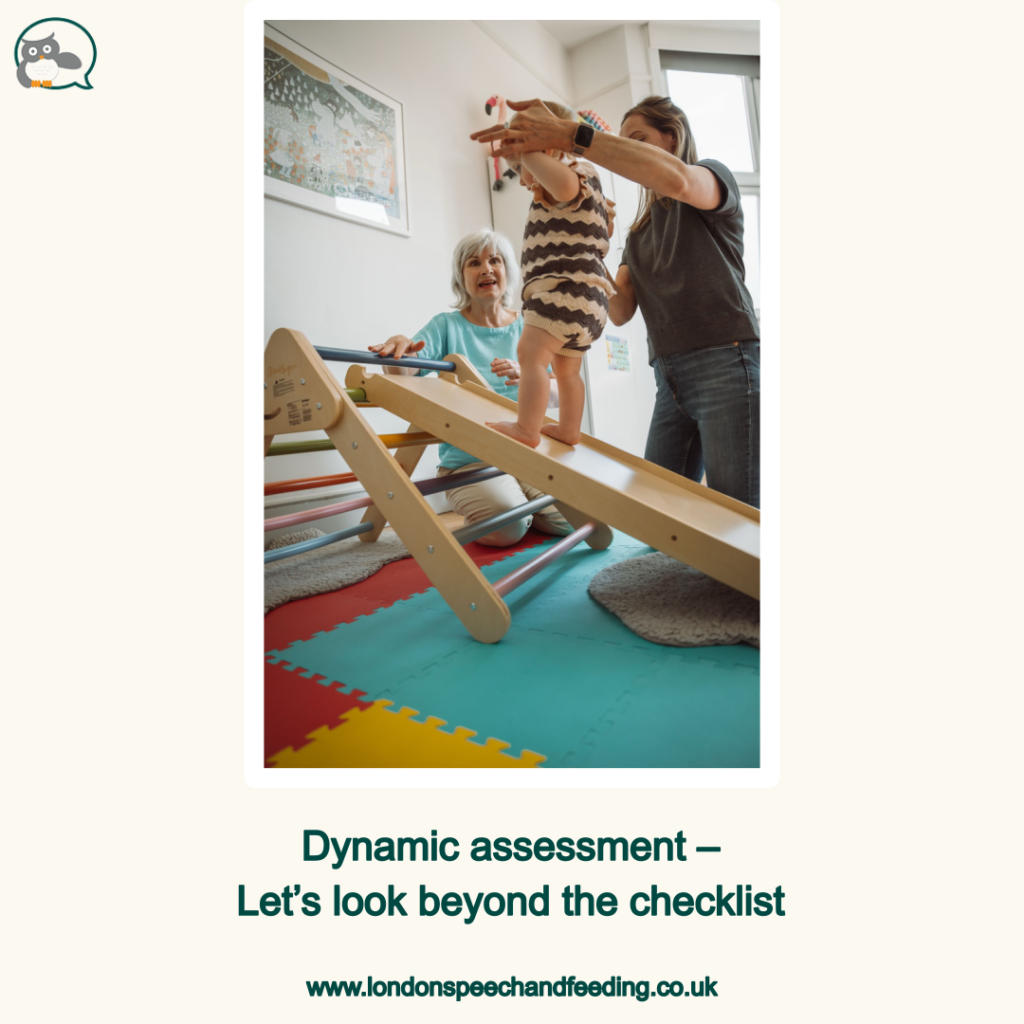
    At The London Speech and Feeding Practice I believe in something far more insightful than a static evaluation: Dynamic Assessment. Think of it as an in-depth, interactive investigation into your child’s unique communication landscape, exploring not just what he or she can do, but how he or she learns and why he or she might be facing challenges. This is so important.

    What makes an assessment ‘dynamic’?

    Imagine trying to understand a child’s personality by just looking at a single photograph. It gives you a glimpse, but it hardly tells the whole story. Traditional, formal assessments, while valuable, can sometimes be like that photograph – a snapshot of skills at one specific moment.

    Dynamic assessment, on the other hand, is a living, breathing process. It’s called ‘dynamic’ because:

    • It’s interactive and responsive: It adapts to your child’s needs in real-time. It’s not about sticking rigidly to a pre-set schedule of tests. Instead, it’s about observing, gently prompting, and providing support to see how your child responds and learns. This allows me to understand his or her learning potential, not just his or her current performance.
    • It’s holistic and multi-faceted: I look at the whole child. We delve deep into not just speech and language, but also his or her play skills (a crucial window into cognitive and social development), attention and listening abilities, and his or her social engagement. These areas are intricately linked, and a delay in one can often impact others.
    • It integrates multiple perspectives: Your insights as a parent are invaluable! Before we even meet, my comprehensive onboarding questionnaire gathers essential background. During the assessment, your feedback, observations, and comments are woven into the fabric of our session. You are the expert on your child, and your voice is central to forming a complete picture.
    Dynamic assessment – Let’s look beyond the checklist

    More than just ‘speech’: A deep dive into development

    You might initially be concerned about your child’s speech sounds, or perhaps his or her ability to form sentences. These are vital areas, but my approach goes much further. I’m keen to understand:

    • The ‘why’ behind the ‘what’: Is a child struggling with language because of difficulties with understanding instructions (receptive language), or with expressing themselves (expressive language)? Are his or her attention skills impacting his or her ability to follow a conversation? Is his or her play demonstrating imaginative thought, or does he or she prefer more structured, repetitive activities? These nuances are critical.
    • Differential diagnosis: This is where the skill of an experienced clinician truly comes into its own. Through dynamic assessment, I can differentiate between a developmental delay (where a child is following a typical progression but at a slower pace) and a disorder (where his or her development is following an atypical pattern). This distinction is vital because it guides the type of support and intervention that will be most effective. Understanding the cause of the delay or disorder is paramount to creating a targeted, impactful therapy plan.

    The art of observation

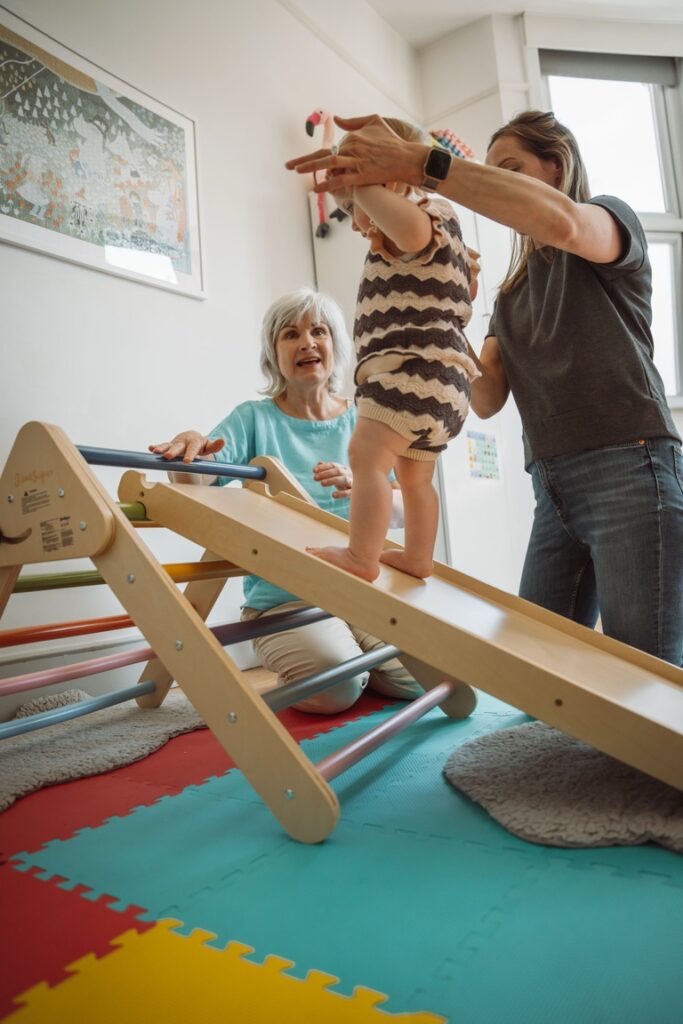
    While I draw upon evidence-based practice as well as a formal, standardised assessment as well as my extensive clinical knowledge, I also rely heavily on the art of observation. From the moment your child walks into the room, I’m establishing rapport, engaging them in play, and creating a safe, fun environment. It’s through this genuine interaction – often without them even realising they’re being ‘assessed’ – that the most authentic insights emerge.

    This is where the magic happens:

    • Building rapport: A child who feels comfortable and connected will show you so much more of his or her true abilities and personality. I pride myself on creating an atmosphere where children can relax and simply be themselves.
    • Play as a window: Play isn’t just fun; it’s a child’s natural language. It reveals his or her understanding of the world, his or her problem-solving skills, his or her social engagement, and his or her ability to use symbols and language.
    • Skilled interpretation: My years of experience allow me to see beyond surface-level behaviours and interpret the subtle cues that might indicate underlying strengths or challenges. This goes far beyond what any standardised test alone can capture.

    Why choose a clinician who offers dynamic assessment?

    In essence, a dynamic assessment provides a rich, nuanced, and truly personalised understanding of your child. It’s an investment in:

    • Accuracy: Leading to a more precise diagnosis and understanding of his or her unique profile.
    • Tailored support: Enabling the creation of highly individualised therapy goals that truly meet your child where he or she is and gently guide him or her forward.
    • Empowerment: You’ll leave with not just answers, but also practical strategies and a clear path forward, feeling confident and informed.

    If you’re seeking a thorough, empathetic, and truly insightful assessment for your child’s communication development in London, I invite you to get in touch. Let’s work together to unlock your child’s full potential.

    Sonja McGeachie

    Highly Specialist Speech and Language Therapist

    Owner of The London Speech and Feeding Practice.


    Health Professions Council registered
    Royal College of Speech & Language Therapists Member
    Member of ASLTIP

    Find a speech and language therapist for your child in London. Are you concerned about your child’s speech, feeding or communication skills and don’t know where to turn? Please contact me and we can discuss how I can help you or visit my services page.

    1