Dynamic assessment – Let’s look beyond the checklist

|
Dynamic assessment – Let’s look beyond the checklist
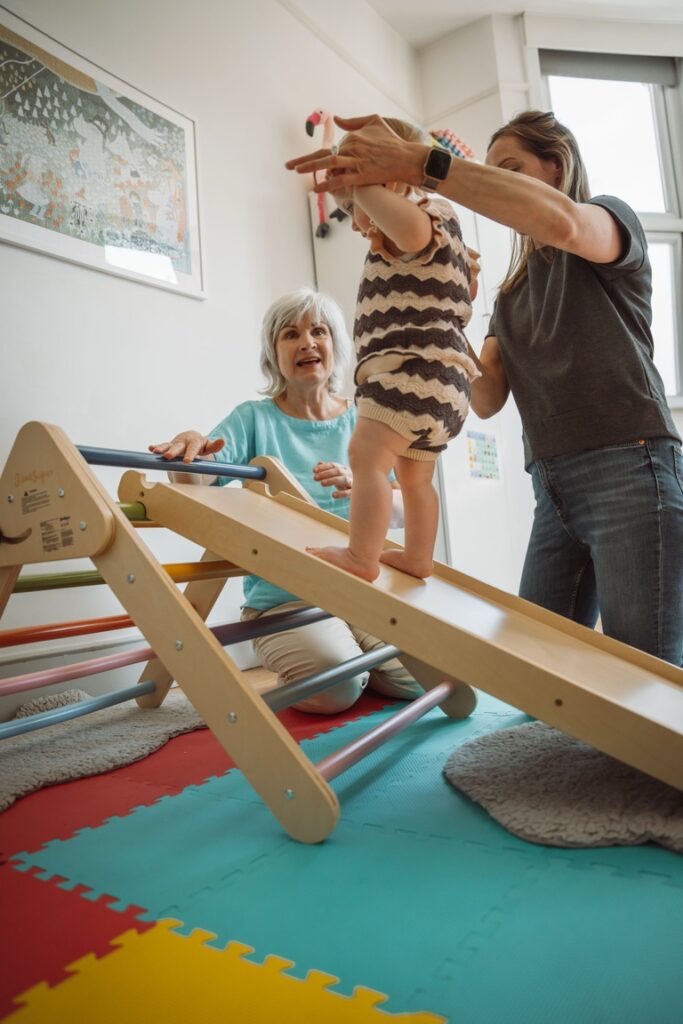
As a parent, you’re always observing your child, celebrating his or her milestones, and sometimes, wondering if he or she is quite on track. When it comes to speech, language, play, attention, and listening, these early years are a whirlwind of development! It’s natural to seek guidance if you have concerns, and that’s where a truly comprehensive assessment comes in.

But what exactly does ‘comprehensive’ mean, especially when it goes beyond a typical checklist? You can find any number of check lists online these days but whilst they can give you an overall idea of what a child is typically expected to do at any given age, it can also start leading you into a rabbit hole of anxiety of ‘what-iffery’.

At The London Speech and Feeding Practice I believe in something far more insightful than a static evaluation: Dynamic Assessment. Think of it as an in-depth, interactive investigation into your child’s unique communication landscape, exploring not just what he or she can do, but how he or she learns and why he or she might be facing challenges. This is so important.

What makes an assessment ‘dynamic’?

Imagine trying to understand a child’s personality by just looking at a single photograph. It gives you a glimpse, but it hardly tells the whole story. Traditional, formal assessments, while valuable, can sometimes be like that photograph – a snapshot of skills at one specific moment.

Dynamic assessment, on the other hand, is a living, breathing process. It’s called ‘dynamic’ because:

  • It’s interactive and responsive: It adapts to your child’s needs in real-time. It’s not about sticking rigidly to a pre-set schedule of tests. Instead, it’s about observing, gently prompting, and providing support to see how your child responds and learns. This allows me to understand his or her learning potential, not just his or her current performance.
  • It’s holistic and multi-faceted: I look at the whole child. We delve deep into not just speech and language, but also his or her play skills (a crucial window into cognitive and social development), attention and listening abilities, and his or her social engagement. These areas are intricately linked, and a delay in one can often impact others.
  • It integrates multiple perspectives: Your insights as a parent are invaluable! Before we even meet, my comprehensive onboarding questionnaire gathers essential background. During the assessment, your feedback, observations, and comments are woven into the fabric of our session. You are the expert on your child, and your voice is central to forming a complete picture.
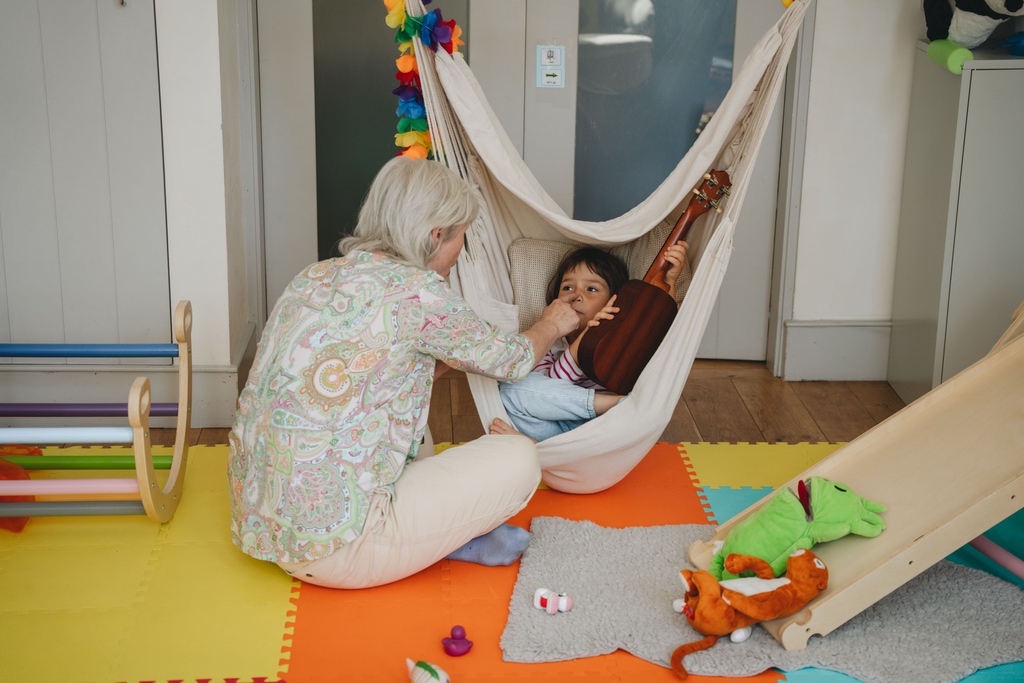
Dynamic assessment – Let’s look beyond the checklist

More than just ‘speech’: A deep dive into development

You might initially be concerned about your child’s speech sounds, or perhaps his or her ability to form sentences. These are vital areas, but my approach goes much further. I’m keen to understand:

  • The ‘why’ behind the ‘what’: Is a child struggling with language because of difficulties with understanding instructions (receptive language), or with expressing themselves (expressive language)? Are his or her attention skills impacting his or her ability to follow a conversation? Is his or her play demonstrating imaginative thought, or does he or she prefer more structured, repetitive activities? These nuances are critical.
  • Differential diagnosis: This is where the skill of an experienced clinician truly comes into its own. Through dynamic assessment, I can differentiate between a developmental delay (where a child is following a typical progression but at a slower pace) and a disorder (where his or her development is following an atypical pattern). This distinction is vital because it guides the type of support and intervention that will be most effective. Understanding the cause of the delay or disorder is paramount to creating a targeted, impactful therapy plan.

The art of observation

While I draw upon evidence-based practice as well as a formal, standardised assessment as well as my extensive clinical knowledge, I also rely heavily on the art of observation. From the moment your child walks into the room, I’m establishing rapport, engaging them in play, and creating a safe, fun environment. It’s through this genuine interaction – often without them even realising they’re being ‘assessed’ – that the most authentic insights emerge.

This is where the magic happens:

  • Building rapport: A child who feels comfortable and connected will show you so much more of his or her true abilities and personality. I pride myself on creating an atmosphere where children can relax and simply be themselves.
  • Play as a window: Play isn’t just fun; it’s a child’s natural language. It reveals his or her understanding of the world, his or her problem-solving skills, his or her social engagement, and his or her ability to use symbols and language.
  • Skilled interpretation: My years of experience allow me to see beyond surface-level behaviours and interpret the subtle cues that might indicate underlying strengths or challenges. This goes far beyond what any standardised test alone can capture.

Why choose a clinician who offers dynamic assessment?

In essence, a dynamic assessment provides a rich, nuanced, and truly personalised understanding of your child. It’s an investment in:

  • Accuracy: Leading to a more precise diagnosis and understanding of his or her unique profile.
  • Tailored support: Enabling the creation of highly individualised therapy goals that truly meet your child where he or she is and gently guide him or her forward.
  • Empowerment: You’ll leave with not just answers, but also practical strategies and a clear path forward, feeling confident and informed.

If you’re seeking a thorough, empathetic, and truly insightful assessment for your child’s communication development in London, I invite you to get in touch. Let’s work together to unlock your child’s full potential.

Sonja McGeachie

Highly Specialist Speech and Language Therapist

Owner of The London Speech and Feeding Practice.


Health Professions Council registered
Royal College of Speech & Language Therapists Member
Member of ASLTIP

Find a speech and language therapist for your child in London. Are you concerned about your child’s speech, feeding or communication skills and don’t know where to turn? Please contact me and we can discuss how I can help you or visit my services page.

1

Similar Posts

  • · · ·

    Unlocking communication: My daily life with the Saltillo 88 Core Board

    Introduction

    As an AAC speech and language therapist who uses the Saltillo 88 Core board every day, I can tell you it’s more than just a communication tool. It’s a doorway to independence, connection, and expressing my students’ unique voice.

    What is the Saltillo 88 and why do I use this one?

    In this blog post, I want to share practical, real-world examples of how I integrate the Saltillo 88 into various daily activities, empowering my students and parents to learn to communicate.

    There are literally hundreds of core boards out there and I have tried many different ones over the years. Which one should I use with this particular client? Should I make up my own? (I have made up tons!) or should I use a ready-made one like the one below which is what this blog is about.

    For me the best ones are boards with a good number of core words (at least 60) so that the board is versatile and can be used across a range of activities. The board needs to have a range of pronouns, verbs, descriptors, prepositions and question words to be useful and to stimulate not just requesting but commenting and asking questions. Another consideration is: can the board easily be transferred to a more robust AAC system. Once my student is used to the symbols and where they are could we move to an electronic talker/device. And if this answer is ’yes’ then we have a great board to get started with.

    Below is a picture of the Saltillo 88.

    Saltillo 88 Core Board
    Saltillo 88 Core Board

    It has 88 words and I find it really does suit most activities. The same board and design is also then found on the TOUCHCHAT AAC device which can be a seamless transition for our learner.

    Let me dive into how core words/board or AAC can be used daily:

    1.  Getting dressed

    Whilst choosing clothes for your little one and getting them ready for the day you can use the following words: want, like, get, finish. Always pack the words into little phrases you can speak naturally when using a board. I have tried to show you phrases that you could use below.

    The words in bold are the core words on the board and the other words are just words you say whilst pointing to the core word.

    • Goal: Express choices, needs, and preferences about clothing.
    • Ideas:
      • ‘I want this one [specific item of clothing: ‘shirt’, ‘pants’]’
      • ‘I like that one [colour/type of clothing]’
      • ‘Help me [put/get it on/take off]’
      • ‘let’s get your socks now’
      • finished let’s go’ (when dressed)

    2. Having a shower/bath

    • Goal: Bath time tends to happen daily and so it lends itself to using the same useful phrases and words to chat about temperature preferences, to ask for toys or for washing routines.
    • Ideas:
      • ‘let’s go have a bath/shower’
      • ‘let’s turn on the tap/water’
      • now turn it off
      • ‘let’s get/have more toys/water/bubbles/tickles’
      • all gone, what’s next?’
      • ‘how about washing your hands/feet’
      • ‘let’s do that again’
      • ‘need some help?’
      • Stop it now, let’s do something different’

    3. Mealtimes

    • Goal: Mealtimes can be (or should be) enjoyable and motivating to ask for specific things we like, and commenting about our eating experiences.
    • Ideas:
      • ‘I want/give me [food item: ‘apple’, ‘bread’]/[drink item: ‘water’, ‘juice’]’
      • More foods/drinks/snacks’
      • All done
      • ‘that’s messy we like that (not)’
      • ‘Like’/‘Don’t like’
      • Big’/‘Little’
      • ‘this is so nice!’

    4. Playing

    • Goal: This is where it’s at for children of course and we can use our core words to chat and engage with our little learners.
    • Ideas:
      • ‘I want play’
      • Go’/‘Stop
      • More/again’
      • ‘not it’s my My turn/’it’s Your turn
      • ‘that’s a Big one!’/‘let’s do Little bubbles (describing toys)
      • ‘let me Open it for you (for boxes, doors in play)
      • ‘I See it’ (to draw attention)
      • Help me’ (with a tricky toy)

    5. Opening boxes/doors/etc

    • Goal: Most kids love opening boxes, doors and cabinets to see what there is to play with. Help your child to ask for what they want.
    • Ideas:
      • let’s Open that box/bag/zip/door’
      • get me a (toy) out of here’
      • ‘Let’s Take it out and see what it is?’
      • finished’ (when finished with the task)
      • ‘I want [what’s inside]’
      • ‘What’s next? Let’s see’

    Tips for using AAC effectively

    • Consistency is key: Emphasise using it regularly, even for small things.
    • Modelling: this is crucial, the adults need to use the board for all situations first and foremost before we can expect our child to be interested.
    • Patience: Communication takes time and practice.
    • Celebrate successes: Acknowledge every communicative attempt.
    • Make it accessible: Keep the board within easy reach at all times.

    Conclusion

    If you’re considering the Saltillo 88, or TouchChat, or are already using it, I hope these examples inspire you. It’s a journey of discovery, and every word communicated is a step towards a more connected and independent life. What are your favourite ways to use the Saltillo 88 or which core board do you love using? I would love to hear your comments and stories.

    Sonja McGeachie

    Highly Specialist Speech and Language Therapist

    Owner of The London Speech and Feeding Practice.

    Health Professions Council registered
    Royal College of Speech & Language Therapists Member
    Member of ASLTIP

    Find a speech and language therapist for your child in London. Are you concerned about your child’s speech, feeding or communication skills and don’t know where to turn? Please contact me and we can discuss how I can help you or visit my services page.

    2
  • · · ·

    Seeing sounds: How visual gestures boost speech sound learning

    Learning to produce new speech sounds can be a complex process for young children, especially those facing challenges with speech sound disorders or motor planning difficulties. It’s not just about knowing what a sound ‘should’ sound like; it’s about figuring out where to put your tongue, how to shape your lips, and how much air to push out. This is where the power of visual gestures comes in – literally helping children see how to make sounds.

    As speech and language therapists, we frequently use visual cues and hand gestures to teach articulation. These techniques are incredibly effective, particularly when a child is struggling with the motor planning aspect of speech production.

    In the video clip above you see me teaching

    • the /SH/ sound: the hand makes a C-shape and moves forward showing both how the lips are positioned and the air flowing forward
    • the /S/ sound: the index finger shows a snake like movement going forward- also showing the air flow again
    • the /W/ sound: my right hand moves forward and fingers splay out showing that the lips open up at the end of the sound
    • the /K/ sound: my finger points to the back of my throat where the tongue needs to raise.

    An overview of motor planning for speech – what do we mean by that?

    Think about learning to ride a bike or play a musical instrument. You don’t just know how to do it instantly. You have to plan the movements, practise them, and make adjustments. Speaking is similar! Our brains must:

    1. Plan the sequence of movements needed for each sound and word (e.g., /B/ requires lips together, then release, while /T/ requires the tongue tip behind the top teeth, then release).
    2. Execute those plans rapidly and precisely.

    For some children, especially those with conditions like Childhood Apraxia of Speech (CAS) or other severe articulation disorders, this motor planning process is disrupted. They know what they want to say, but their brain struggles to send the correct, consistent messages to their articulators (lips, tongue, jaw, velum). This can make speech sound learning incredibly frustrating.

    Why use visual gestures?

    Visual gestures provide an additional, powerful sensory input that can help bridge the gap between knowing a sound and producing it. Here’s how and why they are so beneficial:

    1.      Providing a visual map:

    • How it helps: Many speech sounds are ‘hidden’ inside the mouth. It’s hard for a child to see where their tongue needs to go for a /K/ sound (back of the tongue to the roof of the mouth) or a /T/ sound (tongue tip behind teeth). A simple hand gesture can visually represent this mouth movement. For example, a hand gesture for /K/ might involve sweeping the hand back towards the throat, while for /T/, it might be a tap on the chin.
    • Why it works: Children are highly visual learners. Seeing a physical representation of an abstract mouth movement gives them a concrete ‘map’ to follow, making the process less mysterious and more manageable.

    2.      Enhancing motor planning and memory:

    • How it helps: When a child simultaneously moves their hand (the visual gesture) and attempts to make the sound, they are engaging multiple sensory systems (visual, tactile, proprioceptive – body awareness). This multi-sensory input strengthens the neural pathways associated with that speech sound.
    • Why it works: This multi-modal learning helps to solidify the motor plan for the sound in the brain. It’s like having more ‘hooks’ to hang the information on, making the sound easier to recall and produce consistently. The gesture becomes a built-in reminder.

    3.      Reducing cognitive load:

    • How it helps: Instead of just hearing the sound and trying to figure out the complex motor sequence, the child has a visual cue to guide them. This reduces the mental effort required to decode the sound production.
    • Why it works: When cognitive load is lower, the child can focus more effectively on the specific motor execution of the sound, leading to faster progress and less frustration.

    4.      Increasing engagement and success:

    • How it helps: Gestures can make therapy more interactive and fun! When a child successfully produces a sound with the help of a gesture, it’s a tangible victory.
    • Why it works: Success is a powerful motivator. When children experience success, they are more likely to stay engaged, participate actively, and feel more confident in their ability to learn new sounds.

    5.      Supporting self-correction:

    • How it helps: Once a child learns the gesture associated with a sound, he or she can use it as a self-monitoring tool. If he or she makes an error, he or she can use the gesture to remind himself or herself of the correct mouth position or movement.
    • Why it works: This promotes independent learning and reduces reliance on constant adult prompting.

    Conclusion

    The journey of speech development can be challenging, but visual gestures offer a powerful and effective tool for teaching new sounds, especially when motor planning is a factor. By providing a clear visual map, strengthening motor memory, reducing cognitive load, and fostering engagement, these gestures pave the way for clearer communication and greater confidence. If your child is struggling with speech sounds, consider talking to a Speech and Language Therapist to get guidance on how visual gestures might be incorporated into the therapy plan. Because sometimes, seeing truly is believing (and speaking!).

    Sonja McGeachie

    Highly Specialist Speech and Language Therapist

    Owner of The London Speech and Feeding Practice.


    Health Professions Council registered
    Royal College of Speech & Language Therapists Member
    Member of ASLTIP

    Find a speech and language therapist for your child in London. Are you concerned about your child’s speech, feeding or communication skills and don’t know where to turn? Please contact me and we can discuss how I can help you or visit my services page.


    1
  • Ten Top Tips for Parents and Carers to Encourage their Children’s Communication Development

    A woman is looking down at a child in her arms

    Read some of my top tips so you can make your communication as effective as possible. You’ll be able to make the most out of everyday opportunities to support your child’s speech, language and communication development.

    1. We need to go beyond the child’s needs. Think about their interests and what they may want to communicate. If they can express their wants, they are more likely to be motivated. Motivation is a big factor to ensure successful outcomes in therapy.
    2. Practice really does make perfect. So, 10 minutes twice daily is more effective than an hour every two weeks. To begin with, practise these strategies in a structured activity and then, when you’re comfortable, you can begin to generalise them to other contexts in your child’s life.
    3. Add an element of play into your communication. Make it exciting!! You could add suspense or anticipation. You could use exaggeration to add to the drama, or you could simply change the pace to add a different dimension to your interaction.
    4. Use the ‘wait’ from the OWL strategy to see if your child initiates or makes a request.
    5. Create a list of these requests that your child responds well to. You will be able to notice any patterns and create more of these opportunities to give your child more success.
    6. Talk about the rhythm in everyday experiences such as tapping your foot or describe the rhythm of the washing machine or dishwasher. Try to find everyday sounds in your child’s environment that you can talk about.
    7. Add a gesture to the sound or rhythm. We know that a lot of children are visual learners so adding a gesture will support their understanding and use of language.
    8. Ensure you look animated and this will encourage your child to participate.
    9. Learn to create opportunities for your child every day.
    10. Remember that we are not forcing our children to participate. We are simply making the activity irresistible. Above all, remember communication should be fun, so be creative!!

    You may feel like you need some reassurance, someone to check in with to make sure you’re maximising these opportunities. Feel free to contact me.


    Find a speech and language therapist for your child in London. Are you concerned about your child’s speech, feeding or communication skills and don’t know where to turn? Please contact me and we can discuss how I can help you or visit my services page.

  • ·

    Milestones of Autistic Children: Crawling, Walking, and Talking

    For all children every milestone achieved is a testament to the unique and intricate process unfolding within each young mind. For autistic children, this journey may present a distinct pattern, with some reaching developmental milestones like crawling, walking, and talking later than their neurotypical peers. Let’s have a look into the fascinating realm of Autism and explore why some autistic children might crawl, walk, and talk later, shedding light on the underlying factors contributing to this unique way of developing.

    1. Individual Pacing:

    Child development is not a one-size-fits-all journey. Each child, whether neurotypical or autistic, has a unique timeline for achieving milestones. Autistic children, like any other children, follow their own pacing. This individual rhythm might lead them to focus on one set of skills before they progress to others. Like some neurotypical children might focus on talking earlier than walking, autistic children might prioritise other areas before crawling or talking.

    2. Neurodevelopmental Complexity:

    The human brain is a remarkable entity, with a bewildering array of interconnected processes that lead to us achieving our developmental milestones. Autistic children often have variations in “neural wiring”, which can impact the balance between gross motor skills (crawling, walking) and fine motor skills. Speech and language acquisition falls under fine motor skills and may be momentarily disrupted due to the divergent neurological pathways at play in autism.

    2. Sensory Processing Differences:

    One of the hallmarks of autism is altered sensory processing. Autistic children often experience sensory stimuli differently than their neurotypical peers. This heightened or diminished sensitivity can influence a child’s desire or ability to engage in activities like crawling and walking. The sensation of movement while crawling or walking, for instance, might be overwhelming for some autistic children, causing them to either avoid or delay these activities.

    3. Visual-Spatial Abilities:

    Autistic children and adults frequently display excellent visual-spatial abilities. This strength might lead some children to focus more on activities that engage these skills, potentially delaying their engagement with activities like walking or talking. As they navigate their environment and process information visually, they might naturally invest more time in activities that stimulate this particular cognitive ability and strength.

    4. Communication Challenges:

    For many autistic children, speaking can be a really complex and difficult endeavour. Communication delays are a common feature of autism. This can affect both receptive and expressive language development. While some children might be physically capable of crawling or walking, they may not yet have the tools to communicate their desires and intentions. This leads to a temporary focus on non-speaking forms of expression. This does not mean that they do not communicate at all. But autistic individuals often start out using jargoning or echolalia as a form of communication as well as behaviours and physical forms of communication.

    5. Executive Functioning and Motor Skills:

    Executive functioning, or abilities for planning, organising, and carrying out tasks, can vary in autistic children. These skills are crucial for activities like crawling, walking, and talking, which need coordination and planning. About 40% of autistic persons have a motor planning difficulty.

    6. Intense Interests and Routines:

    Autistic children often develop intense interests in specific subjects, sometimes to the exclusion of other activities. These interests might become their primary mode of engagement. They might side-line milestones like crawling, walking, or talking. The mostly rigid adherence to routines and preferences might cause them to allocate more time to their preferred activities. This delays their engagement with other developmental tasks.

    How can Speech and Language Therapy help:

    Support and Intervention:

    Early intervention and regular Speech and Language Therapy play a pivotal role in the developmental journey of autistic children. Therapies tailored to individual needs can aid in bridging the gaps between milestones. Occupational therapy, for example, can help address sensory sensitivities and motor skill challenges that might impact crawling and walking. Speech therapy can help communication development, gradually bridging the gap between non-verbal expressions and spoken language.

    For example, we now know that echolalia or jargoning of longer phrases with intonation, repeating scripts from favourite tv shows or songs have many meanings and communicative functions. For example, a child who utters long strings of echolalic utterances, often difficult to understand, might want to do any one of the following:

    • Comment
    • greet
    • ask a question
    • make a request
    • express surprise
    • negate something.

    We now understand that the way to support a child with echolalia is to acknowledge all utterances and try and find out what the meaning is behind these scripts. This is very supportive. Over time it will lead a child to move on to understanding and saying more clear and self-generated language. For more information about this Natural Language Acquisition here are some other great websites for you to look at:

    Conclusion

    In conclusion, the journey of an autistic child’s development is a testament to the uniqueness and complexity of the human mind. The delays or differences in achieving milestones like crawling, walking, and talking can be attributed to a range of factors, including

    • neurodevelopmental intricacies,
    • sensory processing variations,
    • and communication challenges.

    It’s crucial to recognise that these delays are not indicative of a lack of potential, but rather a manifestation of the intricate interplay between an autistic child’s strengths and challenges. By embracing these differences and providing tailored support, we can help each autistic child unfold their potential at their own pace.

    Do get in touch if you would like to book an appointment where we can explore how to help your child develop and thrive

    Do get in touch if you would like to book an appointment where we can explore how to help your child develop and thrive


    Find a speech and language therapist for your child in London. Are you concerned about your child’s speech, feeding or communication skills and don’t know where to turn? Please contact me and we can discuss how I can help you or visit my services page.
    0
  • Tele-Speechtherapy: Online, connected, and highly effective

    A different kind of therapy. Online, connected, and highly effective

    When parents first enquire about speech and language therapy, many assume it will happen face-to-face, in a clinic room, with a therapist sitting across from their child.

    So when therapy is offered online, it’s natural for questions to arise:

    Can this really work? Will my child engage? Will progress be slower?

    This short video offers a glimpse into what online therapy can look like: calm, interactive, relationship-based, and surprisingly effective.

    Online therapy is not ‘less than’ in the right circumstances

    Teletherapy is not suitable for every child in every situation. However, for many school-aged children, particularly those who enjoy conversation, technology, and shared activities, online therapy can be an excellent fit.

    The child you see in this video is around eight years old and was supported for a persistent lisp. Sessions were primarily online, with the occasional in-person appointment when helpful.

    What made the difference was not the screen. It was the combination of engagement, support, and consistency.

    Parent involvement changes everything

    One of the greatest strengths of online therapy is the way it naturally invites parents in.

    In this case, parents regularly joined the video sessions:

    • Listening in
    • Taking part when appropriate
    • Learning how to support practice gently between sessions

    This meant that therapy didn’t stay ‘on the screen’. Strategies carried over into everyday conversation, making progress faster and more meaningful.

    Speech sound therapy, including support for lisps, relies heavily on awareness, feedback, and confidence, all of which can be supported very effectively at home with the right guidance.

    Therapy through a screen can still be deeply relational

    A common concern is whether connection can truly be built online.

    In reality, many children feel more relaxed in their own home environment. They are often more willing to talk, experiment with sounds, and reflect on their speech when they feel comfortable and supported.

    Online sessions allow:

    • Shared focus and conversation
    • Clear visual feedback
    • Real-life practice in a familiar setting
    • Immediate parent support

    For some children, this actually enhances engagement rather than limits it.

    Real progress, real outcomes

    Over the course of approximately 12 online sessions, alongside a small number of in-person appointments, this child achieved resolution of their lisp.

    Progress was steady, positive, and confidence-building. Importantly, the child remained motivated and proud of their achievements throughout the process.

    While every child’s journey is different, this example highlights what is possible when:

    • The child is ready
    • Parents are involved
    • Therapy is tailored and collaborative

    If you’re considering online therapy

    If you’re unsure whether teletherapy could work for your child, it’s worth remembering that effective speech and language therapy is less about the room you’re in, and more about:

    • Relationship
    • Understanding
    • Consistency
    • Carryover into daily life

    For many families, online therapy offers flexibility, accessibility, and excellent outcomes especially when parents are active partners in the process.

    If you’re at the start of your child’s speech journey and wondering whether online therapy could be the right fit, I’m always happy to talk it through. Sometimes clarity begins with simply understanding what therapy can look like

    Teletherapy: Frequently Asked Questions

    Is online speech and language therapy really effective?

    Yes. For many children, particularly school-aged children, online therapy can be highly effective. Progress depends far more on engagement, consistency, and support than on physical location.

    What age does online therapy work best for?

    Teletherapy often works well for children from around six years and up, especially those who can attend to a screen, enjoy conversation, and follow simple instructions. That said, suitability is always considered individually and often a supportive adult is needed to help guide the child through the activities.

    Can speech sound work (such as a lisp) really be done online?

    Absolutely. Speech sound therapy relies on clear visual feedback, listening skills, and practice all of which can be supported very effectively online. Many children respond particularly well when practising in their own home environment.

    Do parents need to be involved in sessions?

    Parental involvement is strongly encouraged. Parents may sit in, join parts of the session, or support practice between appointments. This involvement often leads to quicker progress and better carryover into everyday speech.

    Will my child still build a relationship with the therapist?

    Yes. Strong therapeutic relationships can and do develop online. Many children feel more relaxed and confident communicating from home, which can actually enhance connection and learning.

    Is online therapy suitable for every child?

    Not in my experience. Some children benefit more from in-person support, or a combination of online and face-to-face sessions. A discussion and initial assessment help determine the best approach for each child.

    Sonja McGeachie

    Highly Specialist Speech and Language Therapist

    Owner of The London Speech and Feeding Practice.


    Health Professions Council registered
    Royal College of Speech & Language Therapists Member
    Member of ASLTIP

    Find a speech and language therapist for your child in London. Are you concerned about your child’s speech, feeding or communication skills and don’t know where to turn? Please contact me and we can discuss how I can help you or visit my services page.

    3
  • ·

    Discover seven activities to support young children with word-finding difficulties

    Speech Therpaist in London
    Discover seven activities to support young children with word-finding difficulties

    You watch your child struggle to find the right words in conversation. You’ve noticed that they describe what they mean (e.g., it lives in the trees outside, has wings to fly and squawks) but cannot think of the correct word to use (i.e., bird). You see the frustration on their face as they search for that never-ending missing word. You know that as your young person becomes older, they are likely to face an increasing frustration. You recognise the importance of putting strategies into place for their word-finding difficulties. It’s vital that this diagnosis has come from a Speech and Language Therapist, as different activities will target different needs.

    Ensure activities are interesting and fun. Be creative and use the activities your young person relates to. Use words that interest them. Remember, the words we use matter.

    1. Read, read, and read some more!

    • Read books that rhyme, or those that talk about opposites
    • Read about the semantic classes in the book such as occupations, the equipment they might use, or names of related words
    • Talk about books that involve animals and their young, and the names of the animal genders (i.e., Horses have foals; horse; mare, stallion, filly, colt)
    • Use books that have repetition of the same word or ones that have a silly rhyme

    2. Play word-games

    You could play games which transform one part of speech to another

    • Today I am riding, yesterday I … (rode)
    • Today I am driving, yesterday I … (drove)

    You could name the odd word out from a list of items

    • e.g., cat, dog, sheep, red

    Why not read out a list of words and your child must guess which two go together

    • e.g., television, sofa, apple, banana

    Play a game of complete the sentence

    • e.g., “A house is a place to live. An office is a place to …”

    Play a word game involving synonyms or antonyms

    • e.g., Can you think of another word for “small”? Can you think of another word for “sleepy”?
    • e.g., “The opposite of hot is …” or use a question-and-answer format e.g., “What is the opposite of hot?”

    Play a word game involving similarities and/or differences

    • e.g., “what is the same as a car and a bus?”
    • e.g., “what is the difference between a car and a bus?”

    3. Use story telling

    Sing rhymes or songs, and allow children to complete the sentence

    • e.g., ‘Little Jack Horner sat in a …’ (corner)

    4.Tell jokes

    Why not tell knock-knock jokes, or riddles? These need accurate word-retrieval otherwise they wouldn’t be funny.

    5. Make up words in rhymes

    Use rhymes and make up words

    • e.g., “Humpty Dumpty had a great… grandmother”

    6. Play word category games

    These games might include ones (e.g., “see how many boys’ names you can think of in one minute”. Time yourself while you do it. Categories may include tools, games, girls’ names, drinks, films, toys, animals, makes of cars, clothes, sports, items that you find in school, colours, names of places beginning with ‘B’). You could also play this in reverse, so name items in the category and your conversation partner guesses the category.

    7. Play “what comes next?”

    • e.g., ABCDE…
    • e.g., First, second, third…
    • e.g., Monday, Tuesday, Wednesday…

    Knowing that you’re helping your child with their word finding is a weight off your mind. It helps you to relax knowing that you’re supporting their word-finding difficulties. Watch your child develop strategies as their word knowledge grows.

    Credit: Caroline Bowen

    All information in this blog originates from:

    Bowen, C. (1998). Information for Families: Helping Children Who have Word Retrieval Difficulties. Retrieved from http://www.speech-language-therapy.com/index.php?option=com_content&view=article&id=100 on [15.11.2022]


    Find a speech and language therapist for your child in London. Are you concerned about your child’s speech, feeding or communication skills and don’t know where to turn? Please contact me and we can discuss how I can help you or visit my services page.
    2