Tongue-Tie: A complex issue requiring careful assessment

Tongue-tie, or ankyloglossia, is a condition where the lingual frenulum, the thin piece of tissue that connects the underside of the tongue to the floor of the mouth, is too short or tight. Tongue-tie is quite common in babies and is often not detected after birth. Tongue-tie can lead to a difficult start with breast feeding as it makes it very difficult for the baby to latch effectively.

In my clinical experience as a feeding therapist, I have seen many babies who were not able to latch well due to the frenulum being tight. In many cases an experienced feeding speech therapist/lactation consultant can really make a difference and help a new mum to latch the baby even though the tongue is tethered to the floor of the baby’s mouth. In some cases the frenulum can be divided and once this has been done, in some cases, feeding improves immediately or soon after the division. But this is not always the case. I have seen several babies who have had as many as four tongue-tie divisions and feeding was still difficult.

It is important to say that while tongue-tie can sometimes impact speech and feeding, it’s important to note that it’s not always the root cause of these difficulties. In recent years, there has been a surge of interest in tongue-tie division surgeries, with some cases being unnecessary. It’s crucial to understand the complexities of tongue-tie and the role of speech therapy in addressing related challenges.

The impact of tongue-tie on speech and feeding

When tongue-tie is severe, it can interfere with the tongue’s ability to move freely, affecting speech production and swallowing. Some common speech and feeding difficulties associated with tongue-tie include:

  • Feeding difficulties: Challenges with sucking, chewing, and swallowing.
  • Drooling: Excessive drooling due to difficulty controlling saliva.
  • Speech problems: Difficulty producing certain sounds, such as /l/, /r/, /t/, /s/ and /d/.

The importance of comprehensive assessment

Before considering any surgical intervention for tongue-tie, it’s essential to undergo a thorough evaluation by a qualified speech-language therapist (SLT). An SLT can assess the severity of the tongue-tie, its impact on speech and feeding, and determine if surgery is necessary.

  • Functional assessment: The SLT will assess the tongue’s range of motion, its impact on speech sounds, and the child’s overall oral motor skills.
  • Feeding evaluation: The SLT will observe the child’s feeding patterns and identify any difficulties related to tongue-tie.
  • Differential diagnosis: The SLT will rule out other potential causes of speech and feeding difficulties, such as apraxia of speech, dysarthria, or sensory processing disorders.

The role of speech therapy

Even in cases where tongue-tie is present, speech therapy can often be highly effective in addressing speech and feeding difficulties. Here’s how speech therapy can help:

  • Articulation therapy: Targeting specific speech sounds that may be affected by tongue-tie.
  • Childhood Apraxia of Speech (CAS): if the diagnosis by the SLT has shown that in fact the child has motor planning difficulties then there are very specific and effective treatment programmes that help with this and can make a real difference over time.
  • Feeding therapy: Strategies to improve swallowing, chewing, and oral-motor skills.
  • Sensory integration: Addressing underlying sensory processing issues that may contribute to feeding difficulties.

London Speech and Feeding Case Study: The importance of comprehensive assessment

One of my clients was initially diagnosed with tongue-tie and recommended for surgery at the age of eight years old. His speech had been perceived by parents and teachers as ‘mumbled and unclear’.

However, after a thorough evaluation, I was able to determine that the child’s primary issue was apraxia of speech, a neurological disorder that affects motor planning for speech. Parents decided to wait with surgery and trust my judgment and we proceeded with weekly intensive speech therapy to address motor planning difficulties around tricky sounds and words. I am delighted to say that the child’s speech has improved significantly, demonstrating the importance of comprehensive assessment and individualised treatment. He is no longer seen as a candidate for an operation, which would have been traumatic for him at his age and, as it turned out, entirely unnecessary.

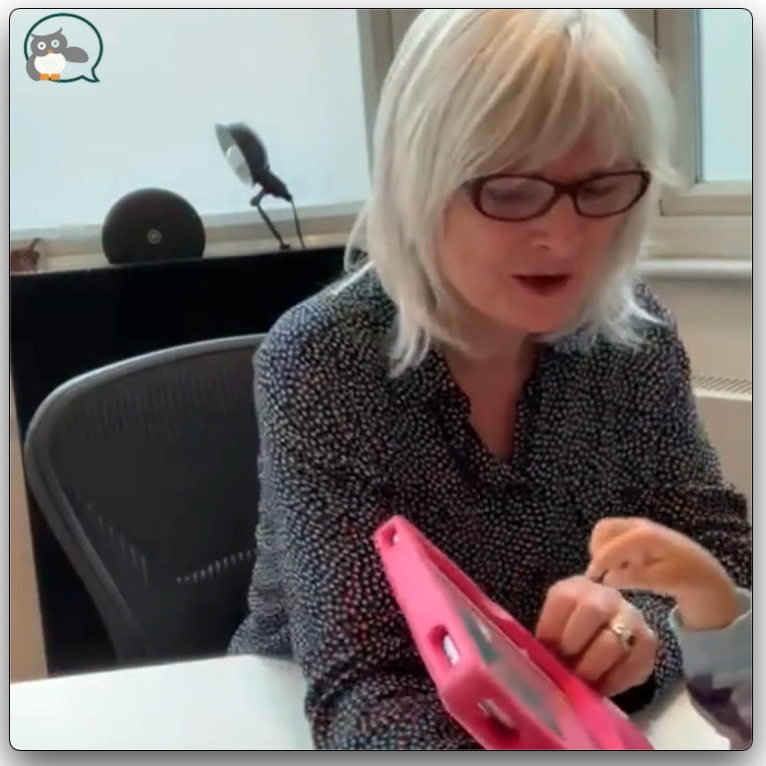
Below is a short video clip of my working on the /l/ sound with this child.

Using the Gingo Puppet from GingoTalk

Conclusion

Tongue-tie is a complex issue that requires careful evaluation and individualised treatment. While surgery may certainly be necessary in some cases, it’s essential to consider the potential benefits and risks. Speech therapy can be a highly effective approach for addressing speech and feeding difficulties associated with tongue-tie, even in cases where surgery is still required. By working with a qualified speech-language therapist, parents can ensure that their child receives the best possible care and support.

Please feel free to contact me.

Sonja McGeachie

Early Intervention Speech and Language Therapist

Feeding and Dysphagia (Swallowing) Specialist The London Speech and Feeding Practice

The London Speech and Feeding Practice


Find a speech and language therapist for your child in London. Are you concerned about your child’s speech, feeding or communication skills and don’t know where to turn? Please contact me and we can discuss how I can help you or visit my services page.

1

Similar Posts

  • · ·

    Ages and Stages: 0–3 months

    What do we offer our babies from 0–3 months old? What toys? What are the best early activities for our baby to develop? I get asked this a lot so here are my suggestions.

    You are the best toy

    You the parent or the caregiver are the BEST toy a baby could have in the first three months. The most important thing is to talk and sing to your baby, to look and hold your baby and offer your face and voice! Use sing song intonation as much as you can, and as often as possible. We know that babies respond really well to interesting voices, singing or funny sounds. Use your facial expressions!

    It is important to encourage early turn taking: leave pauses in between what you say or sing to allow your baby to respond to you. Once you see any signs of your baby responding you continue as if you are having a conversation.

    Visual Stimulation

    We know that baby’s eyesight still needs to develop in those first months and that a newborn can only distinguish light, shapes and faces. And their distance vision is blurry in the first month. A baby can see up to 15 cm away and this is roughly the distance between the feeders’ face when bottle or breastfeeding the baby.

    Black and white

    Your baby can see black and white and some shades of grey. So, in the first month you really will need no toys at all other than your face and your voice, your smile, giggle and your hands! Of course, there are a range of black and white visual toys available these days like the ones below. But if you are on a budget, I would say you don’t need those.

    From the second to third month a baby can begin to follow objects with their eyes. They recognise a familiar face and now they start reaching for things. Their colour vision is also gradually improving.

    Baby gym

    One of the best early toys is a ‘baby gym’ where bright and colourful toys dangle off foam padded arches. You can sometimes get ones with a mirror hanging off one of the arches or a mirror sewn into the mat. This is useful as baby likes to look at his/her face at around three months old and this can also be great for tummy time. If you are on a budget this would be the one toy, I would recommend you to get.

    If there is no mirror on your baby gym you could get a mirror toy. There are lots out there, this one is a good example. I would probably get a mirror toy that has other sensory components attached so you get more value for money, i.e., three toys in one.

    O-ball

    Another great toy to get around 2–3 month is an O-ball for easy grasping, bright colours, very lightweight.

    Sounds

    Lovely early toys are sound makers, bells or rain makers. Some very light weight bells can be attached to your baby’s ankles and they ring every time your baby moves his/her legs. This is a nice and easy introduction to early cause and effect understanding.

    Peek-a-boo

    A great early game is Peek-a Boo and you could complement your hands hiding your eyes with some nice lightweight pieces of material like a piece of organza veil fabric for example. An added benefit is that later on baby can try and grasp the materials and pull them out of the container.

    Music

    Music is very important. Turn on the radio to classical or any easy listening station you like. If nothing else you could sing of course! And do not worry about not hitting the right notes your baby won’t judge you (until they are about three years old!)

    After three months

    At the end of three months your baby is likely to show you the following:

    • makes cooing and early babbling sounds
    • seems to know your face
    • smiles at you socially
    • cries for different needs: hungry, bored, needing attention, looking for you
    • opens and closes hands to try and grasp items
    • takes swipes at dangling
    • kicks his/her legs
    • looks at faces and toys, lights
    • turns his/her head towards sounds
    • starts to understand the world around him/her.

    Don’t panic!

    But don’t panic at all if you feel your baby has not quite mastered any of those stages. Chances are they are doing so very soon. If you are worried, please do come and bring your baby to our clinic for a screen and we will give you plenty of assurance and ideas on how to help your baby move forward.

    On a final note, Early Intervention is key and bringing your baby for a one-off consultation to a speech and language specialist is always a great idea, just to get ideas, to see that baby is on track and to help baby develop.

    The earlier you bring your baby the better. Chances are one consultation is all you need and perhaps a six-monthly review to just stay nicely on track.

    Look out for my next Ages and Stages from three to six months old!

    I look forward to seeing you! Get in touch with me via my contact form.

    Sonja McGeachie

    Early Intervention Speech and Language Therapist

    Feeding and Dysphagia (Swallowing) Specialist The London Speech and Feeding Practice

    The London Speech and Feeding Practice


    Find a speech and language therapist for your child in London. Are you concerned about your child’s speech, feeding or communication skills and don’t know where to turn? Please contact me and we can discuss how I can help you or visit my services page.

    1
  • ·

    Cued Articulation – using hand gestures to show how a sound is made

    Watch how cued articulation can transform your child’s speech and language skills!

    Cued Articulation involves using specific handshapes and placement cues to guide the speaker’s articulators, such as the tongue, lips, and teeth, to produce accurate sounds. It was originally conceptualised by Jane Passy, a speech-language pathologist. But it is important to know that we can, and often do, also use other speech cues which help our student visualise what they need to do. In other words, we can mix and match our cue pictures depending on what works best with each student.

    In the beginning of my speech therapy practice I would stick religiously to Jane Passy’s method but over the years I have learned and used many different visual hand cues which all have worked with individual students.

    It is important to remember that this is not an exact science, rather than an art! The art is to find the key to each individual student’s understanding and inspire motivation to try out a sound which they find hard to do.

    As an example, the hand signs used by Caroline Bowen’s method, an Australian Speech-Language Pathologist, are quite different to Jane Passy’s signs but they can equally work very well. Caroline Bowen’s visual for the /r/ sound is the ‘rowdy rooster’ — a crazed rooster on a motorbike — and the hand signal is that of revving up the motor bike engine with both hands whilst trying out the /r/ sound! I have a good handful of students who really loved this rooster image and were able to eventually produce a good /r/ using this cue.

    So, it is horses for courses with many things, and visual images and hand cues are no exception!

    Sound picture cards:

    Again, there are a host to choose from and I tend to collect a number of different images for each sound I want to practise with my student. As an example, below are a couple of different examples I use for the sound /p/:

    The Nuffield Programme suggests to use this popper card, which works well with a student who knows these poppers and perhaps has one on their trousers.

    As an alternative, and especially for younger students, I like using the Popper Pig Card – which I also have in my room so I can quickly show how it pops. Or we can have a popping game in between saying the /p/ sound at times. (The popper card is great as I can use the real toy to help with conveying the /p/ sound as it pops.)

    Each card has its own merit and I choose the right card for the individual student.

    How I use cued articulation and the visuals in Speech Therapy

    1. Cueing and practice: I introduce the appropriate card and handshapes for the targeted sounds. We then practise producing the sounds.
    2. Reinforcement and feedback: Positive reinforcement encourages progress and builds confidence.
    3. Fading out the cues: Once my student is able to say the sound more easily, we can gradually fade out the speech cues.

    Benefits and effectiveness

    Using Cued Articulation and Speech Image Cards has been shown to be effective in improving speech production for individuals with various speech and language disorders, including:

    • Articulation disorders: Difficulty producing specific sounds accurately.
    • Apraxia of speech: A motor planning disorder that affects the ability to sequence and coordinate movements involved in speech.
    • Phonology disorders or delays: Confusion and delays in how sounds are organised in categories to convey meaning, errors in sound patterns, for example front sounds are produced at the back, or long sounds are produced as stops.
    • Stuttering: A fluency disorder characterised by interruptions in speech, such as repetitions and prolongations.

    Tips for parents and student speech therapists

    Parents can play a crucial role in supporting the implementation of cued articulation at home and in therapy sessions. Here are some tips:

    • Collaborate with your SLT: Good feedback and communication with the Speech and Language Therapist creates consistency and progress..
    • Practise Regularly: Encourage consistent practice of cued articulation at home to reinforce learning.
    • Use Visual Aids: Use the same visuals that your therapist uses in the speech clinic to help your child at home with recall and practice.

    Feel free to contact me if you need help with your child.

    Sonja McGeachie

    Early Intervention Speech and Language Therapist

    Feeding and Dysphagia (Swallowing) Specialist The London Speech and Feeding Practice

    The London Speech and Feeding Practice


    Find a speech and language therapist for your child in London. Are you concerned about your child’s speech, feeding or communication skills and don’t know where to turn? Please contact me and we can discuss how I can help you or visit my services page.
    1
  • · ·

    How do we know our Gestalt Learner is moving to Stage 2?

    Image by Freepik

    Is our student ready to move to NLA 2 (Natural Language Acquisition stage 2)?

    We know that the GLP (Gestalt Language Processor) will move into the next stage when they are ready. But are they now ready you might think? When are they ready? How do I know? If you are not sure whether your child is ready to move forward then go and see your GLP trained Speech Therapist. Together you can work out what the next steps are and how to help your child settle into NLA 2. It’s very exciting!!

    Tip

    The first useful tip: keep a language sample of phrases your child says. This is very helpful!

    You might want to check with your Speech Therapist and offer some language sampling you have taken so they can help you figure out where your child is currently. Always keep an Utterance Journal that you can share with your Speech Therapist and with others who look after your child.

    Basically, we want to listen out for phrases our child says that you or nursery don’t say routinely; that way you can presume that this is not an echo but a mixing together of two chunks of gestalts. Watch out for those coco melon phrases though: double check it really isn’t an NLA 1 gestalt that is copied verbatim from a favourite you tube video.

    You can best support your child best by listening, and thus figuring out what your child is TRYING TO SAY. Often your child might skip over the parts of gestalts they don’t want to say. This is common in older kids who have long gestalts, sometimes even whole episodes or whole stories!

    Try and tease out their shorter mitigations and then focus on practicing and modelling those as they are so much more useful!

    So back to our question: are they ready?

    Are their gestalts covering a variety of situations and contexts?

    Make a note in your journal to see what the backgrounds are to each phrase you ear, so for example:

    • Transitioning: ‘it’s time for the park’ ‘what’s next’ ‘shoes on’
    • Bed Time: ‘we need to wash’ ‘let’s get in (bath/bed)’ ‘ready for our book’
    • Toilet/nappy: ‘we need the potty’ ‘where’s the potty’ ‘let’s wash hands’
    • Mealtime: ‘time to eat’ ‘go get a spoon’ ‘yummy num num’
    • Park/going out: ‘look at the squirrel’ ‘funny doggy’ ‘I wanna swing’
    • At the shops: ‘let’s get the trolley’ ‘lots of veggies’ ‘no tomatoes’ ‘ooh long queue’ ‘back to the car’

    And… does the child use the phrases for a variety of functions?

    • labelling
    • providing information
    • calling out
    • affirming
    • requesting
    • protesting
    • directing

    We need to offer lots of similar language models so that in their own time our children can extract/mitigate useful phrases for what they want to express. The more similar utterances a child hears around him the more he/she can discover the communalities. Once the child has a small range of phrases, he/she can mix them up and create semi-original own phrases.

    If the answer is YES!! our child has perhaps not all but a range of functions and a range of situations where they use a variety of easily mitigable gestalts then yes they are ready for moving to stage 2 of NLA!

    Hurrah!

    Keeping a journal of what your child is saying and in what circumstance is crucial to help with our ongoing detective work!

    Next time I will be looking at how we can help our NLA 2 GLP produce even more of their own mix and match phrases.

    If you need help with your child, please do not hesitate to contact me.


    Find a speech and language therapist for your child in London. Are you concerned about your child’s speech, feeding or communication skills and don’t know where to turn? Please contact me and we can discuss how I can help you or visit my services page.

    1
  • · · ·

    The quiet power: Why silence and responsiveness boost communication in children with delays

    The quiet power: Why silence and responsiveness boost communication in children with delays
    Supplied by Sonja McGeachie, Practice Owner

    As parents and caregivers, our natural instinct when interacting with a child, especially one who struggles with communication, is often to fill every silence. We might ask lots of questions, offer constant commentary, or try to prompt him or her to speak. Our hearts are in the right place. We want to help him or her communicate! However, for children with language delays or those on the autism spectrum, this well-intentioned approach can sometimes inadvertently create more pressure and fewer opportunities for them to truly initiate and develop their own communication skills.

    What if I told you that one of the most powerful tools in your communication toolkit is often silence? And that responding to your child, rather than always initiating, can unlock incredible potential?

    Let’s explore why these seemingly simple strategies are so profoundly beneficial.

    The unspoken benefits of silence

    In our fast-paced world, silence can feel awkward, but for a child who is processing language differently, it’s a gift:

    1. Time to process: Children with language delays often need more time to process what they hear and to formulate their own thoughts or responses. When we bombard them with words, we don’t give their brains the crucial milliseconds they need to catch up. A pause of 5–10 seconds can make all the difference.
    2. Reduces pressure: Constant questioning or prompting can feel like a test. Silence removes this pressure, creating a more relaxed environment where the child feels safe to communicate without fear of being ‘wrong’ or rushed.
    3. Creates opportunity to initiate: If you’re always talking, when does your child get a turn to start the conversation? Silence opens up a space for him or her to initiate, whether it’s through a sound, a gesture, eye contact, or a word. This is vital for developing spontaneous communication.
    4. Encourages independent thinking: When a child is given space, he or she is more likely to try to figure things out himself or herself. This fosters problem-solving skills and reduces reliance on adult prompts.
    5. Prevents overwhelm (especially for ASD): Many children on the autism spectrum can be sensitive to auditory input. A constant stream of language can be overwhelming, leading to withdrawal or challenging behaviours. Strategic pauses can help them regulate and engage more effectively.

    The power of responding (not just initiating)

    Think of a tennis match: if only one person serves, it’s not a game. Communication is a rally, a back-and-forth exchange. When you primarily respond to your child’s communication attempts, you’re teaching him or her the rhythm of conversation:

    1. Follow the child’s lead: This is a cornerstone of effective language intervention, famously championed by programs like Hanen’s ‘It Takes Two to Talk’. When you respond to what your child is already interested in or doing, the interaction becomes immediately relevant and motivating for him or her.
    2. Validates his or her attempts: Every sound, gesture, glance, or partial word your child offers is a communication attempt. By responding to it, you’re telling him or her, ‘I see you. I hear you. Your communication matters.’ This builds immense confidence and encourages him or her to try again.
    3. Builds confidence and motivation: When a child feels understood and successful in his or her communication, he or she are more likely to communicate more often. It’s a positive feedback loop.
    4. Teaches turn-taking naturally: By taking your turn after his or hers, you model the natural flow of conversation. He or she learns that communication is a shared activity, not a one-sided lecture.
    5. Makes interactions meaningful: When you respond to his or her interests, you’re talking about things that are inherently motivating to him or her. This makes the language you use more easily understood and remembered.

    Practical strategies for parents: Observe, Wait, Listen (OWL)

    The Hanen Centre’s ‘Observe, Wait, Listen’ (OWL) strategy perfectly encapsulates these principles:

    • Observe: Watch your child closely. What is he or she looking at? What is he or she doing? What sounds is he or she making? What gestures is he or she using?
    • Wait: After you’ve observed, wait. Give him or her time. Resist the urge to jump in with a question or comment immediately. Count to five (or even ten) in your head. This silence is an invitation for him or her to communicate.
    • Listen: When he or she does communicate (in any way!), listen intently. Try to understand his or her message or intent.

    Beyond OWL – More tips:

    • Reduce questions, increase comments: Instead of ‘What’s that?’ try ‘Oh, a big red ball!’ or ‘The car is going fast!’ Comments provide language models without demanding a verbal response.
    • Expand, don’t just prompt: If your child says ‘Car’, you could respond with ‘Yes, That’s a big car!’ or ‘It’s really fast!’ You’re building on his or her communication with a slightly richer language model.
    • Create opportunities for communication: Place desired items slightly out of reach. This creates a natural reason for your child to communicate his or her wants (e.g., reaching, pointing, vocalising).
    • Respond to all communication: Don’t just wait for words. If your child points, look where he or she is pointing and comment. If he or she makes a sound, imitate it or respond with a related word.

    In summary

    Embracing silence and prioritising responsiveness might feel counterintuitive at first, especially when you’re eager for your child to talk. However, these powerful strategies create a nurturing, low-pressure environment that encourages spontaneous communication, builds confidence, and truly meets your child where he or she is. By giving your child the space and the meaningful responses he or she needs, you’re laying a strong foundation for his or her communication journey.

    Try incorporating these ‘quiet powers’ into your daily interactions and watch your child’s communication blossom.

    Sonja McGeachie

    Highly Specialist Speech and Language Therapist

    Owner of The London Speech and Feeding Practice.


    Health Professions Council registered
    Royal College of Speech & Language Therapists Member
    Member of ASLTIP

    Find a speech and language therapist for your child in London. Are you concerned about your child’s speech, feeding or communication skills and don’t know where to turn? Please contact me and we can discuss how I can help you or visit my services page.

    1
  • ·

    Dynamic assessment – Let’s look beyond the checklist

    Dynamic assessment – Let’s look beyond the checklist

    As a parent, you’re always observing your child, celebrating his or her milestones, and sometimes, wondering if he or she is quite on track. When it comes to speech, language, play, attention, and listening, these early years are a whirlwind of development! It’s natural to seek guidance if you have concerns, and that’s where a truly comprehensive assessment comes in.

    But what exactly does ‘comprehensive’ mean, especially when it goes beyond a typical checklist? You can find any number of check lists online these days but whilst they can give you an overall idea of what a child is typically expected to do at any given age, it can also start leading you into a rabbit hole of anxiety of ‘what-iffery’.

    At The London Speech and Feeding Practice I believe in something far more insightful than a static evaluation: Dynamic Assessment. Think of it as an in-depth, interactive investigation into your child’s unique communication landscape, exploring not just what he or she can do, but how he or she learns and why he or she might be facing challenges. This is so important.

    What makes an assessment ‘dynamic’?

    Imagine trying to understand a child’s personality by just looking at a single photograph. It gives you a glimpse, but it hardly tells the whole story. Traditional, formal assessments, while valuable, can sometimes be like that photograph – a snapshot of skills at one specific moment.

    Dynamic assessment, on the other hand, is a living, breathing process. It’s called ‘dynamic’ because:

    • It’s interactive and responsive: It adapts to your child’s needs in real-time. It’s not about sticking rigidly to a pre-set schedule of tests. Instead, it’s about observing, gently prompting, and providing support to see how your child responds and learns. This allows me to understand his or her learning potential, not just his or her current performance.
    • It’s holistic and multi-faceted: I look at the whole child. We delve deep into not just speech and language, but also his or her play skills (a crucial window into cognitive and social development), attention and listening abilities, and his or her social engagement. These areas are intricately linked, and a delay in one can often impact others.
    • It integrates multiple perspectives: Your insights as a parent are invaluable! Before we even meet, my comprehensive onboarding questionnaire gathers essential background. During the assessment, your feedback, observations, and comments are woven into the fabric of our session. You are the expert on your child, and your voice is central to forming a complete picture.
    Dynamic assessment – Let’s look beyond the checklist

    More than just ‘speech’: A deep dive into development

    You might initially be concerned about your child’s speech sounds, or perhaps his or her ability to form sentences. These are vital areas, but my approach goes much further. I’m keen to understand:

    • The ‘why’ behind the ‘what’: Is a child struggling with language because of difficulties with understanding instructions (receptive language), or with expressing themselves (expressive language)? Are his or her attention skills impacting his or her ability to follow a conversation? Is his or her play demonstrating imaginative thought, or does he or she prefer more structured, repetitive activities? These nuances are critical.
    • Differential diagnosis: This is where the skill of an experienced clinician truly comes into its own. Through dynamic assessment, I can differentiate between a developmental delay (where a child is following a typical progression but at a slower pace) and a disorder (where his or her development is following an atypical pattern). This distinction is vital because it guides the type of support and intervention that will be most effective. Understanding the cause of the delay or disorder is paramount to creating a targeted, impactful therapy plan.

    The art of observation

    While I draw upon evidence-based practice as well as a formal, standardised assessment as well as my extensive clinical knowledge, I also rely heavily on the art of observation. From the moment your child walks into the room, I’m establishing rapport, engaging them in play, and creating a safe, fun environment. It’s through this genuine interaction – often without them even realising they’re being ‘assessed’ – that the most authentic insights emerge.

    This is where the magic happens:

    • Building rapport: A child who feels comfortable and connected will show you so much more of his or her true abilities and personality. I pride myself on creating an atmosphere where children can relax and simply be themselves.
    • Play as a window: Play isn’t just fun; it’s a child’s natural language. It reveals his or her understanding of the world, his or her problem-solving skills, his or her social engagement, and his or her ability to use symbols and language.
    • Skilled interpretation: My years of experience allow me to see beyond surface-level behaviours and interpret the subtle cues that might indicate underlying strengths or challenges. This goes far beyond what any standardised test alone can capture.

    Why choose a clinician who offers dynamic assessment?

    In essence, a dynamic assessment provides a rich, nuanced, and truly personalised understanding of your child. It’s an investment in:

    • Accuracy: Leading to a more precise diagnosis and understanding of his or her unique profile.
    • Tailored support: Enabling the creation of highly individualised therapy goals that truly meet your child where he or she is and gently guide him or her forward.
    • Empowerment: You’ll leave with not just answers, but also practical strategies and a clear path forward, feeling confident and informed.

    If you’re seeking a thorough, empathetic, and truly insightful assessment for your child’s communication development in London, I invite you to get in touch. Let’s work together to unlock your child’s full potential.

    Sonja McGeachie

    Highly Specialist Speech and Language Therapist

    Owner of The London Speech and Feeding Practice.


    Health Professions Council registered
    Royal College of Speech & Language Therapists Member
    Member of ASLTIP

    Find a speech and language therapist for your child in London. Are you concerned about your child’s speech, feeding or communication skills and don’t know where to turn? Please contact me and we can discuss how I can help you or visit my services page.

    1
  • · ·

    Ten games to support communication in primary school aged children

    When parents visit me with their child, their stress is palpable. Often parents don’t relish or even expect to be asked to practise strategies at home with their child between sessions. Let alone to practise whilst on holiday. I understand that you don’t necessarily want anything extra added to your daily ‘to do’ lists. This is why we try our best to incorporate all speech and language therapy practice into children’s daily activities.

    For example:

    1. during bath time;
    2. mealtimes;
    3. getting ready for bedtime;
    4. story time
    5. yes, playtime!

    These are activities that all parents will engage with anyway, so it seems to make sense to incorporate both. This is to avoid adding extra pressure on parents’ already stressful and time-poor daily lives. I am hoping my blog will come in handy, especially for the summer holidays.

    On holiday you are unlikely to have your usual games and toys with you – so here is a nice little list of things you can use instead of traditional games and toys:

    If you can think of any other alternatives on holiday and would like to tell me about them, I would love to see your comments below. We can never have too many holiday games!!

    If you are at home over the summer and you do have some games in the cupboard you might want to dust these ones down or buy one or two new ones (if you want to).

    Most games have multiple uses, and it’s always best to adapt a game to match your child’s interests and what motivates them.

    So let’s start…

    1. Pop up pirate: pop a sword into the barrel and watch the pirate pop up randomly. Practise social skills, speech sounds, expressive language (e.g., put a sword on a picture, say the word/sentence then pick up the sword and push it into the barrel).
    2. Word games such as ‘ISpy’, ‘I went to the shop and I bought…’, ‘describe a person and guess who they are’: perfect for when you’re on the move, whether travelling or walking. You can play this anywhere and still support speech, language and communication. You could play ISpy using your child’s special sound, or ‘I went to the shop and bought all things beginning with [insert special sound here]’.
    3. Shopping list: Orchard game is a game to practise categorising. We explain the analogy of the brain being like a filing cabinet. If information is all in the correct place, it’s easier to find, retrieve and use. You can also practise specific speech sounds in this activity. You could also put the words in a sentence to add more of an expressive language element.
    4. Wiggly worms: this Orchard game is all about phonological (awareness of sounds) awareness. Matching a letter with the word. You can also practise the sounds in the words (e.g, g-o-l-d = gold; m-a-ke = make). Talk about the elements, e.g., ‘g-o-l-d’ has 4 sounds, 1 syllable; ‘m-a-ke has 3 sounds, one syllable. You can talk about what words rhyme with the different words and what makes a rhyming word (i.e., the middle and end sounds remain the same).
    5. Sound detectives: this Orchard game allows children to identify sounds. It also has an app (if your child prefers a tech-way of learning). Children identify the sound then they can add the picture card to their path and become closer to being a successful detective. This game can also support memory skills.
    6. Conversation cubes: throw the dice and start building a story. You can also create and use ‘colourful semantics’ sentence strips to support expressive (spoken) language as support to build the narrative.
    7. Think words: ‘name it, press it, pass it’. A great game to expand word knowledge. You can talk about the words at the end of each round exploring semantic (meanings) and phonemic (sounds) links. Your child can also develop social skills (such as attention, listening and turn-taking).
    8. Poo bingo: this is perfectly disgusting but equally fun for kids of about 3.5 years plus – if your child’s target is to practise /p/ sound this is the one for you. You can also learn all about the different animal’s poo, which I am sure you have always wanted to do!! The more we know about a word, the easier it is to store, retrieve and use. Yes, even talking about poo can help!! Also, it’s great for our visual learners.
    9. Simon says: a game that can be played indoors or outdoors. Parents can take turns being “Simon” and give various commands that your child must follow. This means that your child can practise their receptive (understanding of) language as well as their expressive language, speech sounds and social skills (such as turn-taking and initiating).
    10. Ker-plunk: this is perfect for practising your child’s special sound. Repetition is very important, but also can be monotonous, so finding a game that they enjoy is vital. Take turns to pull out a stick. Next, your child can either say their special sound or word (depending on what stage they are at) or hear a good model from other players.

    Do you still have questions? Contact Sonja for support.


    Find a speech and language therapist for your child in London. Are you concerned about your child’s speech, feeding or communication skills and don’t know where to turn? Please contact me and we can discuss how I can help you or visit my services page.
    0