Why ‘Prosody’ Matters in Childhood Apraxia of Speech (CAS)

| |

Prosody refers to the ‘music’ of speech — the rhythm, pitch, stress, and volume that convey meaning and emotion beyond the literal words themselves. Think about a monotone statement like ‘Really?’ compared to one with a rising inflection, expressing genuine curiosity.

When I work with children on producing speech sound sequences, we focus on mastering individual sounds and then putting them together into target words. A crucial element that can significantly impact a child’s speech production is ‘prosody’.

In CAS, where the difficulty lies in planning and executing the motor movements for speech, prosody can be a powerful tool for producing clearer words and phrases.

Here’s why working on prosody is an essential tool in CAS speech therapy:

1.  It aids Motor Learning:

Apraxia of Speech means that the planning and execution of speech movements are impaired. When we use exaggerated intonation or stress patterns while modelling words, we are providing additional prosodic variation and, therefore, additional auditory cues. These cues often help my student to carry out the correct motor movements for a word or syllable sequence.

For instance, I might say ‘ball’ with a high-pitched emphasis on the ‘b’ sound. This auditory cue might be more effective in guiding the child’s tongue placement than simply repeating the word without variation.

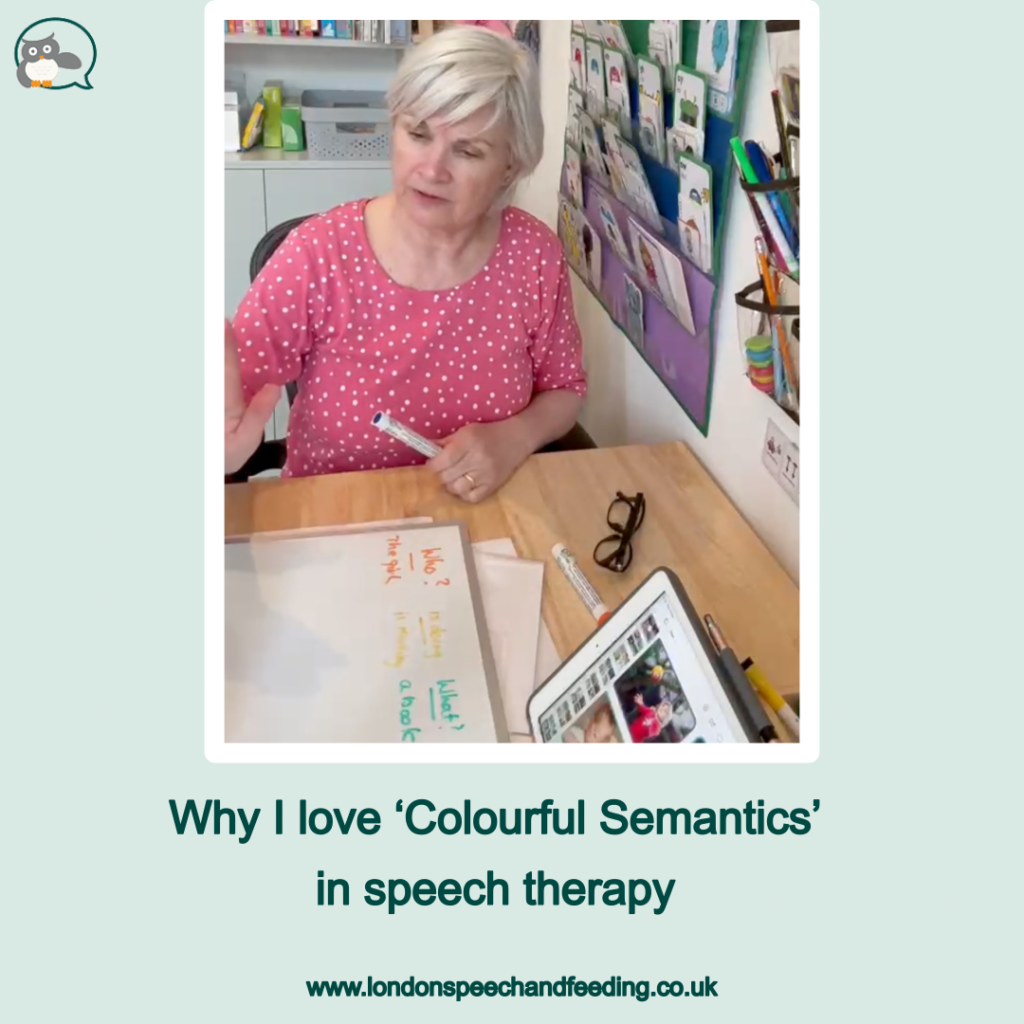
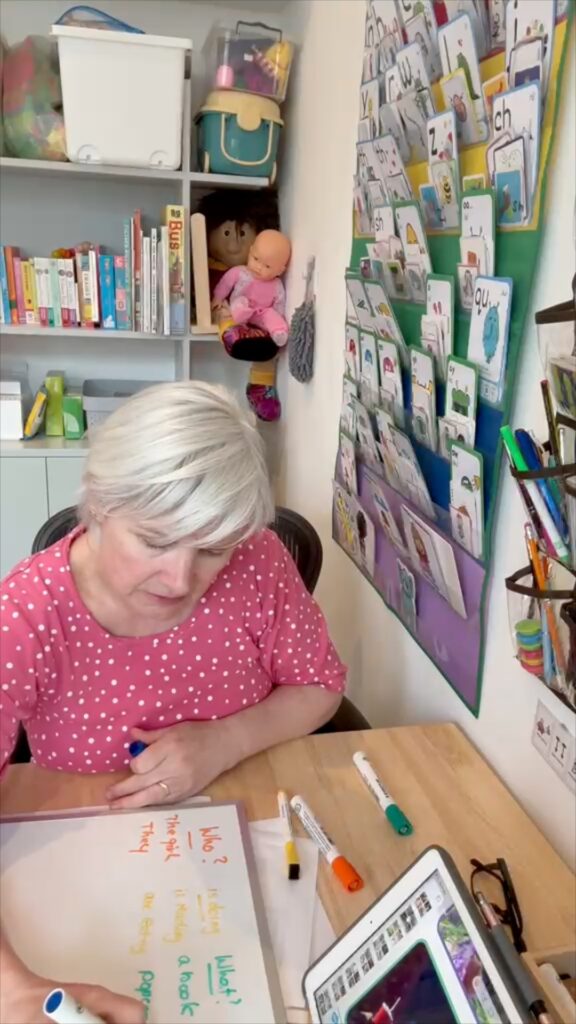
In this little video clip I get my student to say the word ‘snuggle’ (since we were working on that particular sound sequence: snuggle, snout, snore and sneeze) with a high voice and then a lower voice ‘like a bear’ — again it provides that extra auditory cue, but, in addition, the fun aspect also helps to take away the intense focus on a tricky movement pattern.

By now the new pathways have been laid through repeated practice and now automaticity takes over and without too much effort my student can suddenly produce a motor pattern. It’s magical when it happens and gives me such a thrill.

2. It makes speech more engaging and natural sounding:

Children with CAS often sound robotic or flat due to challenges with prosodic elements. By incorporating variations in pitch, volume, and rhythm during therapy, we can help achieve a more natural flow of speech

3. It makes it easier to express our emotions:

Children with CAS often struggle to express themselves emotionally; partly through the difficulty of producing clear words — period, but also in addition due to the difficulties or absence of musicality and rhythm in their speech.

Therefore, it is so important to incorporate activities focused on practising different emotions with varied intonation patterns. This can really empower our students to put emotions into their words.

Good words to practise are fun words like ‘Wow!’ or ‘Yeiih’ or power words and phrases like ‘No!’ or ‘Gimme that’ etc.

Making Therapy Fun and Engaging:

Speech therapy for CAS doesn’t have to be all drills and exercises (though to be fair sometimes we can’t quite get round to making each and every word huge fun though we try…).

I aim to make all my sessions fun and have intrinsic rewards built into the speech practice where possible.

Home practice tips:

Therapy shouldn’t exist in a bubble. Working on prosody during sessions is crucial, but it’s equally important to integrate these skills into everyday interactions. Parents and caregivers can model appropriate prosody during playtime, story time, or even simple conversations. This consistent reinforcement helps our children to generalise their newfound skills and use them naturally in their daily lives.

  • Sing songs and rhymes: Songs naturally incorporate variations in pitch and rhythm. Singing familiar songs and creating silly rhymes can be a delightful way to practise prosody.
  • Use puppets and toys: Assign different voices and personalities to puppets or toys. This encourages children to experiment with pitch and volume to differentiate characters.
  • Read aloud with enthusiasm: Model expressive reading, varying your voice for different characters and emphasising key words. This makes reading time engaging and helps children understand the power of prosody.

Please feel free to contact me if your child has speech sound difficulties. It is my passion. I love supporting children with apraxia.

Sonja McGeachie

Early Intervention Speech and Language Therapist

Feeding and Dysphagia (Swallowing) Specialist The London Speech and Feeding Practice

The London Speech and Feeding Practice


Find a speech and language therapist for your child in London. Are you concerned about your child’s speech, feeding or communication skills and don’t know where to turn? Please contact me and we can discuss how I can help you or visit my services page.


1

Similar Posts

  • ·

    A bite-sized guide to Speech and Language Therapy: feeding and swallowing

    What is a Speech and Language – Feeding Therapist?

    You’ve probably heard of speech therapists helping people who stutter or struggle to pronounce words. But did you know that they also work with children and adults who have problems with eating and swallowing? This specialised area is called Speech and Language Therapy: Feeding and Swallowing, or Dysphagia Therapy.

    Why does a Speech Therapist help with eating and swallowing?

    The mouth, tongue, and throat are all involved in both speech and swallowing. When there’s a problem with any of these parts, it can affect both your ability to talk and to eat. For example:

    • Weak tongue muscles: Can make it hard to chew food and to form sounds.
    • Difficulty coordinating swallowing: Can lead to choking or aspiration (when food or liquid goes into the lungs).
    • Sensory issues: Can make certain textures or tastes feel unpleasant or overwhelming.
    • Communication: If we are not able to express ourselves we are likely to have difficulties during daily mealtimes: how do we ask for ‘more’ of something, how do we say we have had enough or we don’t like a particular food?

    How does a Speech and Language Therapist help?

    Our work involves a combination of assessment and therapy. We carefully observe how your child feeds, eats and swallows, and we look into your child’s mouth to help us see what the cause of the difficulties are: could be a very highly-arched palate, it could be a very flaccid/low tone tongue, it could be poor dentition. Then, we create a personalised treatment plan to address your specific needs.

    Here are some of the things we might do:

    • Teach swallowing techniques: We can help your child learn strategies to improve or facilitate a safe swallow.
    • Recommend dietary modifications: We may suggest changes to your child’s diet to make it easier to eat and swallow.
    • Provide sensory therapy: If your child has sensory needs we can help your child become more comfortable with different textures, tastes, and smells.
    • Work on oral motor skills: We can help to encourage more effective chewing, or drinking skills, or we can help your child to close his/her mouth more during chewing or drinking from a straw.
    • Collaborate with other professionals: We often work closely with doctors, nurses, occupational therapists, and dietitians to provide comprehensive care.

    What kinds of problems do Speech and Language Therapists help with?

    We see a wide range of feeding and swallowing difficulties, including:

    • Delayed feeding: Children who are slow to develop feeding skills or who have difficulty transitioning to solid foods.
    • Tongue-ties: Babies can have significant difficulties with feeding when the tongue is very tightly tethered to the floor of the mouth.
    • Refusal to eat: Children who refuse to eat certain foods or textures.
    • Aspiration: When food or liquid goes into the lungs, which can lead to pneumonia and other serious complications.
    • Chewing difficulties: Problems with chewing food, such as difficulty breaking down food or keeping food in the mouth.
    • Swallowing difficulties: Problems with swallowing, such as feeling like food is stuck or choking.
    • Neurological conditions: Conditions like cerebral palsy, down syndrome or other genetic syndromes can affect feeding and swallowing.
    • Developmental delays: Children with developmental delays may have difficulties with feeding and swallowing.

    Is there hope?

    If your child is struggling with feeding or swallowing, know that there is help available. Speech and Language Therapy can make a significant difference in your and your child’s quality of life. We’re here to support you every step of the way.

    Remember, you don’t have to suffer in silence. If you’re concerned about your child feeding or swallowing, please reach out. You can find a Speech and Language Therapist with a Feeding/dysphagia qualification near you via www.asltip.co.uk or contact me.

    Sonja McGeachie

    Early Intervention Speech and Language Therapist

    Feeding and Dysphagia (Swallowing) Specialist The London Speech and Feeding Practice

    The London Speech and Feeding Practice


    Find a speech and language therapist for your child in London. Are you concerned about your child’s speech, feeding or communication skills and don’t know where to turn? Please contact me and we can discuss how I can help you or visit my services page.

    1
  • Help! My child has a lisp. What can we do about it?

    What is a LISP?

    There are different types of LISPS. Let me explain:

    A lisp is the difficulty making a clear ‘S’ and ‘Z’. Other sounds can also be affected by the tongue protruding too far forward and touching the upper teeth or the upper lip even. ‘T’ and ‘D’ can be produced with ‘too much tongue at the front’ and this can also have an impact on ‘CH’ and often also ‘SH’.

    1. Interdental lisp

    Protruding the tongue between the front teeth while attempting ‘S’ or ‘Z’ is referred to as interdental lisp; it can make the speech sound ‘muffled’ or ‘hissy’. Often, we associate a lisp with the person sounding a bit immature. The good news is that this type of lisp is the easiest to correct and, in my practice. I have a 100% success rate with this type of lisp.

    1. Lateral lisp

    In a lateral lisp the person produces the ‘S’ and ‘Z’ sounds with the air escaping over the sides of the tongue. This renders the ‘S’ as sounding ‘slushy’ or ‘wet’. This type of lisp is a bit harder to correct than the interdental lisp. In my experience this can be fixed but it might need a bit longer, more intensive therapy than the interdental lisp.

    1. Palatal lisp

    With a palatal lisp the ‘S’ sound is attempted with the tongue touching the palate, much further back than it should be. The ‘S’ sounds ‘windy’ and ‘hissy’. This is a quite rare lisp production but it is also not difficult to correct.

    These types of speech difficulties come under the category of ‘speech delay of unknown origin’ and may persist into adolescence and adulthood as ‘residual errors‘.

    Some thoughts on Treatment in general:

    Lisps can be treated successfully by a Speech and Language Therapist. However, for the treatment to work well, a student needs to be able to cooperate and want to improve his or her speech. Lisp remediation entails a fair amount of repetitive work and very young children or unmotivated older children don’t make the best candidates for treatment for this reason. Often students present with other speech, language or social communication difficulties and here the lisp might not be the priority for treating. For example, it might be that due to a student’s Attention Deficit Disorder they are simply not able to focus on speech practice in their daily life.

    When should treatment of lisp begin?

    Waiting well past 4½ years is not advisable as the longer we wait and do nothing the stronger engrained the erroneous tongue/speech habit will become. The ‘right’ age for therapy for one child may be different from the ‘right’ age for another child even within the same family. So do make an appointment with a speech and language therapist to assess and see whether your child might be ready to start therapy.

    Do lots of children lisp—is it normal?

    Until the age of about 4–4.5 years old it can be a perfectly normal developmental phase for some children to have the interdental lisp. But when we see and hear a lateral or palatal lisp we ought to act and see a speech and language therapist for sure.

    After the age of 4.5 or 5 years old most speech therapists would agree on at least having a look to see if treatment could be started. The longer we wait the harder it is to retrain the brain pathways to adopt new speech habits.

    What happens during the first Speech and Language Consultation?

    The first consultation takes about an hour and involves screening relevant areas of communicative function. We take a detailed history, examine the anatomy of the child’s mouth and tongue movements. We check for tongue tie, teeth formation, palate structure and function, as well as swallowing patterns.

    Then we begin straight away to try and see if any of the alveolar sounds (T/D/L/N) can be produced correctly with the right tongue placement as that would be the starting point from where to shape a good, clear ‘S’ sound.

    The first consultation usually ends with home practice being given, explained to parents and another appointment being made for follow up.

    Therapy – what does a session look like?

    Each therapy session consists of:

    1. Listening to sounds, discriminating sounds, identifying sounds, listening to rhyming sounds, sound awareness. We call this Auditory discrimination of single sounds: can the student hear the difference between two words that are the same apart from the first sound: ‘sing’ and ‘thing’ or ‘sigh’ and ‘thigh’?
    2. Sound production: using a variety of different prompts and cues we will teach how to physically make the new sound. Often, we work on making a NEW sound, instead of correcting the OLD one. We work on imitation of single sounds then gradually we try and make new sounds in short words, then longer words and then phrases and sentences.
    3. Games! We play games and try and have fun in between listening and producing our new sounds to help students stay motivated and even enjoy the therapy session and process.

    How long does it take to ‘fix up’ a lisp?

    It tends to take about one term with weekly sessions to help a student make good ‘S’ sounds in phrases and sentences. If the student can do the home practice every day in between the weekly sessions, then in most cases I am able to pronounce the lisp as ‘fixed’ after about one term.

    After that the student needs to practise, practise, practise, at home and in daily life to keep reminding themselves of their new skills and their new sound production.

    It is a matter of reminding and wanting to get it right. Occasionally a student returns to me for another term of simply practising their skills together with me as they are finding it hard for any number of reasons to practise at home. But generally, 8/10 students will be fine after some 12–13 sessions and their speech will be perceived as perfectly typical by family and friends.

    If your child has a lisp or any other speech error, please do not hesitate to contact me.


    Find a speech and language therapist for your child in London. Are you concerned about your child’s speech, feeding or communication skills and don’t know where to turn? Please contact me and we can discuss how I can help you or visit my services page.

    0
  • ·

    What Is Echolalia And Does It Have A Function? How Can Speech Therapy Help With Echolalia?

    What Is Echolalia And Does It Have A Function? How Can Speech Therapy Help With Echolalia?

    Echolalia is a term used when assessing or treating children with Autism. The term refers to the repetition or echoing of utterances, either our own or others’. It can also be echoing phrases heard on television, advertising jingles or catchy repeat phrases used in tv programmes or nursery rhymes and songs. Whilst we all use echolalia occasionally and it can be observed in typically developing children, we tend not to see/hear it beyond the age of 2.5 years old. Children with ASD, however, do use echolalia often into late childhood.

    There are generally two types of Echolalia:

    Immediate echolalia

    Here the repeated phrases or words are produced immediately after someone has spoken the original words or within two conversational turns of the original utterance.

    Delayed echolalia

    The repeat echoing of the original utterance occurs sometime later, more than two conversational turns or with a much longer time delay. Due to the delay it can be hard to interpret the meaning of the echolalic utterance as it may refer to something that happened long ago and in a different context to the originally utterance.

    (Stiegler, 2015, Fay 1967, Blanc 2014)

    There are other unconventional speech behaviours which include:

    • Perseveration of Speech – persistent repetition of speech
    • Repetitive questioning – persisting even though answers were given
    • Vocalisations such as: humming, whistling, clicking, squealing etc.

    Much research has gone into the meaning and treatment of Echolalia and the following list consists of possible functions that have been identified:

    • Information sharing
    • Responding to answers
    • Labelling
    • Drawing attention to self
    • Protesting
    • Requesting
    • Giving instructions
    • Self-regulation, calming

    (Stiegler 2015, Prizant 1983)

    Echolalia does have a function and is part of the Gestalt Learning Process (where longer units of speech are memorised and then used as a whole without the individual words being meaningful).

    As a Speech and Language Therapist I promote sound and proven Intervention based on the Hanen Programme which helps provide a highly facilitative Interaction Style and I will tell you a bit more in my next blog how the “More Than Words” approach can help children with echolalia move through their Gestalt Learning into more analytic processing of language, grammar and meaning.


    Find a speech and language therapist for your child in London. Are you concerned about your child’s speech, feeding or communication skills and don’t know where to turn? Please contact me and we can discuss how I can help you or visit my services page.
  • ·

    The importance of child-led therapy

    Child-led therapy is essentially what it says, therapy sessions that are directed by your child. You may think how can my child’s Speech and Language Therapist focus on goals if sessions are led by my child.

    Let us explain…

    Your child will be more receptive and motivated to take part in therapy if they have some form of input. E.g., they can choose what toys they want to play with, or how they want to play with the resources available. If sessions are child-centred then they are much more likely to engage and reach their goals, making intervention valuable. They will also be able to regulate their emotions, and use movement to support their need for regulation. E.g., some children like to jump whilst others like to run. As Speech and Language Therapists we need to use what is meaningful to your child to get the most out of intervention. By focusing on child-led therapy, we can build trust, which will allow us, in time, to use new techniques and activities that your child may enjoy. We want children to be themselves, to show their true personality. Therapy is about enhancing their skills in their own individualised way and child-led therapy allows for this.

    This way of working may seem daunting to some, but it doesn’t have to feel this way. Parents often feel if they are prepared then activities may go smoother. It might be the case, but perhaps it doesn’t give your child the opportunity for spontaneity. We’d like to suggest something that may lead to some surprises. Put out an activity that is your child’s favourite and then a completely new activity. Remember these activities don’t have to be complicated. Often, the simpler the better!

    So, no need to plan, just place two activities out and see what happens! Look out for anything which surprises you, which activity did they prefer? Do they have any sensory preferences? The freedom of choice is a wonderful thing to explore. So, just go with the flow!

    The kind of activities that are useful for child-led play can include:

    • Hide and seek
    • Cooking or baking
    • An Exercise ball
    • Small world play
    • Pretend play
    • Musical instruments (you could even have a go at making your own)

    Child-led therapy is a very useful resource. We have it at our fingertips. We don’t need special resources. You just need yourselves and your child! Sometimes, child-led therapy can be tricky to put in place. It sounds easy but is much harder in reality. So, make sure you give it time and reflect on your experiences. Ask yourselves ‘what went well’, and ‘what could be improved’. E.g., perhaps you gave your child time to lead to begin with, but you didn’t give them enough time to think about their options during the activity.

    How can parents become more child-led in the home environment?

    • Pause and use silence. This gives your child the opportunity to lead.
    • It’s perfectly natural to want to talk. Afterall, this is how adults maintain conversations. If you find yourself talking too much, count to ten! This will allow your child time to respond or initiate in the conversation or interaction.
    • Move down to your child’s level. It’s much easier to see what’s going on if you’re at the same height.
    • Videoing you and your child can really help you to see where your strengths lie. You’ll also be able to make minor tweaks to improve your communication during child-led play.

    Contact Sonja for more advice on speech, language and communication during child-led play.


    Find a speech and language therapist for your child in London. Are you concerned about your child’s speech, feeding or communication skills and don’t know where to turn? Please contact me and we can discuss how I can help you or visit my services page.

    0
  • · ·

    Strategies to support children with eating difficulties

    where the cause is NOT a swallowing problem, but we are having a “fussy eater” in the family, seeming for no obvious reason

    When parents have a child who find mealtimes or eating difficult, it can put pressure on the whole family dynamics. Once we have observed a child’s eating and drinking skills and found that they are not swallowing impaired, but are for want of a better word “fussy” or “picky”, we can then start to look at what might be underpinning the food aversions/picky eating/food avoidance. Two of the main questions parents have (of course) are:

    • ‘is my child getting the right nutrition?’
    • ‘how can I have less anxiety-provoking and stressful mealtimes?’

    We all tend to have an image in our minds about the ‘perfect mealtime’, and how mealtimes ‘should’ be. Speech and Language Therapists with a Feeding Specialism are the perfect professionals to help you unpick feeding issues. We are trained to look at swallowing and oral skills and we also know a lot about feeding behaviours and sensory difficulties which could be causing your child’s eating avoidance.

    Here are some strategies that can support children with their eating:

    1. Create and maintain a mealtime culture that suits your home and lifestyle. Then stick to that. We all need some routine in our lives to thrive. Mealtimes are no different. It might be that you eat in the same place for every meal, with the same knives and forks, concentrating on maintaining good posture. Children learn by repetition so the more familiar it is, the easier they will find it. In the physical sense, our bodies also need preparing for food, regardless of whether we are eating with our mouths or we are tube-fed. We want every child to connect all the dots of the process. It starts with their eyes, noses, expectations, memories of past experiences, feelings and then finally their mouths….
    2. Be an excellent role model. Children learn through watching others, so your child will be observing you without you knowing. Ensure that you are positive about the food you are all eating, and talk about how delicious, tasty, juicy, and yummy the foods are. Make the atmosphere around the dinner table light hearted. Even though you are secretly stressed about your child not eating, try and not show this. Instead pick a topic or put on some nice music, or talk about something your child might be interested in, and try and avoid coercing your child to eat. Leave small finger foods on their plates and have a range of foods available on the table so that your child can see that everyone is eating a range of foods and enjoying them.
    3. Use positive reinforcement. Try and think of mealtimes as fun and motivating. Children who are happy will likely be more inclined to try foods and take part in family mealtimes. Reward all interactions around food, so if your child merely touches a new food then praise this behaviour. Or if your child licks a food just once, again make a nice comment and praise your child for touching and licking the food. The takeaway here is to try and keep all messages positive around food.
    4. Keep offering all types of food. What often happens is that parents stop serving foods they know will not be eaten. This makes sense in a way; we don’t want wastage! However, try and keep the doors open and re-offer all types of foods, even the ones that your child has not wanted in the past. Try and give your child one food they will like and one food they have tasted before and liked before, even a little, and then one new food to try. So, your child always has something to fall back on and they can join in with eating. But they can also try (or at least look at and think about trying) other foods that you and perhaps the siblings are eating.

    Take a look at this website, I find it very helpful in showing parents what types of foods and how big a portion to offer

    Have a go and try and implement some of the ideas above, and should you get stuck please get in touch!


    Find a speech and language therapist for your child in London. Are you concerned about your child’s speech, feeding or communication skills and don’t know where to turn? Please contact me and we can discuss how I can help you or visit my services page.

    0
  • · ·

    Your child’s communication journey

    Understanding our neurodiversity-affirming, child-led approach

    Welcome to a different kind of therapy!

    Your child’s communication journey

    The start of a new year often brings fresh hope, and sometimes fresh worries, for parents supporting their child’s communication. I am always genuinely excited to begin a new journey with children and their families, and I know that, for many parents, this kind of therapy may look very different from what they were expecting.

    Parents (and children!) are often surprised to discover that our sessions are playful, joyful, and intentionally low-pressure. You won’t see demands for eye contact, sitting still, or being told to ‘do it this way’ or ‘put the red square there’. Instead, you’ll see your child being met exactly where they are.

    For families who have previously experienced more adult-led or behaviour-based approaches including Applied Behaviour Therapy, this difference can feel unfamiliar at first. Because of that, I want to take a moment to prepare you for what child-led, neurodiversity-affirming therapy looks like, so you can feel confident, comfortable, and reassured from day one.

    Why doesn’t child-led therapy look like ‘traditional’ therapy?

    Many people picture speech and language therapy as sitting at a table, using flashcards, or practising words through repetition. While those approaches can work well for some children, they are often not effective or appropriate for many neurodivergent children—including children with autistic profiles, ADHD, or demand-sensitive nervous systems.

    Our approach is grounded in a simple and powerful truth:

    Children learn best when they feel safe, motivated, and emotionally connected.

    When a child’s nervous system feels calm and secure, learning becomes possible. When a child feels pressured or controlled, communication often shuts down, even if they can speak.

    🎯 Our purpose: Communication through connection

    Our goal is not simply to help your child say more words. Our goals go deeper and are built on strong foundations:

    • Trust and regulation: We focus on building a trusting relationship where your child feels safe, understood, and emotionally regulated. A calm nervous system is the starting point for all communication.
    • Motivation: We follow your child’s intrinsic motivation, the things they naturally enjoy to make communication meaningful, joyful, and purposeful.
    • Spontaneous communication: We create opportunities for your child to communicate because they want to, not because they are asked or instructed to.

    🧸 What to expect in a session

    Our sessions are intentionally child-led and often look very much like play.

    FeatureWhat it looks likeWhy we do this
    Minimal toysWe usually offer just 3–4 carefully chosen activities (such as bubbles, blocks, or sensory play).Less is more. Fewer choices reduce overwhelm and help children focus on what genuinely interests them.
    Child choosesYour child decides what to play with and how to engage.This immediately establishes us as a safe, non-demanding partner and increases motivation.
    The therapist’s roleWe join your child’s play, observing closely and responding naturally.We model language, share attention, and reflect your child’s experiences in a way that feels natural and supportive.
    No pressure or demandsThere are no ‘must-do’ tasks. If your child wants to spin, crash, line up toys, or repeat an activity, we follow.Reducing demands lowers anxiety and supports communication, particularly for children with demand-sensitive profiles.

    Is this really effective?

    It’s completely natural to wonder, ‘Are they just playing?’ The answer is yes, and very intentionally so.

    Our sessions are guided by nearly 30 years of speech and language therapy experience, alongside clear, achievable goals tailored to each individual child. Play is a child’s natural language and their most powerful learning tool.

    Within play, we are constantly creating opportunities to:

    • Build joint attention (sharing focus and interest)
    • Model language at the right level
    • Encourage back-and-forth communication
    • Develop a deep, authentic connection

    If your child has struggled to engage or communicate in more structured or demand-heavy settings, this child-led approach is often the key to unlocking their potential.

    💛 What this might look like at home

    You may notice that when pressure is reduced:

    • Your child begins communicating more during everyday routines
    • Language emerges through play, movement, or shared enjoyment
    • Communication feels more natural and less forced

    Small moments could be a shared smile, a look, a sound, a gesture. All matter. These are the building blocks of meaningful communication.

    📚 Resources for parents

    If you’d like to explore these ideas further, you may find the following helpful:

    I look forward to meeting you and your child. Please bring any questions, uncertainties, or curiosities to our first session, there is no such thing as a silly question. This is a journey we take together. Contact me via my contact form.

    Sonja McGeachie

    Highly Specialist Speech and Language Therapist

    Owner of The London Speech and Feeding Practice.


    Health Professions Council registered
    Royal College of Speech & Language Therapists Member
    Member of ASLTIP

    Find a speech and language therapist for your child in London. Are you concerned about your child’s speech, feeding or communication skills and don’t know where to turn? Please contact me and we can discuss how I can help you or visit my services page.

    3