Feeding therapy: A guide for parents and caregivers

| |

Feeding therapy is a specialised form of therapy and support that helps children develop healthy eating habits and overcome challenges related to food. It’s often used for children with picky eating, feeding disorders, or sensory processing issues.

What is feeding therapy?

Feeding therapy involves a series of techniques designed to improve a child’s eating skills and attitudes towards food. In the UK it’s typically provided by speech and language therapists and dietitians. These professionals work closely with parents and caregivers to create a personalised treatment plan tailored to each child’s unique needs.

How does feeding therapy work?

Feeding therapy sessions are typically 30–60 minutes long and involve a variety of techniques, including:

  • Family counselling: Providing support and guidance to parents and caregivers. This can help address any practical, behavioural and emotional issues that may be impacting the child’s eating.
  • Play-based activities: Engaging children in fun activities while introducing new foods or textures. This can help alleviate anxiety and make mealtimes more enjoyable.
  • Sensory exploration: Helping children become more comfortable with different tastes, smells, and textures. This can be achieved through activities like touching, smelling, and tasting various foods.
  • Oral motor exercises: Improving chewing, swallowing, and lip coordination. These exercises can help children develop the necessary skills for eating independently.
  • Behavioural techniques: Using positive reinforcement to encourage healthy eating habits. This can involve rewarding children for trying new foods or eating a variety of meals.

When is feeding therapy needed?

Feeding therapy may be beneficial for children who:

  • Are picky eaters: Refuse to eat a variety of foods or have strong preferences.
  • Have feeding disorders: Experience difficulties with eating, such as swallowing or chewing.
  • Have sensory processing issues: Are sensitive to certain textures, smells, or tastes.
  • Have medical conditions: Such as autism, cerebral palsy, or gastrointestinal disorders.

Feeding therapy strategies you can try at home

While professional feeding therapy can be invaluable, there are several techniques you can try at home to support your child’s eating development:

  • Create a positive mealtime environment: Make mealtimes enjoyable and stress-free by avoiding distractions, limiting screen time, and creating a calm atmosphere.
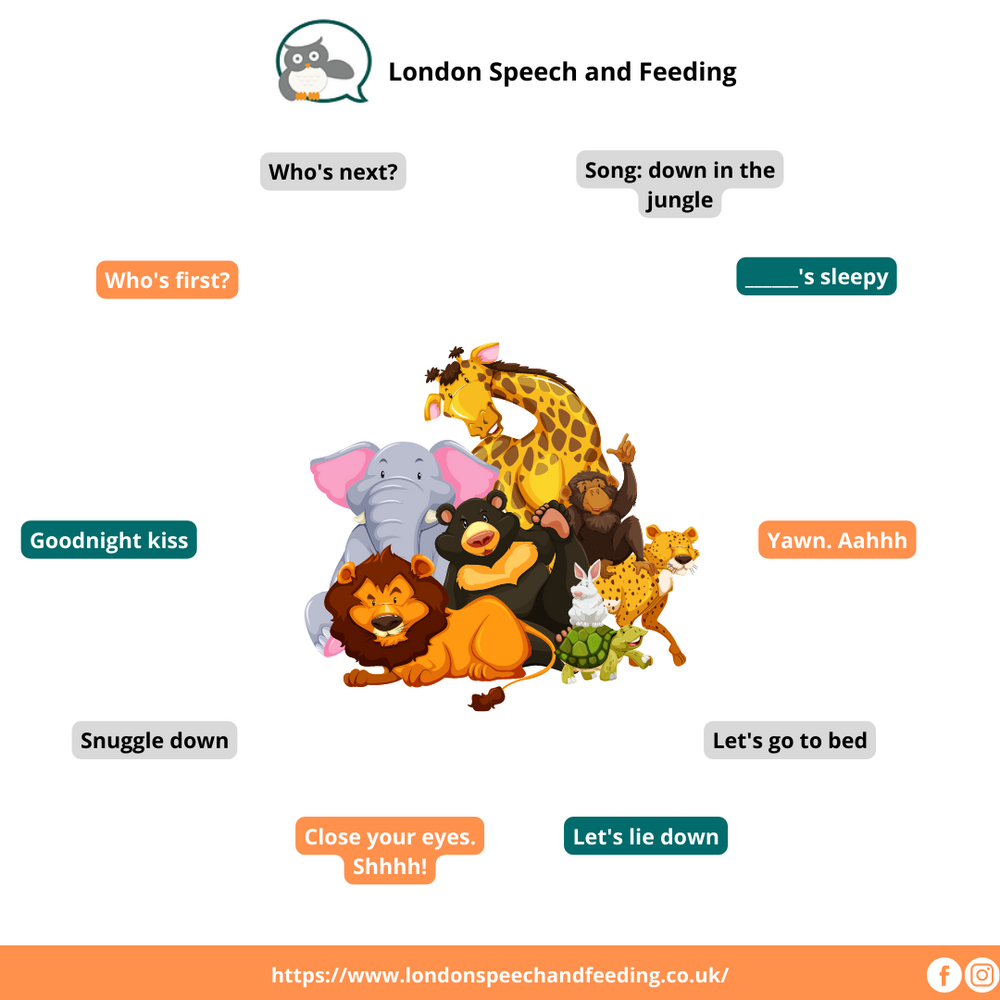
  • Create regular mealtimes and mealtime routines: Introduce set ways of announcing meal times, including songs or short nursery rhymes, try and involve your child with table setting, even just carrying their spoon to the table and putting the beaker next to the plate and ensure that meal time finishes after about 30 minutes, again with a set routine so that the child always knows: this is how we do it in our home, now I am finished and meal time is over.
  • Introduce new foods gradually: Start with small amounts and gradually increase exposure. This can help reduce anxiety and make new foods less overwhelming.
  • Model healthy eating: Show your child how to enjoy a variety of foods by eating a balanced diet yourself.
  • Avoid forcing food: Allow your child to choose and explore foods at their own pace. Forcing them to eat can create negative associations with food.

Seek professional help

If you’re concerned about your child’s eating habits, consult with a feeding therapist. We can provide guidance and support.

Remember, feeding therapy is a collaborative process between parents, caregivers, and professionals. With patience, understanding, and the right strategies, you can help your child develop healthy eating habits and enjoy meals.

Would you like to know more about specific techniques or have any other questions about feeding therapy?

Please feel free to contact me.

Sonja McGeachie

Early Intervention Speech and Language Therapist

Feeding and Dysphagia (Swallowing) Specialist The London Speech and Feeding Practice

The London Speech and Feeding Practice


Find a speech and language therapist for your child in London. Are you concerned about your child’s speech, feeding or communication skills and don’t know where to turn? Please contact me and we can discuss how I can help you or visit my services page.
1

Similar Posts

  • · ·

    Ten games to support communication in primary school aged children

    When parents visit me with their child, their stress is palpable. Often parents don’t relish or even expect to be asked to practise strategies at home with their child between sessions. Let alone to practise whilst on holiday. I understand that you don’t necessarily want anything extra added to your daily ‘to do’ lists. This is why we try our best to incorporate all speech and language therapy practice into children’s daily activities.

    For example:

    1. during bath time;
    2. mealtimes;
    3. getting ready for bedtime;
    4. story time
    5. yes, playtime!

    These are activities that all parents will engage with anyway, so it seems to make sense to incorporate both. This is to avoid adding extra pressure on parents’ already stressful and time-poor daily lives. I am hoping my blog will come in handy, especially for the summer holidays.

    On holiday you are unlikely to have your usual games and toys with you – so here is a nice little list of things you can use instead of traditional games and toys:

    If you can think of any other alternatives on holiday and would like to tell me about them, I would love to see your comments below. We can never have too many holiday games!!

    If you are at home over the summer and you do have some games in the cupboard you might want to dust these ones down or buy one or two new ones (if you want to).

    Most games have multiple uses, and it’s always best to adapt a game to match your child’s interests and what motivates them.

    So let’s start…

    1. Pop up pirate: pop a sword into the barrel and watch the pirate pop up randomly. Practise social skills, speech sounds, expressive language (e.g., put a sword on a picture, say the word/sentence then pick up the sword and push it into the barrel).
    2. Word games such as ‘ISpy’, ‘I went to the shop and I bought…’, ‘describe a person and guess who they are’: perfect for when you’re on the move, whether travelling or walking. You can play this anywhere and still support speech, language and communication. You could play ISpy using your child’s special sound, or ‘I went to the shop and bought all things beginning with [insert special sound here]’.
    3. Shopping list: Orchard game is a game to practise categorising. We explain the analogy of the brain being like a filing cabinet. If information is all in the correct place, it’s easier to find, retrieve and use. You can also practise specific speech sounds in this activity. You could also put the words in a sentence to add more of an expressive language element.
    4. Wiggly worms: this Orchard game is all about phonological (awareness of sounds) awareness. Matching a letter with the word. You can also practise the sounds in the words (e.g, g-o-l-d = gold; m-a-ke = make). Talk about the elements, e.g., ‘g-o-l-d’ has 4 sounds, 1 syllable; ‘m-a-ke has 3 sounds, one syllable. You can talk about what words rhyme with the different words and what makes a rhyming word (i.e., the middle and end sounds remain the same).
    5. Sound detectives: this Orchard game allows children to identify sounds. It also has an app (if your child prefers a tech-way of learning). Children identify the sound then they can add the picture card to their path and become closer to being a successful detective. This game can also support memory skills.
    6. Conversation cubes: throw the dice and start building a story. You can also create and use ‘colourful semantics’ sentence strips to support expressive (spoken) language as support to build the narrative.
    7. Think words: ‘name it, press it, pass it’. A great game to expand word knowledge. You can talk about the words at the end of each round exploring semantic (meanings) and phonemic (sounds) links. Your child can also develop social skills (such as attention, listening and turn-taking).
    8. Poo bingo: this is perfectly disgusting but equally fun for kids of about 3.5 years plus – if your child’s target is to practise /p/ sound this is the one for you. You can also learn all about the different animal’s poo, which I am sure you have always wanted to do!! The more we know about a word, the easier it is to store, retrieve and use. Yes, even talking about poo can help!! Also, it’s great for our visual learners.
    9. Simon says: a game that can be played indoors or outdoors. Parents can take turns being “Simon” and give various commands that your child must follow. This means that your child can practise their receptive (understanding of) language as well as their expressive language, speech sounds and social skills (such as turn-taking and initiating).
    10. Ker-plunk: this is perfect for practising your child’s special sound. Repetition is very important, but also can be monotonous, so finding a game that they enjoy is vital. Take turns to pull out a stick. Next, your child can either say their special sound or word (depending on what stage they are at) or hear a good model from other players.

    Do you still have questions? Contact Sonja for support.


    Find a speech and language therapist for your child in London. Are you concerned about your child’s speech, feeding or communication skills and don’t know where to turn? Please contact me and we can discuss how I can help you or visit my services page.
    0
  • · ·

    How can we support babbling and early speech development? SLT tricks and tips

    My baby isn’t babbling and developing speech – what can I do to support?

    While every baby develops at their own pace, if your child isn’t babbling by nine months, it’s worth seeking help from an Early Intervention Health Professional, such as a doctor and a speech therapist. Don’t panic! There are many reasons for delayed babbling, and early intervention is key.

    In the meantime, it is highly recommended that we talk, sing, and read to our baby often. Exaggerate sounds and expressions, and respond to their coos and smiles. This playful interaction helps stimulate their communication skills.

    Below are some tips and tricks from my experience of working with babies and toddlers who need a little bit of help and support to develop.

    The benefits of imitating your baby

    Copying your baby’s sounds and gestures isn’t just silly fun, it’s a powerful learning tool! By mimicking their babbles and actions, you activate “mirror neurons” in their brain that help them connect sounds with meaning. This playful back-and-forth teaches turn-taking, a foundation for conversation. Plus, it encourages them to copy you, building their own language skills and social interaction abilities.

    This is a nice clip on youtube showing how copying/imitating your baby looks like:

    Here are some fun ways to imitate your baby:

    • Matchmaker: Grab two of the same, or two similar toys your child loves, like rainmakers or shakers. Give one to your baby and keep the other for yourself. When your child plays with his/her toy, mirror his/her actions with yours! This creates a fun, interactive game.
    • Face Time: Get down to your baby’s level, sitting opposite him/her on the floor or kneeling. This makes eye contact easy and encourages him/her to look at you during your playful imitation.
    • Be the Funniest You: Go all out with silly faces, exaggerated sounds, and big gestures. The goal is to capture your baby’s attention and make you irresistible to watch. This playful energy encourages him/her to interact and potentially imitate you back!

    By incorporating these tips, you can turn imitation into a fun and engaging way to boost your baby’s communication skills. I have seen this happen numerous times over the past decades. It is very powerful, go ahead and try it! You cannot be silly and goofy enough!

    Great toy ideas:

    Did you know that speech and language development starts with how we talk to our babies?

    Adults naturally use a special way of speaking called motherese. It involves a higher pitch, slower pace, and exaggerated sounds compared to regular conversation. Sentences are simpler, with shorter words and repetition. This grabs babies’ attention, helps them distinguish sounds, and reinforces word meaning.

    Imitation is a key part of motherese. We wait for our baby to make a sound or gesture, then playfully imitate it with exaggeration. Babies notice this right away and often respond with more vocalisations, creating a mini conversation. This back-and-forth teaches turn-taking, a foundation for future conversations.

    By responding warmly and engaging in these playful interactions, we encourage our babies to keep exploring the world of communication. Talking, singing, reading and, of course, imitating, these simple actions can have a big impact on a baby’s language development.

    Once your conversation is underway then try and keep it going for as long as possible. It’s a beautiful dance of turn-taking, even without words!

    A last word on oxytocin

    There’s evidence suggesting early non-verbal communication with your baby can increase a mother’s oxytocin levels, often called the ‘love hormone’. This hormone plays a key role in bonding and social connection. Positive interactions, touch, and stress reduction all contribute to oxytocin release, strengthening the mother–baby bond.

    For parents of babies with extra needs

    The stress of caring for a child with medical needs or developmental delays can be difficult. Stress can lower oxytocin levels, creating a cycle of sadness for both parent and child.

    Breaking the cycle:

    1. Knowledge is Power: Understanding the importance of communication can empower parents.
    2. Seek Support: Speech therapists and other healthcare professionals can provide valuable guidance on communication strategies.
    3. Start Small, Celebrate Big: Even small interactions can boost oxytocin. Focus on playful imitation and positive reinforcement. Remember, friends, family and healthcare professionals are there to encourage you.

    This approach can help reverse the negative cycle and create a more positive and connected relationship between parent and child.

    I hope this is helpful! Don’t hesitate to reach out with any questions.

    Kind regards

    Sonja McGeachie

    Early Intervention Speech and Language Therapist

    Feeding and Dysphagia (Swallowing) Specialist The London Speech and Feeding Practice

    The London Speech and Feeding Practice


    Find a speech and language therapist for your child in London. Are you concerned about your child’s speech, feeding or communication skills and don’t know where to turn? Please contact me and we can discuss how I can help you or visit my services page.

    2
  • ·

    Four struggles parents face when out and about with children with speech, language, and communication difficulties

    A man and a woman hug a young girl at a table
    Hug

    You (as parents) often describe yourselves as being under constant pressure and stress when looking after your children and young people with Special Educational Needs and Disabilities (SEND). You may find going out to do the simplest of tasks a challenge. And you will try to avoid social situations out of fear and anxiety. One of the most important factors to you is having like-minded people who understand your position as a parent with a young person with additional needs. Let’s look at some of the challenges you face and how I can support you and your family.

    1. Challenging behaviour and going out to the shops

    When your child displays challenging behaviour and won’t go into a shop without buying a toy that they insist on having, it can be tough on your family. You see people around you staring as you try to manage the situation. They do not understand the pressures you face, or that the simplest of tasks are a huge challenge.

    I can support you by giving strategies to use when out and about. I know that using visuals is important for your child. They may not understand or take in language when they are in a heightened state of anxiety or feeling overwhelmed. You could print pictures of the places you’re going to and put them on an easily accessible chain. Then you could use that chain when out and about at the shops. You may want to introduce a visual timetable at home. That way your child or young person understands where they are going. This may lessen their anxiety and subsequent behaviour.

    2. Your child is not able to communicate their needs to an unfamiliar communication partner

    When your child has difficulty communicating to an unfamiliar person it can be hard to manage. You feel yourself explaining your situation repeatedly. I can provide your child with individualised strategies or communication aids which support your child to communicate with both familiar and unfamiliar communication partners. We’ll work together to find which communication methods work in different situations and how your child will use these to help their independence.

    3. Being overwhelmed

    Your child or young person may easily be overwhelmed which may contribute to behaviour changes. I’ll work with your family to understand what the behaviour means, looking at what happened before and what happened afterwards. We’ll not only look at the behaviour but at the environment as well. This can inform how you can support your child or young person in the future, to reduce sensory stimuli (if needed) and for them to feel emotionally regulated.

    4. People avoid engaging with you

    One of the hardest things as a parent is for others to avoid you. You see them crossing the street because they don’t know what to say to you. All you want is them to accept you, to maintain your identity as a person and not as a SEND parent. I can support you emotionally. I can give you advice on local support networks where you can find other parents in a similar situation.

    We know the stresses that being a parent with a child with SEND comes with. Please know I am always here to support you, to find solutions so that when you’re next out and about. Your experience will be a little easier and you’ll feel less isolated.

    Improve your child’s communication, confidence, reduce overwhelm and feel supported here.


    Find a speech and language therapist for your child in London. Are you concerned about your child’s speech, feeding or communication skills and don’t know where to turn? Please contact me and we can discuss how I can help you or visit my services page.

    1
  • · ·

    Speech prompts and strategies I use in Speech Sound Therapy

    This particular student has a mild motor planning difficulty and six weeks ago he came to me with a very strong lisp. In addition to the lisp he is struggling to produce a number of sounds, SH and L on its own and all the clusters (FL/BL/KL/PL) but also CH together with some vowel difficulties.

    The prompts are a mix partially from the DTTC (Dynamic Temporal and Tactile Cueing) model by Dr Edythe Strand as well as phonological models I have learned over the years, and some of them are my own.

    Visual/picture prompts and Images

    Here I use the ‘Flat Tyre’ Sound, to offer as an image for a new S sound and the ‘Tick Tock’ Sound for a new image of the T sound. Both cards are from the Bjorem Speech Sound Deck, which I love and use almost daily.

    Gestural Cues

    I like to use all the ‘cued articulation’ hand cues by Jane Passy for consonants and fricatives. Here we use our fingers and hand to illustrate what our tongue does, and we also show whether a sound is voiced or voiceless. When I use one finger it is voiceless (k/f/s/p) and when I use two fingers for the same cue it means that the voice needs to be turned on: (g/v/z/b/n/m). For vowels I like to use Pam Marshalla’s cue system.

    Simultaneous production

    We say the word together.

    Direct imitation

    I say the word and my student copies me directly.

    Imitation after a delay

    I say the word and then after a little wait my student says the word.

    Spontaneous production

    My student has now learned to say the word by him/herself.

    Offering feedback

    It sounds like… I just heard… I didn’t hear the first sound there? Can you try again?

    Letting the student reflect

    By just shaking my head or by looking quizzical so that my student realises something didn’t quite go right.

    Postitive reinforcement

    ‘Yes that was it, do it again, nice one…’

    Cognitive reframing

    This is a technique where we identify different semantic cues and metaphors or imagery cues, so instead of teaching or focusing on a sound we try out viewing each syllable from a different point of view.

    For example: ‘yellow’. I have had great success with this one: we start with just saying ‘yeah yeah yeah’. I might make a little joke and say something like ‘imagine your mum says tidy your bedroom, what do you say or what do you think?’ Answer: ‘yeah yeah yeah’. Then we practice ‘low’ together, I might blow some bubbles high and low and we talk about ‘low’. And then we put ‘Yeah’ and ‘Low’ together and now we have YELLOW!! It might at first still sound a bit odd, like ‘yea-low’ but we soon shape that up and have the real word.

    Each student is different and having a great rapport is crucial to our success.

    Then a little game break after some 7–10 or so repetitions and always trying to finish on a positive note.

    What game breaks do I use:

    Very quick ones! Students can post something, place a counter in a game, take out a Jenga block from the tower, pop in a counter for ‘connect 4’, stick a sword into the Pop the Pirate barrel or add a couple of Lego blocks to something they are building.

    I hope this is helpful, please contact me for any questions.

    Sonja McGeachie

    Early Intervention Speech and Language Therapist

    Feeding and Dysphagia (Swallowing) Specialist The London Speech and Feeding Practice

    The London Speech and Feeding Practice


    Find a speech and language therapist for your child in London. Are you concerned about your child’s speech, feeding or communication skills and don’t know where to turn? Please contact me and we can discuss how I can help you or visit my services page.

    1
  • · ·

    The Hanen Program® – The beauty of the ‘4 S’

    One of my favourite pieces of advice I give to parents is the ‘4 S’, a strategy coined by the Hanen Program® which I teach, particularly the ‘More than Words’ programme which is designed for and aimed at parents of children with Social Communication Difficulties or Autism. It is honestly one of those golden nuggets that I use myself in my practice and I highly recommend it to all my parents. There is something about terms like the ‘4 S’ that is easy to recall and therefore use.

    Introduction

    The ‘4 S’ is a strategy that helps to clarify the words we use with our children so that they can notice us, hear us and understand what we are saying.

    Research shows that we use on average 120-200 words per minute during everyday conversation. That’s a lot! And our children who are still learning to communicate are often bombarded with endless speech coming at them all day long. If we take into account that many of our students are Gestalt Language Processors, we can see that picking out relevant chunks of what we are saying is not at all easy, and this contributes to our children’s delays.

    So let’s look at the ‘4 S’

    1. The first one is SAY LESS

    This means we should use shorter, simpler sentences with good grammar, for example, something like: ‘let’s get ready, time to put our shoes on’ instead of what we might be saying: ‘come on then darling, let’s put your shoes on we need to get going it’s dark outside’ or similar.

    Good grammar helps to give clues about what words mean and how they are used in sentences. So, instead of ‘shoes on’ say ‘let’s put our shoes on’.

    2. The second one is STRESS

    I hear you think ‘I am stressed!‘. – NO! here it means ‘highlight’. We use our voice to highlight the important words in our sentence or phrase. For example, when you say ‘this banana is so yummy’ you can stress the word ‘yummy’ by saying it a bit louder and you can make a gesture, like rubbing your tummy as you say it.

    3. The third one is GO SLOW

    This means to speak a bit slower than you normally would and add pauses. By slowing down the pace of our speaking we give our child time to think and understand what we are saying. When we allow for pauses after we have spoken, we are inviting our child to say something in response.

    4. The last one is SHOW

    Always remember to show actions, gestures, objects, and point to pictures while speaking to help support your child’s understanding. We can show our child what words mean by pointing to things or holding up objects whilst describing or talking about them.

    At this point I would also like to recommend the use of Core Boards, and particularly Electronic AAC devices, such as LAMP Words for Life or PODD. I have written about this in other blogs but can always be persuaded to say a bit more on the matter… 😊 It is such a big help to have an AAC talker available for both the child and the adult so we can find words and pictures to help support the words we are saying.

    For example, today when reading a book like The Hungry Caterpillar (so good!) I used my LAMP AAC talker to make comments as we were looking at the pages together with my student. Example: ‘Look! He is eating more cake he is very hungry’ using my AAC talker I was able to supplement my speech and at the same time I was inviting my minimally speaking child to press a button or two and reply with ‘cake!’ which they would not have said with their mouth otherwise.

    5. It does say ‘4 S’ but really it should be ‘5’ except the fifth is not an ‘S’

    The fifth is REPEAT.

    Repeat words and phrases often throughout the day. When learning a language we all need to hear words and phrases several times and in different situations before we can understand, remember, and then eventually use them. Our children are ‘new language learners’ and so we can apply the same principles that we would when learning a new foreign language ourselves.

    Any questions or need help with supporting your little one’s language please contact me via my contact form, or you could also check out www.hanen.org for advice and lots of inspiration.

    Sonja McGeachie

    Early Intervention Speech and Language Therapist

    Feeding and Dysphagia (Swallowing) Specialist The London Speech and Feeding Practice

    The London Speech and Feeding Practice


    Find a speech and language therapist for your child in London. Are you concerned about your child’s speech, feeding or communication skills and don’t know where to turn? Please contact me and we can discuss how I can help you or visit my services page.

    1
  • The art of selective care: My journey as a semi-retired private therapist

    Welcome!

    Hello, and welcome. I’m writing this today to share a bit about my professional journey, a journey that has evolved over many years from a bustling, full-schedule practice to a more intentional, deeply fulfilling semi-retired life. This shift wasn’t born out of a desire to slow down, but rather an understanding of what truly matters: my time, your time, and the quality of the work we do together.

    For decades, I poured my energy into a full calendar, helping as many families as I possibly could. It was a wonderful, demanding, and rewarding time. I learned so much, grew immensely as a professional, and had the privilege of witnessing countless moments of breakthrough and success. But over recent months, I began to realise that the most impactful work wasn’t about quantity; it was about quality. It was about giving my whole, undivided attention to a select few, creating an environment where true progress could flourish.

    Change

    This realisation led to a significant change in my practice. I am now at a point in my career where my time is both valuable and precious. It is no longer a commodity to be filled, but a resource to be invested wisely. This doesn’t just apply to my personal life, but to my professional life as well. I’ve chosen to be more selective about the clients I see, and this selectivity is rooted in a single, powerful question: ‘Who can I truly, profoundly help?’

    I believe that successful therapy is a partnership. It requires commitment, trust, and a genuine connection between therapist and client. When I take on a new family, I am not just filling a slot in my schedule; I am making a deep commitment to them. I am dedicating a part of my precious time and decades of expertise to their child’s success. This is why I am now focusing on who I can really work with: families who are equally invested in the process, who understand that progress is a team effort, and who are ready to engage fully in the journey.

    My fees reflect this deep investment. You will find that my rates are higher than those of many other therapists, and I want to be transparent about why. It’s a reflection of the extensive experience I bring to the table. I have spent years honing my skills, navigating complex cases, and developing a unique, effective approach to speech, language and feeding challenges. This is not just a job for me. It is my life’s work, and I honour the value of that expertise and the time I dedicate to each family.

    I want to ensure that every minute you spend with me is productive, focused, and truly transformative. Therefore, I provide a ‘boutique style’ of care. Think of it as an exclusive, personalised experience where every detail is considered and your needs are at the forefront. You won’t feel like you’re just another appointment on a long list. You will feel that you have my full, undivided attention, as if you were my only client.

    This means less time spent on administrative tasks and more time dedicated to preparing for your sessions, reflecting on our progress, and providing you with the most thoughtful, tailored support possible. It means an environment of calm and focused expertise, where we can truly dive deep into the specific challenges and build a clear, effective path forward.

    New perspective

    For parents reading this, I hope this provides a new perspective. Choosing a therapist for your child is one of the most important decisions you can make. It’s about finding not just a professional, but a partner. I want you to feel that, if we choose to work together, you are entering into a unique partnership where your child’s growth is my singular focus.

    In this next chapter of my career, I am prioritising passion over pace, depth over breadth, and meaningful connections over a packed schedule. I am here to work with families who are ready for a truly collaborative and transformative experience. If you are seeking a level of care that goes beyond the standard, an approach that is both highly experienced and deeply personal, I would be honoured to speak with you.

    Sonja McGeachie

    Highly Specialist Speech and Language Therapist

    Owner of The London Speech and Feeding Practice.


    Health Professions Council registered
    Royal College of Speech & Language Therapists Member
    Member of ASLTIP

    Find a speech and language therapist for your child in London. Are you concerned about your child’s speech, feeding or communication skills and don’t know where to turn? Please contact me and we can discuss how I can help you or visit my services page.

    1