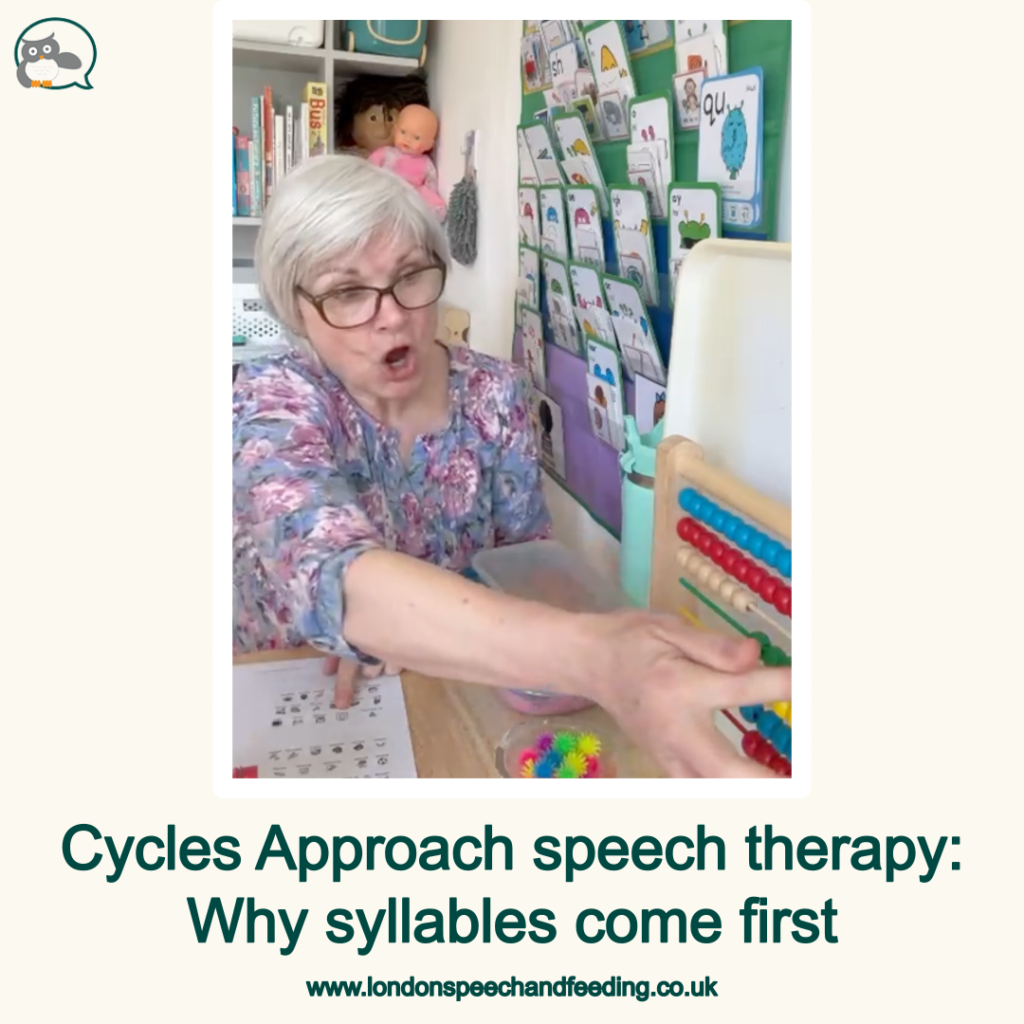
Childhood Apraxia of Speech: Signs and first steps (2–5 years)

| |

If you’ve found yourself wondering ‘Why can my child say a word one day, but not at all the next?’ it might be that your child has a motor speech difficulty. This means the challenge isn’t that your child doesn’t know what they want to say; it’s that their brain finds it harder to plan and coordinate the movements needed for clear speech. This speech difficulty is called Childhood Apraxia of Speech (CAS)

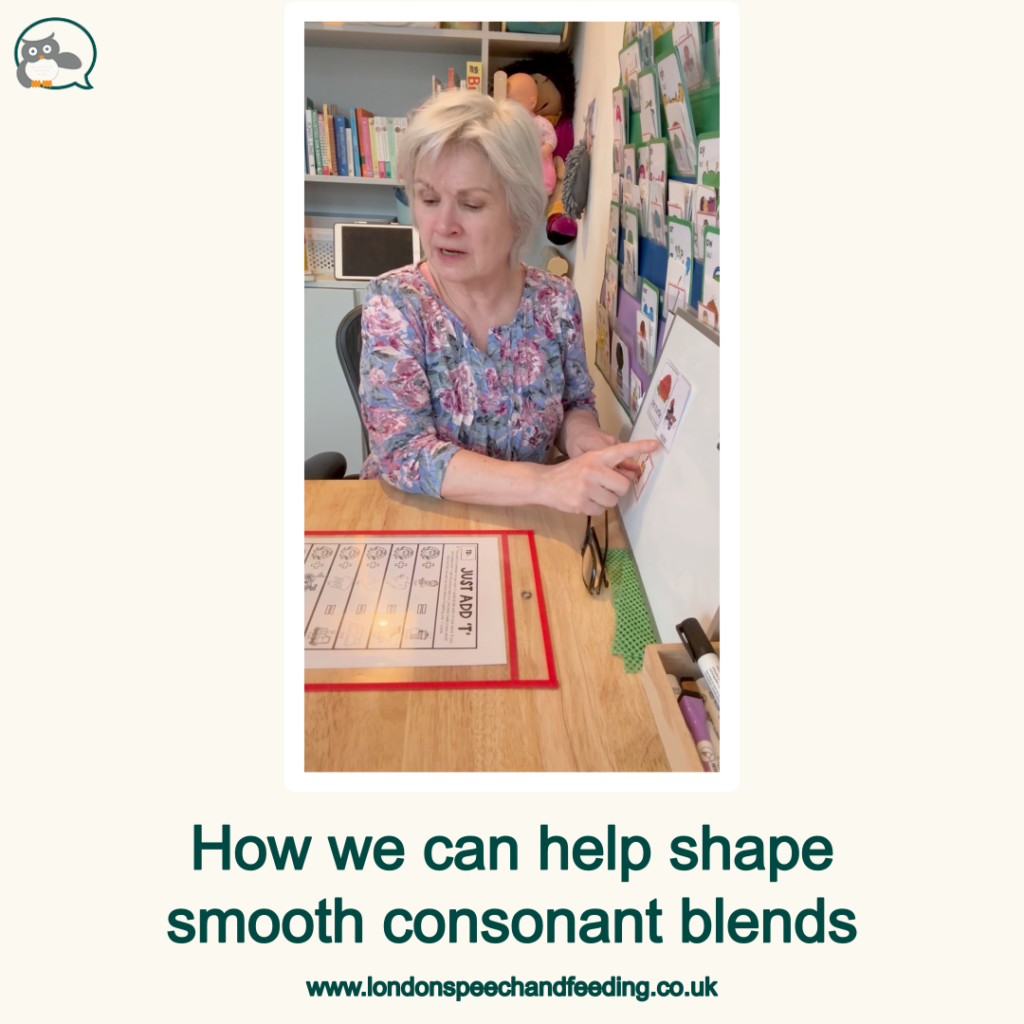
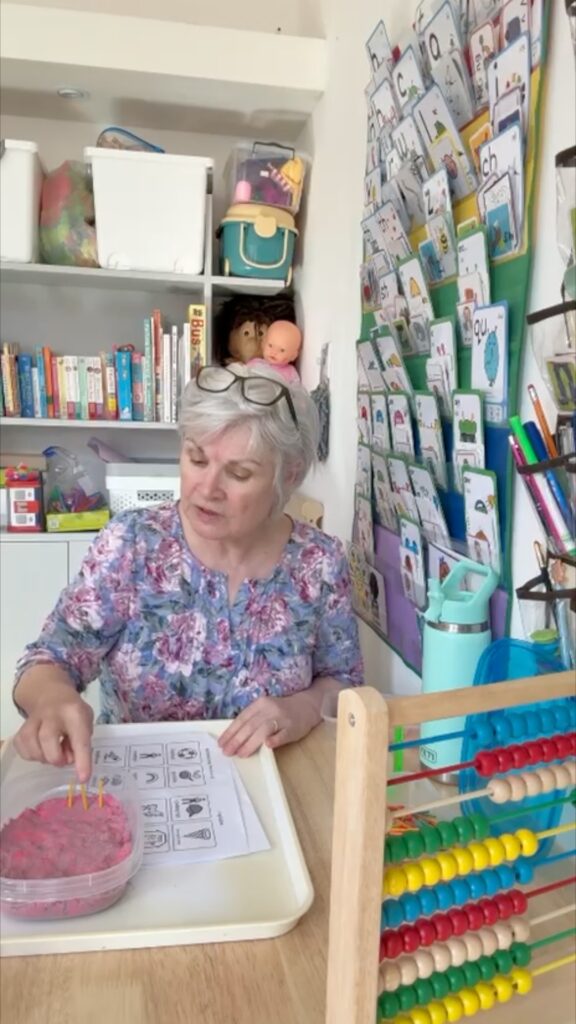
Sonja showing power words on a board

In this post, I’ll explain what CAS can look like in 2–5 year olds, what an assessment usually involves, and what you can start doing at home to support your child without turning life into ‘speech homework all day long’.

What is childhood apraxia of speech (CAS)?

Children with CAS often have lots to communicate about (and strong ideas!) but their speech may come out as:

  • Unclear
  • inconsistent
  • hard to ‘copy’ on demand
  • frustrating for them and for you

CAS is not caused by laziness and it is not a parenting issue. It is also not something children simply ‘grow out of’ without support. But with the right therapy approach, children can absolutely build clearer speech over time.

If you’d like to read more about verbal dyspraxia, you may also find this helpful: Supporting children and families living with verbal dyspraxia.

Why is CAS such a big topic right now?

Many families come to me after months (or years) of being told:

  • ‘She’ll talk when she is ready’
  • ‘He’s just shy’
  • ‘It’s probably a speech delay’
  • ‘It’s normal for toddlers’

And sometimes it is a general delay. But sometimes it’s something more specific, like CAS.

There’s also been a huge rise in parents seeking information online, and CAS is often mentioned alongside speech sound difficulties such as:

  • phonological delay (pattern-based speech errors)
  • articulation difficulties (one sound that won’t come out clearly)
  • inconsistent speech disorder

These can look similar at first glance, which is why a specialist assessment matters.

Signs of childhood apraxia of speech in 2–5 year olds

Children develop speech at different rates, and not every unclear speaker has CAS. But here are some common features that may raise a flag, especially when you notice several together.

1) Inconsistent speech errors

Your child might say the same word in different ways:

  • ‘banana’ → nana / baba / mana
  • ‘daddy’ → gaga / daddy / dadi

This inconsistency is one of the biggest clues.

2) Difficulty copying words on request

Some children speak more easily in natural play, but when asked ‘Say ___’, they freeze or the word becomes much harder.

3) Limited sound repertoire

They may use only a small set of consonants (like /M/, /N/, /B/, /D/) and avoid others.

4) Vowel distortions

Many children with typical delays mainly struggle with consonants. But in CAS, vowels can also sound ‘off’ or change between attempts.

5) Speech that sounds effortful

You might notice your child:

  • pauses between sounds
  • tries multiple times
  • looks like they’re ‘searching’ for the right mouth movement

6) Longer words are much harder

‘Car’ might be easier than ‘carry’, and ‘carry’ easier than ‘caterpillar’.

7) Prosody differences (rhythm and stress)

Some children with CAS sound a little unusual in their speech rhythm, stress, or intonation.

8) Frustration or reduced confidence

When a child is frequently misunderstood, they may:

  • talk less
  • use gestures more
  • become upset when asked to repeat themselves

Important note: none of these signs alone prove CAS but they are a strong reason to seek a speech assessment rather than waiting.

CAS vs phonological delay vs articulation difficulty (quick guide)

These are some of the most common questions I hear.

If it’s mainly an articulation difficulty…

A child may consistently say one sound incorrectly (for example, ‘thun’ for ‘sun’- lisp- but everything else is developing well.

If it’s mainly a phonological delay…

You might notice clear patterns, like:

  • leaving off the ends of words (‘ca’ for ‘cat’)
  • swapping back sounds for front sounds (‘tar’ for ‘car’)

Patterns are often consistent and respond well to phonology-based therapy.

If it might be CAS…

Speech often feels less predictable, harder to imitate, and more impacted by word length and complexity.

If you’re unsure, that’s completely normal, and exactly why assessment matters.

What happens in a CAS assessment?

A high-quality speech assessment for possible CAS usually includes:

1) Parent discussion and developmental history

We talk about:

  • pregnancy and birth history (where relevant)
  • feeding history
  • early sounds and babbling
  • first words and how speech has progressed
  • family history of speech/language needs

2) A speech sound assessment

Your child might be shown pictures or play-based prompts so we can hear:

  • what sounds they can say
  • what they simplify
  • whether errors are consistent or inconsistent

3) An oral-motor and movement check

This isn’t about ‘strength’. It’s about coordination and planning. We look at how your child manages speech movements and transitions.

4) Stimulability testing

This means: how easily can your child learn a new sound or word with support?

For CAS, we often explore how they respond to:

  • slowed-down speech
  • visual cues
  • rhythm/tapping
  • short, simple syllable shapes

5) Functional communication and confidence

We look at how speech impacts daily life:

  • being understood at nursery
  • joining in with peers
  • asking for help
  • managing emotions when misunderstood

At the end, you should leave with:

  • a clear explanation of what we think is going on
  • a therapy plan
  • practical home strategies
  • realistic next steps

What parents can do at home

Here are CAS-friendly strategies you can start right away.

1) Choose ‘power words’

Pick 1–2 words that matter most in your child’s daily life, such as:

  • more
  • help
  • mummy
  • again
  • stop
  • open

These words are motivating and functional.

2) Keep it short and successful

For many children with CAS, the goal is quality over quantity.

Try five minutes a day rather than 30 minutes of struggle.

3) Support speech with rhythm

Some children benefit from:

  • tapping a beat on the table
  • clapping syllables
  • using a gentle ‘marching’ rhythm

This can help the brain organise the sequence of movements.

4) Celebrate approximations

If your child says ‘moh’ for ‘more’, that’s communication!

We want them to feel:

  • safe
  • understood
  • proud to try again

Confidence is a key part of progress.

A short parent story (anonymised)

One mum said to me:

‘We kept being told to wait. But I could see my child understood everything; they just couldn’t get the words out. Once we had an assessment and a plan, it felt like we finally knew what to do. The biggest change was his confidence. He started trying more.’

When should you seek support?

You don’t need to wait until school.

It’s worth getting an assessment if your child is:

  • hard to understand compared with peers
  • becoming frustrated or withdrawing from talking
  • inconsistent with words they used to say
  • struggling to imitate speech sounds
  • showing signs that match CAS

Early support can reduce stress for the whole family and help your child feel successful in communication.

Here’s how I can help:

✅ A detailed speech assessment (including whether CAS is likely)

✅ A clear therapy plan with realistic goals

✅ Practical home strategies you can use immediately

✅ Support for nurseries and schools (where needed)

✅ In-person sessions in North-West London and online options

Book your consultation here.

Final gentle reminder

You are not overreacting. Trust your instincts.

Your child is communicating the best way they can, and with the right support, speech can become easier, clearer, and more confident.

Sonja McGeachie

Highly Specialist Speech and Language Therapist

Owner of The London Speech and Feeding Practice.


Health Professions Council registered
Royal College of Speech & Language Therapists Member
Member of ASLTIP

Find a speech and language therapist for your child in London. Are you concerned about your child’s speech, feeding or communication skills and don’t know where to turn? Please contact me and we can discuss how I can help you or visit my services page.

3

Similar Posts

  • ·

    Tongue training: Why tongue placement matters for clear speech

    As speech and Language therapists (SLTs), we know that where your tongue goes, so goes your sound. This blog post will explore why tongue placement is so vital for speech correction and how we use tools and techniques to help our clients find their ‘sweet spot’ for sound production.

    Let me show you here a little video clip where I am using my dentist’s mouth/teeth model to help my clients navigate their tongue movements.

    The tongue: A tiny muscle with a big job

    The tongue is a small but mighty muscle. It’s incredibly versatile, playing a key role in eating, swallowing, and, of course, speaking. For each speech sound, the tongue, along with the lips and jaw, needs to move to a very specific spot. Think of it like a dance: every part of your mouth has a choreographed movement to produce the correct sound. If the tongue is out of sync, the sound comes out muffled, distorted, or just plain wrong.

    The trouble with our tongue movements is that most of us never think about how the tongue has to move and what it does to: swallow, chew, drink, suck and speak. Most parents when asked to think about their own tongue placement for say the /S/ sound are completely lost as to what their tongue is doing. Yet, of course, they produce a perfect /S/ and perfect speech in general. The same goes for swallowing. When did you last think about what happens in your mouth when you swallow? I bet you have not thought about it. We ‘just do it’, right?

    Why is tongue placement so important?

    Accurate tongue placement is the foundation of clear articulation. When a child struggles with a particular sound, it’s often because his or her tongue isn’t quite reaching the right spot or moving in the correct way. For example, the /S/ sound requires the tongue to be slightly raised and positioned behind the top teeth, creating a narrow channel for air to flow through. If the tongue is too far forward, you might get a /TH/ sound instead. If it’s too far back, the /S/ can sound muffled.

    Visual aids: Our secret weapon

    We SLTs love our visual aids! They’re incredibly helpful for showing clients exactly where their tongue needs to be. Here are some of our favourite tools:

    • Mirrors: Mirrors provide instant feedback. Clients can see their tongue’s position and make adjustments in real-time. We often use hand mirrors or even the mirror on a compact for quick checks.
    • Tongue depressors: These simple tools can gently guide the tongue to the correct position. We might use them to show where the tongue tip should rest for the /L/ sound or how the sides of the tongue should touch the molars for the /K/ and /G/ sounds.
    • Diagrams and models: Pictures and models of the mouth can help clients visualise the tongue’s movements. We might use a cross-section diagram of the mouth to show how the tongue forms different sounds.

    Beyond the tongue: The jaw’s role

    While the tongue takes centre stage, the jaw plays a supporting role. It provides a stable base for the tongue and helps control the opening and closing of the mouth. Sometimes, jaw stability is an issue, and we might use techniques to help clients find a comfortable and stable jaw position.

    Making it fun and engaging

    Learning correct tongue placement can be challenging, but we make it fun! We use games, stories, and playful activities to keep clients motivated. For younger children, we might use silly voices or pretend to be animals. For older children, we might incorporate their interests, like using a car analogy for tongue movements.

    The takeaway

    Correct tongue placement is essential for clear speech. By using visual aids, interactive techniques, and a bit of creativity, we can help our clients master their speech sounds and communicate with confidence.

    If you have any concerns about your child’s speech, don’t hesitate to reach out to a qualified speech and language therapist, we are here to help! Contact me via my contact form.

    Sonja McGeachie

    Early Intervention Speech and Language Therapist

    Feeding and Dysphagia (Swallowing) Specialist The London Speech and Feeding Practice

    The London Speech and Feeding Practice


    Find a speech and language therapist for your child in London. Are you concerned about your child’s speech, feeding or communication skills and don’t know where to turn? Please contact me and we can discuss how I can help you or visit my services page.

    2
  • ·

    The great air debate: How different swallowing patterns impact breastfeeding and reflux

    The great air debate

    As a Speech and Language Therapist specialising in infant feeding, I often hear from worried mums describing their breastfed baby’s fussiness. ‘My baby is so burpy and gassy,’ ‘might it be reflux?’ or ‘she just seems uncomfortable after every feed’. While these concerns are incredibly valid and distressing for both baby and mum (and dads!), the underlying cause isn’t always what you might think. Often, the culprit isn’t primarily a digestive issue, but rather a mechanical one: how effectively your baby is managing air during feeding.

    Many parents are told their baby has ‘colic’ or ‘reflux’ and are offered solutions that don’t quite hit the mark because they overlook a fundamental aspect of feeding: the suck-swallow-breathe sequence. Understanding this intricate dance can be the key to unlocking a calmer, happier feeding experience for your baby and you.

    Understanding the suck-swallow-breathe sequence

    Your baby’s mouth, tongue, jaw, and throat muscles work together in a precise rhythm like a beautifully orchestrated symphony. First your baby draws milk, then swallows it, and then takes a breath, all without interruption. This is the ideal suck-swallow-breathe (SSB) sequence.

    When the SSB sequence functions optimally, a baby latches deeply, creates good suction, draws milk, swallows efficiently, and then pauses just long enough to take a gentle breath before the next suck. This smooth, coordinated process minimises the amount of air swallowed.

    However, for various reasons (it could be a shallow latch, oral motor challenges, an uncoordinated suck, or even an overly fast milk flow) this sequence can get a bit out of sync. Instead of a smooth rhythm, you might see:

    • Suck-suck-swallow-gasp!: Too much air pulled in with the swallow.
    • Rapid, shallow sucking followed by gulping: Inefficient milk transfer and air intake.
    • Clicking noises during feeding: Loss of suction, indicating air entry.
    • Frequent detaching and re-latching: Often to ‘catch a breath’ or because of discomfort.

    Each of these patterns can lead to increased air intake.

    The root cause: Air trapping leading to a gassy breastfed baby

    When a baby swallows too much air during a feed, that air must go somewhere. It builds up in the stomach, causing bloating, discomfort, and often leads to the familiar reflux-like symptoms parents describe: arching, spitting up, burping excessively, or simply appearing distressed.

    It’s a common misconception that all gassiness or reflux symptoms in a breastfed baby are due to something in the mother’s diet or a genuine digestive disorder. While these can be factors, as an SLT, we first look at the mechanics of the feed. If a baby is constantly struggling to maintain a seal, sucking inefficiently, or having to gulp to keep up with flow, he or she is inevitably swallowing air. This air then creates pressure, which can push milk back up (silent reflux) or out (visible reflux).

    Think of it like trying to drink through a straw with a hole in it. You’re sucking, but you’re also pulling in air, making it harder to get the liquid and leaving you with more bubbles in your stomach.

    Why mechanical speech therapy assessment is key

    This is where the distinction between a medical diagnosis (true gastro oesophageal reflux disease or GORD) and a functional feeding challenge becomes critical. A paediatrician will assess for medical causes and may prescribe medication to reduce stomach acid. This can be appropriate for severe cases of GORD.

    However, if the primary issue is air being trapped due to a suboptimal suck-swallow pattern, medication only treats the symptom (acid burning) and not the root cause (air intake). This is precisely where a Speech and Language Therapist specialising in infant feeding comes in.

    My role is to meticulously observe and assess your baby’s oral motor skills, latch, tongue function, and the efficiency of their SSB sequence. I look for subtle signs of inefficiency that contribute to excessive air swallowing.

    • Is the tongue elevating correctly to create suction?
    • Is the jaw stable, or is it excessively moving?
    • Is the latch deep enough to prevent air leaks?
    • Can the baby coordinate suck, swallow, and breathe without gasping?

    By identifying these mechanical challenges, I can then implement targeted strategies to improve feeding efficiency and reduce air intake, often leading to a significant reduction in reflux-like symptoms and overall discomfort.

    Strategies to optimise air management during breastfeeding

    The good news is that many babies can learn to feed more efficiently with the right support. Here are some general strategies we might explore:

    1. Optimise latch and position: A deep, asymmetric latch is crucial. Experiment with different positions that allow for a deeper latch and better head/neck alignment, such as laid-back feeding or upright positions.
    2. Paced feeding (even at the breast): If your milk flow is very fast, consider removing your baby from the breast briefly if you hear excessive gulping or see him or her struggling to breathe. This allows him or her to catch up and manage the flow.
    3. Support the jaw and cheeks: Sometimes, gentle support to the baby’s jaw or cheeks can help them maintain a more stable, efficient suck. I can demonstrate specific techniques for this.
    4. Burping effectively: While burping won’t get rid of all swallowed air, upright burping positions and gentle back rubs can help release some of it.
    5. Pre-feed oral preparation: Gentle oral massage or stretches before a feed can sometimes ‘wake up’ the oral muscles and improve coordination.

    Addressing the ‘Great Air Debate’ isn’t about blaming anyone; it’s about empowering parents with a deeper understanding of their baby’s feeding mechanics. By focusing on the how, not just the what, we can often resolve persistent feeding challenges, reduce discomfort, and make breastfeeding a more joyful, peaceful experience for both you and your little one.

    If you suspect your baby’s gassiness or reflux symptoms are related to how they are managing air during feeds, don’t hesitate to reach out for a specialist assessment.

    Sonja McGeachie

    Highly Specialist Speech and Language Therapist

    Owner of The London Speech and Feeding Practice.

    Health Professions Council registered
    Royal College of Speech & Language Therapists Member
    Member of ASLTIP

    Find a speech and language therapist for your child in London. Are you concerned about your child’s speech, feeding or communication skills and don’t know where to turn? Please contact me and we can discuss how I can help you or visit my services page.

    2
  • · · · ·

    Holiday disruptions & New Year routines: How to support your child’s feeding, communication and regulation over the festive season

    Holiday disruptions & New Year routines

    The festive season is a wonderful time for many families, but for children with feeding challenges, sensory differences, or autism traits, December can feel overwhelming. Changes in routine, busier environments, travel, new foods, disrupted sleep, and well-meaning relatives giving ‘advice’ can all affect a child’s feeding, communication and overall regulation.

    As a speech and language therapist specialising in Early Years, I see the same pattern each year: children often make progress during the term, only to struggle in late December when everything becomes unpredictable. The good news? With a bit of preparation, children can not only cope better, but they can actually make significant developmental gains during the holidays.

    This blog will help you feel confident, supported and prepared for the transition from ‘festive mode’ to a smoother, regulated start in January.

    1. Why routines matter so much. Especially now

    Young children thrive on predictability. For neurodivergent children or those with sensory, feeding or communication needs, routine isn’t just helpful: it’s the backbone of emotional regulation.

    In December, typical patterns change:

    • Mealtimes shift or become irregular
    • Bedtime slides
    • New foods appear
    • Loud social gatherings overwhelm
    • Travel disrupts naps and comfort routines
    • Therapies pause
    • Childcare closes

    Any one of these can lead to feeding refusals, more meltdowns, increased stimming, reduced communication attempts or regression in speech sounds.

    It’s simply the nervous system responding to too much change.

    2. Protecting feeding progress during holiday mealtimes

    My last blog and insta post have a nice social story on festive meals. They are often the trickiest part of the season for families I support. Children with sensory-based feeding challenges, or ARFID traits may find holiday foods completely unfamiliar and challenging.

    What helps:

    • Offer one ‘safe food’ at every meal
    • Keep portion sizes tiny
    • Use the ‘buffet rule’
    • Rehearse tricky moments

    3. Supporting communication when routines are disrupted

    Holiday time actually offers more opportunities for communication, just in different ways.

    Strategies:

    • Slow down and follow your child’s lead
    • Use everyday routines as language opportunities
    • Keep AAC going even if casually

    4. Understanding holiday ‘regressions’ and know they’re temporary

    This is almost always due to nervous system overload. Children don’t truly ‘lose’ skills; they temporarily prioritise regulation over learning.

    5. A gentle January reset: How to start the New Year smoothly

    • Re-establish predictability early
    • Return to preferred foods
    • Book early support if needed
    • Focus on regulation first

    Sonja McGeachie

    Highly Specialist Speech and Language Therapist

    Owner of The London Speech and Feeding Practice.


    Health Professions Council registered
    Royal College of Speech & Language Therapists Member
    Member of ASLTIP

    Find a speech and language therapist for your child in London. Are you concerned about your child’s speech, feeding or communication skills and don’t know where to turn? Please contact me and we can discuss how I can help you or visit my services page.

    Reference:

    Bronson, M. (2000). Self-regulation in early childhood. Guilford Press.

    2
  • Why imitation is a powerful strategy to support social communication

    Before reading this blog, it’s important to understand what we mean by ‘social communication’ and ‘imitation’. Social communication is more complex than it first appears. It refers to many aspects of communication such as body language, voice, conversational skills, social ‘rules’ (such as being polite and using manners), interpersonal skills (such as developing friendships), and emotional literacy (such as appropriacy and developing self-awareness). Imitation refers to the simple act of copying.

    You may have noticed that your child has difficulties in some of the areas mentioned above. They might be less responsive to you and appear to be quite happy in their own world. Whilst we do not want to change their unique characteristics, we do need to prepare them for future experiences, and what is socially acceptable.

    How will copying my child develop their social communication?

    1. If your child is already engaged with a certain activity, they are already interested and motivated. You’re not competing for their attention.
    2. Both yours and your child’s attention is on the same activity which makes imitating for you (as the parent) easier.
    3. Studies have demonstrated that when a parent imitates a child, they are more likely to look at the adult.
    4. Imitation not only supports eye contact but supports facial expressions (such as smiling), may increase vocalisations, and encourages your child to sit closer to you.
    5. Children learn through trial and error. They may start to try to perform new actions to gain their parents attention. Let your child lead the play!!

    How do I start imitating my child?

    1. Start with observing them. Take the time just to watch. You don’t need to make notes. Sit back and observe their actions, movements, and sounds they make.
    2. Wait for your child’s reaction when they realise you are copying their actions. Remember they may not notice, you don’t need to remind them, simply copy them again.
    3. Having the same set up as your child allows them to feel in control. So, you may have two sets of the same activity rather than copying using their set of toys.

    This may sound daunting, but it doesn’t have to be. Start with a ten-minute time frame where you choose to copy your child. This is where you can practise your imitation strategy. Ten minutes a day is far more effective than an hour every two weeks. You may feel self-conscious but trust the process. Build your confidence, whilst exposing your child’s to increased language and communication, enabling them to develop vital social communication skills.

    Look at the video above to watch the strategy in action!

    Support is only a click away. I’m here to help.


    Find a speech and language therapist for your child in London. Are you concerned about your child’s speech, feeding or communication skills and don’t know where to turn? Please contact me and we can discuss how I can help you or visit my services page.

    0
  • Can AI help my child’s speech delay? What it can do and what it can’t

    If you’re worried about your child’s speech, you are absolutely not alone. Many parents I work with tell me the same thing:

    ‘I’ve been Googling…’
    ‘I asked ChatGPT what activities to try…’
    ‘TikTok said we should practise this sound every day…’

    It makes complete sense. When waiting lists are long, evenings are quiet, and your child is struggling to communicate, it’s natural to look for help wherever you can find it.

    AI tools can actually be helpful in some ways. But they also have clear limits especially for children with significant speech delays or speech sound disorders.

    Here’s an honest, balanced guide to what AI can do, and what it simply can’t.

    ✔️ What AI can help with

    1. Explaining things in simple language

    AI can be very helpful for explaining speech and language terms in a way that’s easy for parents to understand for example, what a phonological delay is, or what Childhood Apraxia of Speech means. It can also suggest possible reasons for a child’s speech delay based on the information you provide.

    The difficulty is that parents (or teachers) can only ask questions based on what they notice or perceive to be the problem. In practice, this doesn’t always tell the full story. For example, parents often report that their child ‘can say certain words’, but during an assessment we may find those words are actually produced with consistent error patterns. These patterns give important clues about the underlying nature of the difficulty, whether it’s a delay or a disorder and they guide the speech therapist in choosing the most effective targets to improve intelligibility.

    2. Suggesting games and activities

    AI is very good at suggesting ideas for games and practice, such as word lists, simple play activities, sound practice games, book suggestions, and ways to encourage talking within everyday routines. These can be especially helpful when you feel stuck or want some fresh inspiration for supporting your child at home. It can help to think of AI as a big ideas bank, somewhere to dip into when you need new, playful ways to keep practice engaging.

    3. Helping you prepare questions for a therapist

    Some parents use AI to list questions before an assessment, understand reports and organise concerns.

    This can make therapy feel less overwhelming and more collaborative.

    Used this way, AI can actually support the therapy process.

    ❌ Where and why AI cannot replace real life speech therapy

    There is substantial research supporting the effectiveness of real-life speech therapy compared to generic online resources or AI-generated suggestions. Here are some key points highlighting why in-person therapy is often more beneficial:

    • Personalisation: Speech therapists assess each child’s unique needs, strengths, and challenges through direct observation and interaction. This personalised approach allows for tailored interventions that address specific issues, which generic resources cannot provide.
    • Nuanced understanding: Therapists are trained to recognise subtle cues in speech production, including the nuances of sound articulation, language comprehension, and social communication. This expertise enables us to identify underlying issues that may not be apparent through generic assessments.
    • Motivational support: A speech therapist can provide encouragement, motivation, and emotional support, which can significantly enhance a child’s willingness to participate and engage in therapy. This relational aspect is crucial for building confidence and reducing anxiety around communication.
    • Evidence-based practices: As a highly trained and specialised speech therapist I utilise evidence-based practices that are grounded in research, ensuring that the techniques used are effective and up to date. This contrasts with generic online information, which may not always be reliable or validated.
    • Progress monitoring: In-person therapy allows for ongoing assessment and adjustments to the treatment plan. We track progress over time and modify strategies as needed, ensuring that the therapy remains effective and relevant.

    Research studies consistently show that individualised, face-to-face interventions lead to better outcomes in speech therapy than generalised approaches. For parents and caregivers, seeking professional help tends to provide a more effective path toward improving their child’s communication skills.

    The healthiest way to think about AI

    AI works best as a starting point, not a substitute. You might use it to understand your child’s report and learn how speech develops,

    But if your child has significant delay or difficulty being understood, what makes the real difference is:

    • A tailored assessment
    • A clear therapy plan
    • Expert target selection
    • Ongoing adjustment
    • Support for both child and you the parent!

    Dear parents,

    If you’ve been turning to AI for help, it doesn’t mean you’re doing anything wrong. It means you care!

    But please know the best outcomes usually come from combining your daily support at home with guidance and support from your speech therapist who knows you and your child.

    Many of my past and present clients tell me that they really value my ‘handholding’ and me guiding them in between the sessions. A quick check in is often all that is needed but it makes a huge difference!

    If you’d like support or advice, please contact me and I can help guide the next steps.

    Sonja McGeachie

    Highly Specialist Speech and Language Therapist

    Owner of The London Speech and Feeding Practice.


    Health Professions Council registered
    Royal College of Speech & Language Therapists Member
    Member of ASLTIP

    Find a speech and language therapist for your child in London. Are you concerned about your child’s speech, feeding or communication skills and don’t know where to turn? Please contact me and we can discuss how I can help you or visit my services page.

    3
  • · · ·

    The purpose and nature of a speech and language therapy assessment

    If you have ever wondered what happens when you bring your child to a speech and language therapy assessment, then this blog will shed light on the ins and outs of it for you.

    At its heart, a speech and language therapy assessment is a systematic and thorough evaluation of your child’s communication or eating/swallowing abilities. It’s more than just asking a few questions. It is a carefully constructed process designed to identify strengths, pinpoint challenges, and ultimately pave the way for effective intervention.

    Establishing a detailed profile – a few bullet points:

    • Identification of communication and swallowing difficulties: I aim to determine if a communication or swallowing disorder exists. I will establish if the difficulty is a delay or a more complex disorder.
    • Diagnosis of the specific disorder/autism: The assessment delves deeper to pinpoint the specific type and nature of the difficulty. For instance, is your child’s language delay due to a specific learning disability, a developmental delay, or another underlying condition?
    • Knowing the aetiology or what is causing a difficulty is crucial for targeted intervention. And whilst we are on the topic let’s talk about an autism assessment: I am trained and experienced in assessing and diagnosing autism. However, when it comes to the diagnosis of autism I provide a preliminary ‘working hypothesis’ rather than giving a definite final diagnosis. The reason for this is that it is considered the ‘gold standard’ and ‘best practice’ to diagnose autism in a multi-disciplinary setting and context. Since I work on my own, I always refer to highly recommended multi-disciplinary clinics for the ultimate diagnostic assessment.
    • Determination of severity: Understanding the severity of the difficulty is essential for prioritising intervention and measuring progress. Is your child’s difficulty mild, moderate, or severe? This helps me choose a particular approach and then tailor it to suit each individual child.
    • Identification of underlying strengths and weaknesses: An assessment doesn’t just focus on what’s wrong. It also highlights your child’s strengths and areas of relative ease. This information is invaluable for building upon existing skills during therapy. Understanding weaknesses provides specific targets for intervention.
    • Guiding intervention planning: The assessment provides the crucial information I need to develop an individualised intervention plan. The findings directly inform the selection of therapy goals, strategies, and techniques. Without a thorough assessment, therapy would be a shot in the dark.

    A multi-faceted approach

    A speech and language therapy assessment is not a ‘one-size-fits-all’ procedure. The specific tools and techniques used will vary depending on a child’s age, the nature of the suspected difficulty, and other relevant factors. However, most comprehensive assessments incorporate several key components:

    • Case history: This involves gathering information about your child’s developmental, medical, social, and educational background. We will go through all the relevant milestones and throughout the process I will make notes which will help bring all the puzzle pieces together.
    • Observation: I will observe how parent and child play together and we also look at how the child plays by themselves. Additionally of interest is how a child plays with me, the therapist. Through discussion I will also endeavour to find out how your child plays with other children, be it at the nursery or within the family.
    • Standardised assessments: These are commercially available tests with specific administration and scoring procedures. They provide norm-referenced data, allowing to compare the individual child’s performance to that of his or her peers. Examples include articulation tests, language comprehension and production tests, and fluency assessments. I tend not to use these assessments a lot.
    • Instead, I use non-standardised assessments: These are more flexible and allow to probe specific areas of concern in more detail. This might include language samples (analysing spontaneous speech), dynamic assessment (testing and teaching to identify learning potential), and informal observation of play or interaction.
    • Immediate feedback and report writing: During and thenfollowing the assessment, I will bring all the gathered information together and I will discuss with the parents what my findings are and what my recommendations in the short term are. Parents always go home with a good handful of useful strategies that they can implement at home right away. In addition, I provide a comprehensive report outlining the findings, diagnosis (if applicable), severity, strengths and weaknesses, and recommendations for intervention.

    In conclusion, a speech and language therapy assessment is a dynamic and essential process. It is a journey of discovery, aiming to understand a child and the child’s family and his or her unique communication or feeding profile. The assessment is usually the start of our wonderful learning journey together.

    Below is a short video clip of an assessment where you see me in action explaining a particular therapy approach to a set of parents. It perhaps shows a tiny bit of how relaxed we are in our sessions and that assessment is not at all daunting, but a hugely informative event overall which will leave you feeling empowered and hopeful.

    What happens after an assessment?

    Please feel free to get in touch with me via my contact form if you wish to have an assessment for your child’s communication difficulties or feeding difficulties.

    An assessment is always a stand-alone event and does not mean you need to automatically book follow up sessions at all. It will give a lot of information and based on this you can decide if you would like more therapy or follow up for you and your child. Many times ongoing therapy is not needed! I only recommend a course of therapy if it is really needed and where it would be immediately beneficial for your child.

    Sonja McGeachie

    Highly Specialist Speech and Language Therapist

    Owner of The London Speech and Feeding Practice.


    Health Professions Council registered
    Royal College of Speech & Language Therapists Member
    Member of ASLTIP

    Find a speech and language therapist for your child in London. Are you concerned about your child’s speech, feeding or communication skills and don’t know where to turn? Please contact me and we can discuss how I can help you or visit my services page.

    1