AAC Device

  • · · · ·

    What to do when words don’t come fast enough

    What to do when words don’t come fast enough

    When children find talking hard, parents often face a difficult question: ‘Should we wait and keep encouraging speech? Or introduce something like AAC?’

    AAC (Augmentative and Alternative Communication) can sound intimidating, but it simply means any way we support or replace spoken words, from simple gestures and picture boards to high-tech speech-generating devices. Far from ‘giving up on speech,’ AAC often becomes the bridge that helps children find their voice, in whatever form that takes.

    💡 What is AAC, really?

    AAC is a spectrum of tools and strategies that help people express themselves when speaking is difficult. It might include:

    • Low-tech supports: Gestures, key word signs (like Makaton), picture symbols, or printed boards
    • High-tech systems: Apps on tablets that speak aloud when pictures or words are tapped

    AAC is not just for children who will never talk. It’s for anyone whose speech isn’t meeting their communication needs right now.

    🤔 When to introduce AAC

    There’s a common myth that you should only try AAC after ‘exhausting’ other speech therapy options. In fact, AAC can be introduced at any stage, even alongside speech development.

    Here are some helpful signs that AAC might support your child:

    • Your child understands much more than they can say.
    • They rely on gestures, sounds, or behaviour to communicate.
    • They become frustrated trying to express themselves.
    • You find yourself ‘reading their mind’ to interpret needs.
    • Speech progress feels slow or inconsistent.

    If you recognise these patterns, AAC isn’t a ‘last resort’. It’s a communication support, not a replacement for speech.

    Recent research consistently shows that AAC does not stop children from talking. In fact, it can encourage speech to develop. A 2024 systematic review and meta-analysis published in the Journal of Autism and Developmental Disorders found that children who received interventions combining naturalistic developmental behavioural approaches with aided AAC showed improved language outcomes, and that AAC ‘does not negatively impact speech development and may even facilitate spoken language growth’ (Smith et al., 2024).

    🌉 How AAC supports speech development

    Speech and AAC aren’t competing paths: they’re parallel tracks that often feed each other.

    Here’s how AAC helps speech grow:

    1. Reduces frustration: When a child can express their needs, they’re more relaxed and ready to learn.
    2. Provides a visual model: Seeing symbols or words while hearing spoken language strengthens understanding and word recall.
    3. Builds consistent language structure: AAC systems follow the same grammar and word order as speech, helping children internalise how sentences work.
    4. Encourages turn-taking and social connection: AAC lets children join conversations even before speech is fluent, giving them more practice in real communication.

    AAC is not ‘giving up on speech’. It’s giving a child more ways to succeed while speech continues to develop.

    🧩 How to introduce AAC gently and effectively

    1. Start small and meaningful: Begin with a few key messages your child wants to say, not just what adults want to hear. Think ‘I want’, ‘stop’, ‘help’, ‘more’, ‘all done’, ‘no’, ‘again’. These are powerful words for real interaction and autonomy.
    2. Model, model, model: The most important part of AAC success is modelling—using the system yourself as you talk. For example: ‘You want banana 🍌’ and you tap the ‘want’ and ‘banana’ symbols. Children need to see and hear AAC used naturally before they try it themselves.
    3. Use it throughout the day: AAC isn’t a therapy tool to take out once a week. It’s a living part of communication. Model a few words during mealtimes, play, and routines. The more consistently it’s embedded, the more fluent both you and your child will become.
    4. Keep it accessible: If using a device or picture board, make sure it’s always nearby. If it’s in a bag or drawer, it can’t be used in real moments.
    5. Celebrate all communication: If your child points, signs, uses a sound, or taps a symbol, it all counts. Respond warmly and naturally to reinforce communication in any form.

    🧠 What parents often worry about

    • ‘Won’t AAC stop them from talking?’: No. Research shows AAC use either has no negative effect on speech or leads to increased spoken output (Smith et al., 2024). When children feel understood, their motivation to communicate grows.
    • ‘What if I model it wrong?’: There’s no perfect way to start. Your effort and consistency matter far more than accuracy.
    • ‘Will they get ‘stuck’ using pictures?’:  Some children do continue using AAC long-term; others move naturally toward more spoken language. The goal is always functional communication, not replacing one form with another.

    🪞 Bringing AAC into daily life

    Here are a few simple, parent-friendly ideas:

    • Create visual spaces: Post symbols or core words on the fridge, mirror, or play area.
    • Narrate routines: Use AAC during toothbrushing, dressing, or mealtimes; consistent contexts build understanding.
    • Pair speech and touch: Always say the word aloud when you point to or tap a symbol.
    • Involve siblings and friends: Model how they can respond to AAC too. ‘Oh, you said go! Let’s go fast!’
    • Use shared books and songs: Pause and model key words in stories or songs.

    🌱 The takeaway

    AAC doesn’t mean giving up on speech; it means opening more doors to communication. When words don’t come easily, AAC gives children a way to connect, share, and be heard.

    It helps parents move from guessing to understanding, and gives children the power to express themselves on their own terms.

    If you’re unsure where to start, reach out to a speech and language therapist experienced in AAC. Together, you can find a system that fits your child’s strengths, build confidence in modelling, and help every word (spoken or tapped) feel like a step forward.

    And download and print my one page summary.

    Because when communication is possible, everything else begins to grow.

    Sonja McGeachie

    Highly Specialist Speech and Language Therapist

    Owner of The London Speech and Feeding Practice.

    📚 Reference

    Smith, K., et al. (2024). The Effect of Naturalistic Developmental Behavioral Interventions and Aided AAC on the Language Development of Children on the Autism Spectrum with Minimal Speech: A Systematic Review and Meta‑Analysis. Journal of Autism and Developmental Disorders, 55, 3078–3099. https://doi.org/10.1007/s10803-024-06382-7


    Health Professions Council registered
    Royal College of Speech & Language Therapists Member
    Member of ASLTIP

    Find a speech and language therapist for your child in London. Are you concerned about your child’s speech, feeding or communication skills and don’t know where to turn? Please contact me and we can discuss how I can help you or visit my services page.
    2
  • · ·

    Using AAC in daily life

    Communication is a fundamental human right, a bridge that connects us to the world and each other. For many, spoken language is the primary mode, but for individuals with complex communication needs, Augmentative and Alternative Communication (AAC) offers a powerful pathway to expression and connection. This guide will demystify AAC, highlight the crucial role of modelling, and provide practical examples of how low-tech AAC can be seamlessly integrated into everyday activities.

    What is AAC in a nutshell?

    AAC encompasses a wide range of tools and strategies that supplement or replace spoken language. It’s not about replacing speech, but rather about providing additional ways for individuals to communicate effectively. Think of it as a spectrum:

    • Unaided AAC: This involves using only your body, such as gestures, facial expressions, body language, and sign language.
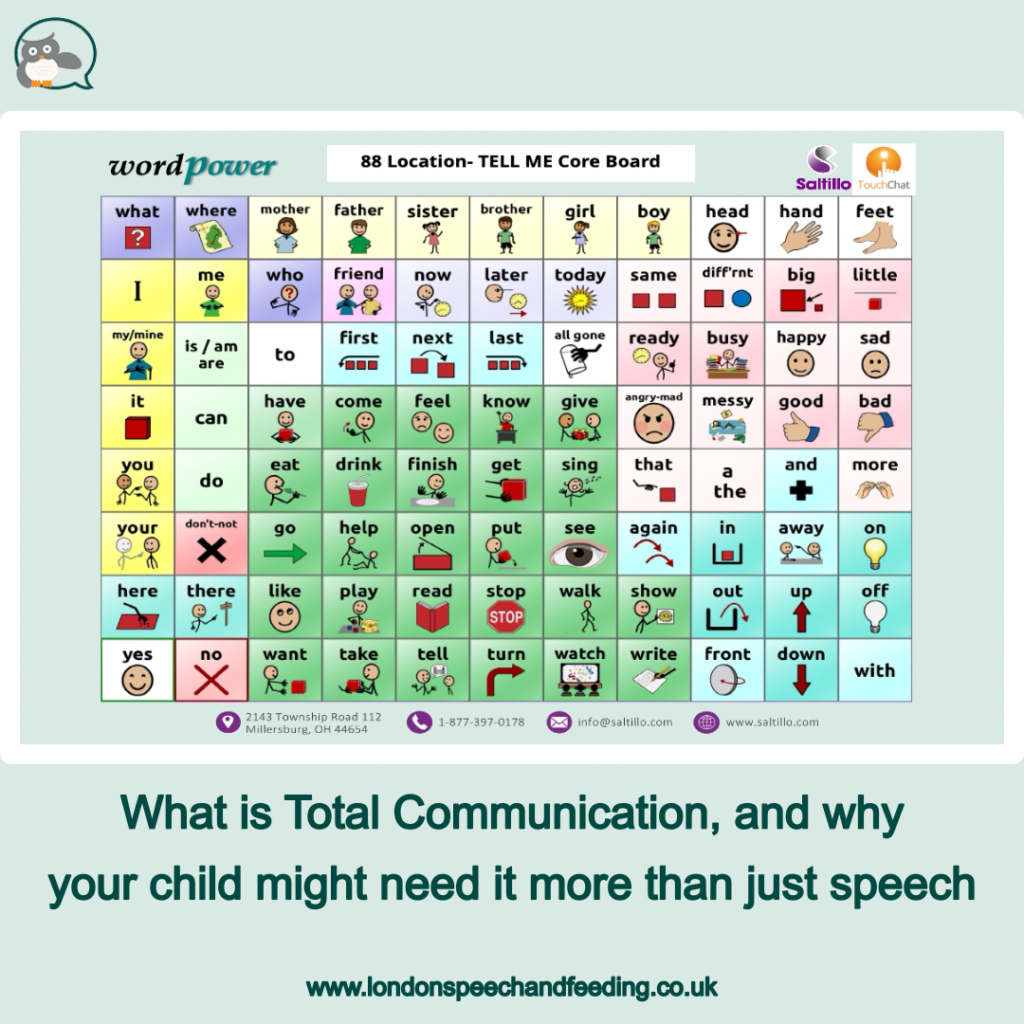
    • Aided AAC: This involves external tools or devices. These can range from low-tech options like picture boards and communication books to high-tech speech-generating devices (SGDs) and apps on tablets.

    The beauty of AAC lies in its flexibility and personalisation. It empowers individuals to express their wants, needs, thoughts, and feelings, fostering independence and participation in all aspects of life.

    Modelling is KEY: Showing, not just telling

    Imagine trying to learn a new language without ever hearing it spoken. It would be incredibly difficult, right? The same principle applies to AAC. Modelling is the single most important strategy for teaching and supporting AAC users. It means actively using the AAC system yourself while talking, demonstrating how to navigate the system and express messages.

    Here’s why modelling is so vital:

    • It’s how we learn language: Typically developing children learn language by hearing it constantly around them. AAC users need the same immersion.
    • It reduces pressure: When you model, you’re not asking the individual to communicate, you’re just showing them how it’s done. This takes the pressure off and makes learning more enjoyable.
    • It expands vocabulary and concepts: By modelling a variety of words and phrases, you introduce new vocabulary and demonstrate how to combine symbols to create more complex messages.
    • It demonstrates purpose: Modelling shows that AAC is a functional and effective way to communicate, not just a set of pictures.

    So, how do you model? It’s simple: point to the symbols on the communication board or device as you speak the words. For example, if you say, ‘Time to eat breakfast,’ you might point to ‘time’, ‘eat’, and ‘breakfast’ on the board.

    Low-tech AAC in action: Everyday activities

    Low-tech AAC, such as communication boards, books, or single-page displays, is incredibly versatile and can be easily incorporated into daily routines. These can be as simple as printed pages with symbols, laminated for durability.

    Let’s explore how low-tech AAC can be used throughout a typical day, with examples of symbols:

    1. Getting ready for nursery

    Mornings can be busy, but they also offer rich communication opportunities. A ‘Getting Ready’ communication board can help sequence activities and offer choices.

    Activity example:

    ‘Time to get up!’ (point to GET UP). ‘What do you want to wear today, the blue shirt or the red shirt?’ (point to GET DRESSED) ‘Then, we brush teeth’ (point to TOOTHBRUSH) and so on.

    AAC mornings symbol examples

    2. Breakfast Time

    Mealtimes are perfect for making choices, expressing preferences, and commenting. A ‘Breakfast’ communication board can focus on food items, actions, and social comments.

    Example symbols:

    AAC meal times symbol examples

    Activity example:

    ‘What do you want to eat for breakfast?’ (point to EAT). ‘Do you want cereal or toast?’ (point to CEREAL or TOAST). If they finish their milk, you could say, ‘Are you ALL DONE or do you want MORE MILK?’ (point to symbols).

    3. Catching the Bus

    Even routine transitions like catching the bus can be communication rich. A small, portable ‘Travel’ board can be useful.

    Example symbols:

    AAC catching the bus symbol examples

    3. Being on the playground

    The playground is a dynamic environment perfect for commenting, requesting actions, and engaging in social play.

    AAC playground symbol examples

    Activity example:

    ‘Let’s PLAY!’ (point to PLAY). ‘Do you want to go on the SWING or the SLIDE?’ (point to symbols). If they are on the swing, you can say, ‘Do you want to go FAST or SLOW?’ (point to symbols) and ‘Push AGAIN!’ (point to PUSH) You can also model social language like ‘It’s MY TURN.’

    Beyond the symbols: Key takeaways

    • Consistency is key: Use AAC consistently across all environments and with all communication partners.
    • Be patient: Learning a new language takes time. Celebrate small successes.
    • Make it fun: Integrate AAC into play and enjoyable activities.
    • Follow the individual’s lead: Respond to all communication attempts, even if they are imperfect.

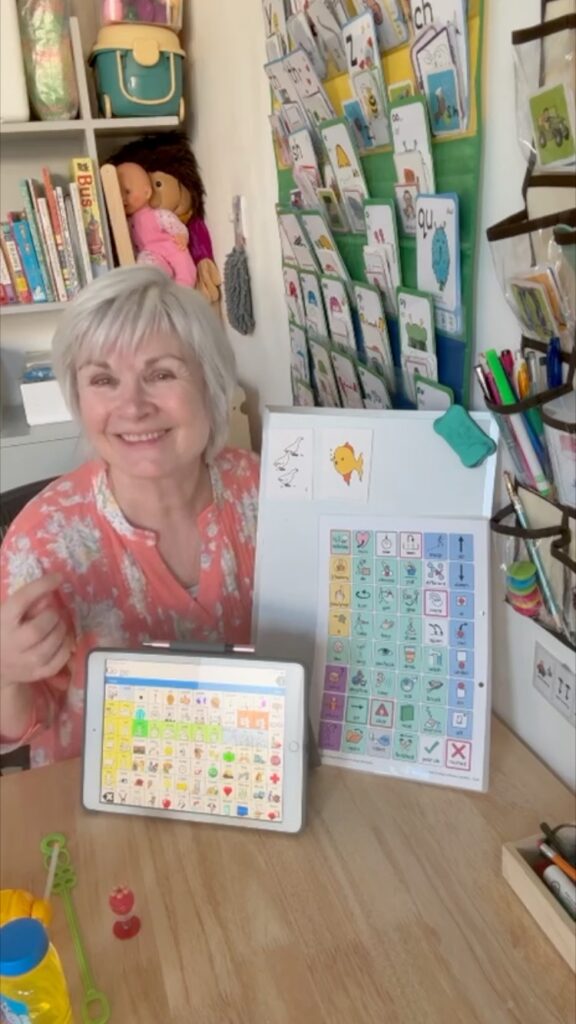
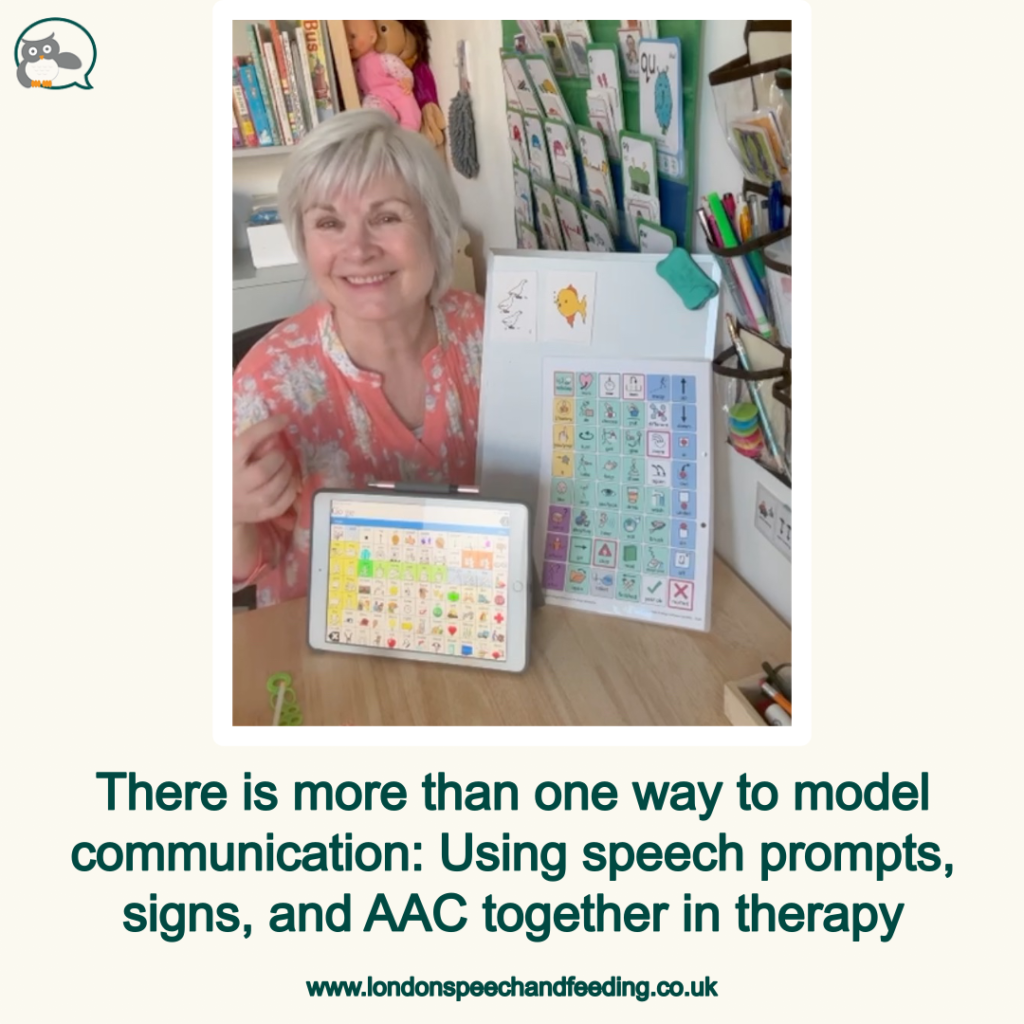
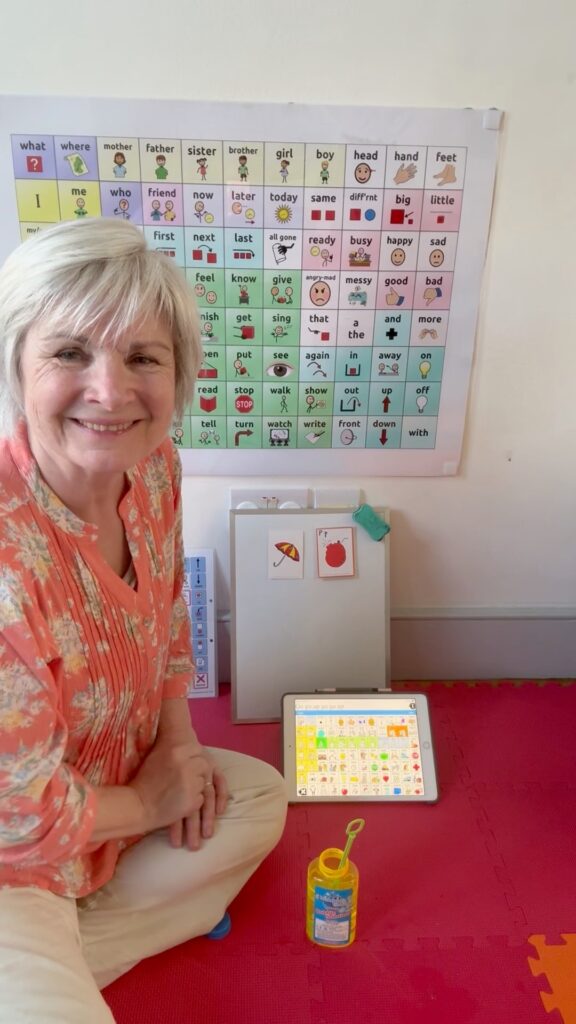
    In the video below I model how to integrate AAC into everyday activities with a few more examples and I discuss the difference between AAC and PECS.

    If you need some inspiration with using AAC or would like your child assessed for the right type of AAC then please get in touch.

    Sonja McGeachie

    Highly Specialist Speech and Language Therapist

    Owner of The London Speech and Feeding Practice.


    Health Professions Council registered
    Royal College of Speech & Language Therapists Member
    Member of ASLTIP

    Find a speech and language therapist for your child in London. Are you concerned about your child’s speech, feeding or communication skills and don’t know where to turn? Please contact me and we can discuss how I can help you or visit my services page.

    1