What to do when words don’t come fast enough

| | | |
What to do when words don’t come fast enough

When children find talking hard, parents often face a difficult question: ‘Should we wait and keep encouraging speech? Or introduce something like AAC?’

AAC (Augmentative and Alternative Communication) can sound intimidating, but it simply means any way we support or replace spoken words, from simple gestures and picture boards to high-tech speech-generating devices. Far from ‘giving up on speech,’ AAC often becomes the bridge that helps children find their voice, in whatever form that takes.

💡 What is AAC, really?

AAC is a spectrum of tools and strategies that help people express themselves when speaking is difficult. It might include:

  • Low-tech supports: Gestures, key word signs (like Makaton), picture symbols, or printed boards
  • High-tech systems: Apps on tablets that speak aloud when pictures or words are tapped

AAC is not just for children who will never talk. It’s for anyone whose speech isn’t meeting their communication needs right now.

🤔 When to introduce AAC

There’s a common myth that you should only try AAC after ‘exhausting’ other speech therapy options. In fact, AAC can be introduced at any stage, even alongside speech development.

Here are some helpful signs that AAC might support your child:

  • Your child understands much more than they can say.
  • They rely on gestures, sounds, or behaviour to communicate.
  • They become frustrated trying to express themselves.
  • You find yourself ‘reading their mind’ to interpret needs.
  • Speech progress feels slow or inconsistent.

If you recognise these patterns, AAC isn’t a ‘last resort’. It’s a communication support, not a replacement for speech.

Recent research consistently shows that AAC does not stop children from talking. In fact, it can encourage speech to develop. A 2024 systematic review and meta-analysis published in the Journal of Autism and Developmental Disorders found that children who received interventions combining naturalistic developmental behavioural approaches with aided AAC showed improved language outcomes, and that AAC ‘does not negatively impact speech development and may even facilitate spoken language growth’ (Smith et al., 2024).

🌉 How AAC supports speech development

Speech and AAC aren’t competing paths: they’re parallel tracks that often feed each other.

Here’s how AAC helps speech grow:

  1. Reduces frustration: When a child can express their needs, they’re more relaxed and ready to learn.
  2. Provides a visual model: Seeing symbols or words while hearing spoken language strengthens understanding and word recall.
  3. Builds consistent language structure: AAC systems follow the same grammar and word order as speech, helping children internalise how sentences work.
  4. Encourages turn-taking and social connection: AAC lets children join conversations even before speech is fluent, giving them more practice in real communication.

AAC is not ‘giving up on speech’. It’s giving a child more ways to succeed while speech continues to develop.

🧩 How to introduce AAC gently and effectively

  1. Start small and meaningful: Begin with a few key messages your child wants to say, not just what adults want to hear. Think ‘I want’, ‘stop’, ‘help’, ‘more’, ‘all done’, ‘no’, ‘again’. These are powerful words for real interaction and autonomy.
  2. Model, model, model: The most important part of AAC success is modelling—using the system yourself as you talk. For example: ‘You want banana 🍌’ and you tap the ‘want’ and ‘banana’ symbols. Children need to see and hear AAC used naturally before they try it themselves.
  3. Use it throughout the day: AAC isn’t a therapy tool to take out once a week. It’s a living part of communication. Model a few words during mealtimes, play, and routines. The more consistently it’s embedded, the more fluent both you and your child will become.
  4. Keep it accessible: If using a device or picture board, make sure it’s always nearby. If it’s in a bag or drawer, it can’t be used in real moments.
  5. Celebrate all communication: If your child points, signs, uses a sound, or taps a symbol, it all counts. Respond warmly and naturally to reinforce communication in any form.

🧠 What parents often worry about

  • ‘Won’t AAC stop them from talking?’: No. Research shows AAC use either has no negative effect on speech or leads to increased spoken output (Smith et al., 2024). When children feel understood, their motivation to communicate grows.
  • ‘What if I model it wrong?’: There’s no perfect way to start. Your effort and consistency matter far more than accuracy.
  • ‘Will they get ‘stuck’ using pictures?’:  Some children do continue using AAC long-term; others move naturally toward more spoken language. The goal is always functional communication, not replacing one form with another.

🪞 Bringing AAC into daily life

Here are a few simple, parent-friendly ideas:

  • Create visual spaces: Post symbols or core words on the fridge, mirror, or play area.
  • Narrate routines: Use AAC during toothbrushing, dressing, or mealtimes; consistent contexts build understanding.
  • Pair speech and touch: Always say the word aloud when you point to or tap a symbol.
  • Involve siblings and friends: Model how they can respond to AAC too. ‘Oh, you said go! Let’s go fast!’
  • Use shared books and songs: Pause and model key words in stories or songs.

🌱 The takeaway

AAC doesn’t mean giving up on speech; it means opening more doors to communication. When words don’t come easily, AAC gives children a way to connect, share, and be heard.

It helps parents move from guessing to understanding, and gives children the power to express themselves on their own terms.

If you’re unsure where to start, reach out to a speech and language therapist experienced in AAC. Together, you can find a system that fits your child’s strengths, build confidence in modelling, and help every word (spoken or tapped) feel like a step forward.

And download and print my one page summary.

Because when communication is possible, everything else begins to grow.

Sonja McGeachie

Highly Specialist Speech and Language Therapist

Owner of The London Speech and Feeding Practice.

📚 Reference

Smith, K., et al. (2024). The Effect of Naturalistic Developmental Behavioral Interventions and Aided AAC on the Language Development of Children on the Autism Spectrum with Minimal Speech: A Systematic Review and Meta‑Analysis. Journal of Autism and Developmental Disorders, 55, 3078–3099. https://doi.org/10.1007/s10803-024-06382-7

Health Professions Council registered
Royal College of Speech & Language Therapists Member
Member of ASLTIP

Find a speech and language therapist for your child in London. Are you concerned about your child’s speech, feeding or communication skills and don’t know where to turn? Please contact me and we can discuss how I can help you or visit my services page.

2

Similar Posts

  • ·

    Transforming Mealtimes

    Speech Therpaist in London

    Transforming Mealtimes

    Below are two reviews I got from grateful clients over the past 4-6 weeks; this blog is more about how Feeding Therapy can help you than blowing my own trumpet…. though that said, it is always so nice and gratifying to hear when parents are happy and hopeful about their little one’s feeding journey. Feeding Therapy is a substantial part of my work as a Children’s Speech and Language Therapist. One of my specialist subjects is Autism and we find that many children on the Autism Spectrum are very specific about eating, and will often refuse a range of typical family foods in favour of a narrow range of foods/snacks.

    Mostly, feeding difficulties are a combination and complex cocktail of factors that have contributed to the current status quo: sure, there may have been some physical problems to start off with, such as reflux causing the baby discomfort, constipation, a very tight tongue tie or a swallowing problem caused by neurological difficulties and of course sensory processing difficulties are also very physical experiences. We always begin with a very thorough case history taking and information gathering, followed by an oral assessment and observation of the actual swallow to establish what might have been – or still might be – the cause for the feeding difficulties.

    In most of the cases I see in my practice, the original obvious cause is no longer present, especially with older children. So, if the swallowing is fine, the reflux is no longer present, the tongue was divided (twice!) why are they still not eating much, refusing to try new foods, only accept certain textures etc.

    The answer is extremely complex and multi-faceted and this little blog is not covering any factors in detail (we would be here all night) -I mentioned sensory processing difficulties earlier on. These are mostly still present but often not acknowledged or recognised by parents. And it is certainly the case that one of the contributors is parental anxiety; this tends to run very high and has been for many months, sometimes years. This in turn often leads to very tense and unpleasant, endlessly long meal times and many times children are force-fed several times a day in order to “get something down there” as otherwise they would probably starve themselves.

    Additionally, parents end up only offering a very narrow range of foods because that is all their child will eat. This ends up in a vicious cycle of children being fed porridge-style food for all meal times and of course they won’t progress to more mature foods if these mature foods are never on offer.

    In order to help address and disentangle some of the issues I often introduce the “Division of Responsibility in Feeding” as researched and recommended by Ellyn Satter (The Satter Feeding Dynamics Model)

    Here are the main points of her approach:

    Children have a natural ability with eating, they eat as much as they need and they grow in the way that is right for them and they learn to eat what their parents eat. (E Satter). The parent is responsible for WHAT the child eats, WHERE and WHEN the child eats. The child is responsible for HOW MUCH they eat or WHETHER to eat. Satter proposes that parents should guide their child’s transition from nipple feeding through semi-solids, then thick and lumpy foods to finger foods and then on to normal family meals.

    Please note: this model is only appropriate for children where the original physical cause is no longer present!

    Of course it’s not easy! It requires a huge shift in thinking about feeding and it requires to trust our children to know what is best for them. This is very big for most parents, as it is not how we were brought up and it is not commonly known that babies and children know what is good for them!

    However, it is certainly true that parents who follow this particular approach and make small, steady changes in the way the offer foods, and in the way they create family meal times differently, children make very nice, pleasing progress and over some months we often see remarkable positive changes.

    I like to work in a team and especially for this type of problem it is essential to have a multi-disciplinary approach. A knowledgeable dietician is an enormous plus in any feeding team as is of course a

    Paediatrician and/ or a Gastroenterologist and the most important people in the team are the parents!

    Feeding Therapy is all about collaboration and a ‘team around the child” approach. When we have this in place and there is trust amongst the team members then we make fantastic progress.

    Do get in touch with me if you would like some help with your tricky feeder.

    Lovely Reviews

    I visited London Speech and Feeding a couple of days ago with my 8-month-old granddaughter and her mother. Sonja made us feel comfortable and at ease from our first introductions. She was able to pinpoint my granddaughter’s mum’s anxiety around weaning very quickly. She not only gave her the tools to do this successfully, but also really encouraged my granddaughter’s mum and instilled confidence that she had everything she needed to make this sometimes-difficult transition without further anxiety.

    Sonja was very thorough in her initial assessment of my granddaughter’s physical milestones and her developing speech. My granddaughter felt very comfortable with Sonja and happily played along with her. Then came the big moment – trying out various foods! We were amazed to see just how easily my granddaughter, with Sonja’s expert encouragement, took to sampling the wonderful array of different delicious morsels Sonja had prepared for the session. My granddaughter even drank from a cup for the first time! Wonderful!

    Sonja then emailed a summary of the session and an extensive array of resources with suggestions for my granddaughter’s mum which she has now put into action. My granddaughter’s mum couldn’t thank Sonja enough for her caring attitude, extensive knowledge, and warm professionalism. I have no hesitation in recommending Sonja, she’s a fantastic Feeding Therapist!

    Sonja (and her lovely colleague, Sandra) were stupendous. I had brought my one-year-old son to see them as I was concerned that he wasn’t eating enough. They looked at his history and we ate together to make sure they had all the information they needed to give an accurate diagnosis. Whilst our outcome was that Henry was in fact doing brilliantly (and I just needed to chill out a bit!), I would imagine if there was something more serious going on, Sonja would make you feel just as supported and empowered as she did with us. Excellent follow-ups too. Money well spent for a bit of reassurance for a stressed out mama. Thank you, Sonja!


    Find a speech and language therapist for your child in London. Are you concerned about your child’s speech, feeding or communication skills and don’t know where to turn? Please contact me and we can discuss how I can help you or visit my services page.

  • ·

    Empowering non-speaking children: the power of AAC Core Boards

    Communication is the essence of human interaction, allowing us to express thoughts, feelings, wants and needs. For non-speaking children and their families finding an avenue to communicate effectively can be a really challenging journey.

    Augmentative and Alternative Communication (AAC) offers a solution: with AAC Core Boards as a powerful ally and tool to empower and express more than requests: ideas, comments, surprise and delight, as well as saying no to something! Very important!

    “AAC is a set of tools and strategies that an individual uses to solve every day communicative challenges. Communication can take many forms such as: speech, a shared glance, text, gestures, facial expressions, touch, sign language, symbols, pictures, and speech-generating devices” (RCSLT, 2023) to name just some.

    AAC Core Boards are a powerful tool to empower non-speakers to express ideas. In this blog, we’ll explore the significance of AAC Core Boards and how they can unlock the world of communication for non-speaking children.

    Let’s discover and understand AAC Core Boards

    Firstly, let’s look at what a Core Board looks like…

    AAC Coreboards
    Credit: Saltillo Word Power

    Why not have a go and download your own copy (and other boards) for free on the Saltillo Word Power website.

    AAC Core Boards are a specific type of AAC system that employs a grid-style board. This grid contains a set of core vocabulary words or symbols, which serve as a foundation for all communicative functions (e.g., initiating, greeting, requesting, negating, commenting, asking a question, and expressing surprise).

    These boards incorporate high-frequency (most used) and versatile words. They enable us to construct sentences, express emotions, and take part in conversations, fostering a sense of independence and autonomy. By enabling communication, we also remove some of the frustration (from not being able to communicate) which contributes/or often leads to behavioural difficulties.

    Building literacy skills

    AAC Core Boards are not only tools for immediate communication. They also play a pivotal role in language and literacy development. By using these boards, non-verbal children engage with words and symbols. It reinforces their understanding of language structure and grammar.

    As they consistently play with and then use their boards, they naturally absorb language patterns, laying the foundation for improved literacy skills. This immersive learning experience paves the way for future language acquisition and communication growth.

    Customisation for individual needs

    Every child is unique, and their communication needs can vary significantly. AAC Core Boards are designed with this diversity in mind, allowing for customisation to suit individual preferences and abilities. The boards can be adapted to include specific vocabulary relevant to a child’s daily life, interests, and activities. This personalisation ensures that the AAC Core Board is a true reflection of your child’s personality and needs, making communication more motivating, engaging and effective.

    Collaboration between AAC Core Boards and Speech Therapy

    AAC Core Boards are an excellent tool but we need to know one important aspect: they only work well when used regularly by the child’s family and key people in the first place.

    The board needs to be used and modelled by adults consistently and regularly across environments. This is so our children know what to expect, take an interest and begin to use the boards themselves. Modelling the use of AAC Core boards is vital. Think how long it typically takes for a child to learn their first word. Around a year! During that time the adults talk constantly to their child without hesitation or expectation! The same goes for introducing this new way of communicating.

    Collaborating with your child’s Speech and Language Therapist (SLT) ensures that your child receives the right guidance in using the AAC system. SLTs can assess your child’s communication abilities, recommend appropriate boards and provide guidance on how to best put them in place, so that your child can reach their communicative potential.

    For non-speaking children, AAC Core Boards are more than just tools. They are bridges to a world of communication, connection, and empowerment. These boards harness the power of visual communication, foster language development, social interaction, and personal expression. They can be tailored to individual needs with the support of skilled professionals. AAC Core Boards offer a beacon of hope, helping to break through communication barriers and thrive in a world that is waiting to hear your child’s voice.

    For answers to your questions and to explore the most effective support for your child, feel free to contact us.


    Find a speech and language therapist for your child in London. Are you concerned about your child’s speech, feeding or communication skills and don’t know where to turn? Please contact me and we can discuss how I can help you or visit my services page.

    0
  • ·

    The role of spinning and swinging in speech and language therapy

    Sonja with a child on a swinging with a stuffed monkey

    Spinning and swinging are often observed behaviours in autistic children. While these actions might seem repetitive or unusual to some, they serve crucial functions for these children. Understanding the underlying reasons for spinning and swinging can provide valuable insights into how to support autistic children and incorporate these activities into therapeutic settings.

    Why do children spin?

    Spinning is a common sensory-seeking activity in autistic children. Sensory seeking means that the child actively looks for sensory input to regulate their nervous system. Here’s why spinning can be beneficial:

    • Vestibular input: Spinning stimulates the vestibular system, which is located in the inner ear and is responsible for balance and spatial orientation. For children with sensory processing difficulties, spinning can provide essential sensory input.
    • Calming effect: For some children, spinning can be a self-regulating strategy. The rhythmic motion can help to calm the nervous system and reduce anxiety.
    • Sensory exploration: Spinning allows children to explore their sensory experiences. It can help them understand their bodies and how they move in space.

    The allure of swinging

    The rhythmic back-and-forth motion of a swing offers several benefits:

    • Vestibular input: Like spinning, swinging stimulates the vestibular system, helping to improve balance and coordination.
    • Proprioceptive input: Swinging provides proprioceptive input, which is the sense of where your body is in space. This information is crucial for motor planning and coordination.
    • Calming and organising: The rhythmic motion of swinging can have a calming effect on the nervous system, helping to regulate emotions and improve focus.
    • Social interaction: Swinging can be a shared experience, fostering social interaction and communication.
    • Facilitating communication: While swinging, children are so much more relaxed and open to communication. The rhythmic motion can also help facilitate singing, humming, listening to my singing, non-verbal communication for sure but also more verbal and mouth words can be heard from children on my swing. If nothing else, it is so fun and helps build trust and rapport between my child and me.

    Therapeutic Activities Combining Spinning, Swinging, and Speech and Language Therapy

    Here are some therapeutic techniques that I use at London Speech and Feeding to combine movement with speech and language development:

    • Swinging with verbal prompts: While the child is swinging, I provide simple verbal prompts such as ‘up’, ‘down’, ‘fast’, and ‘slow.’ This helps to develop receptive language skills and improve auditory processing.
    • Sensory-motor play: I like to combine swinging with tactile activities like playing with textured balls or bean bags. This can facilitate language development through descriptive language, words and scripts like: ‘that’s so soft’, ‘oooh tickle tickle tickle!’
    • Storytelling on the swing: Often I manage to create a story while the child is swinging. This can improve narrative skills, vocabulary, and imagination. Recently I did the ‘Tiger who came to tea’ story and each time the swing stopped the tiger came and ‘ate some more cakes’ and ‘tickled their tummy’ whilst eating. It may make not much sense but my child loved it and we had ‘more tiger eat more’.
    • Song and rhyme time: Often I sing the ‘rumble in the jungle’ song while swinging my child to enhance phonological awareness, rhythm, and timing.
    • Visual supports always help: I use LAMP Words for Life AAC support during swinging and show core words such as: ‘go’ / ‘stop’/ ‘more’ / ‘tickle tickle’ etc. #lampwordsforlife #aac
    • Movement-based activities: We can incorporate activities that require sequencing, such as imitating animal movements or following simple commands while swinging. This can improve motor planning and language comprehension.

    For more information follow me on Instagram, Facebook or LinkedIn.

    Sonja McGeachie

    Early Intervention Speech and Language Therapist

    Feeding and Dysphagia (Swallowing) Specialist The London Speech and Feeding Practice

    The London Speech and Feeding Practice


    Find a speech and language therapist for your child in London. Are you concerned about your child’s speech, feeding or communication skills and don’t know where to turn? Please contact me and we can discuss how I can help you or visit my services page.
    1
  • ·

    Rethinking the PECS Approach

    I want to talk about some concerns of SLTs, parents and increasingly autistic adults who explain to us how this communication method did not really work so well and why.

    What is PECS in a nutshell:

    PECS (Picture Exchange Communication System) is based on the idea of exchanging pictures in return for desired items. For more advanced users, it is used to communicate different functions such as emotions, comments, negations using the exchange of a sentence strip. It was founded on the principles of Applied Behavioural Analysis (ABA).

    How does that look in practice?

    In my experience, having been trained in the approach myself, the overall aim is eventually for the child to spontaneously go and get their picture book (PECS book), open it, look through a range of pages to select the correct picture of what they want to have or say, then go and find their communication partner, and finally place that picture onto the communication partner’s outstretched palm to be rewarded with an item or with a response of some sort. Or the child selects a range of pictures to create a little sentence, such as: ‘the blue fish swims in the sea’, ‘the red bird flies in the sky’ or ‘I see a red bird’ for example. This can be part of a structured table top activity.

    The system follows a series of phases, starting from simple picture exchanges to eventually construction of sentences using symbols. PECS’s aim is to promote communication initiation and reduce frustration for those who struggle with speech.

    So far so good one might say, why not? Before I go into the various concerns, I would want to add my own working experience with PECS, and whilst it is my opinion, I would say I have NEVER seen a working PECS book being used spontaneously!

    My experience

    I have seen attempts of stages 1 and 2 done quite well, in schools, and where people knew that I was coming in “to have a look at how PECS is working with child X”. Yes, in those instances an effort was made of course to try and show me how it worked. I must add that have never been very impressed. I cannot recall it used for any other items than: biscuits/quavers/crisps/ raisins and bubbles/puzzle pieces or spinners.

    If we want to see a child trained to exchange for these items in a structured setting, i.e., the child sits at a little table with the adult sitting opposite enticing the child with one or other item, then yes that can be done successfully. I have seen children exchange 25 pictures with a crisp on it, for said crisp and they might have asked for another 25 of those crisps given half the chance. Yes. Good. But. I have yet to see a child go to their PECS book and go through all the motions that I mentioned above to get a crisp. In school they don’t need to: they know that crisps are only available when the PECS book is being practised. Otherwise, let’s be honest, it’s fruit at 10.30 am!

    So, they don’t get a spontaneous opportunity to ask for highly motivating items as that is not how school works, is it? ‘SIR! Can I have a crisp?’ At 10.02am, in the middle of maths? Didn’t think so… So in reality this does not get practised in my experience.

    A few concerns in no particular order:

    Limited Generalisation

    One issue often raised is the limited generalisation of skills learned through PECS. The structured nature of the program may result in a child only being able to communicate effectively within the specific contexts where they were taught to use the system (as I suggest above: crisps: yes, please let’s do the PECS for it). This limitation can pose challenges when trying to apply communication skills in new or unstructured/spontaneous situations.

    Lack of Spontaneity

    Critics suggest that PECS can sometimes lead to scripted and less spontaneous communication. This is also what I have observed. Since the method is designed to follow a structured progression, there is a concern that individuals might struggle to initiate communication outside of the established framework, potentially hindering their ability to engage in more natural interactions.

    Narrow range of communication functions being practised

    While PECS is quite successful in focusing on requesting and naming items, there are many other important communication functions, such as expressing emotions, asking questions, giving opinions or greetings for instance. We can argue that a communication core board where we have a whole range of different core words available lends itself much better to practising a range of communicative functions.

    The Pictures are movable

    They are attached to the book via Velcro. They are constantly being picked and exchanged and then returned to the book. This means that the pictures tend to be always in different places. This goes against the motor planning that takes place when one is learning a new skill: imagine you want to learn to touch type and the letters always move and are at different places? How can you be quick about finding a letter? You can never get to “automatic” with this type of approach.

    Communication is not taught via behavioural means

    Only if you say “banana” in the way that I dictate that you should will you get a piece of banana. Who does that? Nobody. Typically, child points to the counter where there is a banana and says: ‘ba’ or ‘ana’ and mother/carer will look over there and say ‘oh banana! You want a banana? Ok there you go have a piece.’ Or something like it. Mother will not say: ‘SAY BANANA or else you won’t get it.’ Child hears mum saying ‘Banana’ each time and with time will point and say ‘banana’ or ‘I want-a-nana’ or something. This is how communication is learned: through the adult modelling it cheerfully all day long and the child hearing it and then gradually copying it.

    One other gripe I personally have but I am reliably informed by all my parents that they share this about PECS:

    IT IS SO LABOUR INTENSIVE!

    There are 10, 50, 100’s of little pictures that first of all need laminating… then velcroing, then finding and replacing. As I said above, it’s a constant moveable feast for one, but also you LOSE them. Yep. You want to find the picture for “trampoline”. ‘Where is it? I saw it yesterday… We had it outside when we practised you asking for the trampoline. I am sure we put it back? Where is it??? Ok. We need to print off a new one.’

    It is also labour intensive for the first stage where you need to have TWO adults to ease the exchange (pick up and release of picture into the communication partner’s hand). Who has two adults available for what can be weeks until the child is able to pick up and release by themselves?

    YEP. So it’s really not for me you can tell! I much prefer Core boards (see my previous post on using one) or electronic speech generating AAC devices like GRID, or LAMP or TOUCHCHAT. These are all great to use and there is good support out there for introducing these.

    Finding a Balance

    While the concerns surrounding the PECS approach are valid, it’s fair to note that the method also has some merits. There is anecdotal evidence of many individuals who have successfully improved their communication skills and quality of life through PECS. But, finding a balance between using PECS as a stepping stone and ensuring the development of more comprehensive and SPONTANEOUS communication is key.

    As educators and therapists, we need to extend the focus beyond requesting and labelling by incorporating symbols that represent emotions, actions, and more complex ideas. This expansion encourages a broader range of communication functions. When the time is right, gradually transitioning from PECS to more advanced communication methods such as Core boards or electronic AAC tools and speech-generating devices is the way forward.

    We want to value all communication equally and our approach ought to be playful and child-led and to focus on intrinsic motivation instead of extrinsic rewards and reinforcers.

    If you have any questions or if you are looking for a therapist who endorses play-based and child-led therapy approaches, please do reach out.


    Find a speech and language therapist for your child in London. Are you concerned about your child’s speech, feeding or communication skills and don’t know where to turn? Please contact me and we can discuss how I can help you or visit my services page.
    0
  • · ·

    How do we know our Gestalt Learner is moving to Stage 2?

    Image by Freepik

    Is our student ready to move to NLA 2 (Natural Language Acquisition stage 2)?

    We know that the GLP (Gestalt Language Processor) will move into the next stage when they are ready. But are they now ready you might think? When are they ready? How do I know? If you are not sure whether your child is ready to move forward then go and see your GLP trained Speech Therapist. Together you can work out what the next steps are and how to help your child settle into NLA 2. It’s very exciting!!

    Tip

    The first useful tip: keep a language sample of phrases your child says. This is very helpful!

    You might want to check with your Speech Therapist and offer some language sampling you have taken so they can help you figure out where your child is currently. Always keep an Utterance Journal that you can share with your Speech Therapist and with others who look after your child.

    Basically, we want to listen out for phrases our child says that you or nursery don’t say routinely; that way you can presume that this is not an echo but a mixing together of two chunks of gestalts. Watch out for those coco melon phrases though: double check it really isn’t an NLA 1 gestalt that is copied verbatim from a favourite you tube video.

    You can best support your child best by listening, and thus figuring out what your child is TRYING TO SAY. Often your child might skip over the parts of gestalts they don’t want to say. This is common in older kids who have long gestalts, sometimes even whole episodes or whole stories!

    Try and tease out their shorter mitigations and then focus on practicing and modelling those as they are so much more useful!

    So back to our question: are they ready?

    Are their gestalts covering a variety of situations and contexts?

    Make a note in your journal to see what the backgrounds are to each phrase you ear, so for example:

    • Transitioning: ‘it’s time for the park’ ‘what’s next’ ‘shoes on’
    • Bed Time: ‘we need to wash’ ‘let’s get in (bath/bed)’ ‘ready for our book’
    • Toilet/nappy: ‘we need the potty’ ‘where’s the potty’ ‘let’s wash hands’
    • Mealtime: ‘time to eat’ ‘go get a spoon’ ‘yummy num num’
    • Park/going out: ‘look at the squirrel’ ‘funny doggy’ ‘I wanna swing’
    • At the shops: ‘let’s get the trolley’ ‘lots of veggies’ ‘no tomatoes’ ‘ooh long queue’ ‘back to the car’

    And… does the child use the phrases for a variety of functions?

    • labelling
    • providing information
    • calling out
    • affirming
    • requesting
    • protesting
    • directing

    We need to offer lots of similar language models so that in their own time our children can extract/mitigate useful phrases for what they want to express. The more similar utterances a child hears around him the more he/she can discover the communalities. Once the child has a small range of phrases, he/she can mix them up and create semi-original own phrases.

    If the answer is YES!! our child has perhaps not all but a range of functions and a range of situations where they use a variety of easily mitigable gestalts then yes they are ready for moving to stage 2 of NLA!

    Hurrah!

    Keeping a journal of what your child is saying and in what circumstance is crucial to help with our ongoing detective work!

    Next time I will be looking at how we can help our NLA 2 GLP produce even more of their own mix and match phrases.

    If you need help with your child, please do not hesitate to contact me.


    Find a speech and language therapist for your child in London. Are you concerned about your child’s speech, feeding or communication skills and don’t know where to turn? Please contact me and we can discuss how I can help you or visit my services page.
    1
  • Why imitation is a powerful strategy to support social communication

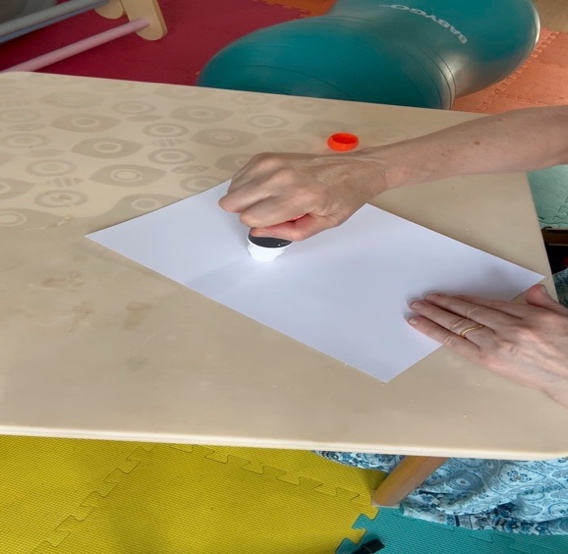
    Before reading this blog, it’s important to understand what we mean by ‘social communication’ and ‘imitation’. Social communication is more complex than it first appears. It refers to many aspects of communication such as body language, voice, conversational skills, social ‘rules’ (such as being polite and using manners), interpersonal skills (such as developing friendships), and emotional literacy (such as appropriacy and developing self-awareness). Imitation refers to the simple act of copying.

    You may have noticed that your child has difficulties in some of the areas mentioned above. They might be less responsive to you and appear to be quite happy in their own world. Whilst we do not want to change their unique characteristics, we do need to prepare them for future experiences, and what is socially acceptable.

    How will copying my child develop their social communication?

    1. If your child is already engaged with a certain activity, they are already interested and motivated. You’re not competing for their attention.
    2. Both yours and your child’s attention is on the same activity which makes imitating for you (as the parent) easier.
    3. Studies have demonstrated that when a parent imitates a child, they are more likely to look at the adult.
    4. Imitation not only supports eye contact but supports facial expressions (such as smiling), may increase vocalisations, and encourages your child to sit closer to you.
    5. Children learn through trial and error. They may start to try to perform new actions to gain their parents attention. Let your child lead the play!!

    How do I start imitating my child?

    1. Start with observing them. Take the time just to watch. You don’t need to make notes. Sit back and observe their actions, movements, and sounds they make.
    2. Wait for your child’s reaction when they realise you are copying their actions. Remember they may not notice, you don’t need to remind them, simply copy them again.
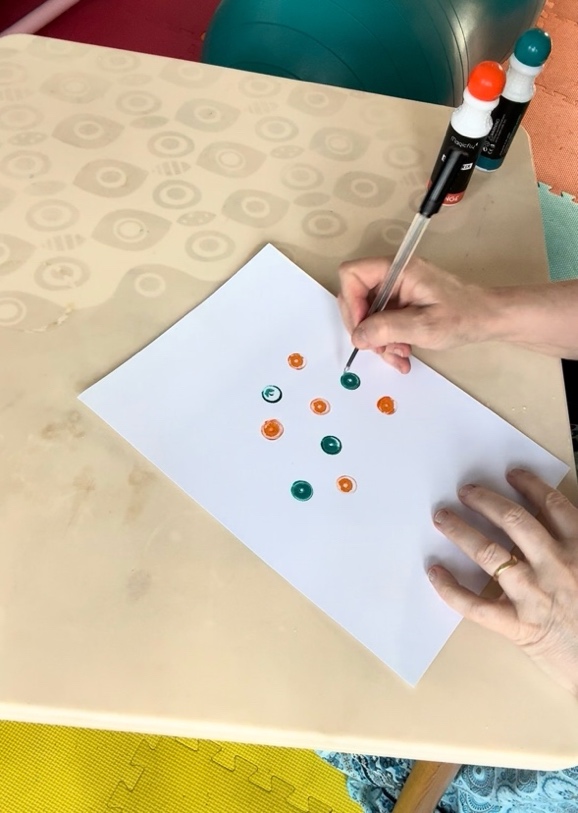
    3. Having the same set up as your child allows them to feel in control. So, you may have two sets of the same activity rather than copying using their set of toys.

    This may sound daunting, but it doesn’t have to be. Start with a ten-minute time frame where you choose to copy your child. This is where you can practise your imitation strategy. Ten minutes a day is far more effective than an hour every two weeks. You may feel self-conscious but trust the process. Build your confidence, whilst exposing your child’s to increased language and communication, enabling them to develop vital social communication skills.

    Look at the video above to watch the strategy in action!

    Support is only a click away. I’m here to help.


    Find a speech and language therapist for your child in London. Are you concerned about your child’s speech, feeding or communication skills and don’t know where to turn? Please contact me and we can discuss how I can help you or visit my services page.
    0