Early Language

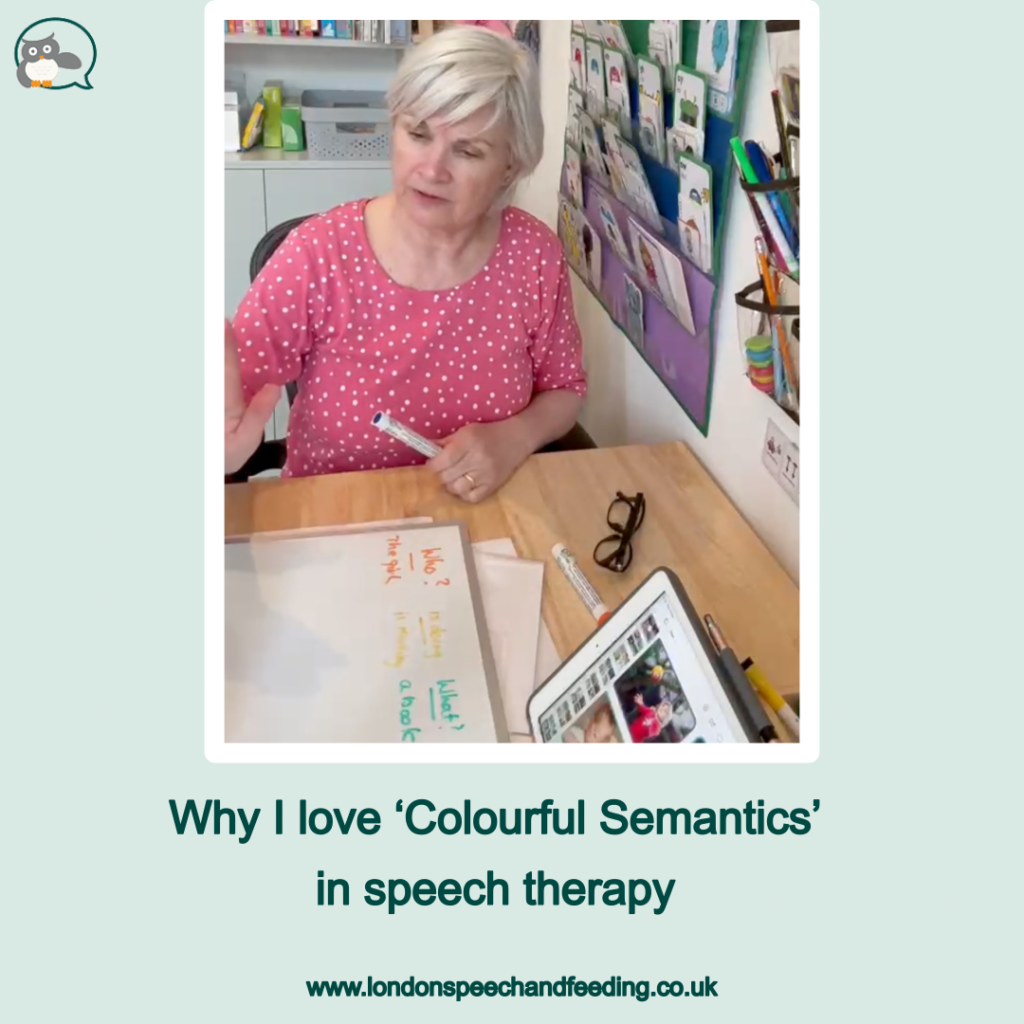
  • One book, dozens of therapy opportunities: What speech therapy really looks like

    As speech and language therapists, some of the most effective moments in therapy don’t come from flashcards, worksheets, or even drilling sounds (though to be fair I do drill quite a lot too! needs must…😊).

    By and large they happen in natural interaction — during shared attention, laughter, storytelling, and connection.

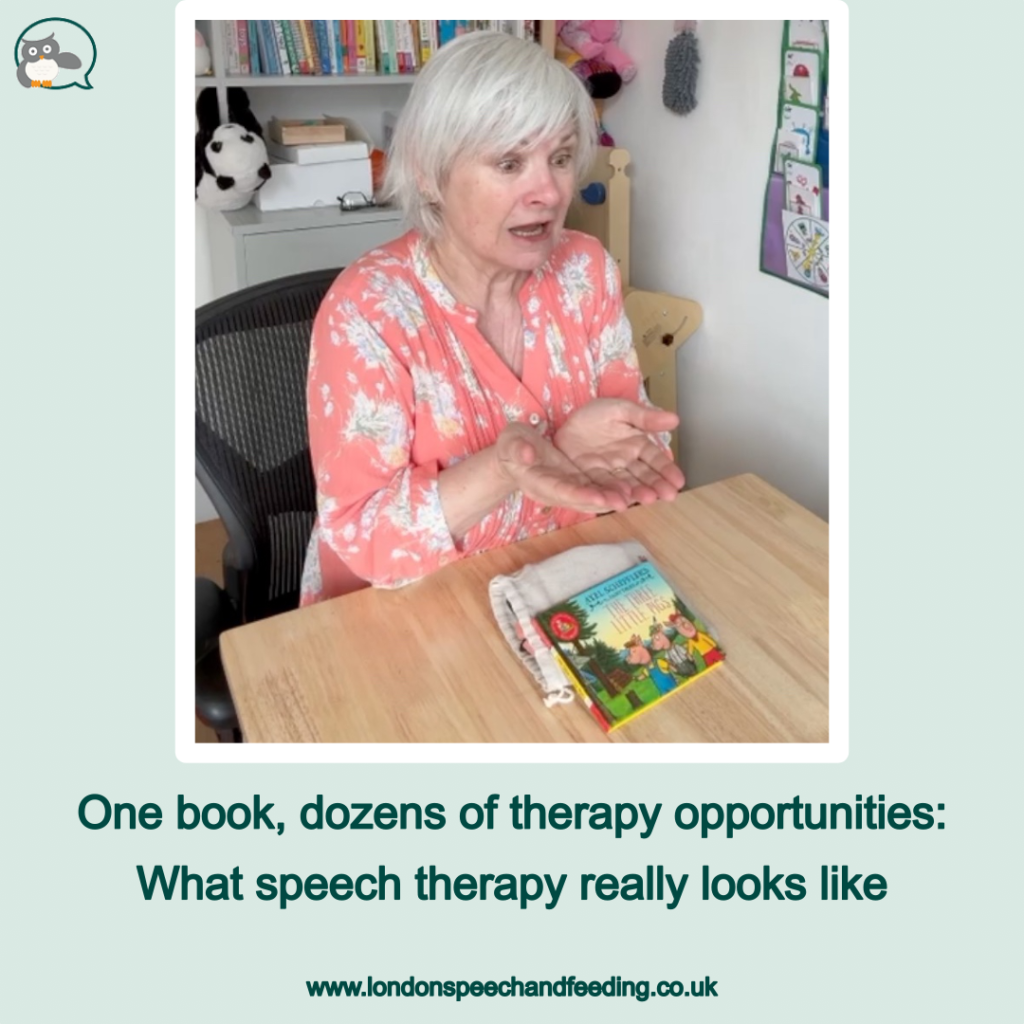
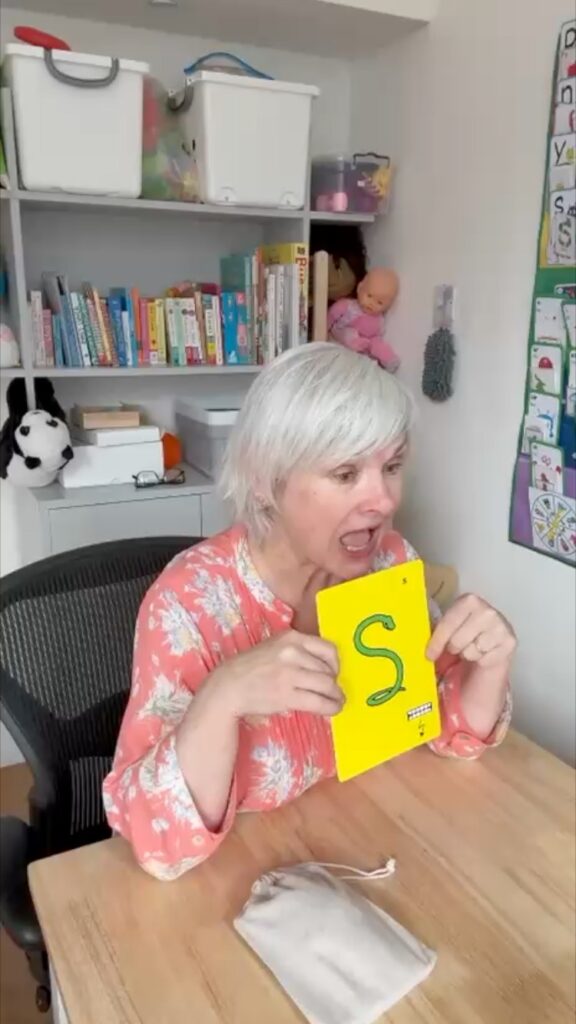
    This short video clip captures that.

    In under two minutes, while simply reading a book together with a three-year-old child, we naturally work on:

    • Speech sounds
    • Vowel production
    • Early phonological patterns
    • Motor planning
    • Signing and total communication
    • Visual cueing
    • Repetition and practice
    • Confidence building
    • And engagement through play

    To many people, it may just look like ‘reading a book’.

    But underneath that moment are years of specialist training, clinical decision-making, preparation, and therapeutic skill.

    Therapy hidden inside play

    One of the most important parts of paediatric speech therapy is knowing how to embed targets into meaningful interaction.

    Books are one of my favourite therapy tools! Why: because as speech therapists we need to prepare for our child and our sessions. And having a book gives me the structure to know beforehand what kind of sounds or words might be coming up. Then I can be prepared for providing extra support for them. As you can see in this clip, I had the sound cards just there because I had anticipated what might be coming up!

    A single story can provide opportunities for:

    • Speech sound practice
    • Vocabulary development
    • Sentence building
    • Turn-taking
    • Symbolic understanding
    • Attention and listening
    • Gesture and signing
    • Motor speech cueing
    • And social communication

    In this clip, I follow my little one’s interests while carefully weaving in her individual therapy targets.

    It looks relaxed and spontaneous — and it is — but it is also highly intentional.

    Catching opportunities in the moment

    One lovely example in the clip is when she says ‘yes’.

    She is now starting to say the final /S/ sound, so I immediately model and draw attention to it using the ‘snake sound’ visual cue, giving her positive feedback that she can now also try using this sound at the start of words.

    My gently shaping the word ‘yeSSSS.’ gives her:

    • Auditory feedback
    • Visual support
    • And an achievable opportunity to try again

    A few seconds later, we naturally practise it again.

    That’s responsive therapy.

    Speech therapists are constantly listening, analysing, adapting, and deciding:

    • When should I model?
    • When should I pause?
    • When should I repeat?
    • When should I let it go?
    • How can I keep confidence high while still targeting speech?

    These decisions happen in seconds.

    Working on speech without ‘stopping the play’

    Another moment in the clip focuses on the word ‘out’, where the vowel sound is one of her speech targets.

    Then we move into practising the word ‘open’, a word she has previously found difficult.

    Within this one word, we can support:

    • Sequencing
    • Motor planning
    • Lip shape
    • Vowel production
    • And speech sound accuracy

    We also briefly practise the /K/ sound — a sound produced at the back of the mouth which can be particularly tricky to produce.

    Instead of explaining it verbally (which is often too abstract for young children), I use:

    • Visual demonstration
    • Exaggerated mouth movements
    • Gesture/sign support
    • And playful modelling

    Children learn through seeing, hearing, doing, and experiencing.

    That is why Speech Therapists use multiple layers of cueing simultaneously.

    Why I use signs alongside speech

    Throughout the clip, I also use signs such as ‘book’ and ‘pig’.

    Using signs does not stop children talking.

    In fact, for many children, signs:

    • Reduce frustration
    • Support understanding
    • Increase participation
    • Reinforce vocabulary
    • And help bridge the gap while speech is developing

    Communication always comes first.

    Speech is only one part of communication.

    When children feel successful communicating, they are far more likely to keep trying.

    The skill behind ‘natural’ therapy

    One thing I often hear from parents is:

    ‘You make it look so easy.’

    That is actually one of the biggest compliments a therapist can receive. (Though we also often feel we need to justify our very existence with these thoughts because we don’t just play/just read but we know it can look like that!) 😊 this is the reason for this blog…

    High-quality paediatric therapy should feel warm, playful, responsive, and natural.

    But underneath that natural interaction is:

    • Clinical knowledge
    • Phonological analysis
    • Motor speech understanding
    • Language development expertise
    • Sensory awareness
    • Relationship-building
    • And careful session planning

    Before this session even began, I already knew:

    • Which speech patterns to target
    • Which words would likely appear in the book
    • What visual cues might help
    • Which signs to model
    • And how to adapt depending on the child’s responses

    That preparation allows therapy to stay child-led without losing therapeutic focus.

    Following the child while leading the therapy

    The best therapy is rarely rigid.

    Children do not learn communication through pressure or endless correction. They learn through interaction.

    That is exactly what this short clip demonstrates.

    One book.
    One conversation.
    Hundreds of tiny therapeutic decisions.

    And all within a joyful moment shared together.

    Because good speech therapy should never feel like hard work for a child.

    It should feel like connection, confidence, success — and fun.

    If you’re concerned about your child’s speech and language or wondering whether they might benefit from speech therapy, feel free to get in touch.

    Sonja McGeachie

    Highly Specialist Speech and Language Therapist

    Owner of The London Speech and Feeding Practice.


    Health Professions Council registered
    Royal College of Speech & Language Therapists Member
    Member of ASLTIP

    Find a speech and language therapist for your child in London. Are you concerned about your child’s speech, feeding or communication skills and don’t know where to turn? Please contact me and we can discuss how I can help you or visit my services page.
    3
  • · · · ·

    What to do when words don’t come fast enough

    What to do when words don’t come fast enough

    When children find talking hard, parents often face a difficult question: ‘Should we wait and keep encouraging speech? Or introduce something like AAC?’

    AAC (Augmentative and Alternative Communication) can sound intimidating, but it simply means any way we support or replace spoken words, from simple gestures and picture boards to high-tech speech-generating devices. Far from ‘giving up on speech,’ AAC often becomes the bridge that helps children find their voice, in whatever form that takes.

    💡 What is AAC, really?

    AAC is a spectrum of tools and strategies that help people express themselves when speaking is difficult. It might include:

    • Low-tech supports: Gestures, key word signs (like Makaton), picture symbols, or printed boards
    • High-tech systems: Apps on tablets that speak aloud when pictures or words are tapped

    AAC is not just for children who will never talk. It’s for anyone whose speech isn’t meeting their communication needs right now.

    🤔 When to introduce AAC

    There’s a common myth that you should only try AAC after ‘exhausting’ other speech therapy options. In fact, AAC can be introduced at any stage, even alongside speech development.

    Here are some helpful signs that AAC might support your child:

    • Your child understands much more than they can say.
    • They rely on gestures, sounds, or behaviour to communicate.
    • They become frustrated trying to express themselves.
    • You find yourself ‘reading their mind’ to interpret needs.
    • Speech progress feels slow or inconsistent.

    If you recognise these patterns, AAC isn’t a ‘last resort’. It’s a communication support, not a replacement for speech.

    Recent research consistently shows that AAC does not stop children from talking. In fact, it can encourage speech to develop. A 2024 systematic review and meta-analysis published in the Journal of Autism and Developmental Disorders found that children who received interventions combining naturalistic developmental behavioural approaches with aided AAC showed improved language outcomes, and that AAC ‘does not negatively impact speech development and may even facilitate spoken language growth’ (Smith et al., 2024).

    🌉 How AAC supports speech development

    Speech and AAC aren’t competing paths: they’re parallel tracks that often feed each other.

    Here’s how AAC helps speech grow:

    1. Reduces frustration: When a child can express their needs, they’re more relaxed and ready to learn.
    2. Provides a visual model: Seeing symbols or words while hearing spoken language strengthens understanding and word recall.
    3. Builds consistent language structure: AAC systems follow the same grammar and word order as speech, helping children internalise how sentences work.
    4. Encourages turn-taking and social connection: AAC lets children join conversations even before speech is fluent, giving them more practice in real communication.

    AAC is not ‘giving up on speech’. It’s giving a child more ways to succeed while speech continues to develop.

    🧩 How to introduce AAC gently and effectively

    1. Start small and meaningful: Begin with a few key messages your child wants to say, not just what adults want to hear. Think ‘I want’, ‘stop’, ‘help’, ‘more’, ‘all done’, ‘no’, ‘again’. These are powerful words for real interaction and autonomy.
    2. Model, model, model: The most important part of AAC success is modelling—using the system yourself as you talk. For example: ‘You want banana 🍌’ and you tap the ‘want’ and ‘banana’ symbols. Children need to see and hear AAC used naturally before they try it themselves.
    3. Use it throughout the day: AAC isn’t a therapy tool to take out once a week. It’s a living part of communication. Model a few words during mealtimes, play, and routines. The more consistently it’s embedded, the more fluent both you and your child will become.
    4. Keep it accessible: If using a device or picture board, make sure it’s always nearby. If it’s in a bag or drawer, it can’t be used in real moments.
    5. Celebrate all communication: If your child points, signs, uses a sound, or taps a symbol, it all counts. Respond warmly and naturally to reinforce communication in any form.

    🧠 What parents often worry about

    • ‘Won’t AAC stop them from talking?’: No. Research shows AAC use either has no negative effect on speech or leads to increased spoken output (Smith et al., 2024). When children feel understood, their motivation to communicate grows.
    • ‘What if I model it wrong?’: There’s no perfect way to start. Your effort and consistency matter far more than accuracy.
    • ‘Will they get ‘stuck’ using pictures?’:  Some children do continue using AAC long-term; others move naturally toward more spoken language. The goal is always functional communication, not replacing one form with another.

    🪞 Bringing AAC into daily life

    Here are a few simple, parent-friendly ideas:

    • Create visual spaces: Post symbols or core words on the fridge, mirror, or play area.
    • Narrate routines: Use AAC during toothbrushing, dressing, or mealtimes; consistent contexts build understanding.
    • Pair speech and touch: Always say the word aloud when you point to or tap a symbol.
    • Involve siblings and friends: Model how they can respond to AAC too. ‘Oh, you said go! Let’s go fast!’
    • Use shared books and songs: Pause and model key words in stories or songs.

    🌱 The takeaway

    AAC doesn’t mean giving up on speech; it means opening more doors to communication. When words don’t come easily, AAC gives children a way to connect, share, and be heard.

    It helps parents move from guessing to understanding, and gives children the power to express themselves on their own terms.

    If you’re unsure where to start, reach out to a speech and language therapist experienced in AAC. Together, you can find a system that fits your child’s strengths, build confidence in modelling, and help every word (spoken or tapped) feel like a step forward.

    And download and print my one page summary.

    Because when communication is possible, everything else begins to grow.

    Sonja McGeachie

    Highly Specialist Speech and Language Therapist

    Owner of The London Speech and Feeding Practice.

    📚 Reference

    Smith, K., et al. (2024). The Effect of Naturalistic Developmental Behavioral Interventions and Aided AAC on the Language Development of Children on the Autism Spectrum with Minimal Speech: A Systematic Review and Meta‑Analysis. Journal of Autism and Developmental Disorders, 55, 3078–3099. https://doi.org/10.1007/s10803-024-06382-7


    Health Professions Council registered
    Royal College of Speech & Language Therapists Member
    Member of ASLTIP

    Find a speech and language therapist for your child in London. Are you concerned about your child’s speech, feeding or communication skills and don’t know where to turn? Please contact me and we can discuss how I can help you or visit my services page.

    2