Let’s relax about making EYE CONTACT already…

|

There’s been a long tradition with teaching staff and with Speech and Language Therapists working in schools that eye contact should be a goal. It is well known that Autistic individuals (whether that be children or adults) mostly avoid eye contact. Whilst it’s part of the way we communicate, it shouldn’t be used as a necessity for an individual who feels that it is uncomfortable. Whilst it does show that you’re listening and showing an interest, it’s not a fair expectation for neurodiverse children.

Autistic children can find making and maintaining eye contact physically and emotionally uncomfortable as well as unnatural. It adds an extra layer of stress and has been reported to increase distractions rather than reduce them. Children who engage in conversations in their own way (i.e., with reduced eye contact) are not shown to suffer with schooling, work, or social interaction.

By having fun through meaningful activities, I often experience that ‘BINGO’ moment (a phrase coined by Alex @meaningfulspeech) where the child is enjoying themselves and naturally makes eye contact. There is no demand on them, they are in a fun, engaging environment which suit their strengths and supports their needs.

Following this, I often reflect on this question ‘Should we make eye contact as a goal?’

It very much depends on the situation. If it places more demands on the child and becomes stressful. Then no. There are many strategies we can use which gain eye contact without placing extra demands on the child. We need to be mindful to adapt the environment and not place neurotypical expectations to meet the needs of neurodiverse children.

How can you encourage eye contact without demand?

  • If you’re using toys, try holding them up to your eye level.
  • You can adjust your position, try sitting face to face during play.
  • Always get down to your child’s level. This might mean that you lay on the floor if your child is positioned in this way.
  • During play, waiting is extremely powerful. Before a key part of the activity, wait and see if your child looks at you. Remember silence is golden!
  • The best way I find is: do something unusual during play. It might be that you spray shaving foam with the lid still on. Or you bring out a wow toy and make it spin/light up or make a noise. A balloon can be good – see video clip. Use the excitement of the activity, and wait to see if you achieve that ‘BINGO’ moment.
  • Create opportunities when there are no toys involved such as during ‘tickles’ or ‘hide and seek’. Autistic children find it difficult to shift their attention between a toy and an adult. So by removing one option, you’re setting them up to succeed.

Remember, it takes practice and time for you to develop these skills. Try one at a time and experiment, see which works best for your child. If you need speech, language or communication support or advice, I am always here to help.


Find a speech and language therapist for your child in London. Are you concerned about your child’s speech, feeding or communication skills and don’t know where to turn? Please contact me and we can discuss how I can help you or visit my services page.


0

Similar Posts

  • · ·

    The picky eater’s plate: Introducing solids to toddlers with ARFID

    Designed by Freepik

    Mealtimes can be a battleground for parents of picky eaters, especially toddlers with Avoidant/Restrictive Food Intake Disorder (ARFID). I see a great number of toddlers with Autism traits and many of my clients are picky eaters from mild to severe. Take a look at my blog for an outline of what the issues are and how to try and help.

    ARFID goes beyond typical ‘picky eating’ and can significantly impact a child’s growth, nutrition, and social-emotional well-being. If your toddler is resistant to trying new foods or has a very limited diet, here are some strategies to navigate the introduction of solids:

    1. Understand ARFID:

    ARFID is a diagnosable eating disorder characterised by:

    • Limited food variety: Eating only a small range of foods, often with specific textures or colours.
    • Fear of new foods: Intense anxiety or aversion to trying unfamiliar foods.
    • Sensory sensitivities: Heightened sensitivity to taste, smell, texture, or appearance of food.
    • Lack of interest in eating: May show little interest in food or mealtimes.

    2. Seek professional guidance:

    • Paediatrician and/or gastroenterologist: Rule out any underlying medical conditions.
    • Registered dietitian: Assess nutritional needs and create a balanced meal plan.
    • Speech and language therapist (SLT): If oral-motor skills or sensory sensitivities are contributing to feeding difficulties.
    • Occupational therapist (OT): If sensory processing challenges are affecting mealtime behaviours.
    • Child psychologist: If anxiety or emotional factors are contributing to ARFID.

    3. Strategies for introducing solids:

    • Start small: Introduce one new food at a time, in small amounts, alongside familiar favourites.
    • Patience is key: It can take multiple exposures (up to 10–15 times!) for a child to accept a new food. Don’t give up!
    • Positive reinforcement: Praise and encouragement for any interaction with the new food, even just touching or smelling it.
    • No pressure: Avoid forcing or pressuring the child to eat. This can create negative associations with food.
    • Make it fun: Present food in playful ways, use cookie cutters for fun shapes, or involve the child in food preparation.
    • Sensory exploration: Encourage exploration of food through touch, smell, and sight before tasting.
    • Role modelling: Show the child that you enjoy eating a variety of foods.
    • Use fun utensils: your child might like characters from ‘Frozen’ or ‘Dinosaurs’ or ‘Diggers’ there are a host of character-based cutlery and cups/plates to be had. Also, I really rate these two items very highly they are so good so I want to share these with you. Both are available online. But warning: the cup is outrageously expensive as it comes from the United States and is sold by a small scale company. But I feel this is cup very worth trying, I have had good results with this.
    • Gradual desensitisation: Start with foods that are similar in texture or taste to accepted foods, then gradually introduce more challenging options.
    • Food chaining: Introduce new foods that are similar in taste, texture, or appearance to accepted foods.

    4. Mealtime Environment:

    • Positive and relaxed: Create a calm and enjoyable mealtime atmosphere.
    • No distractions: Minimise distractions like TV or toys.
    • Consistent schedule: Offer meals and snacks at regular times.
    • Child-sized portions: Offer small, manageable portions to avoid overwhelming the child.
    • Involve the child: Let the child choose their utensils, plate, or cup.

    5. Remember:

    • Every child is different: What works for one child may not work for another.
    • Progress takes time: Be patient and celebrate small victories.
    • Focus on the positive: Praise any positive interaction with food.
    • Seek support: Connect with other parents or support groups.

    Introducing solids to toddlers with ARFID can be challenging, but with patience, persistence, and professional guidance, you can help your child develop a healthier relationship with food.

    Get in touch with me via my contact form if you need support

    Sonja McGeachie

    Early Intervention Speech and Language Therapist

    Feeding and Dysphagia (Swallowing) Specialist The London Speech and Feeding Practice

    The London Speech and Feeding Practice


    Find a speech and language therapist for your child in London. Are you concerned about your child’s speech, feeding or communication skills and don’t know where to turn? Please contact me and we can discuss how I can help you or visit my services page.

    1
  • · ·

    Conquering the ‘slushy’ /S/: Your guide to treating lateral lisps

    Conquering the ‘slushy’ /S/: Your guide to treating lateral lisps

    As a speech therapist, few things are as rewarding as helping a child find their clear, confident voice. Among the various speech sound disorders, the ‘lateral lisp’ – often described as a ‘slushy’ or ‘wet’ /S/ sound – presents a unique challenge. While it can be tricky to treat, I’m thrilled to share that I’ve had significant success in helping children overcome this particular hurdle.

    What is a lateral lisp?

    Most people are familiar with a frontal lisp, where the tongue protrudes between the front teeth, resulting in a /TH/ sound for an /S/ (e.g., ‘thun’ for ‘sun’). A lateral lisp, however, is different. Instead of the air escaping over the front of the tongue, it escapes over the sides, often giving the /S/ and /Z/ sounds a distinct, muffled, or ‘slushy’ quality. This happens because the tongue is not forming the correct central groove, allowing air to spill out laterally.

    The science behind a perfect /S/ vs. a slushy one

    To understand how to fix a lateral lisp, it’s helpful to understand how a ‘perfect’ /S/ sound is made. Imagine a narrow, focused stream of air. For a clear /S/ sound, your tongue forms a shallow groove down its centre, directing a precise, thin stream of air right down the middle, over the tip of your tongue, and out through a tiny opening between your tongue and the roof of your mouth, just behind your front teeth. This focused airflow creates that crisp, sharp /SSSS/ sound we recognise.

    Now, picture what happens with a lateral lisp. Instead of that neat, central channel, the tongue is often flatter or positioned in a way that allows the air to escape over one or both sides. Think of it like a river overflowing its banks – the air, instead of flowing in a controlled stream, spills out sideways, creating that characteristic ‘slushy’ sound. This lateral airflow is what we need to retrain.

    Why is it tricky to treat?

    Treating a lateral lisp can be challenging for a few reasons:

    • Habitual muscle memory: The way the tongue moves and positions itself for a lateral lisp is deeply ingrained. It’s a motor habit that needs to be unlearned and replaced with a new, more precise movement.
    • Subtle differences: The difference between a lateral lisp and a correct /S/ sound can be quite subtle to perceive, both for the child and sometimes even for parents. This makes it harder for the child to self-monitor and correct.
    • Oral motor control: It requires fine motor control of the tongue muscles to create and maintain that central groove for airflow.

    My success with children aged six years and over

    I’ve found great success in treating lateral lisps, particularly with children aged six years and older. Why this age group? By this age, children typically have:

    • Increased awareness: They are more aware of their speech and often more motivated to make changes. They can better perceive the difference between their ‘slushy’ /S/ and a clear one.
    • Improved cognitive skills: They can understand and follow more complex instructions and strategies.
    • Better self-monitoring: Their ability to listen to themselves and correct their own speech improves significantly.
    • Enhanced oral motor control: Their fine motor skills, including those of the tongue, are more developed, allowing for greater precision.

    My approach focuses on a combination of auditory discrimination, tactile cues, and targeted myofunctional exercises to help children ‘feel’ the correct airflow and tongue placement. We use a variety of engaging activities to make the process fun and effective.

    It is crucial to understand tongue functioning and focusing on correcting improper oral resting posture and muscle function, which are often significant contributors to a lateral lisp. For example, if the tongue rests low and wide in the mouth consistently, or if there’s a tongue thrust during swallowing, these habits can prevent the tongue from achieving the precise, midline placement necessary for a clear /S/ or /Z/ sound. Through targeted exercises I aim to re-educate the oral and facial muscles, promoting correct tongue posture at rest, during swallowing, and, ultimately, during speech production. By strengthening the muscles responsible for tongue lifting and encouraging a more appropriate swallowing pattern we can establish the correct oral motor skills needed to overcome a lateral lisp and achieve clearer articulation.

    The recipe for success: Little and often

    The single most crucial ingredient for success in treating a lateral lisp is daily home practice of all the strategies given. This isn’t about long, arduous sessions; it’s about consistency. Think of it like building a muscle: short, frequent workouts yield better results than sporadic, intense ones.

    My recommended formula is ‘little and often’. This means:

    • Short, focused sessions: Aim for 5-10 minutes of practice, 2-3 times a day. This prevents fatigue and keeps the child engaged.
    • Integrate into daily routines: Practise while waiting for dinner, during a car ride, or before bedtime. Make it a natural part of their day.
    • Positive reinforcement: Celebrate every small success! Encouragement goes a long way in building confidence and motivation.
    • Parental involvement: Parents play a vital role in providing consistent cues and encouragement at home. I equip families with clear, easy-to-follow strategies.

    Overcoming a lateral lisp requires dedication, but with the right guidance and consistent practice, a clear, confident /S/ sound is achievable. If your child is struggling with a ‘slushy’ /S/, please don’t hesitate to reach out. Together, we can achieve success!

    Sonja McGeachie

    Highly Specialist Speech and Language Therapist

    Owner of The London Speech and Feeding Practice.


    Health Professions Council registered
    Royal College of Speech & Language Therapists Member
    Member of ASLTIP

    Find a speech and language therapist for your child in London. Are you concerned about your child’s speech, feeding or communication skills and don’t know where to turn? Please contact me and we can discuss how I can help you or visit my services page.

    1
  • · ·

    Using AAC during play with your child

    Playtime! It’s a magic time for exploration, learning, and connection.

    If your child is struggling to use words with his/her mouth, we can always use a robust Augmentative and Alternative Communication (AAC) device to help find their words. We know that using such a device does never stop or delay children to speak with their mouths. On the contrary it helps, enormously!

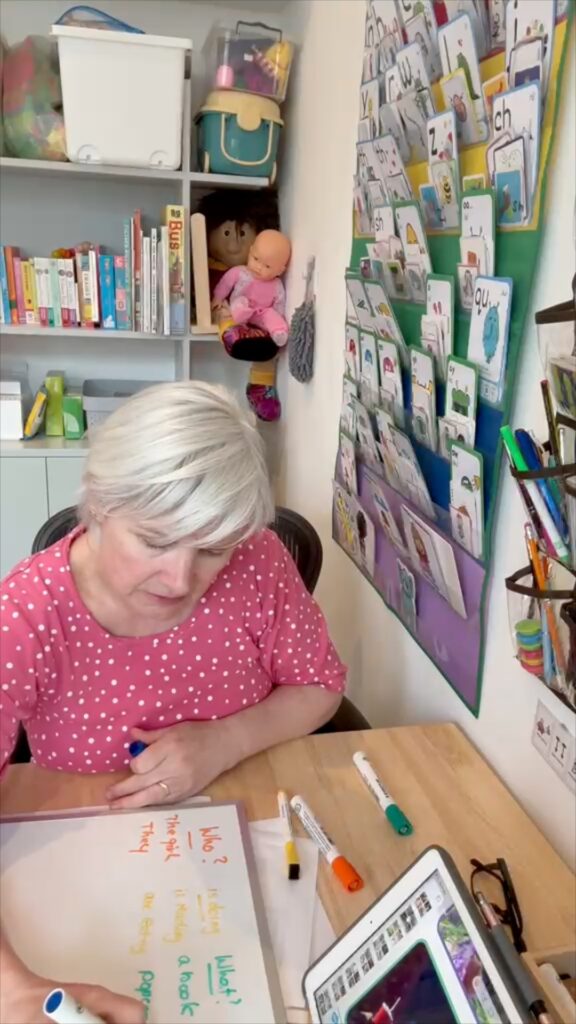
    Can playtime still be a blast? Absolutely! In fact, incorporating AAC into play can be a powerful way to boost communication skills, build confidence, and create a truly inclusive play experience. Here’s how to make it happen, with a focus on core words and core scripts for our GLP’s (the building blocks of communication used by everyone). In this video I am using the core word ‘IN’ and ‘MORE’.

    The Magic of Core Words

    Core words are the most frequently used words in everyday communication. They might be verbs like ‘want’, ‘more’, ‘go’, or ‘stop’, or adjectives like ‘happy’, ‘sad’, and ‘hot’. These words are the foundation for building sentences and expressing needs and desires. They’re perfect for children using AAC because they’re simple to understand and use.

    Let’s Play! Here’s How

    1. Choose Your AAC System

    Many options exist! It could be a low-tech picture board with core words, such as the one you see pasted on my cabinet door in the background, or it can be a dedicated AAC app on your tablet. Here I am using the GRID app but I also love using others, such as LAMP Words for Life.

    2. Make it Fun and Functional

    No pressure! Integrate your AAC system seamlessly into your play routine. Here are some ideas:

    • Car/trains: Use core words to describe what the cars are doing: (‘down’, ‘go’, ‘stop’, ‘again’ ‘fast’ ‘slow’).
    • Dress-up: Use core words to choose clothes (‘want’, ‘hat’, ‘shoes’).
    • Tea Party: Use core words to ask for and share (‘more’, ‘juice’, ‘give’).
    • Building Blocks: Use core words to describe what you’re building (‘tall’, ‘big’, ‘house’).
    • Dolls/Stuffed Animals: Use core words to act out scenarios (‘sleep’, ‘eat’, ‘cry’).
    • Arts and Crafts: Use core words to describe colours (‘red’, ‘blue’), actions (‘draw’, ‘paint’), and feelings (‘happy’, ‘sad’).

    If your child is a Gestalt Language Processor you will want to model meaningful, fun scripts instead of single words! As above, but use phrases:

    • Car/trains: Use scripts to describe what the cars are doing: (‘it’s going down’, ‘let’s go’, ‘make it stop’, ‘want it again’, ‘that was fast’, ‘it’s so slow’).
    • Dress-up: Use scripts to choose clothes (‘I’m gonna wear this’ ‘that’s a lovely hat’, ‘let’s choose shoes’).
    • Tea Party: Use scripts to ask for and share (‘I want more’, ‘more juice’, ‘give me this’).
    • Building Blocks: Use scripts to describe what you’re building (‘a tall one’, ‘that’s so big’, ‘it’s a house’).
    • Dolls/Stuffed Animals: Use scripts to act out scenarios (‘it’s time to sleep’, ‘let’s eat’, ‘he’s crying’).
    • Arts and Crafts: Use scripts to describe colours (‘a red crayon’), actions (‘let’s draw’, ‘I’m gonna paint’), and feelings (‘I’m happy’, ‘that’s so sad’).

    3. Model, Model, Model

    This is key! As you play, constantly model using your child’s AAC system.

    • Point to the picture or word or script you’re using.
    • Speak clearly and slowly while pointing.
    • When using core words for either Analytical or Gestalt Language Processors, try using good phrases. For example, instead of just saying ‘juice’, say, ‘you want more juice?’

    4. Make it a Team Effort

    Get everyone involved! Encourage siblings, grandparents, and caregivers to use the AAC system with your child during playtime. The more consistent the approach, the faster your child will learn and feel confident using their voice.

    5. Celebrate Progress, Big and Small!

    Every step counts! Acknowledge and celebrate your child’s efforts, whether it’s reaching for their AAC system or successfully using a core word. This positive reinforcement will keep them motivated.

    Remember

    • Playtime should be fun, not stressful. Don’t force your child to use their AAC system. Let them lead the way and follow their interests.
    • Every child develops at their own pace. Celebrate your child’s unique communication journey.
    • Seek professional help when needed. Your SLT can provide tailored strategies and resources to support your child’s development.

    By incorporating AAC and core words into playtime, you’re not just fostering communication; you’re creating a space for your child to thrive, explore, and build strong connections.

    So, grab those toys, power up your AAC system, and get ready for a playtime adventure filled with fun, connection and, therefore, communication!

    Don’t hesitate to contact me!

    Sonja McGeachie

    Early Intervention Speech and Language Therapist

    Feeding and Dysphagia (Swallowing) Specialist The London Speech and Feeding Practice

    The London Speech and Feeding Practice


    Find a speech and language therapist for your child in London. Are you concerned about your child’s speech, feeding or communication skills and don’t know where to turn? Please contact me and we can discuss how I can help you or visit my services page.

    1
  • Six ways to prepare your child for the Christmas festivities

    It feels like the Christmas festivities start earlier and earlier every year. This makes it harder for your child with communication difficulties to process what is happening. Whilst you can’t do anything about the events that happen around your child, you can start to put into practice strategies which may support them and allow them to regulate their emotions.

    Speech Therpaist in London
    Six ways to prepare your child for the Christmas festivities

    Explore six ideas here:

    1. Print off or buy a blank calendar to use at home

    You can start to write in activities out of the usual routine and add a picture to allow your child to understand what it’s about. You can also use it as a countdown to Christmas Day to try to prevent ‘how long’ questions.

    2. Make use of visual timetables

    These are useful in everyday settings and activities but also when change occurs.

    3. Be aware of any non-uniform days

    Days like ‘Christmas Jumper Day’ can make your child feel uncomfortable and may affect their behaviour. By giving yourself time, you can have conversations with your child’s teacher to find a more suitable alternative. For example, they can wear a Christmas t-shirt that they find more comfortable.

    4. Think about what will benefit your child

    Do they like being surrounded by people or do they prefer a quiet space on a 1:1 basis? Christmas activities often involve lots of group work in school (e.g., rehearsing for carol concerts or plays). They might prefer to pre-record their part in the Christmas play or create pieces of art which can be used. At home, they may prefer one guest visiting at a time, rather than all at once.

    5. Explore how your child is feeling

    It’s important to find out how your young person is feeling and how these impact on the activities of that day. It might be that your child doesn’t like surprises and the intensity of opening gifts is too much for them. They may prefer gifts to be left unwrapped and given throughout the day, rather than all at once.

    6. Consider sensory needs

    Ensure your young person has everything they need to meet their sensory needs. This can be e.g. noise cancelling headphones, fidget toys, or comforting items. These will particularly be helpful with routines changing, often with little notice. If at home, you may wish to not put lights on the Christmas tree if visual stimuli become too much.

    Remember clear communication between home, school and other family members is vital during this time. By having clear communication and expectations, your young person will feel more secure. And you can have a Christmas that is right for you and your family.


    Find a speech and language therapist for your child in London. Are you concerned about your child’s speech, feeding or communication skills and don’t know where to turn? Please contact me and we can discuss how I can help you or visit my services page.

  • · · · ·

    Holiday disruptions & New Year routines: How to support your child’s feeding, communication and regulation over the festive season

    Holiday disruptions & New Year routines

    The festive season is a wonderful time for many families, but for children with feeding challenges, sensory differences, or autism traits, December can feel overwhelming. Changes in routine, busier environments, travel, new foods, disrupted sleep, and well-meaning relatives giving ‘advice’ can all affect a child’s feeding, communication and overall regulation.

    As a speech and language therapist specialising in Early Years, I see the same pattern each year: children often make progress during the term, only to struggle in late December when everything becomes unpredictable. The good news? With a bit of preparation, children can not only cope better, but they can actually make significant developmental gains during the holidays.

    This blog will help you feel confident, supported and prepared for the transition from ‘festive mode’ to a smoother, regulated start in January.

    1. Why routines matter so much. Especially now

    Young children thrive on predictability. For neurodivergent children or those with sensory, feeding or communication needs, routine isn’t just helpful: it’s the backbone of emotional regulation.

    In December, typical patterns change:

    • Mealtimes shift or become irregular
    • Bedtime slides
    • New foods appear
    • Loud social gatherings overwhelm
    • Travel disrupts naps and comfort routines
    • Therapies pause
    • Childcare closes

    Any one of these can lead to feeding refusals, more meltdowns, increased stimming, reduced communication attempts or regression in speech sounds.

    It’s simply the nervous system responding to too much change.

    2. Protecting feeding progress during holiday mealtimes

    My last blog and insta post have a nice social story on festive meals. They are often the trickiest part of the season for families I support. Children with sensory-based feeding challenges, or ARFID traits may find holiday foods completely unfamiliar and challenging.

    What helps:

    • Offer one ‘safe food’ at every meal
    • Keep portion sizes tiny
    • Use the ‘buffet rule’
    • Rehearse tricky moments

    3. Supporting communication when routines are disrupted

    Holiday time actually offers more opportunities for communication, just in different ways.

    Strategies:

    • Slow down and follow your child’s lead
    • Use everyday routines as language opportunities
    • Keep AAC going even if casually

    4. Understanding holiday ‘regressions’ and know they’re temporary

    This is almost always due to nervous system overload. Children don’t truly ‘lose’ skills; they temporarily prioritise regulation over learning.

    5. A gentle January reset: How to start the New Year smoothly

    • Re-establish predictability early
    • Return to preferred foods
    • Book early support if needed
    • Focus on regulation first

    Sonja McGeachie

    Highly Specialist Speech and Language Therapist

    Owner of The London Speech and Feeding Practice.


    Health Professions Council registered
    Royal College of Speech & Language Therapists Member
    Member of ASLTIP

    Find a speech and language therapist for your child in London. Are you concerned about your child’s speech, feeding or communication skills and don’t know where to turn? Please contact me and we can discuss how I can help you or visit my services page.

    Reference:

    Bronson, M. (2000). Self-regulation in early childhood. Guilford Press.

    2
  • Tele-Speechtherapy: Online, connected, and highly effective

    A different kind of therapy. Online, connected, and highly effective

    When parents first enquire about speech and language therapy, many assume it will happen face-to-face, in a clinic room, with a therapist sitting across from their child.

    So when therapy is offered online, it’s natural for questions to arise:

    Can this really work? Will my child engage? Will progress be slower?

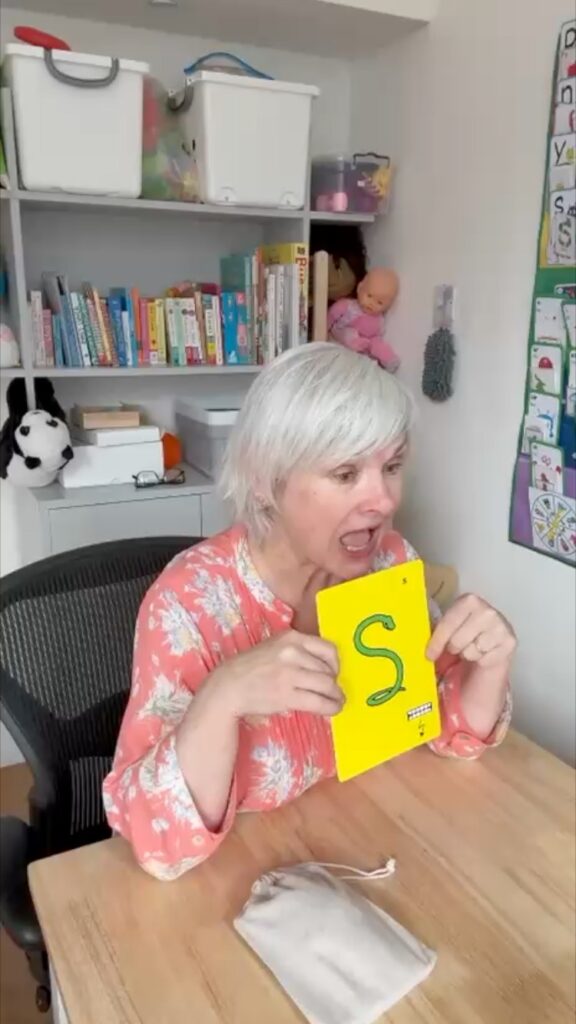
    This short video offers a glimpse into what online therapy can look like: calm, interactive, relationship-based, and surprisingly effective.

    Online therapy is not ‘less than’ in the right circumstances

    Teletherapy is not suitable for every child in every situation. However, for many school-aged children, particularly those who enjoy conversation, technology, and shared activities, online therapy can be an excellent fit.

    The child you see in this video is around eight years old and was supported for a persistent lisp. Sessions were primarily online, with the occasional in-person appointment when helpful.

    What made the difference was not the screen. It was the combination of engagement, support, and consistency.

    Parent involvement changes everything

    One of the greatest strengths of online therapy is the way it naturally invites parents in.

    In this case, parents regularly joined the video sessions:

    • Listening in
    • Taking part when appropriate
    • Learning how to support practice gently between sessions

    This meant that therapy didn’t stay ‘on the screen’. Strategies carried over into everyday conversation, making progress faster and more meaningful.

    Speech sound therapy, including support for lisps, relies heavily on awareness, feedback, and confidence, all of which can be supported very effectively at home with the right guidance.

    Therapy through a screen can still be deeply relational

    A common concern is whether connection can truly be built online.

    In reality, many children feel more relaxed in their own home environment. They are often more willing to talk, experiment with sounds, and reflect on their speech when they feel comfortable and supported.

    Online sessions allow:

    • Shared focus and conversation
    • Clear visual feedback
    • Real-life practice in a familiar setting
    • Immediate parent support

    For some children, this actually enhances engagement rather than limits it.

    Real progress, real outcomes

    Over the course of approximately 12 online sessions, alongside a small number of in-person appointments, this child achieved resolution of their lisp.

    Progress was steady, positive, and confidence-building. Importantly, the child remained motivated and proud of their achievements throughout the process.

    While every child’s journey is different, this example highlights what is possible when:

    • The child is ready
    • Parents are involved
    • Therapy is tailored and collaborative

    If you’re considering online therapy

    If you’re unsure whether teletherapy could work for your child, it’s worth remembering that effective speech and language therapy is less about the room you’re in, and more about:

    • Relationship
    • Understanding
    • Consistency
    • Carryover into daily life

    For many families, online therapy offers flexibility, accessibility, and excellent outcomes especially when parents are active partners in the process.

    If you’re at the start of your child’s speech journey and wondering whether online therapy could be the right fit, I’m always happy to talk it through. Sometimes clarity begins with simply understanding what therapy can look like

    Teletherapy: Frequently Asked Questions

    Is online speech and language therapy really effective?

    Yes. For many children, particularly school-aged children, online therapy can be highly effective. Progress depends far more on engagement, consistency, and support than on physical location.

    What age does online therapy work best for?

    Teletherapy often works well for children from around six years and up, especially those who can attend to a screen, enjoy conversation, and follow simple instructions. That said, suitability is always considered individually and often a supportive adult is needed to help guide the child through the activities.

    Can speech sound work (such as a lisp) really be done online?

    Absolutely. Speech sound therapy relies on clear visual feedback, listening skills, and practice all of which can be supported very effectively online. Many children respond particularly well when practising in their own home environment.

    Do parents need to be involved in sessions?

    Parental involvement is strongly encouraged. Parents may sit in, join parts of the session, or support practice between appointments. This involvement often leads to quicker progress and better carryover into everyday speech.

    Will my child still build a relationship with the therapist?

    Yes. Strong therapeutic relationships can and do develop online. Many children feel more relaxed and confident communicating from home, which can actually enhance connection and learning.

    Is online therapy suitable for every child?

    Not in my experience. Some children benefit more from in-person support, or a combination of online and face-to-face sessions. A discussion and initial assessment help determine the best approach for each child.

    Sonja McGeachie

    Highly Specialist Speech and Language Therapist

    Owner of The London Speech and Feeding Practice.


    Health Professions Council registered
    Royal College of Speech & Language Therapists Member
    Member of ASLTIP

    Find a speech and language therapist for your child in London. Are you concerned about your child’s speech, feeding or communication skills and don’t know where to turn? Please contact me and we can discuss how I can help you or visit my services page.

    3