How can I incorporate AAC into my speech therapy sessions?

|

Many parents are surprised when I bring AAC into a session, especially if they’ve come to see me primarily for speech sound work.

They might wonder: ‘If we’re working on pronunciation, why are we using a communication device?’

The simple answer is this: speech therapy is about communication first, and speech sounds second. Supporting a child’s ability to express themselves clearly and confidently is always the priority, and AAC can be a powerful tool alongside spoken speech.

What do we mean by AAC?

AAC stands for Augmentative and Alternative Communication.

This can include:

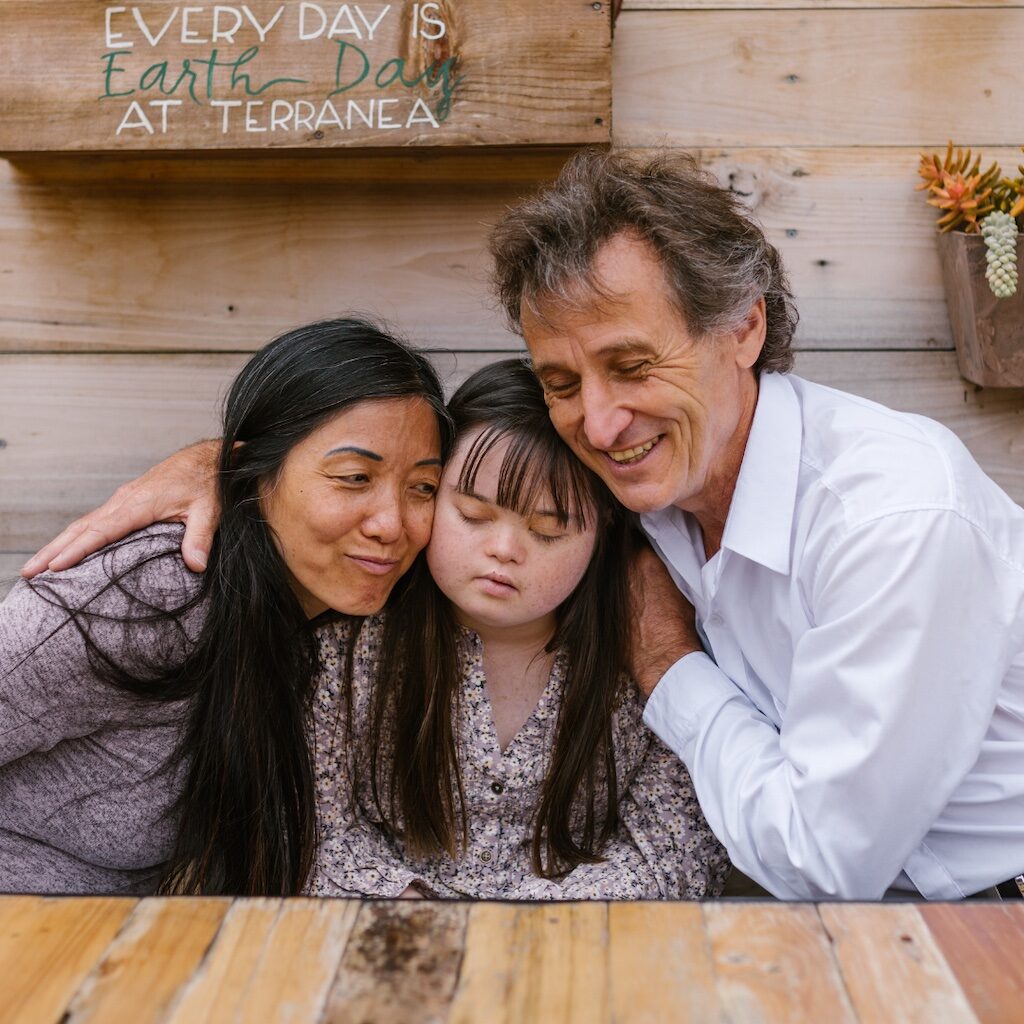
  • A speech-generating device (such as LAMP Words for Life or GRID as I used in the photo below)
  • A communication app on a tablet
  • A symbol board or communication book
  • Gestures, signs, or visual supports

AAC does not replace speech. Instead, it supports language development, reduces frustration, and builds communication success while speech skills are developing.

Pretend Play using Speech and AAC in my clinic room

But I mainly work on speech sounds… So how does AAC fit?

Most of the children I see are working on:

  • Articulation difficulties
  • Phonological delay
  • Motor planning challenges (including apraxia/dyspraxia)
  • Unclear speech affecting confidence

For these children, AAC isn’t a separate therapy. It’s simply woven naturally into what we are already doing.

If a child brings their device to sessions, I actively include it. If they don’t yet use AAC but could benefit from visual or symbolic support, I may introduce simple options within activities.

Using AAC to support speech practice

Let’s say we are working on early speech targets like: ‘GO’.

We might practise:

  • Saying the word verbally
  • Listening for the target sound
  • Using play (TOY TRAIN GOING ROUND A TRACK)

Now we can extend this using AAC.

On the device or communication board, we might model: ‘LET’S GO’ or ‘IT’s GOING up the hill’.

This allows the child to:

  • Practise their speech sound target
  • Build a simple sentence
  • Experience successful communication even if speech is not fully clear yet

All responses are valid and supported.

AAC helps children communicate more than they can say

Many children can understand and think in longer phrases than they can physically say.

For example:

  • A child who verbally says single words may build longer phrases on AAC.
  • A child who struggles to plan speech movements may use AAC to communicate smoothly while still practising verbal attempts.
  • A child who becomes frustrated when misunderstood gains a reliable backup system.

Rather than slowing speech progress, AAC often:

  • Reduces communication pressure
  • Increases participation in therapy
  • Encourages more attempts at speech
  • Supports language growth

When children feel understood, they usually become more motivated to try speaking.

There are no ‘prerequisites’ for AAC

One of the biggest myths I hear is: ‘My child isn’t ready for AAC yet.’

In reality, children do not need to:

  • Reach a certain speech level
  • Use pictures first
  • Prove they understand everything
  • Show immediate interest

Instead, we presume competence and introduce AAC in meaningful, playful ways.

That means:

  • Modelling words while blowing bubbles
  • Commenting during playdough activities
  • Choosing words during games
  • Building simple phrases in shared reading

AAC should never feel like extra ‘work’. It’s simply another way to join in communication.

My goal is always the same: to help each child communicate as clearly, confidently, and successfully as possible, using every helpful tool available.

If your child uses AAC (or might benefit from it)

 Please feel free to:

  • Bring the device to sessions
  • Show me how your child currently uses it
  • Share advice from school or other therapists

I am very happy to incorporate AAC into our work together so that speech practice, language development, and real communication all move forward hand-in-hand. Because ultimately, therapy isn’t just about producing perfect sounds. It’s about helping your child be heard and understood.

If you’d like support or advice, please contact me and I can help guide the next steps.

Sonja McGeachie

Highly Specialist Speech and Language Therapist

Owner of The London Speech and Feeding Practice.


    Health Professions Council registered
    Royal College of Speech & Language Therapists Member
    Member of ASLTIP

    Find a speech and language therapist for your child in London. Are you concerned about your child’s speech, feeding or communication skills and don’t know where to turn? Please contact me and we can discuss how I can help you or visit my services page.

    3

    Similar Posts

    • ·

      Discover how Attention Autism can support your Autistic child’s communication

      “I’ve got something in my bag, in my bag, in my bag,

      I’ve got something in my bag,

      what it is”

      You might be wondering why your Speech and Language Therapist is singing this song and then presenting items from a zipped-up bag. Let me take you through stage one of this evidence-based approach.

      There are many aims of ‘bucket or bag time’. During stage one, you are simply engaging your child’s attention (whilst also exposing them to language). It’s important to remember that you are not forcing your child to say or do anything. The idea is that the items in the bag or bucket ‘offers an irresistible invitation to learn’ (Gina Davies, 2020).

      You don’t need ‘special’ expensive toys. Use what you have at home. It might be that you have some bubbles, a wind-up toy. You might have some foil that you can roll up into a ball, or a balloon. Keep these items for ‘bucket time’. This means that your child is likely to be excited and motivated for the activity. The only stipulation is that these items must be highly motivating and must be the most exciting thing in the room. You’ll want to cover up any distractions.

      So, you have your items and your opaque zipped bag, next you’ll want to put the items into the bag ensuring the zip is closed. The zip is important as it increases suspense and excitement as your child cannot see inside. You can also comment when unzipping ‘open bag’ using the signs ‘open’ + ‘bag’ to support your child’s understanding. Your Speech and Language Therapist can help with any Makaton signs that are unknown. The idea of this activity is that the item isn’t touched by your child. This can seem a little odd or feel “mean” but there is a reason for this: we want our child to look at us as well as the object or toy. As soon as we allow our child to touch and play with that toy their attention will go to the toy alone and we won’t get JOINT attention or engagement. This is the reason why we SHOW interesting things for a brief moment and then put these items back into the bag or bucket and out comes the next item. If your child wants to grab the toy and gets upset, then they may not be quite ready for this approach.

      Next, we sing the song (as above) and unzip the bag taking out one of the items. The use of pausing is important. Pause after the song: does your child try to use gesture or sound? You can also use this opportunity to model short phrases, ideally one or two words such “it’s a spinner! Wow… so many colours”. After a couple of turns, repeat the process and pull out a different item. We tend not to sing the song each time for the next item. Just sing it at the beginning and then get on with producing the amazing, wonderful things in your bag. No hard and fast rules though, apart from “don’t let the child touch the toys”.

      The biggest factor here is that you and your child enjoy the activity together. Have lots of fun!!

      Keep up to date with our latest blogs to explore more stages of Attention Autism.

      If you need speech, language or communication support or advice, I am always here to help.


      Find a speech and language therapist for your child in London. Are you concerned about your child’s speech, feeding or communication skills and don’t know where to turn? Please contact me and we can discuss how I can help you or visit my services page.

      0
    • ·

      The importance of child-led therapy

      Child-led therapy is essentially what it says, therapy sessions that are directed by your child. You may think how can my child’s Speech and Language Therapist focus on goals if sessions are led by my child.

      Let us explain…

      Your child will be more receptive and motivated to take part in therapy if they have some form of input. E.g., they can choose what toys they want to play with, or how they want to play with the resources available. If sessions are child-centred then they are much more likely to engage and reach their goals, making intervention valuable. They will also be able to regulate their emotions, and use movement to support their need for regulation. E.g., some children like to jump whilst others like to run. As Speech and Language Therapists we need to use what is meaningful to your child to get the most out of intervention. By focusing on child-led therapy, we can build trust, which will allow us, in time, to use new techniques and activities that your child may enjoy. We want children to be themselves, to show their true personality. Therapy is about enhancing their skills in their own individualised way and child-led therapy allows for this.

      This way of working may seem daunting to some, but it doesn’t have to feel this way. Parents often feel if they are prepared then activities may go smoother. It might be the case, but perhaps it doesn’t give your child the opportunity for spontaneity. We’d like to suggest something that may lead to some surprises. Put out an activity that is your child’s favourite and then a completely new activity. Remember these activities don’t have to be complicated. Often, the simpler the better!

      So, no need to plan, just place two activities out and see what happens! Look out for anything which surprises you, which activity did they prefer? Do they have any sensory preferences? The freedom of choice is a wonderful thing to explore. So, just go with the flow!

      The kind of activities that are useful for child-led play can include:

      • Hide and seek
      • Cooking or baking
      • An Exercise ball
      • Small world play
      • Pretend play
      • Musical instruments (you could even have a go at making your own)

      Child-led therapy is a very useful resource. We have it at our fingertips. We don’t need special resources. You just need yourselves and your child! Sometimes, child-led therapy can be tricky to put in place. It sounds easy but is much harder in reality. So, make sure you give it time and reflect on your experiences. Ask yourselves ‘what went well’, and ‘what could be improved’. E.g., perhaps you gave your child time to lead to begin with, but you didn’t give them enough time to think about their options during the activity.

      How can parents become more child-led in the home environment?

      • Pause and use silence. This gives your child the opportunity to lead.
      • It’s perfectly natural to want to talk. Afterall, this is how adults maintain conversations. If you find yourself talking too much, count to ten! This will allow your child time to respond or initiate in the conversation or interaction.
      • Move down to your child’s level. It’s much easier to see what’s going on if you’re at the same height.
      • Videoing you and your child can really help you to see where your strengths lie. You’ll also be able to make minor tweaks to improve your communication during child-led play.

      Contact Sonja for more advice on speech, language and communication during child-led play.


      Find a speech and language therapist for your child in London. Are you concerned about your child’s speech, feeding or communication skills and don’t know where to turn? Please contact me and we can discuss how I can help you or visit my services page.

      0
    • ·

      How to model AAC with our minimally speaking students?

      modelling AAC

      How should we start? Should we use prompts? What kind of prompts? hand-over-hand or just pointing? Should we wait, and, if so, how long? Introducing an alternative communication system (AAC) to our child is for many of us a confusing and sometimes scary prospect, but it needn’t be! Let me reassure you and share some tricks of my practice in this area.

      Once we have decided to try for a picture based communication system, I usually start with a paper-based single page with between 48–88 core-words. I choose the number of words depending on where the child is developmentally and also verbally.

      If a child does have a small handful of words already, I might start with the 88-cell board below. If, on the other hand, my student is completely non-speaking and still quite little then I might go for the 48-cell below here or I might have even less cells to start with. Again, sometimes I start with an electronic device in my clinic just to trial and introduce the idea and to see if, or how, a student responds. 

      Below are some samples: a 49-cell board which I made for a child in a nursery setting

      Below a Saltillo WordPower board that can be downloaded from the Saltillo website:

      Example of a slightly more advanced board, again from the Saltillo Website

      And here below one example of a board I made for a specific activity for a child who loves water and sand play:

      It is perfectly possible to be very flexible and create a suitable board for any student, starting with as few as 2–5 cells and working up to over a 100 (very small ones) on a sheet of A4 or A3 paper.

      So once we have a good board for our child, what now? How do we start introducing this into our daily life?

      We can start by showing/pointing to the word GO within a play activity. For example:

      • a car run,
      • or a marble run,
      • or a spinner activity,
      • a wind-up toy,
      • anything that can be stopped and started easily.

      How to start?

      I will talk us through each of the steps using the example for the word ‘GO’.

      First phase

      The first phase is a TEACHING/ LEARNING PHASE. In this phase we do not expect our student to do anything, to copy us or to point to the board. If they do that it is of course a huge bonus and we will celebrate it.

      Our job is to simply MODEL/SHOW/GIVE EXAMPLES of how we can use the board, by steadily and regularly pointing to the chosen word or words. We do so across the day and across settings:

      • play
      • meal time
      • getting dressed/undressed
      • bath time
      • going to the car/shops
      • etc

      Once we can be sure that our student has been submerged and SOAKED in seeing the coreboard being used, say after some 3–4 weeks of using it consistently…

      Second phase

      We can begin to move into the second phase which is the PRACTICE PHASE. By now the student has seen the boards and he or she has seen the word GO (as a example) modelled many times.

      Now we can start to see if we can tempt our student into trying this out for themselves.

      What sort of TEMPTING are we talking about? Take a look at the Prompt Hierarchy below, which shows us what to do to get our student to be independently communicating as soon as possible. 

      The PROMPT HIERARCHY: what sort of prompting should we do, should we expect something from our student or how should we view this stage?

      1.  TEMPT AND PAUSE

      I have the AAC near to the toy and each time the child starts another round of the activity I say clearly ‘GO’ and I point to the picture as do so. I then pause and wait to see what happens. NOTHING? Then…

      1. USE SIGNS AND BODY LANGUAGE

      Next time the child starts another round I might be very animated and do a Makaton sign for GO as I say ‘GO’ and I make a very over point to the picture again. Then I wait. STILL NOTHING? OK then…

      1. OPEN-ENDED QUESTION

      Now I might say ‘GO’ and follow with: ‘OOH I WONDER IF THERE IS A PICTURE TO POINT TO…’

      ‘OH LOOK HERE IS GO!’ I then point to GO.

       STILL NO RESPONSE?

      1. ASK FOR A RESPONSE

      I might say ‘GO’ followed by ‘LOOK! LET’S POINT TO GO HERE ON THE PICTURE.’

      STILL NO RESPONSE? 

      1.  PHYSICAL TOUCH

      Next time I say ‘GO’ I will try and take the student’s hand, help isolate their finger and help him or her to point to the actual picture.

      REMEMBER: Prompting serves a very important function in scaffolding learning for students BUT if we are constantly prompting kids, then we are teaching them to only communicate when someone tells them to. We want our student to become as independent in speaking and using words as possible.

      So once I have done Physical Prompting I will try and phase back down to number 1 where all I need to do is point to the picture or look at the board with the aim that the student will then point to the picture.

      Take away points:

      • Keep the learning phase pressure-free and model without expecting our student to jump in. In other words, let’s model first without expectation. Later we can have a little bit of expectation.
      • After they’ve been exposed to and have been ‘soaked’ in plenty of AAC input, then, YES, we can create an opportunity to help them say or point to the word on their own.
      • We can model BOTH with and without expectation.
      • Only after LOTS of exposure, use the least to most prompting hierarchy and start creating opportunities for a student to become an independent communicator.

      Do get in touch if you have any questions or comments or if you would like some practical help.

      I am always pleased to hear from you.


      Find a speech and language therapist for your child in London. Are you concerned about your child’s speech, feeding or communication skills and don’t know where to turn? Please contact me and we can discuss how I can help you or visit my services page.

      0
    • · ·

      Why auditory memory matters (especially for little ones!)

      Why auditory memory matters (especially for little ones!)

      Have you ever stopped to think about how we learn to speak, understand, and communicate effectively? It’s a complex dance of various cognitive skills, and one often overlooked but absolutely crucial player in this orchestra is auditory memory. It’s not just about remembering sounds. It’s about remembering sequences of sounds, which is fundamental to language development.

      What exactly is auditory memory?

      At its core, auditory memory is our ability to take in, process, store, and recall information that we hear. Think of it as your brain’s internal recording studio. When someone speaks to you, your auditory memory is busy at work, capturing the individual sounds, the order in which they appear, and the rhythm and intonation of the words. This isn’t just for long-term recall; it’s also vital for working auditory memory, which allows us to hold onto a small amount of auditory information for a short period, just long enough to make sense of it.

      For speech and language, auditory memory is essential for:

      • Understanding spoken language: To comprehend a sentence, we need to remember the beginning of the sentence by the time we hear the end.
      • Following instructions: Remembering a sequence of commands relies heavily on auditory memory.
      • Learning new words: We hear a word, remember its sound, and connect it to its meaning.
      • Developing phonological awareness: This is the ability to recognise and manipulate the sounds in spoken language, a critical precursor to reading. Auditory memory helps children distinguish between similar-sounding words (e.g., ‘cat’ vs. ‘bat’) and segment words into individual sounds.
      • Producing clear speech: To articulate words correctly, we need to recall the precise sequence of sounds that make up that word.
      • Developing conversational skills: Remembering what was just said helps us formulate appropriate responses.

      When auditory memory falls short: The impact on speech

      When auditory memory is poor, particularly in young children, the ripple effects on speech and language development can be significant. Children might struggle with:

      • Following multi-step directions: ‘Put on your shoes, get your coat, and meet me at the door’ can become an overwhelming jumble of sounds.
      • Learning new vocabulary: They might hear a new word repeatedly but struggle to retain its sound pattern, making it difficult to recognise or use later.
      • Understanding stories or conversations: Missing key details or losing the thread of a narrative because they can’t hold enough information in their working memory.
      • Developing phonological skills: Difficulty with rhyming, identifying initial sounds in words, or blending sounds together to form words, which can impact early literacy.
      • Speech production: They might mispronounce words, omit sounds, or struggle with the correct sequencing of sounds within words.
      • Social communication: Difficulty participating in group discussions, remembering names, or recalling what their peers have said.
      • Academic performance: Auditory memory challenges can impact a child’s ability to learn in a classroom setting, where much of the instruction is delivered verbally.

      It’s important to note that poor auditory memory isn’t a sign of low intelligence, but rather a specific processing challenge that can be addressed with targeted support.

      Nurturing auditory memory in under 5s: Preparing for schooling

      The good news is that auditory memory is a skill that can be strengthened and developed, especially during the crucial early years. For children under five, laying a strong foundation in auditory memory is an invaluable gift as they prepare for the demands of formal schooling. Here’s what we can do to help:

      1. Read aloud regularly: This is perhaps one of the most powerful tools. As you read, encourage your child to listen for specific words, predict what happens next, and retell parts of the story. Vary your voice, use different intonations, and pause to emphasise key words.
      2. Play auditory memory games:
        • ‘Simon says’: This classic game is fantastic for following multi-step instructions. Start with one command and gradually increase the number.
        • ‘I Spy’ with sounds: Instead of colours, describe sounds. ‘I spy with my little ear something that goes “moo”.’
        • Rhyming games: Sing rhyming songs, read rhyming books, and encourage your child to come up with words that rhyme.
        • Sound matching: Use everyday objects to make sounds (e.g., shaking keys, tapping a spoon) and have your child identify or match them.
        • ‘Memory chain’: Start a sentence and have your child add to it, remembering everything that came before: ‘I went to the market and bought an apple.’ ‘I went to the market and bought an apple and a banana.’
      3. Sing songs and nursery rhymes: Repetitive songs and nursery rhymes are excellent for developing auditory memory, rhythm, and phonological awareness. The predictable patterns help children anticipate and remember sequences of sounds and words.
      4. Give multi-step instructions (and praise!): Start with two-step instructions and gradually increase the complexity as your child’s skills improve. Always give positive reinforcement when they succeed. ‘Please pick up the red block and put it in the box.’
      5. Engage in active listening: Model good listening skills yourself. When your child is speaking, give them your full attention. Ask clarifying questions to encourage them to elaborate and organise their thoughts.
      6. Reduce background noise: A quiet environment makes it easier for young children to focus on auditory information. Minimise distractions like TV or loud music during activities that require listening.
      7. Use visual cues: While we’re focusing on auditory memory, sometimes pairing auditory information with visual cues can be helpful, especially initially. For example, when giving instructions, demonstrate the action as you say it.
      8. Be patient and consistent: Developing auditory memory takes time and consistent practice. Celebrate small victories and create a playful, supportive environment for learning.

      By actively engaging in these strategies, we can empower our youngest learners to build robust auditory memory skills, setting them up for success not only in speech and language development but also in their overall academic journey. It’s an investment that truly pays dividends in their future communication and learning abilities.

      Any comments or if you need help and support with your child’s speech please do not hesitate to get in touch with me: simply fill out the contact form here on the website. I endeavour to reply within 48 hours.

      Sonja McGeachie

      Highly Specialist Speech and Language Therapist

      Owner of The London Speech and Feeding Practice.

      Health Professions Council registered
      Royal College of Speech & Language Therapists Member
      Member of ASLTIP

      Find a speech and language therapist for your child in London. Are you concerned about your child’s speech, feeding or communication skills and don’t know where to turn? Please contact me and we can discuss how I can help you or visit my services page.

      1
    • · ·

      Stage 2 NLA

      Image by Freepik

      Last time we asked: is our child ready tp move to Stage 2 NLA (Natural Language Acquisition stage 2) and we looked at how we can know. Now we know: he/she is ready, they are mixing and matching those scripts quite liberally! Hurrah!

      So for example we hear phrases like:

      • ‘let’s go’+ ‘downstairs’
      • ‘it’s’ + ‘downstairs’
      • ‘I see it’ + ‘downstairs‘
      • ‘I want to’ + ‘shoes downstairs’ (I want to put my shoes on downstairs)

      To recap, it’s important to listen out to a variety of contexts because if we only hear the single version of a gestalt —this is so great, hurrah!— but that’s not yet Stage 2.

      What we can now do on a daily basis to help and support at this time:

      1. We need to offer more ‘mix and match’ phrases to help our child establish this new way of communicating.

      Good phrases:

      • It’s … raining / cooking / eating / washing / brushing
      • That’s … great / cool / amazing / wow / so good
      • Let’s … see / look / go / run / chase
      • How’bout … some food / playing / I’ll chase / sleeping / we read a book
      • I see a … bird / large car / fire engine
      • I wanna … have a biscuit / have a book / have a snuggle
      • We’re … going out / going home / going in the car / going upstairs

      Here in my video clip of train play I use:

      • Let’s go
      • It’s going up the hill
      • It’s coming down
      • Ooops it falls!
      • It’s stopping
      • Let’s put on another parcel
      • Ready steady go
      • Off we go
      • It’s come off!
      • Let’s fix it
      • I can do it
      • I don’t need help

      You can offer these gestalts either with an AAC as you can see me do in the video clip or you can just verbally offer these.

      2. Watch out for Pronoun confusion or reversal:

      Gestalt kids repeat gestalts, so we don’t want to create ‘pronoun reversal’.

      Instead model from a:

      • first person perspective: ‘I’ / ‘Our’ / ‘Us’
      • joint perspective: ‘We’ / ‘Let’s’ or a
      • neutral perspective: ‘It’

      You can turn almost any sentence into a good language model once you get used to it. And you can avoid ‘you’ and ‘your’ at the same time!

      So instead of saying, ‘Do you want to go to the park?’

      You could say:

      • We wanna go to the park?
      • Let’s go out?
      • Shall we go out / to the park?

      3. Start providing ‘variation’ in your language modelling:

      Instead of just modelling something one way, start thinking about offering a pattern in a couple of other ways, in a couple of different situations, then several ways in several different situations.

      Example: once you hear your child saying: ‘it’s raining’ and you know it’s a mitigation, because you don’t often say ‘it’s raining’, or haven’t said it in a while and you know your child says other ‘it’s’ phrases.

      Repeat: ‘it’s raining!’

      Then: ‘it’s’ + ‘raining hard’ / ‘it’s wet out there’ / ‘It’s’ + ‘raining lot’s’.

      Then later think of other combinations for ‘it’s’ + ‘something’:

      • (rice) ‘It’s’ + ‘cooking’
      • (water/tap) ‘It’s’ + ‘running’
      • (radio) ‘It’s’ + ‘singing
      • (dog) ‘It’s’ + ‘peeing’ / ‘it’s’ + ‘running’ / ‘it’s’ + ‘jumping’

      In my train video clip:

      • Let’s go
      • It’s going
      • Let’s make it go
      • Ready steady go
      • Oops its gone

      4. Use natural intonation that shows you really mean what you’re saying.

      You can be animated or try for musical if your child prefers that / doesn’t mind you singing —they might not like it if their hearing is pitch perfect and your singing is off key…—

      • ‘I’m’ + ‘trying to find you!’ (animated, goofy face)
      • ‘I’m’ +’ getting tired!’ (exaggerated stretch and yawn)
      • ‘I’m’ + ‘catching up with you!’ (animated goofy)
      • ‘I’m’ + ‘gonna get you!’ (animated goofy)
      • ‘I’m’ + ‘sad right now’ (exaggerated face and tone of voice)

      5. USE SILENCE!

      Important, I might not have said this before but we need to hold back sometimes (hard I know) and not constantly offer models. Let our child sit in a bit of silence with us there just observing and waiting for their own offers. This is a very important point. Silence is golden sometimes. Try it out. I am not talking about the silence that comes with a person scrolling on their phone though, we do need to be present and receptive.

      You will see this works wonders!

      Do get in touch if you would like some in-person or on-line 1:1 support with this. It can be overwhelming to figure it all out alone.

      You can also check my friend’s lovely handmade jewelry on her website.


      Find a speech and language therapist for your child in London. Are you concerned about your child’s speech, feeding or communication skills and don’t know where to turn? Please contact me and we can discuss how I can help you or visit my services page.

      1
    • ·

      Cued Articulation – using hand gestures to show how a sound is made

      Watch how cued articulation can transform your child’s speech and language skills!

      Cued Articulation involves using specific handshapes and placement cues to guide the speaker’s articulators, such as the tongue, lips, and teeth, to produce accurate sounds. It was originally conceptualised by Jane Passy, a speech-language pathologist. But it is important to know that we can, and often do, also use other speech cues which help our student visualise what they need to do. In other words, we can mix and match our cue pictures depending on what works best with each student.

      In the beginning of my speech therapy practice I would stick religiously to Jane Passy’s method but over the years I have learned and used many different visual hand cues which all have worked with individual students.

      It is important to remember that this is not an exact science, rather than an art! The art is to find the key to each individual student’s understanding and inspire motivation to try out a sound which they find hard to do.

      As an example, the hand signs used by Caroline Bowen’s method, an Australian Speech-Language Pathologist, are quite different to Jane Passy’s signs but they can equally work very well. Caroline Bowen’s visual for the /r/ sound is the ‘rowdy rooster’ — a crazed rooster on a motorbike — and the hand signal is that of revving up the motor bike engine with both hands whilst trying out the /r/ sound! I have a good handful of students who really loved this rooster image and were able to eventually produce a good /r/ using this cue.

      So, it is horses for courses with many things, and visual images and hand cues are no exception!

      Sound picture cards:

      Again, there are a host to choose from and I tend to collect a number of different images for each sound I want to practise with my student. As an example, below are a couple of different examples I use for the sound /p/:

      The Nuffield Programme suggests to use this popper card, which works well with a student who knows these poppers and perhaps has one on their trousers.

      As an alternative, and especially for younger students, I like using the Popper Pig Card – which I also have in my room so I can quickly show how it pops. Or we can have a popping game in between saying the /p/ sound at times. (The popper card is great as I can use the real toy to help with conveying the /p/ sound as it pops.)

      Each card has its own merit and I choose the right card for the individual student.

      How I use cued articulation and the visuals in Speech Therapy

      1. Cueing and practice: I introduce the appropriate card and handshapes for the targeted sounds. We then practise producing the sounds.
      2. Reinforcement and feedback: Positive reinforcement encourages progress and builds confidence.
      3. Fading out the cues: Once my student is able to say the sound more easily, we can gradually fade out the speech cues.

      Benefits and effectiveness

      Using Cued Articulation and Speech Image Cards has been shown to be effective in improving speech production for individuals with various speech and language disorders, including:

      • Articulation disorders: Difficulty producing specific sounds accurately.
      • Apraxia of speech: A motor planning disorder that affects the ability to sequence and coordinate movements involved in speech.
      • Phonology disorders or delays: Confusion and delays in how sounds are organised in categories to convey meaning, errors in sound patterns, for example front sounds are produced at the back, or long sounds are produced as stops.
      • Stuttering: A fluency disorder characterised by interruptions in speech, such as repetitions and prolongations.

      Tips for parents and student speech therapists

      Parents can play a crucial role in supporting the implementation of cued articulation at home and in therapy sessions. Here are some tips:

      • Collaborate with your SLT: Good feedback and communication with the Speech and Language Therapist creates consistency and progress..
      • Practise Regularly: Encourage consistent practice of cued articulation at home to reinforce learning.
      • Use Visual Aids: Use the same visuals that your therapist uses in the speech clinic to help your child at home with recall and practice.

      Feel free to contact me if you need help with your child.

      Sonja McGeachie

      Early Intervention Speech and Language Therapist

      Feeding and Dysphagia (Swallowing) Specialist The London Speech and Feeding Practice

      The London Speech and Feeding Practice


      Find a speech and language therapist for your child in London. Are you concerned about your child’s speech, feeding or communication skills and don’t know where to turn? Please contact me and we can discuss how I can help you or visit my services page.

      1