Why auditory memory matters (especially for little ones!)

| |
Why auditory memory matters (especially for little ones!)

Have you ever stopped to think about how we learn to speak, understand, and communicate effectively? It’s a complex dance of various cognitive skills, and one often overlooked but absolutely crucial player in this orchestra is auditory memory. It’s not just about remembering sounds. It’s about remembering sequences of sounds, which is fundamental to language development.

What exactly is auditory memory?

At its core, auditory memory is our ability to take in, process, store, and recall information that we hear. Think of it as your brain’s internal recording studio. When someone speaks to you, your auditory memory is busy at work, capturing the individual sounds, the order in which they appear, and the rhythm and intonation of the words. This isn’t just for long-term recall; it’s also vital for working auditory memory, which allows us to hold onto a small amount of auditory information for a short period, just long enough to make sense of it.

For speech and language, auditory memory is essential for:

  • Understanding spoken language: To comprehend a sentence, we need to remember the beginning of the sentence by the time we hear the end.
  • Following instructions: Remembering a sequence of commands relies heavily on auditory memory.
  • Learning new words: We hear a word, remember its sound, and connect it to its meaning.
  • Developing phonological awareness: This is the ability to recognise and manipulate the sounds in spoken language, a critical precursor to reading. Auditory memory helps children distinguish between similar-sounding words (e.g., ‘cat’ vs. ‘bat’) and segment words into individual sounds.
  • Producing clear speech: To articulate words correctly, we need to recall the precise sequence of sounds that make up that word.
  • Developing conversational skills: Remembering what was just said helps us formulate appropriate responses.

When auditory memory falls short: The impact on speech

When auditory memory is poor, particularly in young children, the ripple effects on speech and language development can be significant. Children might struggle with:

  • Following multi-step directions: ‘Put on your shoes, get your coat, and meet me at the door’ can become an overwhelming jumble of sounds.
  • Learning new vocabulary: They might hear a new word repeatedly but struggle to retain its sound pattern, making it difficult to recognise or use later.
  • Understanding stories or conversations: Missing key details or losing the thread of a narrative because they can’t hold enough information in their working memory.
  • Developing phonological skills: Difficulty with rhyming, identifying initial sounds in words, or blending sounds together to form words, which can impact early literacy.
  • Speech production: They might mispronounce words, omit sounds, or struggle with the correct sequencing of sounds within words.
  • Social communication: Difficulty participating in group discussions, remembering names, or recalling what their peers have said.
  • Academic performance: Auditory memory challenges can impact a child’s ability to learn in a classroom setting, where much of the instruction is delivered verbally.

It’s important to note that poor auditory memory isn’t a sign of low intelligence, but rather a specific processing challenge that can be addressed with targeted support.

Nurturing auditory memory in under 5s: Preparing for schooling

The good news is that auditory memory is a skill that can be strengthened and developed, especially during the crucial early years. For children under five, laying a strong foundation in auditory memory is an invaluable gift as they prepare for the demands of formal schooling. Here’s what we can do to help:

  1. Read aloud regularly: This is perhaps one of the most powerful tools. As you read, encourage your child to listen for specific words, predict what happens next, and retell parts of the story. Vary your voice, use different intonations, and pause to emphasise key words.
  2. Play auditory memory games:
    • ‘Simon says’: This classic game is fantastic for following multi-step instructions. Start with one command and gradually increase the number.
    • ‘I Spy’ with sounds: Instead of colours, describe sounds. ‘I spy with my little ear something that goes “moo”.’
    • Rhyming games: Sing rhyming songs, read rhyming books, and encourage your child to come up with words that rhyme.
    • Sound matching: Use everyday objects to make sounds (e.g., shaking keys, tapping a spoon) and have your child identify or match them.
    • ‘Memory chain’: Start a sentence and have your child add to it, remembering everything that came before: ‘I went to the market and bought an apple.’ ‘I went to the market and bought an apple and a banana.’
  3. Sing songs and nursery rhymes: Repetitive songs and nursery rhymes are excellent for developing auditory memory, rhythm, and phonological awareness. The predictable patterns help children anticipate and remember sequences of sounds and words.
  4. Give multi-step instructions (and praise!): Start with two-step instructions and gradually increase the complexity as your child’s skills improve. Always give positive reinforcement when they succeed. ‘Please pick up the red block and put it in the box.’
  5. Engage in active listening: Model good listening skills yourself. When your child is speaking, give them your full attention. Ask clarifying questions to encourage them to elaborate and organise their thoughts.
  6. Reduce background noise: A quiet environment makes it easier for young children to focus on auditory information. Minimise distractions like TV or loud music during activities that require listening.
  7. Use visual cues: While we’re focusing on auditory memory, sometimes pairing auditory information with visual cues can be helpful, especially initially. For example, when giving instructions, demonstrate the action as you say it.
  8. Be patient and consistent: Developing auditory memory takes time and consistent practice. Celebrate small victories and create a playful, supportive environment for learning.

By actively engaging in these strategies, we can empower our youngest learners to build robust auditory memory skills, setting them up for success not only in speech and language development but also in their overall academic journey. It’s an investment that truly pays dividends in their future communication and learning abilities.

Any comments or if you need help and support with your child’s speech please do not hesitate to get in touch with me: simply fill out the contact form here on the website. I endeavour to reply within 48 hours.

Sonja McGeachie

Highly Specialist Speech and Language Therapist

Owner of The London Speech and Feeding Practice.


Health Professions Council registered
Royal College of Speech & Language Therapists Member
Member of ASLTIP

Find a speech and language therapist for your child in London. Are you concerned about your child’s speech, feeding or communication skills and don’t know where to turn? Please contact me and we can discuss how I can help you or visit my services page.

1

Similar Posts

  • Help! My child has a lisp. What can we do about it?

    What is a LISP?

    There are different types of LISPS. Let me explain:

    A lisp is the difficulty making a clear ‘S’ and ‘Z’. Other sounds can also be affected by the tongue protruding too far forward and touching the upper teeth or the upper lip even. ‘T’ and ‘D’ can be produced with ‘too much tongue at the front’ and this can also have an impact on ‘CH’ and often also ‘SH’.

    1. Interdental lisp

    Protruding the tongue between the front teeth while attempting ‘S’ or ‘Z’ is referred to as interdental lisp; it can make the speech sound ‘muffled’ or ‘hissy’. Often, we associate a lisp with the person sounding a bit immature. The good news is that this type of lisp is the easiest to correct and, in my practice. I have a 100% success rate with this type of lisp.

    1. Lateral lisp

    In a lateral lisp the person produces the ‘S’ and ‘Z’ sounds with the air escaping over the sides of the tongue. This renders the ‘S’ as sounding ‘slushy’ or ‘wet’. This type of lisp is a bit harder to correct than the interdental lisp. In my experience this can be fixed but it might need a bit longer, more intensive therapy than the interdental lisp.

    1. Palatal lisp

    With a palatal lisp the ‘S’ sound is attempted with the tongue touching the palate, much further back than it should be. The ‘S’ sounds ‘windy’ and ‘hissy’. This is a quite rare lisp production but it is also not difficult to correct.

    These types of speech difficulties come under the category of ‘speech delay of unknown origin’ and may persist into adolescence and adulthood as ‘residual errors‘.

    Some thoughts on Treatment in general:

    Lisps can be treated successfully by a Speech and Language Therapist. However, for the treatment to work well, a student needs to be able to cooperate and want to improve his or her speech. Lisp remediation entails a fair amount of repetitive work and very young children or unmotivated older children don’t make the best candidates for treatment for this reason. Often students present with other speech, language or social communication difficulties and here the lisp might not be the priority for treating. For example, it might be that due to a student’s Attention Deficit Disorder they are simply not able to focus on speech practice in their daily life.

    When should treatment of lisp begin?

    Waiting well past 4½ years is not advisable as the longer we wait and do nothing the stronger engrained the erroneous tongue/speech habit will become. The ‘right’ age for therapy for one child may be different from the ‘right’ age for another child even within the same family. So do make an appointment with a speech and language therapist to assess and see whether your child might be ready to start therapy.

    Do lots of children lisp—is it normal?

    Until the age of about 4–4.5 years old it can be a perfectly normal developmental phase for some children to have the interdental lisp. But when we see and hear a lateral or palatal lisp we ought to act and see a speech and language therapist for sure.

    After the age of 4.5 or 5 years old most speech therapists would agree on at least having a look to see if treatment could be started. The longer we wait the harder it is to retrain the brain pathways to adopt new speech habits.

    What happens during the first Speech and Language Consultation?

    The first consultation takes about an hour and involves screening relevant areas of communicative function. We take a detailed history, examine the anatomy of the child’s mouth and tongue movements. We check for tongue tie, teeth formation, palate structure and function, as well as swallowing patterns.

    Then we begin straight away to try and see if any of the alveolar sounds (T/D/L/N) can be produced correctly with the right tongue placement as that would be the starting point from where to shape a good, clear ‘S’ sound.

    The first consultation usually ends with home practice being given, explained to parents and another appointment being made for follow up.

    Therapy – what does a session look like?

    Each therapy session consists of:

    1. Listening to sounds, discriminating sounds, identifying sounds, listening to rhyming sounds, sound awareness. We call this Auditory discrimination of single sounds: can the student hear the difference between two words that are the same apart from the first sound: ‘sing’ and ‘thing’ or ‘sigh’ and ‘thigh’?
    2. Sound production: using a variety of different prompts and cues we will teach how to physically make the new sound. Often, we work on making a NEW sound, instead of correcting the OLD one. We work on imitation of single sounds then gradually we try and make new sounds in short words, then longer words and then phrases and sentences.
    3. Games! We play games and try and have fun in between listening and producing our new sounds to help students stay motivated and even enjoy the therapy session and process.

    How long does it take to ‘fix up’ a lisp?

    It tends to take about one term with weekly sessions to help a student make good ‘S’ sounds in phrases and sentences. If the student can do the home practice every day in between the weekly sessions, then in most cases I am able to pronounce the lisp as ‘fixed’ after about one term.

    After that the student needs to practise, practise, practise, at home and in daily life to keep reminding themselves of their new skills and their new sound production.

    It is a matter of reminding and wanting to get it right. Occasionally a student returns to me for another term of simply practising their skills together with me as they are finding it hard for any number of reasons to practise at home. But generally, 8/10 students will be fine after some 12–13 sessions and their speech will be perceived as perfectly typical by family and friends.

    If your child has a lisp or any other speech error, please do not hesitate to contact me.


    Find a speech and language therapist for your child in London. Are you concerned about your child’s speech, feeding or communication skills and don’t know where to turn? Please contact me and we can discuss how I can help you or visit my services page.

    0
  • ·

    Discover more about Verbal Dyspraxia

    What is Verbal Dyspraxia?

    Apraxia or dyspraxia is a difficulty in motor planning, which sometimes can be seen in both gross and fine motor skills, as well as speech. Gross motor refers to difficulties in coordinating the whole body (e.g., bumping into things frequently, often falling over hurting themselves or others through being “clumsy” or unsteady). Fine motor movements refer to smaller, more precise movements (e.g., difficulties doing anything with their hands such as holding a spoon or pen).

    Verbal dyspraxia

    In Dyspraxia of Speech, instead of seeing a coordinated smooth way of talking, we see the articulators (tongue, lips, cheeks) and voice coordinating very smoothly. The voice can be very quiet or very loud. Muscle tone can be weaker at times. Speech sounds are very unintelligible, with a flat voice that can sound forced. It may be that the timings of verbalisation appear random and that children can say a certain word once and never again. This is often what we hear from parents.

    It is interesting to note that many of our autistic clients are either non-speaking or are reluctant speakers. Sometimes they say a word once and then never again. Others say lots of words but the words are very hard to make out. Did you know that about 40% of autistic people have verbal dyspraxia? (Richard, 1997). Because the problem is one of motor planning, not of automatic motor execution, once a plan has become automatic, it is easier to get back to it and this is why we often see repetitive patterns that can be called ‘stims’ (Marge Blanc, 2004).

    How can Speech and Language Therapy help?

    Children with verbal dyspraxia can make great progress!

    We provide frequent and appropriate speech movement opportunities and with time and the right support, children will move forward and begin to speak more fluently and with greater intelligibility. It is important to know this can take time.

    We provide Oral Motor Therapy using a variety of approaches to practise breathing, vocalising on the outbreath, and sequencing our speech movements.

    We design carefully tailored programmes focusing on words that have a lot of power (e.g., NO, GO, UP, IN, OUT, LET’S GO, STOP).

    We offer shared enjoyment, and laughter. This helps a child find their voice. Other ways of finding our voices include singing or humming, or even yelling/shouting!

    The most difficult phase of verbal dyspraxia is initiation, that is to start talking, to start producing a word. Frequent “automatic” repetition supports children with initiation because it removes the element of “thinking to start”. I often ask a child to repeat a word 5-10 times (with rewards at the end. A little game works well). You can see that with repetition the act of initiating is taken out of the equation as you are “on a roll “as it were.

    Once a child starts to find their voice, we will be able to hear them talk lot… And if we give them credit and presume that what they are saying has meaning, we will find in time that their words become clearer and more intelligible. If we listen carefully, we can detect real words and phrases.

    For more tips and support, please get in touch!


    Find a speech and language therapist for your child in London. Are you concerned about your child’s speech, feeding or communication skills and don’t know where to turn? Please contact me and we can discuss how I can help you or visit my services page.

    0
  • · ·

    Speech sounds practice at home

    Speech therapists use a variety of tools to help children master specific sounds, and then the students are sent home with some practice sheets to use daily. Parents are able to observe what we do in the session, but I know that back at home three days later they can’t quite remember what it was all about and how to do the practice.

    Here I explain the importance of visual cues, finger shapes, pictures, and semantic prompts (fancy speech therapy term for word clues!). By understanding these tools, you can turn practice time into a fun and engaging experience for both of you.

    Why Visual Cues matter?

    Imagine learning a new language just by listening. It’s tough, right? Young children learning new speech sounds face a similar challenge. Visual cues act like flashcards for their minds, giving them a clear picture of how to position their mouth and tongue.

    • Mirrors: Encourage your child to watch your face (and theirs) in the mirror as you make the sound together. This helps them see the tongue placement and lip movements required.
    • Mouth pictures: Speech therapy sheets often have pictures of mouths making specific sounds. Point to the picture and explain how the tongue and lips look, then have your child try to imitate it.
    • Your face is the best cue! Don’t underestimate the power of your own face. Over-enunciate the sound and let your child observe your mouth movements. Watch this little video clip where I am teaching the /SH/ sound to my little student. You cannot see him but we are both sitting on the floor opposite one another so that he can see me easily.

    Finger fun: making sounds with our hands

    Finger shapes are another powerful tool in my speech therapy arsenal. Think of them as fun reminders of how to position the tongue.

    • ‘Open Wide’ fingers: For sounds like /AH/ and /OH/, hold your fingers wide apart, mimicking an open mouth.
    • ‘Tongue Up’ fingers: For sounds like /T/ and /D/, touch the tip of your thumb to your other fingers, creating a little ‘wall’ like the tongue tip touches the teeth ridge.
    • ‘Snake Tongue’ fingers: For the /S/ sound, wiggle your pinky finger to represent the snake-like tongue tip.
    • In this little video clip I am demonstrating the C-shape moving forward which I had taught my child, showing how the windy sound (/SH/) travels forward with lips open and slightly pursed.

    Bringing sounds to life with pictures

    Pictures serve as visual prompts to connect the sound with a familiar word.

    • Video clip: I am using the WINDY SOUND picture and the FLAT TYRE sound picture to represent /SH/ and /S/ respectively
    • Point and Say: Point to each picture and say the word clearly, emphasising the target sound. Encourage your child to repeat.

    Unlocking sounds with semantic prompts

    Semantic prompts are fancy words for clues that help your child guess the target sound. They can be simple questions or descriptive words.

    • ‘Can you feel the wind whooshing?’ (/SH/)
    • Think of tyre going flat, or a balloon losing air, or a train coming to a slow halt (/S/)

    Practice makes progress, but fun makes it funnier!

    Remember, the key is to keep practice sessions light and engaging. Here are some extra tips:

    • Short and sweet: Stick to short practice times (5-10 minutes) to avoid frustration.
    • Make it a routine: Integrate practice time into your daily routine, like after breakfast or before bedtime.
    • Positive reinforcement: Celebrate your child’s efforts with praise and high fives!
    • Make it multisensory: Incorporate sensory activities like blowing bubbles for /F/ or feeling the wind for /SH/.

    Parents you’re a vital part of your child’s speech development, and together we can make huge progress quickly.

    Please contact me if your child has speech sound difficulties.

    Sonja McGeachie

    Early Intervention Speech and Language Therapist

    Feeding and Dysphagia (Swallowing) Specialist The London Speech and Feeding Practice

    The London Speech and Feeding Practice


    Find a speech and language therapist for your child in London. Are you concerned about your child’s speech, feeding or communication skills and don’t know where to turn? Please contact me and we can discuss how I can help you or visit my services page.

    1
  • · ·

    When speech difficulties overlap: Helping children with phonological delay and childhood apraxia of speech

    One of the questions parents often ask is:

    ‘What kind of speech difficulty does my child have?’

    It’s a very understandable question. We often hear different terms such as phonological delay, articulation difficulties, or Childhood Apraxia of Speech (CAS), and it can be confusing.

    The reality is that many children don’t fit neatly into one single category.

    In fact, quite often I see children whose speech profile includes a mixture of difficulties. They might have some phonological patterns (where they substitute one sound for another) alongside challenges with motor speech planning, where coordinating the movements needed for speech is harder.

    When this happens, therapy needs to be flexible, responsive, and tailored to the child sitting in front of us.

    Example

    Recently I filmed a short clip from one of my therapy sessions which shows exactly how this works in practice.

    The child I was working with has difficulties with several speech sounds. Part of the challenge relates to a phonological pattern called fronting.

    Fronting is when sounds that should be made further back in the mouth (like /K/ or /G/) are produced further forward instead.

    At the same time, this child also shows signs of motor speech planning difficulty, which means the brain has to work harder to organise and sequence the movements of the tongue, lips and jaw for speech.

    This type of profile can sometimes overlap with characteristics seen in Childhood Apraxia of Speech (CAS).

    When difficulties overlap like this, therapy cannot rely on a single approach. Instead, it needs to draw on multiple evidence-based strategies.

    That is exactly what you see happening in the clip. We started out generalising the /K/ sound which until recently had been replaced by a /T/ sound. Whilst looking at a sound loaded picture of /K/ sounds we somehow got talking about a ‘dent’ (I don’t recall how we got there!) but the ‘dent’ was a ‘det’ and I decided to tackle this there and then because there are other great words that end in ‘nt’ like : ‘count’ ‘giant’ ‘point’ or ‘paint’.

    Using visual cues to support motor planning

    Speech is incredibly complex. For children with motor speech difficulties, the challenge is not only knowing what sound they want to say, but also how to move their mouth to produce it.

    This is where visual cues can be incredibly helpful.

    In the clip, you can see me using a whiteboard with pictures and simple visual prompts. These help to:

    • Focus attention on the target sound
    • Understand where the sound occurs in the word
    • Remember the sequence of sounds needed

    Visual supports can act almost like a map for the mouth, guiding children as they practise new speech movements.

    For children with motor planning difficulties, this type of cueing can make a huge difference.

    Why repetition of a single word (massed practice) is so important

    Another key feature you will notice in the clip is lots of repetition.

    This is very deliberate.

    When we are supporting children with motor speech challenges, the brain needs repeated opportunities to practise the correct movement patterns. Just like learning a musical instrument or a new sport, repetition helps the brain build stronger and more efficient pathways.

    In therapy we call this massed practice.

    Rather than saying a word only once or twice, we practise it many times in a structured way, helping the child stabilise the new speech pattern.

    But repetition alone is not enough. The child also needs to understand why the sound matters.

    Showing children that sounds change meaning

    This is where another powerful therapy approach comes in: minimal pairs.

    Minimal pairs are word pairs that differ by only one sound. For example:

    • debt
    • dent

    In the clip, I use these two words to help the child realise that the /N/ sound makes a meaningful difference.

    Without the /N/, the word becomes something else entirely.

    This approach helps children recognise that speech sounds are not random: they carry meaning. If a sound is missing or substituted, the message may change.

    Helping children notice these differences can be a very motivating moment in therapy. Suddenly the sound is no longer just an abstract exercise; it becomes part of real communication.

    Blending approaches for the best outcomes

    In this short therapy moment, I am combining:

    • Visual cueing

    • Motor speech practice

    • High repetition (massed practice)

    • Minimal pair contrasts

    • Listening and awareness of sound differences

    Each element supports a different part of the speech system.

    Some strategies help with motor planning, others support phonological awareness, and others build accuracy and consistency.

    Together they create a therapy session that is both structured and responsive.

    Every child’s speech journey is unique

    One of the most important things I want to convey is that speech development is not always straightforward.

    Two children may both struggle with speech sounds, yet the underlying reasons may be very different.

    This is why careful assessment is essential, and why therapy needs to stay flexible as we learn more about how a child’s speech system works.

    Sometimes a child needs more motor-based work.

    Sometimes the focus shifts towards phonological contrasts.

    Often, as in this example, the most effective therapy uses both.

    Small steps lead to big progress

    Every session helps us understand a little more about how a child’s speech system works and what support will help them move forward.

    And when the pieces start to come together, when a child realises that one tiny sound can change a whole word, that is when the real progress begins.

    If you are concerned about your child’s speech sounds, clarity of speech, or possible motor speech difficulties, early support can make a significant difference. A detailed assessment can help identify the nature of the difficulty and guide a therapy approach tailored to your child’s individual needs.

    Feel free to contact me on www.londonspeechandfeeding.co.uk

    Sonja McGeachie

    Highly Specialist Speech and Language Therapist

    Owner of The London Speech and Feeding Practice.

    Health Professions Council registered
    Royal College of Speech & Language Therapists Member
    Member of ASLTIP

    Find a speech and language therapist for your child in London. Are you concerned about your child’s speech, feeding or communication skills and don’t know where to turn? Please contact me and we can discuss how I can help you or visit my services page.

    Reference

    McNeill, B. C., Gillon, G. T., & Dodd, B. (2009). Effectiveness of an integrated phonological awareness approach for children with childhood apraxia of speech (CAS). Child Language Teaching and Therapy, 25(3), 341-366.

    3
  • ·

    Support your child’s communication using books: OI FROG

    Sonja's top recommendation: Oi Frog, written by Kes Gray and Jim Field. An exciting book for children to enhance their speech, language and communication.
    Oi Frog by Kes Gray and Jim Field

    Book corner with Oi Frog! by Kes Gray and Jim Field.

    Books are an engaging way to support your child’s communication development. Even if your little one dislikes reading in the traditional sense. They will become immersed in this adventure, without realising they are taking in language and developing vital communication skills. This is one of my favourite series for children.

    Increase fun and interaction

    These books are made for fun and excitement! It may seem silly putting on different voices for different characters, but this is one way in which you can engage your child. Why not try to use different intonation patterns (e.g., you may use a deep voice for the dog, and a higher pitch for the cat)? Make your story interactive: you could ‘rawww’ like a lion and see who can make the loudest noise. Make noises to encourage interaction (e.g., when scratching his chin, make a squeaky sound!). You could also relate the experience back to your child (e.g., ‘can you scratch your chin?’).

    Time to talk

    Talk about what you can see on the front cover (e.g., There’s a frog on a log, how funny!) You could also ask your child to choose the rhyming words on a page in the book. Can your child tell you what rhymes with certain words (e.g., can you guess what a parrot sits on?)? Make use of every page. You could comment on your favourite frog and see if your child can talk about their favourite. You can support them by giving them an example (“my favourite frog is the one swimming backwards because he looks funny”). Then you could use this scaffold to support their answer. Your favourite is [________________] because [_________________]

    If your child is reluctant to use language, the use of commenting can take the pressure of them (“look at all those frogs” or “he’s climbing up the stool”) is a powerful way in which you (as parents) can take the pressure off your child. A top tip I like to give is to make sure you pause regularly, which creates opportunities for your child to use language.

    This book uses a subject-verb-object sentence structure (e.g., ‘hares sit on chairs’) which allows your child to hear a good model of a sentence. You could also talk about things in the book that belong in a certain category (e.g., animals, food) or begin with a specific sound. See if your child will name any more.

    Reap the reward of repetitive language

    Oi Frog uses repetitive rhyming language and puts emphasis on these words. This is important because the more your child hears a word, the more likely they are to remember, understand and use it in the correct context.

    Emotions matter

    Talk about how the animals feel and why they may feel this emotion (e.g., the cat’s feeling annoyed because…, Lions sit on irons, how does the lion feel?). Reasons can be difficult for children with communication difficulties. Support them by giving an example or by giving them an option (e.g., “does the lion feel happy or sad? I think the lion feels sad because he’s burnt his bottom on the iron! It’s too hot!”)

    A collection of books
    OI Books

    Why not read similar stories? I highly recommend OI CAT, OI DOG and OI DUCK-BILLED PLATYPUS.

    Need support for your child’s communication? Contact me here.


    Find a speech and language therapist for your child in London. Are you concerned about your child’s speech, feeding or communication skills and don’t know where to turn? Please contact me and we can discuss how I can help you or visit my services page.
    2
  • ·

    Supporting children and families living with verbal dyspraxia

    “It’s brill-i-ant, it’s brill-ant, it’s brillnt”

    Have you ever wondered why children may pronounce a word correctly one minute and in the next breath they struggle to say the same word? It’s equally as frustrating for you as it is for your child. The biggest question of all is WHY? Why does this happen and what causes it? Whilst there are many explanations. When it persists, it might be a condition called verbal dyspraxia.

    What is verbal dyspraxia

    Verbal dyspraxia is a neurological motor speech disorder that affects the coordination and planning of muscle movements that are needed for speech production. A child may have difficulty making the precise movements needed for speech, which may result in inconsistent and unintelligible speech. Children may also have trouble sequencing sounds and syllables, producing speech sounds accurately, and coordinating the movements of their articulators (e.g., lips, tongue, teeth, jaw). This can lead to a range of speech errors (including sound distortions, substitutions, omissions, and difficulty with rhythm and prosody).

    We know that these speech errors, and not being able to get a message across, can be frustrating for children with speech difficulties. Can you imagine talking and limited people understanding you? It’s so tough on children and the people trying to communicate with them.

    Creating a person-centred therapy plan is vital. This allows your child to stay motivated, as intervention is likely to be long term. This planning may include favourite words to use during their hobby or favourite activity, or person-centred goals such as ‘giving Alexa an instruction’.

    Children with verbal dyspraxia can have several different ways of producing words, which often makes it trickier for them as there’s no consistent pattern to work with. So, we’ve put together some top tips to support their communication and make their (and your) lives a little easier in the process.

    Ten ways to make communication easier for your child with verbal dyspraxia

    • Have a list of frequently used words and practise this set. Little and often is best!
    • Use cued articulation to support speech production (ask your Speech and Language Therapist for the gestures)
    • Give time and use active listening. This means showing interest and trying not to think about what is on your never ending ‘to do’ list
    • Reduce frustration in any way that you can. This might mean allowing your child to demonstrate using gestures rather than speech. You might also give top tips for other adults or children who communicate with your child when out and about
    • Talk about the structure of words with your child (i.e., there are two beats/syllables in this word)
    • Show the written form of the word to go alongside their production
    • Split down tasks, so that your child only has to respond to one question at a time, reducing their motor capacity
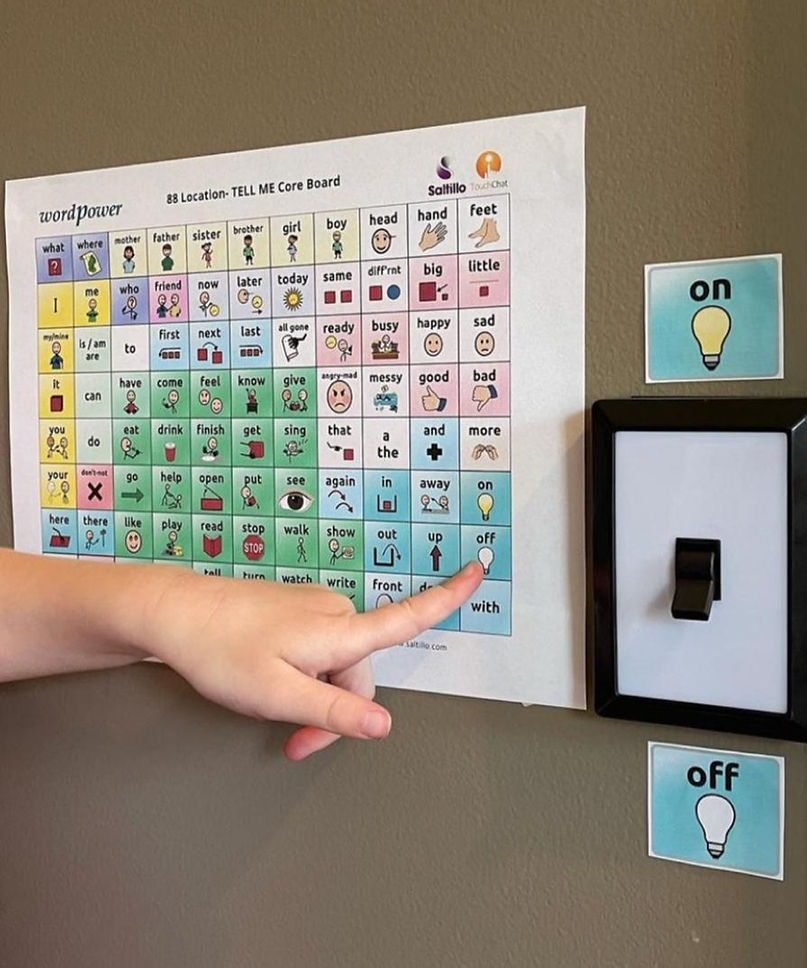
    • Recognise when your child is working well and when they may need support of an Alternative and Augmentative Communication device
    • Allow all environments to have the same training and equipment (i.e., at school, home, out and about)
    • Have regular periods in the day where your child can practise their specific words in different environments. This can be effective for children with verbal dyspraxia

    Do you still have questions? Contact Sonja for support.


    Find a speech and language therapist for your child in London. Are you concerned about your child’s speech, feeding or communication skills and don’t know where to turn? Please contact me and we can discuss how I can help you or visit my services page.
    0

Leave a Reply

Your email address will not be published. Required fields are marked *