When speech difficulties overlap: Helping children with phonological delay and childhood apraxia of speech
| |

One of the questions parents often ask is:

‘What kind of speech difficulty does my child have?’

It’s a very understandable question. We often hear different terms such as phonological delay, articulation difficulties, or Childhood Apraxia of Speech (CAS), and it can be confusing.

The reality is that many children don’t fit neatly into one single category.

In fact, quite often I see children whose speech profile includes a mixture of difficulties. They might have some phonological patterns (where they substitute one sound for another) alongside challenges with motor speech planning, where coordinating the movements needed for speech is harder.

When this happens, therapy needs to be flexible, responsive, and tailored to the child sitting in front of us.

Example

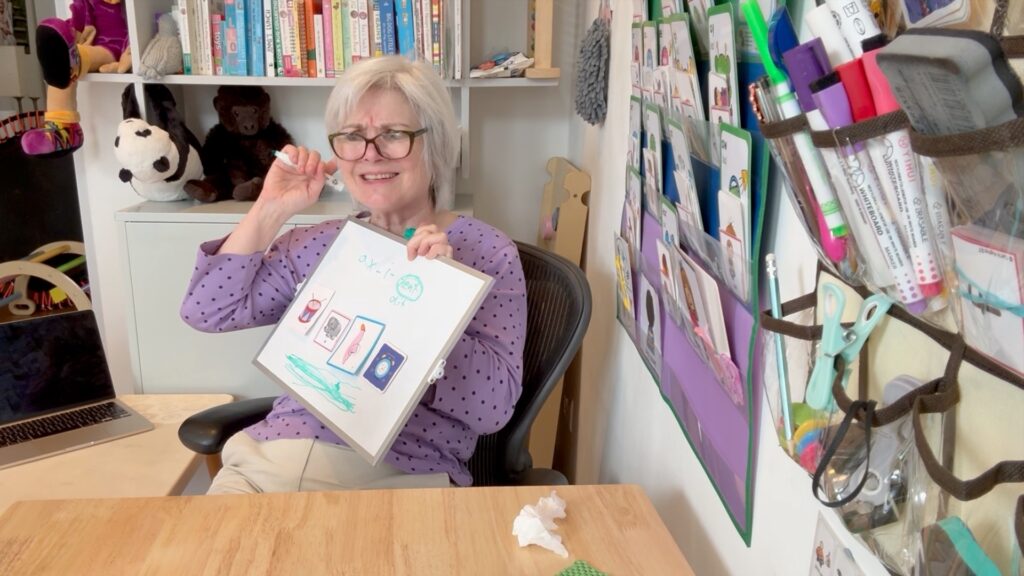
Recently I filmed a short clip from one of my therapy sessions which shows exactly how this works in practice.

The child I was working with has difficulties with several speech sounds. Part of the challenge relates to a phonological pattern called fronting.

Fronting is when sounds that should be made further back in the mouth (like /K/ or /G/) are produced further forward instead.

At the same time, this child also shows signs of motor speech planning difficulty, which means the brain has to work harder to organise and sequence the movements of the tongue, lips and jaw for speech.

This type of profile can sometimes overlap with characteristics seen in Childhood Apraxia of Speech (CAS).

When difficulties overlap like this, therapy cannot rely on a single approach. Instead, it needs to draw on multiple evidence-based strategies.

That is exactly what you see happening in the clip. We started out generalising the /K/ sound which until recently had been replaced by a /T/ sound. Whilst looking at a sound loaded picture of /K/ sounds we somehow got talking about a ‘dent’ (I don’t recall how we got there!) but the ‘dent’ was a ‘det’ and I decided to tackle this there and then because there are other great words that end in ‘nt’ like : ‘count’ ‘giant’ ‘point’ or ‘paint’.

Using visual cues to support motor planning

Speech is incredibly complex. For children with motor speech difficulties, the challenge is not only knowing what sound they want to say, but also how to move their mouth to produce it.

This is where visual cues can be incredibly helpful.

In the clip, you can see me using a whiteboard with pictures and simple visual prompts. These help to:

  • Focus attention on the target sound
  • Understand where the sound occurs in the word
  • Remember the sequence of sounds needed

Visual supports can act almost like a map for the mouth, guiding children as they practise new speech movements.

For children with motor planning difficulties, this type of cueing can make a huge difference.

Why repetition of a single word (massed practice) is so important

Another key feature you will notice in the clip is lots of repetition.

This is very deliberate.

When we are supporting children with motor speech challenges, the brain needs repeated opportunities to practise the correct movement patterns. Just like learning a musical instrument or a new sport, repetition helps the brain build stronger and more efficient pathways.

In therapy we call this massed practice.

Rather than saying a word only once or twice, we practise it many times in a structured way, helping the child stabilise the new speech pattern.

But repetition alone is not enough. The child also needs to understand why the sound matters.

Showing children that sounds change meaning

This is where another powerful therapy approach comes in: minimal pairs.

Minimal pairs are word pairs that differ by only one sound. For example:

  • debt
  • dent

In the clip, I use these two words to help the child realise that the /N/ sound makes a meaningful difference.

Without the /N/, the word becomes something else entirely.

This approach helps children recognise that speech sounds are not random: they carry meaning. If a sound is missing or substituted, the message may change.

Helping children notice these differences can be a very motivating moment in therapy. Suddenly the sound is no longer just an abstract exercise; it becomes part of real communication.

Blending approaches for the best outcomes

In this short therapy moment, I am combining:

• Visual cueing

• Motor speech practice

• High repetition (massed practice)

• Minimal pair contrasts

• Listening and awareness of sound differences

Each element supports a different part of the speech system.

Some strategies help with motor planning, others support phonological awareness, and others build accuracy and consistency.

Together they create a therapy session that is both structured and responsive.

Every child’s speech journey is unique

One of the most important things I want to convey is that speech development is not always straightforward.

Two children may both struggle with speech sounds, yet the underlying reasons may be very different.

This is why careful assessment is essential, and why therapy needs to stay flexible as we learn more about how a child’s speech system works.

Sometimes a child needs more motor-based work.

Sometimes the focus shifts towards phonological contrasts.

Often, as in this example, the most effective therapy uses both.

Small steps lead to big progress

Every session helps us understand a little more about how a child’s speech system works and what support will help them move forward.

And when the pieces start to come together, when a child realises that one tiny sound can change a whole word, that is when the real progress begins.

If you are concerned about your child’s speech sounds, clarity of speech, or possible motor speech difficulties, early support can make a significant difference. A detailed assessment can help identify the nature of the difficulty and guide a therapy approach tailored to your child’s individual needs.

Feel free to contact me on www.londonspeechandfeeding.co.uk

Sonja McGeachie

Highly Specialist Speech and Language Therapist

Owner of The London Speech and Feeding Practice.


Health Professions Council registered
Royal College of Speech & Language Therapists Member
Member of ASLTIP

Find a speech and language therapist for your child in London. Are you concerned about your child’s speech, feeding or communication skills and don’t know where to turn? Please contact me and we can discuss how I can help you or visit my services page.

Reference

McNeill, B. C., Gillon, G. T., & Dodd, B. (2009). Effectiveness of an integrated phonological awareness approach for children with childhood apraxia of speech (CAS). Child Language Teaching and Therapy, 25(3), 341-366.

3

Similar Posts

  • · · ·

    Autism – Benefits of Early Assessment and Intervention

    I think my child might be autistic – how can we help?
    Image by macrovector on Freepik

    Consulting a Specialist Speech and Language Therapist can help you in several ways: assessment, informal and formal observation, discussion and advice, onward referrals, direct intervention, parent coaching, educational support and much more, all geared towards supporting you the parents, and helping your child to flourish and thrive.

    First up, we can help you with assessment and advice: with a wealth of expertise in observing childrens’ play and communication, as well as knowledge of the latest research we can see a child’s strengths and areas of struggle very quickly indeed.

    Within a short space of time, we can identify the areas we need to focus on and start guiding you towards helping your child to connect, respond, react and feel better.

    Early detection is key

    If autism is detected in infancy, then therapy can take full advantage of the brain’s plasticity. It is hard to diagnose Autism before 18 months but there are early signs we know to look out for. Let’s have a brief look at the sorts of things we look at.

    The earliest signs of Autism involve more of an absence of typical behaviours and not the presence of atypical ones.

    • Often the earliest signs are that a baby is very quiet and undemanding. Some babies don’t respond to being cuddled or spoken to. Baby is being described as a ‘good baby, so quiet, no trouble at all’.
    • Baby is very object focused: he/she may look for long periods of time at a red spot/twinkly item further away, at the corner of the room for example.
    • Baby does not make eye contact: we can often see that a baby looks at your glasses for example instead of ‘connecting’ with your eyes.
    • At around 4 months we should see a baby copying adults’ facial expressions and some body movements, gestures and then increasingly cooing sounds we make; babies who were later diagnosed with autism were not seen to be doing this.
    • Baby does not respond with smiles by about 6 months.
    • By about 9 months, baby does not share sounds in a back-and-forth fashion.
    • By about 12 months baby does not respond/turn their heads when their name is called.
    • By around 16 months we have no spoken words; perhaps we hear sounds that sound like ‘speech’ but we cannot make out what the sounds are.
    • By about 24 months we see no meaningful two-word combinations that are self-generated by the toddler. We might see some copying of single words.

    24 months plus:

    • Our child is not interested in other children or people and seems unaware of others in the same room/play area.
    • Our child prefers to play alone, and dislikes being touched, held or cuddled.
    • He/she does not share an interest or draw attention to their own achievements e.g., ‘daddy look I got a dog’.
    • We can see our child not being aware that others are talking to them.
    • We see very little creative pretend play.
    • In the nursery our child might be rough with other children, pushing, pinching or scratching, biting sometimes; or our child might simply not interact with others and be unable to sit in a circle when asked to.

    What sort of speech and language difficulties might we see?

    Our child might do any of the following:

    • have no speech at all, but uses body movements to request things, takes adults by the hand
    • repeat the same word or phrase over and over; sometimes straight away after we have said it or sometimes hours later
    • repeat phrases and songs from adverts or videos, nursery rhymes or what dad says every day when he gets back from work etc.
    • copy our way of intonation
    • not understand questions – and respond by repeating the question just asked:
      • adult: Do you want apple? child: do you want apple?
    • not understand directions or only high frequency directions in daily life
    • avoid eye contact or sometimes ‘stares’
    • lack of pointing or other gestures

    Common behaviours:

    • Hand flapping
    • Rocking back-and-forth
    • Finger flicking or wriggling/moving
    • Lining up items/toys
    • Wheel spinning, spinning around self
    • Flicking lights on and off, or other switches
    • Running back-and-forth in the room, needing to touch each wall/door
    • Loud screaming when excited
    • Bashing ears when frustrated or excited
    • Atypical postures or walking, tip toeing, can be falling over easily, uncoordinated
    • Can be hyper sensitive to noises, smells, textures, foods, clothing, hair cutting, washing etc.
    • Being rigid and inflexible, needing to stick to routines, unable to transition into new environments
    • Food sensitivity, food avoidance, food phobias

    I mentioned this to be a ‘brief’ look at the areas and it is: each topic is looked at very deeply and each area is multi-facetted therefore a diagnosis is rarely arrived at very quickly. We want to make sure we have covered all aspects and have got to know your child very well before coming to conclusions.

    Early detection is key, because we want to start helping your child to make progress as quickly as is possible. If you feel /know that your child is delayed in their speech and language development and you would like a professional opinion then please do contact me, I look forward to supporting you. It is important to know at this point, that if your child only has one or two of the above aspects it may mean that your child is simply delayed for reasons other than Autism and if that is the case, we will be able to help you iron out a few areas of need so that your child can go on thriving.

    If you need help with your child, please do not hesitate to contact me.


    Find a speech and language therapist for your child in London. Are you concerned about your child’s speech, feeding or communication skills and don’t know where to turn? Please contact me and we can discuss how I can help you or visit my services page.

    1
  • A day in my life as an Independent Speech and Language Therapist

    During the pandemic I wrote a blog on what my working day looked like. Now a good year has passed since coming back to some sort of normality and I thought I would update this ‘day in the life of an SLT’ as my working life has changed of course to reflect the ‘new normal’.

    I have become truly busy, perhaps busier than I have ever been to be honest. It’s probably mostly due to the fact that I do most of the aspects of my work myself — though I want to mention two invaluable people here without whom I could not function as well as I do: the excellent Nathalie Mahieu () helps me with my SEO, Insta posts and blog uploading and the wonderful Sue Bainbridge () makes sure that my accounts don’t get into trouble with His Majesty’s tax office.

    Attached to our role as Speech and Language Therapists is an arguably enormous amount of administration/paperwork and preparation required for each and every client. This needs to be factored in when deciding how many families I can realistically see each working day. For me it works out as typically 3–5 clients a day, Monday to Friday.

    So how does my day typically look? Each day varies a lot depending on what type of client I have, but on average it looks a bit like this:

    First thing in the morning — after having a coffee and a quick check-in with my besties on WhatsApp — I do my Buddhist chanting for about an hour. My Buddhist prayers are the base of all I do and get me connected to my higher purpose and how to create value with each activity and each person I see that day. It sets me up for the day, I keep in mind who is going to come and see me and how I can best help them.

    Next up, I do the daily ‘spring-clean’ of my therapy room (on all fours! no joke ???? those kids see every speck!), vacuum the floors, wipe down the toys with flash-wipes and tidy up all my boxes, making sure that the battery toys are working, and everything else is in place. On to the guest toilet, the hallway needs to be rid of all the men’s shoes and trainers and coats… It’s endless what needs tidying when you are living with three men… This takes about 45 minutes.

    An articulation activity – packaging practice into a little game

    Then I prep for all my clients that day. I have now got so much quicker about selecting therapy materials. For one thing I have purchased so many toys and materials over the past five years that I can literally now open a shop and need to consider building an extension! ???? The upside is that it is now very easy for me to select a good handful of toys or games for any one child, even at a minute’s notice. Though, on average, I spend about 30 minutes per child preparing activities.

    Hurrah, it’s 11 am and my first client of the day arrives and the fun begins.

    When they leave around an hour later, the cleaning and wiping down starts again, this time less extensively. I write up my notes and send homework whilst enjoying a cuppa.

    The next client comes at 12.30 pm and once they have left, floor cleaned, toys wiped, notes written it is time for a quick lunch. No more than half an hour usually.

    Afternoon clients tend to be one more little one (nursery age) at 2.15 pm and thereafter I see mostly older school children for a variety of reasons (mainly speech production but also some language-based activities). I tend to say farewell to my last client of the day around 6 pm. I spend another hour, sometimes more, on writing up notes, answering new enquiries, blogging and phone calls to keep my service fresh, inspirational and exciting.

    And then dinner and the rest of the day rushes by. I tend to finish my day with some more Buddhist chanting, not a lot, perhaps 10–20 minutes to reflect on what has gone well and what could have been better — re-determine to improve or make better as needed.

    Tele therapy activity using online materials plus a coreboard

    In terms of where I provide a service, I still do a good mix of online clients (tele-therapy) and in-person clients in my clinic, which I love. Occasionally, I visit children in their nursery or at home but this service is now only available for long-standing clients.

    Each client is hand-picked to make sure that we are a good fit: no one client gets the same treatment as another; each client is unique, we get to know one another well over the time we work together and they are always highly valued. That takes time and, in reality, each client gets about two hours of my time. That is the actual session plus all the preparation and aftercare, i.e., bespoke hand holding, tweaks, problem solving and reassurance in between sessions.

    I absolutely love this way of working and would not ever want to do anything else. Nearly three decades of working both in the NHS and in private practice, countless courses (continual professional development) have enabled me to flourish as a therapist and I know that I offer something special and very valuable to my clients.

    My unique way of working affords all my lovely clients the help they need to support their children to make progress; and it gives me the right balance of job satisfaction and work life balance for now. My lovely reviews and testimonials tell me that my clients appreciate my service and this at the end of the day is the most important.

    If you are interested in exploring Buddhism/buddhist chanting then check out this link (https://sgi-uk.org/), and feel free to contact me about that specifically, regardless of whether you want speech therapy. I am always happy to chat about Buddhism, it has been so enriching for the last 43 years of my life.

    If you need help with your child, please do not hesitate to contact me.


    Find a speech and language therapist for your child in London. Are you concerned about your child’s speech, feeding or communication skills and don’t know where to turn? Please contact me and we can discuss how I can help you or visit my services page.

    1
  • ·

    Unlocking language and thinking skills: The power of sequencing

    Sonja demonstrates the power of sequencing

    As speech and language therapists, we often use a variety of techniques to help children develop their communication and cognitive skills. One incredibly valuable tool in our toolkit is the use of sequencing activities. But what exactly is sequencing, and why is it so beneficial?

    What is sequencing?

    Sequencing, at its core, involves arranging items, events, or actions in a specific order. This could involve putting pictures in the correct order to tell a story, following the steps in a recipe, or understanding the order of daily routines like brushing teeth or getting dressed.

    The link between sequencing and language

    Sequencing is fundamental to language development and is quintessential to executive functioning skills in several ways:

    • Narrative skills: Storytelling, whether oral or written, relies heavily on sequencing. A child needs to understand the order of events (beginning, middle, end) to construct a coherent narrative.
    • Explanations and instructions: Providing clear explanations or instructions requires the ability to sequence information logically. For example, explaining how to play a game or how to get from one place to another. In the video clip below we are working on ‘how do make a sandwich’.
    • Vocabulary development: Sequencing helps children understand temporal words and phrases like ‘first,’ ‘then,’ ‘next,’ ‘before,’ and ‘after’.
    • Sentence structure: Constructing grammatically correct sentences often involves sequencing words in a specific order (e.g., subject-verb-object).

    Beyond language, sequencing plays a crucial role in developing executive functioning skills. These are higher-level cognitive skills that help us plan, organise, and manage our time and actions.

    Sequencing activities can help children improve in the following areas:

    • Planning and organisation: Sequencing tasks require children to think ahead, plan the steps involved, and organise them in a logical order.
    • Problem-solving: When they are faced with a problem, sequencing helps children break it down into smaller, more manageable steps.
    • Working memory: Holding information in mind and manipulating it, such as remembering the steps in a multi-step direction, is supported by sequencing skills.
    • Cognitive flexibility: Being able to adjust to changes in a sequence or think of alternative sequences promotes cognitive flexibility.

    Examples of sequencing activities

    Here are some practical examples of sequencing activities you can do with your child:

    • Picture sequencing: Use a set of picture cards to tell a short story or illustrate a process (e.g., making a sandwich, going to the park). Ask your child to arrange the cards in the correct order.
    • Story retelling: After reading a story, have your child retell it, focusing on the order of events.
    • Following instructions: Give your child multi-step instructions to follow (e.g., ‘First, get your shoes. Then, put on your coat. Next, go to the door.’).
    • Sequencing during play: Integrate sequencing into everyday play. For example, while building with blocks, talk about the steps: ‘First, we put this block here. Next, we add this one…’
    • Daily routines: Create visual schedules for daily routines, like getting ready for school or bedtime, to help children understand the sequence of events.
    • In the video clip below I am using an on-line language activity which is often fun for children as they can use their finger to swipe the pictures effortlessly into the right place and, if we realise at the end of the story that we have made a little error, we can then easily re-jig the pictures into their correct place.

    In conclusion

    Sequencing activities offer a powerful way to support children’s language development and enhance their executive functioning skills. By helping children understand and create order, we equip them with essential tools for communicating, learning, and navigating the world around them.

    Do get in touch via my contact form if you are concerned about your child’s development.

    Sonja McGeachie

    Highly Specialist Speech and Language Therapist

    Owner of The London Speech and Feeding Practice.

    Health Professions Council registered
    Royal College of Speech & Language Therapists Member
    Member of ASLTIP

    Find a speech and language therapist for your child in London. Are you concerned about your child’s speech, feeding or communication skills and don’t know where to turn? Please contact me and we can discuss how I can help you or visit my services page.

    1
  • ·

    Baby-Led Weaning: A Speech and Language Therapist’s Take

    Let’s face it, introducing solids is a rollercoaster for parents. You’re bombarded with advice (solicited and otherwise) on purees, spoon-feeding, and the much-discussed ‘baby-led weaning’ (BLW). As a speech-language/feeding therapist I see the world through the lens of communication and development, as well as safe munching and swallowing. BLW can be a fantastic option for many little foodies. But is it right for yours? Let’s take a dive into the messy, hilarious world of toddler feeding.

    BLW in a nutshell

    Your baby, perched in their highchair, eyes wide with excitement and curiosity reaches out for a platter of food. He/She grabs a fat avocado slice, and curiously explore it with his/her lips, gums and tongue. He/She spits some of it out, mashes bits of it into his/her hair, there was a tiny swallow and the rest is smeared onto the high chair tray. Now he/she grabs a bit of the banana and rinse and repeat as before, except this one he/she keeps in his/her mouth for bit longer and takes a tiny bit more before the rest gets deposited into his/her bib.

    This, in a nutshell, is BLW! It’s all about letting your little one take the lead in exploring new foods, textures, and tastes. No spoon-feeding, just pure, messy, self-directed feeding fun.

    The pros of letting your little one loose on solids:

    • Motor Skills: BLW is a sensory party for developing motor skills. Picking up that slippery banana or gumming a chewy piece of toast strengthens those tiny hands and mouth muscles. These are the very skills they’ll need for future talking and chewing.
    • Texture Time: BLW exposes your baby to a variety of textures right from the start. Think soft, steamed broccoli florets or smooth, banana half-slices. This sensory exploration helps them develop an understanding of different textures in the world, which can translate to better oral motor skills needed for speech development.
    • Independence: BLW fosters a sense of self-feeding independence. Your toddler learns to control how much he/she eats and the pace of his/her meal. This can lead to better self-regulation later on, not just with food, but in other areas of his/her development too.
    • A wider variety of flavours: BLW encourages exposure to a wider variety of tastes and smells. Let your baby discover the sweetness of roasted sweet potato or the tang of mashed avocado! This early exploration can lead to less picky eating down the road.

    There are some valid concerns:

    • Gagging vs. Choking: One of the biggest concerns parents have about BLW is choking. However, gagging is a natural reflex that helps babies learn to move food safely around their mouths. Choking is much rarer, and with proper food selection and supervision, the risk is very low. The con here really is parental anxiety more than anything else and if you can overcome this then a bit of gagging is just fine and part of the process. Choking, again most children do choke occasionally a bit! Of course, close supervision and common sense is very important here.
    • It’s ever so messy!: Be prepared for mashed banana on the highchair tray, rogue peas flung across the room, and a general sense of chaos. But then again, this is an important part of the learning process! I would encourage you to embrace the mess (within reason and your personal tolerance level) and focus on the fun of exploration.
    • Nutritional Concerns: Some parents worry that babies won’t get enough nutrients with BLW. While it might take a while for them to master the art of self-feeding, a healthy child’s body is pretty good at self-regulating. Offer a variety of healthy options, and he/she will eventually get the hang of it.

    BLW: Is it right for your Little One?

    BLW isn’t a one-size-fits-all approach. Here are some things to consider:

    • Developmental Milestones: Babies should be able to sit up with good head control and show an interest in food before starting BLW.
    • General good health and absence of food intolerances, allergies, or other significant health issues which might dictatea more controlled feeding regime.
    • Gag Reflex: A strong gag reflex is a good sign. It shows your baby’s natural ability to move food safely around their mouth. If, however, your baby’s gag is overly sensitive and causes frequent bouts of vomiting please consult your health care professional for an assessment (GP, Paediatrician, Dietician, Speech and Language – Feeding Therapist).
    • Your Comfort Level: BLW requires a relaxed and patient approach. If you’re feeling stressed about the mess or potential choking hazards, it might not be the right fit for you.

    A final mouthful:

    BLW can be a fantastic way to introduce your baby to solids. It promotes exploration, independence, and a love for food. Remember, there’s no pressure to go all-in on BLW. You can always combine it with spoon-feeding or purees to find an approach that works for your family and your child. The most important thing is to create a positive and relaxed mealtime environment where your little one can explore the wonderful world of food at their own pace.

    P.S. As an SLT, I always recommend chatting with your health care professional. This way you can address any concerns you might have and ensure your baby is developmentally and physically on track for this exciting new chapter.

    Don’t hesitate to contact me!

    Sonja McGeachie

    Early Intervention Speech and Language Therapist

    Feeding and Dysphagia (Swallowing) Specialist The London Speech and Feeding Practice

    The London Speech and Feeding Practice


    Find a speech and language therapist for your child in London. Are you concerned about your child’s speech, feeding or communication skills and don’t know where to turn? Please contact me and we can discuss how I can help you or visit my services page.

    1
  • · ·

    Halloween without the tears: Supporting children through the Spooky Season

    For many families, Halloween is an exciting time filled with costumes, decorations, and sweets. But for children who are sensory sensitive, whether they’re autistic, have sensory processing differences, or simply find new experiences overwhelming, Halloween can feel like a night of chaos rather than fun.

    The bright lights, unexpected noises, strange textures, and social pressure to ‘join in’ can quickly become too much. The good news? With some thoughtful planning and gentle support, you can make Halloween a positive and manageable experience for your child.

    Understanding sensory overload

    Sensory overload happens when a child’s brain receives more sensory input than it can process. This might mean:

    • Costumes that itch, squeeze, or feel strange on the skin.
    • Loud sounds like doorbells, fireworks, or shrieking decorations.
    • Crowds and unpredictability during trick-or-treating.
    • Strong smells or tastes from face paint or unfamiliar sweets.

    When overloaded, children may cry, cover their ears, hide, run away, or ‘shut down.’ These reactions aren’t ‘bad behaviour’, they’re signs of distress. The goal isn’t to eliminate Halloween fun, but to adjust it to your child’s comfort level.

    Step 1: Choose costumes wisely

    Costumes are often the biggest trigger. Scratchy fabrics, tight seams, or masks that restrict breathing can be unbearable for some children.

    Try these tips:

    • Go sensory-friendly: Use soft, breathable fabrics and remove tags. Many retailers now sell sensory-safe costumes.
    • Test it early: Let your child wear the outfit around the house before Halloween. If it’s too much, simplify — maybe themed pyjamas or a favourite T-shirt with Halloween accessories.
    • Skip the mask: Face paint can be equally challenging, always test on a small patch of skin first. A comfortable headband or hat might be enough to feel ‘in costume.’

    Remember, participation doesn’t require perfection. Your child can still ‘be’ their favourite character without a full costume.

    Step 2: Plan your Halloween environment

    Before the big day, think about what parts of Halloween your child enjoys — and what might overwhelm them.

    At home:

    • Keep decorations minimal and predictable. Avoid motion-activated sounds or flashing lights.
    • Practise knocking at your own front door or saying ‘trick or treat’ with a trusted adult.
    • Have a ‘quiet space’ ready, a cosy corner or room where your child can retreat if things get too intense.

    If you’re going out:

    • Choose earlier, quieter times for trick-or-treating.
    • Visit a few familiar houses instead of the whole street.
    • Bring ear defenders or noise-cancelling headphones.
    • Have a clear exit plan if your child needs a break.

    Sometimes, watching from the window and handing out sweets can be just as enjoyable! it still offers social participation without sensory overload.

    Step 3: Prepare socially and emotionally

    Halloween involves a lot of unexpected social interaction: strangers at the door, unfamiliar greetings, and different rules.

    Help your child by:

    • Using visuals or stories: Read picture books about Halloween or make a short social story about what will happen.
    • Role-playing: Practise saying ‘Trick or treat!’ or handing out sweets in a fun, low-pressure way.
    • Labelling feelings: Explain that it’s okay to feel nervous or to take a break if something feels ‘too loud’ or ‘too much.’

    Children feel safer when they know what to expect. Predictability reduces anxiety and makes participation more enjoyable.

    Step 4: Rethink the treats

    Not every child enjoys sweets; some dislike sticky textures or strong flavours. Offer non-food alternatives like stickers, glow sticks, or small toys.

    If your child has feeding difficulties or oral sensitivities, it’s okay to opt out of the traditional treats entirely. They can still join in by giving treats or decorating treat bags instead.

    It’s also helpful to prepare your child that others might offer sweets they don’t want. Practising polite ‘no thank you’ responses can make these moments easier. (check out my symbol download for children who struggle to speak)

    Step 5: Celebrate your way

    Halloween doesn’t have to look like anyone else’s version. Maybe your family watches a ‘not-too-scary’ film, carves pumpkins, or does a flashlight treasure hunt indoors. The goal is joyful connection, not conformity.

    A calm, happy experience, even if it looks simple from the outside builds positive associations your child will carry into future celebrations.

    In summary

    Halloween can be full of sensory surprises, but with empathy, planning, and flexibility, it doesn’t have to end in tears.

    The more you adapt to your child’s sensory needs, the more they learn that they are safe, understood, and included not just at Halloween, but in every celebration.

    As with all things in speech and feeding development, progress starts with connection. When children feel regulated and supported, communication and confidence follow.

    Sonja McGeachie

    Highly Specialist Speech and Language Therapist

    Owner of The London Speech and Feeding Practice.


    Health Professions Council registered
    Royal College of Speech & Language Therapists Member
    Member of ASLTIP

    Find a speech and language therapist for your child in London. Are you concerned about your child’s speech, feeding or communication skills and don’t know where to turn? Please contact me and we can discuss how I can help you or visit my services page.

    2
  • · ·

    How do we know our Gestalt Learner is moving to Stage 2?

    Image by Freepik

    Is our student ready to move to NLA 2 (Natural Language Acquisition stage 2)?

    We know that the GLP (Gestalt Language Processor) will move into the next stage when they are ready. But are they now ready you might think? When are they ready? How do I know? If you are not sure whether your child is ready to move forward then go and see your GLP trained Speech Therapist. Together you can work out what the next steps are and how to help your child settle into NLA 2. It’s very exciting!!

    Tip

    The first useful tip: keep a language sample of phrases your child says. This is very helpful!

    You might want to check with your Speech Therapist and offer some language sampling you have taken so they can help you figure out where your child is currently. Always keep an Utterance Journal that you can share with your Speech Therapist and with others who look after your child.

    Basically, we want to listen out for phrases our child says that you or nursery don’t say routinely; that way you can presume that this is not an echo but a mixing together of two chunks of gestalts. Watch out for those coco melon phrases though: double check it really isn’t an NLA 1 gestalt that is copied verbatim from a favourite you tube video.

    You can best support your child best by listening, and thus figuring out what your child is TRYING TO SAY. Often your child might skip over the parts of gestalts they don’t want to say. This is common in older kids who have long gestalts, sometimes even whole episodes or whole stories!

    Try and tease out their shorter mitigations and then focus on practicing and modelling those as they are so much more useful!

    So back to our question: are they ready?

    Are their gestalts covering a variety of situations and contexts?

    Make a note in your journal to see what the backgrounds are to each phrase you ear, so for example:

    • Transitioning: ‘it’s time for the park’ ‘what’s next’ ‘shoes on’
    • Bed Time: ‘we need to wash’ ‘let’s get in (bath/bed)’ ‘ready for our book’
    • Toilet/nappy: ‘we need the potty’ ‘where’s the potty’ ‘let’s wash hands’
    • Mealtime: ‘time to eat’ ‘go get a spoon’ ‘yummy num num’
    • Park/going out: ‘look at the squirrel’ ‘funny doggy’ ‘I wanna swing’
    • At the shops: ‘let’s get the trolley’ ‘lots of veggies’ ‘no tomatoes’ ‘ooh long queue’ ‘back to the car’

    And… does the child use the phrases for a variety of functions?

    • labelling
    • providing information
    • calling out
    • affirming
    • requesting
    • protesting
    • directing

    We need to offer lots of similar language models so that in their own time our children can extract/mitigate useful phrases for what they want to express. The more similar utterances a child hears around him the more he/she can discover the communalities. Once the child has a small range of phrases, he/she can mix them up and create semi-original own phrases.

    If the answer is YES!! our child has perhaps not all but a range of functions and a range of situations where they use a variety of easily mitigable gestalts then yes they are ready for moving to stage 2 of NLA!

    Hurrah!

    Keeping a journal of what your child is saying and in what circumstance is crucial to help with our ongoing detective work!

    Next time I will be looking at how we can help our NLA 2 GLP produce even more of their own mix and match phrases.

    If you need help with your child, please do not hesitate to contact me.


    Find a speech and language therapist for your child in London. Are you concerned about your child’s speech, feeding or communication skills and don’t know where to turn? Please contact me and we can discuss how I can help you or visit my services page.

    1