When AAC modelling doesn’t feel natural yet: Helping parents learn to use their chosen AAC system

| |

One of the most common pieces of advice parents hear when their child starts using AAC is: ‘Just model the words naturally.’

And, yes, natural modelling is an important part of AAC support.

But there is something we don’t always talk about: How on earth is a parent supposed to model a word naturally when they are still trying to work out where the word is themselves?

Using a robust AAC system such as LAMP Words for Life can feel a little like learning a new language.

The parent is learning the language at the same time as the child they are hoping to teach it to.

So, although I absolutely want AAC to become part of everyday life, I often begin with something much more structured.

And I have found that this can make the transition to natural, everyday modelling much easier for families.

Learning the system first

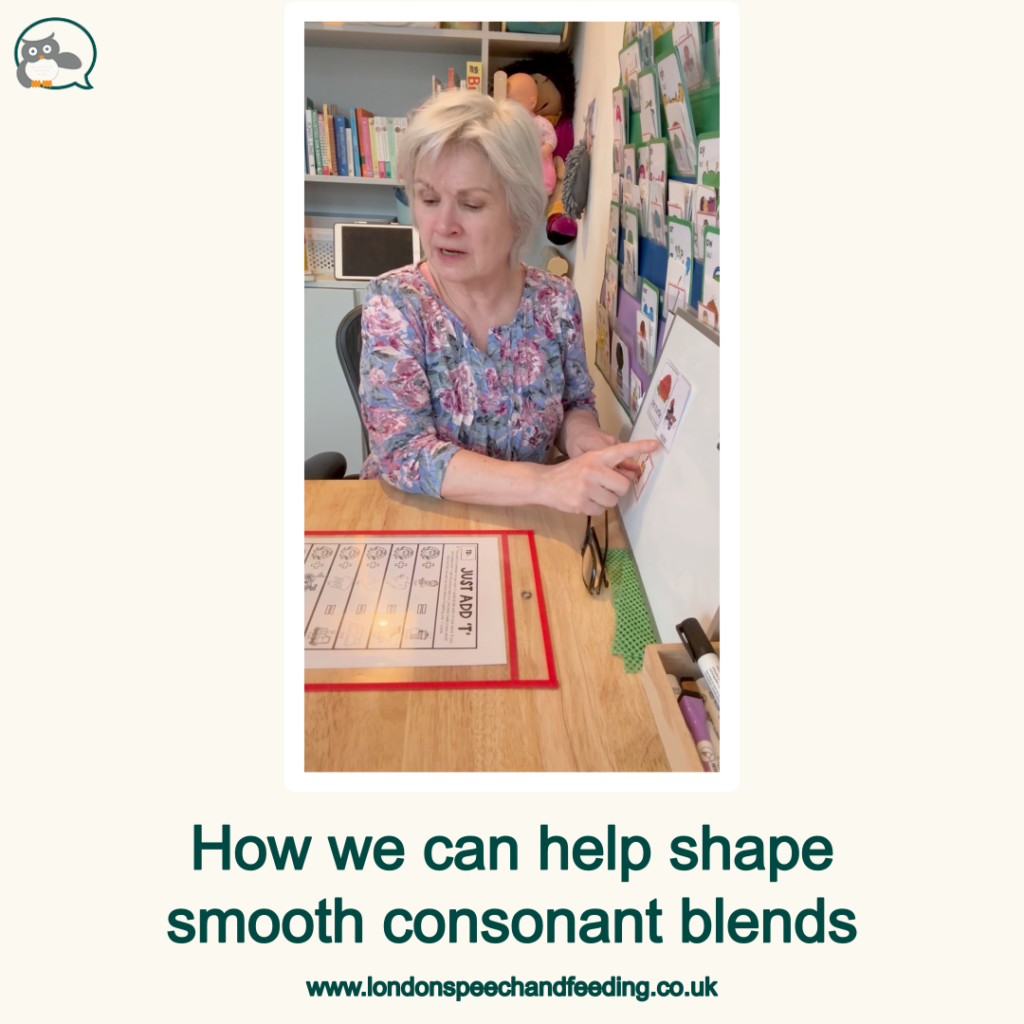
In my first video clip, I am using a very simple farm animal sticker activity with LAMP Words for Life.

The activity gives us the opportunity to practise some useful, functional words:

  • OFF: taking the sticker off
  • FARM ANIMALS: finding the animal category
  • HORSE
  • SHEEP
  • CHICK
  • ON: putting the sticker onto the book

At first, I am quite explicit about what I am doing.

I might draw attention to the relevant button, help the child navigate to it, talk through what we are looking for and practise finding the word several times.

This is more didactic and structured than the idealised picture some people have of AAC modelling.

And I am completely comfortable with that at the beginning.

Why start so explicitly?

Imagine that you are given a brand-new device containing hundreds or thousands of words.

Someone tells you: ‘Don’t worry. Just use it naturally.’

You might manage to find a few obvious words.

But when you are suddenly standing in the kitchen taking your child’s coat off and want to say ‘OFFS, you may have absolutely no idea where to look.

That is exactly why I think parents sometimes need permission to learn the system in a supported way.

The structured activity creates a safe environment where we can stop and think:

  • Where is that word?
  • How do I get there?
  • What does this word do?
  • What happens when I press it?

We can practise it more than once.

We can repeat it.

And gradually, the route to that word becomes familiar.

AAC systems are not simply devices that children need to learn. Communication partners need to learn them too. All the AAC research highlights partner training as an important part of AAC intervention and notes that intervention initially includes helping the individual and their family or carers develop operational competence with the system.

From structured practice to everyday life

And this is where the useful transfer can happen.

Take the word OFF.

In our sticker activity, we may practise:

‘OFFS

‘OFFS

‘OFF’

We take the sticker off.

We find the button again.

We use the word again.

After several opportunities, the parent has not only seen their child use the word, the parent now knows where the word lives too.

Then later that day, they are taking their child’s coat off.

Suddenly:

‘OFF!’

And they know exactly where to find it.

The same thing might happen with ON.

Once the parent has practised finding ON several times during play, it becomes much easier to spot opportunities for it during the day:

‘Shoes ON.’

‘Lights ON.’

‘Music ON.’

‘Hat ON.’

‘Tap ON.’

This is one of the reasons I like structured AAC activities. They are not necessarily the final goal.

They can be the rehearsal space that gives parents and children enough confidence to use AAC in real life.

Natural modelling is still the goal

This doesn’t mean that I want parents spending their whole day sitting beside their child and directing them towards buttons.

Quite the opposite.

The aim is to gradually move towards a much more natural style of AAC use.

Once parents know their way around the system, they can begin to model words spontaneously as they occur in everyday interactions.

Research into aided AAC modelling describes adults using AAC alongside speech within meaningful activities, and evidence supports the use of aided input as part of AAC intervention.

But getting there may take teaching, repetition, practice and coaching.

And that’s okay.

It is not about making the child press the button

There is another important distinction here.

When I say that I may initially be more explicit or ‘direct’ during an activity, I do not mean that I am trying to make a child perform the correct response.

I am not interested in turning AAC into a test.

I am not continually asking:

‘Where’s HORSE?’

‘Find SHEEP.’

‘Show me CHICK.’

Instead, I am helping the child and parent become familiar with the system.

I might point, gesture, navigate, model the word and repeat it within a meaningful activity.

As confidence grows, the support can be reduced so that the child has increasing opportunity to locate and use the language themselves.

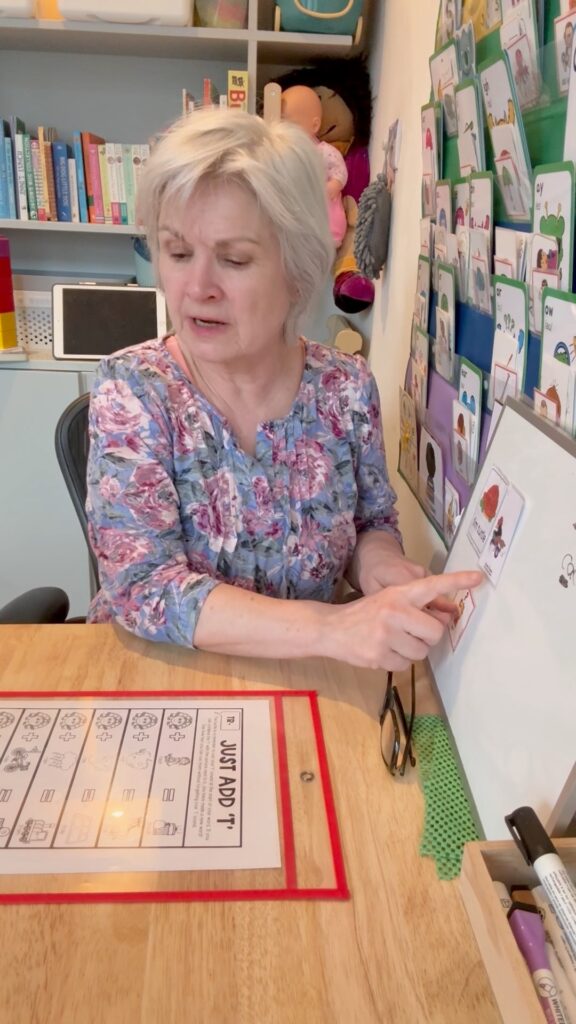
My second video clip shows a child using their own LAMP Words for Life system at home, accessing a category they have chosen which is FOOD.

This is what I love about AAC.

The device isn’t just being used in the therapy room.

It becomes part of the child’s own life.

And the child is using it around their own interests and choices.

That is the direction I want families to move towards:

From ‘I don’t know where anything is!’ to ‘I know where some useful words are.’

Then ‘I can use those words during our everyday routines.’

And eventually: ‘This is my communication system, and I can use it to tell you what I think, want, notice, enjoy, reject and choose.’

Parents don’t have to get it perfect

This is perhaps the biggest message I would like parents to take away.

You do not have to become an AAC expert overnight.

You are learning too.

It is completely reasonable for a parent to need time to become familiar with the layout, vocabulary and navigation of their child’s system.

Learn it. Practise it. Model it. Then take it into real life.

Any questions please contact me via my contact form.

Sonja McGeachie

Sonja McGeachie

Highly Specialist Speech and Language Therapist

Owner of The London Speech and Feeding Practice.


Health Professions Council registered
Royal College of Speech & Language Therapists Member
Member of ASLTIP

Find a speech and language therapist for your child in London. Are you concerned about your child’s speech, feeding or communication skills and don’t know where to turn? Please contact me and we can discuss how I can help you or visit my services page.

3

Similar Posts

  • · ·

    The hidden impact of mouth breathing and open mouth posture on speech and feeding

    When most people think about speech or feeding difficulties, they picture the tongue, lips, or chewing skills, but how a child breathes at rest plays a surprisingly big role too.

    Mouth breathing and open mouth resting posture can quietly influence everything from how a child’s face grows to how clearly they speak, to how confidently they chew and swallow. It’s something many parents never think about, until they start noticing the subtle signs.

    Let’s explore why this happens, what to look for, and how to gently support better breathing and oral posture.

    Recent research supports this link between mouth breathing and speech difficulties. For example, a 2022 study by Alhazmi et al., published in the Journal of Pharmacy and Bioallied Sciences, found that 81.7% of children aged 9–17 who breathed primarily through their mouths presented with speech sound disorders. The study highlights how mouth breathing can significantly influence orofacial development and articulation patterns.

    💨 Why we’re designed to breathe through our nose

    Our bodies are made for nasal breathing. When we breathe through the nose, the air is filtered, warmed, and humidified before reaching the lungs. The tongue naturally rests against the roof of the mouth, the lips close gently, and the jaw stays relaxed, all of which encourage healthy oral development.

    In contrast, mouth breathing often means the tongue rests low in the mouth and the lips stay apart. Over time, this posture can subtly reshape how the muscles and bones of the face grow.

    Children who breathe through their mouths most of the time may develop:

    • A longer face and narrower palate
    • Forward head posture
    • Slightly open lips and low tongue position at rest
    • A tendency toward drooling or noisy breathing
    • A dry mouth and consequently bad breath
    • At times the tongue pushes constantly against the front teeth causing them to grow forward (buck teeth)

    These changes are not anyone’s fault, as they often start because of blocked noses, allergies, enlarged adenoids, low facial muscle tone or habits formed when a child was younger. But understanding the pattern helps us know how to support change.

    🗣 How mouth breathing affects speech

    Speech depends on precise coordination between the lips, tongue, and jaw. The resting position of these structures affects how ready they are to move.

    1. Reduced tongue strength and placement, i.e. the tongue rests low in the mouth (as it does in mouth breathing), it’s harder for children to lift it efficiently for sounds like /T/, /D/, /N/, /L/, and /S/. This can lead to speech that sounds slightly slushy or unclear, or a frontal lisp.
    2. Open mouth posture and resonance: An open mouth at rest may affect how air vibrates in the oral and nasal cavities. Children might have speech that sounds a bit ‘muffled’ or lacks crispness because the lips and jaw aren’t fully supporting articulation.
    3. Fatigue and breath control: Mouth breathing can lead to drier mouths and less efficient breath support. That can make longer sentences or conversations feel tiring, especially in noisy environments.

    🥄 How mouth breathing affects feeding and chewing

    Feeding involves the same structures that control speech, so posture and breathing patterns matter here, too.

    1. Chewing efficiency: Children who habitually keep their mouths open often have low tongue tone and reduced jaw stability. They may prefer softer foods, chew slowly, or struggle with mixed textures.
    2. Swallowing pattern: A tongue that rests low may push forward when swallowing. This ‘tongue-thrust swallow’ can interfere with efficient chewing and even affect dental alignment over time.
    3. Breathing while eating: Since it’s hard to chew, swallow, and breathe through the mouth simultaneously, children who can’t comfortably nasal breathe may rush bites or pause to catch their breath. This can contribute to coughing, choking, or food refusal.

    Common signs to watch for

    Parents often notice subtle clues before realising mouth breathing is a pattern. Some red flags include:

    • Lips habitually open at rest
    • Drooling after the toddler years
    • Snoring or noisy breathing during sleep
    • Preference for soft foods or grazing eating habits
    • Dark circles under the eyes due to allergies
    • Frequent colds, congestion, or mouth odour
    • Speech that sounds slushy or unclear despite good effort

    If several of these sound familiar, it’s worth mentioning them to your child’s GP, dentist, or speech and language therapist.

    👩‍⚕️ What can help

    1. Address the underlying cause: If nasal blockage, allergies, or enlarged adenoids are making nasal breathing difficult, a medical assessment is the first step. ENT specialists can rule out or treat physical causes.
    2. Encourage closed mouth rest: Gentle reminders like ‘Lips together, tongue up, breathe through your nose’ can help older children become aware of their resting posture. For younger ones, visual cues (stickers or mirrors) can make it a game.
    3. Build oral-motor strength and awareness: Speech therapists can design activities to strengthen the tongue and lips, improve jaw stability, and encourage balanced breathing. This might include blowing games, tongue-tip lifts, use of dental-palatal devices or oral-motor exercises disguised as play.
    4. Support good posture: Sometimes mouth breathing goes hand-in-hand with forward-head posture. Encouraging upright sitting during meals and screen time helps keep the airway open and supports better breathing habits.
    5. Make nasal breathing part of daily routines: Gentle nose-breathing practice during calm times (reading, bedtime, car rides) helps normalise it. Avoid making it a battle: calm, consistent reminders work best.

    🌱 A gentle note on change

    Patterns of mouth breathing develop over time, and change doesn’t happen overnight. It’s important to approach this with curiosity, not criticism. The aim isn’t ‘perfect breathing,’ but to give your child the tools and awareness to breathe comfortably and efficiently.

    Small improvements in nasal breathing and resting posture can lead to big gains in speech clarity, eating confidence, and even sleep quality.

    💡 The takeaway

    Breathing seems automatic, and it is! but how we breathe matters. Mouth breathing and open-mouth posture can quietly shape how a child speaks, eats, and grows.

    By noticing early signs, addressing underlying causes, and building supportive habits, you can help your child move toward stronger, clearer speech and more comfortable mealtimes.

    Just like every area of development, progress starts with connection, patience, and gentle consistency, one calm breath at a time.

    Sonja McGeachie

    Highly Specialist Speech and Language Therapist

    Owner of The London Speech and Feeding Practice.
    References

    Alhazmi, A., Alshamrani, A., Alhussain, A., et al. (2022). Mouth Breathing and Speech Disorders: A Multidisciplinary Study. Journal of Pharmacy and Bioallied Sciences 14(5):911. https://www.researchgate.net/publication/361978128_Mouth_breathing_and_speech_disorders_A_multidisciplinary_evaluation_based_on_the_etiology


    Health Professions Council registered
    Royal College of Speech & Language Therapists Member
    Member of ASLTIP

    Find a speech and language therapist for your child in London. Are you concerned about your child’s speech, feeding or communication skills and don’t know where to turn? Please contact me and we can discuss how I can help you or visit my services page.

    2
  • A day in my speech clinic: Mastering the /SP/ cluster

    I very often work on /S/ Blends (/SP/ /ST/ /SM/ /SK/ /SN/ and /SL/). When we work on these sound blends (like SPider, STop, or SMile), we are using a clever speech therapy ruse! Because these blends are complex, teaching a child how to master them naturally helps them clear up simpler single sounds (like just /S/ or just /P/) at the same time. Plus, because S-blend words are so common in everyday language think spoon, spy, spot, and spin, practising them gives your child an immediate confidence boost when they are understood much more easily.

    Good news: high-repetition motor practice doesn’t have to be a chore. In fact, the more sensory input we can provide, the faster those new neural pathways are built. Recently, I recorded a series of seven short clips to demonstrate how we can weave intense speech practice into the fabric of play.

    Here is a look at a typical day in the clinic focusing on /SP/ blends.

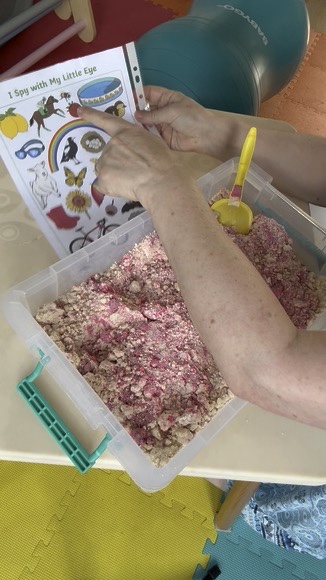
    1. The sensory sandbox:

    We started our session at the sensory table. Sensory bins can often work well because they provide tactile feedback that grounds the child’s focus (of course they are usually messy, so one needs to have the physical space and energy for it to be fair!).

    • The Activity: I pointed to our ‘I Spy’ board before we dove into the sand. Using a toy spade we dug for hidden objects and named them each time we found one.
    • Every time we scooped, we practised Spade. Every discovery was a spider, a spoon or a spotty animal. By pairing the physical effort of digging with the speech sound, we help the brain synchronise motor planning and vocal execution.

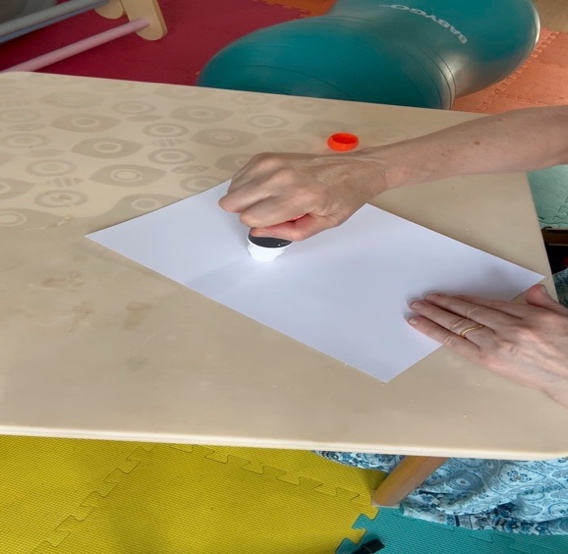
    2. Bingo dabbers rock!

    Next, we moved to making ink marks on paper.

    • The Activity: I demonstrated making spots with coloured bingo dabbers.
    • We treated each ink spot as a visual anchor. Stamp –Spot Stamp –Spot. This creates a rhythmic pacing that prevents the child from rushing. It’s a wonderful way to get 50+ repetitions in under five minutes without the child even realising they are ‘working’.

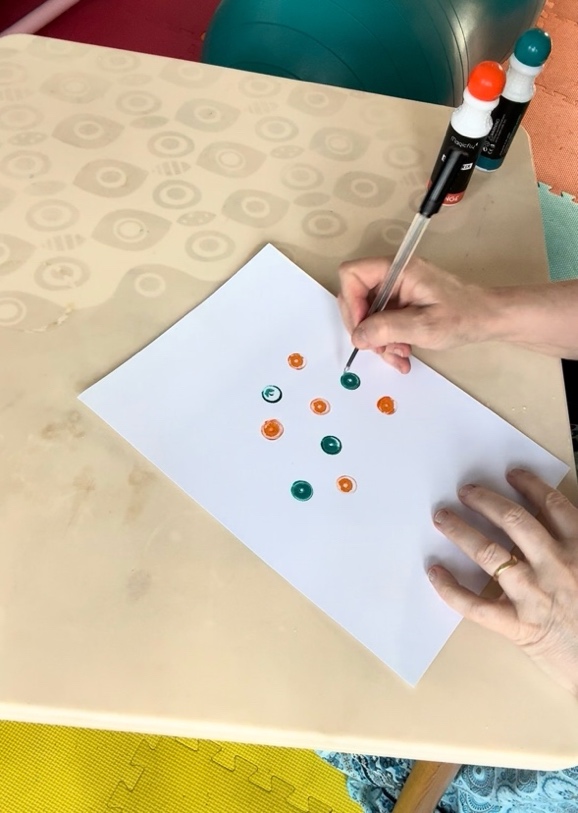
    3. Drawing spiders

    Building on the previous activity, we took those spots and turned them into something more complex.

    • The Activity: I drew spiders out of the spots we had just made.
    • Drawing the legs provided a perfect opportunity for ‘stretch’ sounds. As we drew a long leg, we practise a long, hissy ‘Sssssssss’, snapping into the /P/ as the pen hits the spot.

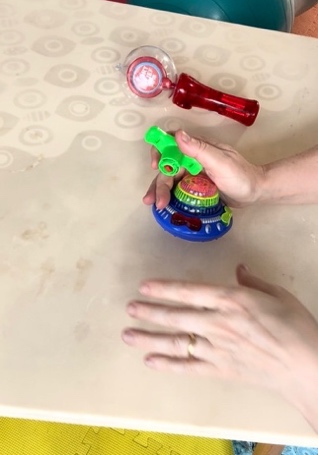
    4. Wind-up spinners

    High-energy toys are excellent for eliciting ‘power’ sounds.

    • The Activity: I brought out two mechanical wind-up spinners.
    • Method: The child says Spin or Spinner to get me to wind them up. The anticipation of the toy moving acts as a natural reinforcer.

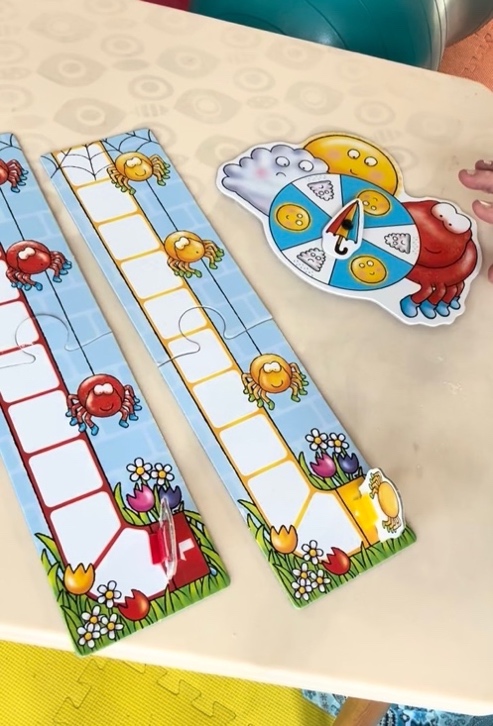
    5. The Incy Wincy spider game

    • The Activity: I spun a game spinner to determine how many steps our toy spiders would take up the spout.
    • This activity is a triple threat. We practised ‘Spin’, ‘Spider’, and ‘Spout’ all in one go. The visual of the spider moving up the spout also helps with the concept of UP and DOWN of course.

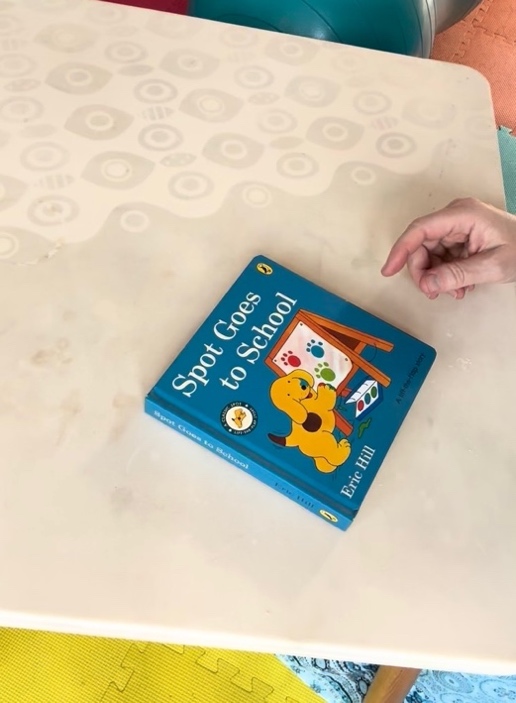
    6. Searching for Spot

    Books are a great tool for generalisation, taking a sound from a single word and moving it into phrases and sentences.

    • The Activity: We went through a ‘Spot the Dog’ book.
    • Instead of just reading, we used the ‘I Spy’ strategy. ‘I spy Spot! He has a big spot on his back!’ This encourages the child to use the target word in a functional, communicative way rather than just repeating it after me.

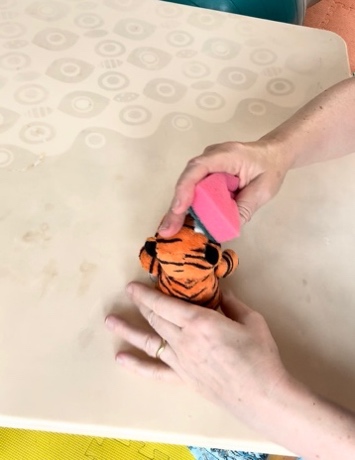
    7. Finally, sponging off some sand

    We ended the session with some ‘heavy work’ and cleaning.

    • The Activity: We took a soft toy that had gotten a bit ‘dusty’ in the sandbox and used a sponge to clean it down.
    • The action of squeezing the sponge provides proprioceptive input (pressure), which can be very calming and help a child focus on their articulatory placement for those final repetitions of the day.
    A day in my speech clinic: Mastering the /SP/ cluster

    Speech therapy works on motor learning. Just like learning to ride a bike or play the piano, the brain needs thousands of correct repetitions to make a movement automatic. By using /SP/ words in these seven distinct, sensory-rich ways, we:

    1. Reduce frustration: The focus is on the play, not the correction.
    2. Increase engagement: A child who is having fun will stay in the learning zone longer.
    3. Provide context: The child learns that saying /SP/ correctly helps them get the spade, spin the spinner, and find the spider.

    Next time I will show you some more activities for /ST/ and /SM/ words. If you have any super ideas for /S/ cluster words please leave me your suggestions in the comments on instagram, I would appreciate it thank you! 😊

    If you are concerned about your child’s speech, please do not hesitate to get in touch. I would love to help you find some answers.

    Sonja McGeachie

    Highly Specialist Speech and Language Therapist

    Owner of The London Speech and Feeding Practice.


    Health Professions Council registered
    Royal College of Speech & Language Therapists Member
    Member of ASLTIP

    Find a speech and language therapist for your child in London. Are you concerned about your child’s speech, feeding or communication skills and don’t know where to turn? Please contact me and we can discuss how I can help you or visit my services page.

    3
  • ·

    How we can help shape smooth consonant blends

    For many children, especially those navigating Childhood Apraxia of Speech (CAS), the challenge isn’t just making individual sounds. It’s the ‘speech gymnastics’ required to move smoothly from one sound to the next.

    You might notice that instead of saying ‘Train’, your child says ‘Ter-ain’, or for ‘Frog’, you hear ‘Fer-og’. That sneaky little ‘uh’ sound in the middle is what we call a schwa vowel. In the world of speech science, this is known as epenthesis. It’s essentially a ‘repair strategy’ the brain uses to break up a difficult cluster of sounds into two easier pieces.

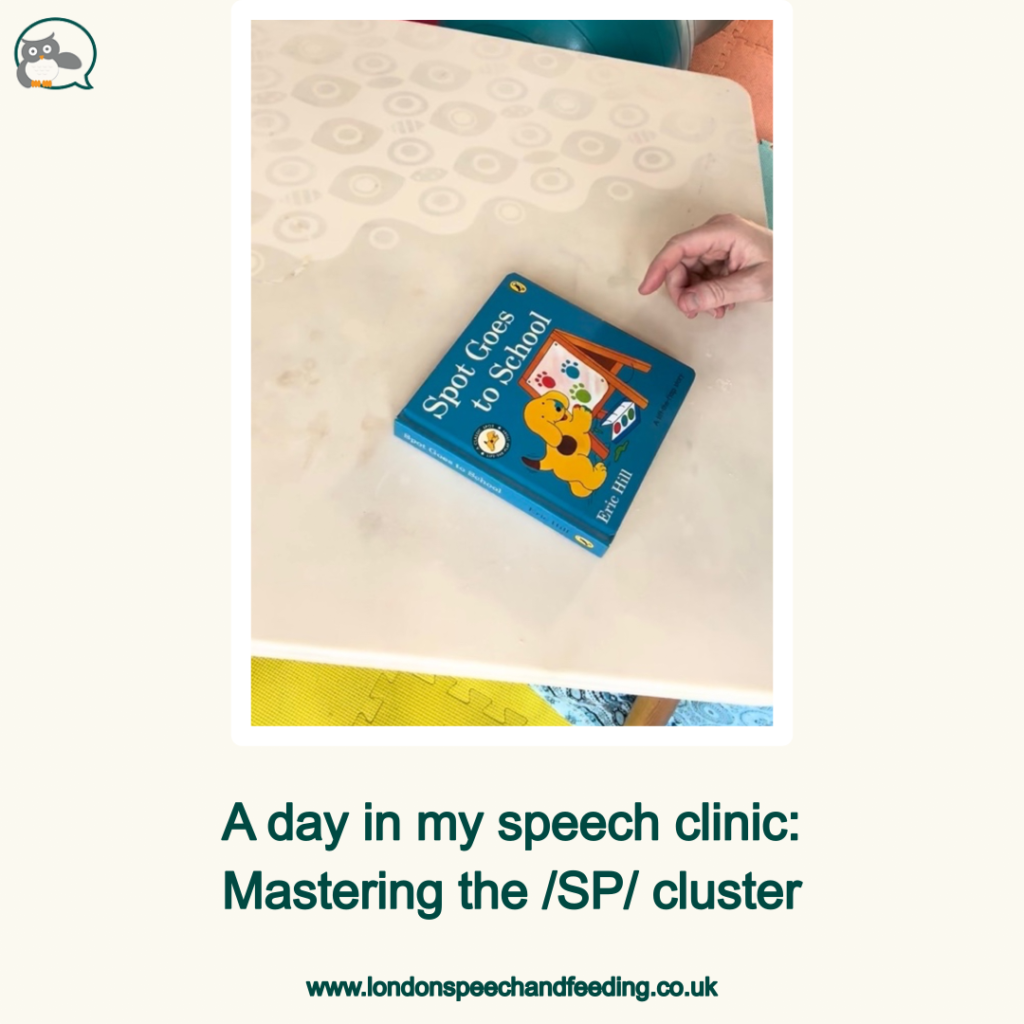
    While it might seem like a small detail, that tiny vowel makes a big difference in how fluent and clear a child’s speech sounds. In today’s post (and the video below), I am working with my student on ironing out that schwa by focusing on co-articulation—the art of getting the mouth ready for the second sound while still finishing the first.

    The ‘best friends’ strategy

    To help my student understand this complex movement, I use visual cues and a story. There are many ways to portray two sounds living closely together, but for this session, I used the ‘Best Friends’ story.

    In our story, the /T/ and the /R/ are older brother best friends who want to play together. The ‘schwa’ sound is represented by a little sister who keeps trying to jump in the middle of their game! Because my student has a younger sister, this scenario was instantly familiar and helped him visualise why we needed to ‘close the gap’ between those two sounds.

    Alternative methods I often use:

    Beyond stories, I often use other visual and tactile methods to show the closeness of two sounds:

    • The sliding finger: I draw two dots on a paper—one for /T/ and one for /R/. We slide a finger quickly from one to the other. I might say, ‘Don’t let the ‘uh’ monster jump in the gap!’
    • The rubber band: We stretch a rubber band as we speak. I tell my student that the word is one long, smooth stretch, rather than two separate ‘pops’.
    • Visual cues for ‘quiet’ sounds: I often put my finger to my lips or tap my throat to remind a child to keep the first sound voiceless. If the voice stays ‘off’ during the /T/, it’s much harder for that schwa vowel to creep in.

    The importance of ‘pure’ modelling

    A major hurdle in clearing up these blends is how we, as adults, model sounds. Often, when teaching the alphabet, we say ‘Kuh’, ‘Puh’ or ‘Tuh’. But if you listen closely, you’re actually adding a vowel! If a child learns that /K/ says ‘Kuh’, it’s only natural they will say ‘Kuh-R’ for /KR/.

    To give your child a cleaner blueprint, try modeling ‘pure’ sounds. Think of whispering rather than talking:

    • The /K/ sound: A short, sharp burst of air from the back of the throat. No voice! (A quiet /K/ click).
    • The /P/ sound: Just a ‘pop’ of air from the lips. If your throat vibrates, the vowel has snuck in.
    • The /T/ sound: A tiny tap of the tongue behind the teeth.

    Why is this important?

    You might ask, ‘If I can still understand them, does it really matter if they say “ter-ain”?’

    The goal of speech therapy isn’t just functional communication; it’s building phonological awareness. When a child adds extra vowels, it can eventually impact their literacy. If they hear ‘ter-ain,’ they are much more likely to eventually spell it as ‘terain’ or ‘traint’.

    By helping them master these clusters through co-articulation now, we are setting them up for success in reading and writing. And we are giving them the confidence to speak with ease.

    Feel free to contact me if your child needs help with clusters or other difficulties either aligned with Childhood Apraxia of Speech or other articulation difficulties.

    Sonja McGeachie

    Highly Specialist Speech and Language Therapist

    Owner of The London Speech and Feeding Practice.

    References

    • Hall, N. (2011). Vowel Epenthesis. In The Blackwell Companion to Phonology (eds M. Oostendorp, C.J. Ewen, E. Hume and K. Rice). In this work, epenthesis is defined as the insertion of a vowel to break up complex consonant clusters into simpler, more manageable syllables. This is often viewed as a ‘repair strategy’ used by the brain when a transition between sounds is too complex to execute quickly.
    • Aichert, I., & Ziegler, W. (2004) Brain and Language 88(1):148-59. Syllable frequency and syllable structure in apraxia of speech. This research highlights that children with Apraxia often struggle specifically with word-onset clusters, leading to distortions like the schwa.
    • Browman, C. P., & Goldstein, L. (1992) Phonetica 1992;49(3-4):155-80. Articulatory Phonology: An Overview. This paper explains that fluent speech requires ‘gestural overlap,’ where the movements for two different sounds happen simultaneously. This supports the ‘Best Friends’ method of keeping sounds close together.

    Health Professions Council registered
    Royal College of Speech & Language Therapists Member
    Member of ASLTIP

    Find a speech and language therapist for your child in London. Are you concerned about your child’s speech, feeding or communication skills and don’t know where to turn? Please contact me and we can discuss how I can help you or visit my services page.
    3
  • ·

    Discover more about Verbal Dyspraxia

    What is Verbal Dyspraxia?

    Apraxia or dyspraxia is a difficulty in motor planning, which sometimes can be seen in both gross and fine motor skills, as well as speech. Gross motor refers to difficulties in coordinating the whole body (e.g., bumping into things frequently, often falling over hurting themselves or others through being “clumsy” or unsteady). Fine motor movements refer to smaller, more precise movements (e.g., difficulties doing anything with their hands such as holding a spoon or pen).

    Verbal dyspraxia

    In Dyspraxia of Speech, instead of seeing a coordinated smooth way of talking, we see the articulators (tongue, lips, cheeks) and voice coordinating very smoothly. The voice can be very quiet or very loud. Muscle tone can be weaker at times. Speech sounds are very unintelligible, with a flat voice that can sound forced. It may be that the timings of verbalisation appear random and that children can say a certain word once and never again. This is often what we hear from parents.

    It is interesting to note that many of our autistic clients are either non-speaking or are reluctant speakers. Sometimes they say a word once and then never again. Others say lots of words but the words are very hard to make out. Did you know that about 40% of autistic people have verbal dyspraxia? (Richard, 1997). Because the problem is one of motor planning, not of automatic motor execution, once a plan has become automatic, it is easier to get back to it and this is why we often see repetitive patterns that can be called ‘stims’ (Marge Blanc, 2004).

    How can Speech and Language Therapy help?

    Children with verbal dyspraxia can make great progress!

    We provide frequent and appropriate speech movement opportunities and with time and the right support, children will move forward and begin to speak more fluently and with greater intelligibility. It is important to know this can take time.

    We provide Oral Motor Therapy using a variety of approaches to practise breathing, vocalising on the outbreath, and sequencing our speech movements.

    We design carefully tailored programmes focusing on words that have a lot of power (e.g., NO, GO, UP, IN, OUT, LET’S GO, STOP).

    We offer shared enjoyment, and laughter. This helps a child find their voice. Other ways of finding our voices include singing or humming, or even yelling/shouting!

    The most difficult phase of verbal dyspraxia is initiation, that is to start talking, to start producing a word. Frequent “automatic” repetition supports children with initiation because it removes the element of “thinking to start”. I often ask a child to repeat a word 5-10 times (with rewards at the end. A little game works well). You can see that with repetition the act of initiating is taken out of the equation as you are “on a roll “as it were.

    Once a child starts to find their voice, we will be able to hear them talk lot… And if we give them credit and presume that what they are saying has meaning, we will find in time that their words become clearer and more intelligible. If we listen carefully, we can detect real words and phrases.

    For more tips and support, please get in touch!


    Find a speech and language therapist for your child in London. Are you concerned about your child’s speech, feeding or communication skills and don’t know where to turn? Please contact me and we can discuss how I can help you or visit my services page.
    0
  • Help! My child has a lisp. What can we do about it?

    What is a LISP?

    There are different types of LISPS. Let me explain:

    A lisp is the difficulty making a clear ‘S’ and ‘Z’. Other sounds can also be affected by the tongue protruding too far forward and touching the upper teeth or the upper lip even. ‘T’ and ‘D’ can be produced with ‘too much tongue at the front’ and this can also have an impact on ‘CH’ and often also ‘SH’.

    1. Interdental lisp

    Protruding the tongue between the front teeth while attempting ‘S’ or ‘Z’ is referred to as interdental lisp; it can make the speech sound ‘muffled’ or ‘hissy’. Often, we associate a lisp with the person sounding a bit immature. The good news is that this type of lisp is the easiest to correct and, in my practice. I have a 100% success rate with this type of lisp.

    1. Lateral lisp

    In a lateral lisp the person produces the ‘S’ and ‘Z’ sounds with the air escaping over the sides of the tongue. This renders the ‘S’ as sounding ‘slushy’ or ‘wet’. This type of lisp is a bit harder to correct than the interdental lisp. In my experience this can be fixed but it might need a bit longer, more intensive therapy than the interdental lisp.

    1. Palatal lisp

    With a palatal lisp the ‘S’ sound is attempted with the tongue touching the palate, much further back than it should be. The ‘S’ sounds ‘windy’ and ‘hissy’. This is a quite rare lisp production but it is also not difficult to correct.

    These types of speech difficulties come under the category of ‘speech delay of unknown origin’ and may persist into adolescence and adulthood as ‘residual errors‘.

    Some thoughts on Treatment in general:

    Lisps can be treated successfully by a Speech and Language Therapist. However, for the treatment to work well, a student needs to be able to cooperate and want to improve his or her speech. Lisp remediation entails a fair amount of repetitive work and very young children or unmotivated older children don’t make the best candidates for treatment for this reason. Often students present with other speech, language or social communication difficulties and here the lisp might not be the priority for treating. For example, it might be that due to a student’s Attention Deficit Disorder they are simply not able to focus on speech practice in their daily life.

    When should treatment of lisp begin?

    Waiting well past 4½ years is not advisable as the longer we wait and do nothing the stronger engrained the erroneous tongue/speech habit will become. The ‘right’ age for therapy for one child may be different from the ‘right’ age for another child even within the same family. So do make an appointment with a speech and language therapist to assess and see whether your child might be ready to start therapy.

    Do lots of children lisp—is it normal?

    Until the age of about 4–4.5 years old it can be a perfectly normal developmental phase for some children to have the interdental lisp. But when we see and hear a lateral or palatal lisp we ought to act and see a speech and language therapist for sure.

    After the age of 4.5 or 5 years old most speech therapists would agree on at least having a look to see if treatment could be started. The longer we wait the harder it is to retrain the brain pathways to adopt new speech habits.

    What happens during the first Speech and Language Consultation?

    The first consultation takes about an hour and involves screening relevant areas of communicative function. We take a detailed history, examine the anatomy of the child’s mouth and tongue movements. We check for tongue tie, teeth formation, palate structure and function, as well as swallowing patterns.

    Then we begin straight away to try and see if any of the alveolar sounds (T/D/L/N) can be produced correctly with the right tongue placement as that would be the starting point from where to shape a good, clear ‘S’ sound.

    The first consultation usually ends with home practice being given, explained to parents and another appointment being made for follow up.

    Therapy – what does a session look like?

    Each therapy session consists of:

    1. Listening to sounds, discriminating sounds, identifying sounds, listening to rhyming sounds, sound awareness. We call this Auditory discrimination of single sounds: can the student hear the difference between two words that are the same apart from the first sound: ‘sing’ and ‘thing’ or ‘sigh’ and ‘thigh’?
    2. Sound production: using a variety of different prompts and cues we will teach how to physically make the new sound. Often, we work on making a NEW sound, instead of correcting the OLD one. We work on imitation of single sounds then gradually we try and make new sounds in short words, then longer words and then phrases and sentences.
    3. Games! We play games and try and have fun in between listening and producing our new sounds to help students stay motivated and even enjoy the therapy session and process.

    How long does it take to ‘fix up’ a lisp?

    It tends to take about one term with weekly sessions to help a student make good ‘S’ sounds in phrases and sentences. If the student can do the home practice every day in between the weekly sessions, then in most cases I am able to pronounce the lisp as ‘fixed’ after about one term.

    After that the student needs to practise, practise, practise, at home and in daily life to keep reminding themselves of their new skills and their new sound production.

    It is a matter of reminding and wanting to get it right. Occasionally a student returns to me for another term of simply practising their skills together with me as they are finding it hard for any number of reasons to practise at home. But generally, 8/10 students will be fine after some 12–13 sessions and their speech will be perceived as perfectly typical by family and friends.

    If your child has a lisp or any other speech error, please do not hesitate to contact me.


    Find a speech and language therapist for your child in London. Are you concerned about your child’s speech, feeding or communication skills and don’t know where to turn? Please contact me and we can discuss how I can help you or visit my services page.
    0
  • · ·

    The picky eater’s plate: Introducing solids to toddlers with ARFID

    Designed by Freepik

    Mealtimes can be a battleground for parents of picky eaters, especially toddlers with Avoidant/Restrictive Food Intake Disorder (ARFID). I see a great number of toddlers with Autism traits and many of my clients are picky eaters from mild to severe. Take a look at my blog for an outline of what the issues are and how to try and help.

    ARFID goes beyond typical ‘picky eating’ and can significantly impact a child’s growth, nutrition, and social-emotional well-being. If your toddler is resistant to trying new foods or has a very limited diet, here are some strategies to navigate the introduction of solids:

    1. Understand ARFID:

    ARFID is a diagnosable eating disorder characterised by:

    • Limited food variety: Eating only a small range of foods, often with specific textures or colours.
    • Fear of new foods: Intense anxiety or aversion to trying unfamiliar foods.
    • Sensory sensitivities: Heightened sensitivity to taste, smell, texture, or appearance of food.
    • Lack of interest in eating: May show little interest in food or mealtimes.

    2. Seek professional guidance:

    • Paediatrician and/or gastroenterologist: Rule out any underlying medical conditions.
    • Registered dietitian: Assess nutritional needs and create a balanced meal plan.
    • Speech and language therapist (SLT): If oral-motor skills or sensory sensitivities are contributing to feeding difficulties.
    • Occupational therapist (OT): If sensory processing challenges are affecting mealtime behaviours.
    • Child psychologist: If anxiety or emotional factors are contributing to ARFID.

    3. Strategies for introducing solids:

    • Start small: Introduce one new food at a time, in small amounts, alongside familiar favourites.
    • Patience is key: It can take multiple exposures (up to 10–15 times!) for a child to accept a new food. Don’t give up!
    • Positive reinforcement: Praise and encouragement for any interaction with the new food, even just touching or smelling it.
    • No pressure: Avoid forcing or pressuring the child to eat. This can create negative associations with food.
    • Make it fun: Present food in playful ways, use cookie cutters for fun shapes, or involve the child in food preparation.
    • Sensory exploration: Encourage exploration of food through touch, smell, and sight before tasting.
    • Role modelling: Show the child that you enjoy eating a variety of foods.
    • Use fun utensils: your child might like characters from ‘Frozen’ or ‘Dinosaurs’ or ‘Diggers’ there are a host of character-based cutlery and cups/plates to be had. Also, I really rate these two items very highly they are so good so I want to share these with you. Both are available online. But warning: the cup is outrageously expensive as it comes from the United States and is sold by a small scale company. But I feel this is cup very worth trying, I have had good results with this.
    • Gradual desensitisation: Start with foods that are similar in texture or taste to accepted foods, then gradually introduce more challenging options.
    • Food chaining: Introduce new foods that are similar in taste, texture, or appearance to accepted foods.

    4. Mealtime Environment:

    • Positive and relaxed: Create a calm and enjoyable mealtime atmosphere.
    • No distractions: Minimise distractions like TV or toys.
    • Consistent schedule: Offer meals and snacks at regular times.
    • Child-sized portions: Offer small, manageable portions to avoid overwhelming the child.
    • Involve the child: Let the child choose their utensils, plate, or cup.

    5. Remember:

    • Every child is different: What works for one child may not work for another.
    • Progress takes time: Be patient and celebrate small victories.
    • Focus on the positive: Praise any positive interaction with food.
    • Seek support: Connect with other parents or support groups.

    Introducing solids to toddlers with ARFID can be challenging, but with patience, persistence, and professional guidance, you can help your child develop a healthier relationship with food.

    Get in touch with me via my contact form if you need support

    Sonja McGeachie

    Early Intervention Speech and Language Therapist

    Feeding and Dysphagia (Swallowing) Specialist The London Speech and Feeding Practice

    The London Speech and Feeding Practice


    Find a speech and language therapist for your child in London. Are you concerned about your child’s speech, feeding or communication skills and don’t know where to turn? Please contact me and we can discuss how I can help you or visit my services page.
    1