Feeding Therapy

  • · · · ·

    Managing mealtime sensory overload at holiday gatherings: Supporting children with allergies and feeding differences

    Managing mealtime sensory overload at holiday gatherings: Supporting children with allergies and feeding differences

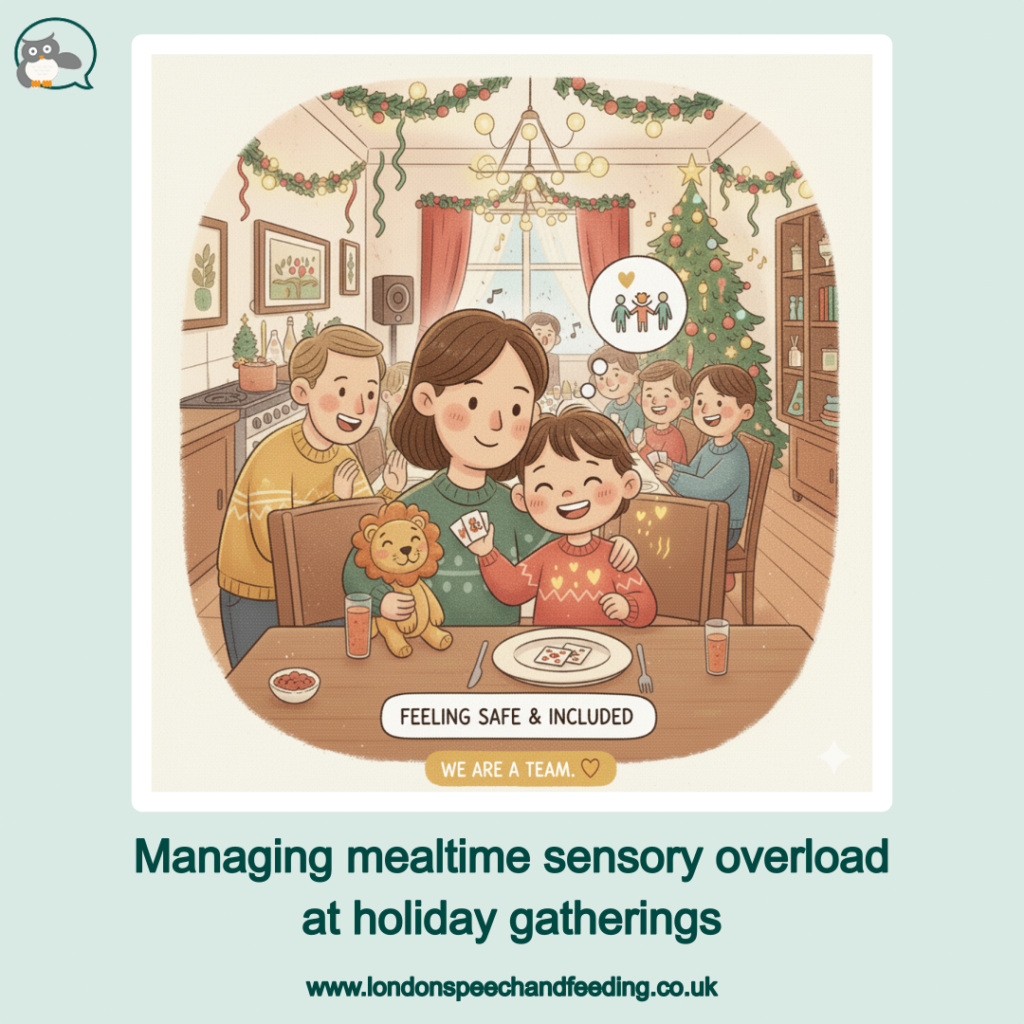
    Holiday meals are meant to be joyful and something we all look forward to. But for many children and their families, these occasions can be overwhelming and be the cause of dread and worry. The combination of new smells, unfamiliar foods, loud environments, social expectations, and allergy anxieties can quickly turn what should be a festive time into a stressful one.

    For parents of children with sensory processing differences, selective eating challenges, or food allergies, holiday gatherings often require careful planning and a big dose of tolerance and compassion. The good news is that with awareness and a few gentle strategies, you can support your child to feel safe, regulated, and included during festive meals without pressure, tears, or discomfort.

    Let’s explore how to make holiday mealtimes calmer, safer, and more connected this season.

    🎄 Why holiday meals feel so overwhelming

    Holiday gatherings usually combine several sensory triggers all at once:

    • Noisy, chaotic rooms
    • Strong smells from a mix of foods we don’t normally cook
    • Multiple conversations happening at once
    • Bright lights, Christmas décor, flickering candles
    • Unfamiliar foods with unexpected textures
    • Expectations to ‘try everything’ or ‘enjoy it’s sooo good!’
    • New environments, seating arrangements, or routines

    For children with sensory sensitivities, this can feel like a tidal wave of input. Research shows that children who are sensory-sensitive often have heightened responses to smell, taste, and texture, which may lead to avoidance or distress at mealtimes (Cermak, Curtin, & Bandini, 2010).

    Add food allergies into the picture and anxiety increases even further for both children and parents. A 2020 study by DunnGalvin et al. found that children with food allergies experience significantly higher stress in shared eating environments, especially when food preparation or contamination risk is hard to control.

    So, if your child becomes tearful, shuts down, or refuses to sit at the festive table, it isn’t ‘bad behaviour.’ It’s sensory overload, heightened vigilance, or discomfort communicating through their body.

    🌟 Preparing your child for a calmer festive meal

    Preparation is especially important for sensory-sensitive or allergy-aware children. Here’s how to set them up for success:

    1. Offer predictability through previewing

    Before the event, show your child pictures of:

    • where you’re going
    • who will be there
    • the types of foods that might be served
    • where they might sit

    A visual schedule or social story can help reduce anxiety and give your child a sense of control.

    2. Pack safe foods without apology

    If your child has allergies or selective eating, bring:

    • ‘Safe foods’ you know they will eat
    • Backup snacks
    • A separate (their own) plate, if needed
    • Emergency medication

    Announce clear, firm boundaries such as:

    ‘Ok people, these are Jamie’s safe foods — we’ll stick with these today.’ This will help relatives understand without pressure or judgement.

    3. Choose seating that supports sensory regulation

    If possible, seat your child:

    • at the end of the table
    • near a familiar adult
    • away from the kitchen (strong smells)
    • away from noise clusters
    • give them their favourite toy or fidget whilst waiting

    Let them take breaks when needed. This isn’t ‘rude,’ it’s self-regulation.

    🍽️ Supporting children during the meal

    1. Focus on connection, not consumption

    The holidays are not the time to expand your child’s food range. Keeping mealtimes low-pressure actually supports long-term progress.

    In fact, the research is clear: pressuring children to eat decreases acceptance and increases refusal (Galloway et al., 2006).

    So instead of ‘Just try it!’ try:

    • ‘You don’t have to eat it, you can look at it.’
    • ‘You’re in charge of what goes in your mouth.’
    • ‘You can keep your safe foods on your plate.’

    2. Protect your child’s allergy safety

    Holiday meals often include:

    • cross-contamination risks
    • shared utensils
    • buffets
    • homemade dishes without ingredient lists

    Use gentle but firm scripts:

    • ‘Because of Ellie’s allergies, we’ll keep her plate separate.’
    • ‘We’ll serve her food ourselves to make sure she stays safe.’

    Confidence in your boundary helps others respect it.

    3. Manage sensory load in real time

    Offer:

    • headphones
    • a small chew or fidget toy
    • a designated ‘calm corner’
    • time outside for fresh air
    • a predictable signal for breaks (e.g., a hand squeeze or card)

    Remember, sensory regulation is healthcare, not ‘giving in.’

    4. Model calm eating

    Children learn most from watching.

    Slow, happy bites and relaxed facial expressions tell the nervous system: ‘This environment is safe’.

    💛 What to say to well-meaning relatives

    Families often have big feelings about food. You can prepare nice phrases like:

    • ‘We’re focusing on helping him feel safe around food today.’
    • ‘She has allergies, so we’re sticking to our plan.’
    • ‘We’re avoiding pressure because it helps him eat better long term.’
    • ‘We’re celebrating together, eating is not the goal today.’

    Setting expectations ahead of time can reduce awkward moments later.

    🎁 The bigger picture: It’s about safety, not ‘picky eating’

    Children with allergies, sensory differences, or feeding challenges aren’t trying to be difficult. They are trying to stay safe, regulated, and comfortable.

    Your calm presence, gentle boundaries, and preparation create the conditions for a holiday that feels peaceful, not pressured.

    Sonja McGeachie

    Highly Specialist Speech and Language Therapist

    Owner of The London Speech and Feeding Practice.


    Health Professions Council registered
    Royal College of Speech & Language Therapists Member
    Member of ASLTIP

    Find a speech and language therapist for your child in London. Are you concerned about your child’s speech, feeding or communication skills and don’t know where to turn? Please contact me and we can discuss how I can help you or visit my services page.

    📚Research References

    Cermak, S. A., Curtin, C., & Bandini, L. G. (2010). Food selectivity and sensory sensitivity in children with autism spectrum disorders. Journal of the American Dietetic Association, 110(2), 238–246.

    DunnGalvin, A. et al. (2020). APPEAL-2: A pan-European qualitative study to explore the burden of peanut-allergic children, teenagers and their caregivers. Clinical & Experimental Allergy, 50(11), 1238–1248.

    Galloway, A. T., Fiorito, L. M., Francis, L. A., & Birch, L. L. (2006). ‘Finish your soup!’ Counterproductive effects of pressuring children to eat on intake and affect. Appetite, 46(3), 318–323.

    2
  • · ·

    The hidden impact of mouth breathing and open mouth posture on speech and feeding

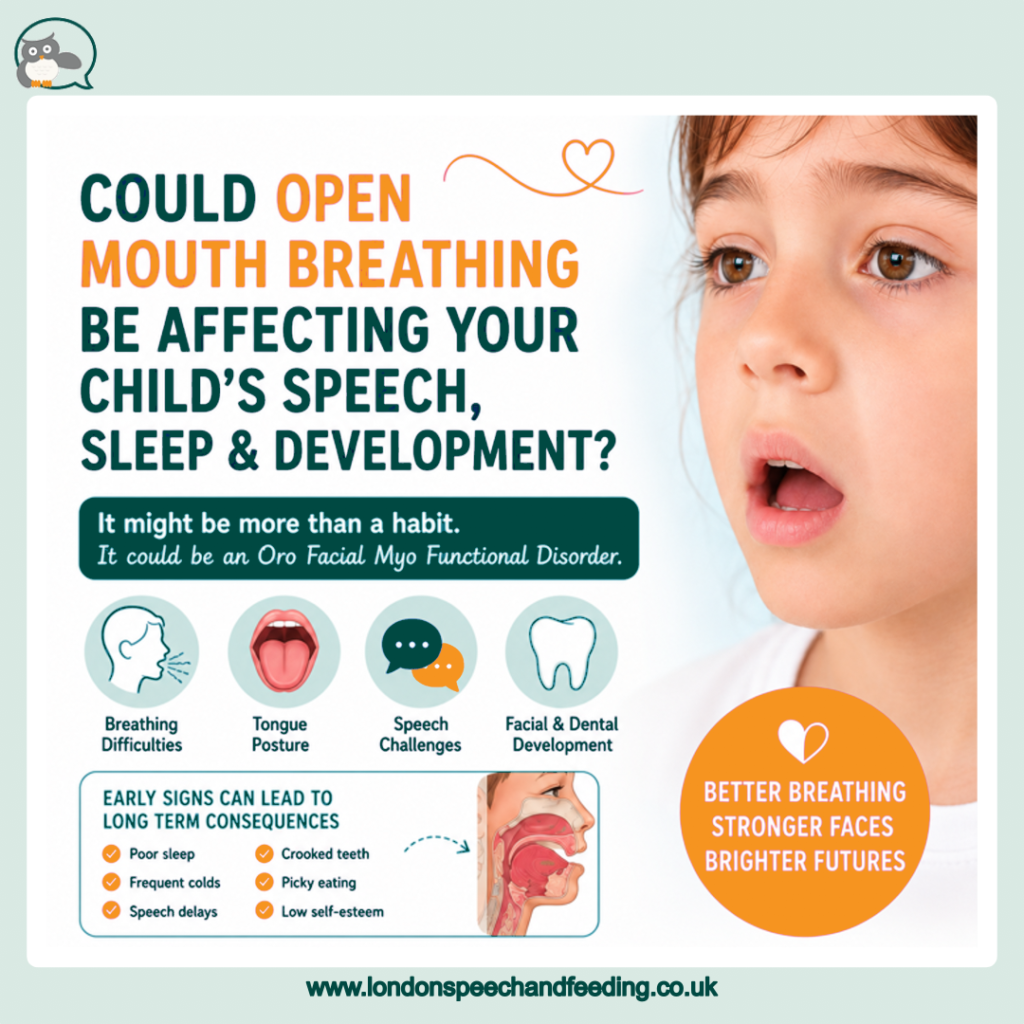
    When most people think about speech or feeding difficulties, they picture the tongue, lips, or chewing skills, but how a child breathes at rest plays a surprisingly big role too.

    Mouth breathing and open mouth resting posture can quietly influence everything from how a child’s face grows to how clearly they speak, to how confidently they chew and swallow. It’s something many parents never think about, until they start noticing the subtle signs.

    Let’s explore why this happens, what to look for, and how to gently support better breathing and oral posture.

    Recent research supports this link between mouth breathing and speech difficulties. For example, a 2022 study by Alhazmi et al., published in the Journal of Pharmacy and Bioallied Sciences, found that 81.7% of children aged 9–17 who breathed primarily through their mouths presented with speech sound disorders. The study highlights how mouth breathing can significantly influence orofacial development and articulation patterns.

    💨 Why we’re designed to breathe through our nose

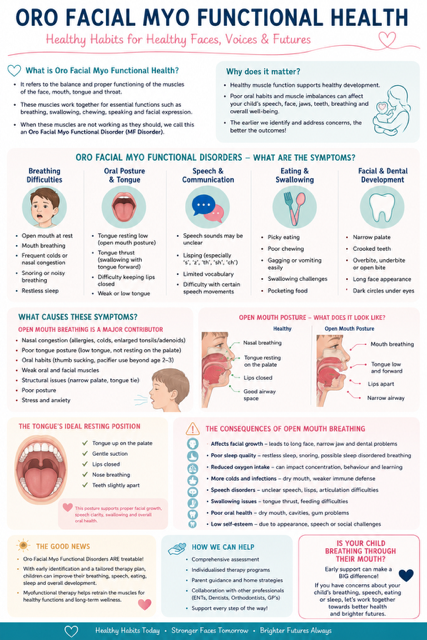
    Our bodies are made for nasal breathing. When we breathe through the nose, the air is filtered, warmed, and humidified before reaching the lungs. The tongue naturally rests against the roof of the mouth, the lips close gently, and the jaw stays relaxed, all of which encourage healthy oral development.

    In contrast, mouth breathing often means the tongue rests low in the mouth and the lips stay apart. Over time, this posture can subtly reshape how the muscles and bones of the face grow.

    Children who breathe through their mouths most of the time may develop:

    • A longer face and narrower palate
    • Forward head posture
    • Slightly open lips and low tongue position at rest
    • A tendency toward drooling or noisy breathing
    • A dry mouth and consequently bad breath
    • At times the tongue pushes constantly against the front teeth causing them to grow forward (buck teeth)

    These changes are not anyone’s fault, as they often start because of blocked noses, allergies, enlarged adenoids, low facial muscle tone or habits formed when a child was younger. But understanding the pattern helps us know how to support change.

    🗣 How mouth breathing affects speech

    Speech depends on precise coordination between the lips, tongue, and jaw. The resting position of these structures affects how ready they are to move.

    1. Reduced tongue strength and placement, i.e. the tongue rests low in the mouth (as it does in mouth breathing), it’s harder for children to lift it efficiently for sounds like /T/, /D/, /N/, /L/, and /S/. This can lead to speech that sounds slightly slushy or unclear, or a frontal lisp.
    2. Open mouth posture and resonance: An open mouth at rest may affect how air vibrates in the oral and nasal cavities. Children might have speech that sounds a bit ‘muffled’ or lacks crispness because the lips and jaw aren’t fully supporting articulation.
    3. Fatigue and breath control: Mouth breathing can lead to drier mouths and less efficient breath support. That can make longer sentences or conversations feel tiring, especially in noisy environments.

    🥄 How mouth breathing affects feeding and chewing

    Feeding involves the same structures that control speech, so posture and breathing patterns matter here, too.

    1. Chewing efficiency: Children who habitually keep their mouths open often have low tongue tone and reduced jaw stability. They may prefer softer foods, chew slowly, or struggle with mixed textures.
    2. Swallowing pattern: A tongue that rests low may push forward when swallowing. This ‘tongue-thrust swallow’ can interfere with efficient chewing and even affect dental alignment over time.
    3. Breathing while eating: Since it’s hard to chew, swallow, and breathe through the mouth simultaneously, children who can’t comfortably nasal breathe may rush bites or pause to catch their breath. This can contribute to coughing, choking, or food refusal.

    Common signs to watch for

    Parents often notice subtle clues before realising mouth breathing is a pattern. Some red flags include:

    • Lips habitually open at rest
    • Drooling after the toddler years
    • Snoring or noisy breathing during sleep
    • Preference for soft foods or grazing eating habits
    • Dark circles under the eyes due to allergies
    • Frequent colds, congestion, or mouth odour
    • Speech that sounds slushy or unclear despite good effort

    If several of these sound familiar, it’s worth mentioning them to your child’s GP, dentist, or speech and language therapist.

    👩‍⚕️ What can help

    1. Address the underlying cause: If nasal blockage, allergies, or enlarged adenoids are making nasal breathing difficult, a medical assessment is the first step. ENT specialists can rule out or treat physical causes.
    2. Encourage closed mouth rest: Gentle reminders like ‘Lips together, tongue up, breathe through your nose’ can help older children become aware of their resting posture. For younger ones, visual cues (stickers or mirrors) can make it a game.
    3. Build oral-motor strength and awareness: Speech therapists can design activities to strengthen the tongue and lips, improve jaw stability, and encourage balanced breathing. This might include blowing games, tongue-tip lifts, use of dental-palatal devices or oral-motor exercises disguised as play.
    4. Support good posture: Sometimes mouth breathing goes hand-in-hand with forward-head posture. Encouraging upright sitting during meals and screen time helps keep the airway open and supports better breathing habits.
    5. Make nasal breathing part of daily routines: Gentle nose-breathing practice during calm times (reading, bedtime, car rides) helps normalise it. Avoid making it a battle: calm, consistent reminders work best.

    🌱 A gentle note on change

    Patterns of mouth breathing develop over time, and change doesn’t happen overnight. It’s important to approach this with curiosity, not criticism. The aim isn’t ‘perfect breathing,’ but to give your child the tools and awareness to breathe comfortably and efficiently.

    Small improvements in nasal breathing and resting posture can lead to big gains in speech clarity, eating confidence, and even sleep quality.

    💡 The takeaway

    Breathing seems automatic, and it is! but how we breathe matters. Mouth breathing and open-mouth posture can quietly shape how a child speaks, eats, and grows.

    By noticing early signs, addressing underlying causes, and building supportive habits, you can help your child move toward stronger, clearer speech and more comfortable mealtimes.

    Just like every area of development, progress starts with connection, patience, and gentle consistency, one calm breath at a time.

    Sonja McGeachie

    Highly Specialist Speech and Language Therapist

    Owner of The London Speech and Feeding Practice.

    References

    Alhazmi, A., Alshamrani, A., Alhussain, A., et al. (2022). Mouth Breathing and Speech Disorders: A Multidisciplinary Study. Journal of Pharmacy and Bioallied Sciences 14(5):911. https://www.researchgate.net/publication/361978128_Mouth_breathing_and_speech_disorders_A_multidisciplinary_evaluation_based_on_the_etiology


    Health Professions Council registered
    Royal College of Speech & Language Therapists Member
    Member of ASLTIP

    Find a speech and language therapist for your child in London. Are you concerned about your child’s speech, feeding or communication skills and don’t know where to turn? Please contact me and we can discuss how I can help you or visit my services page.

    2
  • ·

    The great air debate: How different swallowing patterns impact breastfeeding and reflux

    The great air debate

    As a Speech and Language Therapist specialising in infant feeding, I often hear from worried mums describing their breastfed baby’s fussiness. ‘My baby is so burpy and gassy,’ ‘might it be reflux?’ or ‘she just seems uncomfortable after every feed’. While these concerns are incredibly valid and distressing for both baby and mum (and dads!), the underlying cause isn’t always what you might think. Often, the culprit isn’t primarily a digestive issue, but rather a mechanical one: how effectively your baby is managing air during feeding.

    Many parents are told their baby has ‘colic’ or ‘reflux’ and are offered solutions that don’t quite hit the mark because they overlook a fundamental aspect of feeding: the suck-swallow-breathe sequence. Understanding this intricate dance can be the key to unlocking a calmer, happier feeding experience for your baby and you.

    Understanding the suck-swallow-breathe sequence

    Your baby’s mouth, tongue, jaw, and throat muscles work together in a precise rhythm like a beautifully orchestrated symphony. First your baby draws milk, then swallows it, and then takes a breath, all without interruption. This is the ideal suck-swallow-breathe (SSB) sequence.

    When the SSB sequence functions optimally, a baby latches deeply, creates good suction, draws milk, swallows efficiently, and then pauses just long enough to take a gentle breath before the next suck. This smooth, coordinated process minimises the amount of air swallowed.

    However, for various reasons (it could be a shallow latch, oral motor challenges, an uncoordinated suck, or even an overly fast milk flow) this sequence can get a bit out of sync. Instead of a smooth rhythm, you might see:

    • Suck-suck-swallow-gasp!: Too much air pulled in with the swallow.
    • Rapid, shallow sucking followed by gulping: Inefficient milk transfer and air intake.
    • Clicking noises during feeding: Loss of suction, indicating air entry.
    • Frequent detaching and re-latching: Often to ‘catch a breath’ or because of discomfort.

    Each of these patterns can lead to increased air intake.

    The root cause: Air trapping leading to a gassy breastfed baby

    When a baby swallows too much air during a feed, that air must go somewhere. It builds up in the stomach, causing bloating, discomfort, and often leads to the familiar reflux-like symptoms parents describe: arching, spitting up, burping excessively, or simply appearing distressed.

    It’s a common misconception that all gassiness or reflux symptoms in a breastfed baby are due to something in the mother’s diet or a genuine digestive disorder. While these can be factors, as an SLT, we first look at the mechanics of the feed. If a baby is constantly struggling to maintain a seal, sucking inefficiently, or having to gulp to keep up with flow, he or she is inevitably swallowing air. This air then creates pressure, which can push milk back up (silent reflux) or out (visible reflux).

    Think of it like trying to drink through a straw with a hole in it. You’re sucking, but you’re also pulling in air, making it harder to get the liquid and leaving you with more bubbles in your stomach.

    Why mechanical speech therapy assessment is key

    This is where the distinction between a medical diagnosis (true gastro oesophageal reflux disease or GORD) and a functional feeding challenge becomes critical. A paediatrician will assess for medical causes and may prescribe medication to reduce stomach acid. This can be appropriate for severe cases of GORD.

    However, if the primary issue is air being trapped due to a suboptimal suck-swallow pattern, medication only treats the symptom (acid burning) and not the root cause (air intake). This is precisely where a Speech and Language Therapist specialising in infant feeding comes in.

    My role is to meticulously observe and assess your baby’s oral motor skills, latch, tongue function, and the efficiency of their SSB sequence. I look for subtle signs of inefficiency that contribute to excessive air swallowing.

    • Is the tongue elevating correctly to create suction?
    • Is the jaw stable, or is it excessively moving?
    • Is the latch deep enough to prevent air leaks?
    • Can the baby coordinate suck, swallow, and breathe without gasping?

    By identifying these mechanical challenges, I can then implement targeted strategies to improve feeding efficiency and reduce air intake, often leading to a significant reduction in reflux-like symptoms and overall discomfort.

    Strategies to optimise air management during breastfeeding

    The good news is that many babies can learn to feed more efficiently with the right support. Here are some general strategies we might explore:

    1. Optimise latch and position: A deep, asymmetric latch is crucial. Experiment with different positions that allow for a deeper latch and better head/neck alignment, such as laid-back feeding or upright positions.
    2. Paced feeding (even at the breast): If your milk flow is very fast, consider removing your baby from the breast briefly if you hear excessive gulping or see him or her struggling to breathe. This allows him or her to catch up and manage the flow.
    3. Support the jaw and cheeks: Sometimes, gentle support to the baby’s jaw or cheeks can help them maintain a more stable, efficient suck. I can demonstrate specific techniques for this.
    4. Burping effectively: While burping won’t get rid of all swallowed air, upright burping positions and gentle back rubs can help release some of it.
    5. Pre-feed oral preparation: Gentle oral massage or stretches before a feed can sometimes ‘wake up’ the oral muscles and improve coordination.

    Addressing the ‘Great Air Debate’ isn’t about blaming anyone; it’s about empowering parents with a deeper understanding of their baby’s feeding mechanics. By focusing on the how, not just the what, we can often resolve persistent feeding challenges, reduce discomfort, and make breastfeeding a more joyful, peaceful experience for both you and your little one.

    If you suspect your baby’s gassiness or reflux symptoms are related to how they are managing air during feeds, don’t hesitate to reach out for a specialist assessment.

    Sonja McGeachie

    Highly Specialist Speech and Language Therapist

    Owner of The London Speech and Feeding Practice.


    Health Professions Council registered
    Royal College of Speech & Language Therapists Member
    Member of ASLTIP

    Find a speech and language therapist for your child in London. Are you concerned about your child’s speech, feeding or communication skills and don’t know where to turn? Please contact me and we can discuss how I can help you or visit my services page.
    2
  • · ·

    The picky eater’s plate: Introducing solids to toddlers with ARFID

    Designed by Freepik

    Mealtimes can be a battleground for parents of picky eaters, especially toddlers with Avoidant/Restrictive Food Intake Disorder (ARFID). I see a great number of toddlers with Autism traits and many of my clients are picky eaters from mild to severe. Take a look at my blog for an outline of what the issues are and how to try and help.

    ARFID goes beyond typical ‘picky eating’ and can significantly impact a child’s growth, nutrition, and social-emotional well-being. If your toddler is resistant to trying new foods or has a very limited diet, here are some strategies to navigate the introduction of solids:

    1. Understand ARFID:

    ARFID is a diagnosable eating disorder characterised by:

    • Limited food variety: Eating only a small range of foods, often with specific textures or colours.
    • Fear of new foods: Intense anxiety or aversion to trying unfamiliar foods.
    • Sensory sensitivities: Heightened sensitivity to taste, smell, texture, or appearance of food.
    • Lack of interest in eating: May show little interest in food or mealtimes.

    2. Seek professional guidance:

    • Paediatrician and/or gastroenterologist: Rule out any underlying medical conditions.
    • Registered dietitian: Assess nutritional needs and create a balanced meal plan.
    • Speech and language therapist (SLT): If oral-motor skills or sensory sensitivities are contributing to feeding difficulties.
    • Occupational therapist (OT): If sensory processing challenges are affecting mealtime behaviours.
    • Child psychologist: If anxiety or emotional factors are contributing to ARFID.

    3. Strategies for introducing solids:

    • Start small: Introduce one new food at a time, in small amounts, alongside familiar favourites.
    • Patience is key: It can take multiple exposures (up to 10–15 times!) for a child to accept a new food. Don’t give up!
    • Positive reinforcement: Praise and encouragement for any interaction with the new food, even just touching or smelling it.
    • No pressure: Avoid forcing or pressuring the child to eat. This can create negative associations with food.
    • Make it fun: Present food in playful ways, use cookie cutters for fun shapes, or involve the child in food preparation.
    • Sensory exploration: Encourage exploration of food through touch, smell, and sight before tasting.
    • Role modelling: Show the child that you enjoy eating a variety of foods.
    • Use fun utensils: your child might like characters from ‘Frozen’ or ‘Dinosaurs’ or ‘Diggers’ there are a host of character-based cutlery and cups/plates to be had. Also, I really rate these two items very highly they are so good so I want to share these with you. Both are available online. But warning: the cup is outrageously expensive as it comes from the United States and is sold by a small scale company. But I feel this is cup very worth trying, I have had good results with this.
    • Gradual desensitisation: Start with foods that are similar in texture or taste to accepted foods, then gradually introduce more challenging options.
    • Food chaining: Introduce new foods that are similar in taste, texture, or appearance to accepted foods.

    4. Mealtime Environment:

    • Positive and relaxed: Create a calm and enjoyable mealtime atmosphere.
    • No distractions: Minimise distractions like TV or toys.
    • Consistent schedule: Offer meals and snacks at regular times.
    • Child-sized portions: Offer small, manageable portions to avoid overwhelming the child.
    • Involve the child: Let the child choose their utensils, plate, or cup.

    5. Remember:

    • Every child is different: What works for one child may not work for another.
    • Progress takes time: Be patient and celebrate small victories.
    • Focus on the positive: Praise any positive interaction with food.
    • Seek support: Connect with other parents or support groups.

    Introducing solids to toddlers with ARFID can be challenging, but with patience, persistence, and professional guidance, you can help your child develop a healthier relationship with food.

    Get in touch with me via my contact form if you need support

    Sonja McGeachie

    Early Intervention Speech and Language Therapist

    Feeding and Dysphagia (Swallowing) Specialist The London Speech and Feeding Practice

    The London Speech and Feeding Practice


    Find a speech and language therapist for your child in London. Are you concerned about your child’s speech, feeding or communication skills and don’t know where to turn? Please contact me and we can discuss how I can help you or visit my services page.
    1
  • ·

    Feeding Therapy – What can a Speech Therapist help with and how does it work?

    Feeding our child can be the most satisfying time of the day or it can be the worst, stressful and hardest thing to do. Parents usually contact a Feeding Therapist once things have become totally stressful and unmanageable as often parents feel that ‘it will get better’ and ‘let’s wait and see’. Whilst this is generally a good, relaxed way of thinking, when it comes to feeding, eating and drinking, it does not take much to completely put a child off a particular food or texture. Once refusal has set in and not been responded to in quite the right way then feeding rarely gets better without intervention and support.

    What can have started as a physical, concrete problem can quickly develop or acquire a psychological and sensory aversion aspect as well. A child may have started out with an allergy to cow milk protein or gastro-oesophageal reflux for example or perhaps our child has an oral motor difficulty such as the tongue not rotating well, or lips not closing tightly enough around a bottle teat. Because those difficulties were not understood we now have a combination of both physical discomfort, oral weakness and sensory aversion making it a heady cocktail of feeding difficulty and refusal, which needs careful unpicking before each issue can be addressed sensitively and effectively.

    A dyad

    We call the relationship between the feeder and the child a dyad: both individuals play their part and both need ‘to work together’ to ensure meal times are happy events. The parent/feeder is responsible for offering and providing the meal and the child is ‘responsible’ for taking the food, spoon or drink and swallowing it.

    Formation

    For the past few years Speech and Language Therapist Students in the UK have received basic feeding/swallowing training as part of their undergraduate degree courses. However, relatively few SLTs in the UK end up specialising in this area and take further professional courses to develop this area of specialist knowledge and input. To be sure that an SLT is able to work in the complex field of eating, drinking and swallowing they must undertake further training and complete increasing levels of competency in this field. This is something to bear in mind for parents when looking for a suitable feeding therapist for their child.

    Important to know

    Parents are not alone. Many families are experiencing the same difficulty and there is help available both in the NHS and in the private sector.

    Children’s feeding can be improved greatly and the best approach is a joint team centred around the child between the parents, the dietician, medical and therapy professionals.

    By working closely together we can build confidence and skill and find ways of making mealtimes enjoyable and free of stress.

    What happens in my feeding clinic

    Parents feed their child and I coach them, model strategies, and support the feeding process.

    I provide information on their child’s developmental skill level, oral motor skill. I advise on appropriate food consistencies, optimal positioning. We talk about self-feeding and parent feeding. And we look at strategies during feeding that will improve feeding skills.

    I can help with mealtime planning and scheduling. And we decide together on when to practise what type of strategy.

    We create our meal goals together based on what is important to the families.

    Parents are invited to videotape strategies and advice I give to serve as reminders for home practice.

    I offer episodes of follow-up which sometimes can be online. Or parents can bring their child back to the clinic for another mealtime and practice of certain strategies, to follow on from our current status, and take things forward gently and steadily.

    If I can be of help with your child’s feeding journey, please get in touch on via my contact form.

    Sonja McGeachie

    Early Intervention Speech and Language Therapist

    Feeding and Dysphagia (Swallowing) Specialist The London Speech and Feeding Practice

    The London Speech and Feeding Practice


    Find a speech and language therapist for your child in London. Are you concerned about your child’s speech, feeding or communication skills and don’t know where to turn? Please contact me and we can discuss how I can help you or visit my services page.

    1
  • · ·

    Feeding therapy: A guide for parents and caregivers

    Feeding therapy is a specialised form of therapy and support that helps children develop healthy eating habits and overcome challenges related to food. It’s often used for children with picky eating, feeding disorders, or sensory processing issues.

    What is feeding therapy?

    Feeding therapy involves a series of techniques designed to improve a child’s eating skills and attitudes towards food. In the UK it’s typically provided by speech and language therapists and dietitians. These professionals work closely with parents and caregivers to create a personalised treatment plan tailored to each child’s unique needs.

    How does feeding therapy work?

    Feeding therapy sessions are typically 30–60 minutes long and involve a variety of techniques, including:

    • Family counselling: Providing support and guidance to parents and caregivers. This can help address any practical, behavioural and emotional issues that may be impacting the child’s eating.
    • Play-based activities: Engaging children in fun activities while introducing new foods or textures. This can help alleviate anxiety and make mealtimes more enjoyable.
    • Sensory exploration: Helping children become more comfortable with different tastes, smells, and textures. This can be achieved through activities like touching, smelling, and tasting various foods.
    • Oral motor exercises: Improving chewing, swallowing, and lip coordination. These exercises can help children develop the necessary skills for eating independently.
    • Behavioural techniques: Using positive reinforcement to encourage healthy eating habits. This can involve rewarding children for trying new foods or eating a variety of meals.

    When is feeding therapy needed?

    Feeding therapy may be beneficial for children who:

    • Are picky eaters: Refuse to eat a variety of foods or have strong preferences.
    • Have feeding disorders: Experience difficulties with eating, such as swallowing or chewing.
    • Have sensory processing issues: Are sensitive to certain textures, smells, or tastes.
    • Have medical conditions: Such as autism, cerebral palsy, or gastrointestinal disorders.

    Feeding therapy strategies you can try at home

    While professional feeding therapy can be invaluable, there are several techniques you can try at home to support your child’s eating development:

    • Create a positive mealtime environment: Make mealtimes enjoyable and stress-free by avoiding distractions, limiting screen time, and creating a calm atmosphere.
    • Create regular mealtimes and mealtime routines: Introduce set ways of announcing meal times, including songs or short nursery rhymes, try and involve your child with table setting, even just carrying their spoon to the table and putting the beaker next to the plate and ensure that meal time finishes after about 30 minutes, again with a set routine so that the child always knows: this is how we do it in our home, now I am finished and meal time is over.
    • Introduce new foods gradually: Start with small amounts and gradually increase exposure. This can help reduce anxiety and make new foods less overwhelming.
    • Model healthy eating: Show your child how to enjoy a variety of foods by eating a balanced diet yourself.
    • Avoid forcing food: Allow your child to choose and explore foods at their own pace. Forcing them to eat can create negative associations with food.

    Seek professional help

    If you’re concerned about your child’s eating habits, consult with a feeding therapist. We can provide guidance and support.

    Remember, feeding therapy is a collaborative process between parents, caregivers, and professionals. With patience, understanding, and the right strategies, you can help your child develop healthy eating habits and enjoy meals.

    Would you like to know more about specific techniques or have any other questions about feeding therapy?

    Please feel free to contact me.

    Sonja McGeachie

    Early Intervention Speech and Language Therapist

    Feeding and Dysphagia (Swallowing) Specialist The London Speech and Feeding Practice

    The London Speech and Feeding Practice


    Find a speech and language therapist for your child in London. Are you concerned about your child’s speech, feeding or communication skills and don’t know where to turn? Please contact me and we can discuss how I can help you or visit my services page.

    1