Empty Set and Phonology approaches

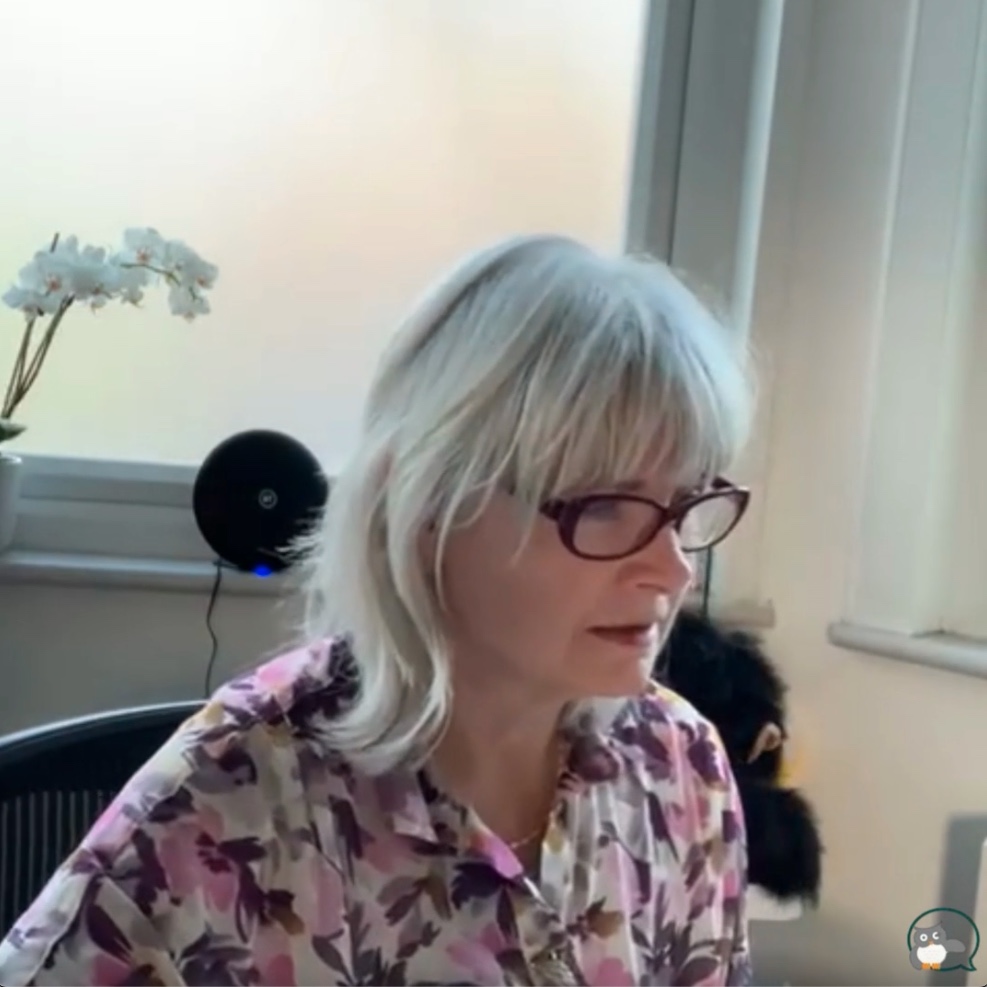
I have been avoiding the use of the Empty Set approach for the longest time as I was not sure if it would work seeing that I am challenging two sounds my student struggles with at the same time. But I decided to give it a go and it works a treat!

With this approach, we use two sounds that our student is struggling with. For example, in my video this student cannot produce /sh/ and /r/. Both sounds have different rules, so I decided to contrast them with each other.

  • The rules of /sh/ are: no voice, air is pushed out through teeth, produced at the front.
  • The rules for /r/ are: use your voice, produce the sound in the middle of the mouth by shaping your tongue in a particular way.

So I chose the words ‘shoes’ and ‘ruse’ as their rules are quite different. Contrasting two sounds the student does not know has been shown to lead to greater change in the child’s articulation. And I can certainly vouch for this as my student is making the best progress with this approach.

Phonology Therapy – what is it, why and how?

Phonology is the study of the sound system of a language. It’s distinct from articulation therapy which focuses on the physical production of sounds.

Phonology therapy focuses on rules. For example, sounds that are produced at the front of the mouth, in contrast to sounds that are produced at the back of the mouth, or sounds that are produced with a long air stream: /s/ or /f/ versus short sounds like /p/ or /t/; sounds are produced with voice or without voice.

Many children, and sometimes adults, are unaware of some of the speech rules and confuse and replace individual sounds. They might say TAT instead of CAT or SIP instead of SHIP.

A quick overview of phonology approaches I use:

Minimal Pairs:

This approach is good for single sound substitutions. We offer word pairs that differ by only one sound, like ‘ship’ and ‘sip.’ One of our first goal in therapy is to highlight the difference between the target sound (e.g., /sh/) and the sound the child uses (e.g., /s/). This helps discriminate and eventually produce the correct sound.

Multiple Oppositions:

A child might replace lots of sounds with a single sound like a /d/. So instead of ‘four’, ‘chore’ and ‘store’ our child says ‘door’, making speech very unintelligible.

The approach is typically geared towards shaking up the phonological system. Our goal is to choose two to four targets that are different from each other, and different from the substituted sound. If our child’s favourite sound is /d/ they can use their voice and make a short sound by stopping their airflow. So I will choose a different target sound to change up the speech system. For example I might choose an /f/, a /m/ and a /k/ sound. So I would contrast: ‘door’ with ‘four’, ‘more’ and ‘core’.

Maximal Oppositions:

In the Maximal Oppositions approach the treatment sets consists of words that are minimally contrasted and that have maximal or near maximal feature differences between each word pair. One word in a pair represents a sound the child ‘knows’ (can say at word level) and the other represents a sound the child does not know (cannot say).

For example, a child may ‘know’ /m/ and be able to say words like ‘man’, ‘mat’ and ‘mine’. However, the same child may be unable to say /f/ as in ‘fan’, ‘fat’ and ‘fine’. The consonants /f/ and /m/ are maximally opposed as follows.

I am always delighted to work on speech sound disorders, I love the challenge and the successes we can celebrate together. Get in touch with me!

Sonja McGeachie

Early Intervention Speech and Language Therapist

Feeding and Dysphagia (Swallowing) Specialist The London Speech and Feeding Practice

The London Speech and Feeding Practice


Find a speech and language therapist for your child in London. Are you concerned about your child’s speech, feeding or communication skills and don’t know where to turn? Please contact me and we can discuss how I can help you or visit my services page.

1

Similar Posts

  • · · ·

    Following your child’s lead: A playful path to AAC success

    Unlocking playtime: A guide to child-led learning

    Does your child struggle to focus on toys or activities? Do they dart away as soon as you approach? You’re not alone!

    The key to unlocking your child’s potential lies in following their lead. Let them guide the play session, and watch their engagement and focus soar.

    Why Child-Led Play Works:

    • Empowerment: Children feel in control, sparking their curiosity and motivation.
    • Focused attention: They’ll stay engaged with activities for longer periods.
    • Reduced frustration: By stepping back and observing, you eliminate the pressure and stress that often comes with directed play.

    How to Implement Child-Led Play:

    1. Prepare the environment: Set out a limited selection of engaging toys.
    2. Observe and wait: Sit back, watch, and listen to your child’s interests.
    3. Embrace the moment: Resist the urge to direct or question; simply enjoy the process.

    Remember: This simple approach can transform playtime and support your child’s development. Give it a try for a week and see the difference!

    #OWLing #hanenmorethanwords

    Observe, Wait, Listen. It’s a powerful formula for unlocking your child’s potential.

    You will likely see:

    • Your child will stay put with any toy for longer whilst you are near them.
    • Your child will tolerate you being nearby and he/she won’t move away.
    • Your child will start giving you brief glances of enjoyment, or perhaps they will hand things to you, or they might take your hand and lead it to something that needs opening etc.
    • In other words, you will see that there suddenly is JOINT PLAY. Yes, granted it may not be according to your adult agenda, but there will be more togetherness than there was before. And this is the START of communication and social engagement.

    USE Core words and a coreboard — to help your child understand the power of words

    Core words are the building blocks of communication. Try using a coreboard like the one below, they are versatile and can be used in countless ways. By modelling these words naturally during play, you expose your child to their meaning and function in context. This approach is far more effective than isolated drill and practice, more powerful than flashcards!

    Using AAC coreboard
    Photo by lemonlenz

    A Winning Combination

    Combining child-led play and AAC modelling creates a magic effect. To summarise:

    • Increased engagement: When you follow your child’s lead, they are more likely to be engaged and receptive to learning. This creates optimal conditions for introducing AAC core words.
    • Natural learning: By modelling AAC core words in the context of play, you help your child understand their meaning and purpose naturally. This fosters generalisation and spontaneous use.
    • Building relationships: Shared play experiences strengthen the bond between you and your child. This trust and connection are essential for successful communication.
    • Reduced pressure: Modelling AAC core words without expectation removes the pressure to produce language. This allows your child to explore communication at their own pace.
    • Expanded vocabulary: As your child becomes more comfortable with AAC, they will begin to incorporate core words into their own communication. This leads to vocabulary growth and increased independence.

    Practical Tips

    • Observe and respond: Pay close attention to your child’s interests and actions. Respond to their cues with enthusiasm and support.
    • Keep it simple: Start with a few core words and gradually introduce new ones as your child’s skills develop.
    • Be patient: Language learning takes time. Celebrate small successes and avoid frustration.
    • Have fun: Remember, play is supposed to be enjoyable for both you and your child. Relax and have fun together!

    Example:

    Photo by lemonlenz

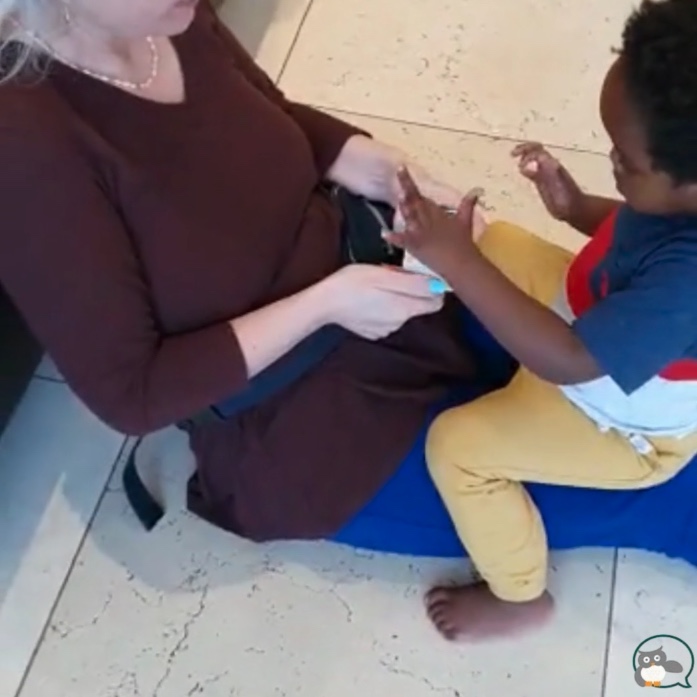
    Let’s say your child is playing with a pop-up toy like you see me do in the above photograph. Here, I followed my child’s lead by waiting to see what she wanted to do with the toy. You are now OWLING! (Observe Wait and Listen)

    Once I noticed that there was repetitive opening of the flaps going on I then pointed to OPEN and MORE on the board, as I said: ‘let’s OPEN this one’ / let’s see MORE animals’ / ‘MORE cow! it says moo!’ ‘OPEN another one’ and so on.

    Important to know, we are not expecting our child to respond verbally or with AAC, but we are providing language input and demonstrating how these words can be used with enthusiasm.

    Naturally in time your child will look at the board and at your pointing and they will eventually want to copy you!

    By incorporating these strategies into your daily interactions, you can create a supportive environment that fosters language development and communication growth.  If you would like more guidance please get in touch and book in for a consultation, some individual therapy and/ or some parent coaching.

    I look forward to supporting you. Please contact me and let’s see how.

    Sonja McGeachie

    Early Intervention Speech and Language Therapist

    Feeding and Dysphagia (Swallowing) Specialist The London Speech and Feeding Practice

    The London Speech and Feeding Practice


    Find a speech and language therapist for your child in London. Are you concerned about your child’s speech, feeding or communication skills and don’t know where to turn? Please contact me and we can discuss how I can help you or visit my services page.

    1
  • ·

    The importance of child-led therapy

    Child-led therapy is essentially what it says, therapy sessions that are directed by your child. You may think how can my child’s Speech and Language Therapist focus on goals if sessions are led by my child.

    Let us explain…

    Your child will be more receptive and motivated to take part in therapy if they have some form of input. E.g., they can choose what toys they want to play with, or how they want to play with the resources available. If sessions are child-centred then they are much more likely to engage and reach their goals, making intervention valuable. They will also be able to regulate their emotions, and use movement to support their need for regulation. E.g., some children like to jump whilst others like to run. As Speech and Language Therapists we need to use what is meaningful to your child to get the most out of intervention. By focusing on child-led therapy, we can build trust, which will allow us, in time, to use new techniques and activities that your child may enjoy. We want children to be themselves, to show their true personality. Therapy is about enhancing their skills in their own individualised way and child-led therapy allows for this.

    This way of working may seem daunting to some, but it doesn’t have to feel this way. Parents often feel if they are prepared then activities may go smoother. It might be the case, but perhaps it doesn’t give your child the opportunity for spontaneity. We’d like to suggest something that may lead to some surprises. Put out an activity that is your child’s favourite and then a completely new activity. Remember these activities don’t have to be complicated. Often, the simpler the better!

    So, no need to plan, just place two activities out and see what happens! Look out for anything which surprises you, which activity did they prefer? Do they have any sensory preferences? The freedom of choice is a wonderful thing to explore. So, just go with the flow!

    The kind of activities that are useful for child-led play can include:

    • Hide and seek
    • Cooking or baking
    • An Exercise ball
    • Small world play
    • Pretend play
    • Musical instruments (you could even have a go at making your own)

    Child-led therapy is a very useful resource. We have it at our fingertips. We don’t need special resources. You just need yourselves and your child! Sometimes, child-led therapy can be tricky to put in place. It sounds easy but is much harder in reality. So, make sure you give it time and reflect on your experiences. Ask yourselves ‘what went well’, and ‘what could be improved’. E.g., perhaps you gave your child time to lead to begin with, but you didn’t give them enough time to think about their options during the activity.

    How can parents become more child-led in the home environment?

    • Pause and use silence. This gives your child the opportunity to lead.
    • It’s perfectly natural to want to talk. Afterall, this is how adults maintain conversations. If you find yourself talking too much, count to ten! This will allow your child time to respond or initiate in the conversation or interaction.
    • Move down to your child’s level. It’s much easier to see what’s going on if you’re at the same height.
    • Videoing you and your child can really help you to see where your strengths lie. You’ll also be able to make minor tweaks to improve your communication during child-led play.

    Contact Sonja for more advice on speech, language and communication during child-led play.


    Find a speech and language therapist for your child in London. Are you concerned about your child’s speech, feeding or communication skills and don’t know where to turn? Please contact me and we can discuss how I can help you or visit my services page.
    0
  • · · ·

    How do we play with our Gestalt Language Processors?

    Image by Freepik

    Child-led therapy

    When working with Gestalt Language Processors, it is always advisable to use child-led therapy. What does that mean? Child led therapy involves following a child’s interests and allowing her/him to lead the play activity throughout the speech and language therapy session. In other words, instead of having my own ideas of what we might want to play with or what activities I might try and use, I provide a range of toys I know the child likes or has played well with before; then I wait for the child to pick what she/he enjoys doing.

    Play can be very repetitive and we can often see our child cycling back to the same one or two toys throughout the session. But this is what she/he needs to do at that time and it means that we have focused attention and engagement. This in turn is very helpful for the therapeutic process, which is to offer great scripts and phrases/words alongside what she/he is playing with.

    Monotropic minds

    Often the mind of autistic children is more strongly pulled towards a smaller number of interests or hobbies as I like to call them. Dr Dinah Murray, Dr Winn Lawson and Mike Lesser have found in 2005 that autistic people have ‘monotropic’ minds. They explain that autistic children focus their energy on a narrow range of activities as the energy required to switch between several toys is much higher than we would see in the neuro-typical population.

    Gestalt Language Processors are often also Gestalt Cognitive Processors. This is when experiences are retained as episodic events and memories. An event is remembered by specific parts of the same event. And, therefore, these specific parts should always be part of that event, when the event is repeated.

    Should any of the specifics be changed or are missing, then this can cause great upset to Gestalt Cognitive Processors. So, for example, if the last two times in speech therapy we had the train set out and this was played with happily, then this becomes a specific part of the whole session. If, I then don’t offer the train set the third time a child comes to see me, this could be very upsetting.

    This is why I tend to try this out and see what happens. Usually in the 3rd or 4th session: I might not bring out the car run that has hitherto been super successful to see if we are able to transition well to other toys. If yes, then we can have new experiences but if not then I will re-offer the car run/or whatever toy pretty quickly so as not to cause complete dysregulation.

    A few pointers below which help with child-led play:

    Introduce a few new toys and see what happens

    Parents are encouraged to bring some familiar toys their child likes to the session. We can then introduce a couple of different toys to see how we go. Try offering a new toy alongside the familiar one; try offering new toys without the familiar one present, but be prepared to re-offer the “old” toy should our child get upset.

    Rotate toys and don’t offer out too many toys

    I find that children can get overwhelmed and overstimulated by too many items out all at once. I always talk to parents about toy rotation at home and I encourage storage and ‘tidy up’ of toys so that we can increase attention focus, and also maintain freshness and new interest in older toys.

    Some children are not yet ready to play with toys

    Here I suggest people games: these are games where the adult becomes part of a more motor-based activity. Some call it ‘rough and tumble play’ but it can be nursery rhymes such as sleeping bunnies/row row the boat or peek-a-boo for the younger ones.

    Copy/Imitation is so important – try getting two identical or similar play items

    When we are copying our child, it is often not desirable to ‘take turns’ with their toys/blogs/cars etc as our child may not be ready to let us take a turn. Instead, if we have the exact same toy that our child is having then we can play alongside our child and copy them perfectly without interrupting their play.

    References:

    Murray, D., Lesser, M., & Lawson, W. (2005). Attention, monotropism and the diagnostic criteria for autism. Autism9(2), 139-156.

    If you need help with your child, please do not hesitate to contact me.


    Find a speech and language therapist for your child in London. Are you concerned about your child’s speech, feeding or communication skills and don’t know where to turn? Please contact me and we can discuss how I can help you or visit my services page.

    0
  • · · ·

    Unlocking communication: My daily life with the Saltillo 88 Core Board

    Introduction

    As an AAC speech and language therapist who uses the Saltillo 88 Core board every day, I can tell you it’s more than just a communication tool. It’s a doorway to independence, connection, and expressing my students’ unique voice.

    What is the Saltillo 88 and why do I use this one?

    In this blog post, I want to share practical, real-world examples of how I integrate the Saltillo 88 into various daily activities, empowering my students and parents to learn to communicate.

    There are literally hundreds of core boards out there and I have tried many different ones over the years. Which one should I use with this particular client? Should I make up my own? (I have made up tons!) or should I use a ready-made one like the one below which is what this blog is about.

    For me the best ones are boards with a good number of core words (at least 60) so that the board is versatile and can be used across a range of activities. The board needs to have a range of pronouns, verbs, descriptors, prepositions and question words to be useful and to stimulate not just requesting but commenting and asking questions. Another consideration is: can the board easily be transferred to a more robust AAC system. Once my student is used to the symbols and where they are could we move to an electronic talker/device. And if this answer is ’yes’ then we have a great board to get started with.

    Below is a picture of the Saltillo 88.

    Saltillo 88 Core Board
    Saltillo 88 Core Board

    It has 88 words and I find it really does suit most activities. The same board and design is also then found on the TOUCHCHAT AAC device which can be a seamless transition for our learner.

    Let me dive into how core words/board or AAC can be used daily:

    1.  Getting dressed

    Whilst choosing clothes for your little one and getting them ready for the day you can use the following words: want, like, get, finish. Always pack the words into little phrases you can speak naturally when using a board. I have tried to show you phrases that you could use below.

    The words in bold are the core words on the board and the other words are just words you say whilst pointing to the core word.

    • Goal: Express choices, needs, and preferences about clothing.
    • Ideas:
      • ‘I want this one [specific item of clothing: ‘shirt’, ‘pants’]’
      • ‘I like that one [colour/type of clothing]’
      • ‘Help me [put/get it on/take off]’
      • ‘let’s get your socks now’
      • finished let’s go’ (when dressed)

    2. Having a shower/bath

    • Goal: Bath time tends to happen daily and so it lends itself to using the same useful phrases and words to chat about temperature preferences, to ask for toys or for washing routines.
    • Ideas:
      • ‘let’s go have a bath/shower’
      • ‘let’s turn on the tap/water’
      • now turn it off
      • ‘let’s get/have more toys/water/bubbles/tickles’
      • all gone, what’s next?’
      • ‘how about washing your hands/feet’
      • ‘let’s do that again’
      • ‘need some help?’
      • Stop it now, let’s do something different’

    3. Mealtimes

    • Goal: Mealtimes can be (or should be) enjoyable and motivating to ask for specific things we like, and commenting about our eating experiences.
    • Ideas:
      • ‘I want/give me [food item: ‘apple’, ‘bread’]/[drink item: ‘water’, ‘juice’]’
      • More foods/drinks/snacks’
      • All done
      • ‘that’s messy we like that (not)’
      • ‘Like’/‘Don’t like’
      • Big’/‘Little’
      • ‘this is so nice!’

    4. Playing

    • Goal: This is where it’s at for children of course and we can use our core words to chat and engage with our little learners.
    • Ideas:
      • ‘I want play’
      • Go’/‘Stop
      • More/again’
      • ‘not it’s my My turn/’it’s Your turn
      • ‘that’s a Big one!’/‘let’s do Little bubbles (describing toys)
      • ‘let me Open it for you (for boxes, doors in play)
      • ‘I See it’ (to draw attention)
      • Help me’ (with a tricky toy)

    5. Opening boxes/doors/etc

    • Goal: Most kids love opening boxes, doors and cabinets to see what there is to play with. Help your child to ask for what they want.
    • Ideas:
      • let’s Open that box/bag/zip/door’
      • get me a (toy) out of here’
      • ‘Let’s Take it out and see what it is?’
      • finished’ (when finished with the task)
      • ‘I want [what’s inside]’
      • ‘What’s next? Let’s see’

    Tips for using AAC effectively

    • Consistency is key: Emphasise using it regularly, even for small things.
    • Modelling: this is crucial, the adults need to use the board for all situations first and foremost before we can expect our child to be interested.
    • Patience: Communication takes time and practice.
    • Celebrate successes: Acknowledge every communicative attempt.
    • Make it accessible: Keep the board within easy reach at all times.

    Conclusion

    If you’re considering the Saltillo 88, or TouchChat, or are already using it, I hope these examples inspire you. It’s a journey of discovery, and every word communicated is a step towards a more connected and independent life. What are your favourite ways to use the Saltillo 88 or which core board do you love using? I would love to hear your comments and stories.

    Sonja McGeachie

    Highly Specialist Speech and Language Therapist

    Owner of The London Speech and Feeding Practice.


    Health Professions Council registered
    Royal College of Speech & Language Therapists Member
    Member of ASLTIP

    Find a speech and language therapist for your child in London. Are you concerned about your child’s speech, feeding or communication skills and don’t know where to turn? Please contact me and we can discuss how I can help you or visit my services page.

    1
  • · ·

    Living life with a lisp

    You may be questioning ‘will my child grow out of having a lisp?’ There are so many myths out there that it’s sometimes difficult to find your way out of a complex maze of information.

    The good news: lisps can be successfully treated by a Speech and Language Therapist and the earlier it’s resolved, the better. We know from the evidence base that some children’s lisps will resolve and, as always, it is completely age appropriate to have this speech pattern up until aged 4 ½.

    As with any speech and language targets your child will need to be motivated to practise their newly acquired techniques, at home and in other settings. They will eventually be able to generalise this skill, but it takes lots of practice. So, think carefully about if your child is ready and motivated before commencing Speech and Language Therapy.

    There are essentially two ways in which your child has acquired a lisp. It’s key here to mention that parents have no blame in this.

    1. They’ve mis-learned it and now incorrect production has become a habit
    2. Children have difficulties organising the sounds to make a clear production

    You may be surprised to realise that there are different types of lisps. But all the techniques will be the same.

    1. Interdental lisp

    When your child pushes their tongue too far forward, they will make a /th/ sound instead of /s/ and /z/

    1. Dental lisp

    This is where your child’s tongue pushes against their teeth

    1. Lateral lisp

    Air comes over the top of the tongue and down the sides

    1. Palatal lisp

    Your palate is the roof of your child’s mouth. Sometimes they will touch their palate when making certain sounds (e.g., /s/ and /z/)

    It’s useful for you to know what type of lisp your child has because you can then support them to make the correct production. You’ll be able to talk about where in the mouth their tongue is and where it needs to be to produce a clear sound. Your Speech and Language Therapist will be able to help you with this.

    Top therapy tips for lisps

    1. Awareness is key. Does your child know where their tongue and teeth are (i.e., are they behind their teeth)? Do they notice the air escaping? Use a mirror so that your child can see not only themselves but also you in the mirror.
    2. Repetition! As with most therapeutic intervention, practice makes perfect. So little and often is key!
    3. Make sessions fun, perhaps around your child’s interests or allow them to drink from a straw
    4. Comment on how the sound is produced (e.g., /z/ is like a bee, /s/ is like a snake)
    5. Use tactile cues. Your child’s vocal folds vibrate when they produce a sound like /z/ but not with /s/. You could use the words ‘loud’ and ‘quiet’ to describe this.
    6. Start with a /t/ sound and gradually elongate the sound to an /s/

    Having a lisp may not be problematic for some, but for other children, it can have a significant impact on their emotional wellbeing. Intervening at an early age can prevent this from happening. We always advocate for early intervention!

    Contact Sonja for support on resolving your child’s lisp.


    Find a speech and language therapist for your child in London. Are you concerned about your child’s speech, feeding or communication skills and don’t know where to turn? Please contact me and we can discuss how I can help you or visit my services page.

    0
  • Teletherapy: A fun and convenient way to help your child master those sounds!

    It can be hard to get your child to come to the clinic on a weekly basis to work on those tricky sounds. Perhaps the car isn’t working, you have had a lot on, or our student has a bit of a cold but is still able to do a little bit of sound practice?

    The good news is that Teletherapy can be a fantastic option to continue your child’s speech journey from the comfort of your own home!

    Even when your wifi is not working and your laptop is broken, as you can see on this clip I was able to stretch into running the session on WhatsApp video, but that is less then ideal I will say.

    What is Teletherapy?

    Teletherapy is speech therapy delivered virtually, through a secure video platform. I use Zoom for example, but I have also used WhatsApp Video Call on occasions where parents’ zoom was not working.

    When is Teletherapy perfect?

    Here’s why teletherapy can be a great fit for helping your child solidify those learned sounds:

    • Basic sound patterns have been established in clinic: Your child is now able to say those tricky sounds BUT they are not saying them in daily life yet; they are not ‘generalising’ those new sounds into the normal speech.
    • You just can’t make it today: No more fighting traffic or fitting appointments into busy schedules. Teletherapy sessions happen at home, on your time. Sometimes even in the attic or the garden shed as in my video clip here ????
    • Your child is about 7 years old or older and is motivated to work on their sounds: I use fun and interactive online tools and games to keep your child engaged during practice sessions. Due to having done teletherapy over the Covid period I have amassed lots of great games and know-how in this area. Our student needs to be mature enough to be able to sit in front of the laptop camera and participate with a minimum of adult help.
    • Your child loves gaming and is best motivated through online games: Sometimes children are best motivated when playing online games in between speech sound/language activities; in this case teletherapy is totally perfect.
    • Focus on Carryover: The familiar environment of your home can actually be an advantage! I can guide my student on practising sounds in everyday situations, like reading a book together or playing with toys, sometimes even talking to their sibling or a.n.other in the room.
    • Parental Involvement: Teletherapy allows you to be directly involved in the sessions just in same way as when I see your child in my clinic. You can learn strategies and techniques from me to continue practising with your child throughout the day. You can also make a note of the online games I have and then use them in your home sessions.

    What to Expect During a Teletherapy Session

    • Initial Consultation: We start with a brief chat on how the week has gone, what gains have been made with the home exercises and we settle the student into a good learning mode; sometimes I start off with a very quick game just to set the scene.
    • Working on generalising: When asking my student about how their week has been I will remind them to remember their new sounds and to try and produce them whilst talking to me. This is already the start of therapy.
    • Practising target sounds: We practice our target sounds in different contexts, using games, visuals, and activities.
    • The teletherapy session lasts the same amount of time as do 1:1 sessions, unless I see that a child becomes very fidgety and we are not able to hold out much longer, I will cut short the session and focus on increased home practice.
    • Home Practice: Just like in 1:1 clinic sessions, I will provide you with easy-to-follow tips and activities to continue practising sounds throughout the week.

    Getting Started with Teletherapy

    • Technology Check: Ensure you have a reliable internet connection and a device with a camera and microphone.
    • What device is best: Ideally the student needs to be on a laptop or PC because that way the student can actively engage with their mouse, moving game pieces, or participating in online activities using their mouse. Tablets are ok but do not allow active participation of the student as described above. However once in a while we can make it work and I do have some games and activities that do not rely on student participation.

    Finally, I would say that Teletherapy is a safe, fun and effective way to continue your child’s speech therapy journey. It’s convenient, engaging, and it is perfect on a rainy day when you don’t want to or can’t come out to bring your child to clinic.

    Do get in touch if you would like some in-person or on-line 1:1 support with this. It can be overwhelming to figure it all out alone.


    Find a speech and language therapist for your child in London. Are you concerned about your child’s speech, feeding or communication skills and don’t know where to turn? Please contact me and we can discuss how I can help you or visit my services page.

    1