Explore 12 questions to determine whether your child may be Autistic

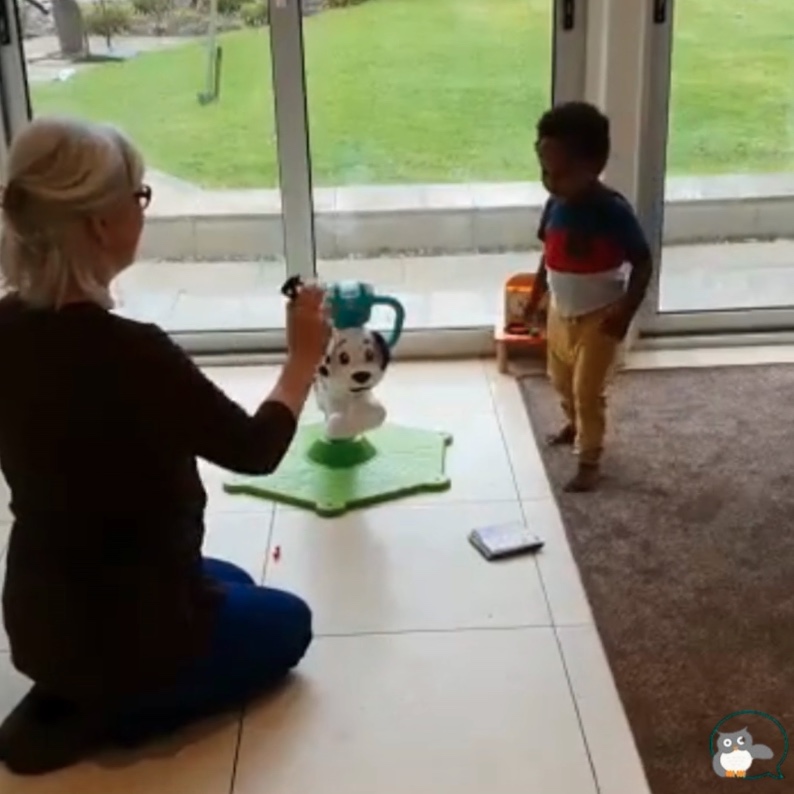
A young boy is in the foreground and has turned his head away from the woman sitting next to him.
May your child be autistic?

As professionals, when diagnosing young children with an Autistic Spectrum Condition, it is vital we work as a multi-disciplinary team, so you will likely see many professionals. This may include Educational Psychologist, Dietician, General Practitioner, Occupational Therapist, Paediatrician, Special Educational Needs Coordinator, Speech and Language Therapist and Social worker. Once the evidence is collated, then a diagnosis may be made.

You may be wondering what are some of the early signs of social communication difficulties? Whilst no autistic child is the same and we know Autism is very much a very wide spectrum of abilities and needs there are some autistic spectrum characteristics we do typically see in the early years of childhood. You may wish to think about these areas or presentations to help you prepare for the Speech and Language Therapy appointment.

Twelve questions

  1. Does your child respond to their name?
  2. Are they fixated with watching their hands?
  3. Do they have sensory processing difficulties such as bright lights, food textures, or loud noises?
  4. Are they meeting their milestones or are they delayed?
  5. Do they flap their arms or legs when excited?
  6. Have you noticed any rocking back and forth?
  7. Do they blink excessively or display any facial tics?
  8. Do they play with a particular sort of toy e.g. spinning toys?
  9. Have you noticed that they lack interest in toys?
  10. Have they regressed in their language? Perhaps you’ve noticed they are not using words that they have previously learnt.
  11. Do they use gestures to communicate their needs? How do they communicate their wants and needs?
  12. Do they appear to be in their own world?

You are not alone

These questions are by no means exhaustive and there are many more factors to consider. But it is important to trust your instincts as you are the expert on your child and know your child the best. Regardless of whether you see all of the above points or none, do not hesitate to have an assessment if you are concerned as, even if it turns out to be nothing to worry about, there is always at least one or two great pieces of advice I can offer you on the way and you will leave feeling hopeful and empowered. It’s always best to seek early intervention with communication difficulties. This allows strategies and support to be put in place. Never feel alone, always speak out.

Find communication support here from me, Sonja, (Specialist Speech and Language Therapist)


Find a speech and language therapist for your child in London. Are you concerned about your child’s speech, feeding or communication skills and don’t know where to turn? Please contact me and we can discuss how I can help you or visit my services page.
Similar Posts

  • ·

    Explore how Intensive Interaction develops Autistic children’s communication

    Intensive Interaction is an approach that I might suggest for your child. Here is an overview of this approach to increase your knowledge. There are a range of approaches that overlap and having trained in them all I use them all interchangeably to tailor to each child individually. This approach is particularly good for children who work mostly to their own agenda and find it hard to engage with others.

    So, what is Intensive Interaction?

    According to its founder, Hewett (1980), the approach “involves mirroring a person’s actions, sounds and facial expressions.” This allows your child to recognise and form communication between themselves and another, in a fun, play-based setting. Attention and listening are the fundamentals to speech and language development. By using the Intensive Interaction approach, we can increase the time your child can attend for and with another person. We are working towards a child enjoying another person’s presence. We are hoping to make gains with playing together with a child, taking turns and achieving reciprocity. That is the platform which we need to start with to build communication, language, words and perhaps even speech.

    There are many aspects that this approach supports:

    • such as using facial expressions
    • being in the presence of other people
    • having a shared space
    • attending to others
    • recognising and using non-verbal behaviours (e.g., gestures)
    • making sounds/noises (vocalisations) that have meaning
    • and eye contact. Although, we must be careful when suggesting ‘improving’ the use of eye contact. For some individuals making eye contact can be physically painful. So be aware that we are not making our children ‘look’ we are encouraging their natural behaviour.

    Who benefits from Intensive Interaction?

    Children with more complex communication and learning delay can benefit from the Intensive Interaction approach. Each session can be adapted to the needs of the individual and the sessions can be designed to use the whole or part of the approach. It is especially useful for children who are finding it hard to engage in any way socially with another person. Autistic children who tend to work to their own agenda often benefit from this approach.

    How is Intensive Interaction implemented?

    You need to have an environment that your child is comfortable in, and to be able to come down to their level so that you can see each other. This is why I often visit children in their own homes to ensure that they are comfortable and that they can withdraw for periods of time if they need to as well.

    Ensure your child knows you’re there and you are 100% present. This is very important. I would recommend that you put your phone away for some 10 minutes or so and give your undivided attention to your child for that period of time.

    Waiting

    Waiting is very important: we need to give your child time to process what is happening around them. After waiting for a response, you might want to start copying any gestures they use, any facial expressions they make, or perhaps imitate any sounds. You’ll want to continue with this for a few minutes to see if the communication between you and your child changes. Remember always take the cues from your child; if they communicate a message with you, respond. It might be that they are ready to finish and that they’ve shown this by walking away or signing.

    Giving your child a way to respond is vital. We can use visuals to support their communication. We can create ‘yes’ and ‘no’ symbols so they can use them in a functional way.

    A top tip in these sessions is to use mirrors, so that your child can see and begin to recognise their own facial expressions.

    There are other programmes that overlap with Intensive Interaction such as Hanen with following your child’s lead and the Gina Davies Curiosity Programme.

    Now you know a bit about Intensive Interaction, why not book a call to discuss how we can support your Autistic child’s communication using this evidence-based approach.


    Find a speech and language therapist for your child in London. Are you concerned about your child’s speech, feeding or communication skills and don’t know where to turn? Please contact me and we can discuss how I can help you or visit my services page.

    0
  • · · ·

    Autism – Benefits of Early Assessment and Intervention

    I think my child might be autistic – how can we help?
    Image by macrovector on Freepik

    Consulting a Specialist Speech and Language Therapist can help you in several ways: assessment, informal and formal observation, discussion and advice, onward referrals, direct intervention, parent coaching, educational support and much more, all geared towards supporting you the parents, and helping your child to flourish and thrive.

    First up, we can help you with assessment and advice: with a wealth of expertise in observing childrens’ play and communication, as well as knowledge of the latest research we can see a child’s strengths and areas of struggle very quickly indeed.

    Within a short space of time, we can identify the areas we need to focus on and start guiding you towards helping your child to connect, respond, react and feel better.

    Early detection is key

    If autism is detected in infancy, then therapy can take full advantage of the brain’s plasticity. It is hard to diagnose Autism before 18 months but there are early signs we know to look out for. Let’s have a brief look at the sorts of things we look at.

    The earliest signs of Autism involve more of an absence of typical behaviours and not the presence of atypical ones.

    • Often the earliest signs are that a baby is very quiet and undemanding. Some babies don’t respond to being cuddled or spoken to. Baby is being described as a ‘good baby, so quiet, no trouble at all’.
    • Baby is very object focused: he/she may look for long periods of time at a red spot/twinkly item further away, at the corner of the room for example.
    • Baby does not make eye contact: we can often see that a baby looks at your glasses for example instead of ‘connecting’ with your eyes.
    • At around 4 months we should see a baby copying adults’ facial expressions and some body movements, gestures and then increasingly cooing sounds we make; babies who were later diagnosed with autism were not seen to be doing this.
    • Baby does not respond with smiles by about 6 months.
    • By about 9 months, baby does not share sounds in a back-and-forth fashion.
    • By about 12 months baby does not respond/turn their heads when their name is called.
    • By around 16 months we have no spoken words; perhaps we hear sounds that sound like ‘speech’ but we cannot make out what the sounds are.
    • By about 24 months we see no meaningful two-word combinations that are self-generated by the toddler. We might see some copying of single words.

    24 months plus:

    • Our child is not interested in other children or people and seems unaware of others in the same room/play area.
    • Our child prefers to play alone, and dislikes being touched, held or cuddled.
    • He/she does not share an interest or draw attention to their own achievements e.g., ‘daddy look I got a dog’.
    • We can see our child not being aware that others are talking to them.
    • We see very little creative pretend play.
    • In the nursery our child might be rough with other children, pushing, pinching or scratching, biting sometimes; or our child might simply not interact with others and be unable to sit in a circle when asked to.

    What sort of speech and language difficulties might we see?

    Our child might do any of the following:

    • have no speech at all, but uses body movements to request things, takes adults by the hand
    • repeat the same word or phrase over and over; sometimes straight away after we have said it or sometimes hours later
    • repeat phrases and songs from adverts or videos, nursery rhymes or what dad says every day when he gets back from work etc.
    • copy our way of intonation
    • not understand questions – and respond by repeating the question just asked:
      • adult: Do you want apple? child: do you want apple?
    • not understand directions or only high frequency directions in daily life
    • avoid eye contact or sometimes ‘stares’
    • lack of pointing or other gestures

    Common behaviours:

    • Hand flapping
    • Rocking back-and-forth
    • Finger flicking or wriggling/moving
    • Lining up items/toys
    • Wheel spinning, spinning around self
    • Flicking lights on and off, or other switches
    • Running back-and-forth in the room, needing to touch each wall/door
    • Loud screaming when excited
    • Bashing ears when frustrated or excited
    • Atypical postures or walking, tip toeing, can be falling over easily, uncoordinated
    • Can be hyper sensitive to noises, smells, textures, foods, clothing, hair cutting, washing etc.
    • Being rigid and inflexible, needing to stick to routines, unable to transition into new environments
    • Food sensitivity, food avoidance, food phobias

    I mentioned this to be a ‘brief’ look at the areas and it is: each topic is looked at very deeply and each area is multi-facetted therefore a diagnosis is rarely arrived at very quickly. We want to make sure we have covered all aspects and have got to know your child very well before coming to conclusions.

    Early detection is key, because we want to start helping your child to make progress as quickly as is possible. If you feel /know that your child is delayed in their speech and language development and you would like a professional opinion then please do contact me, I look forward to supporting you. It is important to know at this point, that if your child only has one or two of the above aspects it may mean that your child is simply delayed for reasons other than Autism and if that is the case, we will be able to help you iron out a few areas of need so that your child can go on thriving.

    If you need help with your child, please do not hesitate to contact me.


    Find a speech and language therapist for your child in London. Are you concerned about your child’s speech, feeding or communication skills and don’t know where to turn? Please contact me and we can discuss how I can help you or visit my services page.

    1
  • · · ·

    Unlocking communication: My daily life with the Saltillo 88 Core Board

    Introduction

    As an AAC speech and language therapist who uses the Saltillo 88 Core board every day, I can tell you it’s more than just a communication tool. It’s a doorway to independence, connection, and expressing my students’ unique voice.

    What is the Saltillo 88 and why do I use this one?

    In this blog post, I want to share practical, real-world examples of how I integrate the Saltillo 88 into various daily activities, empowering my students and parents to learn to communicate.

    There are literally hundreds of core boards out there and I have tried many different ones over the years. Which one should I use with this particular client? Should I make up my own? (I have made up tons!) or should I use a ready-made one like the one below which is what this blog is about.

    For me the best ones are boards with a good number of core words (at least 60) so that the board is versatile and can be used across a range of activities. The board needs to have a range of pronouns, verbs, descriptors, prepositions and question words to be useful and to stimulate not just requesting but commenting and asking questions. Another consideration is: can the board easily be transferred to a more robust AAC system. Once my student is used to the symbols and where they are could we move to an electronic talker/device. And if this answer is ’yes’ then we have a great board to get started with.

    Below is a picture of the Saltillo 88.

    Saltillo 88 Core Board
    Saltillo 88 Core Board

    It has 88 words and I find it really does suit most activities. The same board and design is also then found on the TOUCHCHAT AAC device which can be a seamless transition for our learner.

    Let me dive into how core words/board or AAC can be used daily:

    1.  Getting dressed

    Whilst choosing clothes for your little one and getting them ready for the day you can use the following words: want, like, get, finish. Always pack the words into little phrases you can speak naturally when using a board. I have tried to show you phrases that you could use below.

    The words in bold are the core words on the board and the other words are just words you say whilst pointing to the core word.

    • Goal: Express choices, needs, and preferences about clothing.
    • Ideas:
      • ‘I want this one [specific item of clothing: ‘shirt’, ‘pants’]’
      • ‘I like that one [colour/type of clothing]’
      • ‘Help me [put/get it on/take off]’
      • ‘let’s get your socks now’
      • finished let’s go’ (when dressed)

    2. Having a shower/bath

    • Goal: Bath time tends to happen daily and so it lends itself to using the same useful phrases and words to chat about temperature preferences, to ask for toys or for washing routines.
    • Ideas:
      • ‘let’s go have a bath/shower’
      • ‘let’s turn on the tap/water’
      • now turn it off
      • ‘let’s get/have more toys/water/bubbles/tickles’
      • all gone, what’s next?’
      • ‘how about washing your hands/feet’
      • ‘let’s do that again’
      • ‘need some help?’
      • Stop it now, let’s do something different’

    3. Mealtimes

    • Goal: Mealtimes can be (or should be) enjoyable and motivating to ask for specific things we like, and commenting about our eating experiences.
    • Ideas:
      • ‘I want/give me [food item: ‘apple’, ‘bread’]/[drink item: ‘water’, ‘juice’]’
      • More foods/drinks/snacks’
      • All done
      • ‘that’s messy we like that (not)’
      • ‘Like’/‘Don’t like’
      • Big’/‘Little’
      • ‘this is so nice!’

    4. Playing

    • Goal: This is where it’s at for children of course and we can use our core words to chat and engage with our little learners.
    • Ideas:
      • ‘I want play’
      • Go’/‘Stop
      • More/again’
      • ‘not it’s my My turn/’it’s Your turn
      • ‘that’s a Big one!’/‘let’s do Little bubbles (describing toys)
      • ‘let me Open it for you (for boxes, doors in play)
      • ‘I See it’ (to draw attention)
      • Help me’ (with a tricky toy)

    5. Opening boxes/doors/etc

    • Goal: Most kids love opening boxes, doors and cabinets to see what there is to play with. Help your child to ask for what they want.
    • Ideas:
      • let’s Open that box/bag/zip/door’
      • get me a (toy) out of here’
      • ‘Let’s Take it out and see what it is?’
      • finished’ (when finished with the task)
      • ‘I want [what’s inside]’
      • ‘What’s next? Let’s see’

    Tips for using AAC effectively

    • Consistency is key: Emphasise using it regularly, even for small things.
    • Modelling: this is crucial, the adults need to use the board for all situations first and foremost before we can expect our child to be interested.
    • Patience: Communication takes time and practice.
    • Celebrate successes: Acknowledge every communicative attempt.
    • Make it accessible: Keep the board within easy reach at all times.

    Conclusion

    If you’re considering the Saltillo 88, or TouchChat, or are already using it, I hope these examples inspire you. It’s a journey of discovery, and every word communicated is a step towards a more connected and independent life. What are your favourite ways to use the Saltillo 88 or which core board do you love using? I would love to hear your comments and stories.

    Sonja McGeachie

    Highly Specialist Speech and Language Therapist

    Owner of The London Speech and Feeding Practice.


    Health Professions Council registered
    Royal College of Speech & Language Therapists Member
    Member of ASLTIP

    Find a speech and language therapist for your child in London. Are you concerned about your child’s speech, feeding or communication skills and don’t know where to turn? Please contact me and we can discuss how I can help you or visit my services page.

    2
  • · · ·

    Following your child’s lead: A playful path to AAC success

    Unlocking playtime: A guide to child-led learning

    Does your child struggle to focus on toys or activities? Do they dart away as soon as you approach? You’re not alone!

    The key to unlocking your child’s potential lies in following their lead. Let them guide the play session, and watch their engagement and focus soar.

    Why Child-Led Play Works:

    • Empowerment: Children feel in control, sparking their curiosity and motivation.
    • Focused attention: They’ll stay engaged with activities for longer periods.
    • Reduced frustration: By stepping back and observing, you eliminate the pressure and stress that often comes with directed play.

    How to Implement Child-Led Play:

    1. Prepare the environment: Set out a limited selection of engaging toys.
    2. Observe and wait: Sit back, watch, and listen to your child’s interests.
    3. Embrace the moment: Resist the urge to direct or question; simply enjoy the process.

    Remember: This simple approach can transform playtime and support your child’s development. Give it a try for a week and see the difference!

    #OWLing #hanenmorethanwords

    Observe, Wait, Listen. It’s a powerful formula for unlocking your child’s potential.

    You will likely see:

    • Your child will stay put with any toy for longer whilst you are near them.
    • Your child will tolerate you being nearby and he/she won’t move away.
    • Your child will start giving you brief glances of enjoyment, or perhaps they will hand things to you, or they might take your hand and lead it to something that needs opening etc.
    • In other words, you will see that there suddenly is JOINT PLAY. Yes, granted it may not be according to your adult agenda, but there will be more togetherness than there was before. And this is the START of communication and social engagement.

    USE Core words and a coreboard — to help your child understand the power of words

    Core words are the building blocks of communication. Try using a coreboard like the one below, they are versatile and can be used in countless ways. By modelling these words naturally during play, you expose your child to their meaning and function in context. This approach is far more effective than isolated drill and practice, more powerful than flashcards!

    Using AAC coreboard
    Photo by lemonlenz

    A Winning Combination

    Combining child-led play and AAC modelling creates a magic effect. To summarise:

    • Increased engagement: When you follow your child’s lead, they are more likely to be engaged and receptive to learning. This creates optimal conditions for introducing AAC core words.
    • Natural learning: By modelling AAC core words in the context of play, you help your child understand their meaning and purpose naturally. This fosters generalisation and spontaneous use.
    • Building relationships: Shared play experiences strengthen the bond between you and your child. This trust and connection are essential for successful communication.
    • Reduced pressure: Modelling AAC core words without expectation removes the pressure to produce language. This allows your child to explore communication at their own pace.
    • Expanded vocabulary: As your child becomes more comfortable with AAC, they will begin to incorporate core words into their own communication. This leads to vocabulary growth and increased independence.

    Practical Tips

    • Observe and respond: Pay close attention to your child’s interests and actions. Respond to their cues with enthusiasm and support.
    • Keep it simple: Start with a few core words and gradually introduce new ones as your child’s skills develop.
    • Be patient: Language learning takes time. Celebrate small successes and avoid frustration.
    • Have fun: Remember, play is supposed to be enjoyable for both you and your child. Relax and have fun together!

    Example:

    Photo by lemonlenz

    Let’s say your child is playing with a pop-up toy like you see me do in the above photograph. Here, I followed my child’s lead by waiting to see what she wanted to do with the toy. You are now OWLING! (Observe Wait and Listen)

    Once I noticed that there was repetitive opening of the flaps going on I then pointed to OPEN and MORE on the board, as I said: ‘let’s OPEN this one’ / let’s see MORE animals’ / ‘MORE cow! it says moo!’ ‘OPEN another one’ and so on.

    Important to know, we are not expecting our child to respond verbally or with AAC, but we are providing language input and demonstrating how these words can be used with enthusiasm.

    Naturally in time your child will look at the board and at your pointing and they will eventually want to copy you!

    By incorporating these strategies into your daily interactions, you can create a supportive environment that fosters language development and communication growth.  If you would like more guidance please get in touch and book in for a consultation, some individual therapy and/ or some parent coaching.

    I look forward to supporting you. Please contact me and let’s see how.

    Sonja McGeachie

    Early Intervention Speech and Language Therapist

    Feeding and Dysphagia (Swallowing) Specialist The London Speech and Feeding Practice

    The London Speech and Feeding Practice


    Find a speech and language therapist for your child in London. Are you concerned about your child’s speech, feeding or communication skills and don’t know where to turn? Please contact me and we can discuss how I can help you or visit my services page.

    1
  • · ·

    Chaining: A powerful tool for phonological development

    Understanding chaining

    Chaining is a therapeutic technique I like to use in my speech therapy work with children who have Childhood Apraxia of Speech (CAS) or phonological speech sound difficulties. It helps to break down a complex target behaviour into smaller, more manageable steps. By systematically teaching and reinforcing each step, I can help my students achieve their communication goals.

    There are two types of chaining: Forward and backward chaining

    Today I am going to show and talk about backward chaining. This technique involves starting with the last step and working backward to the first. This approach can be particularly effective for children with persistent speech sound difficulties where combining consonants into clusters, such as /BL/ or /FR/ or /SHR/ is very difficult.

    Backward chaining allows my student to experience immediate success and build his confidence.

    In my video I show you how I applied backward chaining to the words ‘Shriek’, ‘Shrub’, ‘Shrimp’ etc

    My student struggles with both the /SH/ and the /R/ sounds and we have been working on both sounds for some weeks now. He has mild Childhood Apraxia of Speech and he has difficulties with coordinating his tongue movements, breathing and using his jaw effectively to make words. His sound repertoire has grown a lot since we started working together last year. Today in this session I show you how we pulled both the sound /SH/ together with /REEK/ to make ‘SHRIEK’. I love using the pictures and therapy materials from Adventures in Speech Pathology.

    This is also part of the Complexity approach which I will explain in a separate blog post.

    • Step 1 (not shown in the video): I explain what the word means; I find that when my student understands what a word means he is much better at saying it. It increases his confidence and motivation to say a word that he knows the meaning of. Often this student does not tell me that he does not know what a word means, so I always remind myself to check that out first.
    • Step 2 (not shown in the video): We do a little rhyming game and think about what any one word rhymes with: ‘Shriek’ – ‘meek’, ‘weak’, ‘seek’.
    • Step 3: I show my student that there are two parts to this word /reek/ and the sound /SH/.
    • Step 3: We practise the easier part: /reek/ /reek/ /reek/.
    • Step 4: We add the /SH/ sound and pull it together to make our target word ‘Shriek’.

    /REEK/ /REEK/ /REEK/ + /SH/ = ‘SHRIEK’
    /RUB/ /RUB/ /RUB/ + /SH/ = ‘SHRUB’
    /RUG/ /RUG/ /RUG/ + /SH/ = ‘SHRUG’

    By breaking down the word into smaller, manageable steps, my student can focus on each syllable individually, get that right and then gradually build up to the full word. This approach can help to reduce frustration and increase motivation.

    Forward chaining

    Forward chaining is the same process but in reverse: we start with the front sound or syllable and work forward towards the next/last part of the word:

    /SH/ + /REEK/ = ‘SHRIEK’
    /SH/ + /RUB/ = ‘SHRUB’
    /SH/ + /RUG/ = ‘SHRUG’

    Benefits of chaining

    • Increased motivation: By starting with the last step, my student experiences success, which boosts his motivation to continue trying to say the word and trying other words.
    • Reduced frustration: Breaking down the target behaviour into smaller steps can make the task less overwhelming, reducing frustration and anxiety.
    • Improved confidence: As the little learner masters each of the step, his confidence and self-esteem increases. Again, this leads to increased motivation.
    • Faster learning: By focusing on the final step first, and practising lots of chaining (forward and backward), a student can quickly learn to generalise to other words.

    Backward chaining (and forward chaining) is a really great tool for teaching complex speech sounds and words to children with phonological disorders.

    Watch out for my next blog which is all about the complexity approach in Phonology.

    Do get in touch if your child has a speech sound disorder, I would love to help.

    Any questions or need help with supporting your little one’s language please contact me via my contact form, or you could also check out www.hanen.org for advice and lots of inspiration.

    Sonja McGeachie

    Early Intervention Speech and Language Therapist

    Feeding and Dysphagia (Swallowing) Specialist The London Speech and Feeding Practice

    The London Speech and Feeding Practice


    Find a speech and language therapist for your child in London. Are you concerned about your child’s speech, feeding or communication skills and don’t know where to turn? Please contact me and we can discuss how I can help you or visit my services page.

    1
  • · ·

    Your child’s communication journey

    Understanding our neurodiversity-affirming, child-led approach

    Welcome to a different kind of therapy!

    Your child’s communication journey

    The start of a new year often brings fresh hope, and sometimes fresh worries, for parents supporting their child’s communication. I am always genuinely excited to begin a new journey with children and their families, and I know that, for many parents, this kind of therapy may look very different from what they were expecting.

    Parents (and children!) are often surprised to discover that our sessions are playful, joyful, and intentionally low-pressure. You won’t see demands for eye contact, sitting still, or being told to ‘do it this way’ or ‘put the red square there’. Instead, you’ll see your child being met exactly where they are.

    For families who have previously experienced more adult-led or behaviour-based approaches including Applied Behaviour Therapy, this difference can feel unfamiliar at first. Because of that, I want to take a moment to prepare you for what child-led, neurodiversity-affirming therapy looks like, so you can feel confident, comfortable, and reassured from day one.

    Why doesn’t child-led therapy look like ‘traditional’ therapy?

    Many people picture speech and language therapy as sitting at a table, using flashcards, or practising words through repetition. While those approaches can work well for some children, they are often not effective or appropriate for many neurodivergent children—including children with autistic profiles, ADHD, or demand-sensitive nervous systems.

    Our approach is grounded in a simple and powerful truth:

    Children learn best when they feel safe, motivated, and emotionally connected.

    When a child’s nervous system feels calm and secure, learning becomes possible. When a child feels pressured or controlled, communication often shuts down, even if they can speak.

    🎯 Our purpose: Communication through connection

    Our goal is not simply to help your child say more words. Our goals go deeper and are built on strong foundations:

    • Trust and regulation: We focus on building a trusting relationship where your child feels safe, understood, and emotionally regulated. A calm nervous system is the starting point for all communication.
    • Motivation: We follow your child’s intrinsic motivation, the things they naturally enjoy to make communication meaningful, joyful, and purposeful.
    • Spontaneous communication: We create opportunities for your child to communicate because they want to, not because they are asked or instructed to.

    🧸 What to expect in a session

    Our sessions are intentionally child-led and often look very much like play.

    FeatureWhat it looks likeWhy we do this
    Minimal toysWe usually offer just 3–4 carefully chosen activities (such as bubbles, blocks, or sensory play).Less is more. Fewer choices reduce overwhelm and help children focus on what genuinely interests them.
    Child choosesYour child decides what to play with and how to engage.This immediately establishes us as a safe, non-demanding partner and increases motivation.
    The therapist’s roleWe join your child’s play, observing closely and responding naturally.We model language, share attention, and reflect your child’s experiences in a way that feels natural and supportive.
    No pressure or demandsThere are no ‘must-do’ tasks. If your child wants to spin, crash, line up toys, or repeat an activity, we follow.Reducing demands lowers anxiety and supports communication, particularly for children with demand-sensitive profiles.

    Is this really effective?

    It’s completely natural to wonder, ‘Are they just playing?’ The answer is yes, and very intentionally so.

    Our sessions are guided by nearly 30 years of speech and language therapy experience, alongside clear, achievable goals tailored to each individual child. Play is a child’s natural language and their most powerful learning tool.

    Within play, we are constantly creating opportunities to:

    • Build joint attention (sharing focus and interest)
    • Model language at the right level
    • Encourage back-and-forth communication
    • Develop a deep, authentic connection

    If your child has struggled to engage or communicate in more structured or demand-heavy settings, this child-led approach is often the key to unlocking their potential.

    💛 What this might look like at home

    You may notice that when pressure is reduced:

    • Your child begins communicating more during everyday routines
    • Language emerges through play, movement, or shared enjoyment
    • Communication feels more natural and less forced

    Small moments could be a shared smile, a look, a sound, a gesture. All matter. These are the building blocks of meaningful communication.

    📚 Resources for parents

    If you’d like to explore these ideas further, you may find the following helpful:

    I look forward to meeting you and your child. Please bring any questions, uncertainties, or curiosities to our first session, there is no such thing as a silly question. This is a journey we take together. Contact me via my contact form.

    Sonja McGeachie

    Highly Specialist Speech and Language Therapist

    Owner of The London Speech and Feeding Practice.


    Health Professions Council registered
    Royal College of Speech & Language Therapists Member
    Member of ASLTIP

    Find a speech and language therapist for your child in London. Are you concerned about your child’s speech, feeding or communication skills and don’t know where to turn? Please contact me and we can discuss how I can help you or visit my services page.

    3