Four struggles parents face when out and about with children with speech, language, and communication difficulties

|
A man and a woman hug a young girl at a table
Hug

You (as parents) often describe yourselves as being under constant pressure and stress when looking after your children and young people with Special Educational Needs and Disabilities (SEND). You may find going out to do the simplest of tasks a challenge. And you will try to avoid social situations out of fear and anxiety. One of the most important factors to you is having like-minded people who understand your position as a parent with a young person with additional needs. Let’s look at some of the challenges you face and how I can support you and your family.

1. Challenging behaviour and going out to the shops

When your child displays challenging behaviour and won’t go into a shop without buying a toy that they insist on having, it can be tough on your family. You see people around you staring as you try to manage the situation. They do not understand the pressures you face, or that the simplest of tasks are a huge challenge.

I can support you by giving strategies to use when out and about. I know that using visuals is important for your child. They may not understand or take in language when they are in a heightened state of anxiety or feeling overwhelmed. You could print pictures of the places you’re going to and put them on an easily accessible chain. Then you could use that chain when out and about at the shops. You may want to introduce a visual timetable at home. That way your child or young person understands where they are going. This may lessen their anxiety and subsequent behaviour.

2. Your child is not able to communicate their needs to an unfamiliar communication partner

When your child has difficulty communicating to an unfamiliar person it can be hard to manage. You feel yourself explaining your situation repeatedly. I can provide your child with individualised strategies or communication aids which support your child to communicate with both familiar and unfamiliar communication partners. We’ll work together to find which communication methods work in different situations and how your child will use these to help their independence.

3. Being overwhelmed

Your child or young person may easily be overwhelmed which may contribute to behaviour changes. I’ll work with your family to understand what the behaviour means, looking at what happened before and what happened afterwards. We’ll not only look at the behaviour but at the environment as well. This can inform how you can support your child or young person in the future, to reduce sensory stimuli (if needed) and for them to feel emotionally regulated.

4. People avoid engaging with you

One of the hardest things as a parent is for others to avoid you. You see them crossing the street because they don’t know what to say to you. All you want is them to accept you, to maintain your identity as a person and not as a SEND parent. I can support you emotionally. I can give you advice on local support networks where you can find other parents in a similar situation.

We know the stresses that being a parent with a child with SEND comes with. Please know I am always here to support you, to find solutions so that when you’re next out and about. Your experience will be a little easier and you’ll feel less isolated.

Improve your child’s communication, confidence, reduce overwhelm and feel supported here.


Find a speech and language therapist for your child in London. Are you concerned about your child’s speech, feeding or communication skills and don’t know where to turn? Please contact me and we can discuss how I can help you or visit my services page.

1

Similar Posts

  • ·

    Speech sounds: Expectations vs reality

    Sometimes our kids find it hard to listen to sounds in words and hearing the difference between sounds. This is an important skill which we call “sound awareness”. A lack of it can really impact on clear speech sounds production.

    Your child might be confusing similar sounding words. Or they might not notice that a TAT is not a CAT for a DOD is not a DOG. Often children with speech sound disorders or difficulties don’t tune into individual sounds or even syllables. Grow your knowledge to support your child.

    Read our latest blog on hearing the difference between sounds to develop speech sound production.

    Practice makes perfect

    There is a lot more to speech sound production than first meets the eye. Did you know that producing the correct speech sound at sentence level is the last piece to the communication puzzle? There’s a lot of practice before your child develops this last stage of speaking clearly. Your Speech and Language Therapist will start by determining if your child can hear the difference between the sound they are producing and the correct sound. So if your child says LIT instead of LICK we might contrast those two words by perhaps using a candle and a lollypop. Each time he/she says LICK they get to have a lick (or 3) on the lolly. But if they say LIT then we light up and blow out a candle. This way your child can see that there is a difference between those words and that the sounds we make actually matter. Fancy that!!

    We call this auditory awareness, which is essentially hearing the sounds in words. Don’t be surprised if you hear your child’s therapist model the sound a lot. This is to develop their awareness. The more your child hears a sound, the easier they will find production. Furthermore, your Speech and Language Therapist will work on phonemic awareness (sound structures) such as the difference between a sound (e.g. sh, is one sound) vs a syllable (e.g., shell has one syllable) vs total number of sounds in a word (shell has three sounds sh-e-ll ), like you can see in my little video clip.

    Once a child is able to produce a sound on its own and they can hear and identify how a short word is said correctly we can go and repeat lots of similar words with the sound at the beginning or end until it becomes automatic and new neuro pathways are laid in the child’s brain. From there we branch out into short phrases and then eventually sentences.

    Six tips to practise auditory discrimination for speech sound production

    1. Sit opposite your child so they can see your mouth or or sit next to the child and place a mirror in front of you so they can see and hear your production.
    2. Make it fun! Once they’ve identified the sounds in the word, play part of a game (e.g., pop up pirate, Jenga, something which allows plenty of turns).
    3. Use car journeys or walking to school to practise (e.g., oh I see a sheep, sh-ee-p, sh-ee-p has three sounds. Can you spot something beginning with /sh/?)
    4. Remember that spellings can differ (e.g., ‘chef’ and ‘shed’ both have the same initial sound).
    5. Talk about what you’re doing with your mouth (e.g., my lips are rounded for /sh/). Your Speech and Language Therapist will be able to support you with this.
    6. Make silly sentences using your child’s special sound (e.g., Sheep show shepherds shearing).

    At this stage you are not expecting your child to produce the sound. This is why it’s important that they continually hear an excellent model. If your child attempts speech sound production at any stage, this is to be encouraged as it’s a great opportunity to model the correct version.

    Contact me to develop your child’s speech sounds.


    Find a speech and language therapist for your child in London. Are you concerned about your child’s speech, feeding or communication skills and don’t know where to turn? Please contact me and we can discuss how I can help you or visit my services page.

    0
  • · · · ·

    Managing mealtime sensory overload at holiday gatherings: Supporting children with allergies and feeding differences

    Managing mealtime sensory overload at holiday gatherings: Supporting children with allergies and feeding differences

    Holiday meals are meant to be joyful and something we all look forward to. But for many children and their families, these occasions can be overwhelming and be the cause of dread and worry. The combination of new smells, unfamiliar foods, loud environments, social expectations, and allergy anxieties can quickly turn what should be a festive time into a stressful one.

    For parents of children with sensory processing differences, selective eating challenges, or food allergies, holiday gatherings often require careful planning and a big dose of tolerance and compassion. The good news is that with awareness and a few gentle strategies, you can support your child to feel safe, regulated, and included during festive meals without pressure, tears, or discomfort.

    Let’s explore how to make holiday mealtimes calmer, safer, and more connected this season.

    🎄 Why holiday meals feel so overwhelming

    Holiday gatherings usually combine several sensory triggers all at once:

    • Noisy, chaotic rooms
    • Strong smells from a mix of foods we don’t normally cook
    • Multiple conversations happening at once
    • Bright lights, Christmas décor, flickering candles
    • Unfamiliar foods with unexpected textures
    • Expectations to ‘try everything’ or ‘enjoy it’s sooo good!’
    • New environments, seating arrangements, or routines

    For children with sensory sensitivities, this can feel like a tidal wave of input. Research shows that children who are sensory-sensitive often have heightened responses to smell, taste, and texture, which may lead to avoidance or distress at mealtimes (Cermak, Curtin, & Bandini, 2010).

    Add food allergies into the picture and anxiety increases even further for both children and parents. A 2020 study by DunnGalvin et al. found that children with food allergies experience significantly higher stress in shared eating environments, especially when food preparation or contamination risk is hard to control.

    So, if your child becomes tearful, shuts down, or refuses to sit at the festive table, it isn’t ‘bad behaviour.’ It’s sensory overload, heightened vigilance, or discomfort communicating through their body.

    🌟 Preparing your child for a calmer festive meal

    Preparation is especially important for sensory-sensitive or allergy-aware children. Here’s how to set them up for success:

    1. Offer predictability through previewing

    Before the event, show your child pictures of:

    • where you’re going
    • who will be there
    • the types of foods that might be served
    • where they might sit

    A visual schedule or social story can help reduce anxiety and give your child a sense of control.

    2. Pack safe foods without apology

    If your child has allergies or selective eating, bring:

    • ‘Safe foods’ you know they will eat
    • Backup snacks
    • A separate (their own) plate, if needed
    • Emergency medication

    Announce clear, firm boundaries such as:

    ‘Ok people, these are Jamie’s safe foods — we’ll stick with these today.’ This will help relatives understand without pressure or judgement.

    3. Choose seating that supports sensory regulation

    If possible, seat your child:

    • at the end of the table
    • near a familiar adult
    • away from the kitchen (strong smells)
    • away from noise clusters
    • give them their favourite toy or fidget whilst waiting

    Let them take breaks when needed. This isn’t ‘rude,’ it’s self-regulation.

    🍽️ Supporting children during the meal

    1. Focus on connection, not consumption

    The holidays are not the time to expand your child’s food range. Keeping mealtimes low-pressure actually supports long-term progress.

    In fact, the research is clear: pressuring children to eat decreases acceptance and increases refusal (Galloway et al., 2006).

    So instead of ‘Just try it!’ try:

    • ‘You don’t have to eat it, you can look at it.’
    • ‘You’re in charge of what goes in your mouth.’
    • ‘You can keep your safe foods on your plate.’

    2. Protect your child’s allergy safety

    Holiday meals often include:

    • cross-contamination risks
    • shared utensils
    • buffets
    • homemade dishes without ingredient lists

    Use gentle but firm scripts:

    • ‘Because of Ellie’s allergies, we’ll keep her plate separate.’
    • ‘We’ll serve her food ourselves to make sure she stays safe.’

    Confidence in your boundary helps others respect it.

    3. Manage sensory load in real time

    Offer:

    • headphones
    • a small chew or fidget toy
    • a designated ‘calm corner’
    • time outside for fresh air
    • a predictable signal for breaks (e.g., a hand squeeze or card)

    Remember, sensory regulation is healthcare, not ‘giving in.’

    4. Model calm eating

    Children learn most from watching.

    Slow, happy bites and relaxed facial expressions tell the nervous system: ‘This environment is safe’.

    💛 What to say to well-meaning relatives

    Families often have big feelings about food. You can prepare nice phrases like:

    • ‘We’re focusing on helping him feel safe around food today.’
    • ‘She has allergies, so we’re sticking to our plan.’
    • ‘We’re avoiding pressure because it helps him eat better long term.’
    • ‘We’re celebrating together, eating is not the goal today.’

    Setting expectations ahead of time can reduce awkward moments later.

    🎁 The bigger picture: It’s about safety, not ‘picky eating’

    Children with allergies, sensory differences, or feeding challenges aren’t trying to be difficult. They are trying to stay safe, regulated, and comfortable.

    Your calm presence, gentle boundaries, and preparation create the conditions for a holiday that feels peaceful, not pressured.

    Sonja McGeachie

    Highly Specialist Speech and Language Therapist

    Owner of The London Speech and Feeding Practice.


    Health Professions Council registered
    Royal College of Speech & Language Therapists Member
    Member of ASLTIP

    Find a speech and language therapist for your child in London. Are you concerned about your child’s speech, feeding or communication skills and don’t know where to turn? Please contact me and we can discuss how I can help you or visit my services page.

    📚Research References

    Cermak, S. A., Curtin, C., & Bandini, L. G. (2010). Food selectivity and sensory sensitivity in children with autism spectrum disorders. Journal of the American Dietetic Association, 110(2), 238–246.

    DunnGalvin, A. et al. (2020). APPEAL-2: A pan-European qualitative study to explore the burden of peanut-allergic children, teenagers and their caregivers. Clinical & Experimental Allergy, 50(11), 1238–1248.

    Galloway, A. T., Fiorito, L. M., Francis, L. A., & Birch, L. L. (2006). ‘Finish your soup!’ Counterproductive effects of pressuring children to eat on intake and affect. Appetite, 46(3), 318–323.

    2
  • Learn why ‘watchful waiting’ isn’t the answer

    As a Speech and Language Therapist, I am a big advocate of early intervention. And I’m always encouraging you (as parents and carers) to seek intervention as early as possible. But you might be thinking, “my child just needs more time.” Have you ever wondered why early intervention is important? Read on to learn more.

    Speech Therpaist in London
    Watchful waiting is not the answer

    Early intervention

    By intervening at a later age or stage of development, you may be leading your child to develop consequences as a result. One consequence can be challenging behaviour due to their inability to express their wants and needs. They may have difficulty in understanding and following directions. This will not only affect their ability in the classroom but also socially, maintaining friendships. Early intervention can support understanding. This can also help you support your child in breaking down activities so they can fully take part in home and school life. The Early Intervention Foundation (2021) suggest that providing early intervention can develop a young person’s strengths. You can use these activities to support their needs which creates better outcome measures. This allows young people to reach their full potential across a range of settings. It can positively impact on mental health and self-esteem.n

    Positive outcomes

    Also, we are protecting our young people from harmful situations by giving them a voice. And by giving them a voice, they are:

    • more likely to achieve and
    • less likely to have in negative experiences such as crime and with the justice system.

    We know that social and emotional skills (such as developing self-awareness, social skills, and emotional regulation) are crucial to a young person’s development. Research has found that children with a higher level of social and emotional skills are more likely to:

    • achieve in education,
    • graduate from university,
    • have career prospects,
    • have positive work and family relationships,n
    • maintain good mental and physical health.

    By having these positive aspects in their lives, they are less likely to engage in antisocial behaviour and related crime. It’s easy to think this feels like a long way off for your family. But by giving them the best possible start, you are promoting a positive future in all aspects of their life.

    Contact me today to get started with speech, language and communication intervention.


    Find a speech and language therapist for your child in London. Are you concerned about your child’s speech, feeding or communication skills and don’t know where to turn? Please contact me and we can discuss how I can help you or visit my services page.
    1
  • · ·

    Navigating the exciting 9–18 months journey: Your baby’s communication milestones

    Between 9 and 18 months, your little one undergoes a remarkable transformation, blossoming from a curious explorer into a budding communicator. This period is filled with exciting milestones in speech, language, and social development. Let’s delve into what you can expect.

    9–12 months: The world opens up

    Communication takes flight

    • Babbling becomes more complex with a wider range of sounds. By babbling we mean syllables like: pa ga ka ma da and then ‘baba’ gohgoh’. First we hear one and two syllables together and then longer and longer strings! This is so exciting!
    • First words! One day around the 12 months–14 months mark we hear a first word! My older son’s first word was ‘Licht’ which is the German word for ‘light’ as literally every time I carried him along the corridors in our home, I pointed out the light switches to him and turned them off and on a few times. And each time I said ‘Licht!’ and it stuck! PS: sadly I cannot remember what my younger son’s first word was… poor second and third babies they just have to muddle along and call loudly to get noticed!
    • Understanding grows! Baby now understands simple instructions like ‘where is your ball’ and responds by looking to the ball across the room!

    Social butterflies

    • Your baby now starts to show interest in other children, and may try to copy their actions. Now we are getting proper traction with simple social games like peek-a-boo and patty-cake. Whilst your baby is generally interested in other people and children he or she may show separation anxiety when mum or dad or other familiar person suddenly leaves the room and they feel alone with strangers.

    Fine motor skills

    • Pincer grasp develops. This is where your child puts an index finger to the thumb in order to pick up of small objects, hold them and transfer them to either a box, back on the floor or into the other hand.
    • Your baby may start to explore objects by banging, shaking, and mouthing.

    12–15 months: Words are taking shape

    • Language explosion: From our early words we now suddenly see baby’s vocabulary expanding, with new words added each week. I would highly recommend parents keep a little journal of all the words they hear. If nothing else this is a wonderful aide-memoire for years down the road when you might like to reminisce about the first ten words. I promise you otherwise you won’t recall! (especially for second and third babies; I would do this now, had I the time again).
    • Understanding grows:
      • By about 15 months our baby can follow simple two-step instructions like ‘Go get your shoes and bring them here.’
      • Begins to understand the concept of ‘no.’ and that’s a very useful thing. Though before you breathe a sigh of relief… your toddler may well show you that he is understanding a ‘no’ though he may not stop doing what he is doing or come down off the table!
    • Playtime gets interactive:
      • Now we engage in more complex play, such as stacking blocks, pretending to eat with a spoon, and imitating actions.
      • Many toddlers now start showing an interest in picture books.

    15–18 months: Communication blossoms

    • Words combine: Towards 18 months or around about then your toddler may start to put two words together, such as ‘more milk’ or ‘bye-bye dada.’
    • Gestures and sounds: Now we also use gestures to communicate, such as pointing, shaking head ‘no,’ and waving ‘bye-bye.’
    • Exploration and curiosity:
      • Your toddler is now EVERYWHERE! Turn your back and he or she is gone! Your toddler now shows a strong sense of curiosity and explores their environment with enthusiasm.
    • Copying
    • Look out for actions and gestures your toddler will copy such as clapping hands or patting a cushion or banging a spoon on the table .

    Remember

    • Every child develops at his or her own pace.
    • These are just general guidelines, and some children may reach certain milestones earlier or later than others.
    • If you have any concerns about your child’s development, please consult with your speech and language therapist. We are always keen to hear from parents and happy to help promote all those lovely early skills.

    General tips to encourage communication if you feel your child needs a little more help

    • Talk, talk, talk! Engage in frequent chatting with your child.
    • Listen to your child: Allow for periods of silence when playing with your child to allow them to say something or make sounds which you can then copy and respond to.
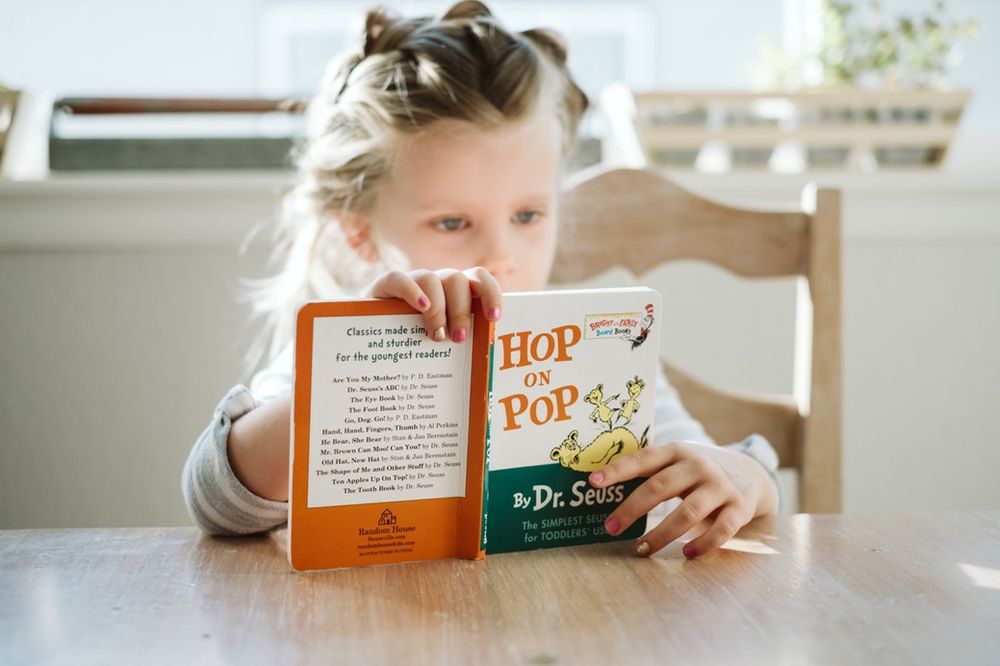
    • Read aloud regularly. Use books with simple words and pictures.
    • Play interactive games: Hickory Dickory Dock, Row Row the boat, Old McDonalds, 5 little monkeys jumping on the bed, chasing and catching, tickling games.
    • Respond to your child’s babbling and gestures. You can copy them or if your toddler says long strings of babbling you cannot understand you could just say: ‘Oh ok!? ‘yes that’s great!’ ‘who knew!’ ‘wow you’ve got much to say!’ as if you understood.
    • Limit screen time or if your child is very passionate about watching clips then sit and watch with your child so that you can see what is the best bit, which songs they like the best and what sort of phrases they love hearing.

    This exciting period of rapid growth and development is a precious time for both you and your child.

    By providing a loving, stimulating, and responsive environment, you will naturally nurture their communication skills! Any more questions, please get in touch!

    Sonja McGeachie

    Early Intervention Speech and Language Therapist

    Feeding and Dysphagia (Swallowing) Specialist The London Speech and Feeding Practice

    The London Speech and Feeding Practice


    Find a speech and language therapist for your child in London. Are you concerned about your child’s speech, feeding or communication skills and don’t know where to turn? Please contact me and we can discuss how I can help you or visit my services page.
    1
  • ·

    Principles of motor learning in childhood apraxia of speech: A guide for parents and therapists

    Image by Freepik

    Childhood Apraxia of Speech (CAS) is a complex neurological disorder that affects a child’s ability to plan and coordinate the movements necessary for speech production. Children with CAS often have difficulty with articulation, prosody, and fluency, making it challenging for them to communicate effectively. While there is no cure for CAS, speech and language therapy can significantly improve a child’s communication skills and overall quality of life. Understanding the principles of motor learning is crucial for both parents and speech therapists to support children with CAS on their speech journey.

    What is MOTOR LEARNING?

    Motor learning refers to the process of acquiring and refining new skills through practice and experience. This applies to all aspects of movement, including speech production. The brain constantly receives sensory information about the movements being made and adjusts them based on the desired outcome. A breakdown or interruption of this process can make it difficult for children to plan, sequence, and coordinate the intricate movements involved in speech.

    What key principles do we use in speech and language therapy for motor learning?

    • Task Specificity: Speech Therapy activities that directly target the specific speech sounds or skills your child is working on. For example, if your child is struggling with /p/, practising isolated /p/ sounds, words with /p/, and phrases with /p/ would be most beneficial.
    • Massed vs. Distributed Practice: We consider the optimal amount and distribution of practice sessions throughout the day. Massed practice involves concentrated practice in a single session, while distributed practice spreads practice sessions throughout the day. The best approach depends on the individual child’s learning style and attention span.
    • Feedback: We provide clear and immediate feedback to help your child understand the accuracy and effectiveness of their attempts. This feedback can be auditory, visual, or touch based.
    • Error Correction: We aim to gently correct errors so that we can help your child refine their movements and avoid developing bad habits. The focus is on providing specific cues and guidance rather than simply pointing out mistakes.
    • Variety and Progression: We gradually introduce new challenges and variations in speech therapy activities to prevent plateaus and maintain motivation.
    • Motivation and Engagement: A big part of our work is to make therapy sessions fun and engaging to keep your child motivated and actively participating. We use games, songs, and activities that your child enjoys while incorporating targeted practice opportunities.

    What about home work?

    Yes we need your help and here are some examples of how this could look:

    • Task Specificity: During story time, focus on practising target sounds present in the story. Have your child repeat words or phrases containing the sound and encourage them to identify the sound in other words.
    • Massed vs. Distributed Practice: Instead of one long practice session, try shorter, more frequent sessions throughout the day. This can help maintain focus and prevent fatigue. It is recommended to go for 100 repetitions of the target sound per day, every day in between the sessions. We can decide together how you can best do that through either massed or distributed practice. We can decide after the session.
    • Feedback: Use a mirror to provide visual feedback on lip and tongue placement during sound production. Record the child’s speech and play it back to help them self-monitor their accuracy.

    I quite like this mirror below but any table top mirror will work as long as it is not too small. Your child should see their whole face easily.

    tabletop mirror
    • Error Correction: If the child makes an error, gently model the correct sound or movement without shaming or criticising. Provide specific cues such as ‘lips together’ for /p/ or ‘tongue up’ for /t/.
    • Variety and Progression: We will guide you on exactly what words to practise so this is something you need not worry about.
    • Motivation and Engagement: Use games, songs, and activities that your child enjoys. Play a game of ‘I Spy’ focusing on words with the target sound or create silly sentences with the sound to make practice fun.

    Let’s work together!

    It is crucial for parents, therapists, and other caregivers to work collaboratively to ensure a consistent and comprehensive approach to supporting your child’s speech development. Speech and Language Therapists can provide guidance and resources on implementing these principles at home, while parents can share observations and progress updates to inform therapy sessions.

    Remember, every child with CAS learns at their own pace. By understanding and applying the principles of motor learning, parents and speech therapists can create a supportive and stimulating environment that empowers children with CAS to reach their full communication potential.

    Do get in touch if you would like some in-person or on-line 1:1 support with this. It can be overwhelming to figure it all out alone.


    Find a speech and language therapist for your child in London. Are you concerned about your child’s speech, feeding or communication skills and don’t know where to turn? Please contact me and we can discuss how I can help you or visit my services page.

    2
  • ·

    Explore speech delays and disorders and how you can support your child’s communication

    Speech delay vs speech disorder
    Speech Delay vs Speech Disorder

    You often wonder if your child’s speech difficulties will resolve. This very much depends on whether they have a speech disorder or delay. You often wonder if there’s something you’ve done to cause your child’s speech difficulties. Rest assured this is not the case. Let’s explore some of the factors to put your mind at ease.

    We know that males are more likely to have a speech, language, or communication difficulty than females. Additionally, if your child has an older sibling, they may not have the opportunities to speak. Their sibling may speak for them, especially if their speech difficulty causes them to be anxious or self-conscious. It’s important to note that bilingualism does not cause a speech delay or difficulty. Your child’s Speech and Language Therapist will ask about your child’s milestones. Research suggests that if your child did not babble then they may be at a higher risk of having communications difficulties.

    When it comes to a speech delay or disorder, it’s vital to rule out any other co-occurring difficulties such as hearing loss. Your child’s Speech and Language Therapist will need to factor in the health of your child. They will ask if your child has had lots of colds or ear infections. This may have affected their hearing, so it’s also recommended that your child has a hearing test. Your Speech and Language Therapist will tell you how you can book an appointment.

    It’s natural that children learn at different rates. The same is true for speech sounds. Some children are slower to pick up speech sounds, and this might be called a ‘speech delay’. A delay is when a child is behind with the development in a particular area or areas but is generally progressing along typical milestones. They will be progressing at a slower rate than expected. For example, a four-year-old understands two key word instructions and utterances are at a single word level, with some short phrases. But, some may show unusual speech sound error patterns, and this is typically where you may hear it called a ‘speech disorder’. A disorder is where the development we see is patchy and not following what is typically expected for your child’s chronological age. For example, a child understands three key word sentences, but speech is unintelligible and the utterances sound like jargon.

    You recognise how important speech is in daily living and want to build your child’s confidence so they can maximise social and educational opportunities. Follow our top tips to support your child’s communication.

    Top tips for supporting your child with their speech sounds:

    1. Allow your child to communicate in another way to convey their message if they get stuck (e.g., you could ask ‘show me’, ‘draw it for me’).
    2. Model the correct sound (e.g., child: It’s a thnake, adult: it’s a snake, a slithery snake).

      You can emphasise their tricky sound.

    3. Avoid telling your child to ‘say [insert sound here]’.
    4. Your child may speak quickly, especially if they are excited to tell you a story. If you slow down your rate of speech, they will too. This may make it easier for you to understand the message of their story.
    5. Allow your child to speak about how their communication difficulty makes them feel (if they are aware and want to speak about it).

    If you are unsure of where to start, contact me to ease your confusion, and allow your child to communicate effectively.


    Find a speech and language therapist for your child in London. Are you concerned about your child’s speech, feeding or communication skills and don’t know where to turn? Please contact me and we can discuss how I can help you or visit my services page.
    1