The great air debate: How different swallowing patterns impact breastfeeding and reflux

|

The great air debate

As a Speech and Language Therapist specialising in infant feeding, I often hear from worried mums describing their breastfed baby’s fussiness. ‘My baby is so burpy and gassy,’ ‘might it be reflux?’ or ‘she just seems uncomfortable after every feed’. While these concerns are incredibly valid and distressing for both baby and mum (and dads!), the underlying cause isn’t always what you might think. Often, the culprit isn’t primarily a digestive issue, but rather a mechanical one: how effectively your baby is managing air during feeding.

Many parents are told their baby has ‘colic’ or ‘reflux’ and are offered solutions that don’t quite hit the mark because they overlook a fundamental aspect of feeding: the suck-swallow-breathe sequence. Understanding this intricate dance can be the key to unlocking a calmer, happier feeding experience for your baby and you.

Understanding the suck-swallow-breathe sequence

Your baby’s mouth, tongue, jaw, and throat muscles work together in a precise rhythm like a beautifully orchestrated symphony. First your baby draws milk, then swallows it, and then takes a breath, all without interruption. This is the ideal suck-swallow-breathe (SSB) sequence.

When the SSB sequence functions optimally, a baby latches deeply, creates good suction, draws milk, swallows efficiently, and then pauses just long enough to take a gentle breath before the next suck. This smooth, coordinated process minimises the amount of air swallowed.

However, for various reasons (it could be a shallow latch, oral motor challenges, an uncoordinated suck, or even an overly fast milk flow) this sequence can get a bit out of sync. Instead of a smooth rhythm, you might see:

  • Suck-suck-swallow-gasp!: Too much air pulled in with the swallow.
  • Rapid, shallow sucking followed by gulping: Inefficient milk transfer and air intake.
  • Clicking noises during feeding: Loss of suction, indicating air entry.
  • Frequent detaching and re-latching: Often to ‘catch a breath’ or because of discomfort.

Each of these patterns can lead to increased air intake.

The root cause: Air trapping leading to a gassy breastfed baby

When a baby swallows too much air during a feed, that air must go somewhere. It builds up in the stomach, causing bloating, discomfort, and often leads to the familiar reflux-like symptoms parents describe: arching, spitting up, burping excessively, or simply appearing distressed.

It’s a common misconception that all gassiness or reflux symptoms in a breastfed baby are due to something in the mother’s diet or a genuine digestive disorder. While these can be factors, as an SLT, we first look at the mechanics of the feed. If a baby is constantly struggling to maintain a seal, sucking inefficiently, or having to gulp to keep up with flow, he or she is inevitably swallowing air. This air then creates pressure, which can push milk back up (silent reflux) or out (visible reflux).

Think of it like trying to drink through a straw with a hole in it. You’re sucking, but you’re also pulling in air, making it harder to get the liquid and leaving you with more bubbles in your stomach.

Why mechanical speech therapy assessment is key

This is where the distinction between a medical diagnosis (true gastro oesophageal reflux disease or GORD) and a functional feeding challenge becomes critical. A paediatrician will assess for medical causes and may prescribe medication to reduce stomach acid. This can be appropriate for severe cases of GORD.

However, if the primary issue is air being trapped due to a suboptimal suck-swallow pattern, medication only treats the symptom (acid burning) and not the root cause (air intake). This is precisely where a Speech and Language Therapist specialising in infant feeding comes in.

My role is to meticulously observe and assess your baby’s oral motor skills, latch, tongue function, and the efficiency of their SSB sequence. I look for subtle signs of inefficiency that contribute to excessive air swallowing.

  • Is the tongue elevating correctly to create suction?
  • Is the jaw stable, or is it excessively moving?
  • Is the latch deep enough to prevent air leaks?
  • Can the baby coordinate suck, swallow, and breathe without gasping?

By identifying these mechanical challenges, I can then implement targeted strategies to improve feeding efficiency and reduce air intake, often leading to a significant reduction in reflux-like symptoms and overall discomfort.

Strategies to optimise air management during breastfeeding

The good news is that many babies can learn to feed more efficiently with the right support. Here are some general strategies we might explore:

  1. Optimise latch and position: A deep, asymmetric latch is crucial. Experiment with different positions that allow for a deeper latch and better head/neck alignment, such as laid-back feeding or upright positions.
  2. Paced feeding (even at the breast): If your milk flow is very fast, consider removing your baby from the breast briefly if you hear excessive gulping or see him or her struggling to breathe. This allows him or her to catch up and manage the flow.
  3. Support the jaw and cheeks: Sometimes, gentle support to the baby’s jaw or cheeks can help them maintain a more stable, efficient suck. I can demonstrate specific techniques for this.
  4. Burping effectively: While burping won’t get rid of all swallowed air, upright burping positions and gentle back rubs can help release some of it.
  5. Pre-feed oral preparation: Gentle oral massage or stretches before a feed can sometimes ‘wake up’ the oral muscles and improve coordination.

Addressing the ‘Great Air Debate’ isn’t about blaming anyone; it’s about empowering parents with a deeper understanding of their baby’s feeding mechanics. By focusing on the how, not just the what, we can often resolve persistent feeding challenges, reduce discomfort, and make breastfeeding a more joyful, peaceful experience for both you and your little one.

If you suspect your baby’s gassiness or reflux symptoms are related to how they are managing air during feeds, don’t hesitate to reach out for a specialist assessment.

Sonja McGeachie

Highly Specialist Speech and Language Therapist

Owner of The London Speech and Feeding Practice.


Health Professions Council registered
Royal College of Speech & Language Therapists Member
Member of ASLTIP

Find a speech and language therapist for your child in London. Are you concerned about your child’s speech, feeding or communication skills and don’t know where to turn? Please contact me and we can discuss how I can help you or visit my services page.

2

Similar Posts

  • · ·

    The power of babble: Why your baby’s ‘talk’ matters

    That adorable string of ‘ba-ba-ga-ga-ma-ma’ might sound like baby gibberish, but it’s actually a crucial milestone in your little one’s language development. Babbling or babble, as we call it, is far more than just cute baby noises. It’s a sequence of sounds that lays the foundation for future communication.

    Image by freepik

    What is babbling?

    Babbling typically begins around six months of age, though the timing can vary slightly from baby to baby. It involves your baby experimenting with different sounds, stringing together consonants and vowels. You might hear them repeating sounds like:

    • ‘Ba-ba’
    • ‘Da-da’
    • ‘Ma-ma’
    • ‘Ga-ga’

    As they progress, the babbling becomes more complex, with variations in pitch, rhythm, and intonation. It might even sound like they’re having a conversation with you!

    Why is babbling so important?

    1. Laying the groundwork for speech: Babbling is like a vocal workout for your baby. By practising these sounds, they’re strengthening the muscles in their mouth, tongue, and vocal cords that are essential for speech.
    2. Developing phonological skills: Through babbling, babies begin to understand the sound patterns of their native language. They’re learning which sounds go together and how they’re used.
    3. Enhancing social interaction: Babbling is a social activity. Babies often babble back and forth with their caregivers, which helps them learn about the give-and-take of communication.
    4. Cognitive development: The act of babbling requires babies to use their brains in new ways. They’re learning to control their vocalisations, pay attention to the sounds they’re making, and connect those sounds to the responses they receive from others.

    How can you encourage babbling?

    • Talk to your baby: Even though they can’t understand your words yet, talking to your baby exposes them to language and encourages them to respond with their own vocalisations.
    • Imitate their sounds: When your baby babbles, imitate them! This shows them that you’re paying attention and encourages them to keep ‘talking.’
    • Respond to their babbling: Treat your baby’s babbling as if it’s a real conversation. Respond with words, smiles, and gestures.
    • Play sound games: Make different sounds for your baby and encourage them to imitate you. This could include animal sounds, silly noises, or simple words.
    • Read to your baby: Even before they can understand the words, reading to your baby exposes them to the rhythm and sounds of language.
    • Sing songs: Singing is a fun and engaging way to introduce your baby to new sounds and words.
    • Use mirrors: Babies often enjoy watching themselves make sounds in a mirror.
    • Tactile stimulation: Gentle massage around the mouth and face can increase oral awareness and encourage vocalisations.
    • Vary textures: Offer different textured teethers.
    • Read books with sound effects: Choose books with animal sounds or other engaging noises.
    • Blow bubbles: The act of blowing and popping bubbles can encourage vocalisations.
    • Use visual aids: Show pictures of objects and say their names, emphasising the consonant sounds.
    • Use exaggerated facial expressions: When you make sounds, exaggerate your mouth movements to help your baby see how sounds are made.
    • Increase joint attention: Follow the child’s gaze and point to objects that they are looking at and say the name of the object.

    When to seek help

    If you notice that your baby is not babbling by eight months, it’s a good idea to talk to your speech and language therapist. You might also notice a lack of variation in tone when your child is making sounds, is your baby sounding a little ‘flat’ or monotonous? While every child develops at their own pace, a lack of babbling can sometimes indicate a developmental delay or hearing issue.

    Remember, babbling is a gift. So, enjoy those precious moments of ‘baby talk’ and take comfort in knowing that your little one is on the path to becoming a chatterbox!

    Do get in touch via my contact form if you are concerned about your child’s development or if you simply want some reassurance that your baby is developing well. We will be delighted to arrange a screening appointment for you and give you support and reassurance.

    Sonja McGeachie

    Highly Specialist Speech and Language Therapist

    Owner of The London Speech and Feeding Practice.

    Health Professions Council registered
    Royal College of Speech & Language Therapists Member
    Member of ASLTIP

    Find a speech and language therapist for your child in London. Are you concerned about your child’s speech, feeding or communication skills and don’t know where to turn? Please contact me and we can discuss how I can help you or visit my services page.

    1
  • · ·

    Stage 2 NLA

    Image by Freepik

    Last time we asked: is our child ready tp move to Stage 2 NLA (Natural Language Acquisition stage 2) and we looked at how we can know. Now we know: he/she is ready, they are mixing and matching those scripts quite liberally! Hurrah!

    So for example we hear phrases like:

    • ‘let’s go’+ ‘downstairs’
    • ‘it’s’ + ‘downstairs’
    • ‘I see it’ + ‘downstairs‘
    • ‘I want to’ + ‘shoes downstairs’ (I want to put my shoes on downstairs)

    To recap, it’s important to listen out to a variety of contexts because if we only hear the single version of a gestalt —this is so great, hurrah!— but that’s not yet Stage 2.

    What we can now do on a daily basis to help and support at this time:

    1. We need to offer more ‘mix and match’ phrases to help our child establish this new way of communicating.

    Good phrases:

    • It’s … raining / cooking / eating / washing / brushing
    • That’s … great / cool / amazing / wow / so good
    • Let’s … see / look / go / run / chase
    • How’bout … some food / playing / I’ll chase / sleeping / we read a book
    • I see a … bird / large car / fire engine
    • I wanna … have a biscuit / have a book / have a snuggle
    • We’re … going out / going home / going in the car / going upstairs

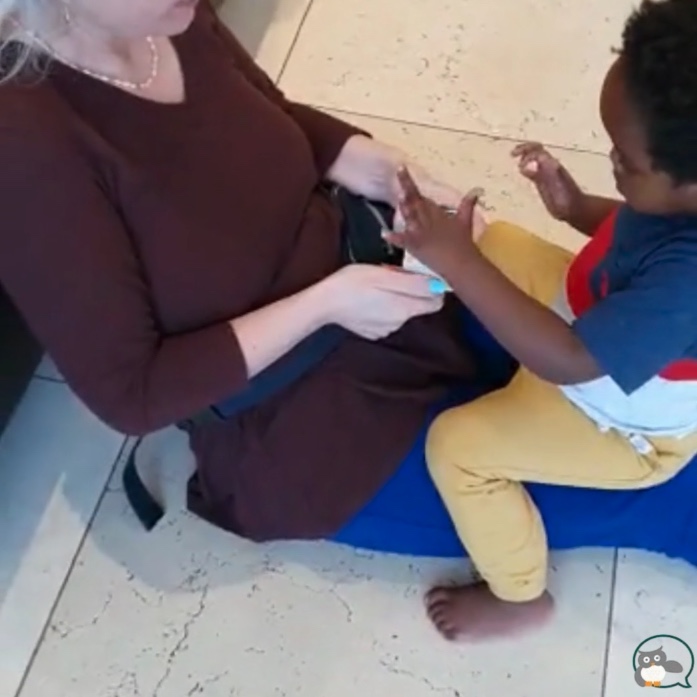
    Here in my video clip of train play I use:

    • Let’s go
    • It’s going up the hill
    • It’s coming down
    • Ooops it falls!
    • It’s stopping
    • Let’s put on another parcel
    • Ready steady go
    • Off we go
    • It’s come off!
    • Let’s fix it
    • I can do it
    • I don’t need help

    You can offer these gestalts either with an AAC as you can see me do in the video clip or you can just verbally offer these.

    2. Watch out for Pronoun confusion or reversal:

    Gestalt kids repeat gestalts, so we don’t want to create ‘pronoun reversal’.

    Instead model from a:

    • first person perspective: ‘I’ / ‘Our’ / ‘Us’
    • joint perspective: ‘We’ / ‘Let’s’ or a
    • neutral perspective: ‘It’

    You can turn almost any sentence into a good language model once you get used to it. And you can avoid ‘you’ and ‘your’ at the same time!

    So instead of saying, ‘Do you want to go to the park?’

    You could say:

    • We wanna go to the park?
    • Let’s go out?
    • Shall we go out / to the park?

    3. Start providing ‘variation’ in your language modelling:

    Instead of just modelling something one way, start thinking about offering a pattern in a couple of other ways, in a couple of different situations, then several ways in several different situations.

    Example: once you hear your child saying: ‘it’s raining’ and you know it’s a mitigation, because you don’t often say ‘it’s raining’, or haven’t said it in a while and you know your child says other ‘it’s’ phrases.

    Repeat: ‘it’s raining!’

    Then: ‘it’s’ + ‘raining hard’ / ‘it’s wet out there’ / ‘It’s’ + ‘raining lot’s’.

    Then later think of other combinations for ‘it’s’ + ‘something’:

    • (rice) ‘It’s’ + ‘cooking’
    • (water/tap) ‘It’s’ + ‘running’
    • (radio) ‘It’s’ + ‘singing
    • (dog) ‘It’s’ + ‘peeing’ / ‘it’s’ + ‘running’ / ‘it’s’ + ‘jumping’

    In my train video clip:

    • Let’s go
    • It’s going
    • Let’s make it go
    • Ready steady go
    • Oops its gone

    4. Use natural intonation that shows you really mean what you’re saying.

    You can be animated or try for musical if your child prefers that / doesn’t mind you singing —they might not like it if their hearing is pitch perfect and your singing is off key…—

    • ‘I’m’ + ‘trying to find you!’ (animated, goofy face)
    • ‘I’m’ +’ getting tired!’ (exaggerated stretch and yawn)
    • ‘I’m’ + ‘catching up with you!’ (animated goofy)
    • ‘I’m’ + ‘gonna get you!’ (animated goofy)
    • ‘I’m’ + ‘sad right now’ (exaggerated face and tone of voice)

    5. USE SILENCE!

    Important, I might not have said this before but we need to hold back sometimes (hard I know) and not constantly offer models. Let our child sit in a bit of silence with us there just observing and waiting for their own offers. This is a very important point. Silence is golden sometimes. Try it out. I am not talking about the silence that comes with a person scrolling on their phone though, we do need to be present and receptive.

    You will see this works wonders!

    Do get in touch if you would like some in-person or on-line 1:1 support with this. It can be overwhelming to figure it all out alone.

    You can also check my friend’s lovely handmade jewelry on her website.


    Find a speech and language therapist for your child in London. Are you concerned about your child’s speech, feeding or communication skills and don’t know where to turn? Please contact me and we can discuss how I can help you or visit my services page.

    1
  • ·

    My child is not speaking yet. What can I do?

    My Child Is Not Speaking Yet What Can I Do?
    My Child Is Not Speaking Yet What Can I Do?

    SIMPLE SPEECH AND LANGUAGE THERAPY TIPS you can try out at home in daily life!

    So many new referrals come to me from parents of toddlers saying help, my little one does not speak yet, what can I do? Consider trying out those strategies, they really help:

    Increase playing with your child and try to have MORE FUN. Try and resist the urge to ‘teach’ your child. Fun activities are naturally more motivating and your child will learn new words more easily if you are both having fun together. Try and act goofy to get your child’s attention and make them laugh.

    Respect all play forms your child is interested in, not just play with typical/shop bought toys. Be a PLAY PARTNER instead of a PLAY DIRECTOR.

    My Child Is Not Speaking Yet What Can I Do?
    Go With What Your Child Is Interested In
    Go with what your child is interested in even if it isn’t that new toy you bought the other day! If you follow your child’s lead by watching him closely, you will discover what they are interested in. Then, if you wait and observe your little one he or she may try to communicate something about that favourite toy or activity.

    Use simple words and short phrases with correct grammar about your child’s interests. For example, if he gives you a toy and wants to play, use words to describe that activity, e.g. : “spinning”! “that’s spinning round and round” “wheee” “wow it’s spinning fast!”

    Your child is likely to learn the words that match activities he’s motivated and interested in.

    Show your child what words mean

    You can POINT to something as you say the word (e.g. point to a bird in the sky as you say “Look at the bird!”), ACT out what the word means (e.g. pretend to shiver as you talk about how “cold” it is), or HOLD UP OBJECT as you say it’s name (e.g. hold up your child’s coat as you say, “It’s time to put your coat on”).

    Stress key words and repeat them often. Children need to hear words several times in different situations before they really understand what they mean. Try to repeat words that are familiar to your child during everyday activities and routines. For example, you might use the word “go” when you are talking about going outside and duringva “ready steady go” game. Using the same word in different situations gives your child more information about what the word means.

    Stop asking too many questions, this is hard for adults to do as we often try to direct our children’s play.

    Respond positively to your child’s attempts to communicate, even if these attempts aren’t perfect. As children are learning about words, they sometimes attempt to say a word but don’t pronounce it correctly, or they might use an action or gesture instead of the word. When you notice your child attempt to communicate with you, respond as if he said the word. This shows him you are listening and that you understand what he is trying to tell you. It also encourages him to keep trying to communicate with you.

    Learning to say new words doesn’t happen overnight. It takes time for children to build their understanding enough that they can say a word and use it in the right situation. By using the tips above, you will give your child’s vocabulary a kickstart, and pave the way to new words.

    Do get in touch with me if you need more help. I specialise in providing individual on-line virtual coaching with parents . This is helpful and often necessary given how complex our children are and how difficult it is to acquire speech and language when for one reason or another it is not your thing!

    Find a speech and language therapist for your child in London. Are you concerned about your child’s speech, feeding or communication skills and don’t know where to turn? Please contact me and we can discuss how I can help you or visit my services page.

  • · ·

    From ‘Nailed it!’ in therapy to ‘Whoops!’ at home: Why generalising speech sounds is tricky

    As a parent, you’ve likely experienced the triumphant feeling when your child, who’s been working so hard on his or her /S/ sound, produces it perfectly in a therapy session. He or she is rocking those ‘sun’ and ‘socks’ words, his or her lisp seemingly a distant memory. You leave feeling elated, confident that all that hard work is finally paying off.

    Then you get home. And within minutes, you hear it: ‘Thooper!’ instead of ‘Super!’ Or maybe the clear /R/ in ‘rabbit’ from therapy reverts to a ‘wabbit’ when his or she is playing with his or her toys. It’s frustrating, confusing, and can feel like you’re back to square one.

    So, what’s going on? Why is it so difficult for children to take those amazing skills learned in a focused therapy session and seamlessly apply them to their everyday conversations? You’re not alone in wondering this. It’s a common challenge in speech therapy and understanding the ‘why’ can help both parents and children navigate this crucial stage.

    The brain’s habits: Old pathways are strong pathways

    Think of your child’s brain as having established ‘pathways’ for how he or she produces certain sounds. If he or she has been lisping his or her /S/ sound for years, that neural pathway is deeply ingrained. It’s like a well-worn path through a field: easy to follow because it’s always been there.

    In therapy, we’re essentially trying to forge a new path. We’re teaching him or her a new, more accurate way to make the sound. This new path is initially faint, like a barely visible trail. It takes conscious effort and repeated practice to strengthen it. Outside of the structured therapy environment, his or her brain often defaults to the old, comfortable, and well-established pathway, even if it’s not the most accurate.

    The demands of daily conversation: A multitasking challenge

    Therapy sessions are designed to be focused and controlled. We isolate sounds, practice them in specific words, and provide immediate feedback. There are minimal distractions, and your child’s full attention is on his or her speech production.

    Now, consider daily conversation:

    • Speed: We speak much faster in natural conversation than we do during structured practice. There is less time to think about individual sounds.
    • Cognitive load: Children are simultaneously thinking about what they want to say, understanding what others are saying, processing social cues, and managing their emotions. Adding the conscious effort of producing a new speech sound correctly on top of all that is a huge cognitive demand.
    • Variety of contexts: In therapy, we might practise ‘sun’ and ‘socks’. In real life, the /S/ sound appears in countless words, in different positions within words, and alongside a vast array of other sounds. Each new word and phonetic context present a fresh challenge.
    • Lack of immediate feedback: In therapy, the speech therapist is right there to provide instant correction and reinforcement. In a playground, during a family dinner, or while playing with friends, that immediate, consistent feedback isn’t present.

    The role of automaticity: Making it second nature

    The ultimate goal of speech therapy isn’t just correct sound production; it’s automaticity. This means producing the sound correctly without having to consciously think about it. It’s like learning to ride a bike. Initially, every pedal stroke and steering adjustment is deliberate. Eventually, it becomes second nature.

    Generalisation is the process of moving from conscious, controlled production to unconscious, automatic production. This takes time, consistent practice, and exposure to a wide variety of real-life speaking situations.

    How can we help? Bridging the gap

    So, what can parents do to help their children bridge this gap between therapy success and everyday speech?

    1. Be patient and positive: This is a marathon, not a sprint. Celebrate the small victories and avoid getting discouraged by setbacks. Your positive reinforcement is crucial.
    2. Practise little and often: Instead of long, infrequent practice sessions, aim for short, consistent bursts throughout the day. ‘Sprinkle’ in opportunities to practise their target sounds in natural conversations.
    3. Create ‘sound awareness’ moments: Gently draw your child’s attention to his or her target sounds in everyday words. For example, if he or she is working on /R/, you might say, ‘Oh, you said ‘wabbit.’ Can you try to make your /RRR/ sound for ‘rabbit’?’
    4. Model correct production: Continue to model the correct production of their target sounds in your own speech.
    5. Collaborate with your speech therapist: Your therapist is your best resource! Ask them for specific strategies and activities you can do at home to support generalisation. They can also provide guidance on when and how to gently correct your child.

    Tips and tricks

    Below I have listed a few good tips and tricks that can help the transition from therapy room to daily life:

    Empowering your child as the ‘sound detective’:

    • ‘Secret sound listener’: Instead of you doing the correcting, make your child the detective. When you’re having a conversation, say ‘your /S/ sounds are sometimes a bit “slippery”’ (or whatever fun, non-judgmental term you like). Ask your child to quietly listen for your /S/ sounds. You can even purposely make a few ‘slippery’ ones (or correct yourself immediately after) and see if they notice. This shifts the focus from being corrected to actively listening and identifying the sound in a non-threatening way.
    • ‘Sound scorecard’: For a short period (maybe 10–15 minutes during a specific activity, like dinner or a game), provide a small notepad and pencil. Explain that your child is going to listen for his or her /S/ sounds and gently mark a tally every time he or she uses it correctly. The goal isn’t perfection, but awareness. This gives your child agency and a visual representation of progress. You can even make it a game: ‘Let’s see how many /S/ sounds we can catch in five minutes!’
    • /S/ sound song/rhyme creation: Work together to create silly songs or rhymes that are packed with /S/ sounds. The sillier, the better! You can sing them in the car, while doing chores, etc.
    • /S/ sound superpower: Frame the new sound skill as a ‘superpower’. ‘You’re getting so good at using your /S/ superpower! It’s going to help you speak so clearly and confidently.’
    • Highlighting successes: Always go out of your way to acknowledge and praise successful /S/ productions in natural conversation. ‘I really understood you clearly when you said ”s_top”.’ or ‘That /S/ sound was perfect when you told me about the “s_tory”!’

    Important considerations:

    • Keep it low-pressure: The goal is generalisation, not perfection. If your child is feeling pressured, he or she will likely revert to old patterns.
    • Focus on awareness, not just correction: Help your child become aware of his or her own speech rather than relying on you for corrections.
    • Short, frequent bursts: A few minutes of subtle focus multiple times a day is more effective than one long, forced session.
    • Acknowledge feelings: If your child expresses frustration about ‘being corrected’, validate these feelings. ‘I understand it can feel like a lot of listening, but we’re just trying to help you use that super /S/ sound all the time!’

    By incorporating these strategies, you can help your child naturally integrate the new /S/ sound into daily speech, fostering independence and confidence without it feeling like constant ‘testing’ or ‘correction’. Generalising new speech sounds is arguably the hardest part of speech therapy, but it’s also the most rewarding. With patience, consistent effort, and a collaborative approach between parents and therapists, children can successfully integrate their new, clearer speech sounds into every aspect of their daily lives.

    Any comments or if you need help and support with your child’s speech please do not hesitate to get in touch with me: simply fill out the contact form here on the website. I endeavour to reply within 48 hours.

    Sonja McGeachie

    Highly Specialist Speech and Language Therapist

    Owner of The London Speech and Feeding Practice.


    Health Professions Council registered
    Royal College of Speech & Language Therapists Member
    Member of ASLTIP

    Find a speech and language therapist for your child in London. Are you concerned about your child’s speech, feeding or communication skills and don’t know where to turn? Please contact me and we can discuss how I can help you or visit my services page.

    1
  • ·

    Cued Articulation – using hand gestures to show how a sound is made

    Watch how cued articulation can transform your child’s speech and language skills!

    Cued Articulation involves using specific handshapes and placement cues to guide the speaker’s articulators, such as the tongue, lips, and teeth, to produce accurate sounds. It was originally conceptualised by Jane Passy, a speech-language pathologist. But it is important to know that we can, and often do, also use other speech cues which help our student visualise what they need to do. In other words, we can mix and match our cue pictures depending on what works best with each student.

    In the beginning of my speech therapy practice I would stick religiously to Jane Passy’s method but over the years I have learned and used many different visual hand cues which all have worked with individual students.

    It is important to remember that this is not an exact science, rather than an art! The art is to find the key to each individual student’s understanding and inspire motivation to try out a sound which they find hard to do.

    As an example, the hand signs used by Caroline Bowen’s method, an Australian Speech-Language Pathologist, are quite different to Jane Passy’s signs but they can equally work very well. Caroline Bowen’s visual for the /r/ sound is the ‘rowdy rooster’ — a crazed rooster on a motorbike — and the hand signal is that of revving up the motor bike engine with both hands whilst trying out the /r/ sound! I have a good handful of students who really loved this rooster image and were able to eventually produce a good /r/ using this cue.

    So, it is horses for courses with many things, and visual images and hand cues are no exception!

    Sound picture cards:

    Again, there are a host to choose from and I tend to collect a number of different images for each sound I want to practise with my student. As an example, below are a couple of different examples I use for the sound /p/:

    The Nuffield Programme suggests to use this popper card, which works well with a student who knows these poppers and perhaps has one on their trousers.

    As an alternative, and especially for younger students, I like using the Popper Pig Card – which I also have in my room so I can quickly show how it pops. Or we can have a popping game in between saying the /p/ sound at times. (The popper card is great as I can use the real toy to help with conveying the /p/ sound as it pops.)

    Each card has its own merit and I choose the right card for the individual student.

    How I use cued articulation and the visuals in Speech Therapy

    1. Cueing and practice: I introduce the appropriate card and handshapes for the targeted sounds. We then practise producing the sounds.
    2. Reinforcement and feedback: Positive reinforcement encourages progress and builds confidence.
    3. Fading out the cues: Once my student is able to say the sound more easily, we can gradually fade out the speech cues.

    Benefits and effectiveness

    Using Cued Articulation and Speech Image Cards has been shown to be effective in improving speech production for individuals with various speech and language disorders, including:

    • Articulation disorders: Difficulty producing specific sounds accurately.
    • Apraxia of speech: A motor planning disorder that affects the ability to sequence and coordinate movements involved in speech.
    • Phonology disorders or delays: Confusion and delays in how sounds are organised in categories to convey meaning, errors in sound patterns, for example front sounds are produced at the back, or long sounds are produced as stops.
    • Stuttering: A fluency disorder characterised by interruptions in speech, such as repetitions and prolongations.

    Tips for parents and student speech therapists

    Parents can play a crucial role in supporting the implementation of cued articulation at home and in therapy sessions. Here are some tips:

    • Collaborate with your SLT: Good feedback and communication with the Speech and Language Therapist creates consistency and progress..
    • Practise Regularly: Encourage consistent practice of cued articulation at home to reinforce learning.
    • Use Visual Aids: Use the same visuals that your therapist uses in the speech clinic to help your child at home with recall and practice.

    Feel free to contact me if you need help with your child.

    Sonja McGeachie

    Early Intervention Speech and Language Therapist

    Feeding and Dysphagia (Swallowing) Specialist The London Speech and Feeding Practice

    The London Speech and Feeding Practice


    Find a speech and language therapist for your child in London. Are you concerned about your child’s speech, feeding or communication skills and don’t know where to turn? Please contact me and we can discuss how I can help you or visit my services page.

    1
  • ·

    The importance of child-led therapy

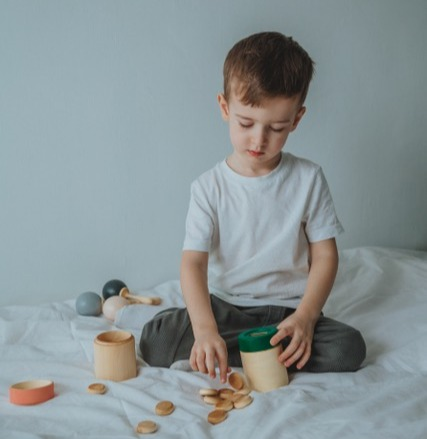
    Child-led therapy is essentially what it says, therapy sessions that are directed by your child. You may think how can my child’s Speech and Language Therapist focus on goals if sessions are led by my child.

    Let us explain…

    Your child will be more receptive and motivated to take part in therapy if they have some form of input. E.g., they can choose what toys they want to play with, or how they want to play with the resources available. If sessions are child-centred then they are much more likely to engage and reach their goals, making intervention valuable. They will also be able to regulate their emotions, and use movement to support their need for regulation. E.g., some children like to jump whilst others like to run. As Speech and Language Therapists we need to use what is meaningful to your child to get the most out of intervention. By focusing on child-led therapy, we can build trust, which will allow us, in time, to use new techniques and activities that your child may enjoy. We want children to be themselves, to show their true personality. Therapy is about enhancing their skills in their own individualised way and child-led therapy allows for this.

    This way of working may seem daunting to some, but it doesn’t have to feel this way. Parents often feel if they are prepared then activities may go smoother. It might be the case, but perhaps it doesn’t give your child the opportunity for spontaneity. We’d like to suggest something that may lead to some surprises. Put out an activity that is your child’s favourite and then a completely new activity. Remember these activities don’t have to be complicated. Often, the simpler the better!

    So, no need to plan, just place two activities out and see what happens! Look out for anything which surprises you, which activity did they prefer? Do they have any sensory preferences? The freedom of choice is a wonderful thing to explore. So, just go with the flow!

    The kind of activities that are useful for child-led play can include:

    • Hide and seek
    • Cooking or baking
    • An Exercise ball
    • Small world play
    • Pretend play
    • Musical instruments (you could even have a go at making your own)

    Child-led therapy is a very useful resource. We have it at our fingertips. We don’t need special resources. You just need yourselves and your child! Sometimes, child-led therapy can be tricky to put in place. It sounds easy but is much harder in reality. So, make sure you give it time and reflect on your experiences. Ask yourselves ‘what went well’, and ‘what could be improved’. E.g., perhaps you gave your child time to lead to begin with, but you didn’t give them enough time to think about their options during the activity.

    How can parents become more child-led in the home environment?

    • Pause and use silence. This gives your child the opportunity to lead.
    • It’s perfectly natural to want to talk. Afterall, this is how adults maintain conversations. If you find yourself talking too much, count to ten! This will allow your child time to respond or initiate in the conversation or interaction.
    • Move down to your child’s level. It’s much easier to see what’s going on if you’re at the same height.
    • Videoing you and your child can really help you to see where your strengths lie. You’ll also be able to make minor tweaks to improve your communication during child-led play.

    Contact Sonja for more advice on speech, language and communication during child-led play.


    Find a speech and language therapist for your child in London. Are you concerned about your child’s speech, feeding or communication skills and don’t know where to turn? Please contact me and we can discuss how I can help you or visit my services page.

    0