There’s been a long tradition with teaching staff and with Speech and Language Therapists working in schools that eye contact should be a goal. It is well known that Autistic individuals (whether that be children or adults) mostly avoid eye contact. Whilst it’s part of the way we communicate, it shouldn’t be used as a necessity for an individual who feels that it is uncomfortable. Whilst it does show that you’re listening and showing an interest, it’s not a fair expectation for neurodiverse children.
Autistic children can find making and maintaining eye contact physically and emotionally uncomfortable as well as unnatural. It adds an extra layer of stress and has been reported to increase distractions rather than reduce them. Children who engage in conversations in their own way (i.e., with reduced eye contact) are not shown to suffer with schooling, work, or social interaction.
By having fun through meaningful activities, I often experience that ‘BINGO’ moment (a phrase coined by Alex @meaningfulspeech) where the child is enjoying themselves and naturally makes eye contact. There is no demand on them, they are in a fun, engaging environment which suit their strengths and supports their needs.
Following this, I often reflect on this question ‘Should we make eye contact as a goal?’
It very much depends on the situation. If it places more demands on the child and becomes stressful. Then no. There are many strategies we can use which gain eye contact without placing extra demands on the child. We need to be mindful to adapt the environment and not place neurotypical expectations to meet the needs of neurodiverse children.
How can you encourage eye contact without demand?
If you’re using toys, try holding them up to your eye level.
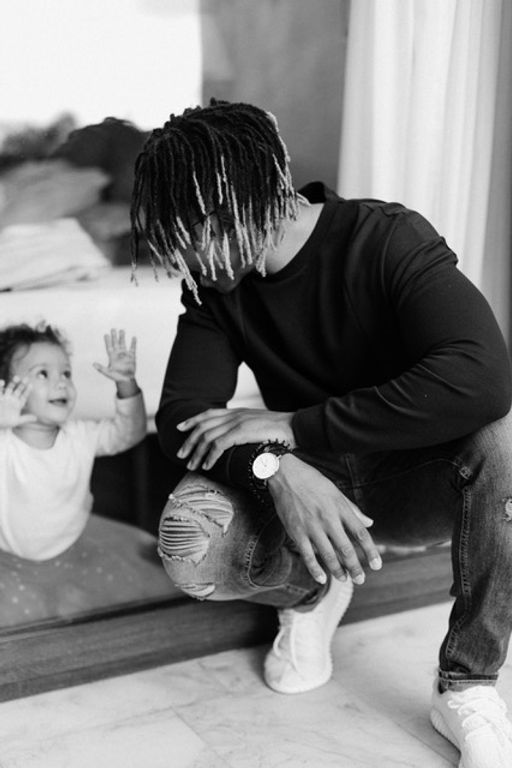
You can adjust your position, try sitting face to face during play.
Always get down to your child’s level. This might mean that you lay on the floor if your child is positioned in this way.
During play, waiting is extremely powerful. Before a key part of the activity, wait and see if your child looks at you. Remember silence is golden!
The best way I find is: do something unusual during play. It might be that you spray shaving foam with the lid still on. Or you bring out a wow toy and make it spin/light up or make a noise. A balloon can be good – see video clip. Use the excitement of the activity, and wait to see if you achieve that ‘BINGO’ moment.
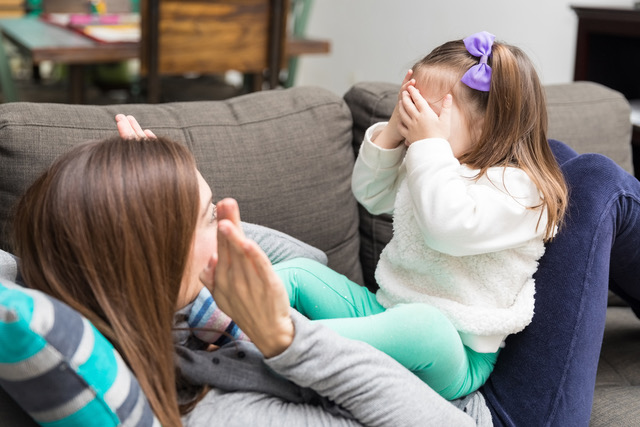
Create opportunities when there are no toys involved such as during ‘tickles’ or ‘hide and seek’. Autistic children find it difficult to shift their attention between a toy and an adult. So by removing one option, you’re setting them up to succeed.
Remember, it takes practice and time for you to develop these skills. Try one at a time and experiment, see which works best for your child. If you need speech, language or communication support or advice, I am always here to help.
Find a speech and language therapist for your child in London. Are you concerned about your child’s speech, feeding or communication skills and don’t know where to turn? Please contact me and we can discuss how I can help you or visit my services page.
There’s often this idea that autistic children have extensive vocabulary and knowledge, but this is not always the case. In fact, 30% of autistic children have language regression.
Goldberg (2003) suggested that speech and language regression refers to the decline in a young child’s speech and communication abilities. We know that regression in speech, language and communication skills often occur before the age of two years. 25% of autistic children develop language at word level between 12 and 18 months of age before losing this language they have learned. As you’re probably aware this regression in communication is a diagnostic indicator of Autism.
We understand that you want your child to progress, and you struggle to watch as their frustration grows as you feel helpless. I want to provide you with tips so that you can feel empowered to support your autistic child and reduce the impact their communication skills have on the family.
Reduce frustration by providing visuals to support their communication
Praise the ability to communicate. Focus on what they say not how they say it. E.g., good listening, nice talking.
Provide your child with choices (using real objects to represent your choices). E.g., do you want an apple or banana?
Your child must be motivated and have a purpose to communicate. So, ensure you use highly motivating objects for conversations
Provide them with opportunities to communicate. We need to teach children that if they want something, there’s a process that you need to have the opportunity to ask for it. We find that if parents understand what their child wants (without them asking), the object is given to them, and so there’s no reason for your child to ask.
There’s this idea that we need to teach children eye contact. This is not always the case. Your child is unique, we do not want to take their unique skills away.
Model words which are concrete. E.g., words such as ‘finished’, ‘more’. You can model these several times within the day. You can use a gesture to make the word more visual (see the images below). We know that autistic children are often visual learners.
Remember that if your child has speech, language and communication regression, it doesn’t mean your child will stay static.
It’s vital that you seek support from a qualified Speech and Language Therapist. We can tell you at what point in the communication development that your child is at. And we can support you through the process. We can provide you with an individualised plan specifically for your child to ensure you maximise their potential.
Find a speech and language therapist for your child in London. Are you concerned about your child’s speech, feeding or communication skills and don’t know where to turn? Please contact me and we can discuss how I can help you or visit my services page.
As professionals, when diagnosing young children with an Autistic Spectrum Condition, it is vital we work as a multi-disciplinary team, so you will likely see many professionals. This may include Educational Psychologist, Dietician, General Practitioner, Occupational Therapist, Paediatrician, Special Educational Needs Coordinator, Speech and Language Therapist and Social worker. Once the evidence is collated, then a diagnosis may be made.
You may be wondering what are some of the early signs of social communication difficulties? Whilst no autistic child is the same and we know Autism is very much a very wide spectrum of abilities and needs there are some autistic spectrum characteristics we do typically see in the early years of childhood. You may wish to think about these areas or presentations to help you prepare for the Speech and Language Therapy appointment.
Twelve questions
Does your child respond to their name?
Are they fixated with watching their hands?
Do they have sensory processing difficulties such as bright lights, food textures, or loud noises?
Are they meeting their milestones or are they delayed?
Do they flap their arms or legs when excited?
Have you noticed any rocking back and forth?
Do they blink excessively or display any facial tics?
Do they play with a particular sort of toy e.g. spinning toys?
Have you noticed that they lack interest in toys?
Have they regressed in their language? Perhaps you’ve noticed they are not using words that they have previously learnt.
Do they use gestures to communicate their needs? How do they communicate their wants and needs?
Do they appear to be in their own world?
You are not alone
These questions are by no means exhaustive and there are many more factors to consider. But it is important to trust your instincts as you are the expert on your child and know your child the best. Regardless of whether you see all of the above points or none, do not hesitate to have an assessment if you are concerned as, even if it turns out to be nothing to worry about, there is always at least one or two great pieces of advice I can offer you on the way and you will leave feeling hopeful and empowered. It’s always best to seek early intervention with communication difficulties. This allows strategies and support to be put in place. Never feel alone, always speak out.
Find a speech and language therapist for your child in London. Are you concerned about your child’s speech, feeding or communication skills and don’t know where to turn? Please contact me and we can discuss how I can help you or visit my services page.
If your child is using echolalia and/or has a diagnosis of autism, then your child’s way of processing language is most likely different to the classic way children typically learn language. We call this process Natural Language Acquisition or Gestalt Language Processing.
Step by Step guide to Gestalt Learning
Let’s explore the following stages of Gestalt Processing:
Stage 1: communicative use of whole language gestalts
(e.g., “let’s get out of here”)
Children and young people in this stage use echolalia. They need to hear more gestalts or scripts. So, your job is to model, model, model and to use functional language that your child can repeat back.
Stage 2: mitigated into chunks and re-combining these chunks
(e.g., “let’s get” + “some more”) and (e.g., “let’s get” + “out of here”)
This is when you take parts of gestalts or phrases and then combine it with other parts.
Stage 3: further mitigation (single words recombining words, formulating two-word phrases)
(e.g., “get…more”)
They are going beyond their gestalts. Furthermore, they may begin to label different objects.
Stage 4: formulating first sentences
(e.g., “let’s get more toys”)
You may see more grammatical errors during this phase as they are creating unique sentences. Please don’t worry about this, it means they are playing and experimenting with language. As communication partners, you could model the correct form of the sentence.
Stages 5 & 6: formulating more complex sentences
(e.g., “how long do you want to play inside for?”)
You can see that language learning is a process, that is trialled and tested, used in different contexts for children to be able to learn and use language appropriately.
My next blog will give you activities ideas and how you might use them specifically with a Gestalt Language Processor.
Remember early intervention is vital. So, if you have any concerns, please seek the advice of a Speech and Language Therapist.
Find a speech and language therapist for your child in London. Are you concerned about your child’s speech, feeding or communication skills and don’t know where to turn? Please contact me and we can discuss how I can help you or visit my services page.
When you have a child who uses Gestalts it is often difficult to think and adapt clinic activities into those to use at home. More importantly, you find that individualising your activities for your child who uses Gestalt are time-consuming. But you value its importance for their communication development.
You feel so busy, you are taking them to other appointments, or trying to get through your daily activities, all whilst still ensuring your child’s emotional needs are met. You know life should not get in the way of your child’s therapy activities at home, but it does. We know your spare time is precious and limited, so let us achieve your child’s or young person’s goals in the allotted time you have which meets their way of learning (using Gestalts).
We wanted to support you by exploring items which you may have at home, and we will give you some key phrases which you can start to model with your child. Whereas our last blog introduced the idea of gestalt language processors, we are now developing ideas to give you the tools to implement activities at home. We recognise how overwhelming it may feel, and this is one of the reasons to make activities as straight forward as possible. Therapy does not need to be complicated; it just needs to be carried out on a regular basis.
Explore the samples I’ve created to give you an idea of how this might look but please consult with a Speech and Language Therapist who knows about Gestalt Language Processing so that you can work together to develop great home activities for your child.
Want to learn more about gestalt language processing?
Find a speech and language therapist for your child in London. Are you concerned about your child’s speech, feeding or communication skills and don’t know where to turn? Please contact me and we can discuss how I can help you or visit my services page.
Let’s break it down into steps to make these complicated words easier to understand. Once you have a deeper understanding, you will then be able to support your child or young person develop their communication skills in the best way as a Gestalt Language Processor. Remember not every child will be a Gestalt Language Processor; if your child uses echolalia and/or has a diagnosis of autism then your child’s way of processing language is most likely different to the classic way children typically learn language.
Let’s start with understanding what each of these words “Gestalt Language Processors” mean.
Gestalt: “the way a thing has been placed or put together”
Language: “a system of human communication”
Processors: “responds to and processes basic instruction”
So, let’s put those meanings together. “Gestalt Language Processors are children who process early language in strings of sounds or chunks.” They tend not to process single words.
It is important to understand this way of processing communication because between 75-90% of children with Autistic Spectrum Conditions process language in this way (Blanc, 2012). We know that it’s important for young people to have their voice heard and to be able to express themselves. So, it’s vital that they move from echolalia to self-generated communication to be able to do this. This means that our children’s communication partners play a vital role in supporting their child’s language. We can support our children by modelling phrases until the child has learnt the process themselves.
Let’s explore an example together
X (who is a gestalt language processor) and his family love to feed the ducks in their spare time; this is an activity that takes place regularly. Let’s look at how you, as the adults, could support X in his communication. Look at the phrases that are used. They are meaningful to the activity with repetition used throughout.
Top tip: You could think of an activity you and your child or young person take part in on a regular basis and brainstorm some key phrases that you could use.
Need a boost in confidence to support your child’s gestalt language processing?
Find a speech and language therapist for your child in London. Are you concerned about your child’s speech, feeding or communication skills and don’t know where to turn? Please contact me and we can discuss how I can help you or visit my services page.
“Attention Autism” is an Early Years Intervention designed by Gina Davies, Specialist Speech and Language Therapist. Gina created this amazing therapy approach based on her many years of working with children on the autism spectrum. It aims to develop natural and spontaneous communication through the use of highly motivating activities. These activities offer your child an IRRESISTABLE INVITATION to engage and attend to.
I love using this approach and have trained in all of the stages including the Curiosity Stage which is for another blog. I use it frequently with all children who have trouble attending, listening, sitting or waiting regardless of whether they are neuro-diverse or neuro-typical, this activity and method is so great for all children!!
Why is it important for our children to attend and listen?
It is commonly assumed that, as our child has passed their hearing tests he/she will be able to listen and respond to being called, being questioned or asked to do something. However, all children I see in my practice have reduced joint attention skills, which means that whilst their hearing is often good, even brilliant to the point that they can often hear a faint noise somewhere outside the house like a distant train rushing by – but strangely they can’t seem to hear their name being called. Parents often ask me why this is the case, why can my child not turn round when I call him?
The reason lies in the difference between hearing and listening. Listening is a skill that needs to be learned and practiced. As a child develops, their hearing tunes into (listening) the sounds and noises they hear on a daily basis. This is how a child develops understanding of the speech sounds they hear every day (which then form the basis of their native language); they also get to know “their door bell, dog barking next door, daddy coming up the stairs” and so on. They tune into those common every day sounds and noises and gradually start to copy speech sounds to form words. So listening is tuning our ears to the sounds that surround us. In contrast, many of us have to work in large office spaces or noisy environment, perhaps even a café, etc, where we are able to tune out those environmental noises and sounds that surround us, for otherwise we will not get that report/piece of work done in time! Our focus means that we become single-minded and single-channelled concentrating on our work and so we do not hear people chat and clutter all around us.
Tuning in and out is a skill that we learn and some of us are better than it that others, it comes largely with practice but also with motivation – I go back to the report that needs doing by end of the day – my motivation is strong and I can now focus and blend out all around me so that I get the work done. Other times when I am not so motivated I might doodle and tune into what is being said at the table next to me, because my focus is not that strongly dedicated to my work.
Many children who are delayed in their development and especially children on the neuro-diverse continuum have difficulty with tuning in. By contrast, they are very good at being single-minded, single focused on what it is they are wanting/needing to do at any one point. And so they cannot listen to sounds, speech, noises around them very easily at all. They are fully absorbed in their activity and are not able to look and listen to mum/dad calling their name. Once we understand this we can start helping our children to practise tuning in a bit more bit by bit and day by day.
Enter the Attention Autism approach!
There are 4 stages to this method:
Stage 1: The Bucket to Focus Attention
The first stage involves filling a bucket with visually engaging toys that aim to help children learn how to focus their attention. Three toys will be presented to the child/group one at a time and the therapist will make simple comments about each toy to help introduce them to the children and expand their vocabulary.
Important to know: the Attention Autism approach does not require the child to look at the adult, or to sustain eye-gaze on the objects. Instead engagement may be indicated by non-verbal signals such as seeming alert and interested, and looking frequently at the object.
Stage 2: The Attention Builder
At this stage the child/group is introduced to visually stimulating activities. This stage aims to build and sustain attention for a longer period of time. Activities may include ideas such as:
Flour castles which can be built like sandcastles, using flour, a bowl and moulds
Erupting volcano activity
Wriggly worms foam – pile shaving foam onto an upside down plastic flower pot with the holes taped over; then slowly press down another plastic flower pot over the shaving foam and the foam will come through the top holes looking like wriggly worms, especially if you have dropped a bit of food colouring on top of the foam
Important: children are not required to make eye contact or sit still during these activities. The focus is on engagement, in whatever way the child demonstrates this.
Stage 3: The Interactive Game – Turn-Taking and Shifting Attention
The therapist demonstrates a simple engaging activity and invites children up to have a turn. This may be the same activity from stage 2 or something new. The aim is for children to learn to shift their attention from the group/sitting experience to doing something and then going back to sitting again.
Stage 4: Individual Activity
In the final stage of Attention Autism, the adult models an activity, and then each child is given the same equipment to use themselves. They do not have to copy exactly what the adult modelled. The aim is for the child watching to have a go independently with confidence, and then to take their materials back to the leading adult at the end. The activity should be engaging and enjoyable for the children. The Attention Autism approach aims to foster an interest in learning new things and to inspire communication in whatever form works for the child.
Ideally this should be practised 4-5 times a week aside from the therapy session. But I have seen it work with just 2-3 practice repeats per week. It can be tough in the beginning until your child gets used to the “no touch just look” rule but with a little bit of practice usually children do sit well for the first part of the Bucket activity within about 10 sessions and after that you are on a roll!
Find a speech and language therapist for your child in London. Are you concerned about your child’s speech, feeding or communication skills and don’t know where to turn? Please contact me and we can discuss how I can help you or visit my services page.
Why imitation is so important and how can speech and language therapy help children who struggle to imitate?
Imitation or copying starts in early infancy. When we observe a young baby and his parent or familiar adult we can see clearly and frequently that the baby will be intently looking at adult’s face and try to copy their facial expressions, smiles and all those funny baby sounds we often make with young babies.
These sounds are called “motherese” and are the beginnings of a little conversation between the parent and the baby. The “conversation can go back and forth for a long time and include sounds, as well as facial expressions.
A little later on, once the baby can crawl and sit up unaided the copying then goes on to include toys and objects. Mum or Dad will show their toddler how to use a drum or how to put a little train on the wooden tracks and the toddler will try and copy this. They may not succeed and be a little clumsy perhaps but the act of copying anything and everything their favourite adult does is typically seen throughout the day.
We all know and have laughed at mums or dads saying; ssshhh don’t say that in front of the baby he/she will copy you, watch your mouth! (as dad is swearing at the broken radiator….)
This imitation goes on for years and includes eventually of course little words, more words, putting words together and then creating sentences, all the while our toddler is listening to how their adults speak, not only what they say but how they say it. This is how dialects and accents can be transmitted easily from parent /family to child.
Copying in Children with Autism
We know that children with autism often struggle to imitate. We see children on the spectrum typically having great difficulty to copy adults or children; this can be seen in very reduced play with their peers in nursery for example.
Children with autism tend to have reduced joint attention and engagement with others and need to develop the ability and awareness to copy others in order to then engage more jointly with others.
Speech and Language Therapy can help with Parent Child Interaction work and Coaching, here is how:
During my coaching work with parents I teach step by step how to help a child who struggles to imitate:
We look at all the researched skills and actions that adults can take to help their little one to copy, starting with close observation of their child’s interests, then following and including their child’s play and copying/imitating their child in how they play. I teach steps in a graduated way so that it is easy to see the progress and joyful to have the results at the end.
The results are clear to see over time: our children on the spectrum learn to imitate actions, with objects and gestures, then sounds and words. Alongside this increased imitation skill the child can then develop more joint attention and engagement.
Find a speech and language therapist for your child in London. Are you concerned about your child’s speech, feeding or communication skills and don’t know where to turn? Please contact me and we can discuss how I can help you or visit my services page.
Why is joint engagement important for communication development?
It has been well-documented that the development of joint attention is impaired in children who have social communication difficulties or autism. It is, in fact, this impairment which distinguishes children with ASD from children who have other developmental delays.
A lack of joint attention in very young children is an early sign of autism as it is a signal that there is a disruption in the motivation to connect socially with others. Since this is a crucial element, I thought I would outline what we mean by Joint Attention as supported by the research undertaken at Hanen.org.
In typically developing children, the ability to shift attention between a person and an object for the purposes of connecting socially or for requesting develops around the same time. However, for children with ASD, these components emerge one at a time and in a linear fashion. Children with ASD usually start with requesting something and later they may learn to share attention for social sharing. (see pattern below as a general guide).
As with typical development, there is variation in the order that these skills emerge but the following patterns of development is commonly seen:
Reaching, taking adult’s arm/hand or pointing to ask for something — but without looking at the adult
Gradually alternating looking between person and object of desire
Then learning to follow the point of another — which is responding to joint attention initiated by another
Directing attention to share interests — without looking at the adult: pointing to a truck on the road/ helicopter circling above
Then directing attention to share interest by alternating gaze shift between person and object — here the child is now initiating joint attention.
What is important to note is that in order to fulfil the criteria for true joint attention, the purpose of directing the attention of another person must be social in nature. In other words, it must not be exclusively to obtain a desirable object or event/action. True Joint Attention is seen verbally or non-verbally; we want to share a thought with another person and direct them to something we are interested or excited or spooked by.
For example: we can see an amazing firework display in the distance and we want to quickly direct our friend’s attention to this. In order to do this we might be tugging their sleeve/arm whilst pointing to the display in the distance, and perhaps we might add “wow look over there!” We are doing so simply to share an interest without obtaining anything, we are just being social with each other. So True Joint Attention is not just looking at what we want to have, then look at the person who can get this for us and then point to the item. We can say that this is the precursor to true joint attention, which is purely social in nature.
Because true joint attention is an essential precursor to typical language development, the absence of joint attention in children with ASD contributes to difficulties with language learning. Beuker, K., Rommelse, N., Donders, R. & Buitelaar, J. (2013).
The Hanen programme for Parent Child Interaction teaches parents of children with Social Communication Difficulties step by step how to enable their children to learn to pay attention to an object and the parent at the same time.
We learn how to enable a child to:
engage take turns
shift eye gaze between toy and adult
copy adult’s actions, gestures and then words
play with toys in different, new ways
interact and for longer periods of time
have fun whilst playing
If you would like to know more about the Hanen programme please get in touch. I look forward to exploring the topic with you and help guide you forward if this is something your child is struggling with.
Find a speech and language therapist for your child in London. Are you concerned about your child’s speech, feeding or communication skills and don’t know where to turn? Please contact me and we can discuss how I can help you or visit my services page.