Does my child need a myofunctional therapist? Lisps, tongue posture and oral function explained

|

Have you ever been told that if your child’s lisp or /R/ sound isn’t improving after months of speech therapy, you should see a myofunctional therapist?

The short answer is: possibly, but not automatically. Whether it will help depends on what is behind your child’s difficulty, and finding that out is exactly what a thorough assessment is for.
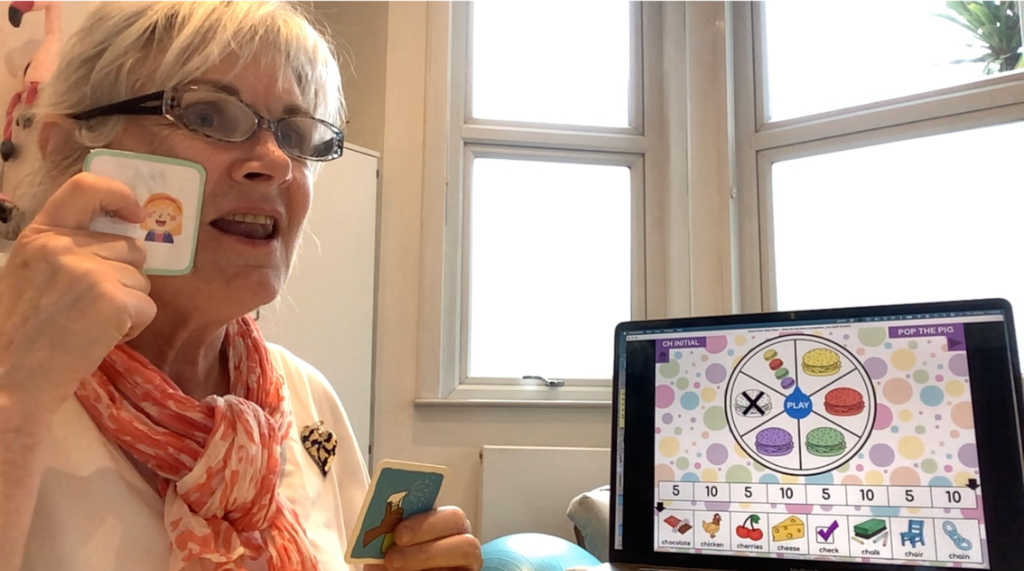
I’m a Speech and Language Therapist with nearly 30 years’ experience in speech sound disorders, feeding and swallowing, and I have additional training in myofunctional therapy. Looking at how the mouth works has been an intrinsic part of my assessments for many years, so I’d like to explain what that involves and when it matters.

What is myofunctional therapy?

Myofunctional therapy (often called orofacial myofunctional therapy, or OMT) is about how the muscles of the mouth and face work. It overlaps with what speech and feeding therapists call oro-motor function, although OMT looks more specifically at things like resting posture, breathing and swallowing patterns. Depending on the therapist’s training and your child’s needs, it may include:

  • tongue movement, resting posture and positioning
  • lip closure and resting posture
  • jaw movement and coordination
  • oral habits, such as thumb sucking or dummy use
  • swallowing patterns
  • how oral function, feeding and speech affect one another.

Some children have difficulties across several of these areas. Others have one specific speech sound difficulty and no wider problem with how their mouth works.

Signs it may be worth having your child’s oral function checked

You might want an assessment if your child:

  • has a lisp or a tricky /R/ that hasn’t changed with therapy
  • often has their mouth hanging open at rest
  • pushes their tongue forward against or between their teeth when speaking or swallowing (sometimes called tongue thrust)
  • is still dribbling or drooling after 18 months
  • finds chewing difficult, or struggles to move their tongue up, out or from side to side
  • breathes mostly through their mouth.

If you are worried about tongue-tie, I can assess how your child’s tongue moves for speech and feeding. If a medical or dental opinion is needed, I will explain why, advise you on who to see and work alongside them, for example an ENT consultant or paediatric dentist.

What does a comprehensive assessment look at?

When a child has a speech sound difficulty, I look at their speech alongside how their mouth is built and how it works. Depending on the concern, that may include:

  • jaw: how steady it is, and how well it moves and coordinates with the lips and tongue
  • teeth and mouth structure: the position of the teeth, the bite, the palate and anything structural that may be relevant
  • lips: closure, movement and resting posture
  • tongue: how well it moves in different directions, where it rests and whether it pushes forward
  • swallowing: relevant aspects of how your child swallows and where the tongue sits
  • palate and voice: anything that may need further investigation, such as concerns about how the palate is working or an unusually nasal sound
  • habits and breathing: things like thumb sucking or mouth breathing, and any signs that a medical or dental check may be needed.

Not every child needs every part of this. The questions we are trying to answer guide what I look at and what happens next.

For example, a child with a lisp may find it hard to coordinate the tongue placement needed for an /S/ sound. They may rest their tongue low in the mouth, or they may have spent years making the /S/ sound with the tongue between the teeth. By looking at how the mouth moves, along with habits and history such as thumb sucking, I can understand what may be contributing and plan therapy accordingly.

The findings help decide whether your child needs direct speech therapy, further assessment, a different approach, or input from another professional such as an ENT consultant, dentist or orthodontist. Assessment isn’t simply about spotting something that looks unusual. It is about understanding what it means for your child and deciding what, if anything, needs to be done. This kind of clinical reasoning is a natural, daily part of my work as a Speech and Language Therapist.

What if my child isn’t making progress in speech therapy?

If your child has been attending therapy for weeks or months without meaningful progress, it is reasonable to ask for a review. In my practice I monitor progress from one session to the next, and if things aren’t moving, I would rather review the plan than simply carry on with the same approach.

Sometimes a child needs more time. Sometimes the approach needs to change. Sometimes we need more information or another professional’s input. Sometimes therapy needs to pause while an underlying issue is looked into.

Whichever it is, you can expect a clear explanation of what we are working towards and how progress will be reviewed. A lack of progress should always prompt a review of the plan.

Does myofunctional therapy help with speech difficulties?

Sometimes. Some children have speech sound difficulties alongside differences in how their mouth works, which is why I assess both and consider whether they are related. A different tongue posture, an open-mouth resting posture or an unusual swallowing pattern is always worth noting, but it is not automatically the cause of a lisp or another speech sound disorder.

For speech sound disorders, treatment should be chosen to match the nature of the speech difficulty and be supported by evidence. The routine use of non-speech oral-motor exercises, meaning exercises that don’t involve practising speech sounds, to improve speech is not supported by the available evidence (the Cochrane review of non-speech oral-motor treatment – Lee & Gibbon, 2015).

That doesn’t mean work on oral function is never appropriate. The important question is what we are trying to achieve. If the aim is clearer speech, therapy needs to work on the speech itself, with plenty of practice of the relevant sounds, syllables and words. If your child also has a separate difficulty with feeding, swallowing or another aspect of oral function, such as resting posture, that may need its own assessment and targeted therapy. This is why I combine evidence-based speech practice with myofunctional assessment and therapy where a child’s oral function needs it, and I will always explain the aim and the reasoning behind what I recommend.

Choosing the right therapist for your child

Whoever you choose, I would encourage you to ask who will be treating your child, what their training covers and whether they are well placed to meet your child’s particular needs. Good clinical practice includes recognising the limits of your own expertise and referring on or working with others when appropriate. No practitioner should feel they have to manage every part of a child’s difficulties alone.

When the main concern is your child’s speech sounds, speech clarity or expressive language, I would recommend starting with an experienced Speech and Language Therapist whose expertise matches your child’s needs. If that therapist also has additional training in myofunctional therapy, so much the better. You can check that any Speech and Language Therapist is registered using the HCPC online register, and it is always fine to ask about a practitioner’s original qualification, clinical experience and the scope of their training.

So that you know who would be working with your child, here is a little about my own training: I am an HCPC-registered Speech and Language Therapist (BSc Clinical Communication Sciences, Royal Central School of Speech and Drama, 1996) with nearly 30 years’ experience, a postgraduate diploma in dysphagia (2000) and certification in the SOS Approach to Feeding (2018) and Orofacial Myofunctional Disorders training in 2026. I also completed IBCLC lactation consultant certification in 2019 (since lapsed, 2024) and worked as a neonatal Speech and Language Therapist and Lactation Consultant at Barnet Hospital in 2019–2020.

Next steps

If your child has a lisp, a tricky /R/, an open-mouth resting posture, a tongue thrust, dribbling or difficulty chewing, I would be happy to look at the whole picture. I assess speech and oral function together, and if your child needs a dentist, orthodontist or ENT consultant, I will tell you.

You can find out more on my Speech and Feeding Difficulties page, or get in touch to arrange an assessment. If you’re not sure whether your child needs one, contact me and we can talk it through.

Sonja McGeachie

Sonja McGeachie

Highly Specialist Speech and Language Therapist

Owner of The London Speech and Feeding Practice.


Health Professions Council registered
Royal College of Speech & Language Therapists Member
Member of ASLTIP

Find a speech and language therapist for your child in London. Are you concerned about your child’s speech, feeding or communication skills and don’t know where to turn? Please contact me and we can discuss how I can help you or visit my services page.

Reference

Lee AS-Y, Gibbon FE. Non-speech oral motor treatment for children with developmental speech sound disorders. Cochrane Database of Systematic Reviews 2015, Issue 3. Art. No.: CD009383. DOI: 10.1002/14651858.CD009383.pub2.

3

Similar Posts

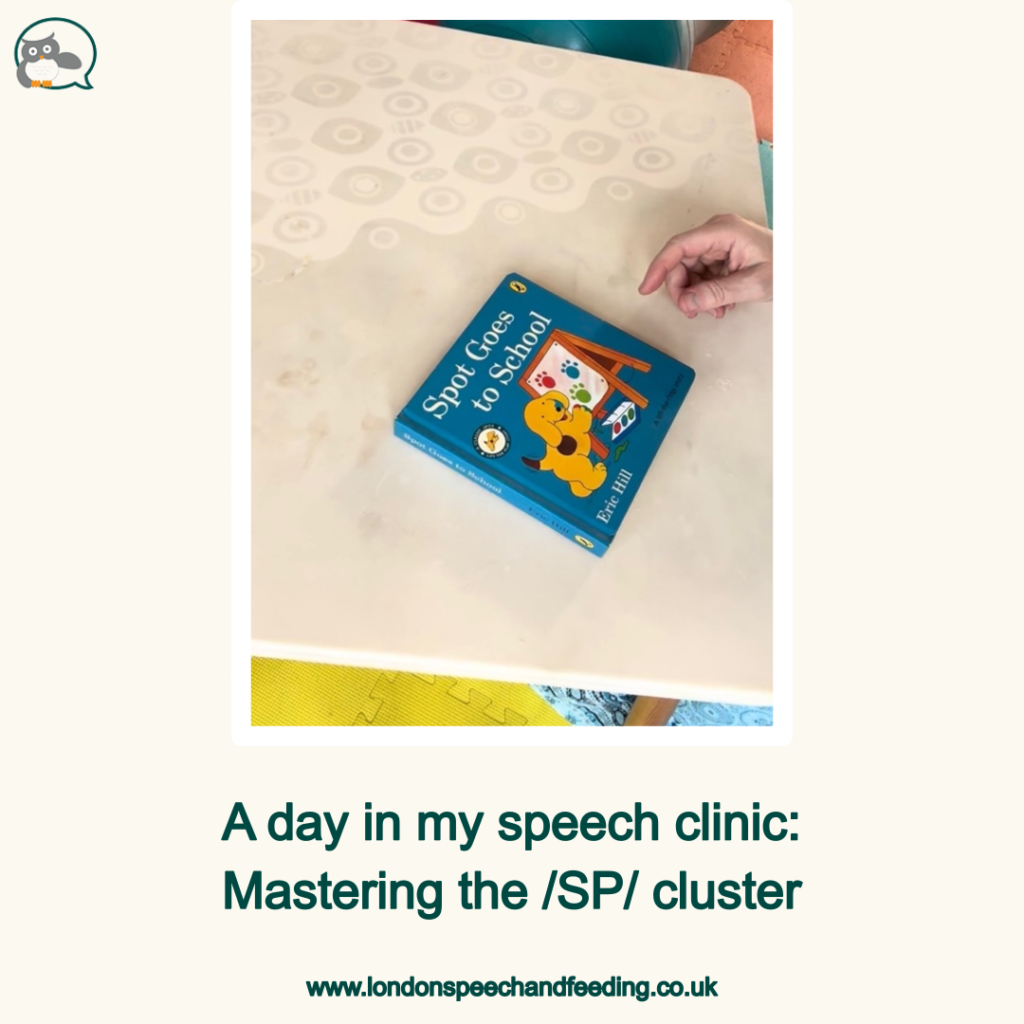
  • A day in my speech clinic: Mastering the /SP/ cluster

    I very often work on /S/ Blends (/SP/ /ST/ /SM/ /SK/ /SN/ and /SL/). When we work on these sound blends (like SPider, STop, or SMile), we are using a clever speech therapy ruse! Because these blends are complex, teaching a child how to master them naturally helps them clear up simpler single sounds (like just /S/ or just /P/) at the same time. Plus, because S-blend words are so common in everyday language think spoon, spy, spot, and spin, practising them gives your child an immediate confidence boost when they are understood much more easily.

    Good news: high-repetition motor practice doesn’t have to be a chore. In fact, the more sensory input we can provide, the faster those new neural pathways are built. Recently, I recorded a series of seven short clips to demonstrate how we can weave intense speech practice into the fabric of play.

    Here is a look at a typical day in the clinic focusing on /SP/ blends.

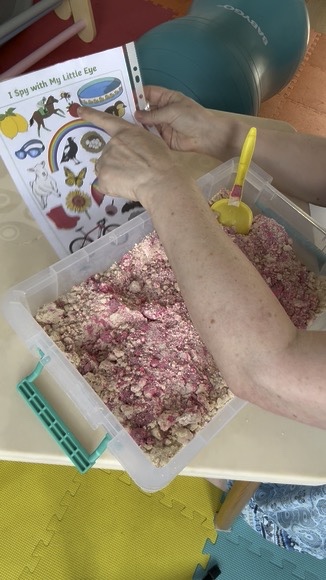
    1. The sensory sandbox:

    We started our session at the sensory table. Sensory bins can often work well because they provide tactile feedback that grounds the child’s focus (of course they are usually messy, so one needs to have the physical space and energy for it to be fair!).

    • The Activity: I pointed to our ‘I Spy’ board before we dove into the sand. Using a toy spade we dug for hidden objects and named them each time we found one.
    • Every time we scooped, we practised Spade. Every discovery was a spider, a spoon or a spotty animal. By pairing the physical effort of digging with the speech sound, we help the brain synchronise motor planning and vocal execution.

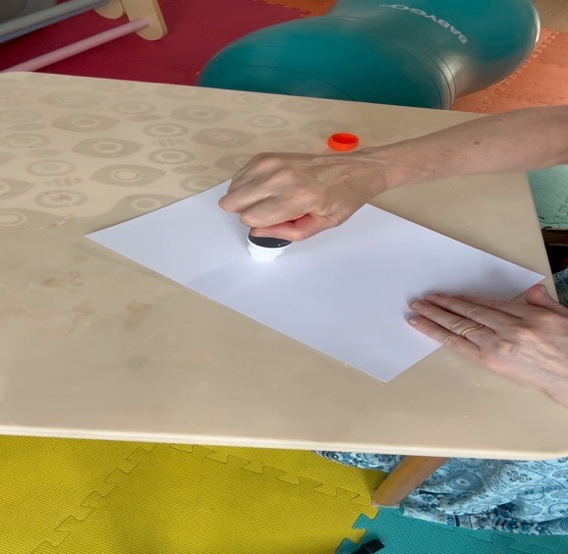
    2. Bingo dabbers rock!

    Next, we moved to making ink marks on paper.

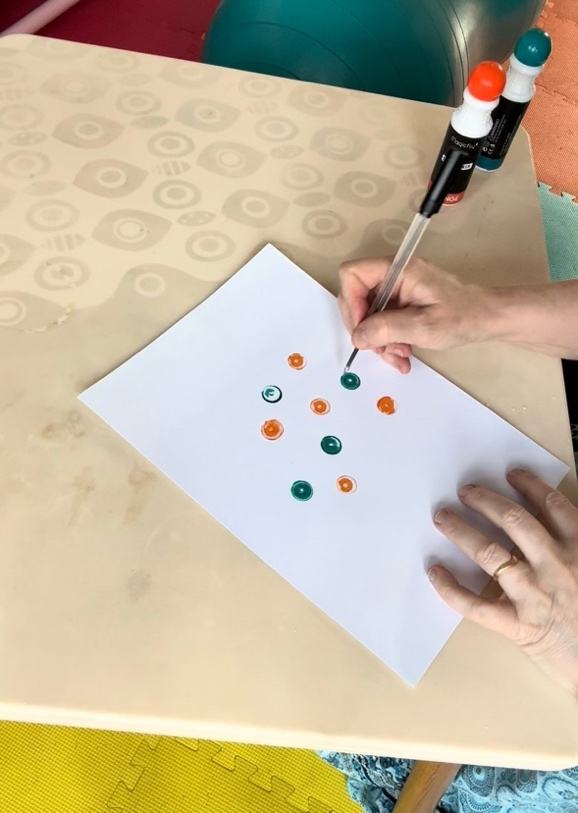
    • The Activity: I demonstrated making spots with coloured bingo dabbers.
    • We treated each ink spot as a visual anchor. Stamp –Spot Stamp –Spot. This creates a rhythmic pacing that prevents the child from rushing. It’s a wonderful way to get 50+ repetitions in under five minutes without the child even realising they are ‘working’.

    3. Drawing spiders

    Building on the previous activity, we took those spots and turned them into something more complex.

    • The Activity: I drew spiders out of the spots we had just made.
    • Drawing the legs provided a perfect opportunity for ‘stretch’ sounds. As we drew a long leg, we practise a long, hissy ‘Sssssssss’, snapping into the /P/ as the pen hits the spot.

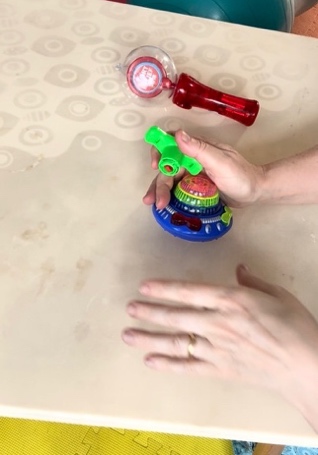
    4. Wind-up spinners

    High-energy toys are excellent for eliciting ‘power’ sounds.

    • The Activity: I brought out two mechanical wind-up spinners.
    • Method: The child says Spin or Spinner to get me to wind them up. The anticipation of the toy moving acts as a natural reinforcer.

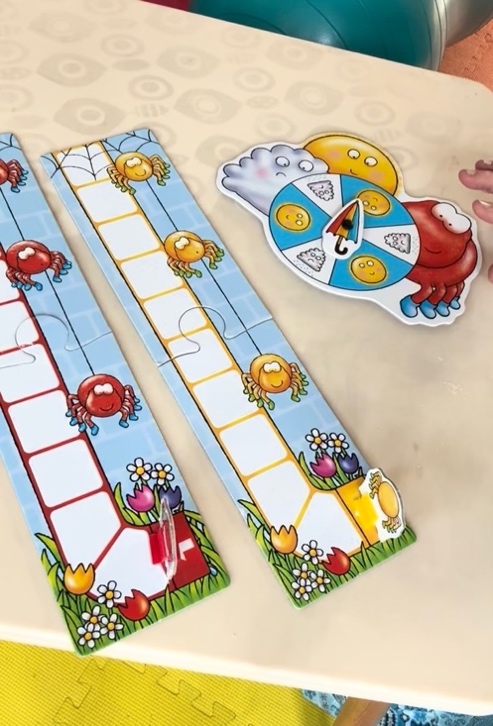
    5. The Incy Wincy spider game

    • The Activity: I spun a game spinner to determine how many steps our toy spiders would take up the spout.
    • This activity is a triple threat. We practised ‘Spin’, ‘Spider’, and ‘Spout’ all in one go. The visual of the spider moving up the spout also helps with the concept of UP and DOWN of course.

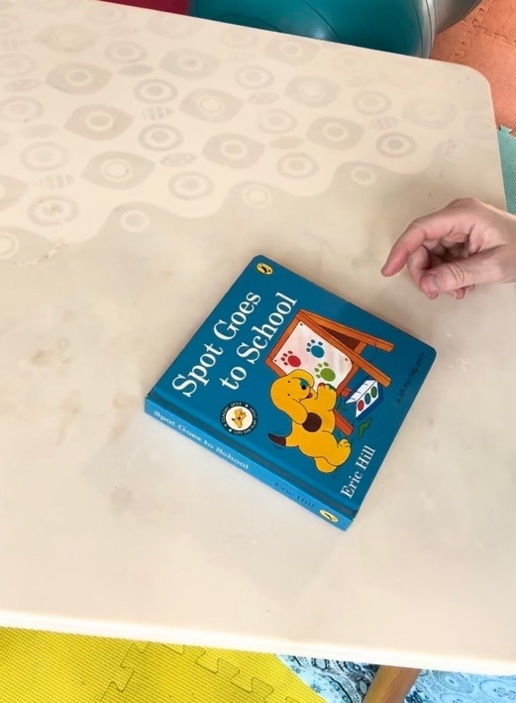
    6. Searching for Spot

    Books are a great tool for generalisation, taking a sound from a single word and moving it into phrases and sentences.

    • The Activity: We went through a ‘Spot the Dog’ book.
    • Instead of just reading, we used the ‘I Spy’ strategy. ‘I spy Spot! He has a big spot on his back!’ This encourages the child to use the target word in a functional, communicative way rather than just repeating it after me.

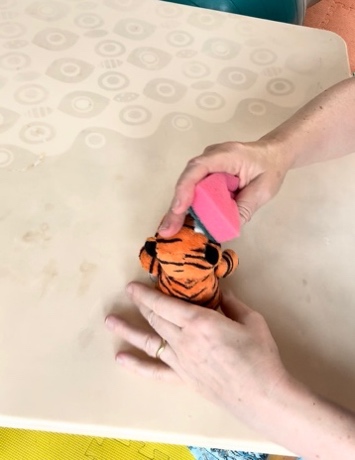
    7. Finally, sponging off some sand

    We ended the session with some ‘heavy work’ and cleaning.

    • The Activity: We took a soft toy that had gotten a bit ‘dusty’ in the sandbox and used a sponge to clean it down.
    • The action of squeezing the sponge provides proprioceptive input (pressure), which can be very calming and help a child focus on their articulatory placement for those final repetitions of the day.
    A day in my speech clinic: Mastering the /SP/ cluster

    Speech therapy works on motor learning. Just like learning to ride a bike or play the piano, the brain needs thousands of correct repetitions to make a movement automatic. By using /SP/ words in these seven distinct, sensory-rich ways, we:

    1. Reduce frustration: The focus is on the play, not the correction.
    2. Increase engagement: A child who is having fun will stay in the learning zone longer.
    3. Provide context: The child learns that saying /SP/ correctly helps them get the spade, spin the spinner, and find the spider.

    Next time I will show you some more activities for /ST/ and /SM/ words. If you have any super ideas for /S/ cluster words please leave me your suggestions in the comments on instagram, I would appreciate it thank you! 😊

    If you are concerned about your child’s speech, please do not hesitate to get in touch. I would love to help you find some answers.

    Sonja McGeachie

    Highly Specialist Speech and Language Therapist

    Owner of The London Speech and Feeding Practice.

    Health Professions Council registered
    Royal College of Speech & Language Therapists Member
    Member of ASLTIP

    Find a speech and language therapist for your child in London. Are you concerned about your child’s speech, feeding or communication skills and don’t know where to turn? Please contact me and we can discuss how I can help you or visit my services page.

    3
  • ·

    Tongue training: Why tongue placement matters for clear speech

    As speech and Language therapists (SLTs), we know that where your tongue goes, so goes your sound. This blog post will explore why tongue placement is so vital for speech correction and how we use tools and techniques to help our clients find their ‘sweet spot’ for sound production.

    Let me show you here a little video clip where I am using my dentist’s mouth/teeth model to help my clients navigate their tongue movements.

    The tongue: A tiny muscle with a big job

    The tongue is a small but mighty muscle. It’s incredibly versatile, playing a key role in eating, swallowing, and, of course, speaking. For each speech sound, the tongue, along with the lips and jaw, needs to move to a very specific spot. Think of it like a dance: every part of your mouth has a choreographed movement to produce the correct sound. If the tongue is out of sync, the sound comes out muffled, distorted, or just plain wrong.

    The trouble with our tongue movements is that most of us never think about how the tongue has to move and what it does to: swallow, chew, drink, suck and speak. Most parents when asked to think about their own tongue placement for say the /S/ sound are completely lost as to what their tongue is doing. Yet, of course, they produce a perfect /S/ and perfect speech in general. The same goes for swallowing. When did you last think about what happens in your mouth when you swallow? I bet you have not thought about it. We ‘just do it’, right?

    Why is tongue placement so important?

    Accurate tongue placement is the foundation of clear articulation. When a child struggles with a particular sound, it’s often because his or her tongue isn’t quite reaching the right spot or moving in the correct way. For example, the /S/ sound requires the tongue to be slightly raised and positioned behind the top teeth, creating a narrow channel for air to flow through. If the tongue is too far forward, you might get a /TH/ sound instead. If it’s too far back, the /S/ can sound muffled.

    Visual aids: Our secret weapon

    We SLTs love our visual aids! They’re incredibly helpful for showing clients exactly where their tongue needs to be. Here are some of our favourite tools:

    • Mirrors: Mirrors provide instant feedback. Clients can see their tongue’s position and make adjustments in real-time. We often use hand mirrors or even the mirror on a compact for quick checks.
    • Tongue depressors: These simple tools can gently guide the tongue to the correct position. We might use them to show where the tongue tip should rest for the /L/ sound or how the sides of the tongue should touch the molars for the /K/ and /G/ sounds.
    • Diagrams and models: Pictures and models of the mouth can help clients visualise the tongue’s movements. We might use a cross-section diagram of the mouth to show how the tongue forms different sounds.

    Beyond the tongue: The jaw’s role

    While the tongue takes centre stage, the jaw plays a supporting role. It provides a stable base for the tongue and helps control the opening and closing of the mouth. Sometimes, jaw stability is an issue, and we might use techniques to help clients find a comfortable and stable jaw position.

    Making it fun and engaging

    Learning correct tongue placement can be challenging, but we make it fun! We use games, stories, and playful activities to keep clients motivated. For younger children, we might use silly voices or pretend to be animals. For older children, we might incorporate their interests, like using a car analogy for tongue movements.

    The takeaway

    Correct tongue placement is essential for clear speech. By using visual aids, interactive techniques, and a bit of creativity, we can help our clients master their speech sounds and communicate with confidence.

    If you have any concerns about your child’s speech, don’t hesitate to reach out to a qualified speech and language therapist, we are here to help! Contact me via my contact form.

    Sonja McGeachie

    Early Intervention Speech and Language Therapist

    Feeding and Dysphagia (Swallowing) Specialist The London Speech and Feeding Practice

    The London Speech and Feeding Practice


    Find a speech and language therapist for your child in London. Are you concerned about your child’s speech, feeding or communication skills and don’t know where to turn? Please contact me and we can discuss how I can help you or visit my services page.

    2
  • ·

    Four struggles parents face when out and about with children with speech, language, and communication difficulties

    A man and a woman hug a young girl at a table
    Hug

    You (as parents) often describe yourselves as being under constant pressure and stress when looking after your children and young people with Special Educational Needs and Disabilities (SEND). You may find going out to do the simplest of tasks a challenge. And you will try to avoid social situations out of fear and anxiety. One of the most important factors to you is having like-minded people who understand your position as a parent with a young person with additional needs. Let’s look at some of the challenges you face and how I can support you and your family.

    1. Challenging behaviour and going out to the shops

    When your child displays challenging behaviour and won’t go into a shop without buying a toy that they insist on having, it can be tough on your family. You see people around you staring as you try to manage the situation. They do not understand the pressures you face, or that the simplest of tasks are a huge challenge.

    I can support you by giving strategies to use when out and about. I know that using visuals is important for your child. They may not understand or take in language when they are in a heightened state of anxiety or feeling overwhelmed. You could print pictures of the places you’re going to and put them on an easily accessible chain. Then you could use that chain when out and about at the shops. You may want to introduce a visual timetable at home. That way your child or young person understands where they are going. This may lessen their anxiety and subsequent behaviour.

    2. Your child is not able to communicate their needs to an unfamiliar communication partner

    When your child has difficulty communicating to an unfamiliar person it can be hard to manage. You feel yourself explaining your situation repeatedly. I can provide your child with individualised strategies or communication aids which support your child to communicate with both familiar and unfamiliar communication partners. We’ll work together to find which communication methods work in different situations and how your child will use these to help their independence.

    3. Being overwhelmed

    Your child or young person may easily be overwhelmed which may contribute to behaviour changes. I’ll work with your family to understand what the behaviour means, looking at what happened before and what happened afterwards. We’ll not only look at the behaviour but at the environment as well. This can inform how you can support your child or young person in the future, to reduce sensory stimuli (if needed) and for them to feel emotionally regulated.

    4. People avoid engaging with you

    One of the hardest things as a parent is for others to avoid you. You see them crossing the street because they don’t know what to say to you. All you want is them to accept you, to maintain your identity as a person and not as a SEND parent. I can support you emotionally. I can give you advice on local support networks where you can find other parents in a similar situation.

    We know the stresses that being a parent with a child with SEND comes with. Please know I am always here to support you, to find solutions so that when you’re next out and about. Your experience will be a little easier and you’ll feel less isolated.

    Improve your child’s communication, confidence, reduce overwhelm and feel supported here.


    Find a speech and language therapist for your child in London. Are you concerned about your child’s speech, feeding or communication skills and don’t know where to turn? Please contact me and we can discuss how I can help you or visit my services page.

    1
  • · ·

    Neurodiversity affirming Speech and Language Therapy

    Introduction

    I am a neurodiversity affirming therapist and I love and endorse play-based therapy. I use it alongside a strengths-focused approach in all my sessions. Find out why we should use these transformative therapy methodologies in all our work and play with our children.

    I always have a range of different toys and activities up my sleeve so that when one toy is no longer interesting, that’s fine. ‘Look here’s a new one, how about we try this one?’ When therapy feels like play, children are more likely to be engaged and attentive, which leads to better outcomes.

    By using play as a context for Speech and Language Therapy we can create opportunities for children to use and practise their communication skills in a natural, real-life setting. This helps bridge the gap between the therapy room and everyday life.

    Goals and targets

    What about goals and targets I hear you say? Of course, as Speech and Language Therapists we always have our goals for any particular child. They can be speech goals (we want Bobbi to produce a ‘k’ sound at the end of words) or communication goals (we want Fatima to ask for something by pointing to it rather than grabbing it). And these goals can be achieved where there is a reciprocation and a positive, playful relationship between the adult and the child. That relationship comes through play and fun.

    Play and fun

    Play is how a child interacts and learns. If it’s fun, interesting, exciting or pleasurable then that is where the magic happens. And that is what we need to return to repeatedly and then see if we can fold our targets into the activity as we go.

    As soon as we expect our child to do something and we try and shape their behaviours towards a certain outcome we no longer ‘play’. We are now in teaching mode, where we direct and where we are ‘in charge’. As a neurodiversity affirming therapist, I believe that all play is valid. We must not get into the trap of thinking that only functional play is valid, that there is only one way to play with that car ramp/puzzle/potato head. Our autistic children often need to play in a particular way to navigate their world and we must not try and stop that.

    When we affirm and validate our child’s play and copy their play with enthusiasm and respect then, in my experience, all children regardless where they are on the neurodiversity spectrum will begin to engage with us, copy us, and learn how to communicate effectively about things that matter to them.

    Play-based therapy allows therapists to tailor interventions to each child’s unique interests and abilities. This individualised approach increases the likelihood of success and progress.

    Strengths-Focused Speech Therapy

    Strengths-focused therapy emphasizes a child’s strengths and abilities rather than their deficits. It recognises that every person has unique strengths that can be harnessed to overcome challenges.

    Focusing on strengths helps us build a positive self-image. This is especially important for children with communication disorders, as it can boost their confidence and self-esteem.

    When we encourage children to play in ways that they enjoy and are good at they feel empowered and more in control of their lives and play. This can lead to increased motivation and a sense of ownership over their progress.

    Now, imagine the powerful impact that can be achieved by combining play-based therapy and strengths-focused therapy in speech therapy sessions. This dynamic combination brings out the best of both worlds. It creates a therapeutic environment that is not only effective but also enjoyable for children and their families.

    As Speech Therapists we can use the child’s strengths and interests as a foundation for play-based activities. This personalisation not only makes therapy more engaging but also more effective.

    An example

    Charlie, a 3-year-old with social communication challenges, had a deep interest in anything that spins. We used this strength and interest to create a variety of spinning activities. As he is allowed to engage in his spinners, we can practise lots of speech and language and provide great phrases alongside his interest and activities: Ready steady go! Stop! ‘another one’ ‘the red one’ ‘again again’ ‘I love it’ ‘it’s a spinner’ ‘Charlie loves this toy’ ‘it’s going fast’ ‘it’s so fun’ etc..

    Over time Charlie started to copy some of these word models and then used them to create his own little phrases, such as ‘the blue one again’. When this occurred, we felt like celebrating because it had come naturally and appropriately to the situation without any coercion or direction. That is what communication is about! Well done Charlie!

    Conclusion

    Play-based and strengths-focused speech therapy approaches are powerful tools and by combining these approaches, we create a therapeutic environment that is not only effective but also enjoyable and empowering for our clients.

    Contact me if you would like your child to have neurodiversity affirming speech and language therapy.


    Find a speech and language therapist for your child in London. Are you concerned about your child’s speech, feeding or communication skills and don’t know where to turn? Please contact me and we can discuss how I can help you or visit my services page.

    0
  • ·

    Principles of motor learning in Childhood Apraxia of Speech (CAS)

    We use powerful motor learning principles to help children with CAS (Childhood Apraxia of Speech) learn how to produce better, clearer speech sounds in words, phrases and sentences.

    What are these principles?

    Principle 1: MASSED PRACTICE

    This is where you see a child for lots of sessions in a shorter period of time, so for instance six weeks of three times weekly for 30 minutes.

    This leads to motor performance or automaticity.

    Principle 2. DISTRIBUTED PRACTICE

    This is what I use, as most of my clients are not able to come and see me that often on a weekly basis. It is hard to travel in London and life is hectic. So I favour one session a week over say a term or two terms and a session is usually 45 minutes long.

    This leads to improved Motor Learning and good generalisation.

    During either Massed or Distributed Practice, we choose between 4 variables:

    Principle 3: Constant vs Variable

    Principle 4: Blocked vs Random

    To explain:

    Constant Practice is where we repeat the practice of a small handful of target words.

    We practise the same target sound in the same word position, e.g. at the beginning of a word: ‘bee’, ‘bye’, ‘bow’, ‘baa’ or ‘key’, ‘car’, ‘cow’, ‘Kaye’ etc.

    We keep the rate, pitch and intonation constant.

    Variable Practice is where we vary the rate, volume, pitch and intonation of the targets

    We use a larger number of sounds, and words that are motivating to say for the child.

    For example, if a child loves Peppa Pig then I might choose the words: ‘Peppa’, ‘Daddy Pig’, ‘George’, ‘Mummy Pig’ and a couple of other favourite characters. My child might struggle with a number of sound sequences there but we will target them one by one.

    We can also select simpler words like ‘cape’ and ‘cake’ or ‘tick’ and ‘tip’.

    Blocked Practice is where we practise one target word for say five minutes then we move to another target word for the next five minutes and then we revert back to the first target word again and so on, so blocks of practice.

    Random Practice means we practise several target words at the same time.

    How do I decide on what to use?

    Good question!

    I always opt for distributed practice (weekly for up to 45 minutes).

    Within that, I tend to find it most successful to start out with constant practice when a child is finding a certain sound sequence really hard and we need to just ‘nail it’. Bearing in mind I only pick sounds that my student can actually make in isolation, so we are not working on articulation! (where we focus on trying to elicit single sounds correctly – or even at all sometimes) Here in CAS work, we are working with sounds the student can make but is having trouble to add together, into a sequence that is needed to make a word sound right.

    As soon as I feel we have some traction I will go to variable practice, i.e. I pick words that are either funny or interesting for the child and it can be a slightly larger number.

    I tend to use blocked practice in the beginning or when working on vowels. That’s because it is more important we get our vowels right. They carry a word and are very important for overall speech intelligibility. Once we are on a roll, I tend to go more for random practice.

    Example

    Here in the video clip, we try and work the /e/ vowel in short words likes ‘bell’, ’fell’, ‘dell’, ‘sell’, ‘smell’ and I am using an AAC device to give a child’s voice as auditory feedback as well as using the PROMPT approach to help my student shape his vowels.

    So this is:

    1. Distributed (1 x week for 45 minutes)
    2. Constant – we are practising the /e/ vowel in the same position in six different words
    3. Blocked – we did this: several repetitions of each word and after the sixth we moved to another sound, and then later we came back to this.

    Please feel free to contact me if your child has speech sound difficulties. It is my passion. I love supporting children with apraxia.

    Sonja McGeachie

    Early Intervention Speech and Language Therapist

    Feeding and Dysphagia (Swallowing) Specialist The London Speech and Feeding Practice

    The London Speech and Feeding Practice


    Find a speech and language therapist for your child in London. Are you concerned about your child’s speech, feeding or communication skills and don’t know where to turn? Please contact me and we can discuss how I can help you or visit my services page.

    1
  • · ·

    Great toys and books for our toddlers (around 1–2 years old)

    As a speech and language therapist, I often get asked by parents what toys and books they should buy for their toddlers. It can feel overwhelming with so many options available! So, I’ve put together a list based on my experience and what I’ve found works well.

    Remember, every child is unique!

    Observe your toddler’s interests and play style. Some toys that are popular might not be engaging for your child.

    Here are a few ideas to get you started:

    Sensory Toys:

    • Stacking cups: These are fantastic for developing hand-eye coordination, fine motor skills, and understanding size relationships. (Various brands available) Note: You can stack many things you have around the house, like bowls or measuring cups, for a similar experience!
    • Shape sorters: Help with shape recognition, hand-eye coordination, and problem-solving. (Melissa & Doug, Vtech)
    • Sensory balls: Balls with different textures (soft, bumpy, squishy) provide tactile stimulation. (Various brands)
    • Push and pull toys: Encourage gross motor development and exploration. (Vtech, Fisher-Price)

    Communication-focused toys:

    • Picture books with flaps: Engage curiosity and encourage language development. (Various brands)
    • Talking toys: Introduce new vocabulary and encourage imitation. (Vtech, Fisher-Price)
    • Simple puzzles: Develop hand-eye coordination, problem-solving, and spatial awareness. (Melissa & Doug, Ravensburger)
    • Musical instruments: Encourage exploration of sounds and develop auditory skills. (Bright Starts, Fisher-Price)

    Now, let’s talk about books:

    • The Very Hungry Caterpillar by Eric Carle: A classic with repetitive text and vibrant illustrations, great for introducing vocabulary and concepts like days of the week.
    • Brown Bear, Brown Bear, What Do You See? by Bill Martin Jr. and Eric Carle: Simple, repetitive text and engaging illustrations make this a favourite for many toddlers.
    • Goodnight Moon by Margaret Wise Brown: A soothing bedtime story with calming illustrations.
    • Pat the Bunny by Dorothy Kunhardt: An interactive book with textures and flaps to engage young children.
    • Corduroy by Don Freeman: A heartwarming story about a teddy bear who loses his button.

    Remember:

    • Observe your child’s interests: Choose toys and books that capture their attention and encourage exploration.
    • Engage with your child: Play with the toys together and read books aloud with enthusiasm.
    • Keep it simple: Start with a few toys and books and gradually introduce new ones.
    • Rotate toys: Keep playtime fresh by rotating toys and books regularly.
    • Most importantly, have fun! Reading and playing with your child should be a joyful experience for both of you.

    Also consider the power of open-ended play

    In today’s world filled with electronic gadgets, it’s easy to overlook the value of open-ended play. Open-ended toys lack specific functions or prescribed outcomes, allowing children to use their imaginations to explore and create. Unlike toys with pre-determined ways to play, open-ended toys encourage:

    • Creative thinking: Children can use them in countless ways, developing their own rules and narratives. A block can become a car, a house, or a spaceship, depending on the child’s imagination.
    • Problem-solving skills: Children learn to figure out how to use the toys, experimenting and adapting as they go. Don’t immediately rush in and fix things for your little one, let them think for themselves and then communication incentive: let them come and find you!
    • Fine motor skills: Many open-ended toys, like blocks, encourage the development of fine motor skills like grasping, stacking, and building.
    • Cognitive development: Children learn about cause and effect, spatial relationships, and problem-solving as they play with open-ended toys.
    • Social-emotional development: Open-ended play can foster social interaction and cooperation as children play together and share ideas.

    Simple toys with big impact

    Some of the best toys for toddlers are often the simplest ones. Here are a few examples:

    • Wooden blocks: Building towers, bridges, and forts encourages creativity and problem-solving.
    • Balls: Throwing, kicking, and rolling balls promote gross motor skills and hand-eye coordination.
    • Fabric: Bits of fabric can be draped, draped, and used for imaginative play.
    • Empty boxes: From cardboard boxes to tissue boxes, these can be transformed into anything a child can imagine: a car, a house, a spaceship!
    • Natural materials: Sticks, leaves, pinecones, and rocks can be used for imaginative play and sensory exploration.

    Remember, the key to open-ended play is to let children explore and discover

    Step back and observe, allowing your child to use his or her imaginations without too much direction. You might be surprised at the creative ways he or she uses simple toys!

    Happy play times with your little one!

    Contact me via my contact form.

    Sonja McGeachie

    Early Intervention Speech and Language Therapist

    Feeding and Dysphagia (Swallowing) Specialist The London Speech and Feeding Practice

    The London Speech and Feeding Practice


    Find a speech and language therapist for your child in London. Are you concerned about your child’s speech, feeding or communication skills and don’t know where to turn? Please contact me and we can discuss how I can help you or visit my services page.

    1