Why structure, high expectations and warmth matter in speech therapy

|

If you were to peek through the window of one of my speech therapy sessions, you might notice two things: a room full of engaging games and activities, and a therapist who is carefully guiding a child towards a specific goal.
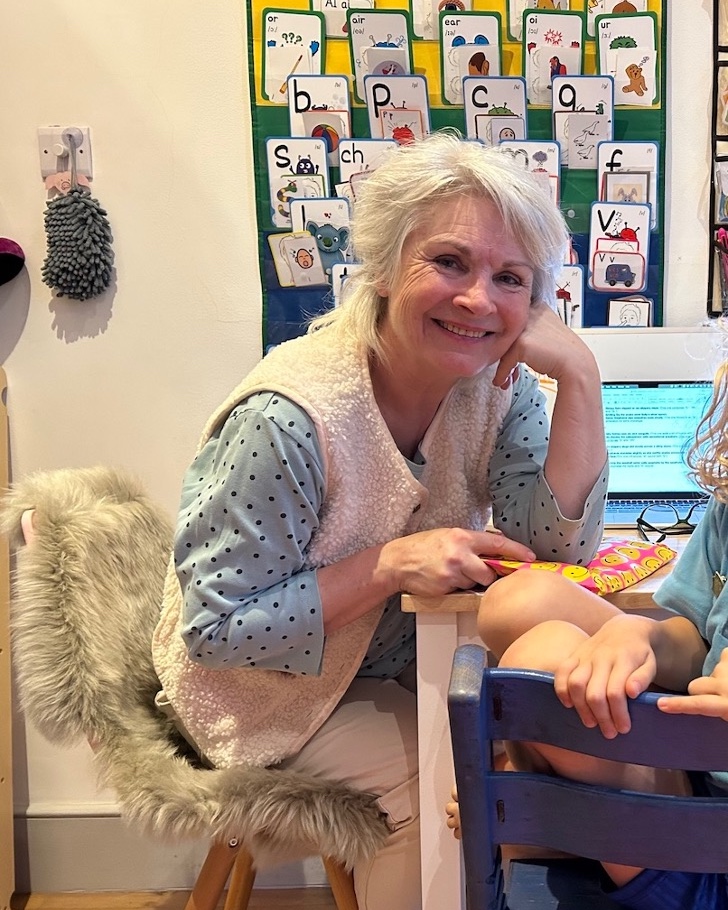
Why structure, high expectations and warmth matter in speech therapy. A photo of Sonja McGeachie smiling.

There will be laughter, encouragement and opportunities to play. But there will also be moments when I ask a child to stop, listen carefully, try a sound again or adjust the way they are producing it.

To an outside observer, this might sometimes look quite structured. And that raises an important question: does effective speech therapy need to be more than simply playing with a child?

My answer is yes.

Play has a valuable place in speech therapy, but when a child is working on a speech sound disorder, we also need clinical expertise, purposeful practice, careful listening and clear goals. Children deserve sessions that are enjoyable and supportive, while also helping them develop the skills they need to communicate more clearly and confidently.

For me, the key is combining warmth and encouragement with high expectations, appropriate structure and an approach tailored to each individual child.

Here is why I believe this balance matters.

1. Speech sound therapy involves learning a new skill

Learning to produce a speech sound accurately is not simply a matter of telling a child what to do. Speech involves highly coordinated movements, and children who have difficulty producing particular sounds may need considerable support to develop new or more consistent ways of producing them.

Think about learning to play a musical instrument. Understanding what a note should sound like is not the same as being able to play it accurately. It takes practice, feedback and time to develop the necessary skills.

Speech sound therapy can be similar. A child may understand that they need to make a /K/ sound, for example, but continue to produce a /T/ sound instead. They may need help to notice the difference, understand where the sound is produced in the mouth and practise the new movement with appropriate support.

This is where purposeful practice becomes important.

During a session, I listen closely to how a child produces a sound. I may model the sound, use a visual cue, help the child notice their tongue position or break the task into smaller, more manageable steps.

Sometimes a child can produce a sound accurately straight away. At other times, we need to slow down, change our approach or practise at an easier level before moving on.

The aim is not simply to produce lots of sounds. It is to help a child practise in a way that supports accurate, increasingly consistent speech.

That means I will sometimes ask a child to try again. Not because I expect perfection, but because I want to help them discover what works and build on their successes.

2. Clear structure can help children know what to expect

Some children arrive at therapy full of energy. Others may find it difficult to concentrate on a task, manage transitions or persist when something feels challenging.

Expecting every child to sit still and work in exactly the same way would not be realistic, nor would it be appropriate.

However, children often benefit from knowing what is happening, what we are working towards and what comes next.

For example, I might explain:

‘First, let’s practise five careful /S/ sounds together. Then we’ll take our turn in the game.’

This gives the child a clear, achievable goal and a predictable next step. For another child, I might use a visual timetable, shorter practice bursts, movement breaks or a more playful activity to support participation.

Structure does not mean that every session must look the same. It means that the activities have a purpose and that I am making thoughtful decisions about how best to help the child learn.

If a child becomes tired, frustrated or overwhelmed, I may need to adapt the task rather than simply insist that they continue. Sometimes a short break or a different approach is exactly what enables the child to return to the activity successfully.

My responsibility is to recognise what the child needs while keeping sight of the therapeutic goal.

3. Warmth and high expectations belong together

I believe one of the most important qualities of a good speech and language therapist is the ability to combine a positive relationship with clear clinical guidance.

Children need to feel safe enough to try something difficult, make mistakes and have another go. They also need a therapist who can recognise when they are ready for the next step and help them work towards it.

In my sessions, encouragement might sound like this:

‘That was a good try. Let’s see if we can make that sound even clearer together.’

‘I know this sound is tricky. Let’s slow it down and find the mouth position that works.’

‘You did that one really carefully! Can you remember what you did with your tongue?’

These are small moments, but they matter. They help children understand that speech sounds can take practice, that mistakes are part of learning and that they can make progress with the right support.

I celebrate genuine achievements, whether that means producing a difficult sound accurately for the first time, becoming more aware of how a sound feels, or managing to use a new skill more consistently.

I also want children to understand that they are not expected to get everything right immediately. My job is to guide them, give them appropriate feedback and help them develop their skills step by step.

High expectations should never mean expecting every child to progress at the same pace. They mean taking each child’s potential seriously and giving them the support they need to move forward.

4. Play can be powerful when it has a purpose

I love using games and playful activities in therapy. They can motivate children, create opportunities for interaction and make repeated practice much more enjoyable.

But the game itself is not the therapy. It is one of the ways I help a child engage with the therapeutic task.

For example, a simple board game might provide opportunities to practise a target sound in carefully chosen words. A picture activity might help a child listen for the difference between two sounds. A motivating toy might encourage a child to practise a word several times without the session feeling repetitive.

While the child is playing, I am listening, observing, adjusting the level of difficulty and deciding what support to offer next.

If a child is not yet able to produce a sound accurately in a particular word, I may return to an easier level of practice. If they are achieving the target consistently, I may begin to introduce more challenging words or activities that help them use the sound in a wider range of situations.

The activities may look simple, but the clinical reasoning behind them is important.

Parents should be able to understand what their child is working on, why a particular approach has been chosen and how progress is being monitored.

For me, effective therapy is about making the session purposeful, responsive and productive.

5. Progress takes clinical expertise, practice and partnership

When parents seek specialist speech and language therapy, they understandably want to see progress. They want their child to be understood more easily, to feel more confident communicating and to experience fewer frustrations when speaking.

My role is to assess the child’s speech carefully, identify the areas that need support and develop an appropriate plan.

Depending on the child’s needs, this may involve working on individual speech sounds, helping them distinguish between sounds, addressing patterns that affect several sounds, or using a more specialised approach where speech motor planning is a concern.

There is no single programme that suits every child. The type of intervention, the amount of practice and the pace of progress will depend on the child’s individual profile and response to therapy.

I monitor how a child is progressing and adjust my approach accordingly. I also explain what we are working towards and, where appropriate, suggest practical ways parents can support learning between sessions.

Home practice is particularly valuable, and it needs to be realistic and manageable for each family. Even a short period of well-supported practice provide useful opportunities to build on what a child has been learning in therapy.

Ultimately, I want parents to feel informed and involved, with a clear understanding of their child’s goals and the steps we are taking to work towards them.

The takeaway: Structure with warmth

I believe children deserve speech therapy that combines a warm, trusting relationship with skilled clinical intervention.

I will encourage a child, celebrate their achievements and make sessions enjoyable. I will also listen carefully, give feedback, revisit difficult sounds and help them work towards their goals.

Sometimes that means asking for another attempt. Sometimes it means changing the activity, taking a break or approaching the task in a completely different way.

The important thing is understanding when to encourage, when to challenge and when to adapt.

High expectations are not about making children comply. They are about believing in their capacity to learn while giving them the individual support they need to succeed.

For me, that is the balance at the heart of effective speech sound therapy: warmth, structure, clinical expertise and a genuine commitment to helping every child make meaningful progress.

Looking for specialist speech sound therapy?

If your child has difficulty producing particular speech sounds, is difficult to understand or is becoming frustrated when trying to communicate, an individual assessment can help clarify their needs and identify appropriate next steps.

At London Speech and Feeding, I provide tailored speech and language therapy with clear goals, careful clinical guidance and an approach that recognises each child as an individual.

Get in touch to arrange an initial assessment and discuss how I may be able to help your child.

Sonja McGeachie

Sonja McGeachie

Highly Specialist Speech and Language Therapist

Owner of The London Speech and Feeding Practice.


Health Professions Council registered
Royal College of Speech & Language Therapists Member
Member of ASLTIP

Find a speech and language therapist for your child in London. Are you concerned about your child’s speech, feeding or communication skills and don’t know where to turn? Please contact me and we can discuss how I can help you or visit my services page.

3

Similar Posts

  • · ·

    Why ‘Prosody’ Matters in Childhood Apraxia of Speech (CAS)

    Prosody refers to the ‘music’ of speech — the rhythm, pitch, stress, and volume that convey meaning and emotion beyond the literal words themselves. Think about a monotone statement like ‘Really?’ compared to one with a rising inflection, expressing genuine curiosity.

    When I work with children on producing speech sound sequences, we focus on mastering individual sounds and then putting them together into target words. A crucial element that can significantly impact a child’s speech production is ‘prosody’.

    In CAS, where the difficulty lies in planning and executing the motor movements for speech, prosody can be a powerful tool for producing clearer words and phrases.

    Here’s why working on prosody is an essential tool in CAS speech therapy:

    1.  It aids Motor Learning:

    Apraxia of Speech means that the planning and execution of speech movements are impaired. When we use exaggerated intonation or stress patterns while modelling words, we are providing additional prosodic variation and, therefore, additional auditory cues. These cues often help my student to carry out the correct motor movements for a word or syllable sequence.

    For instance, I might say ‘ball’ with a high-pitched emphasis on the ‘b’ sound. This auditory cue might be more effective in guiding the child’s tongue placement than simply repeating the word without variation.

    In this little video clip I get my student to say the word ‘snuggle’ (since we were working on that particular sound sequence: snuggle, snout, snore and sneeze) with a high voice and then a lower voice ‘like a bear’ — again it provides that extra auditory cue, but, in addition, the fun aspect also helps to take away the intense focus on a tricky movement pattern.

    By now the new pathways have been laid through repeated practice and now automaticity takes over and without too much effort my student can suddenly produce a motor pattern. It’s magical when it happens and gives me such a thrill.

    2. It makes speech more engaging and natural sounding:

    Children with CAS often sound robotic or flat due to challenges with prosodic elements. By incorporating variations in pitch, volume, and rhythm during therapy, we can help achieve a more natural flow of speech

    3. It makes it easier to express our emotions:

    Children with CAS often struggle to express themselves emotionally; partly through the difficulty of producing clear words — period, but also in addition due to the difficulties or absence of musicality and rhythm in their speech.

    Therefore, it is so important to incorporate activities focused on practising different emotions with varied intonation patterns. This can really empower our students to put emotions into their words.

    Good words to practise are fun words like ‘Wow!’ or ‘Yeiih’ or power words and phrases like ‘No!’ or ‘Gimme that’ etc.

    Making Therapy Fun and Engaging:

    Speech therapy for CAS doesn’t have to be all drills and exercises (though to be fair sometimes we can’t quite get round to making each and every word huge fun though we try…).

    I aim to make all my sessions fun and have intrinsic rewards built into the speech practice where possible.

    Home practice tips:

    Therapy shouldn’t exist in a bubble. Working on prosody during sessions is crucial, but it’s equally important to integrate these skills into everyday interactions. Parents and caregivers can model appropriate prosody during playtime, story time, or even simple conversations. This consistent reinforcement helps our children to generalise their newfound skills and use them naturally in their daily lives.

    • Sing songs and rhymes: Songs naturally incorporate variations in pitch and rhythm. Singing familiar songs and creating silly rhymes can be a delightful way to practise prosody.
    • Use puppets and toys: Assign different voices and personalities to puppets or toys. This encourages children to experiment with pitch and volume to differentiate characters.
    • Read aloud with enthusiasm: Model expressive reading, varying your voice for different characters and emphasising key words. This makes reading time engaging and helps children understand the power of prosody.

    Please feel free to contact me if your child has speech sound difficulties. It is my passion. I love supporting children with apraxia.

    Sonja McGeachie

    Early Intervention Speech and Language Therapist

    Feeding and Dysphagia (Swallowing) Specialist The London Speech and Feeding Practice

    The London Speech and Feeding Practice


    Find a speech and language therapist for your child in London. Are you concerned about your child’s speech, feeding or communication skills and don’t know where to turn? Please contact me and we can discuss how I can help you or visit my services page.

    1
  • Explore the relationship between poor speech, language and communication and literacy skills

    Communication skills are critical in all areas of communication throughout childhood and into adulthood. They are needed for understanding, narrating, making predictions and to develop social skills, for example in understanding everyday language or talking in the classroom or socialising with peers. Children with communication needs can experience low self-esteem, potential behavioural difficulties, lower school attendance and attainment.

    Communication skills have a strong impact on literacy. Let’s look at some of the facts:

    • 50% of children with language delays also have challenges with literacy (Burns et al, 1999).
    • 73% of poor readers in year three had a history of difficulties with phonemic awareness (the ability to hear, identify and manipulate sounds) or spoken language in pre-school (Catts et al, 1999).
    Speech Therpaist in London

    The effect of expressive language on spelling and reading

    The ability to read is very much dependent on competent language skills. Furthermore, a limited vocabulary will also have an impact on literacy skills. The more we know about a word, the easier it is to retrieve, recall, understand and use. So, if a young person has a poorer vocabulary, it’s likely that they will not have the same decoding skills as a peer with a richer set of vocabulary. By decoding we mean the ability to apply knowledge of letter-sound relationships including pronunciation of words. Decoding is a vital skill used in literacy.

    Whilst learning to read is a key skill, it’s important to remember that a solid foundation is needed for success. We need to ensure that no steps are missed, otherwise there will be gaps in knowledge.

    As your child moves further through the education system, they will be “reading to learn”. This is where young people with poorer language skills may show literacy difficulties (for example, reading comprehensions become more challenging, and their expressive language skills impact on their written abilities).

    When should I seek advice or support?

    Always seek the advice from a qualified professional such as a Speech and Language Therapist. You need appropriate advice for the age and stage of your child’s development and early intervention is of course key to success. It is never too late to ask for advice. The earlier you seek support, the better the outcome for your child in all areas (language, literacy, and emotional well-being).

    Have you still got unanswered questions? Contact me here and we can have a look at your child’s phonemic awareness, auditory processing skills, verbal understanding and assess his/her ability and likelihood of reading and literacy struggles. If we find that your child has dyslexia I can refer on to a specialist colleague who can help you further.


    Find a speech and language therapist for your child in London. Are you concerned about your child’s speech, feeding or communication skills and don’t know where to turn? Please contact me and we can discuss how I can help you or visit my services page.

  • Tongue-Tie: A complex issue requiring careful assessment

    Tongue-tie, or ankyloglossia, is a condition where the lingual frenulum, the thin piece of tissue that connects the underside of the tongue to the floor of the mouth, is too short or tight. Tongue-tie is quite common in babies and is often not detected after birth. Tongue-tie can lead to a difficult start with breast feeding as it makes it very difficult for the baby to latch effectively.

    In my clinical experience as a feeding therapist, I have seen many babies who were not able to latch well due to the frenulum being tight. In many cases an experienced feeding speech therapist/lactation consultant can really make a difference and help a new mum to latch the baby even though the tongue is tethered to the floor of the baby’s mouth. In some cases the frenulum can be divided and once this has been done, in some cases, feeding improves immediately or soon after the division. But this is not always the case. I have seen several babies who have had as many as four tongue-tie divisions and feeding was still difficult.

    It is important to say that while tongue-tie can sometimes impact speech and feeding, it’s important to note that it’s not always the root cause of these difficulties. In recent years, there has been a surge of interest in tongue-tie division surgeries, with some cases being unnecessary. It’s crucial to understand the complexities of tongue-tie and the role of speech therapy in addressing related challenges.

    The impact of tongue-tie on speech and feeding

    When tongue-tie is severe, it can interfere with the tongue’s ability to move freely, affecting speech production and swallowing. Some common speech and feeding difficulties associated with tongue-tie include:

    • Feeding difficulties: Challenges with sucking, chewing, and swallowing.
    • Drooling: Excessive drooling due to difficulty controlling saliva.
    • Speech problems: Difficulty producing certain sounds, such as /l/, /r/, /t/, /s/ and /d/.

    The importance of comprehensive assessment

    Before considering any surgical intervention for tongue-tie, it’s essential to undergo a thorough evaluation by a qualified speech-language therapist (SLT). An SLT can assess the severity of the tongue-tie, its impact on speech and feeding, and determine if surgery is necessary.

    • Functional assessment: The SLT will assess the tongue’s range of motion, its impact on speech sounds, and the child’s overall oral motor skills.
    • Feeding evaluation: The SLT will observe the child’s feeding patterns and identify any difficulties related to tongue-tie.
    • Differential diagnosis: The SLT will rule out other potential causes of speech and feeding difficulties, such as apraxia of speech, dysarthria, or sensory processing disorders.

    The role of speech therapy

    Even in cases where tongue-tie is present, speech therapy can often be highly effective in addressing speech and feeding difficulties. Here’s how speech therapy can help:

    • Articulation therapy: Targeting specific speech sounds that may be affected by tongue-tie.
    • Childhood Apraxia of Speech (CAS): if the diagnosis by the SLT has shown that in fact the child has motor planning difficulties then there are very specific and effective treatment programmes that help with this and can make a real difference over time.
    • Feeding therapy: Strategies to improve swallowing, chewing, and oral-motor skills.
    • Sensory integration: Addressing underlying sensory processing issues that may contribute to feeding difficulties.

    London Speech and Feeding Case Study: The importance of comprehensive assessment

    One of my clients was initially diagnosed with tongue-tie and recommended for surgery at the age of eight years old. His speech had been perceived by parents and teachers as ‘mumbled and unclear’.

    However, after a thorough evaluation, I was able to determine that the child’s primary issue was apraxia of speech, a neurological disorder that affects motor planning for speech. Parents decided to wait with surgery and trust my judgment and we proceeded with weekly intensive speech therapy to address motor planning difficulties around tricky sounds and words. I am delighted to say that the child’s speech has improved significantly, demonstrating the importance of comprehensive assessment and individualised treatment. He is no longer seen as a candidate for an operation, which would have been traumatic for him at his age and, as it turned out, entirely unnecessary.

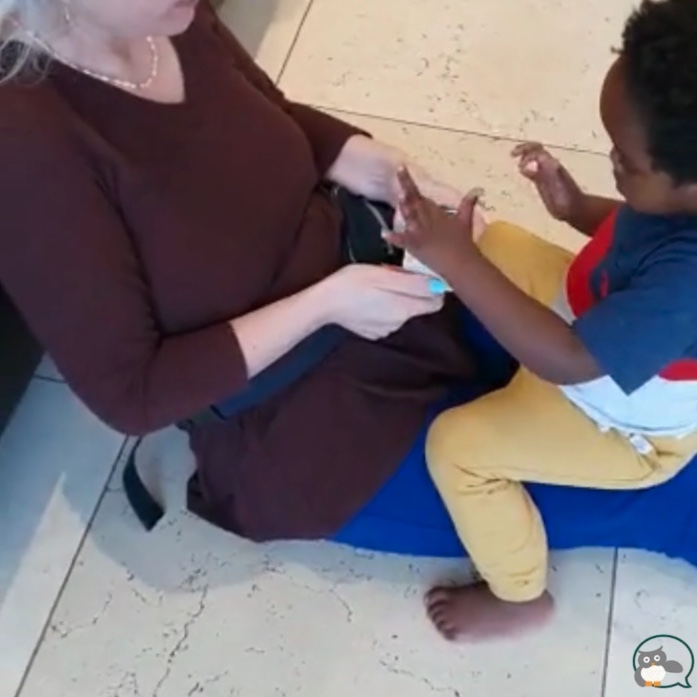
    Below is a short video clip of my working on the /l/ sound with this child.

    Using the Gingo Puppet from GingoTalk

    Conclusion

    Tongue-tie is a complex issue that requires careful evaluation and individualised treatment. While surgery may certainly be necessary in some cases, it’s essential to consider the potential benefits and risks. Speech therapy can be a highly effective approach for addressing speech and feeding difficulties associated with tongue-tie, even in cases where surgery is still required. By working with a qualified speech-language therapist, parents can ensure that their child receives the best possible care and support.

    Please feel free to contact me.

    Sonja McGeachie

    Early Intervention Speech and Language Therapist

    Feeding and Dysphagia (Swallowing) Specialist The London Speech and Feeding Practice

    The London Speech and Feeding Practice


    Find a speech and language therapist for your child in London. Are you concerned about your child’s speech, feeding or communication skills and don’t know where to turn? Please contact me and we can discuss how I can help you or visit my services page.

    1
  • · · ·

    How do we play with our Gestalt Language Processors?

    Image by Freepik

    Child-led therapy

    When working with Gestalt Language Processors, it is always advisable to use child-led therapy. What does that mean? Child led therapy involves following a child’s interests and allowing her/him to lead the play activity throughout the speech and language therapy session. In other words, instead of having my own ideas of what we might want to play with or what activities I might try and use, I provide a range of toys I know the child likes or has played well with before; then I wait for the child to pick what she/he enjoys doing.

    Play can be very repetitive and we can often see our child cycling back to the same one or two toys throughout the session. But this is what she/he needs to do at that time and it means that we have focused attention and engagement. This in turn is very helpful for the therapeutic process, which is to offer great scripts and phrases/words alongside what she/he is playing with.

    Monotropic minds

    Often the mind of autistic children is more strongly pulled towards a smaller number of interests or hobbies as I like to call them. Dr Dinah Murray, Dr Winn Lawson and Mike Lesser have found in 2005 that autistic people have ‘monotropic’ minds. They explain that autistic children focus their energy on a narrow range of activities as the energy required to switch between several toys is much higher than we would see in the neuro-typical population.

    Gestalt Language Processors are often also Gestalt Cognitive Processors. This is when experiences are retained as episodic events and memories. An event is remembered by specific parts of the same event. And, therefore, these specific parts should always be part of that event, when the event is repeated.

    Should any of the specifics be changed or are missing, then this can cause great upset to Gestalt Cognitive Processors. So, for example, if the last two times in speech therapy we had the train set out and this was played with happily, then this becomes a specific part of the whole session. If, I then don’t offer the train set the third time a child comes to see me, this could be very upsetting.

    This is why I tend to try this out and see what happens. Usually in the 3rd or 4th session: I might not bring out the car run that has hitherto been super successful to see if we are able to transition well to other toys. If yes, then we can have new experiences but if not then I will re-offer the car run/or whatever toy pretty quickly so as not to cause complete dysregulation.

    A few pointers below which help with child-led play:

    Introduce a few new toys and see what happens

    Parents are encouraged to bring some familiar toys their child likes to the session. We can then introduce a couple of different toys to see how we go. Try offering a new toy alongside the familiar one; try offering new toys without the familiar one present, but be prepared to re-offer the “old” toy should our child get upset.

    Rotate toys and don’t offer out too many toys

    I find that children can get overwhelmed and overstimulated by too many items out all at once. I always talk to parents about toy rotation at home and I encourage storage and ‘tidy up’ of toys so that we can increase attention focus, and also maintain freshness and new interest in older toys.

    Some children are not yet ready to play with toys

    Here I suggest people games: these are games where the adult becomes part of a more motor-based activity. Some call it ‘rough and tumble play’ but it can be nursery rhymes such as sleeping bunnies/row row the boat or peek-a-boo for the younger ones.

    Copy/Imitation is so important – try getting two identical or similar play items

    When we are copying our child, it is often not desirable to ‘take turns’ with their toys/blogs/cars etc as our child may not be ready to let us take a turn. Instead, if we have the exact same toy that our child is having then we can play alongside our child and copy them perfectly without interrupting their play.

    References:

    Murray, D., Lesser, M., & Lawson, W. (2005). Attention, monotropism and the diagnostic criteria for autism. Autism, 9(2), 139-156.

    If you need help with your child, please do not hesitate to contact me.


    Find a speech and language therapist for your child in London. Are you concerned about your child’s speech, feeding or communication skills and don’t know where to turn? Please contact me and we can discuss how I can help you or visit my services page.
    0
  • ·

    The importance of child-led therapy

    Child-led therapy is essentially what it says, therapy sessions that are directed by your child. You may think how can my child’s Speech and Language Therapist focus on goals if sessions are led by my child.

    Let us explain…

    Your child will be more receptive and motivated to take part in therapy if they have some form of input. E.g., they can choose what toys they want to play with, or how they want to play with the resources available. If sessions are child-centred then they are much more likely to engage and reach their goals, making intervention valuable. They will also be able to regulate their emotions, and use movement to support their need for regulation. E.g., some children like to jump whilst others like to run. As Speech and Language Therapists we need to use what is meaningful to your child to get the most out of intervention. By focusing on child-led therapy, we can build trust, which will allow us, in time, to use new techniques and activities that your child may enjoy. We want children to be themselves, to show their true personality. Therapy is about enhancing their skills in their own individualised way and child-led therapy allows for this.

    This way of working may seem daunting to some, but it doesn’t have to feel this way. Parents often feel if they are prepared then activities may go smoother. It might be the case, but perhaps it doesn’t give your child the opportunity for spontaneity. We’d like to suggest something that may lead to some surprises. Put out an activity that is your child’s favourite and then a completely new activity. Remember these activities don’t have to be complicated. Often, the simpler the better!

    So, no need to plan, just place two activities out and see what happens! Look out for anything which surprises you, which activity did they prefer? Do they have any sensory preferences? The freedom of choice is a wonderful thing to explore. So, just go with the flow!

    The kind of activities that are useful for child-led play can include:

    • Hide and seek
    • Cooking or baking
    • An Exercise ball
    • Small world play
    • Pretend play
    • Musical instruments (you could even have a go at making your own)

    Child-led therapy is a very useful resource. We have it at our fingertips. We don’t need special resources. You just need yourselves and your child! Sometimes, child-led therapy can be tricky to put in place. It sounds easy but is much harder in reality. So, make sure you give it time and reflect on your experiences. Ask yourselves ‘what went well’, and ‘what could be improved’. E.g., perhaps you gave your child time to lead to begin with, but you didn’t give them enough time to think about their options during the activity.

    How can parents become more child-led in the home environment?

    • Pause and use silence. This gives your child the opportunity to lead.
    • It’s perfectly natural to want to talk. Afterall, this is how adults maintain conversations. If you find yourself talking too much, count to ten! This will allow your child time to respond or initiate in the conversation or interaction.
    • Move down to your child’s level. It’s much easier to see what’s going on if you’re at the same height.
    • Videoing you and your child can really help you to see where your strengths lie. You’ll also be able to make minor tweaks to improve your communication during child-led play.

    Contact Sonja for more advice on speech, language and communication during child-led play.


    Find a speech and language therapist for your child in London. Are you concerned about your child’s speech, feeding or communication skills and don’t know where to turn? Please contact me and we can discuss how I can help you or visit my services page.

    0
  • · ·

    Stage 2 NLA

    Image by Freepik

    Last time we asked: is our child ready tp move to Stage 2 NLA (Natural Language Acquisition stage 2) and we looked at how we can know. Now we know: he/she is ready, they are mixing and matching those scripts quite liberally! Hurrah!

    So for example we hear phrases like:

    • ‘let’s go’+ ‘downstairs’
    • ‘it’s’ + ‘downstairs’
    • ‘I see it’ + ‘downstairs‘
    • ‘I want to’ + ‘shoes downstairs’ (I want to put my shoes on downstairs)

    To recap, it’s important to listen out to a variety of contexts because if we only hear the single version of a gestalt —this is so great, hurrah!— but that’s not yet Stage 2.

    What we can now do on a daily basis to help and support at this time:

    1. We need to offer more ‘mix and match’ phrases to help our child establish this new way of communicating.

    Good phrases:

    • It’s … raining / cooking / eating / washing / brushing
    • That’s … great / cool / amazing / wow / so good
    • Let’s … see / look / go / run / chase
    • How’bout … some food / playing / I’ll chase / sleeping / we read a book
    • I see a … bird / large car / fire engine
    • I wanna … have a biscuit / have a book / have a snuggle
    • We’re … going out / going home / going in the car / going upstairs

    Here in my video clip of train play I use:

    • Let’s go
    • It’s going up the hill
    • It’s coming down
    • Ooops it falls!
    • It’s stopping
    • Let’s put on another parcel
    • Ready steady go
    • Off we go
    • It’s come off!
    • Let’s fix it
    • I can do it
    • I don’t need help

    You can offer these gestalts either with an AAC as you can see me do in the video clip or you can just verbally offer these.

    2. Watch out for Pronoun confusion or reversal:

    Gestalt kids repeat gestalts, so we don’t want to create ‘pronoun reversal’.

    Instead model from a:

    • first person perspective: ‘I’ / ‘Our’ / ‘Us’
    • joint perspective: ‘We’ / ‘Let’s’ or a
    • neutral perspective: ‘It’

    You can turn almost any sentence into a good language model once you get used to it. And you can avoid ‘you’ and ‘your’ at the same time!

    So instead of saying, ‘Do you want to go to the park?’

    You could say:

    • We wanna go to the park?
    • Let’s go out?
    • Shall we go out / to the park?

    3. Start providing ‘variation’ in your language modelling:

    Instead of just modelling something one way, start thinking about offering a pattern in a couple of other ways, in a couple of different situations, then several ways in several different situations.

    Example: once you hear your child saying: ‘it’s raining’ and you know it’s a mitigation, because you don’t often say ‘it’s raining’, or haven’t said it in a while and you know your child says other ‘it’s’ phrases.

    Repeat: ‘it’s raining!’

    Then: ‘it’s’ + ‘raining hard’ / ‘it’s wet out there’ / ‘It’s’ + ‘raining lot’s’.

    Then later think of other combinations for ‘it’s’ + ‘something’:

    • (rice) ‘It’s’ + ‘cooking’
    • (water/tap) ‘It’s’ + ‘running’
    • (radio) ‘It’s’ + ‘singing
    • (dog) ‘It’s’ + ‘peeing’ / ‘it’s’ + ‘running’ / ‘it’s’ + ‘jumping’

    In my train video clip:

    • Let’s go
    • It’s going
    • Let’s make it go
    • Ready steady go
    • Oops its gone

    4. Use natural intonation that shows you really mean what you’re saying.

    You can be animated or try for musical if your child prefers that / doesn’t mind you singing —they might not like it if their hearing is pitch perfect and your singing is off key…—

    • ‘I’m’ + ‘trying to find you!’ (animated, goofy face)
    • ‘I’m’ +’ getting tired!’ (exaggerated stretch and yawn)
    • ‘I’m’ + ‘catching up with you!’ (animated goofy)
    • ‘I’m’ + ‘gonna get you!’ (animated goofy)
    • ‘I’m’ + ‘sad right now’ (exaggerated face and tone of voice)

    5. USE SILENCE!

    Important, I might not have said this before but we need to hold back sometimes (hard I know) and not constantly offer models. Let our child sit in a bit of silence with us there just observing and waiting for their own offers. This is a very important point. Silence is golden sometimes. Try it out. I am not talking about the silence that comes with a person scrolling on their phone though, we do need to be present and receptive.

    You will see this works wonders!

    Do get in touch if you would like some in-person or on-line 1:1 support with this. It can be overwhelming to figure it all out alone.

    You can also check my friend’s lovely handmade jewelry on her website.


    Find a speech and language therapist for your child in London. Are you concerned about your child’s speech, feeding or communication skills and don’t know where to turn? Please contact me and we can discuss how I can help you or visit my services page.

    1