Three-syllable words made fun: How I use play to build speech skills

|

Why spend time on syllables?

Sounds have to be organised into syllables, words and phrases. A child needs to coordinate these parts to produce longer words successfully.

This can be particularly relevant for children who:

  • leave out parts of longer words
  • simplify multisyllabic words
  • have reduced speech intelligibility
  • have phonological difficulties
  • have difficulty remembering or organising the sound sequence in a word
  • have suspected or diagnosed Childhood Apraxia of Speech (CAS)
  • find longer or more complex words particularly difficult.

For children with speech sound disorders, phonological awareness is important because speech sound development and awareness of the sound structure of words are connected areas of development.

When creating new habits, new motor plans,new anything repetition is important!

But the way we get to that repetition can be playful and creative.

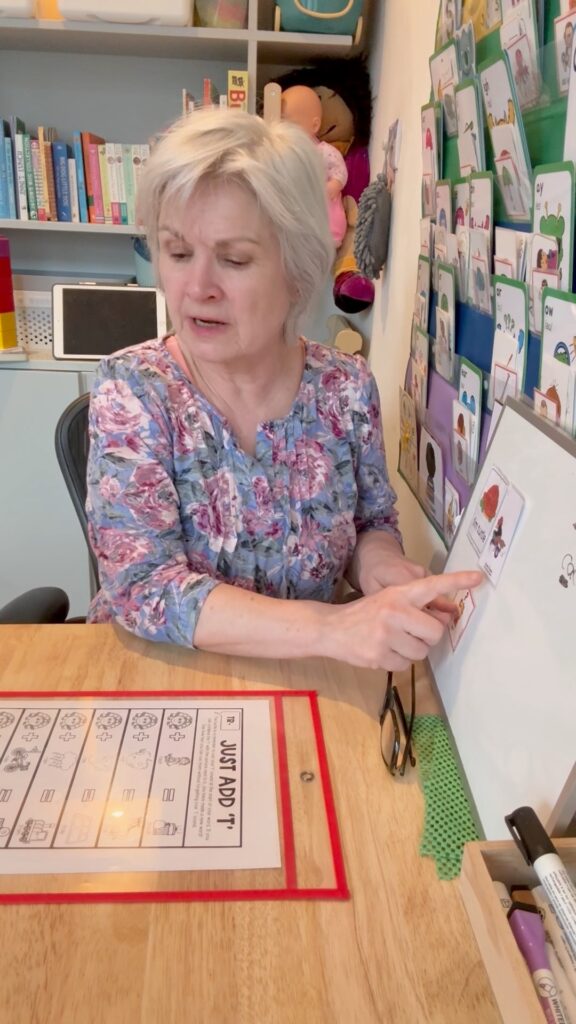
Today I give you a little window into one of my recent speech therapy sessions. I was working on three-syllable words, words such as ladybird, butterfly and other longer words that contain three ‘beats’.

I used five very simple activities:

  • playdough
  • two different versions of Snap
  • an online activity
  • stickers.

None of these activities are complicated or expensive. What matters is how the activity is being used and what the child is practising within it.

Video examples

Here are five little clips from the session so you can see what I mean.

Squashing the syllables with playdough

In my first clip, you can see me using three blobs of playdough with picture cards.

The child places or squashes one blob onto each part of the word.

For example:

LA – DY – BIRD

Three blobs. Three beats.

This gives the child something very concrete to see and feel while they are listening to the word.

We can squash:

  • 🟢 LA
  • 🟢 DY
  • 🟢 BIRD

And then say the whole word: LADYBIRD.

Next came Snap.

I used cards containing the target words and played two different versions of the game.

This is where something very simple becomes surprisingly useful.

The child isn’t just practising ‘ladybird, ladybird, ladybird…’

Instead, they are playing a game.

They have to look. They have to listen. They have to wait. They take a turn.

And, importantly, they have a reason to say the word.

When a card appears, we can practise the three syllables: LA – DY – BIRD

Then we might say it again naturally: ‘I got ladybird!’

This gives us repeated opportunities to practise the target word while keeping the activity meaningful.

Taking the practice online

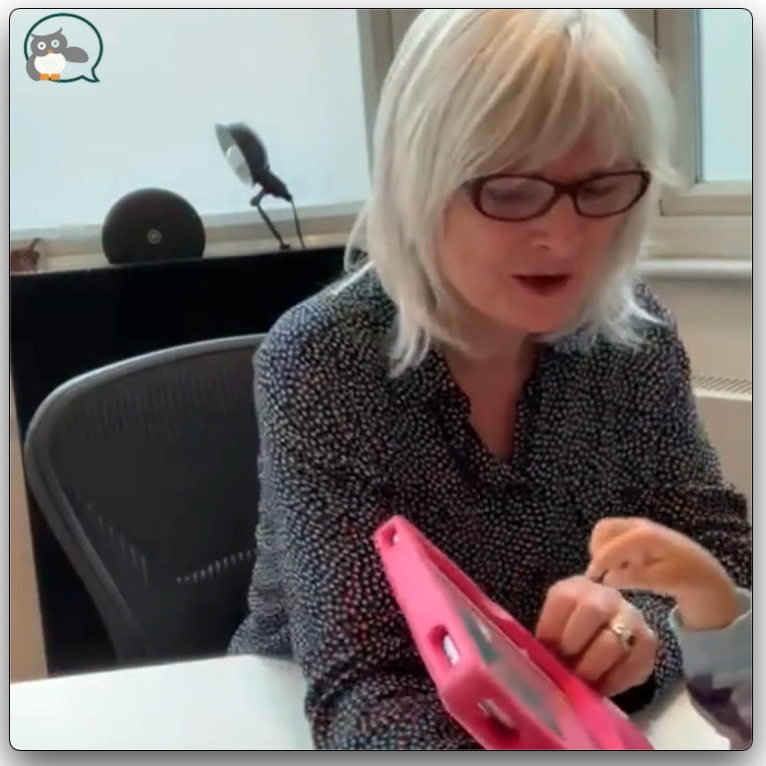
The fourth clip shows an online activity.

Here, the online pictures provide another opportunity to look at a picture, identify the word and break it into its three syllables.

My child taps each syllable.

Thun-der-storm

👏 👏 👏

The visual presentation can be particularly helpful for children who benefit from seeing exactly what we are talking about.

And we can move between levels of difficulty.

First:

How many beats can you hear?

Then:

Can you say the word with me?

Then:

Can you say it by yourself?

That progression is important. We build the steps.

This time, I used a sticker sheet

We practise:

TAKE – IT – OFF

👏 👏 👏

Three syllables.

And then we can reverse the action:

PUT – IT – ON

👏 👏 👏

Three syllables again.

This is a lovely example of why I like to work on speech within real actions and little phrases, rather than only isolated words.

The child has an actual reason to communicate.

They want the sticker. They want to take it off. They want to put it somewhere.

And suddenly our three-syllable practice is also helping with:

  • verbs
  • little phrases
  • following an action
  • understanding language
  • turn-taking
  • functional communication.

So although my clinical focus might be syllable structure and speech production, I am still thinking about the whole child and the whole communication experience.

And eventually we want those words to become part of everyday communication rather than something that only happens during therapy.

That is the real goal.

A little bit of research

A useful recent article by Brosseau-Lapré and Roepke (2024) looked at phonological awareness skills in preschool children with speech sound disorders. Through three case studies, the authors highlighted that children with speech sound disorders can have very different profiles of phonological and pre-literacy skills, and that children with more atypical and omission-type speech errors were more likely to show phonological awareness difficulties.

It is another reminder that speech development is wonderfully complex, and that sometimes a seemingly simple activity, such as putting three blobs of playdough onto a picture, can have a very specific clinical purpose behind it.

If you are concerned about your child’s speech, a speech and language therapist can help identify whether the difficulty is primarily related to speech sounds, phonological patterns, syllable structure, motor planning, language development, or a combination of factors.

Any questions please contact me via my contact form.

Sonja McGeachie

Sonja McGeachie

Highly Specialist Speech and Language Therapist

Owner of The London Speech and Feeding Practice.


Health Professions Council registered
Royal College of Speech & Language Therapists Member
Member of ASLTIP

Find a speech and language therapist for your child in London. Are you concerned about your child’s speech, feeding or communication skills and don’t know where to turn? Please contact me and we can discuss how I can help you or visit my services page.

Reference

Brosseau-Lapré, Françoise & Roepke, Elizabeth. (2024). Beyond Sounds: Decoding Speech Errors and Phonological Awareness in Preschoolers. Perspectives of the ASHA Special Interest Groups. 9. 922-934. 10.1044/2024_PERSP-24-00001.

3

Similar Posts

  • · ·

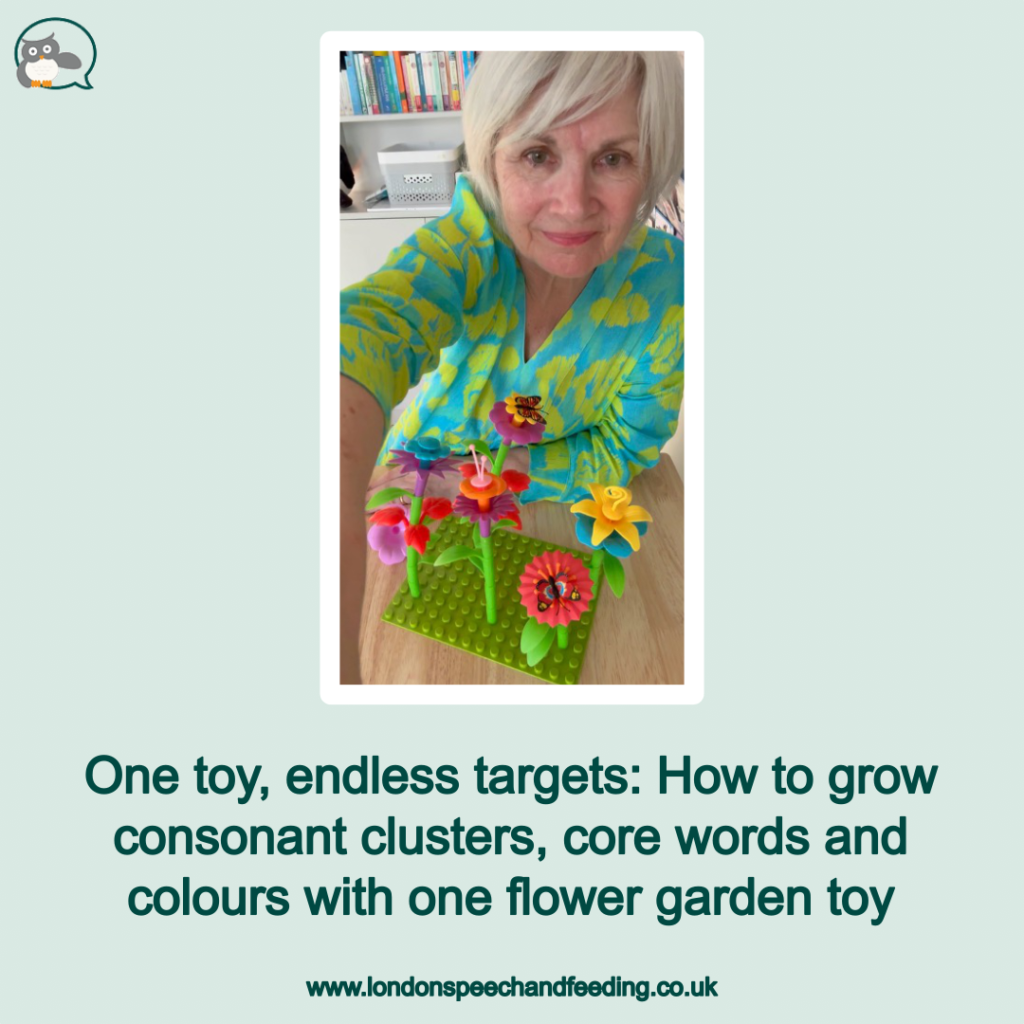
    One toy, endless targets: How to grow consonant clusters, core words and colours with one flower garden toy

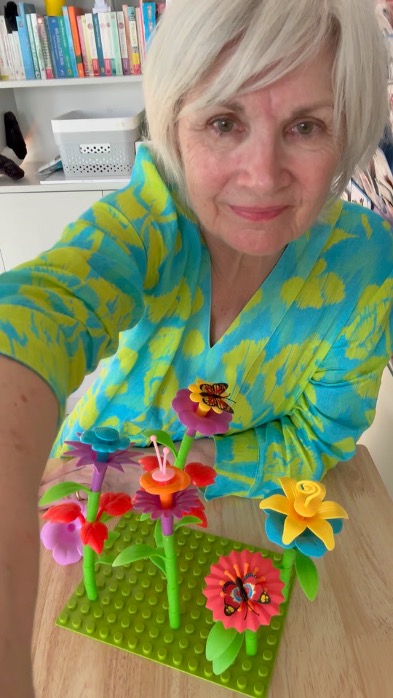
    Sonja McGeachie with the build-a-flower garden toy

    If you’ve been following me for a while you already know my absolute favourite rule for speech therapy: let the toy work for you. You don’t need an entire cabinet full of different flashcards or games to target a massive range of speech goals (though truth be told I do have 4 cabinets! What am I saying…) but often I find that sticking to one highly engaging, open-ended toy reduces a child’s cognitive load, keeps them firmly planted in play, and gives you dozens of natural opportunities for high-repetition practice. It also reduced my cognitive load!

    In today’s post we are looking at a classic: The build-a-flower garden toy. A link is here: https://www.amazon.co.uk/Fivejoy-Flower-Garden-Building.

    This vibrant, stacking toy isn’t just great for fine motor skills. It is an absolute goldmine for speech therapy. While it is incredible for targeting tricky consonant clusters (blends) like /ST/, /SP/, /SPR/, /FL/, /BL/, and /GR/, it is equally powerful for building functional core vocabulary.

    1. Digging deep with /ST/

    Let’s start building our garden.

    Stem & stalk: ‘Look at this long stem!’ or ‘Can you put the stem in?’ or ‘do you want the green or the red stem’?

    • Stuck: If a piece is a little tight to push down, it’s a brilliant opportunity for a natural exclamation: ‘Oh no, it’s stuck! Help me!’
    • Stand: Once it’s secure, you can celebrate: ‘it can stand up now!’
    • 👉 Core word integration: Use this setup stage to practise ANOTHER ONE. As you hold the base pieces, wait for the child to use their words or AAC device to request, ‘I want another one!’ before handing over the next stem.

    2. Sowing seeds with /SP/ and /SPR/

    Every good gardener needs the right equipment and a close eye for detail. We can introduce tools and descriptive language to hit our /SP/ and triple-blend /SPR/ targets.

    • Spade: Grab a toy shovel or pretend to use one. ‘Let’s dig a hole with the spade.’
    • Spot: Point to the holes on the base. ‘Find a good spot for this flower.’
    • Sprout: Talk about the little green pieces: ‘Look at the little sprout!’
    • 👉 Core word integration: Build on spontaneous requesting here. If they are eyeing a specific piece, model a full phrase like: ‘I WANT THE PINK ONE.’

    3. /FL/ and fine motor actions

    Now, we can start adding the colourful petals.

    • Flower: This is your high-frequency word for the entire activity. ‘Put the green/blue/pink flower on top.’
    • Flat & flutter: ‘This piece is flat on the ground,’ or ‘The butterfly flutters by!’
    • 👉 Core word integration: This stage is perfect for teaching directional actions. Every time they stack a petal onto a stem, model the core phrase: ‘PUT IT ON!’

    4. Blending it all together with /BL/

    Building a garden is a fantastic sensory experience because of the vivid colours. We can lean heavily into the /BL/ sound by focusing on colour selection and the action of growth.

    • Blue & bloom: ‘Should we use a blue flower?’ and ‘Watch it bloom!’
    • Blade & blend: Point out the blades of grass and talk about how we blend all the colours together.
    • 👉 Core word integration: Don’t just focus on putting the toy together, taking it apart is half the fun! If a child places a piece they don’t want, or when it’s time to clean up, model: ‘TAKE IT OFF.’

    5. Working the /GR/

    Finally, we look at the environment supporting our garden. The /GR/ blend can be targeted by looking downward at the base of our toy setup.

    • Green: Nearly every stem and base piece in this toy is a vibrant shade of green.
    • Grass & ground: ‘Put the base down on the ground.’ ‘Look at the green grass.’
    • 👉 Core word integration: Combine your /GR/ blend with a powerful core phrase. As you pull a stem upward slowly or stack the petals higher and higher, chant together: ‘MAKE IT GROW! Grow, grow, grow!’

    Maximise your repetitions in play

    The beauty of the flower garden toy is its repetitive nature. Because a child builds multiple flowers, you aren’t just saying a word or a phrase once, you have the potential to repeat it 10, 15, or 20 times in a single sitting without the child losing interest.

    By layering structural speech sounds (like blends) over functional communication phrases (like core words), we give children words they can use across their entire day.

    What toy would you like to see us target next in our series? Let me know in the comments on Instagram, and don’t forget to swipe through the carousel there to save these word lists for your next playtime!

    If you are concerned about your child’s speech, please do not hesitate to get in touch. I would love to help you find some answers.

    Sonja McGeachie

    Highly Specialist Speech and Language Therapist

    Owner of The London Speech and Feeding Practice.

    Health Professions Council registered
    Royal College of Speech & Language Therapists Member
    Member of ASLTIP

    Find a speech and language therapist for your child in London. Are you concerned about your child’s speech, feeding or communication skills and don’t know where to turn? Please contact me and we can discuss how I can help you or visit my services page.

    3
  • ·

    Discover speech and language regression in autistic children and how you can support your child

    Discover speech and language regression in autistic children and how you can support your child

    There’s often this idea that autistic children have extensive vocabulary and knowledge, but this is not always the case. In fact, 30% of autistic children have language regression.

    Goldberg (2003) suggested that speech and language regression refers to the decline in a young child’s speech and communication abilities. We know that regression in speech, language and communication skills often occur before the age of two years. 25% of autistic children develop language at word level between 12 and 18 months of age before losing this language they have learned. As you’re probably aware this regression in communication is a diagnostic indicator of Autism.

    We understand that you want your child to progress, and you struggle to watch as their frustration grows as you feel helpless. I want to provide you with tips so that you can feel empowered to support your autistic child and reduce the impact their communication skills have on the family.

    1. Reduce frustration by providing visuals to support their communication
    2. Model gestalts. We know that autistic children are often gestalt language processors. Learn more about gestalt language processors in one of my previous posts.
    3. Praise the ability to communicate. Focus on what they say not how they say it. E.g., good listening, nice talking.
    4. Provide your child with choices (using real objects to represent your choices). E.g., do you want an apple or banana?
    5. Your child must be motivated and have a purpose to communicate. So, ensure you use highly motivating objects for conversations
    6. Provide them with opportunities to communicate. We need to teach children that if they want something, there’s a process that you need to have the opportunity to ask for it. We find that if parents understand what their child wants (without them asking), the object is given to them, and so there’s no reason for your child to ask.
    7. There’s this idea that we need to teach children eye contact. This is not always the case. Your child is unique, we do not want to take their unique skills away.
    8. Model words which are concrete. E.g., words such as ‘finished’, ‘more’. You can model these several times within the day. You can use a gesture to make the word more visual (see the images below). We know that autistic children are often visual learners.
    Makaton fro "more"
    Makaton for “more”
    Makaton for "finished"
    Makaton for “finished”

    Credit: Little Dots Makaton, Polkadot World

    Remember that if your child has speech, language and communication regression, it doesn’t mean your child will stay static.

    It’s vital that you seek support from a qualified Speech and Language Therapist. We can tell you at what point in the communication development that your child is at. And we can support you through the process. We can provide you with an individualised plan specifically for your child to ensure you maximise their potential.

    Contact me for help.


    Find a speech and language therapist for your child in London. Are you concerned about your child’s speech, feeding or communication skills and don’t know where to turn? Please contact me and we can discuss how I can help you or visit my services page.

    1
  • ·

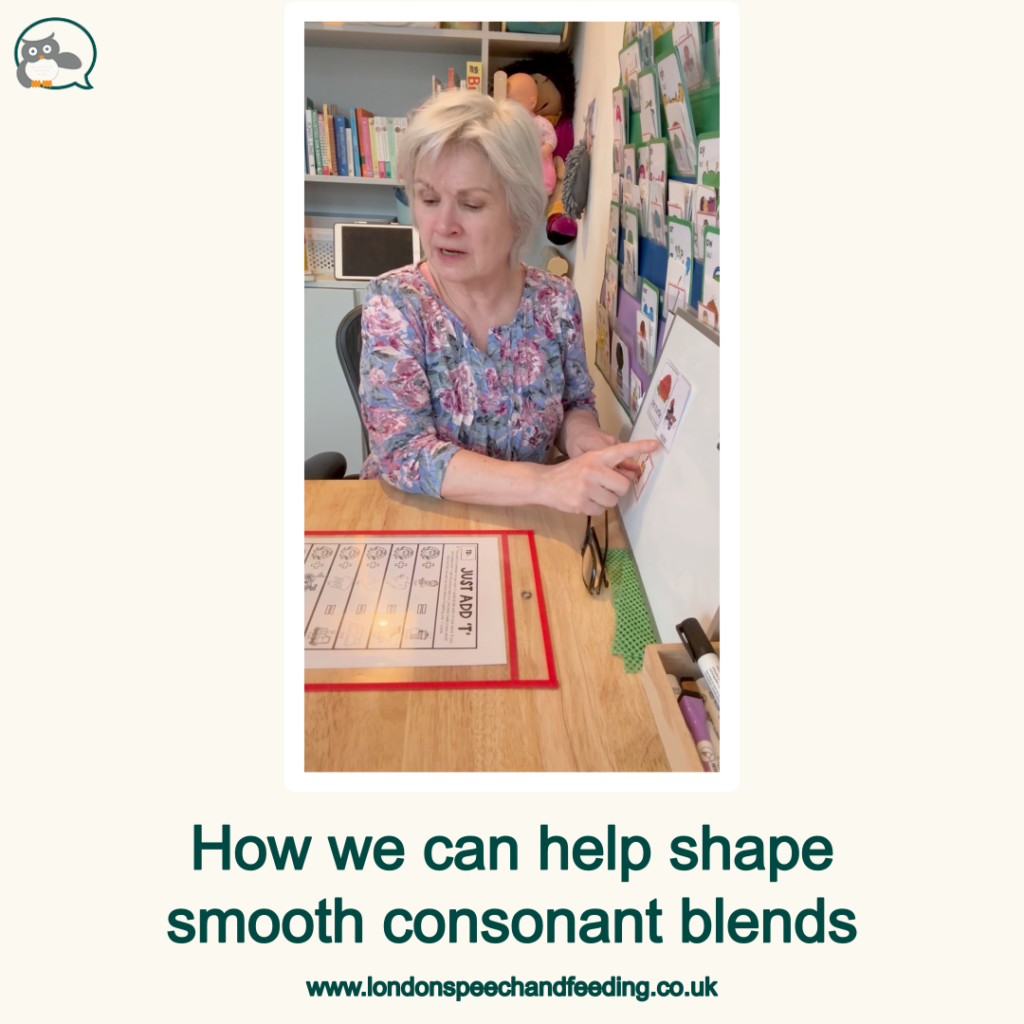
    How we can help shape smooth consonant blends

    For many children, especially those navigating Childhood Apraxia of Speech (CAS), the challenge isn’t just making individual sounds. It’s the ‘speech gymnastics’ required to move smoothly from one sound to the next.

    You might notice that instead of saying ‘Train’, your child says ‘Ter-ain’, or for ‘Frog’, you hear ‘Fer-og’. That sneaky little ‘uh’ sound in the middle is what we call a schwa vowel. In the world of speech science, this is known as epenthesis. It’s essentially a ‘repair strategy’ the brain uses to break up a difficult cluster of sounds into two easier pieces.

    While it might seem like a small detail, that tiny vowel makes a big difference in how fluent and clear a child’s speech sounds. In today’s post (and the video below), I am working with my student on ironing out that schwa by focusing on co-articulation—the art of getting the mouth ready for the second sound while still finishing the first.

    The ‘best friends’ strategy

    To help my student understand this complex movement, I use visual cues and a story. There are many ways to portray two sounds living closely together, but for this session, I used the ‘Best Friends’ story.

    In our story, the /T/ and the /R/ are older brother best friends who want to play together. The ‘schwa’ sound is represented by a little sister who keeps trying to jump in the middle of their game! Because my student has a younger sister, this scenario was instantly familiar and helped him visualise why we needed to ‘close the gap’ between those two sounds.

    Alternative methods I often use:

    Beyond stories, I often use other visual and tactile methods to show the closeness of two sounds:

    • The sliding finger: I draw two dots on a paper—one for /T/ and one for /R/. We slide a finger quickly from one to the other. I might say, ‘Don’t let the ‘uh’ monster jump in the gap!’
    • The rubber band: We stretch a rubber band as we speak. I tell my student that the word is one long, smooth stretch, rather than two separate ‘pops’.
    • Visual cues for ‘quiet’ sounds: I often put my finger to my lips or tap my throat to remind a child to keep the first sound voiceless. If the voice stays ‘off’ during the /T/, it’s much harder for that schwa vowel to creep in.

    The importance of ‘pure’ modelling

    A major hurdle in clearing up these blends is how we, as adults, model sounds. Often, when teaching the alphabet, we say ‘Kuh’, ‘Puh’ or ‘Tuh’. But if you listen closely, you’re actually adding a vowel! If a child learns that /K/ says ‘Kuh’, it’s only natural they will say ‘Kuh-R’ for /KR/.

    To give your child a cleaner blueprint, try modeling ‘pure’ sounds. Think of whispering rather than talking:

    • The /K/ sound: A short, sharp burst of air from the back of the throat. No voice! (A quiet /K/ click).
    • The /P/ sound: Just a ‘pop’ of air from the lips. If your throat vibrates, the vowel has snuck in.
    • The /T/ sound: A tiny tap of the tongue behind the teeth.

    Why is this important?

    You might ask, ‘If I can still understand them, does it really matter if they say “ter-ain”?’

    The goal of speech therapy isn’t just functional communication; it’s building phonological awareness. When a child adds extra vowels, it can eventually impact their literacy. If they hear ‘ter-ain,’ they are much more likely to eventually spell it as ‘terain’ or ‘traint’.

    By helping them master these clusters through co-articulation now, we are setting them up for success in reading and writing. And we are giving them the confidence to speak with ease.

    Feel free to contact me if your child needs help with clusters or other difficulties either aligned with Childhood Apraxia of Speech or other articulation difficulties.

    Sonja McGeachie

    Highly Specialist Speech and Language Therapist

    Owner of The London Speech and Feeding Practice.

    References

    • Hall, N. (2011). Vowel Epenthesis. In The Blackwell Companion to Phonology (eds M. Oostendorp, C.J. Ewen, E. Hume and K. Rice). In this work, epenthesis is defined as the insertion of a vowel to break up complex consonant clusters into simpler, more manageable syllables. This is often viewed as a ‘repair strategy’ used by the brain when a transition between sounds is too complex to execute quickly.
    • Aichert, I., & Ziegler, W. (2004) Brain and Language 88(1):148-59. Syllable frequency and syllable structure in apraxia of speech. This research highlights that children with Apraxia often struggle specifically with word-onset clusters, leading to distortions like the schwa.
    • Browman, C. P., & Goldstein, L. (1992) Phonetica 1992;49(3-4):155-80. Articulatory Phonology: An Overview. This paper explains that fluent speech requires ‘gestural overlap,’ where the movements for two different sounds happen simultaneously. This supports the ‘Best Friends’ method of keeping sounds close together.

    Health Professions Council registered
    Royal College of Speech & Language Therapists Member
    Member of ASLTIP

    Find a speech and language therapist for your child in London. Are you concerned about your child’s speech, feeding or communication skills and don’t know where to turn? Please contact me and we can discuss how I can help you or visit my services page.

    3
  • The tricky /R/: Mastering tongue placement for clear speech

    The /R/ sound is notoriously challenging for many children (and even some adults!). It’s one of the most complex sounds in the English language, with various pronunciations depending on its position in a word. If your child is struggling with their /R/s, you’re not alone. As Speech and Language Therapists (SLTs), we frequently work on this sound, and a key component of our therapy is focusing on proper tongue placement.

    Why is the /R/ so difficult?

    The /R/ sound requires precise coordination of the tongue, jaw, and lips. Unlike sounds like /P/ or /B/ that involve simple lip movements, the /R/ involves intricate tongue movements and tension. There are also different ways to produce the /R/ sound, which adds to the complexity:

    • Retroflex /R/: The tongue tip curls up and back towards the roof of the mouth.
    • Bunched /R/: The body of the tongue bunches up towards the roof of the mouth, while the tongue tip remains down.

    The importance of tongue placement

    Regardless of which /R/ variation is being targeted, accurate tongue placement is crucial. Even a slight deviation can result in a distorted or inaccurate sound. That’s why SLTs dedicate significant time to teaching and practising tongue positioning.

    Speech therapy techniques: Focusing on the tongue

    Here’s a glimpse into how I address /R/ sound difficulties, with a focus on tongue placement:

    • Visual aids:
      • Mirrors: I use a mirror to help children see their tongue movements and make adjustments.
      • Tongue diagrams and models: These visual tools provide a clear representation of where the tongue should be positioned.
    • Tactile cues:
      • Tongue depressors: These can be used to gently guide the tongue into the correct position.
      • Food-grade tools: Sometimes, I use flavoured tongue depressors or other tools to provide tactile feedback and increase awareness of tongue placement.
    • Auditory discrimination:
      • I help children distinguish between correct and incorrect /R/ sounds.
      • I use auditory cues and verbal feedback to reinforce proper pronunciation.
    • Exercises and drills:
      • Tongue strengthening exercises: Strengthening the tongue muscles can improve control and coordination.
      • Tongue placement drills: We practise positioning the tongue in the desired location and holding it there.
      • Sound approximation techniques: Sometimes we use other sounds to help approximate the /R/ sound. For example, I use the /L/ sound, to help achieve the correct tongue placement. Once my child has found the /L/ sound it is then a matter of pulling back just slightly to get a good /R/.
    • Contextual practice:
      • Once the child can produce the /R/ sound in isolation, we gradually introduce it into syllables, words, phrases, and sentences.
      • We also practise the /R/ sound in different contexts, such as at the beginning, middle, and end of words.

    Tips for Parents:

    • Be patient and supportive: Learning the /R/ sound takes time and practice.
    • Practise regularly: Short, frequent practice sessions are more effective than long, infrequent ones.
    • Make it fun! Use games, stories, and other engaging activities to keep your child motivated.
    • Work with an SLT: A qualified SLT can provide personalised guidance and support.

    In conclusion:

    The /R/ sound can be challenging, but with targeted speech therapy and a focus on tongue placement, most children can achieve clear and accurate pronunciation.

    I hope this blog post is helpful!

    Get in touch with me via my contact form if you need support

    Sonja McGeachie

    Early Intervention Speech and Language Therapist

    Feeding and Dysphagia (Swallowing) Specialist The London Speech and Feeding Practice

    The London Speech and Feeding Practice


    Find a speech and language therapist for your child in London. Are you concerned about your child’s speech, feeding or communication skills and don’t know where to turn? Please contact me and we can discuss how I can help you or visit my services page.

    1
  • · ·

    Discover nine ways to support literacy in autistic children

    We are all aware that Autism is on a spectrum. By the very nature of this, it means that every child will present differently, so an individualised approach is required. We need to remember to use a child’s strengths to support their needs. By using a person-centred approach, you’ll see your child’s literacy develop and thrive.

    I hear many parents concerns about literacy as well as communication. Will they be able to read, write and spell? How will they manage their literacy independently? The questions are endless, so let’s look at how you can support your child’s literacy skills and how together we can provide a scaffold to them becoming independent learners.

    1. The one thing we know is that Autistic children are visual learners. They succeed by us sharing pictures and demonstrating how the narrative is shown.
    2. Start reading to your child at an early age. You can never start too early. This creates a love for books and supports vital pre-literacy skills (such as increasing vocabulary, following narratives, awareness of sounds in words, and letter recognition and awareness). By supporting pre-literacy skills, you’re starting the process to create confident young readers.
    3. There are many ways to use books. You can narrate the story using different voices and tones to increase interest. You can do this even if your child isn’t interested. They are still listening and learning vital skills. You may even ask and answer questions and voice the skills that they will need for internal monitoring.
    4. Use their interests to select appropriate reading material. In addition, you can then create questions on the book and provide a scaffold to support your child with the answer.
    5. Use technology to spark their interest in reading. Demonstrate how they can read online. This is often successful as it becomes an individual activity as opposed to needing social interaction.
    6. Provide them with a choice of texts (e.g., would you like ‘Perfectly Norman or when things get too loud’) rather than an open-ended question such as ‘What book would you like to read?’
    7. Write key pieces of information down on paper. Research suggests that Autistic learners understand written text better than speech.
    8. You could have a ‘word of the day’ from chosen reading material that you explore together.
    9. Reading aloud to your child can have many benefits which include understanding vocabulary to how the book is read, with appropriate intonation.

    I highly recommend the boom decks as they are a great resource!

    The ethos at London Speech and Feeding:

    “If they can’t learn in the way we teach, then we teach the way they learn”

    If you need speech, language or communication support or advice, I am always here to help.


    Find a speech and language therapist for your child in London. Are you concerned about your child’s speech, feeding or communication skills and don’t know where to turn? Please contact me and we can discuss how I can help you or visit my services page.

    0
  • · ·

    Baby-led weaning: Empowering little eaters from the start

    I had a mum ask me about Baby Led Weaning the other day. So I thought I would write a blog on all the useful questions she had and what we discussed as it may help lots of mums and dads out there.

    As a Paediatric Feeding SLT, one of the exciting developments in recent years is the growing interest in baby-led weaning (BLW). This approach to introducing solids has gained significant traction, and for good reason. It empowers infants to take the lead in their feeding journey, fostering a positive relationship with food and supporting important developmental milestones.

    What exactly is baby-led weaning?

    At its core, baby-led weaning is about offering your baby appropriately sized and textured solid foods from the very beginning, allowing him or her to self-feed. Instead of spoon-feeding purées, you present whole, soft foods that your baby can grasp, bring to his or her mouth, and explore at his or her own pace. This means no mashing, no blending, and no forcing spoons into reluctant mouths. It’s a fun, messy, and intuitive process that is led by your baby’s natural instincts.

    The genesis of baby-led weaning

    ‘Baby-led weaning’ was popularised by British health visitor Gill Rapley. In the early 2000s, Rapley observed that babies naturally develop the skills needed to self-feed and that traditional spoon-feeding might actually hinder this development. Her work, particularly her book Baby-Led Weaning: The Essential Guide to Introducing Solid Foods (co-authored with Tracey Murkett), published in 2008, brought BLW into the mainstream and provided a structured framework for parents. Her research and observations highlighted the benefits of trusting a baby’s innate ability to regulate his or her intake and explore different textures.

    What’s the deal?

    Implementing BLW is simpler than you might think, though it does require a shift in mindset. Here’s a breakdown of what it typically involves:

    • Readiness is key: The golden rule of BLW is to wait until your baby shows clear signs of readiness. This isn’t about age alone, but rather developmental milestones. Your baby should be at least six months old, able to sit unassisted, have good head and neck control, show an interest in food (e.g., reaching for yours), and have lost his or her tongue-thrust reflex (which pushes solids out of his or her mouth).
    • Offer finger foods: Start with soft, easily graspable foods cut into finger-sized sticks or spears. Think cooked sweet potato fries, steamed broccoli florets (soft enough to mash with gentle pressure), banana sticks, or avocado slices. The goal is for babies to be able to pick it up and get some into their mouth.
    • Embrace the mess: BLW is inherently messy, especially in the beginning. Food will be squished, dropped, and smeared. This is a crucial part of the learning process as babies explore textures, smells, and the properties of food. A wipeable mat under the highchair and a good bib are your best friends!
    • Observe, don’t interfere: Allow your baby to lead. He or she will decide what to eat, how much, and how quickly. Avoid putting food into his or her mouth or pressuring him or her to eat more. This respects his or her hunger and fullness cues, laying the foundation for healthy eating habits.
    • Continue breastmilk or formula: Until your baby is well-established on solids, breastmilk or formula remains his or her primary source of nutrition. Solids are for exploration, taste, and developing skills, gradually increasing in quantity over time.

    The benefits of baby-led weaning

    The advantages of BLW extend far beyond simply getting food into your baby. From a speech and feeding perspective, the benefits are compelling:

    • Develops oral motor skills: Chewing, gnawing, and manipulating various food textures are crucial for developing the muscles in the mouth, jaw, and tongue. This strengthens the oral motor skills necessary for speech development.
    • Enhances fine motor skills and hand-eye coordination: The act of grasping food, bringing it to the mouth, and coordinating these movements significantly refines fine motor skills and hand-eye coordination.
    • Promotes self-regulation and intuitive eating: By allowing babies to control their intake, BLW helps them tune into their own hunger and fullness cues, fostering a healthy relationship with food and reducing the likelihood of overeating.
    • Encourages adventurous eating: Exposure to a wide variety of tastes and textures from the outset can lead to less picky eating later. Babies are more likely to accept new foods when they have been in control of their exploration.
    • Facilitates family mealtimes: BLW integrates babies into family mealtimes from an early age, promoting social interaction and making mealtime a shared, enjoyable experience.

    When is baby-led weaning appropriate, and when not?

    While BLW offers numerous benefits, it’s not a one-size-fits-all approach.

    When BLW is appropriate:

    • When your baby meets all the developmental readiness signs: This is paramount for safety and success.
    • When you are comfortable with the mess and the learning curve: It requires patience and a relaxed attitude.
    • When you are committed to offering a variety of safe, appropriate foods.
    • When you are willing to learn about and practise safe food preparation to minimise choking hazards.

    When BLW might not be appropriate (or requires extra caution and professional guidance):

    • If your baby has a history of prematurity or significant developmental delays: His or her oral motor skills might not be sufficiently developed.
    • If your baby has certain medical conditions or anatomical differences (e.g., cleft palate, severe reflux, swallowing difficulties): These may necessitate a modified approach to feeding.
    • If there are significant feeding difficulties, aversion, or a history of choking incidents.
    • If you feel overly anxious about choking: While BLW, when done correctly, is not associated with a higher choking risk than traditional weaning, parental anxiety can impact the feeding experience. Education and consultation with a professional can help alleviate these concerns.

    A note on safety: Choking hazards

    It’s crucial to understand the difference between gagging and choking. Gagging is a natural reflex that helps prevent choking and is very common in BLW as babies learn to manage food in their mouths. Choking is silent and serious. To minimise choking risks:

    • Always supervise your baby closely during mealtimes.
    • Offer appropriately sized and textured foods. Avoid small, round, hard foods like whole grapes, nuts, popcorn, and large chunks of meat.
    • Ensure your baby is sitting upright and calm.
    • Educate yourself on infant CPR.

    Final thoughts

    Baby-led weaning is a wonderfully empowering approach that celebrates a baby’s natural abilities and fosters a positive and independent relationship with food. As Speech and Language Therapists we often see the positive impact it has on oral motor development, self-regulation, and overall feeding confidence. By understanding what it entails, when it’s appropriate, and prioritising safety, you can embark on this exciting journey with your little one, helping him or her become a confident and capable eater from the very first bite.

    If you would like help and support with weaning your baby whilst continuing to breastfeed then please get in touch!

    Sonja McGeachie

    Highly Specialist Speech and Language Therapist

    Owner of The London Speech and Feeding Practice.


    Health Professions Council registered
    Royal College of Speech & Language Therapists Member
    Member of ASLTIP

    Find a speech and language therapist for your child in London. Are you concerned about your child’s speech, feeding or communication skills and don’t know where to turn? Please contact me and we can discuss how I can help you or visit my services page.

    1