When AAC modelling doesn’t feel natural yet: Helping parents learn to use their chosen AAC system
One of the most common pieces of advice parents hear when their child starts using AAC is: ‘Just model the words naturally.’
And, yes, natural modelling is an important part of AAC support.
But there is something we don’t always talk about: How on earth is a parent supposed to model a word naturally when they are still trying to work out where the word is themselves?
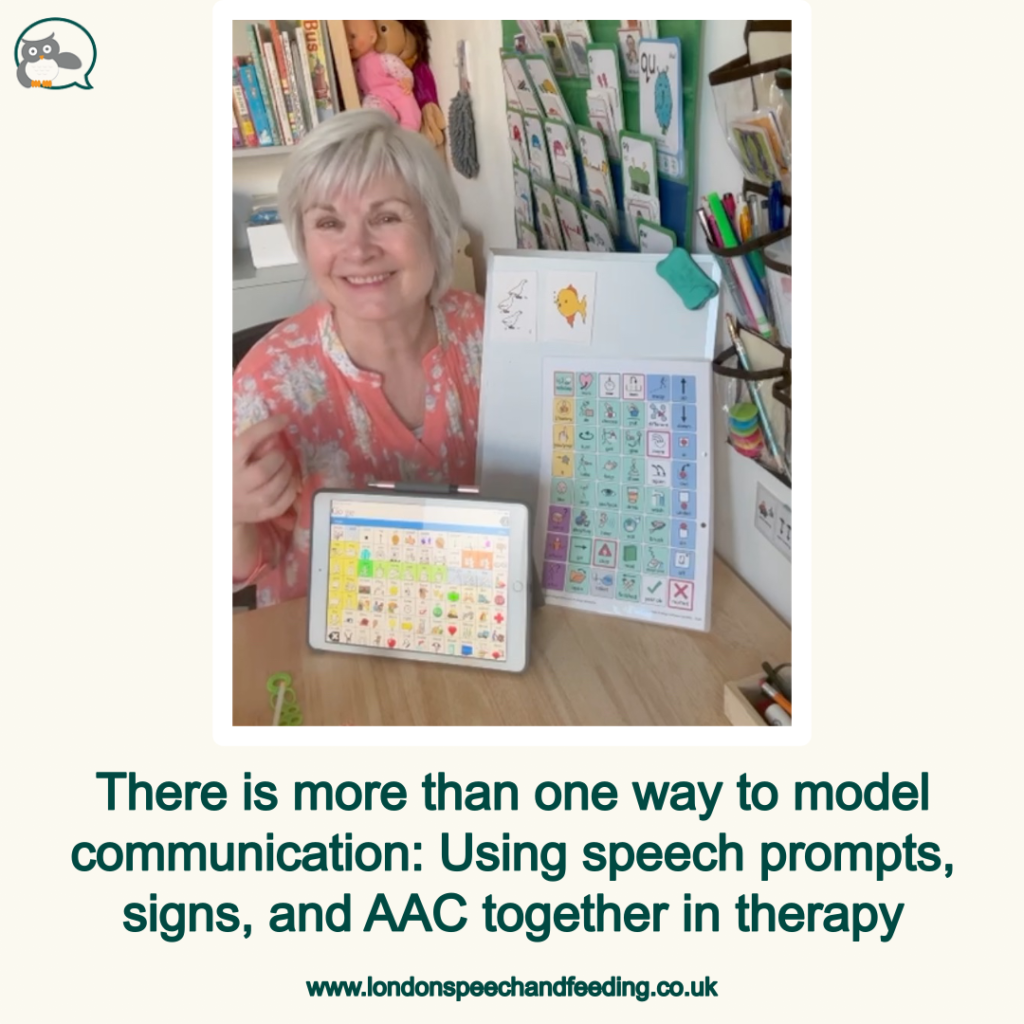
Using a robust AAC system such as LAMP Words for Life can feel a little like learning a new language.
The parent is learning the language at the same time as the child they are hoping to teach it to.
So, although I absolutely want AAC to become part of everyday life, I often begin with something much more structured.
And I have found that this can make the transition to natural, everyday modelling much easier for families.
Learning the system first
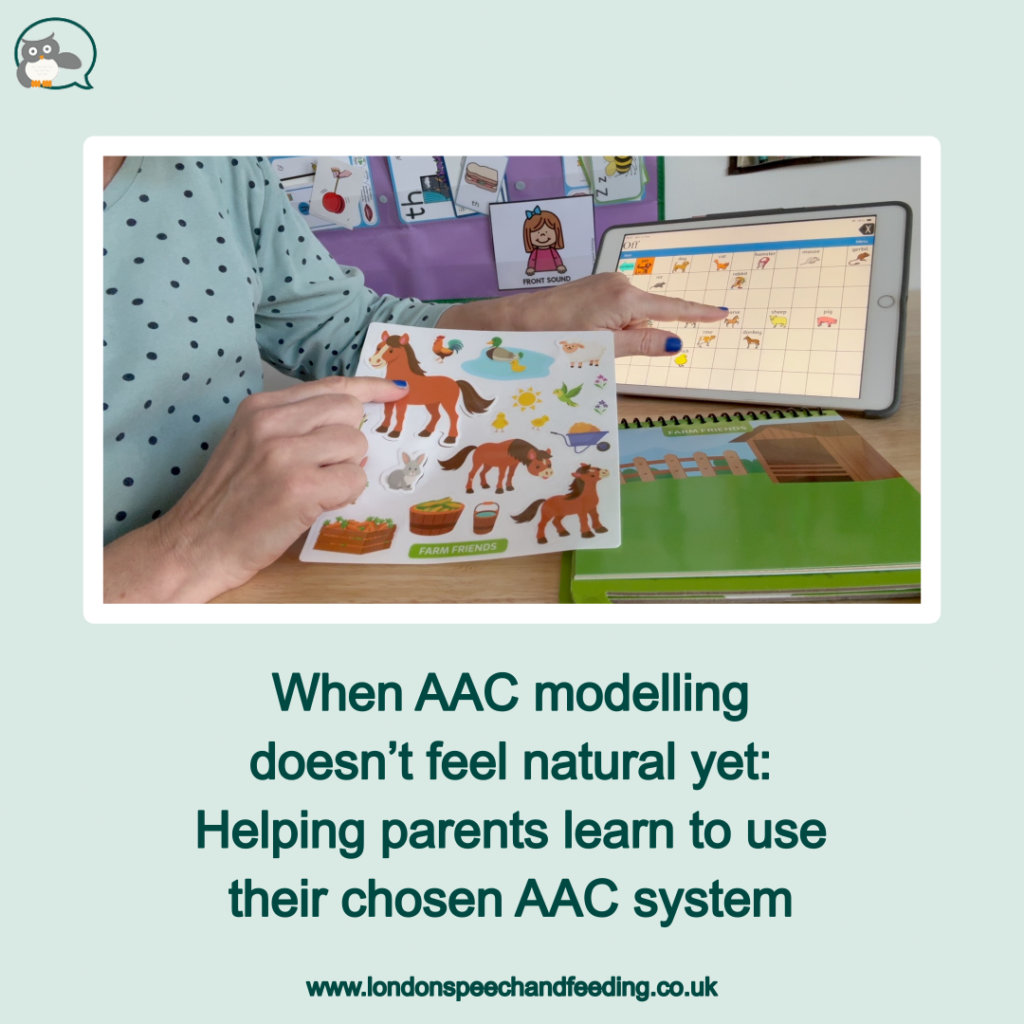
In my first video clip, I am using a very simple farm animal sticker activity with LAMP Words for Life.
The activity gives us the opportunity to practise some useful, functional words:
- OFF: taking the sticker off
- FARM ANIMALS: finding the animal category
- HORSE
- SHEEP
- CHICK
- ON: putting the sticker onto the book
At first, I am quite explicit about what I am doing.
I might draw attention to the relevant button, help the child navigate to it, talk through what we are looking for and practise finding the word several times.
This is more didactic and structured than the idealised picture some people have of AAC modelling.
And I am completely comfortable with that at the beginning.
Why start so explicitly?
Imagine that you are given a brand-new device containing hundreds or thousands of words.
Someone tells you: ‘Don’t worry. Just use it naturally.’
You might manage to find a few obvious words.
But when you are suddenly standing in the kitchen taking your child’s coat off and want to say ‘OFFS, you may have absolutely no idea where to look.
That is exactly why I think parents sometimes need permission to learn the system in a supported way.
The structured activity creates a safe environment where we can stop and think:
- Where is that word?
- How do I get there?
- What does this word do?
- What happens when I press it?
We can practise it more than once.
We can repeat it.
And gradually, the route to that word becomes familiar.
AAC systems are not simply devices that children need to learn. Communication partners need to learn them too. All the AAC research highlights partner training as an important part of AAC intervention and notes that intervention initially includes helping the individual and their family or carers develop operational competence with the system.
From structured practice to everyday life
And this is where the useful transfer can happen.
Take the word OFF.
In our sticker activity, we may practise:
‘OFFS
‘OFFS
‘OFF’
We take the sticker off.
We find the button again.
We use the word again.
After several opportunities, the parent has not only seen their child use the word, the parent now knows where the word lives too.
Then later that day, they are taking their child’s coat off.
Suddenly:
‘OFF!’
And they know exactly where to find it.
The same thing might happen with ON.
Once the parent has practised finding ON several times during play, it becomes much easier to spot opportunities for it during the day:
‘Shoes ON.’
‘Lights ON.’
‘Music ON.’
‘Hat ON.’
‘Tap ON.’
This is one of the reasons I like structured AAC activities. They are not necessarily the final goal.
They can be the rehearsal space that gives parents and children enough confidence to use AAC in real life.
Natural modelling is still the goal
This doesn’t mean that I want parents spending their whole day sitting beside their child and directing them towards buttons.
Quite the opposite.
The aim is to gradually move towards a much more natural style of AAC use.
Once parents know their way around the system, they can begin to model words spontaneously as they occur in everyday interactions.
Research into aided AAC modelling describes adults using AAC alongside speech within meaningful activities, and evidence supports the use of aided input as part of AAC intervention.
But getting there may take teaching, repetition, practice and coaching.
And that’s okay.
It is not about making the child press the button
There is another important distinction here.
When I say that I may initially be more explicit or ‘direct’ during an activity, I do not mean that I am trying to make a child perform the correct response.
I am not interested in turning AAC into a test.
I am not continually asking:
‘Where’s HORSE?’
‘Find SHEEP.’
‘Show me CHICK.’
Instead, I am helping the child and parent become familiar with the system.
I might point, gesture, navigate, model the word and repeat it within a meaningful activity.
As confidence grows, the support can be reduced so that the child has increasing opportunity to locate and use the language themselves.
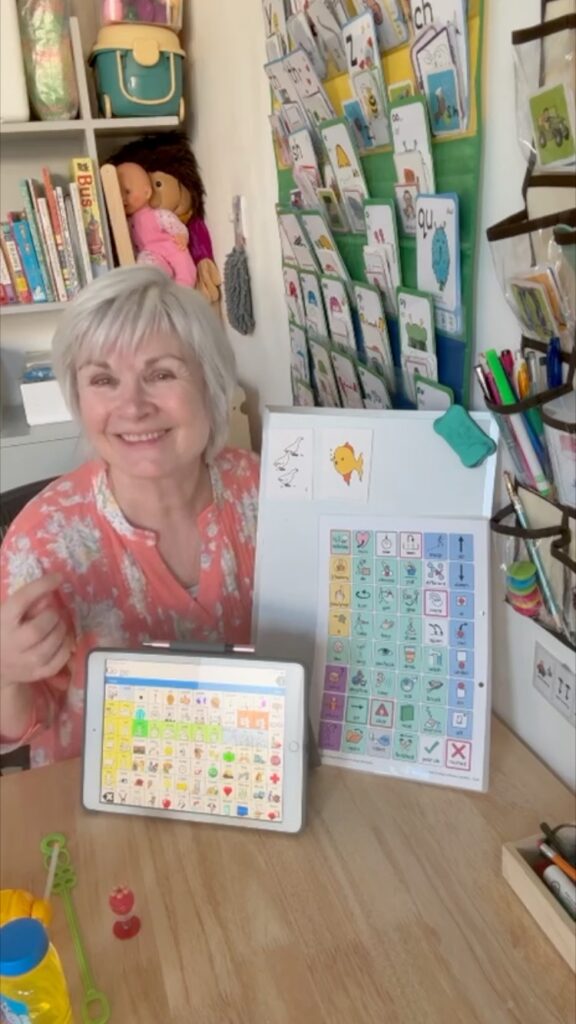
My second video clip shows a child using their own LAMP Words for Life system at home, accessing a category they have chosen which is FOOD.
This is what I love about AAC.
The device isn’t just being used in the therapy room.
It becomes part of the child’s own life.
And the child is using it around their own interests and choices.
That is the direction I want families to move towards:
From ‘I don’t know where anything is!’ to ‘I know where some useful words are.’
Then ‘I can use those words during our everyday routines.’
And eventually: ‘This is my communication system, and I can use it to tell you what I think, want, notice, enjoy, reject and choose.’
Parents don’t have to get it perfect
This is perhaps the biggest message I would like parents to take away.
You do not have to become an AAC expert overnight.
You are learning too.
It is completely reasonable for a parent to need time to become familiar with the layout, vocabulary and navigation of their child’s system.
Learn it. Practise it. Model it. Then take it into real life.
Any questions please contact me via my contact form.

Sonja McGeachie
Highly Specialist Speech and Language Therapist
Owner of The London Speech and Feeding Practice.


Find a speech and language therapist for your child in London. Are you concerned about your child’s speech, feeding or communication skills and don’t know where to turn? Please contact me and we can discuss how I can help you or visit my services page.